BMG and Suno have apparently reached the stage of the AI music revolution where everyone puts down the flamethrowers long enough to discuss licensing fees.
The companies announced a global strategic alliance on August 12, 2026, establishing a framework covering BMG’s recorded-music and publishing repertoire. More importantly, BMG says artists and songwriters who choose to participate will have their rights protected and will be compensated, while the agreement also settles Suno’s prior use of BMG recordings and publishing works.
That last part deserves some attention. Suno is not merely paying for access to music going forward; BMG says the agreement also addresses what already happened.
That is a rather expensive way of admitting there was a problem. With BMG representing music tied to everyone from Kylie Minogue and Jelly Roll to Iron Maiden, Mick Jagger, Keith Richards, and Bruno Mars, one imagines the attorneys eventually discovered that licensing was cheaper than continuing to expense dinner.
BMG and Suno Are Trying to Make Licensed AI Music a Business
The partnership will contribute to Suno’s forthcoming music model developed with participation from the music industry. BMG becomes the first major rights holder to strike a new Suno agreement since Warner Music Group settled its copyright litigation with Suno in November 2025 and agreed to work with the company on licensed AI models. Universal Music Group and Sony Music remain in U.S. litigation against Suno.
Suno has also started cleaning up some of the more obvious problems surrounding mass-produced AI music. Beginning September 3, Free users will receive seven lifetime downloads, Pro subscribers 20 per month and Premier subscribers 60, although Suno Studio users on the Premier tier will not have those limits. Suno says the restrictions are designed in part to make large-scale export and streaming-platform abuse harder.
That follows its August pledge to make Suno-generated music easier to identify and strengthen safeguards against unauthorized reproduction of existing songs, voices and likenesses.
Better late than after another 75 million AI songs clog the recommendation engine.

Does This Actually Help Artists?
Potentially, yes — and the opt-in provision is the strongest part of the agreement.
If BMG artists and songwriters genuinely choose whether their work participates, understand how it will be used and receive meaningful compensation, this is considerably more defensible than training first and negotiating after everyone hires lawyers.
There is also money on the table that previously did not exist. Licensed AI tools could create new revenue from catalog music, fan-generated creations and other uses that have historically happened without permission or payment.
But we should not start handing out medals yet.
The financial terms have not been disclosed, so we do not know how much participating artists and songwriters will receive, how payments will be calculated, or precisely what uses they will be approving. BMG’s announcement promises “clear economics,” but does not publish those economics.
There is also evidence that artists do not necessarily believe record-company AI agreements protect them. The American Federation of Musicians sued Warner Music Group and Universal Music Group in June, alleging that AI licensing agreements allowed members’ recordings to be used without appropriate permission or compensation. Warner and Universal dispute that characterization.
Suno also lost a significant copyright ruling in Germany on July 31 when a Munich court found that it had used works represented by GEMA without authorization and ordered it to disclose related revenue and pay damages still to be determined. Suno said it disagreed with the decision and was considering an appeal.
So yes, licensing is progress. Artist consent and meaningful compensation are the test.
Why Should Consumers Care?
Because the next phase of AI music will increasingly arrive through licensed services rather than anonymous experiments uploaded by the million.
For listeners, that could mean clearer disclosure, fewer impersonations, less mass-produced streaming spam and AI tools that allow fans to interact with music without stealing someone’s voice or work in the process.
It could also create another problem: an enormous new supply of inexpensive music competing for the same recommendation slots, playlists and royalty pools as human musicians.
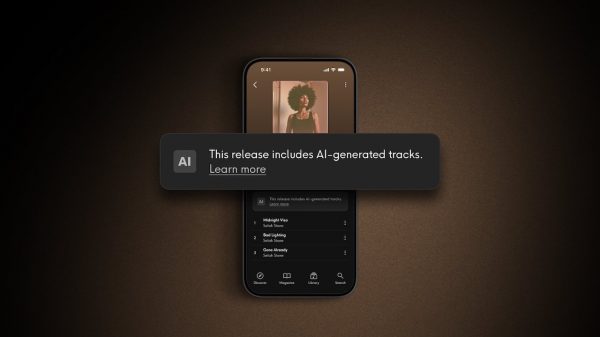
eCoustics has already examined the industry’s push toward AI Generated and AI Assisted labels, along with TIDAL’s decision to identify wholly AI-generated music and exclude it from royalty attribution. Transparency is improving, but the systems remain voluntary and inconsistent across streaming platforms.
The BMG/Suno agreement therefore looks like progress, but not absolution.
If artists really control participation and receive a fair share, licensed AI could become another creative tool and revenue stream. If “opt-in” eventually becomes another paragraph nobody can negotiate and compensation amounts to loose change after everyone upstream gets paid, we will have simply taught the old music business a new trick.
And it already knew quite a few.
For more information: bmg.com
Related Reading:
- Spotify Will Label AI Artists And Stop Recommending Them. So Why Is It Letting Fans Remix Real Music With AI?
- Spotify Wants Fans To Remix Real Songs With AI And The Labels Smell Another Payday
- Why Should AI Created Music Be Allowed On The Charts At All?
- TIDAL Says AI Music Can Stay, But It Won’t Get Paid