

For decades, Bose has been viewed by much of the audiophile world as a consumer electronics company operating outside the traditional high-end audio establishment. That description is becoming increasingly outdated. Its acquisition of McIntosh Group, along with continued expansion into automotive, immersive, and software-driven audio, suggests Bose is building a much broader audio technology business.
The latest move is the acquisition of Firelight Technologies, the Melbourne-based company behind FMOD. Financial terms were not disclosed, but Bose confirmed that Firelight will become part of its Audio Technology business while FMOD remains available to its existing customers and development community.

FMOD operates well below the level where most consumers encounter audio. Developers, sound designers, and composers use it to create sound that responds dynamically to events inside games and other interactive environments.
Unlike recorded music, which largely unfolds as mastered, interactive audio must react instantly as a player moves through a space, accelerates a car, fires a weapon, or triggers any number of events. FMOD integrates with Unity, Unreal Engine, custom game engines, consoles, computers, mobile devices, and web applications.
Bose is therefore not simply buying another audio technology company. It is acquiring software that helps determine how sound behaves inside virtual spaces. Gaming is the immediate opportunity, but Bose has also pointed to potential applications in VR/AR, automotive, and other real-time environments.
Related Reading:
- Bose Returns To Wired Earbuds After 11 Years With Noise Cancellation And USB-C
- Bose QuietComfort Ultra Headphones (2nd Gen) Get Auracast And LE Audio In New Beta Update
The StreamUnlimited Deal Makes More Sense Now

Three months before buying Firelight, Bose acquired StreamUnlimited Engineering, a Vienna-based company that develops network-audio software, hardware modules, streaming technologies, certification tools, and other infrastructure used by consumer-electronics manufacturers.
That deal received far less attention outside the industry, but strategically it may be just as important.
Bose said StreamUnlimited would continue serving existing customers while helping the company expand its access to streaming technologies, services, and capabilities. Its solutions would also remain interoperable with third-party products and ecosystems rather than being locked inside Bose hardware.
Put the two acquisitions beside one another and an interesting picture starts to emerge.
StreamUnlimited provides connected-audio infrastructure. FMOD provides interactive-audio infrastructure. Bose already has decades of DSP and acoustic research, a substantial consumer-audio business, automotive relationships, and ownership of McIntosh and Sonus faber.
The company no longer needs every Bose technology to arrive inside a product carrying a Bose badge.
That may ultimately be the most consequential shift.
McIntosh & Sonus faber Changed the Conversation
Bose’s November 2024 acquisition of McIntosh Group, parent company of McIntosh Laboratory and Sonus faber, was the deal that forced the traditional high-end industry to pay attention.

McIntosh and Sonus faber occupy territory that Bose historically did not. McIntosh sells massive amplifiers, preamplifiers, source components, and systems whose blue meters have become symbols of American high-end audio. Sonus faber builds Italian loudspeakers that can involve wood, leather, carbon fiber, and enough artisanal craftsmanship to make assembling a Bluetooth speaker feel rather pedestrian.
Bose acquired both without attempting to turn either into Bose.
At the time, Bose said McIntosh and Sonus faber would continue concentrating on their established high-end categories while the companies explored opportunities together in the home, on the go, and in the car. Bose also specifically highlighted automotive as an area where its four decades of experience could complement the luxury brands.
That was important. Bose did not need to persuade traditional audiophiles that a $30,000 loudspeaker with its own logo was suddenly desirable. It bought two brands whose credibility in that market had already been established over generations.
Some audiophiles reacted as if Taco Bell had purchased Le Bernardin.
Nearly two years later, there is little evidence that Bose has hampered either company’s ability to innovate. If anything, both brands have continued behaving very much like themselves.
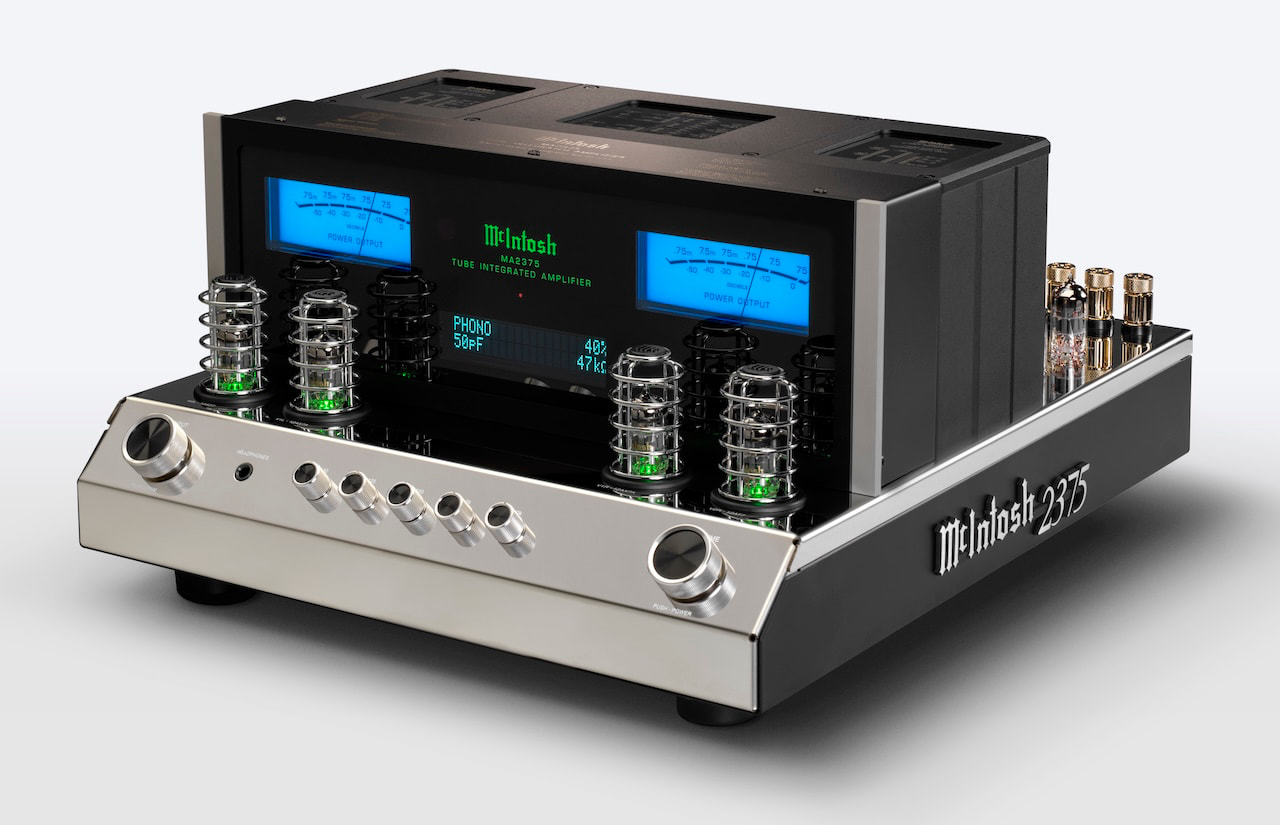
In 2026, McIntosh introduced the $15,000 MA2375, an unapologetically old-school, all-analog vacuum tube integrated amplifier with KT88 output tubes, Unity Coupled Circuit output transformers, MM/MC phono stages, and the blue meters that have been glowing in Binghamton for generations.
A few months later, it introduce the $12,500 CS7500 Streaming Preamplifier, combining McIntosh preamplification with Qobuz, Spotify, TIDAL, AirPlay, Google Cast, Roon, HDMI ARC, and high-resolution digital playback.
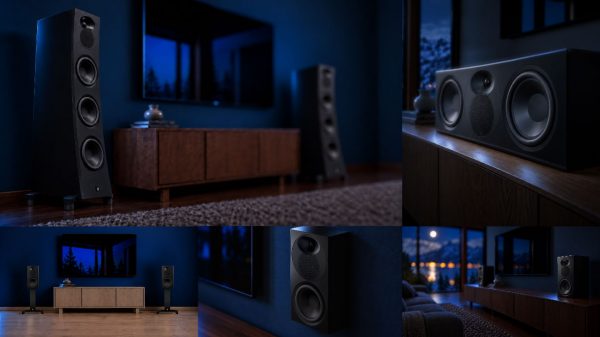
Sonus faber has hardly been sitting around waiting for instructions from Massachusetts either. Its new Olympica G3 Collection incorporates technology derived from the $750,000 Suprema, including the Camelia midrange driver, cork-damped internal chambers, redesigned woofers, and revised crossover networks, while retaining the wood, leather, asymmetrical cabinets, and Italian craftsmanship that define the brand.
The five-model range stretches from stereo listening into dedicated home theater applications without turning Sonus faber into something unrecognizable.
Whatever concerns surrounded the Bose acquisition in 2024, the evidence so far suggests that Bose understood the value of leaving both companies enough room to remain themselves.
The Car May Be Where Many of These Pieces Meet
Bose has worked in automotive audio since the early 1980s, and its current automotive business extends far beyond installing a branded amplifier and some door speakers.
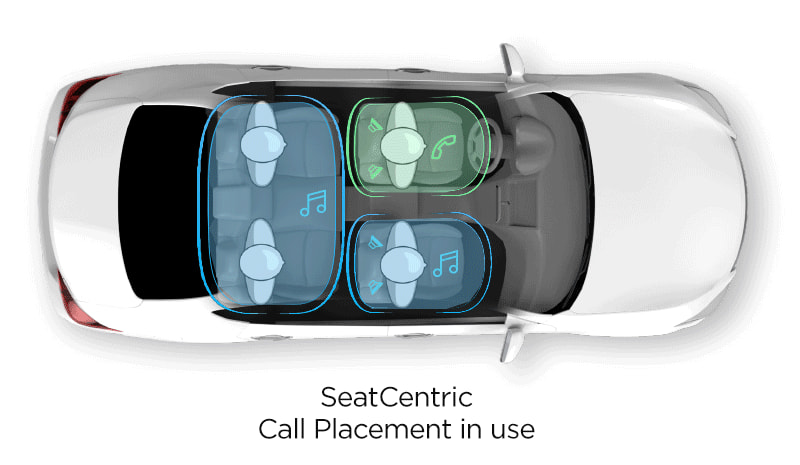
The company has been developing SeatCentric technologies that can create different listening experiences for individual passengers, position navigation and safety alerts spatially, isolate telephone calls, manipulate perceived sound locations, and actively reduce unwanted audio in specific areas of a vehicle.
Its CES demonstrations have included Dolby Atmos, Perceptual Sound Rendering, individualized listening zones, UltraNearfield speakers, and 3D audio without conventional overhead speaker arrays. Bose has also integrated its audio processing directly into Qualcomm’s Snapdragon Digital Chassis, allowing automakers to run Bose tuning on the vehicle’s central computing platform rather than requiring a dedicated Bose DSP.
That last development deserves more attention.
The automobile is rapidly becoming a software-defined environment. Music, navigation, phone calls, safety alerts, voice assistants, entertainment, engine-sound synthesis, active noise cancellation, gaming, and potentially augmented reality increasingly share the same computing infrastructure.
FMOD specializes in audio that reacts to events in real time.
You can probably see why Bose might find that interesting.
There is no announced Bose-FMOD automotive product, and connecting those dots should not be confused with reporting one. But Bose already talks about interactive cabin experiences where sound changes according to passenger location, vehicle information, and surrounding conditions. FMOD comes from a world where responsive audio is the entire point.
The overlap is difficult to ignore.
QuietComfort Is Still Extremely Important
All of this could make it sound as though Bose has lost interest in selling headphones.
It has not.
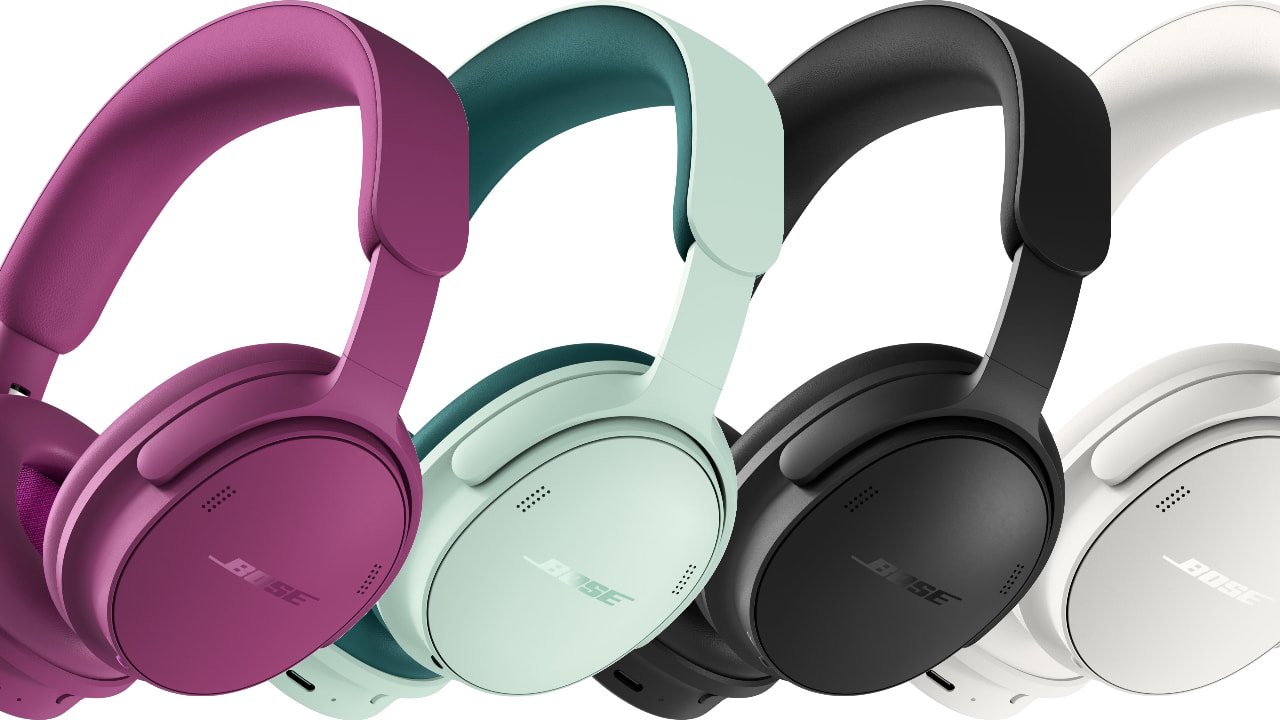
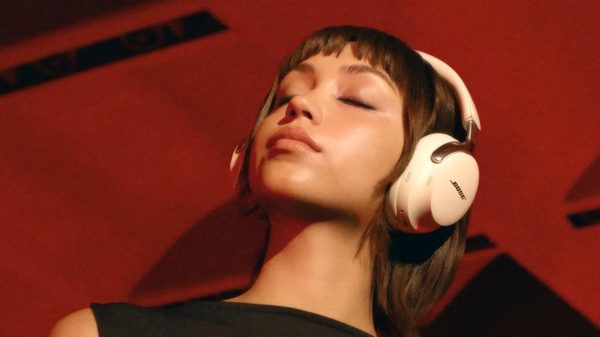
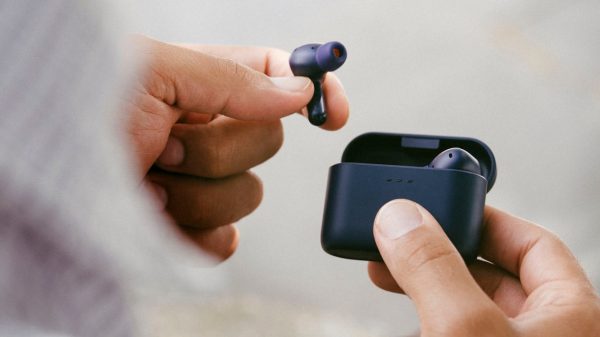
The QuietComfort franchise remains one of Bose’s most powerful consumer businesses, and the company continues investing in adaptive ANC, immersive audio, personalization, voice pickup, and spatial processing. Its QuietComfort Ultra Earbuds (2nd Gen), for example, retained the company’s CustomTune system while adding improved adaptive noise cancellation, voice pickup, and wireless charging.
Bose’s expertise in noise cancellation may actually be more strategically valuable today than when the technology was primarily used to make an airplane cabin tolerable.
Noise control, individualized audio, spatial rendering, and perceptual processing increasingly apply across headphones, vehicles, AR/VR environments, gaming, and smart spaces. A company capable of moving those technologies between categories does not need to win every market with the same physical product.
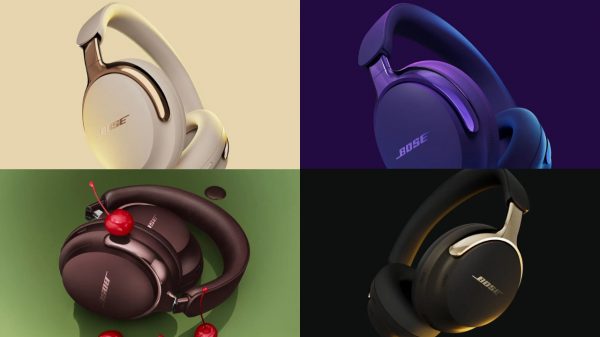
The QuietComfort headphones are the consumer-facing part most people know.
The intellectual property underneath them is where things get interesting.
And Then There Is Home Theater
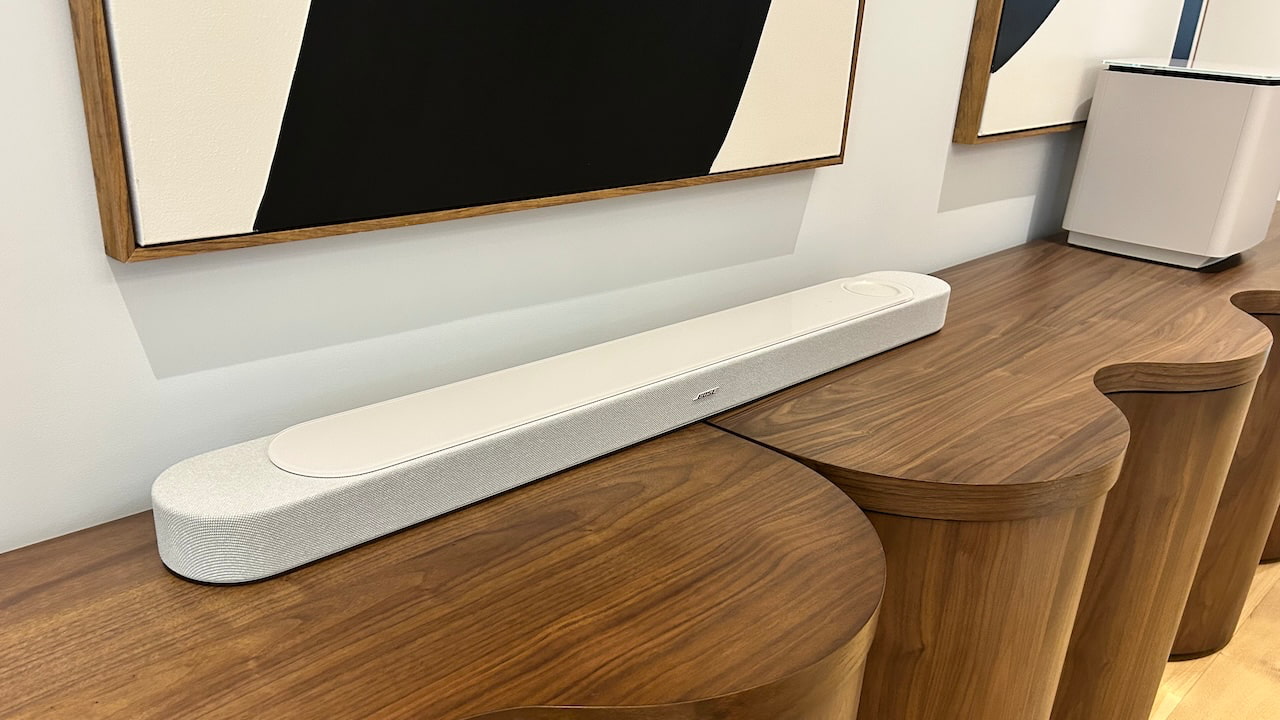
Bose also remains a major participant in soundbars and home entertainment, another category increasingly defined by software rather than the number of drivers somebody managed to cram into an enclosure.
Dolby Atmos, virtualized height information, room adaptation, dialogue enhancement, psychoacoustic processing, and sound-field manipulation all require expertise in making listeners perceive sound in places where a physical loudspeaker may not exist.
Gaming and VR present variations of the same fundamental problem. So does automotive.
That does not mean Bose will merge its soundbar, automotive, and FMOD engineering teams into some giant spatial-audio Voltron next Tuesday. It means the company has accumulated expertise in several businesses where software determines what the listener perceives as much as the transducer does.
The walls between those businesses are getting thinner.
Bose Is Building More Than Products
The more interesting conclusion is that Bose increasingly operates across multiple layers of the audio business rather than simply manufacturing products. Its recent acquisitions give it deeper involvement in connected audio, interactive sound, luxury hi-fi, and automotive, but the company has also started moving upstream into music itself.
In 2026, Bose launched Bose Studios and Bose Records, with plans to work with emerging and underrecognized artists while developing original music, video, podcasts, live events, and other content. Bose has said it does not intend to own artists’ masters or take a share of their streaming and record sales, making the initiative less of a conventional record-label play than another way for the company to participate in the music ecosystem.
Automotive extends that reach further. Bose already works directly with major vehicle manufacturers, while its integration with Qualcomm’s Snapdragon Digital Chassis allows Bose audio processing to run directly on the vehicle’s Snapdragon Cockpit Platform rather than requiring a dedicated Bose DSP inside an amplifier.
Taken together, Bose now has potential involvement in how audio is created, distributed, processed, personalized, and ultimately reproduced — even when Bose did not manufacture the headphones or loudspeakers through which someone hears it.
That is a very different business from selling Wave Radios.
Perhaps Audiophiles Need to Update Their Opinion of Bose
Bose has spent decades occupying an awkward place in audiophile culture.
Its products became enormously popular, which in certain corners of high-end audio is apparently grounds for suspicion. The company’s willingness to use DSP, psychoacoustics, compact enclosures, and unconventional engineering also did not always endear it to a community that can become emotionally attached to technologies whose greatest innovation occurred before the first moon landing.
You do not have to love every Bose product to recognize how outdated that dismissal has become.
This is a company that owns McIntosh and Sonus faber, controls one of gaming’s important interactive-audio platforms, owns a major connected-audio engineering operation, remains deeply embedded in automotive, and continues to compete near the top of the global ANC headphone market.
Other audio companies may have stronger credibility in individual categories.
Very few now cover this many categories at once. And fewer still possess technologies capable of moving between them.
What Could Bose Be Planning?

The temptation is to imagine one enormous Bose ecosystem connecting McIntosh amplifiers, Sonus faber loudspeakers, QuietComfort headphones, FMOD gaming audio, automotive systems, and StreamUnlimited software.
There is currently no evidence Bose intends to build that, and it may not need to.
The more plausible strategy is also potentially more powerful: own important audio technologies across multiple markets and allow them to reinforce one another without forcing everything into a single consumer platform. FMOD can continue serving game developers. StreamUnlimited can continue working with outside manufacturers. McIntosh can remain McIntosh, while Sonus faber can keep building loudspeakers in Italy that look considerably nicer than most people’s furniture.
What Bose gains is optionality. Interactive audio developed for games could influence immersive automotive experiences. Automotive personalization could inform future headphones or AR products. Streaming infrastructure can support connected products across multiple brands, while Bose’s DSP, ANC, and psychoacoustic expertise can migrate almost anywhere that microphones and speakers coexist.
Not every piece needs to connect directly for the collection to become valuable. Bose increasingly has a position in how sound is created, processed, distributed, personalized, and reproduced across the home, the car, headphones, games, and other interactive environments. That is a considerably larger ambition than selling more speakers with a Bose logo on the front.
The Firelight acquisition pushes Bose even further beyond the traditional definition of an audio manufacturer. The company appears to be positioning itself for a future in which the most influential audio businesses will not merely build excellent speakers or headphones; they will control important pieces of the software, signal processing, connectivity, content, personalization, and hardware required to deliver sound wherever people happen to be listening.
Audiophiles are free to keep making jokes about the 901.
Godzilla does not generally stop walking because the villagers are laughing.
Related Reading:
- Bose QuietComfort Ultra Headphones 2nd Gen Review: Still The Best For Noise Cancelling?
- Viaim Rise AI Agent Earbuds Use Bose Audio Tuning And Turn Meetings Into Notes And Tasks
- Bose Buys StreamUnlimited To Build A Bigger Connected Audio Platform
- Bose Lifestyle Ultra Soundbar Review: Dolby Atmos, AirPlay, And Google Cast Aim Straight At Sonos










ORT
October 8, 2026 at 2:42 pm
I like Bose. I always have and likely always will. I have a 40 year old pair of 901s with the equalizer. If Bose would make a new pair that paid stylistic homage to the originals and put a built-in digital EQ in each speaker and sold them for an affordable price of say, $2,000 a pair? I think people, real normal peoole, would buy and enjoy them. People. Not frAudiophiles who strain at a bit and swallow a PRaT.
I recall when Bose fell from frAudian grace and those idiots began to chant their new mantra: “No highs. No lows. It must be Bose”. Maroons. No, make that ASStriches. That’s human equivalent of an Ostrich except Asstriches don’t stick their head in the ground, they shove it up their own butt.
The EQ would have to be contained within the speakers as there are too few (if any) receivers with a “Tape Loop” these days. I like stereo and I like Bose enough buy those 901s when I was, if not dirt poor, then perhaps linoleum rich?
ORT
Ian White
October 8, 2026 at 3:23 pm
ORT,
The more I learn about Bose, the more I respect them as a company. They sell billions of dollars worth of product every year. Audiophiles can bitch all they want, but they own two of the most iconic high-end brands and have no plans to curb their growth or innovation. Their technology is appearing in more and more 3rd party headphones, car audio systems, and professional venues. These new moves will make them a tech player in gaming and VR. They are also some of the nicest people I’ve met in the industry.
IW