
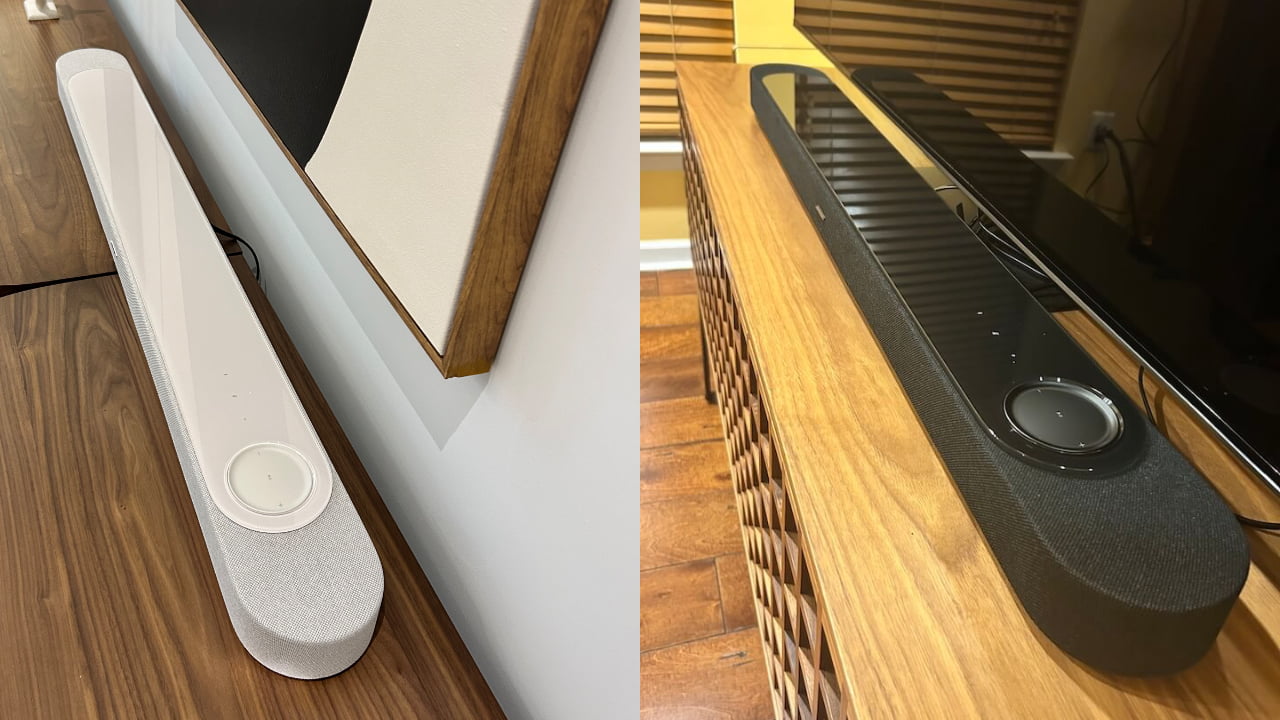
Bose knows the soundbar market better than most because it helped make the category matter. The new Bose Lifestyle Ultra Soundbar and Lifestyle Ultra Subwoofer have arrived with Dolby Atmos, Apple AirPlay, Google Cast, and a very specific mission of delivering better TV and movie sound without turning the living room into a wiring nightmare.
At $1,099 for the Lifestyle Ultra Soundbar and $899 for the wireless Lifestyle Ultra Subwoofer, Bose is not trying to win the spec sheet Olympics. There is no attempt here to bury consumers under every possible format, socket, mode, or app feature. The focus is narrower, and frankly smarter: sound quality, easy setup, daily usability, a clean aesthetic, and enough Dolby Atmos performance to make people rethink whether they really need an AVR and five boxes to enjoy movie night.
That matters because the soundbar fight has become nasty. LG, Samsung, Sony, Klipsch, and Sonos all want the same space under your TV, and most of them are pitching some version of “cinema sound” from a long plastic enclosure. Bose is taking a different swing with the Lifestyle Ultra system. It is betting that people still care about sound quality, but not enough to spend a weekend fishing speaker wire through walls like they’re tunneling out of Shawshank.
A traditional 5.1 or Dolby Atmos AVR based system can still outperform a soundbar and subwoofer combo when properly installed. Physics remains undefeated. But most consumers are not building dedicated theaters — That is where the Bose Lifestyle Ultra Soundbar and Subwoofer are aimed.
Dolby Atmos, Dialogue, and Bass That Doesn’t Fall Apart
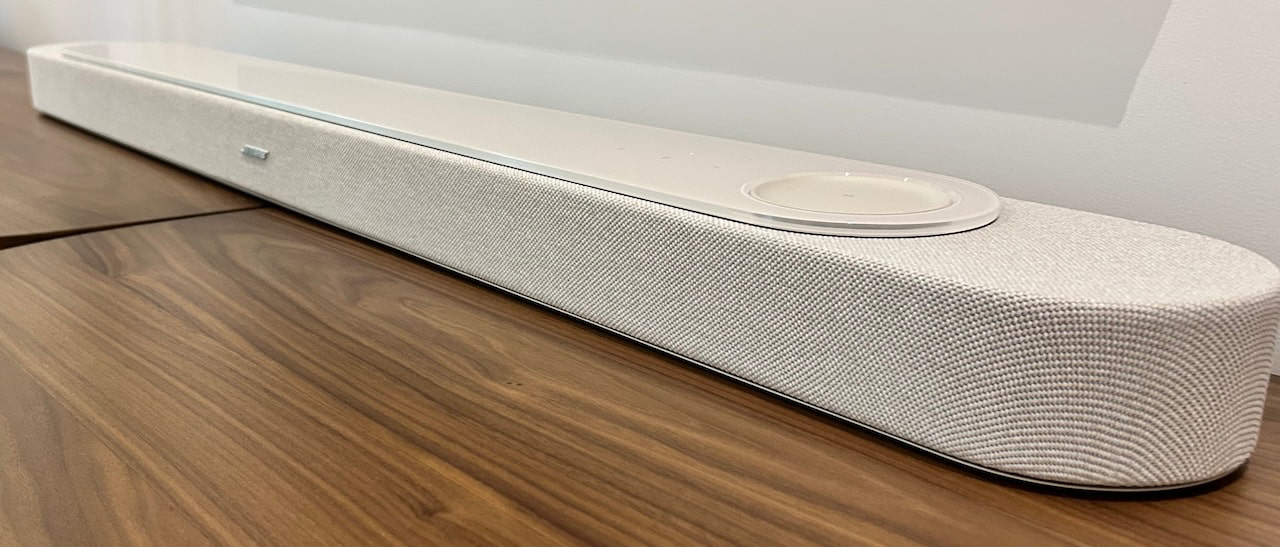
The Bose Lifestyle Ultra Soundbar is the anchor of the company’s new home theater system, and Bose says it represents its first major soundbar redesign in more than a decade. That matters because this is not just a new shell around old hardware.
Inside the 43.54 inch wide enclosure is a nine driver array that includes six full range drivers, with two up firing drivers, four front facing drivers, a dedicated center tweeter, and two proprietary PhaseGuide drivers. At 2.64 inches tall, 4.96 inches deep, and 14.8 pounds, it is clearly designed for larger TVs; Bose is thinking 55 inches and up here.
For testing, I used it with a 55-inch Samsung TV in my den and a 75-inch MiniLED display in my living room, and the Lifestyle Ultra worked just fine in both spaces without looking undersized or ridiculous. Always a plus when the gear doesn’t look like it wandered in from another room.
The goal is straightforward: deliver Dolby Atmos playback, better spatial width, clearer dialogue, and a more convincing sense of height from a single enclosure before asking buyers to add a subwoofer, rear speakers, or anything else to the room. Although Bose wants you to add both from their new lineup as well.
The supporting technology is aimed at the usual soundbar weaknesses. PhaseGuide is designed to steer sound horizontally so effects can appear to come from areas where there are no physical speakers. TrueSpatial processing is used to make non Atmos content sound more immersive, which matters because not everything on Netflix, Disney+, Prime Video, or cable is mixed in Dolby Atmos.
DTS and its variants are not supported, so anyone with a disc-heavy library that leans on DTS:X or DTS-HD Master Audio needs to know that before getting emotionally attached.
Dialogue also gets specific attention. SpeechClarity uses adjustable AI driven speech enhancement to make voices easier to follow without boosting the entire mix like a volume button with trust issues. CustomTune room calibration uses an iOS or Android device as the microphone reference point to analyze the room, seating position, surfaces, and layout.
Bass is handled by CleanBass, which works with Bose’s QuietPort acoustic opening and DSP to reduce low frequency distortion. That is important because compact soundbars are often asked to deliver more bass than their cabinets can honestly support. Bose is clearly trying to keep the Lifestyle Ultra Soundbar controlled before the optional Lifestyle Ultra Subwoofer enters the picture.
Adding the Subwoofer
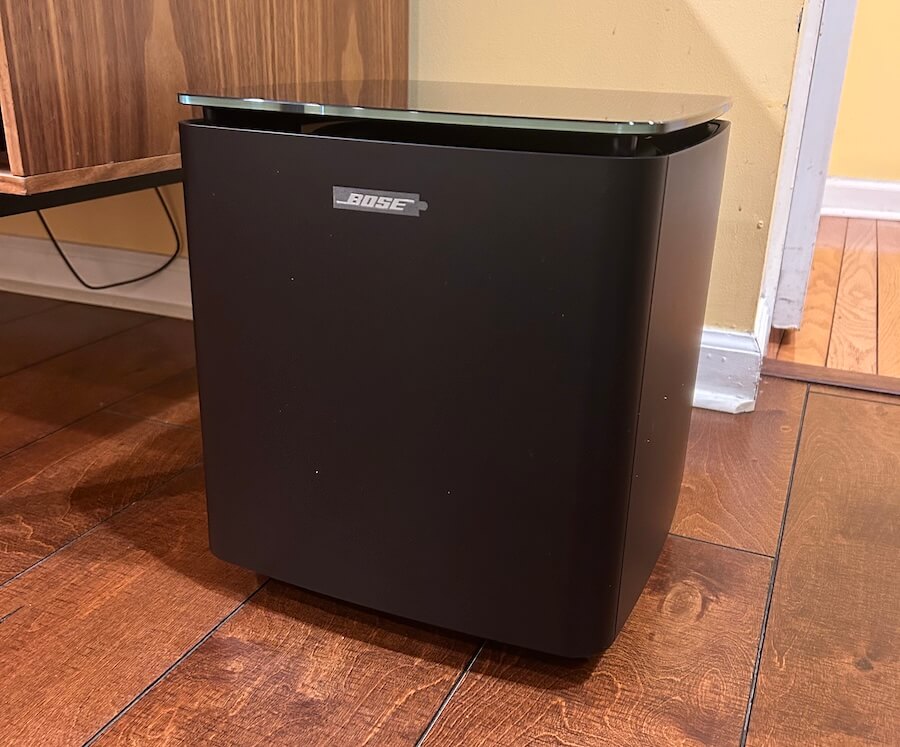
The Lifestyle Ultra Subwoofer is the obvious next step if the system is going under the main TV. It measures 11.63 inches wide, 12.88 inches tall, and 11.63 inches deep, weighs 33.7 pounds, and connects wirelessly through the Bose app with a stated range of 30 feet. Bose also lists a 3.5 mm wired connection as an option, which is useful for anyone who prefers a hardwired backup.
Its role is simple: handle the more demanding low frequency effects, add weight to movies and music, and let the soundbar focus on dialogue, spatial cues, mids, and highs. In 5.1.2 or 7.1.4 configurations, the subwoofer also works with CustomTune room calibration, which matters because bass and rooms have been arguing since the first person shoved a speaker into a corner and called it “placement.”
The configuration path is where Bose keeps things flexible. The Lifestyle Ultra Soundbar can be used on its own as a 5.0.2 system. Add the Lifestyle Ultra Subwoofer and it becomes 5.1.2, which is where most buyers are likely to start if this is replacing a basic soundbar or TV speakers in the main room.
Adding two Lifestyle Ultra Speakers as wireless surrounds expands the system to 7.0.4 without the subwoofer, or 7.1.4 with the subwoofer included. That is the more complete setup, but it also adds another $600 to the bill, so it will likely be a second step for many buyers rather than the automatic first move.
That is the practical appeal here. Buyers can start with the soundbar, add the subwoofer for more impact, and decide later whether rear channels are worth the extra cost. Bose also offers custom designed stands for the Lifestyle Ultra Wireless Speakers with cable management, but did not supply the custom stands for this review, so I used a pair of 28-inch Wharfedale metal stands to position the Lifestyle Ultra Speakers for rear surround and height channel duties.
The setup worked, although the dedicated Bose stands would likely offer a cleaner look and better cable management.
HDMI eARC, Wireless Streaming, and the Missing Second Subwoofer
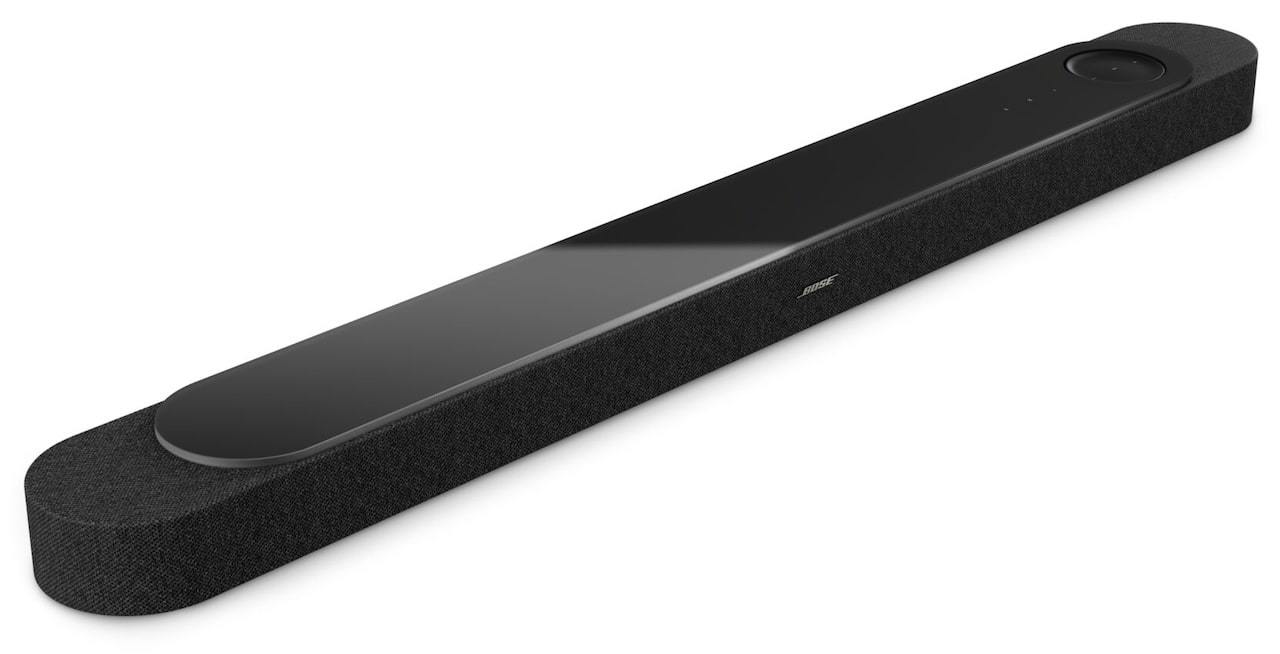
A few practical details matter here. The Bose Lifestyle Ultra Soundbar supports HDMI ARC and eARC, Wi-Fi, Bluetooth 5.3, Google Cast, Apple AirPlay, Spotify Connect, Alexa, and Alexa Plus in the U.S. Bose includes an eARC compatible HDMI cable in the box, along with tactile controls and a hidden LED for status feedback. Optional accessories include a wall bracket and remote control.
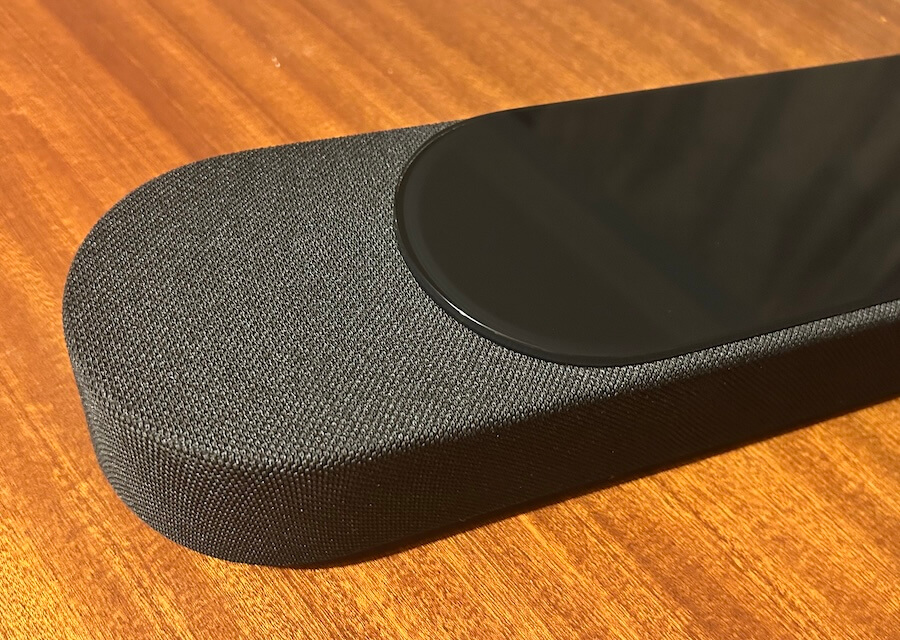
The soundbar and subwoofer are both available in Black and White Smoke, with the soundbar using a textured knit fabric grille and the same premium glass top design language found across the new Lifestyle Ultra lineup. It looks clean, modern, and intentionally understated.
Bose has clearly paid attention to build quality here, and it shows. The cabinet feels solid, the glass top adds a more premium finish, and the finger flick test came back with a sore index finger. Not exactly lab grade testing, but it told me enough.
The Lifestyle Ultra Soundbar feels like a premium product, not a hollow plastic tube trying to bluff its way through movie night. No glitter, no hallway meltdown, no Rue voiceover explaining the trauma behind the HDMI cable. Just a solid piece of hardware that looks and feels the part.
The bigger practical question is subwoofer support. At launch, Bose is not claiming dual subwoofer compatibility for the Lifestyle Ultra system. Previous Bose systems have supported dual bass modules, so the question is fair. In larger rooms, or rooms where bass response gets uneven, support for two subs would be useful. Not because everyone needs to rattle the windows, but because two properly placed subwoofers can deliver smoother, more consistent bass across the seating area.
At the Bose House event in New York, Bose did not say that dual subwoofer support is never coming. But it is also not available right now. So the accurate answer is simple: one Lifestyle Ultra Subwoofer today, no confirmed path to two tomorrow.
Setup Is Mostly Painless, It Brings on Many Changes
Sorry. Couldn’t resist. I’ve been watching M*A*S*H again, which remains a top five show ever. Toledo Mud Hens forever.
Out of the box, the Lifestyle Ultra Soundbar and Lifestyle Ultra Subwoofer were relatively easy to set up. Bose has wisely kept the process simple, with fewer steps, fewer cables, and less of the usual “why is this asking me to do that again?” routine.
Fine. Into the system one went.
The rest of the setup was mostly painless: connect the soundbar to the TV through HDMI eARC, plug in the subwoofer, open the Bose app, and let the system walk through pairing and calibration. There were a few app hiccups along the way, but nothing that derailed the process or required a visit from Radar O’Reilly with a clipboard.
One issue I ran into with the Lifestyle Ultra Wireless Speakers was the Bose app occasionally acting like it had picked up some Southie attitude about recognizing both speakers. It took four or five tries before everything finally behaved. I get paid to do this, so I kept going. Most consumers, however, are not especially thrilled when setup starts requiring online troubleshooting, emotional restraint, or a phone call to someone in New England who may or may not be prepared for yelling.
Bose did make one smart choice during setup: the app separates the process for a 2-channel configuration from a home theater system. That helps avoid some confusion, especially if you are adding the Lifestyle Ultra Speakers as surround and height channels rather than using them as a stereo pair.
For whatever reason, integrating the Lifestyle Ultra Soundbar, Lifestyle Ultra Subwoofer, and the rear surround and height channels took only two tries in my system.
Mazel tov. Progress is progress.
That matters because setup problems at 11 p.m. tend to expose the worst version of me. Tyrion just sits there, stares, and rolls over expecting a belly rub. I usually consider going outside with my goalie stick, pretending to be Toshiro Mifune in Yojimbo, and swinging at imaginary enemies in the dark. Another Ian may have used a cricket bat. I went Canadian.
My Indian neighbors generally lower the shades at that point, which feels fair.
The actual takeaway is simple: setup was easier than most competing systems I have tried, but the Bose app still had a few moments where it needed to get out of its own way.Once the speakers were recognized and assigned correctly, the system locked in and calibration moved along fairly quickly.
Anyone expecting Dirac level room correction should keep walking. This is Bose keeping setup simple and practical, not handing you a lab coat, a calibrated microphone, and three hours of self-loathing.
Listening
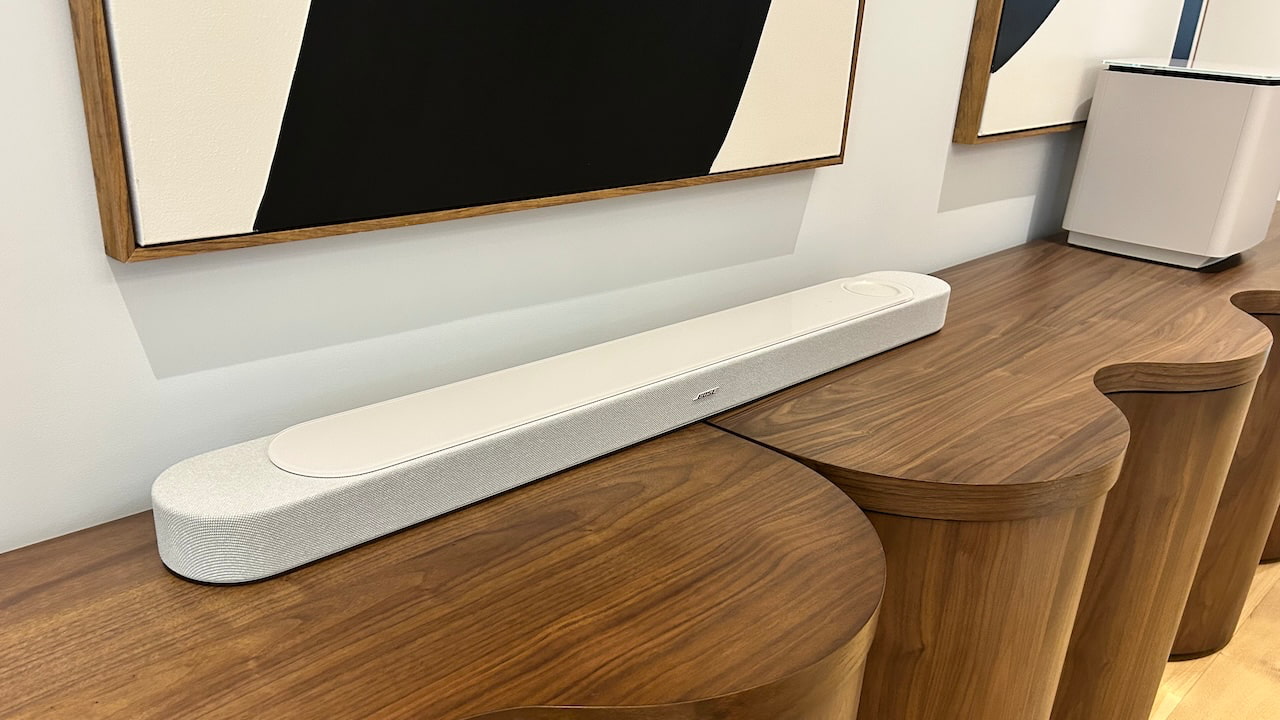
Bose handled the NYC demo the right way: full 7.1.4 first, then fewer pieces. We heard the complete system, then the rear channels were removed, and the Lifestyle Ultra Subwoofer was switched in and out. That made it easier to judge what the Lifestyle Ultra Soundbar could do by itself, what the subwoofer actually contributed, and how much the Lifestyle Ultra Speakers changed the surround and height presentation.
That kind of demo matters because soundbars can be hard to evaluate when everything is playing at once. The bar, subwoofer, and surrounds all contribute, but not equally. Bose gave us a cleaner read on the system instead of hiding behind the full package and hoping nobody asked questions. Always suspicious when nobody asks questions.
The room was also part of the story. Bose used an upper floor den inside its Upper West Side press location, not a massive showroom or some hotel demo room where bass goes to die. I don’t know the exact dimensions, but it felt close to my 16 x 13 foot den at home, probably a little deeper, with ceilings that looked to be at least 10 feet high. Brick walls covered in plaster helped, and the room was quiet enough that Broadway traffic in the mid-70s never intruded. For Manhattan, that’s basically a miracle with alternate side parking.
But press demos in $5 million Upper West Side brownstones have to be taken for what they are: useful, controlled, and not exactly the same as your apartment, condo, ranch, or suburban house where the walls went on Ozempic and now transmit every sneeze from the next room.
That is why I tested the system in two very different real world spaces. One was my den with a 55-inch Samsung TV. The other was my living room with a 75-inch Mini LED display. Both rooms have openings into a larger central foyer, and each also opens into either the dining room or kitchen. In other words, these are not sealed listening rooms. They are normal spaces where sound has places to escape, bass has places to misbehave, and reflections do what reflections do.
That context matters for readers. The Bose demo showed what the Lifestyle Ultra system can do in a carefully selected room. My spaces were closer to what many buyers will actually use: imperfect, open, lived in, and not designed by an Gerrman acoustician who owns too many black turtlenecks.
The Sandworm Arrives, But Only If the Subwoofer Shows Up
I started with Dune and Dune: Part Two because both films are loaded with low frequency effects, wide spatial cues, sandworm chaos, ornithopters moving across the soundstage, and enough desert violence to expose a soundbar that is bluffing.
I was especially interested in three things: how the Bose Lifestyle Ultra Soundbar performed on its own, how much the Lifestyle Ultra Subwoofer added, and whether the system became more convincing with the Lifestyle Ultra Wireless Speakers handling the rear surround and height channels. That is the point of a modular system. The pieces need to matter, not just make the receipt longer.
I am not going to compare the Bose system directly with the Theory Audio Design soundbar system which is my personal benchmark, because that would be dumb. The Theory system costs roughly 15 times more, uses larger full range drivers and serious active subwoofers, and can pressurize my 30 x 13 x 9 foot basement space with very little effort.
That is not the same contest. It is like asking an Acura TLX Type S to chase a Porsche 911 GT3 RS around a track. Both are real cars. Only one of them arrived wearing a helmet and a bad attitude and a pocket filled with biltong.
Without the Lifestyle Ultra Subwoofer, the sandworm scenes in both Dune films still worked, but only up to a point. You get the rumble. You get the scale. You get enough low end information to understand what the film is trying to do. What you do not get is the visceral punch, the dynamic shove, or that pressure wave in your gut and chair when Arrakis decides to remind everyone who actually owns the lease.
Adding the subwoofer is a clear step in the right direction. It gives the system more weight, better impact, and a much stronger foundation during the worm attacks and spice harvester sequences. It is not SVS level bass, and anyone expecting that from a lifestyle wireless subwoofer needs a glass of water and a chair. But the Bose subwoofer makes the system feel more complete and much more credible with films that lean hard on LFE.
Dialogue was very clear, and that was before I engaged SpeechClarity, which I will get into more below. That matters with Dune, because whispered prophecy, political scheming, and sand blasted exposition can become mush on lesser systems. The Bose kept voices clean and centered without making everything sound artificially sharpened.
The stereo spread was also good, and the overall sense of spaciousness was better in my room than it was during the NYC setup. That surprised me a little, but rooms matter. My listening spaces are more open and reflective in different ways, and the Bose system did a good job creating width without making effects sound detached from the screen.
The surround performance was solid with the bar alone, but it became a lot more effective once I added the Lifestyle Ultra Wireless Speakers behind the listening position. That is where the system started to feel less like a very good soundbar and more like an actual home theater package.
The overhead movement of the ornithopters was also one of the better parts of the demo material. The aircraft movement was precise, easy to follow, and more convincing with the rear speakers engaged. The films use ornithopters heavily, including the spice harvester and attack sequences, so they are a useful Atmos test when you want to hear whether height effects are actually moving through the room or just being sprayed upward like acoustic Febreze.
Dragons, Dialogue, and Why TV Still Needs Real Audio
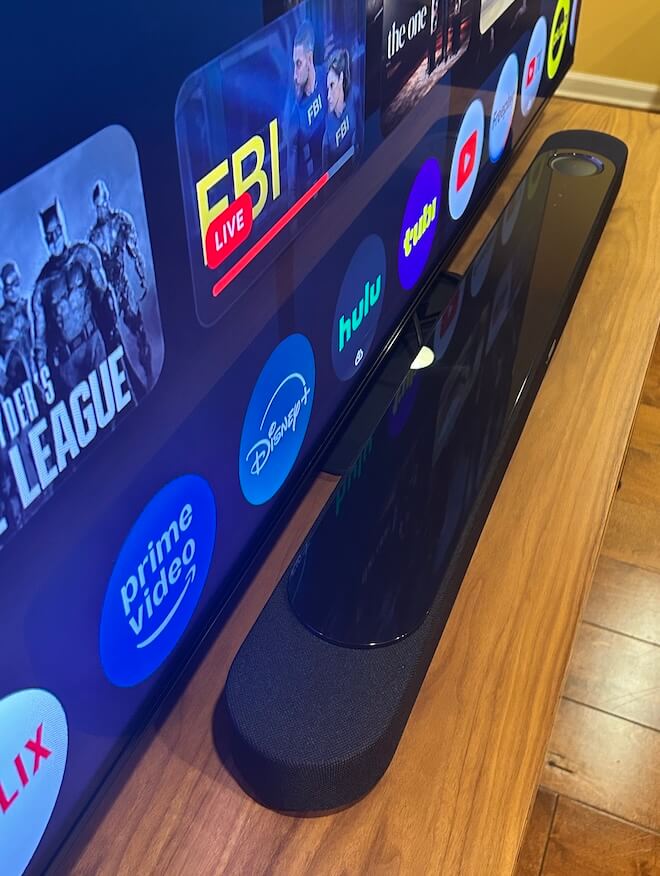
Switching to TV viewing matters because this is where a lot of families will actually use the Bose Lifestyle Ultra Soundbar and Lifestyle Ultra Subwoofer the most. Movie night is great, but prestige TV, sports, streaming series, and the nightly “what are we watching?” debate are the real workload.
I spent time with the 4K Dolby Atmos encoded seasons of Game of Thrones, which remain a very useful test for a system like this. The show needs scale. It needs clean dialogue. It needs weight when dragons arrive, armies move, castles fall, and Ramin Djawadi’s score starts doing emotional damage with a full orchestral weapon pointed at your living room.
I remain one of those people who hated the final three episodes, but I was pretty much obsessed with the rest of the series. I could watch Arya, Tyrion, and Cersei on repeat for days. Especially Cersei, whose venomous smile could make a man mad before breakfast. And Peter Dinklage? I could listen to that man deliver dialogue forever. The writing gave him a blade, and he knew exactly where to put it. Jersey boy for the win.
That is where the Bose system did well. Dialogue stayed clear and centered, even before leaning on SpeechClarity, and the soundbar did a good job keeping voices intelligible without making the presentation feel thin or artificially boosted. That matters with Game of Thrones, because half the show is people whispering threats in rooms full of stone, wine, bad lighting, and worse family decisions about incest and who has to live beyond the wall.
The subwoofer also helped give the series the foundation it needs. Game of Thrones is not just dialogue and political rot; it has dragons, siege engines, battles, ships, and low frequency moments that lose impact through TV speakers or weaker soundbars. With the Lifestyle Ultra Subwoofer engaged, the presentation had more body and scale. Not dedicated theater levels of impact, but enough weight to make the world feel larger and more convincing.
SpeechClarity is one of the more useful features here because it pushes dialogue forward without dragging the rest of the mix along for the ride. Explosions do not suddenly get louder with the voices, but they also do not vanish like someone hit the “make this boring” button.
And yes, some of us are getting older. Some of us watch the Stanley Cup Playoffs past 11 p.m. Some of us have spouses and children upstairs who are armed. Being able to keep the focus on the play-by-play crew in the booth without turning crowd noise into a fight is a genuinely valuable feature.
It worked well. No text messages from upstairs. That counts as a win.
Bigger, Wider, Better With Electronic Music
Switching over to music, a few things stood out. The Bose Lifestyle Ultra Soundbar does a very solid job with music, especially when paired with the Lifestyle Ultra Subwoofer, but I still found myself more drawn to the two Lifestyle Ultra Wireless Speakers on their own for dedicated music listening.
Does that make me weird? Possibly. But we passed that exit in Palm Beach County 12 months ago.
The soundbar and subwoofer combination works best with music that benefits from a larger sense of space and more low end energy. The Orb, Aphex Twin, and some Sia tracks were the strongest fits because the Bose system could lean into scale, width, and bass foundation without pretending to be a pair of properly positioned stereo loudspeakers.
The presentation was bigger than the wireless speakers on their own, and the subwoofer gave electronic music more drive and physical presence. Soundstage width was good, the sense of scale was better, and the system delivered more sonic weight than the Lifestyle Ultra Speakers can manage alone.
Jazz and singer songwriter material were a different story. Lee Morgan and Jason Isbell sounded clean, clear, and easy to follow, but I was less emotionally pulled in. That is not a failure of the Bose system as much as it is the reality of music through a soundbar. I have never truly loved listening to music through one, and apparently this is the hill I have chosen to stand on with a coffee in one hand and a mildly judgmental expression on my face.
The Bottom Line
The Bose Lifestyle Ultra Soundbar and Lifestyle Ultra Subwoofer work because Bose kept the mission focused: better TV and movie sound, clean industrial design, easier setup than most, useful wireless streaming, and credible Dolby Atmos performance without dragging an AVR, speaker wire, and a therapy co-pay into the living room. Dialogue clarity is excellent, even before SpeechClarity gets involved, and the subwoofer adds the weight the soundbar needs for films, and anything with real LFE content.
What is missing? DTS support, dual subwoofer support, and deeper room correction for users expecting Dirac level calibration. The app still has a few moments where it needs to stop arguing with itself, and music playback through the soundbar is good but not as satisfying as using the Lifestyle Ultra Wireless Speakers on their own.
This system is for buyers who want a clean, premium Dolby Atmos package with strong dialogue, useful streaming, solid spatial effects, and enough bass to make movies feel bigger without building a full component system. It is not for hardcore theater purists or anyone expecting SVS level impact, but for families, apartment dwellers, condo owners, and anyone allergic to cable chaos, the Bose Lifestyle Ultra system makes a strong case.
Pros:
- Clean, premium design that works well under larger TVs
- Strong dialogue clarity, with SpeechClarity adding real value
- Dolby Atmos performance delivers good width, height, and spatial effects
- Lifestyle Ultra Subwoofer adds needed weight and scale for movies and TV
- Easier setup than most competing systems, with useful AirPlay, Google Cast, Spotify Connect, and Bluetooth support
Cons:
- No DTS or DTS variant support
- No dual subwoofer support at launch
- App setup can still have a few hiccups
- Room calibration is simple, not Dirac level correction
- Music playback is good, but bettered by the stand-alone Lifestyle Ultra wireless speakers
Where to buy:
Related Reading:
- Klipsch Flexus Core 300 Soundbar System Review: DIRAC For The Masses
- Samsung 2026 Q-Series Soundbars: Wireless Dolby Atmos, Q-Symphony And SpaceFit For TV And Movies
- Sony’s Best Soundbars Just Got A Bass Boost (And Two Little Brothers)
- Bose Lifestyle Ultra Soundbar And Wireless Subwoofer Bring Dolby Atmos, Apple AirPlay, And Google Cast To Home Theater
























Former Blockbuster Executive
May 15, 2026 at 4:24 pm
Could care less about DTS.
The price seems rather high considering you to add the surround/height speakers.
I did notice in some images that the HDMI ports are angled? Huh?
Ian White
May 16, 2026 at 2:47 pm
So some of us own a lot of movies with encoded DTS tracks so that does matter.
The pictures don’t really convey just how solid these products are. Not a plastic part. The soundbar feels like a high-end speaker. Both in terms of the build quality and fit/finish. Bose did a great job.
Yes — the HDMI ports are angled. That should never have been a design choice.
IW
Chris Boylan
May 17, 2026 at 3:54 pm
Good write-up. Lack of DTS support would be a show-stopper for me. It’s not hard. It just costs a bit of money for the license. If Sony, Klipsch, Samsung and even TCL can do it, why not Bose?
Robertwrari
May 18, 2026 at 9:29 am
Salut, ech wollt Äre Präis wëssen.
Ian White
May 18, 2026 at 4:08 pm
Das sind fast 1.900 US-Dollar.