
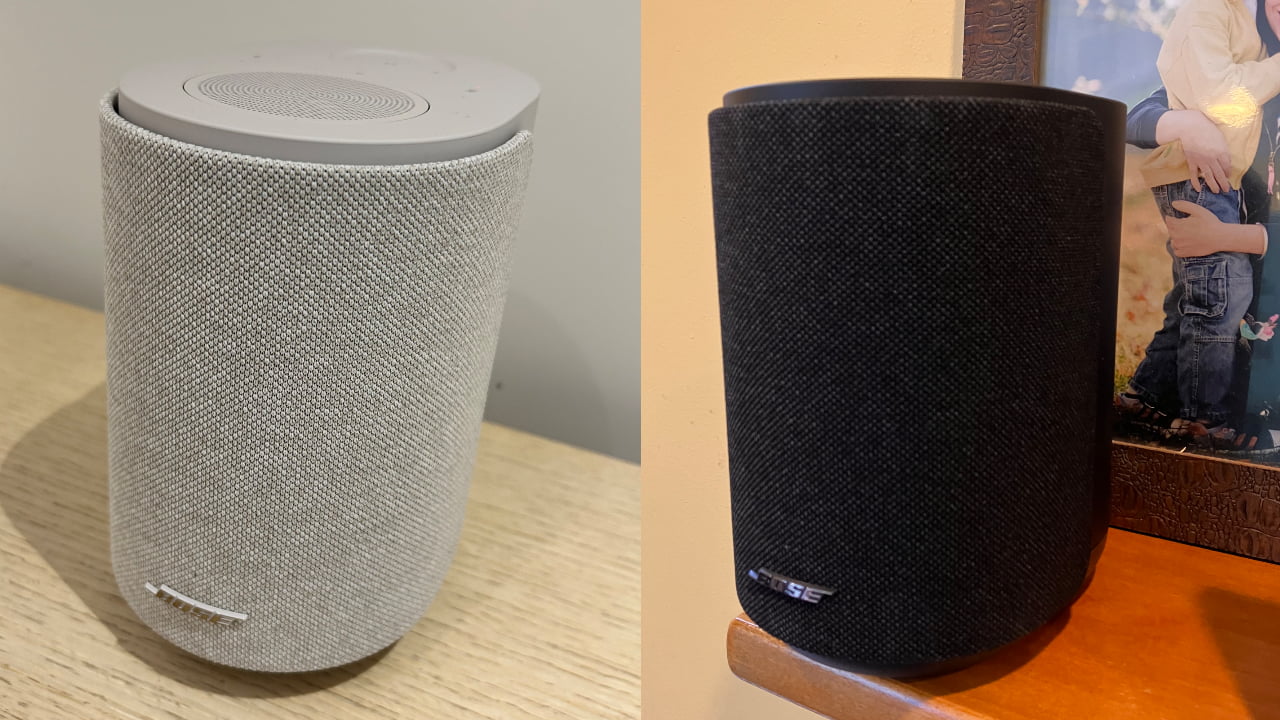
The Bose Lifestyle Ultra Wireless Speaker arrives at $299 with most of the connectivity options people actually care about: Apple AirPlay, Google Cast, Spotify Connect, Wi-Fi, Bluetooth 5.3, 3.5mm AUX, Alexa, and Alexa+ support. That matters because Bose is not just dropping another compact wireless speaker into an already crowded category and hoping the logo does the heavy lifting.
Ask Sonos how that worked out after a rather significant app disaster. Brand loyalty only gets you so far outside the Apple ecosystem, especially when the app becomes the thing customers are complaining about.
This is the entry point into the new Lifestyle Ultra system, but it can also stand on its own, work as a stereo pair, or serve as rear channels with the Lifestyle Ultra Soundbar and Subwoofer. Bose is clearly taking aim at Sonos, Bluesound, Denon, Samsung, and LG with a speaker that sounds bigger than it looks, and costs less than some obvious rivals.
Technology: Small Box, Big DSP, Very Bose
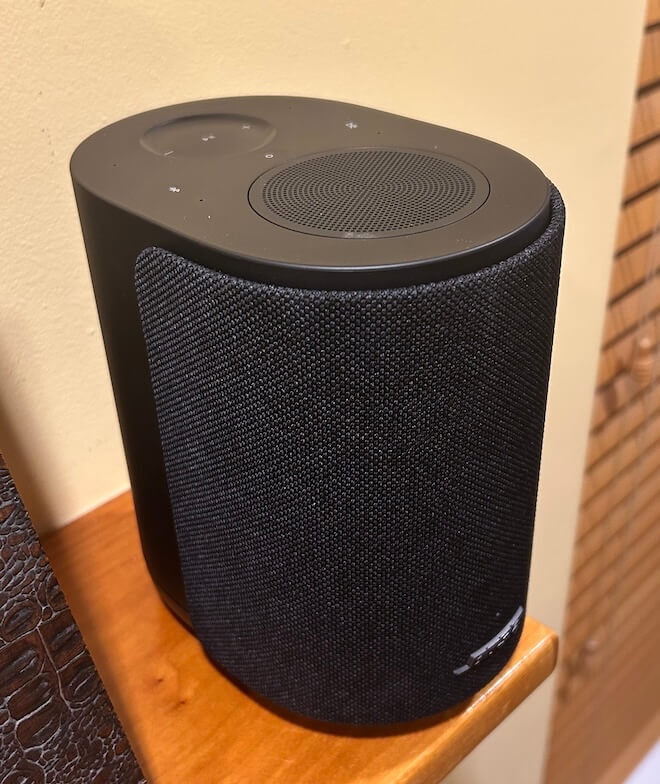
The Bose Lifestyle Ultra Wireless Speaker is built around a compact three driver array with two front facing drivers and one up-firing driver, which is where things get more interesting than the size of the cabinet suggests. Bose is using its TrueSpatial audio processing to analyze content and create a wider, taller presentation from a single speaker, rather than pretending a small wireless box can bend physics. Guess what? That’s not really a thing no matter how many times you click your heels together and pray for it.
That up-firing driver matters because the Lifestyle Ultra is not just pushing sound straight at you. It is using direct and reflected sound, plus DSP, to create a larger soundstage. Pair two of them in stereo and the effect becomes more convincing, especially in smaller rooms where placement and simplicity matter more to the typical Lifestyle Ultra buyer.
After listening to the speaker in four different rooms, that part tracks. The Bose does a very good job creating scale from a compact enclosure, but let’s not pretend that moving from the bedroom to the den magically turns the pair into Sonus faber Electa Amator III loudspeakers. Physics still gets a vote.
Bass is handled through Bose CleanBass technology, which combines the woofer, DSP, and a proprietary QuietPort acoustic opening to keep low frequency output under control. Bose is not claiming this replaces a real subwoofer, and neither should anyone with working ears. The goal is cleaner, fuller bass from a compact enclosure without the bloated thump that ruins too many wireless speakers in this category.
One decision I asked about at the NYC event still does not make sense to me: the Lifestyle Ultra Wireless Subwoofer is not compatible with a pair of Lifestyle Ultra Wireless Speakers on their own. It only works as part of the broader Lifestyle Ultra home theater setup.
That feels like a missed opportunity. Two Lifestyle Ultra Wireless Speakers already sound confident from the upper bass range through the treble, and they do have useful midbass output. But letting users add the Lifestyle Ultra Wireless Subwoofer to fill in the lower range would make the system a much easier recommendation for music listeners who want more scale without moving into a full soundbar based system. The subwoofer is good. Let people use it. I really hope that Bose make this a reality.
Compact, Flexible, and Not Just a Sidekick
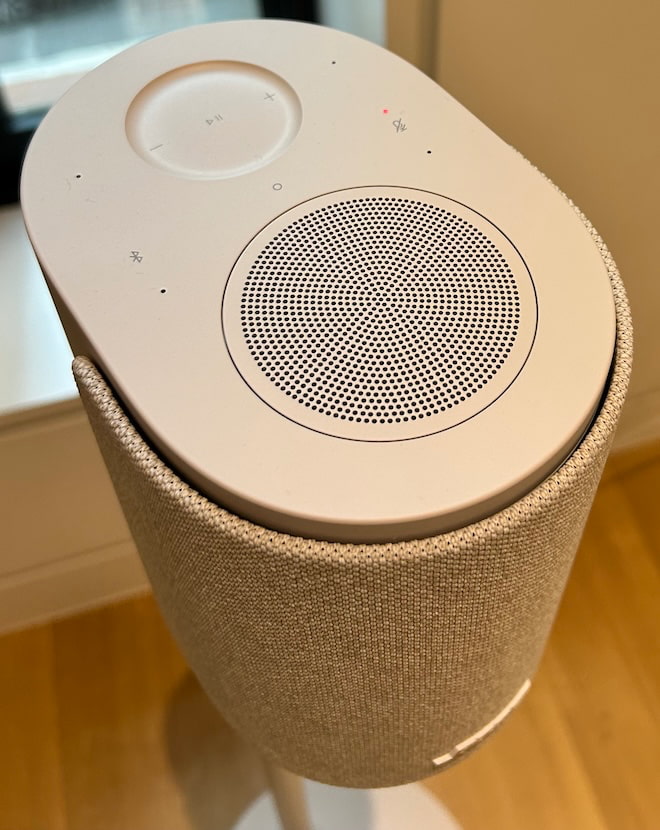
The Lifestyle Ultra Wireless Speaker measures 4.8 inches wide, 7.3 inches high, and 6.6 inches deep, which makes it small enough for a kitchen counter, bedroom, office, or shelf where a larger system would be overkill.
I also tried the pair on top of the mantle in the den, spaced about 60 inches apart, and discovered that the imaging was convincing enough to get a reaction from Tyrion the Westie. He stared directly between the two speakers like someone had just promised him Casterly Rock and then hidden the snacks.
To be fair, he was probably trying to figure out why Nick Cave and Sia were suddenly serenading him from the fireplace. That is not a formal listening test, unless the AES has added “confused Westie” to the measurement protocol, but it did suggest that the stereo image was more focused than I expected from two compact wireless speakers sitting on a mantle.
The Lifestyle Ultra series also supports multiple configurations: 1.0, 2.0, 7.0.4, and 7.1.4. That means a single speaker can work on its own, two can be used as a stereo pair, and a pair can also serve as rear surround speakers with the Lifestyle Ultra Soundbar and Lifestyle Ultra Wireless Bass Module. That flexibility is the real hook. This is not merely a wireless speaker trying to look useful in a press photo. It is the modular piece that helps tie the Lifestyle Ultra system together.
The Lifestyle Ultra Wireless Speaker comes in Black Smoke and White Smoke for $299, with a limited edition Driftwood Sand version at $349. The Black Smoke finish is fine, but a little too utilitarian for me. It looks like it was designed to disappear into a shelf, which is useful, but not exactly inspiring unless your interior design theme is “conference room after the consultants left.”
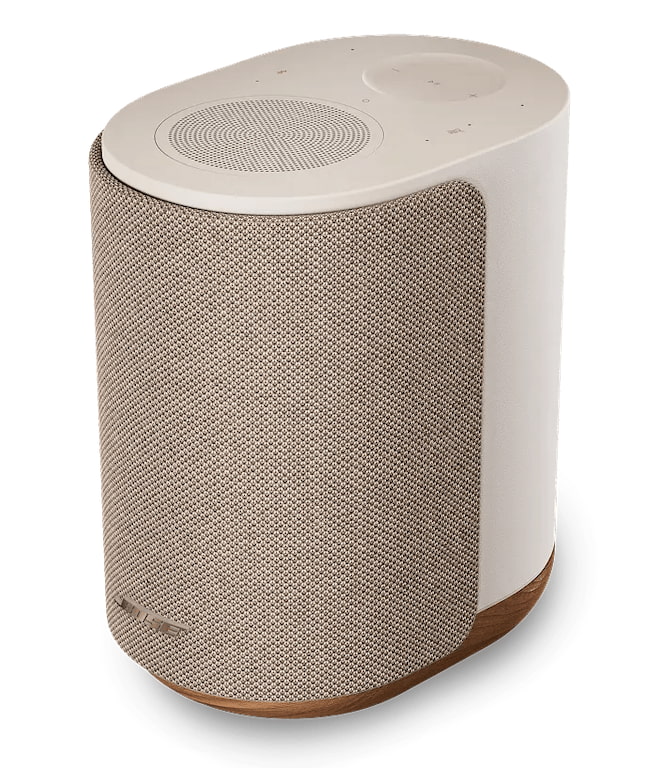
The Driftwood Sand version is the one I would buy 100 times out of 100. The soft beige finish and solid white oak base give it a warmer, more furniture friendly look that makes the speaker feel like it belongs in a real room rather than hiding from the homeowner’s association. It is the difference between a proper Rutt’s Hut ripper and a dirty water dog. Both are technically food. Only one should wind up in your West Elm or CB2-inspired home.
The tactile controls are also practical. Playback, track skipping, volume, microphone mute, Bluetooth, and Alexa prompts can all be handled directly on the speaker.
Download the Right Bose App or Enjoy the Wrong Kind of Adventure
Bose has more than one app, so do yourself a favor and use the setup sheet in the box. Tap the setup link or QR code and it will send you to the correct app. Guessing in the App Store is how normal people lose 20 minutes of their lives and start blaming Bluetooth for crimes it did not commit.
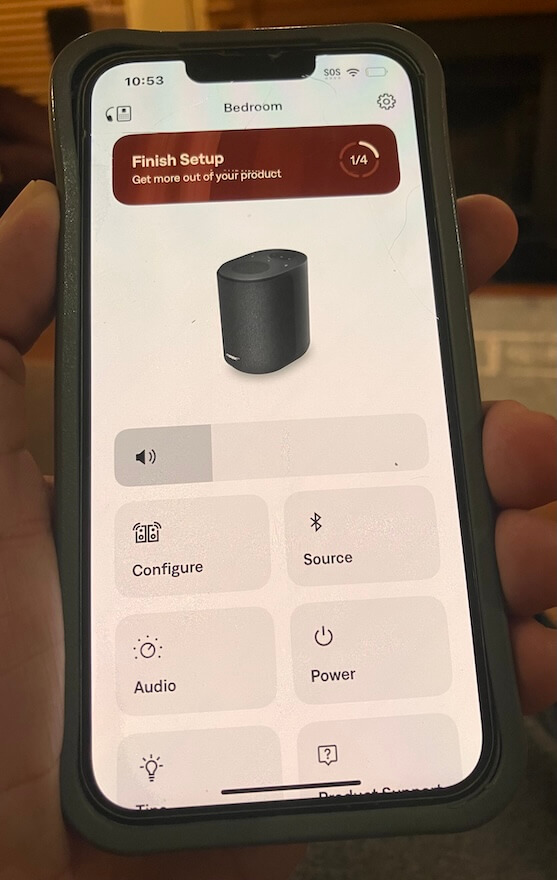
The app also requires iOS 18 or later, which is worth noting if you are setting this up for parents or anyone still nursing an older iPhone like it contains state secrets. Some of us are already somewhere in iOS 26.xxx, but not every household lives on the bleeding edge of software updates and battery anxiety.
Once installed, the Bose app loaded quickly and immediately pushed a mandatory firmware update. That part was painless, and it appeared to unlock additional control inside the app. Unless I was not drinking enough Brio Chinotto, the app now includes balance control, along with EQ adjustments for bass, midrange, and treble, plus a control for the height of the sound/image.
That is useful because the Lifestyle Ultra Wireless Speaker is not just a one button box with a logo and an attitude. The app handles setup, updates, EQ, pairing, stereo configuration, and system management. It is still not a full music browsing hub, and Bose is clearly leaning on AirPlay, Google Cast, Spotify Connect, Bluetooth, and AUX for actual playback. But for setup and fine tuning, the app is straightforward, fast, and less painful than expected. Which, in 2026, sadly counts as progress.
Bose is leaning on the streaming apps people already use, which is sensible, but the absence of TIDAL Connect and Qobuz Connect leaves a gap for listeners who live inside those ecosystems. Both platforms worked without any issues using AirPlay.
A Few Setup Caveats Before You Start Swearing at the App
Like most things involving modern tech, the Bose app worked relatively well, but not without a few small detours. The same was true recently with the latest version of BluOS that I used with the Bluesound PULSE FLEX, so this is not strictly a Bose problem. Welcome to the golden age of wireless audio, where the sound can be excellent and the setup occasionally reminds you that firmware has a borderline personality disorder. It’s something I can relate to.
Connecting a single Lifestyle Ultra Wireless Speaker to my Verizon FiOS fiber optic modem/router was painless. First try. It took roughly 15 seconds, and once connected, stability was excellent. Adding the second speaker took more patience. Each individual speaker required a few attempts, probably four or five, before both finally appeared in the configuration section of the app. Once they were both there, things moved along properly.
One thing to remember: hit the Save button. The app gives you configuration options, but you still need to lock them in. This sounds obvious until you are staring at the screen wondering why the system has ignored your choices like a teenager asked to walk the dog in a proper Boston blizzard.
If you need to reboot the speaker, Bose uses a button sequence on the top panel, which is actually very responsive and well designed. The sequence lands on an amber light, followed by a light pattern before the speaker is ready to sync again. It worked as intended, and I did not have to unplug everything or threaten the router with my Sherwood goalie signed by the late-Greg Millen.
The volume control is slightly granular, but not in a deal breaking way. It gives you enough adjustment to dial things in without launching the Lifestyle Ultra from quiet background music to ICE raid volume in two seconds.
Listening
Bose impressed the hell out of me at its Upper West Side event. The Lifestyle Ultra system sounded far better than I expected, and not in the usual “everyone nods politely while a PR person watches for facial movement” kind of way. It had scale, clarity, and a surprisingly confident presentation for a lifestyle system designed to live in normal rooms without turning them into a Best Buy annex.
But there is always a caveat with event demos.
What you hear at a well staged press event, where everything has been triple checked, carefully positioned, updated, paired, rebooted, blessed by legal, and probably stared at by six engineers, is not always what you hear at home. I’ve been to more than a few product events over the years where things did not go smoothly, and it is embarrassing as hell when the app refuses to cooperate, the network collapses, or the product decides to audition for witness protection in front of a room full of journalists.
That was not the case here. Bose had the system dialed in.
The townhouse acoustics also helped. Plaster over brick, proper rugs, real furniture, and not a lot of exposed glass or hard reflective surfaces creating chaos. In other words, the room gave the Lifestyle Ultra system a fighting chance. I wish my own home had that kind of isolation from the other rooms in the house. Instead, I get dogs, doorways, glass, kitchen noise, and the acoustic generosity of modern residential compromises. Very glamorous. Very “where did the center image go?”
So I always temper my expectations after a strong demo. It is the only realistic way to deal with being either underwhelmed or pleasantly surprised once the product lands in my own room. It is also how I deal with my South African biltong problem. Sometimes it is fantastic and I can eat it for hours. Sometimes I want to stop after the first bite, transition to droëwors, and hope for the best.
I miss her. I mean it.
Amy Winehouse, Nick Cave, and Sia seemed like the logical place to start. Subtle? Not really. Useful? Absolutely.
Winehouse remains the late Beehive Queen of some shady corner of London, armed with the soul of Aretha Franklin and the romantic judgment of someone who should have had better friends, a better lawyer, and someone in the room willing to unplug the bad decisions. What a waste.
“Valerie” from the BBC Sessions is one of those tracks I use because it has a slightly hard top end. Not broken. Not unlistenable. Just enough edge to expose whether a speaker is going to polish the wart or shine a flashlight on it like a suspicious dermatologist from Englewood Cliffs.
The Bose passed with flying colors.
I liked the weight and slightly reserved presentation here. The Lifestyle Ultra Wireless Speakers did not try to make Winehouse sound larger than life, which would have been the wrong move. Instead, they gave her voice a solid center image, believable scale, and actual height. Not “change your underwear” spooky like the $99,999 ATC EL50 Anniversary system I heard at AXPONA, but definitely not some vague vocal ghost floating around the room without a foundation.
She was pushed slightly in front of the speakers, but not into my lap. That worked.
Switching to the master of grit, snarl, and genuine power, the Bose made Nick Cave sound very present. Did it deliver the weight of larger loudspeakers? No. Let’s not start lying before lunch. But compared with the Bluesound PULSE FLEX, I actually found the Bose more convincing in that regard. Neither compact wireless speaker can deliver the proper mass and menace of Cave’s piano playing, but the Bose tried harder. That surprised me.
It also gave up none of the clarity or detail in the process. I can’t make a fair comparison of soundstage size between the Bose and Bluesound because Bluesound only sent me one PULSE FLEX, and stereo imaging generally requires two speakers.
Sia’s “Unstoppable,” “Cheap Thrills,” and “Breathe Me” were all well resolved, with clean vocals, decent separation, and enough dynamic snap to keep the presentation from feeling flat. But they also exposed the obvious limitation: the absence of real sub bass impact.
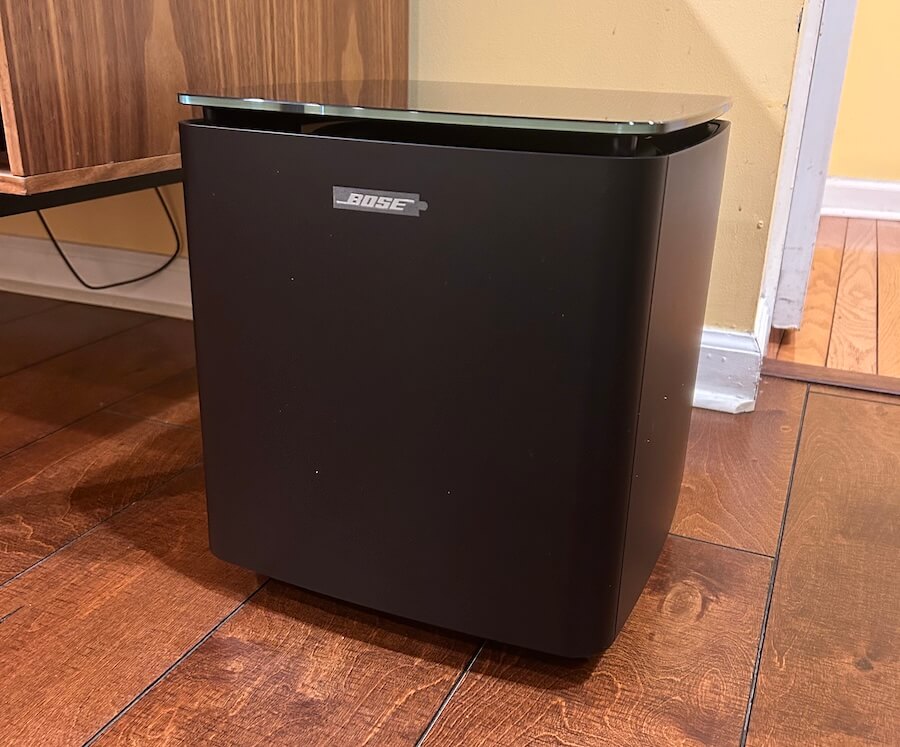
This is where the Lifestyle Ultra Wireless Subwoofer would have made a major difference. The speakers have enough upper bass and midbass energy to sound balanced on their own, but Sia’s music needs that lower range support to fully land. The subwoofer is already in the Lifestyle Ultra family. Bose should let people use it with the speakers as a 2.1 music system.
Switching over to jazz, with some electronic music mixed in, a few things became clear about the Bose Lifestyle Ultra Wireless Speakers. The folks outside of Boston are rather clearly done listening to audiophiles tell them their products do not cut the mustard. We have reviewed a substantial number of Bose wireless headphones and earbuds over the past three years, and the pattern is not hard to spot: Bose knows what it is doing, and it knows exactly who its customers are.
That matters here.
With The Orb, Aphex Twin, and deadmau5, the Lifestyle Ultra speakers were clear, detailed, quick, and a little meatier through the midbass than some of their rivals to the north. Minus the missing sub bass impact, the presentation had enough drive and body to make the music work. Another case of the Bruins beating the Leafs. In this scenario, it felt like David Pastrnak was in the building, and someone in Toronto had already started blaming the officiating.
The Bose did not turn compact wireless speakers into a nightclub system. That is not the assignment. But the timing was strong, transients were clean, and electronic tracks had enough snap to avoid sounding soft or polite. Again, the Lifestyle Ultra Wireless Subwoofer would have changed the equation in a major way, especially with music that lives below the midbass.
Jazz exposed a different set of strengths and limitations. Horns had bite, and there was enough texture to keep brass and reed instruments from sounding overly sanitized. But do not go looking for a long, luxurious trail of decay. Notes lingered briefly and then exited the building faster than the Red Sox starting rotation against the Tigers. Ouch.
Soundstage depth was not massive on some jazz recordings, but height and width were, to borrow from Larry David, pretty, pretty good. The Lifestyle Ultra speakers created a presentation that felt taller and wider than expected from two compact boxes, especially when they were positioned properly and given some breathing room.
Pacing was not an issue. The Bose kept things moving, stayed composed, and did not smear complex passages into wireless speaker soup. It may not satisfy the listener who expects electrostatic transparency, 300B glow, and a tax audit with every cymbal tap, but that is not who this product is for. For the intended buyer, the Lifestyle Ultra delivers a more convincing musical experience than a lot of people will expect from something this size.

The Bottom Line
The Bose Lifestyle Ultra Wireless Speaker is better than a lot of audiophiles will want to admit, which is always fun to watch from a safe distance. At $299, Bose has cleared the Green Monster with room to spare. Maybe not a Carlton Fisk wave it fair moment, but definitely not a wall ball single.
What works best is the combination of scale, clarity, image height, midbass weight, and genuinely useful connectivity. Apple AirPlay, Google Cast, Spotify Connect, Wi-Fi, Bluetooth, AUX, Alexa, and Alexa+ support give most users the paths they actually need, and the speaker sounds bigger and more composed than its size suggests. In stereo, the Lifestyle Ultra becomes far more convincing, with a solid center image, good width, and enough height to make vocals and smaller jazz ensembles feel properly placed rather than sprayed across the room like Fenway beer in the cheap seats.
What is missing? TIDAL Connect and Qobuz Connect are not supported, the Bose app is for setup and control rather than full music browsing, and the lack of Lifestyle Ultra Wireless Subwoofer support with a standalone stereo pair feels like a genuine missed opportunity. The speakers do well from the upper bass through the treble, but a proper 2.1 option would give electronic music, Sia, Nick Cave, and larger scale recordings the low end authority they deserve.
This is for listeners who want a clean, compact, easy to use wireless speaker that does not sound like an afterthought, and for buyers who want something more flexible than Bluetooth but less fussy than a traditional hi-fi setup. Personally, I would pick the Lifestyle Ultra over the Bluesound PULSE FLEX and the comparable Sonos option in this price range.
Pros:
- Strong sound quality for $299 with better scale, clarity, and composure than expected from a compact wireless speaker.
- Excellent connectivity: Apple AirPlay, Google Cast, Spotify Connect, Wi-Fi, Bluetooth 5.3, 3.5mm AUX, Alexa, and Alexa+ support.
- Convincing stereo performance when paired, with solid imaging, good width, and real height.
- Useful Bose app for setup, firmware updates, EQ, balance, pairing, and system control.
- Better midbass weight than some rivals, including the Bluesound PULSE FLEX and comparable Sonos options.
Cons:
- No TIDAL Connect or Qobuz Connect at launch.
- Lifestyle Ultra Wireless Subwoofer does not work with a standalone stereo pair.
- Limited sub bass impact with electronic music and larger scale recordings.
- Bose app is not a full music browsing hub.
- Black Smoke finish looks too utilitarian; Driftwood Sand is the better pick but costs $349.
Where to buy:
Related Reading:
- Bluesound PULSE FLEX Review: This $379 Hi-Res BluOS Speaker Has Range, But Does It Have A Pulse?
- Bose Lifestyle Ultra Wireless Speaker Debuts With AirPlay, Spotify Connect, And Google Cast: Should Sonos Be Worried?
- Elipson Unveils Facet II 6 Active BT Speakers With AptX HD, MM Phono, And HDMI ARC
- Best Wireless Speakers: Editors’ Choice 2025


















Andy
May 15, 2026 at 4:20 pm
Very interesting review. Slightly confused why they would send out the black one when the wood version looks so much nicer.
I’m not against using AirPlay. The sophisticated control apps get slightly wonky.
The price is a surprise. I would expect Bose to charge a lot more.
Never had Biltong. Whatever that is.
Ian White
May 16, 2026 at 2:49 pm
Biltong is South African beef jerky without all of the shitty preservatives and chemicals we use in Slim Jims, and the 400 brands of beef jerky you can buy here. It’s an acquired taste but one that I happen to love.
The price for these speakers is absurdly low. The $349 wood version is a very nicely designed speaker that I would use in my own home.
IW