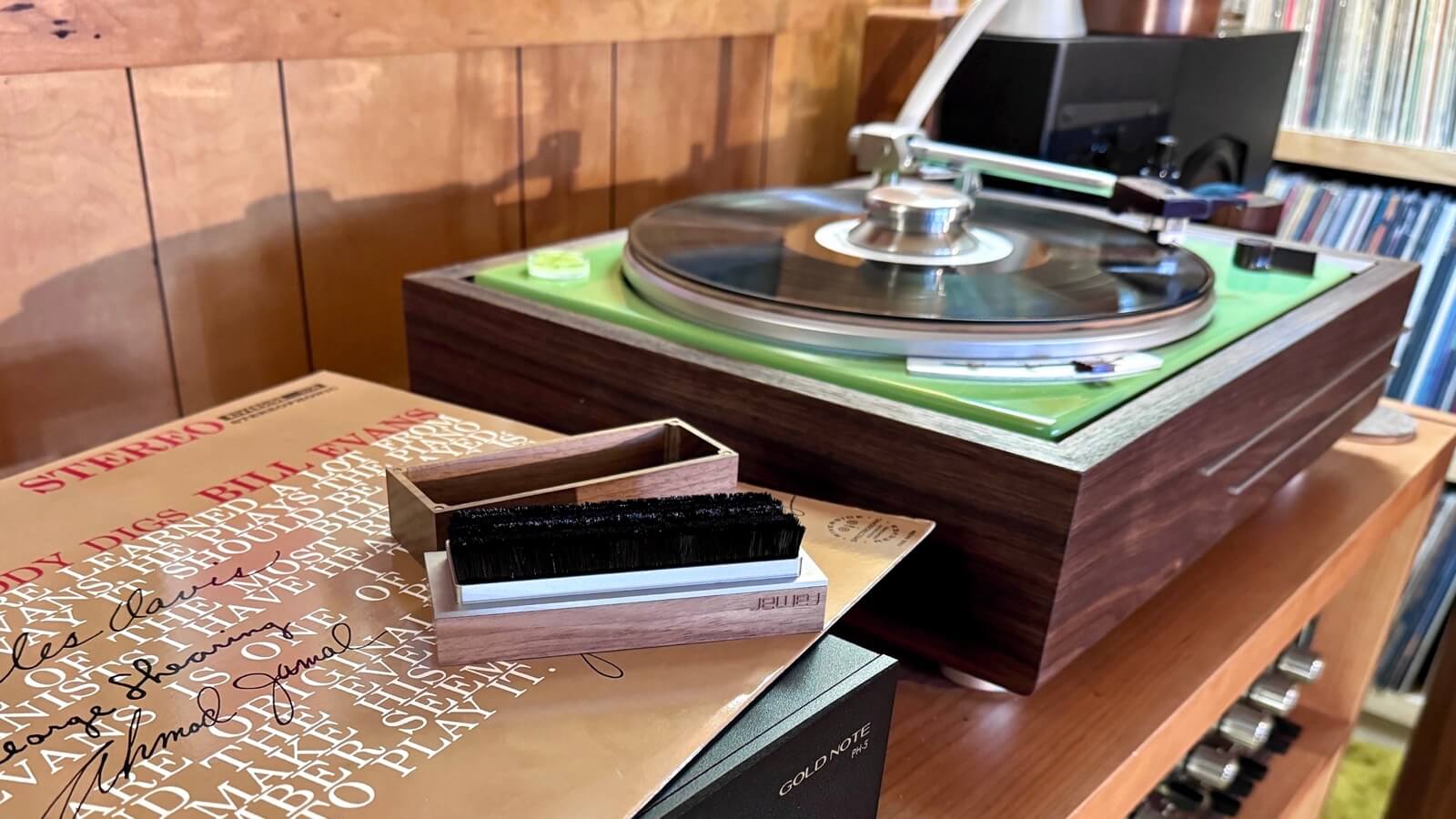
One of the enduring myths of audiophilia is the concept of the “end-game” system. No matter the quality of the system you have, there always seems to be a missing piece.
“If I can only add a (insert next-level piece of equipment here) to my system I will be forever content and can die a happy (wo)man.”
I have achieved what I thought was end-game several times – for a few days or several weeks – but each time a new siren song emerges. Klipsch Forté, Lenco L70 and Sansui AU-777 are calls of the past now silenced. Current objects calling with varying urgency include blue-baffle JBLs, concentric-driver Tannoys, Thorens TD-124 or 125, and the Sansui AU-111.

With a planned move back to Japan in two or three years, the question of whether any of these will be achieved is on hold. I am in an enforced end-game state, knowing I will sell everything I have before I move, and will start again when I land on the other side of the Pacific.
Upgrading my Cleaning Game
This continual desire to upgrade and improve the system is about more than just equipment. It applies also to furniture, storage, cables, accessories, and record cleaning.
Four years ago, as a fairly new vinyl collector with a few hundred records in my collection, I wrote about budget cleaning solutions that did the job and kept the wallet (and Mrs. Audiolove) happy.
Today, with nearly 1,800 albums, I’ve become pickier about cleaning; I won’t cut corners and am more willing to drop some coin on quality. I’ve replaced records that didn’t cut the mustard (including grey-market EU “Public Domain” reissues) with modern audiophile or early pressings, and I want to show these the respect they deserve so they play clean and clear for my remaining decades.
And so ladies and gentlemen I present my 2026 cleaning arsenal, with medium-of-choice dependent on dirt levels and apparent vinyl condition.
Dust and Static – Ramar Berlin Record Brush (Tina)
Ramar record brushes are made with a combination of carbon fibre (six double rows) and two rows of goat hair to penetrate every groove and remove fine dust and larger dirt particles while dissipating electrostatic charges.
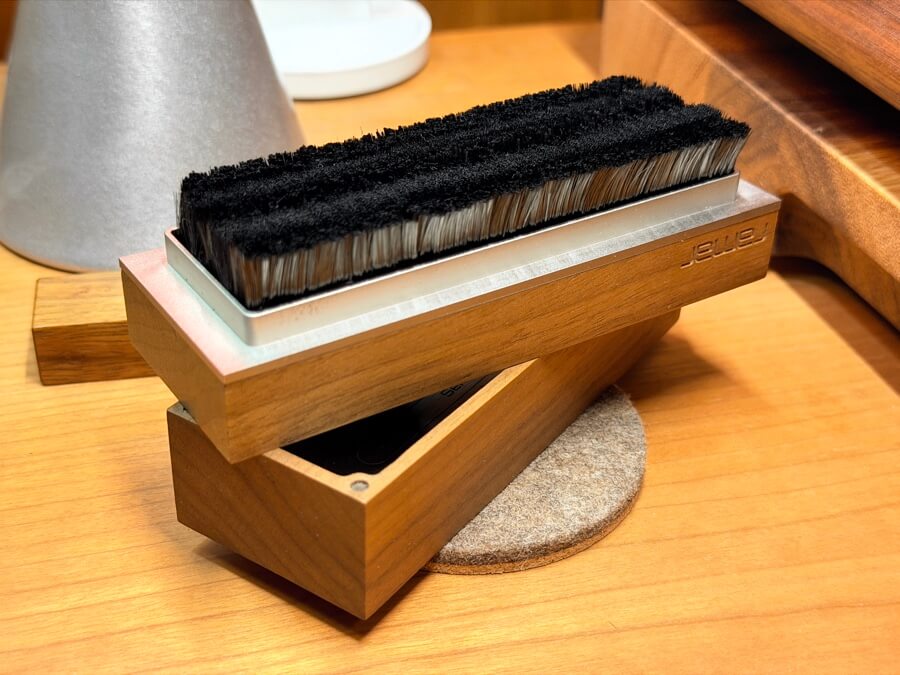
The body and protective case of my brush are made with walnut, fashioned from a single block. The case protects the brush fibres from damage and dirt. A range of handle and case styles are available, including other wood variants and metal finishes.
Brushes come with a natural felt cleaning pad for removing any dust or dirt caught between the fibres during use, and Ramar offers after-market renewal and repair services.
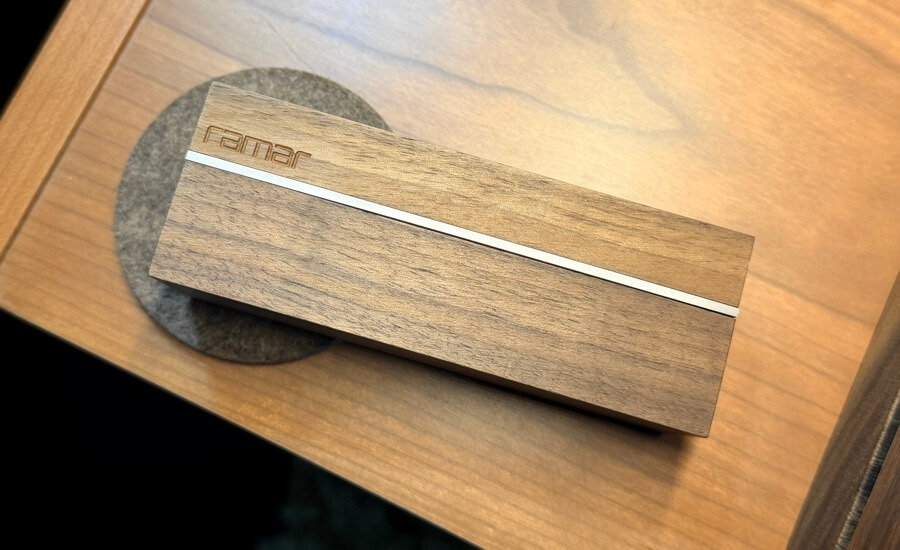
The Ramar brush replaced my $20 Audio-Technica anti-static brush, and the difference was obvious. It feels far more substantial and better made, and it delivers noticeably better dust and static removal. At €360, it had better be excellent, and it is. For most records, this is the only cleaning solution I need, which makes the expense easier to justify.
Minor Dirt – GrooveWasher Hardwood Record Cleaning Kit
GrooveWasher makes a variety of cleaning accessories and kits, including record and stylus fluids and brushes. They also make anti-static record sleeves.
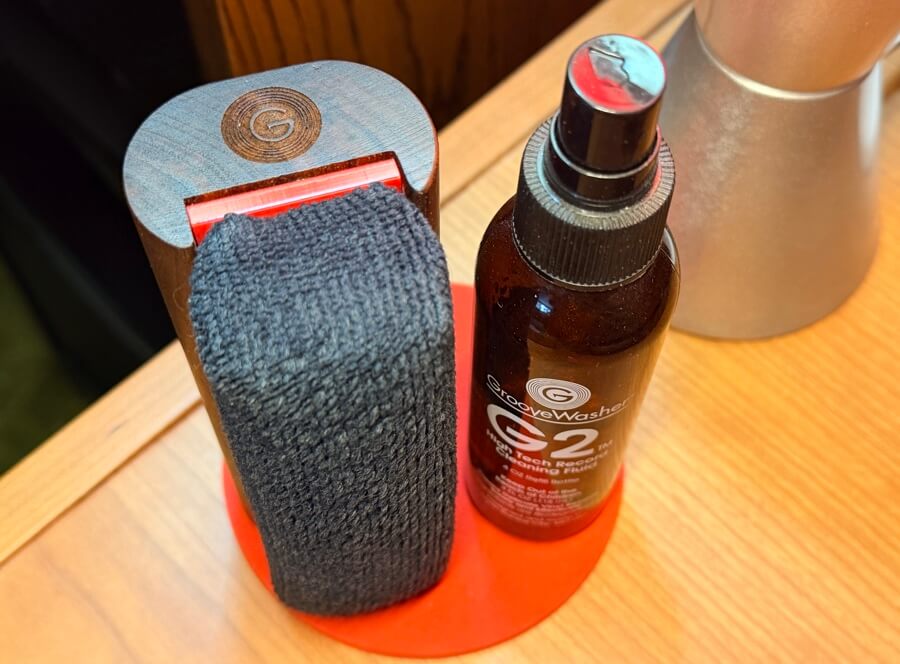
This was my first cleaner “upgrade,” replacing the cheapie DiscWasher. The look and feel of the two cleaners are similar, but the heft of the GrooveWasher’s wooden handle and the cleaning performance of the black Terry microfibre pad are a step up in quality.
The Hardwood Kit costs around $50 and comes with a 4 oz spray bottle of G2 high tech record cleaning fluid. This combination effectively removes minor grime like errant fingerprints or other sticky dirt that the Ramar can’t tackle. I use this brush for a first clean of used records that look to be in very good condition, and every few plays for records I’ve had in the collection for some time.
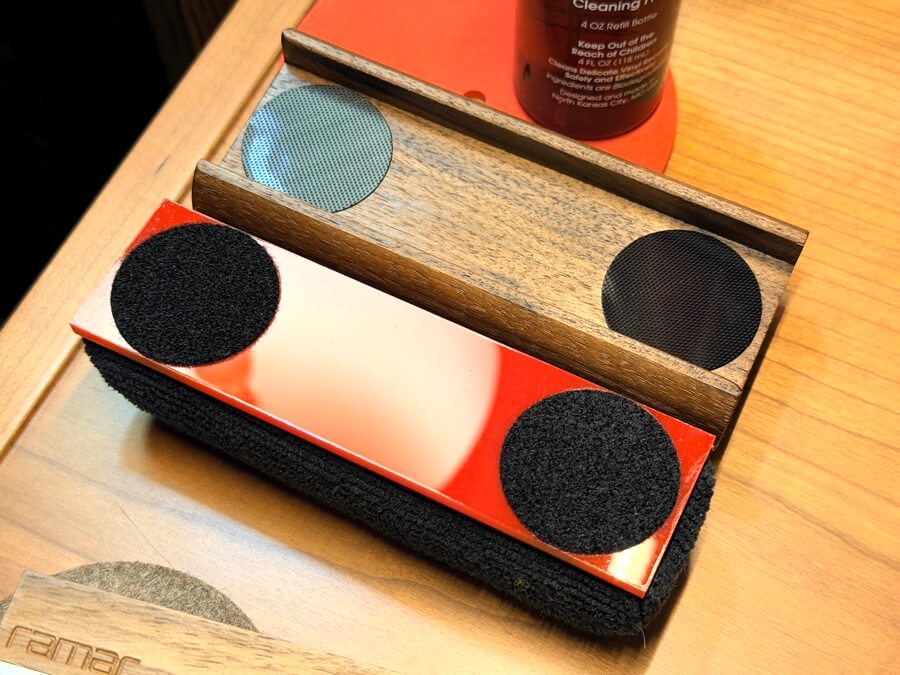
Over time the plush terry cloth pad does wear down and flatten out, and I’m currently eyeing up a replacement pad. The cleaning pads are easily removable, and replacements adhere solidly to the wood handle by way of Velcro fasteners.
Embedded Dirt and Persistent Crackle – HumminGuru HG01 Ultrasonic
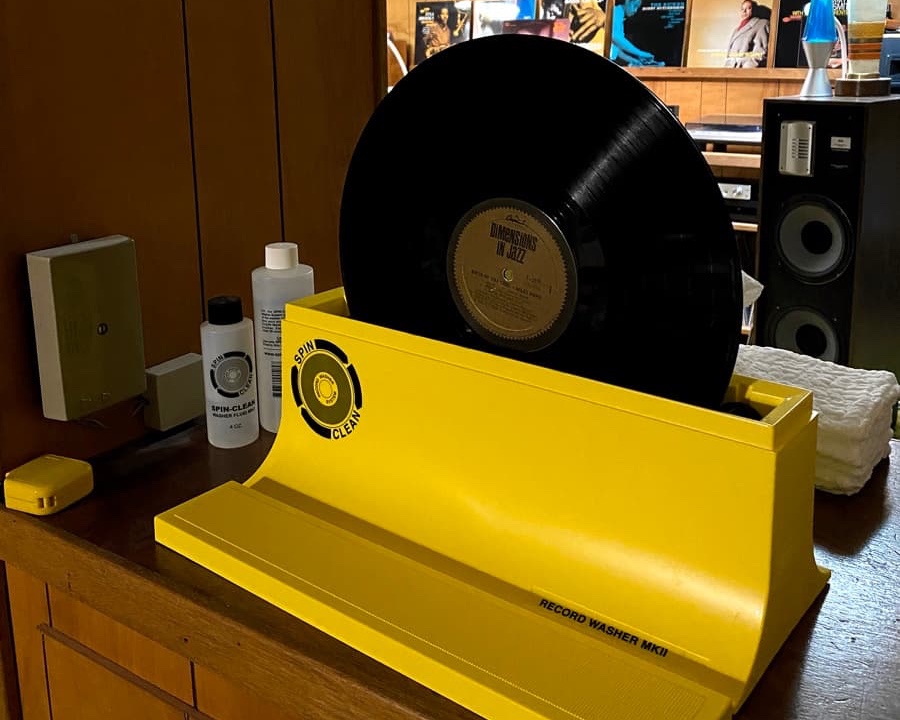
The HumminGuru HG01 ultrasonic replaced a Spin Clean Mk. II a couple of years ago. The Spin Clean manual water-and-brush system worked well initially, but for some reason had begun jamming, even after replacing the brushes. While it still did a good job of cleaning, using it became frustrating and an upgrade was called for.
I investigated various vacuum and ultrasonic systems and the HumminGuru seemed to offer a good balance between results and financial outlay (Yes, I’m willing to drop some coin, but my pockets are not bottomless).
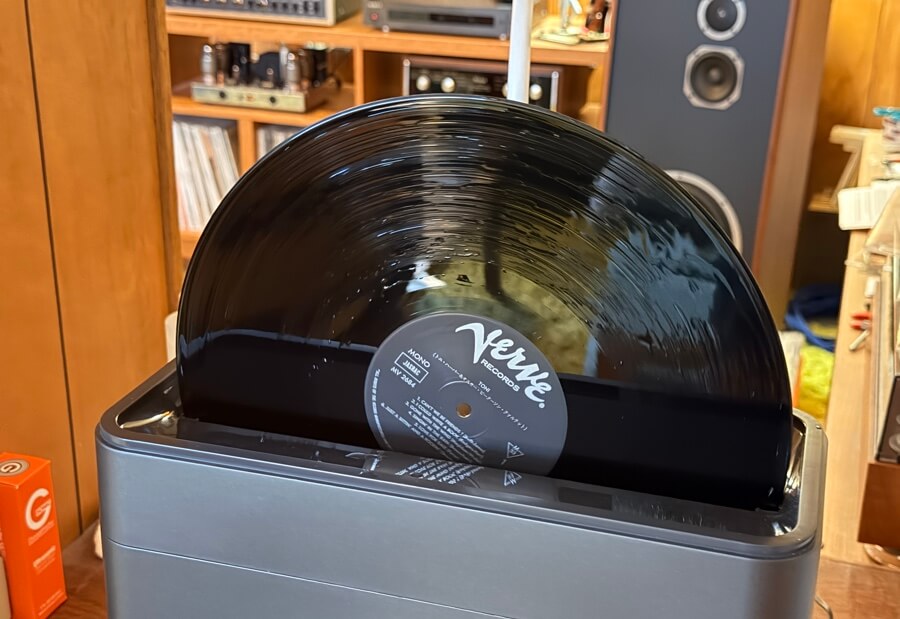
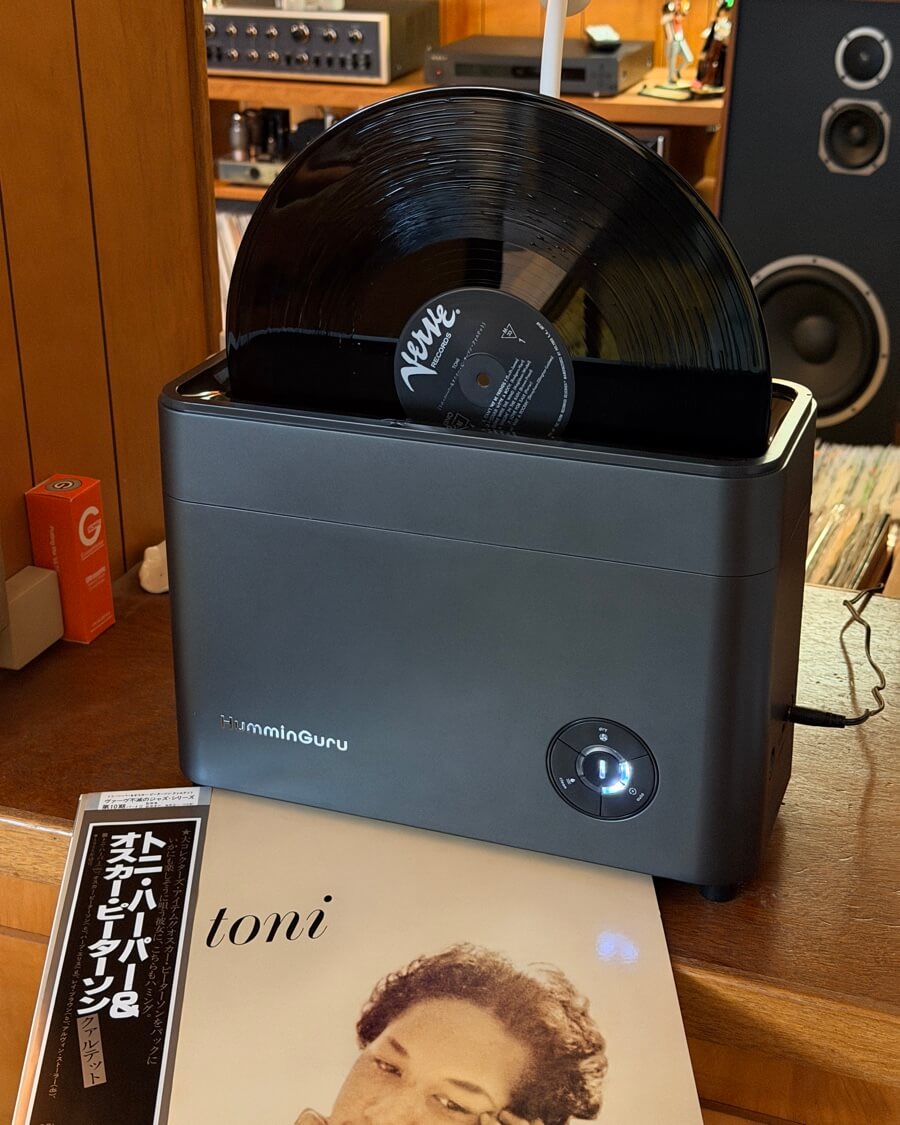
Ultrasonic cleaning uses high-frequency sound waves to create cavitation bubbles in water, requiring zero physical contact with the record. The HumminGuru automates the process of both cleaning and drying. All that’s required of the user is to add distilled water to the bath area on top, insert the record vertically into the cleaning slot, and hit a few buttons to set cleaning and drying time and start the cleaning process.
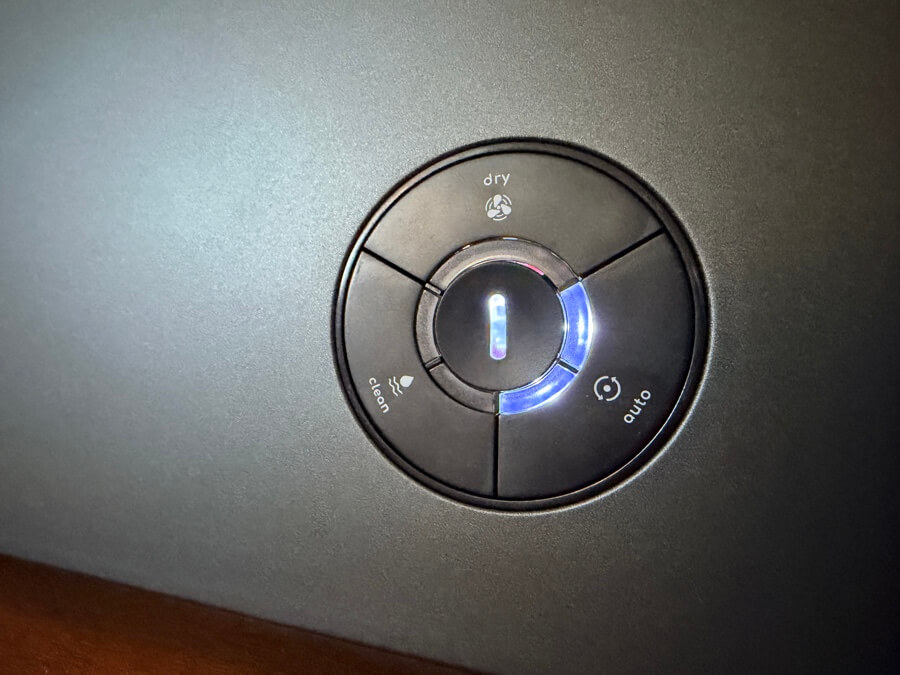
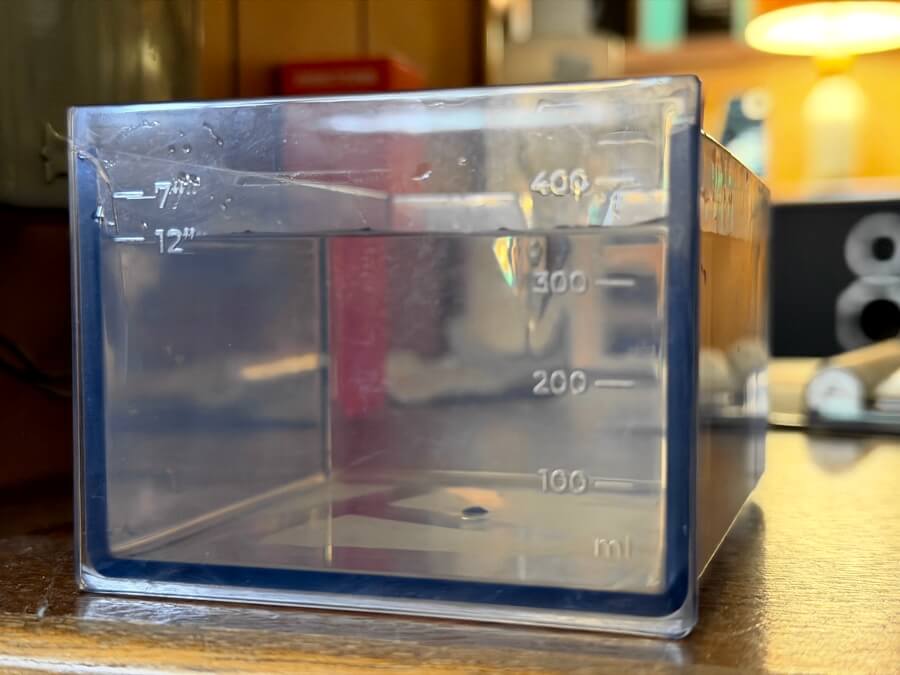
The record spins in the bath for several minutes while the ultrasonics remove dirt, the bath auto-drains into a removable water receptacle at the bottom of the machine, and then dual warm air fans dry the record. After 7-10 minutes, remove the record and it’s ready to store or play.
Water can be re-used to clean multiple records, and HumminGuru recommends using a few drops of alcohol-free cleaning formula to reduce surface tension and facilitate better penetration into the record grooves and to enhance drying in humid environments. Adaptors are available for 7” and 10” records.
I’ve been very impressed with results from the HumminGuru, with big improvements in grading quality post cleaning. I also noted improvements for records already cleaned with the old Spin Clean (which was no slouch, even with the jamming issues I experienced).
At time of writing the HumminGuru HG01 costs around $400 direct from the manufacturer, which is down significantly from my original purchase price.
Since I purchased my HG01, Humminguru has introduced an advanced model (the Nova) which features quieter cleaning, faster drying and automatic adjustment for different record sizes. The Nova runs about $700.
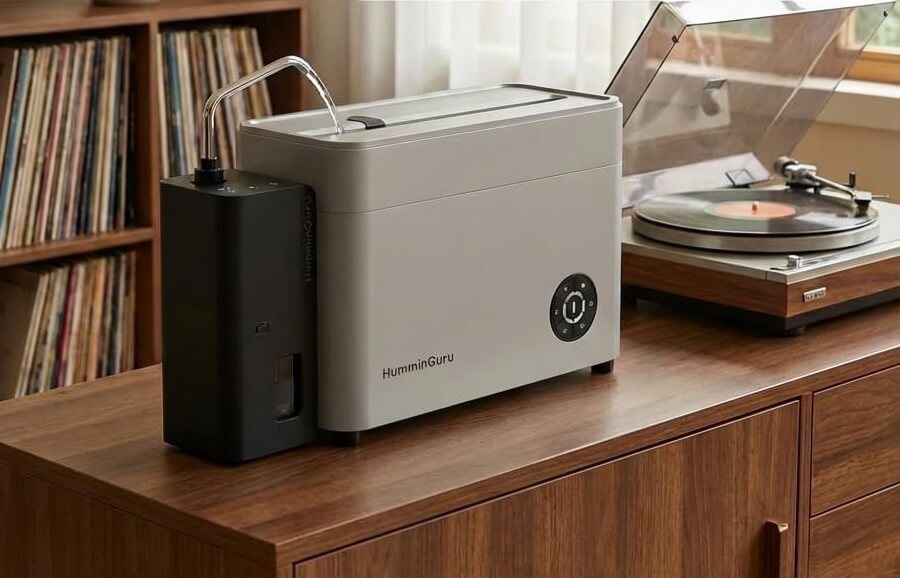
HumminGuru also introduced an Automatic Water Dispenser ($159.99 at Amazon) unit which eliminates my one gripe with the HG01 (and Nova), that being the somewhat inelegant process of removing the water receptacle to refill the water bath. The water dispenser costs around $160, and is very definitely on my to-buy list (and an exception to enforced end-game status).
The Bottom Line
And there we have the three arrows in my cleaning quiver, with all needs and bases covered. A final mention goes to the Ramar brush, which elicits frequent comments on Instagram regarding what many see as an exorbitant price (about the same as the HumminGuru).
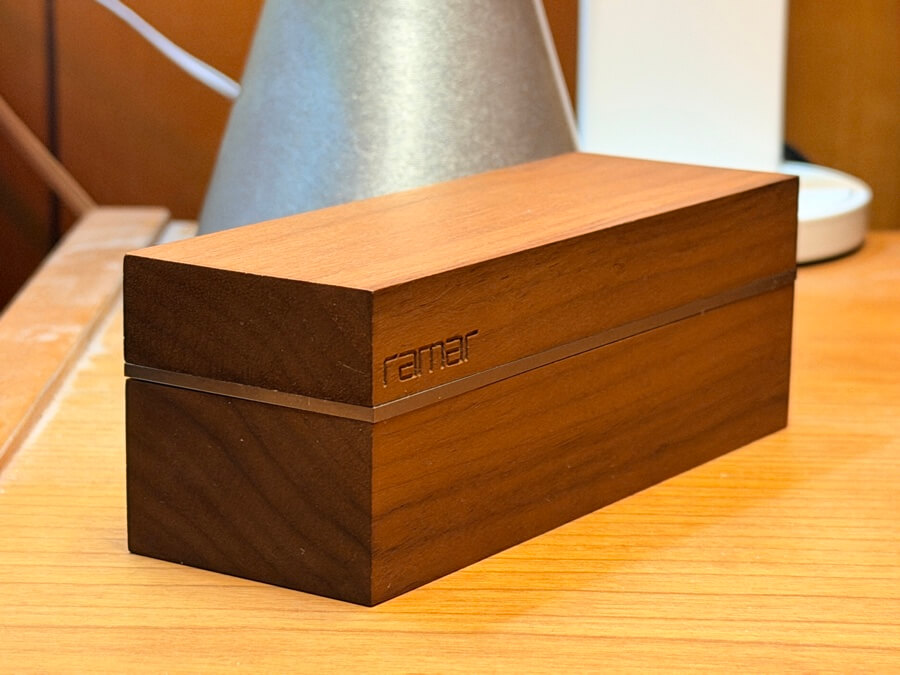
No, there are no moving parts. Yes, it’s just a brush. But what a brush! As mentioned, this is my main cleaner and so on a per-use basis the cost is not so high. Factor in craftsmanship and precision – hand crafted, grain-matched wooden handle and holder, exquisitely layered brush fibres – and an obviously time-intensive build process, and it all makes sense. In my mind the juice is worth the squeeze.
What do you think? Leave your thoughts in the comments, or message me on the ‘Gram at @audioloveyyc.
Where to buy:
- Humminguru – $599.99 at Amazon
- Ramar Brush – 360 Euro at Ramar
- Spin-Clean – $124.99 at Amazon
- GrooveWasher – $49.50 at Amazon
Related Reading:
- Grado Updates Its 2026 Phono Cartridge Lineup Across Lineage, Timbre, And Prestige Series: Brooklyn Built For Your Turntable
- Okki Nokki ONE Record Cleaning Machine Arrives In North America, Takes Aim At VPI’s Turf
- Best Vinyl Record Cleaning Brushes To Buy In 2025
- HumminGuru EZ Vinyl Record Washer Takes Aim At SpinClean — A More Expensive, More Polished Challenge To The Budget Cleaning King