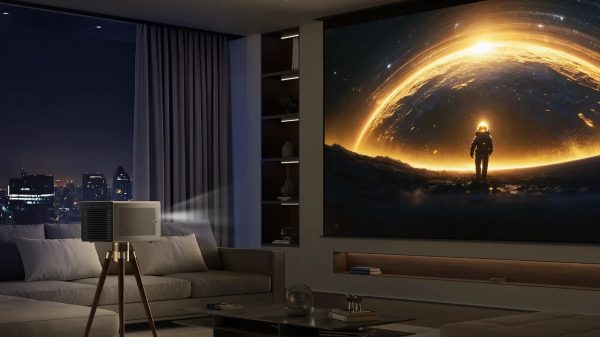
Projectors have become brighter, smarter, and considerably easier to install, but they still face some stubborn problems if they are going to compete with increasingly affordable 85- and 98-inch TVs. Ambient light can wash out the image, mediocre native contrast can turn dark movie scenes into gray soup, and gamers increasingly expect the high refresh rates and low latency that have become standard on premium televisions.
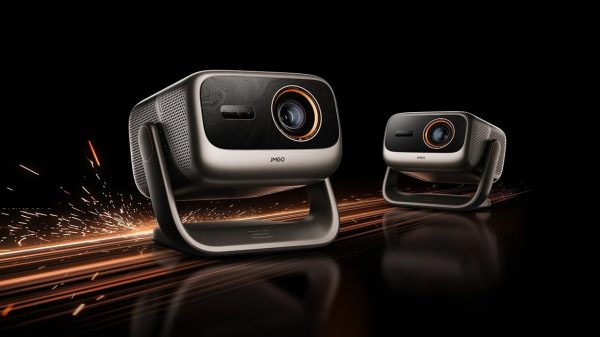
XGIMI is trying to address all three with its new HORIZON 30 Series 4K RGB triple-laser projectors.
The HORIZON 30 Series builds on last year’s HORIZON 20 lineup with higher light output, substantially improved native contrast, and support for 4K/120Hz playback. Dolby Vision and HDR10+ are also supported, giving movie and TV viewers access to both major dynamic HDR formats.
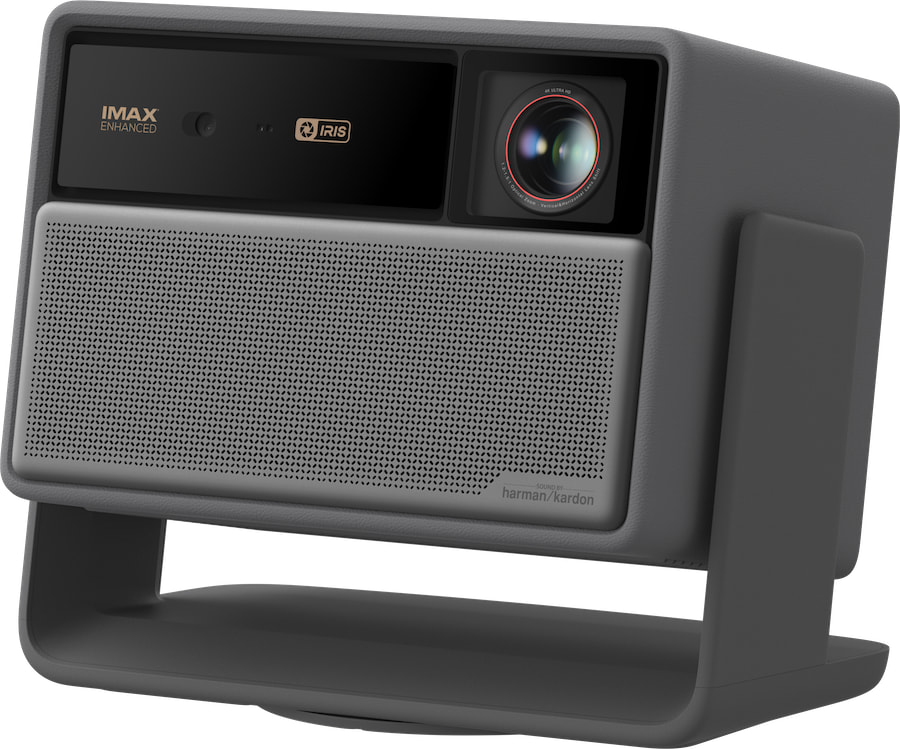
Pro Tip: The HORIZON 30 Series uses a 0.47-inch DLP imaging chip and pixel shifting to display a 3840 x 2160 4K UHD image; it does not use a native 3840 x 2160 imaging device.
The lineup consists of three models: the HORIZON 30 Pro, HORIZON 30 Max, and HORIZON 30 Ultra Max. Compared with their HORIZON 20 predecessors, XGIMI claims up to 15% greater brightness, as much as seven times the native contrast, and twice the 4K refresh rate, depending on the model.
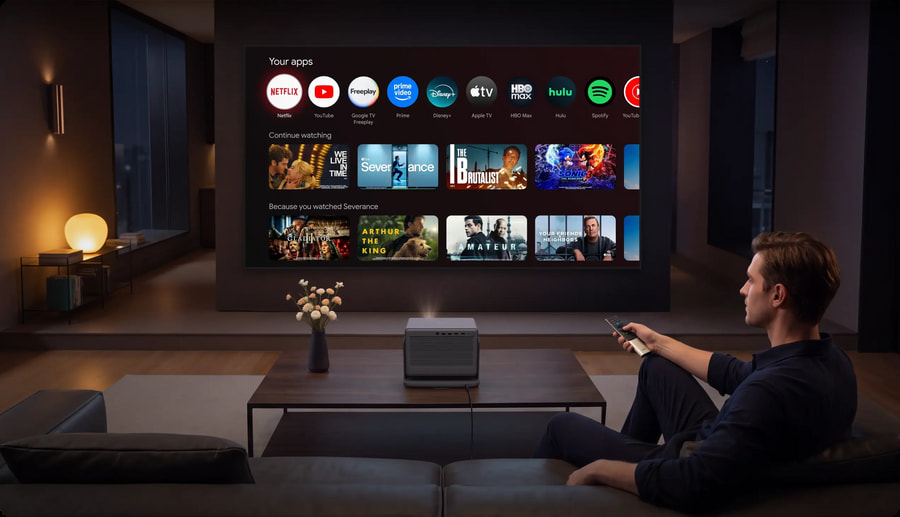
Those improvements aren’t merely useful numbers for the specification sheet. More light output should make the HORIZON 30 models better suited to living rooms where controlling ambient light is not always practical, while the increased native contrast is intended to preserve shadow detail and black levels during darker movie and television scenes. The move to 4K/120Hz is aimed squarely at gamers and sports fans who want smoother motion without giving up the large-screen experience that remains projection’s biggest advantage.
In other words, XGIMI isn’t simply trying to make the HORIZON 30 Series brighter than what came before. It is trying to remove some of the reasons people choose a giant television instead.
Triple Laser
All three projectors continue to use the RGB triple-laser light source technology introduced with the HORIZON 20 Series, but with higher light output. The HORIZON 30 Ultra Max, for example, is rated at up to 6,000 ISO lumens with a 10,000:1 native contrast ratio, which should help preserve image punch, shadow detail, and color saturation in movies, sports, and games, especially in rooms with some ambient light.
X-Master Red Ring Lens and HDR
For additional image control, the HORIZON 30 projectors include a Dual Intelligent Iris System that automatically adjusts light output as scenes change, helping preserve detail in both bright highlights and darker areas of the image.
XGIMI’s X-Master Red Ring Lens is designed to maintain sharpness and clarity across the image, while support for Dolby Vision, HDR10+, and IMAX Enhanced gives compatible content access to wider dynamic range, richer color, and more precise contrast.
Pro Tip: The X-Master Red Ring Lens combines high-resolution A-grade optics with aerospace-grade laser glass. XGIMI says the design improves clarity and light transmission while helping preserve fine image detail.
4K @ 120Hz
High refresh rates are most closely associated with gaming, but the HORIZON 30 Series’ 4K/120Hz support also benefits sports and fast-moving video by making motion easier to follow.
The projectors can also display native 24fps film content evenly at 120Hz using a 5:5 cadence, with each frame repeated five times. That preserves the original film cadence without introducing the uneven judder associated with 3:2 pulldown.
This is separate from motion interpolation, which is what typically creates the unwanted “soap opera effect.”
Gaming Support
For gaming, the HORIZON 30 Series offers a claimed input latency as low as 1.9ms at 4K/120Hz, along with support for VRR, ALLM, and AMD FreeSync.
Together, those features are designed to reduce lag, minimize screen tearing, and keep gameplay smoother and more responsive, especially with fast-paced titles.
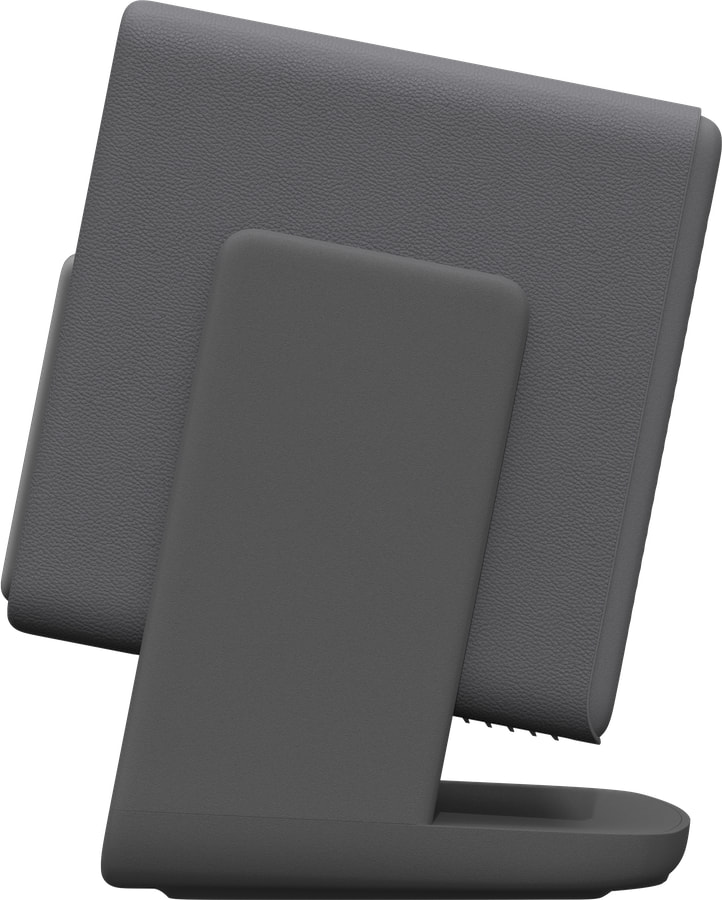
Image Placement
The HORIZON 30 Series is designed to deliver screen sizes from 40 to 300 inches while offering more placement flexibility than a conventional fixed-position projector. Its integrated stand can tilt and rotate like a gimbal, while optical zoom and lens shift provide additional freedom to position the image without requiring the projector to sit directly in front of the screen.
Once the projector is in place, XGIMI’s Intelligent Screen Adaptation technology can automatically adjust the image to fit the screen and compensate for the surrounding setup.
The HORIZON 30 Series also includes Lens Memory, allowing users to store up to five custom image-position settings for different screen formats or movie aspect ratios.
Wireless & Wired Connectivity
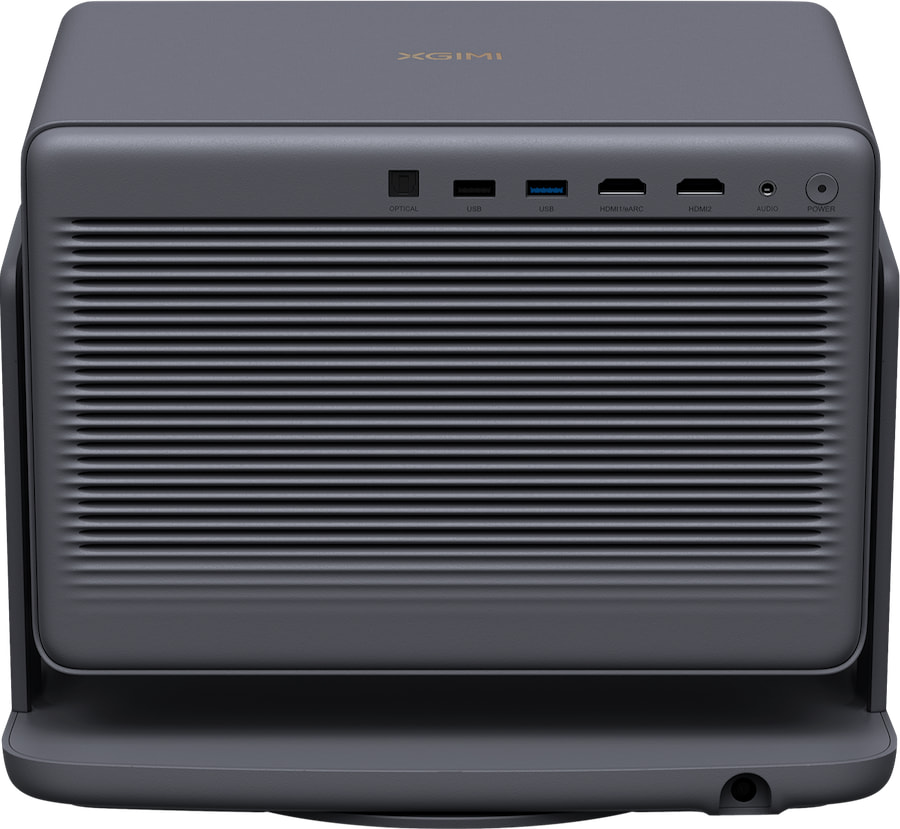
The HORIZON 30 Series runs on Google TV, providing access to thousands of streaming apps along with native Netflix support. Built-in Wi-Fi 6 handles wireless connectivity, while HDMI and USB 3.0 inputs support external source devices.
Audio
For audio, the HORIZON 30 Series incorporates a pair of 12-watt Harman Kardon speakers with DTS Virtual processing, designed to create a wider, more immersive soundfield without requiring additional speakers.
For a more substantial home theater setup, HDMI eARC allows the projectors to send audio to a compatible soundbar or AV receiver. That provides a straightforward upgrade path to more powerful stereo, surround sound, or immersive audio than the projector’s built-in speakers can deliver.
XGIMI Horizon 30 Series Projector Comparison
Pro Tip: The difference between the Horizon 30 Pro, 30 Max, and 30 Ultra Max is the amount of light output, contrast ratio, and price. All other features are the same.
| Horizon 30 Pro | Horizon 30 Max | Horizon 30 Ultra Max | |
| Product Type | Home Projector | Home Projector | Home Projector |
| Price (MSRP) | $2,499 | $2,599 | $3,499 |
| Display Technology | DLP | DLP | DLP |
| Imaging Chip | 0.47 DMD | 0.47 DMD | 0.47 DMD |
| Refresh Rate | 4K/120Hz | 4K/120Hz | 4K/120Hz |
| Light Source | RGB Triple Laser | RGB Triple Laser | RGB Triple Laser |
| Lens | High Light Transmission Coated Lens | High Light Transmission Coated Lens | High Light Transmission Coated Lens |
| Projection Method | Front, Rear, Front Ceiling, Rear Ceiling | Front, Rear, Front Ceiling, Rear Ceiling | Front, Rear, Front Ceiling, Rear Ceiling |
| Image Size | 40” – 300” | 40” – 300” | 40” – 300” |
| Aspect Ratio | 16:9 | 16:9 | 16:9 |
| Resolution (via Pixel Shifting) | 4K UHD (3840 x 2160 pixels) | 4K UHD (3840 x 2160 pixels) | 4K UHD (3840 x 2160 pixels) |
| Brightness | 4800 ISO Lumens | 5300 ISO Lumens | 6000 ISO Lumens |
| Contrast Ratio (Native) | 8,000:1 | 9,000:1 | 10,000:1 |
| Color Gamut | BT.2020 110% | BT.2020 110% | BT.2020 110% |
| HDR Support | HDR 10, HDR10+, Dolby Vision, HLG, Dynamic Tone Mapping | HDR 10, HDR10+, Dolby Vision, HLG, Dynamic Tone Mapping | HDR 10, HDR10+, Dolby Vision, HLG, Dynamic Tone Mapping |
| IMAX Enhanced | Yes | Yes | Yes |
| Filmmaker Mode | Yes | Yes | Yes |
| ISF Calibration | Yes | Yes | Yes |
| Gaming Support | (Game Mode, AK off) Latency 1ms1080P@240Hz 2.2ms at 1080P@120Hz 1.9ms at 4K@120Hz 3ms at 4K@60Hz | (Game Mode, AK off) Latency 1ms1080P@240Hz 2.2ms at 1080P@120Hz 1.9ms at 4K@120Hz 3ms at 4K@60Hz | (Game Mode, AK off) Latency 1ms1080P@240Hz 2.2ms at 1080P@120Hz 1.9ms at 4K@120Hz 3ms at 4K@60Hz |
| MEMC | Yes | Yes | Yes |
| 3D Viewing Option | Yes | Yes | Yes |
| Eye Protection | Yes | Yes | Yes |
| Setup System | Uninterrupted Auto Keystone Correction Auto Focus Intelligent Screen Alignment Intelligent Obstacle Avoidance | Uninterrupted Auto Keystone Correction Auto Focus Intelligent Screen Alignment Intelligent Obstacle Avoidance | Uninterrupted Auto Keystone Correction Auto Focus Intelligent Screen Alignment Intelligent Obstacle Avoidance |
| Les Shift | V±130%/H±50% | V±130%/H±50% | V±130%/H±50% |
| Optical Zoom | Yes | Yes | Yes |
| Digital Zoom | Yes | Yes | Yes |
| Throw Ratio | 1.2-1.5:1 | 1.2-1.5:1 | 1.2-1.5:1 |
| System CPU | MT9679 | MT9679 | MT9679 |
| GPU | Mali-G52 | Mali-G52 | Mali-G52 |
| RAM | 3GB | 3GB | 3GB |
| Storage | 64GB | 64GB | 64GB |
| Google TV | Yes | Yes | Yes |
| Fast Boot | Yes (STR) | Yes (STR) | Yes (STR) |
| Mirroring Display | DLNA/GoogleCast | DLNA/GoogleCast | DLNA/GoogleCast |
| Audio Support | DTS-Virtual:X DTS-HD Dolby Audio Dolby Digital (DD ) Dolby Digital Plus (DD+) | DTS-Virtual:X DTS-HD Dolby Audio Dolby Digital (DD) Dolby Digital Plus (DD+) | DTS-Virtual:X DTS-HD Dolby Audio Dolby Digital (DD) Dolby Digital Plus (DD+) |
| Audio System | 2 x 12W Harman/Kardon | 2 x 12W Harman/Kardon | 2 x 12W Harman/Kardon |
| WiFi | WiFi 6 Dual-band 2.4/5GHz, 802.11a/b/g/n/ac/ax10 | WiFi 6 Dual-band 2.4/5GHz, 802.11a/b/g/n/ac/ax10 | WiFi 6 Dual-band 2.4/5GHz, 802.11a/b/g/n/ac/ax10 |
| Bluetooth | Ver 5.2 | Ver 5.2 | Ver 5.2 |
| Wired Connectivity (Inputs) | DC x 1 HDMI x 2 (HDMI1 supports eARC) 1 x USB 3.0 1 x USB 2.0 | DC x 1 HDMI x 2 (HDMI1 supports eARC) 1 x USB 3.0 1 x USB 2.0 | DC x 1 HDMI x 2 (HDMI1 supports eARC) 1 x USB 3.0 1 x USB 2.0 |
| Wired Connectivity (Outputs) | Optical x 1 Audio x 1 | Optical x 1 Audio x 1 | Optical x 1 Audio x 1 |
| Noise Level | ≤28dB@1m | ≤28dB@1m | ≤28dB@1m |
| Power | AC100-240V, 50/60Hz | AC200-240V, 50Hz | AC100-240V, 50/60Hz |
| Dimensions (HWD) | 249 x 298 x 190 mm / 9.8 x 11.7 x 7.5 In | 249 x 298 x 190 mm / 9.8 x 11.7 x 7.5 | 249 x 298 x 190 mm / 9.8 x 11.7 x 7.5 |
| Weight | 4.8 kg / 10.6 lbs | 4.9 kg / 10.8 lbs | 5.4 kg / 11.9 lbs |
| What’s in the Box | Horizon 30 Series Projector x 1 Carrying Case x 1 Power Cable x 1 External Power Supply x 1 Manual x 1 Warranty Card x 1 Backlit Bluetooth Remote Control x 1 AAA Batteries x 2 | Horizon 30 Series Projector x 1 Carrying Case x 1 Power Cable x 1 External Power Supply x 1 Manual x 1 Warranty Card x 1 Backlit Bluetooth Remote Control x 1 AAA Batteries x 2 | Horizon 30 Series Projector x 1 Carrying Case x 1 Power Cable x 1 External Power Supply x 1 Manual x 1 Warranty Card x 1 Backlit Bluetooth Remote Control x 1 AAA Batteries x 2 |
The Bottom Line
XGIMI’s timing with the HORIZON 30 Series is hard to ignore. It arrives almost immediately after JMGO introduced its IRIS lineup, and the two brands are starting to look like they are playing a very expensive game of tag.
Both lineups use RGB triple-laser light engines, offer 4K/120Hz support, high claimed brightness, lens shift, optical zoom, automated setup, and gimbal-style designs. What makes the HORIZON 30 Series stand out is how many traditionally higher-end projector features XGIMI has packed into a lifestyle design.
The main caveat is that these are still pixel-shifting DLP projectors rather than native 4K designs, and the built-in audio is more about convenience than replacing a proper home theater system.
The closest competitor is JMGO’s IRIS Ultra Series, while the Hisense C2 Ultra remains another strong lifestyle alternative.
The category has come a long way. XGIMI and JMGO are no longer just making easier-to-use projectors; they are trying to give consumers fewer reasons to buy a giant television instead.
Pricing & Availability
The XGIMI HORIZON 30 Series is available for pre-order from October 12 to October 31, 2026 at XGIMI.com, with open sales at regular prices beginning November 1.
During the pre-order period, HORIZON 30 Pro is available for $1,899, HORIZON 30 Max for $2,499, and HORIZON 30 UltraMax for $2,999 before settling on regular prices as noted in our comparison chart.
All pre-orders include a choice of an XGIMI Floor Stand (Elephant Grey) or Ceiling Mount, two pairs of 3D glasses, and a $500 coupon toward the XGIMI Ascend Screen.
Related Reading:
- Hisense C3 Lifestyle 4K Projectors Take Aim at Big-Screen TVs With Up to 300-inch Images
- Dangbei MP1 Max 4K Lifestyle Projector: Half Laser, Half LED, All Out to Replace Your TV
- Leica Cine Compact 1 Projector Debuts: 4K RGB Laser Performance in a Smaller Package for $2,000
- Hisense XR10 Triple Laser 4K Projector Review: Lifestyle to the Max