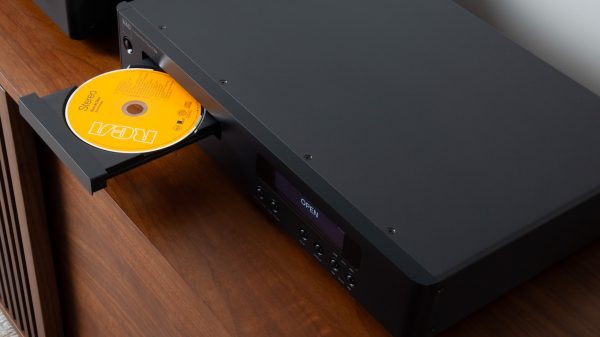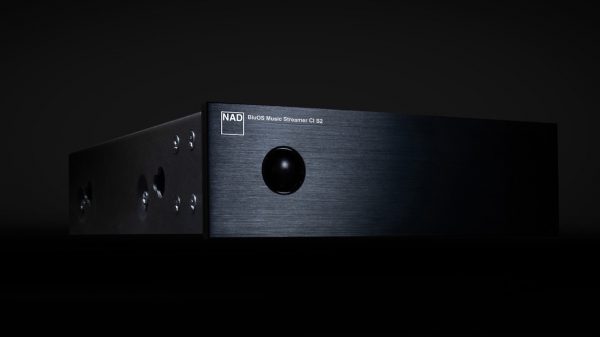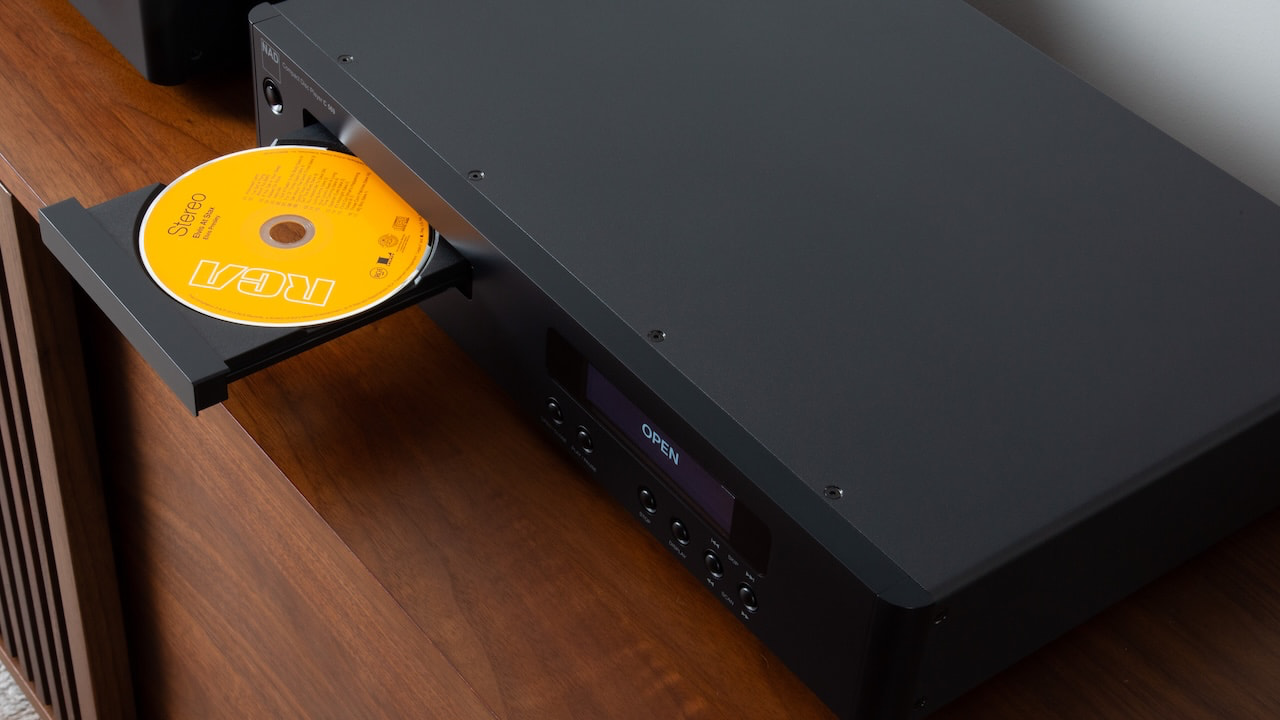
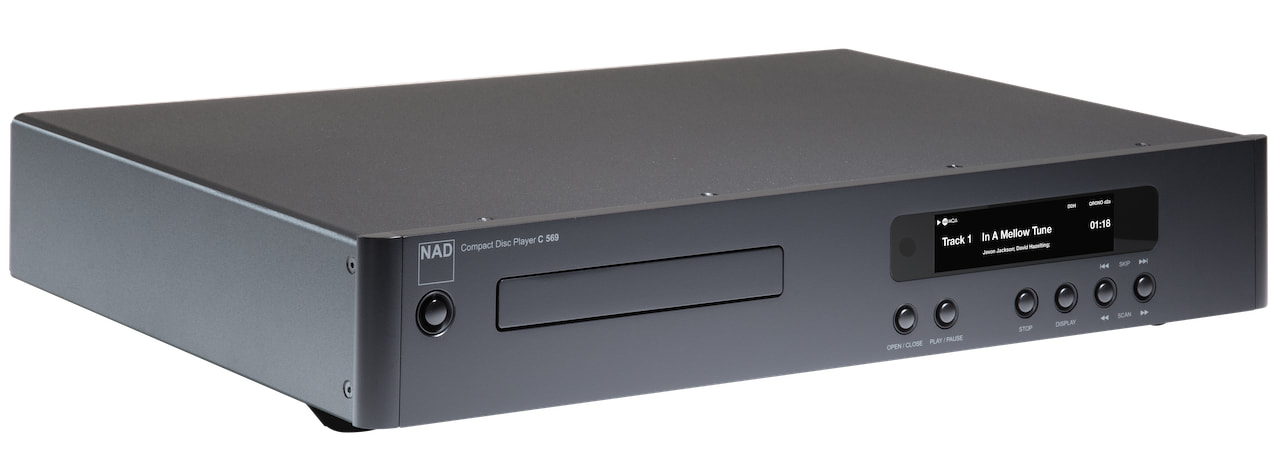
NAD apparently didn’t receive the memo that compact discs were supposed to be dead. Only six months after introducing the C 589, the Canadian manufacturer is back with the new C 569 CD Player ($999), a less expensive Classic Series model that borrows some of its flagship sibling’s most interesting digital technologies.
The C 569 sits between the entry-level C 538 and the more expensive C 589, combining a modern ESS SABRE DAC with QRONO d2a processing, Dynamic Digital Headroom (DDH), and a redesigned analog output stage.
There is no streaming, app integration, or touch-sensitive interface to complicate things. Just a traditional CD player designed to get the most from a format that millions of music listeners never abandoned.
At $999, however, NAD needs to offer something more convincing than nostalgia and a reasonably quiet disc tray.
Related Reading:
- Marantz Launches MODEL 70 Integrated Amplifier And CD 70 CD Player But North America Only Gets Half The System
- NAD C 589 CD Player Revives MQA With QRONO D2a Processing
What’s Different About the NAD C 569?
The biggest development is the combination of two digital processing technologies previously introduced in the C 589.
QRONO d2a, developed by MQA Labs under Lenbrook Media Group, uses digital filtering and noise shaping techniques intended to improve impulse response and timing accuracy during digital-to-analog conversion.
The objective is to reduce unwanted time-domain artifacts while preserving transient information and low-level musical detail. Importantly, QRONO d2a operates with conventional PCM recordings and does not require an MQA-encoded CD.
The second technology, Dynamic Digital Headroom (DDH), addresses inter-sample clipping. Digital recordings mastered close to maximum level can produce reconstructed peaks that exceed the nominal digital ceiling, potentially creating distortion during playback.
DDH provides additional digital headroom to help prevent that problem. It’s a useful engineering approach, particularly with aggressively mastered CDs, but don’t expect it to restore the missing dynamics from a recording that was compressed within an inch of its life. Even NAD can’t perform that kind of miracle.
At the center of the conversion stage is an ESS ES9039Q2M SABRE DAC, supported by upgraded operational amplifiers and a carefully regulated analog output section. Unlike the C 589’s fully balanced implementation, the C 569 employs a symmetrical stereo analog circuit with short signal paths and dedicated power regulation intended to minimize noise and interference.
The disc mechanism also deserves attention. NAD uses a conventional tray-loading transport controlled by an NXP-based servo system responsible for spindle speed, laser focus, and tracking. The transport, power supply, and sensitive analog circuitry are physically arranged to help reduce unwanted electrical interference.
None of this guarantees superior sound quality, but it suggests NAD has concentrated its engineering budget on the signal path rather than another collection of features that most CD owners won’t use.
Built for People Who Actually Listen to Albums
The front panel incorporates a 3.7-inch full-color LCD, with CD-Text support for displaying available album and track information. Gapless playback is included, which should be a basic requirement for anyone listening to live recordings, classical music, or albums where the songs flow together.
The C 569 also supports MQA-CD playback, although the format remains a tiny niche proposition compared with conventional Red Book CDs.
Stereo RCA outputs allow owners to use the internal ESS DAC, while optical and coaxial digital outputs provide the option of connecting an external DAC or using the C 569 purely as a transport.
There are no announced provisions for SACD playback, USB music files, or a headphone amplifier. NAD is clearly prioritizing CD playback over versatility, an approach that will appeal to some listeners while leaving others wondering what happened to the rest of their $999.
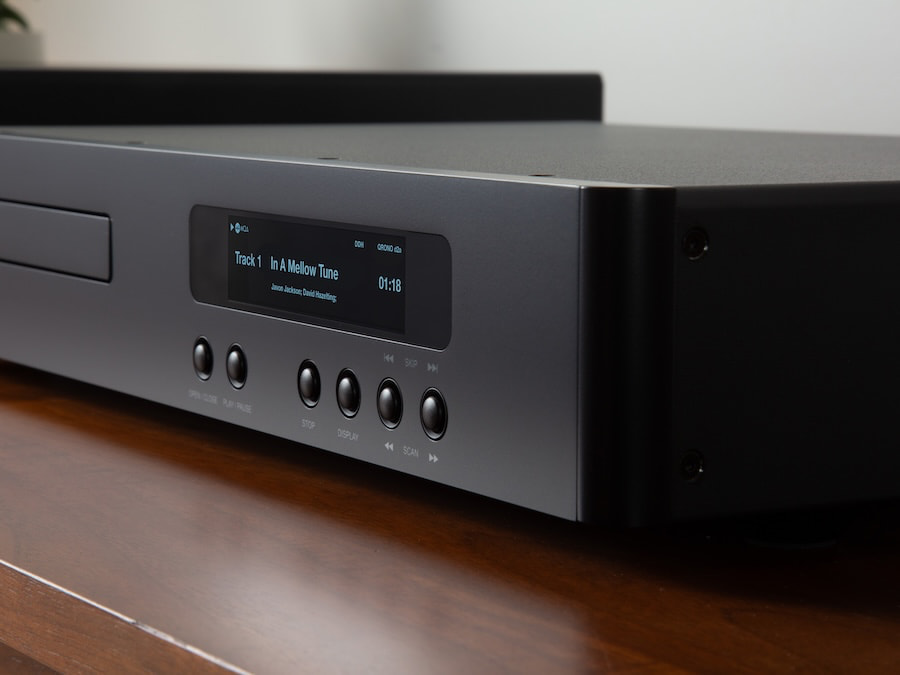
NAD C 569 CD Player Specifications:
- Price: $999 USD / $1,199 CAD
- Type: Single-disc CD player
- DAC: ESS ES9039Q2M SABRE
- Digital processing: QRONO d2a, Dynamic Digital Headroom (DDH)
- Disc features: Conventional CD playback, MQA-CD, CD-Text, gapless playback
- Transport: Tray-loading mechanism with NXP-based servo control
- Display: 3.7-inch full-color LCD
- Analog outputs: Stereo RCA
- Digital outputs: Optical and coaxial
- Analog output level: 2.2V ±0.2V
- Frequency response: 20Hz – 20kHz (±0.5dB)
- Total harmonic distortion: ≤0.006% at 1kHz
- Signal-to-noise ratio: ≥110dB (A-weighted)
- Channel separation: ≥110dB
- Channel balance: 0.5dB
- Dimensions (WxHxD): 435 x 83 x 294mm
- Weight: 4.2kg (9.2 lbs)
- Idle power consumption: ≤20W
- Standby consumption: Less than 0.5W
- Included accessory: IR remote control
- Finish: Black
NAD C 538 vs. C 569 vs. C 589: Which One Makes Sense?
NAD now has three CD players serving rather different customers, although the differences between the C 569 and C 589 are particularly interesting.
The C 538 remains NAD’s affordable option for music lovers who simply want to play their discs without spending a fortune. Its $499 price makes it considerably more accessible, and it already provides optical and coaxial digital outputs.
At the other end, the C 589 uses the more advanced ES9039PRO DAC, a fully balanced conversion architecture, XLR analog outputs, and an AES/EBU digital connection. NAD also specifies a slightly lower distortion figure of 0.005% and a signal-to-noise ratio of at least 115dB.
Those are genuine technical differences, but whether they justify the additional expense will depend on the rest of the system and listening results.
When we originally covered the C 589 in April 2026, its announced U.S. price was $1,399. NAD now lists it at $1,699, making the C 569 a full $700 less expensive.
For listeners using conventional RCA connections, the C 569 offers much of the same processing technology without charging for the flagship’s balanced circuitry and additional connectivity.
Competition: Marantz and Rotel Aren’t Going Anywhere
The $999 price also places the NAD against two established CD players that deserve consideration.
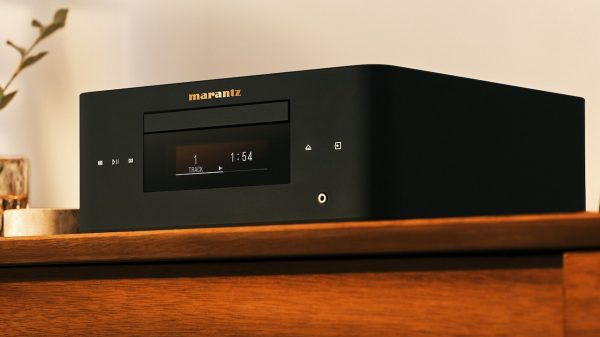
The Marantz CD 60 ($1,100) uses the company’s proprietary HDAM analog circuitry and selectable digital filters. It also offers a dedicated headphone output and front-panel USB playback for high-resolution music files. Marantz has a more versatile package, while NAD counters with its QRONO d2a and DDH processing.
The Rotel CD14MKII ($1,099) takes another traditional approach, employing a Texas Instruments 32-bit/384kHz-capable DAC, independent power supplies for critical circuitry, and a dedicated CD mechanism. It offers RCA analog and coaxial digital outputs, along with MP3 disc playback. Rotel also includes 12V trigger and RS232 connections for system integration.
Both are credible alternatives with established engineering pedigrees. More importantly, neither requires buyers to accept the claim that a particular DAC chipset automatically sounds better simply because its model number is higher.
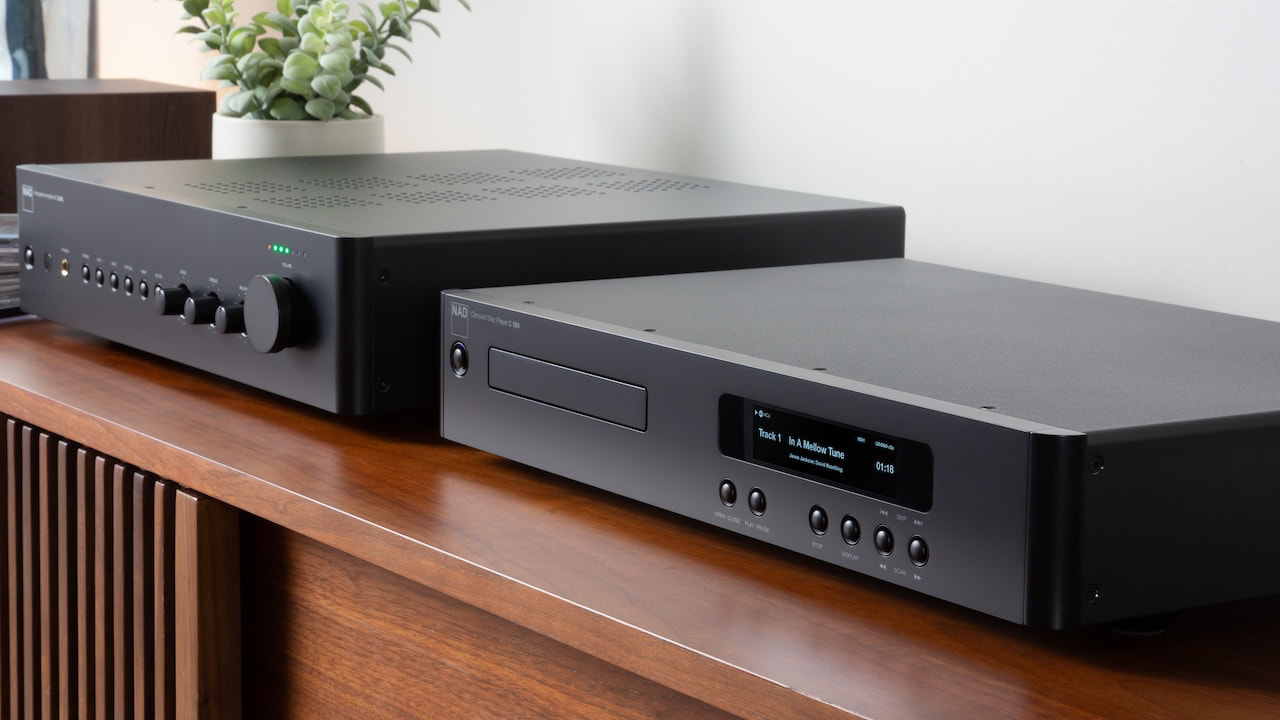
The Bottom Line
The NAD C 569 makes a compelling argument for spending less without necessarily giving up the most important digital technologies found in the company’s flagship CD player.
QRONO d2a, DDH, a current-generation ESS SABRE DAC, and a carefully engineered analog output stage are meaningful additions. The simplified connectivity makes sense for listeners who use conventional RCA connections and have no intention of building a fully balanced system.
The missing SACD and USB playback options are harder to ignore at $999, particularly when competing players offer greater flexibility. And as always, the real test will be whether NAD’s engineering choices translate into audible improvements over less expensive alternatives.
For collectors with hundreds or thousands of CDs, however, the C 569 looks like a potentially sensible upgrade without going completely overboard.
Pricing & Availability:
The NAD C 569 will be available in late November 2026 for $999 in the United States and $1,199 in Canada through authorized NAD dealers, the NAD website, and Amazon.
For more information: nadelectronics.com
Related Reading: