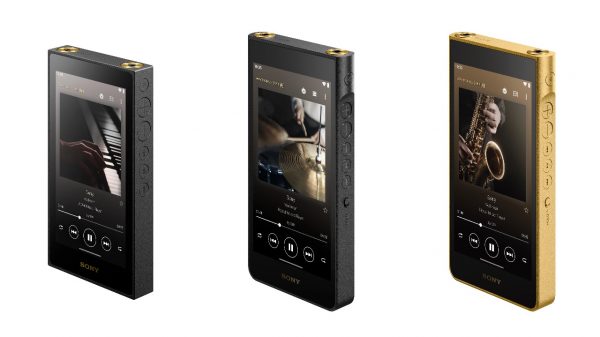
Smartphones have become remarkably capable music players, but that doesn’t mean every serious music listener wants to use one as their primary source. Between battery drain, mobile data limitations, compromised audio hardware, and the limited output power of many phones, there are legitimate reasons to consider a dedicated digital audio player (DAP). And if you’ve already spent $500, $1,000, or considerably more on a pair of high-end IEMs or headphones, chances are you’re a little obsessive about sound quality. Welcome to the club. Sony is betting that those listeners will take a serious look at its three new Walkman DAPs for 2026: the NW-ZX900 ($1,899), NW-WM1AM3 ($2,999), and flagship NW-WM1ZM3 ($5,899).
Of course, not every smartphone sounds terrible, and some of the best portable USB DACs can deliver excellent performance. But dedicated DAPs offer the potential advantages of purpose-built audio circuitry, more sophisticated digital processing, greater amplification power for demanding headphones, and local music playback without relying on a cellular connection.
They also keep your phone’s battery available for everything else you’re supposed to be doing. Like answering messages from people who don’t understand why you just spent $3,000 on a music player.
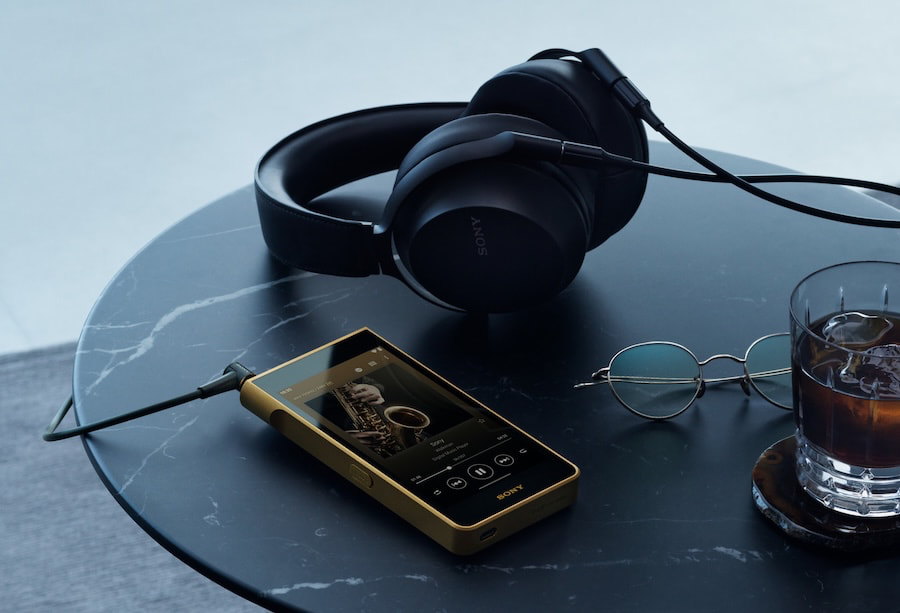
Sony’s latest Walkman models are designed to make that investment more appealing, with upgraded audio processing, improved sound quality, sharper 1080p displays, and faster, more intuitive navigation. The three models offer different levels of performance and features, giving buyers a choice rather than a single take-it-or-leave-it flagship.
More importantly, Sony is making it clear that Astell&Kern, iBasso, and other high-end DAP manufacturers don’t have the premium portable audio market to themselves. With prices approaching $6,000, the Walkman is no longer just a nostalgic reminder of the cassette era. It’s a serious investment in personal audio, and Sony has plenty to prove.
Related Reading:
- Astell&Kern SP4000T Copper Gives Its Quad Tube Flagship DAP An Even Flashier Finish
- Astell&Kern PD10 DAP Review: Bridging Ultra-Premium Portable Audio And Home Hi-Fi
Sony Walkman ZX900
The Sony Walkman ZX900 is the “entry-level” model in the new lineup, although $1,899 is a rather ambitious definition of affordable. Building on the previous ZX700 Series, the ZX900 introduces significant upgrades to its operating system, display, digital amplification, and internal components.
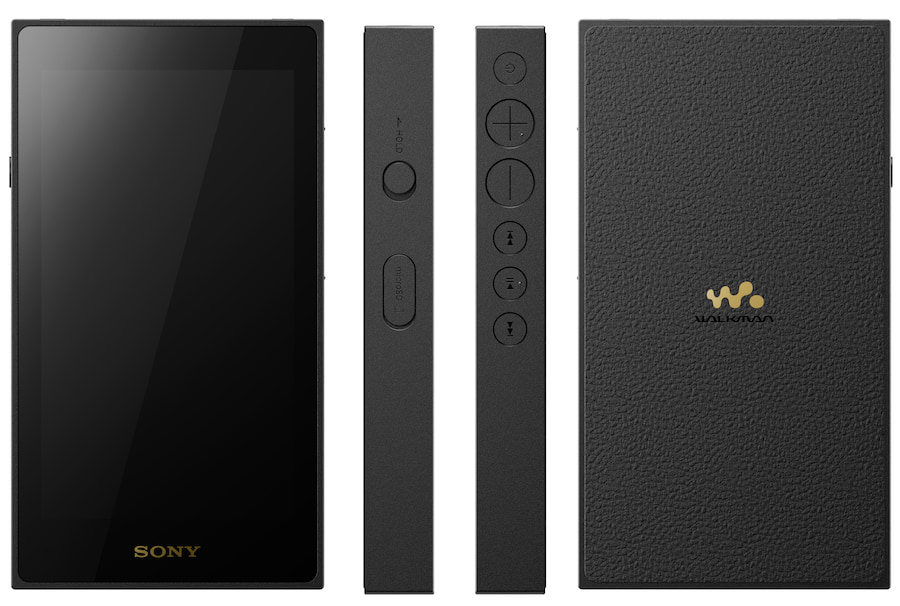
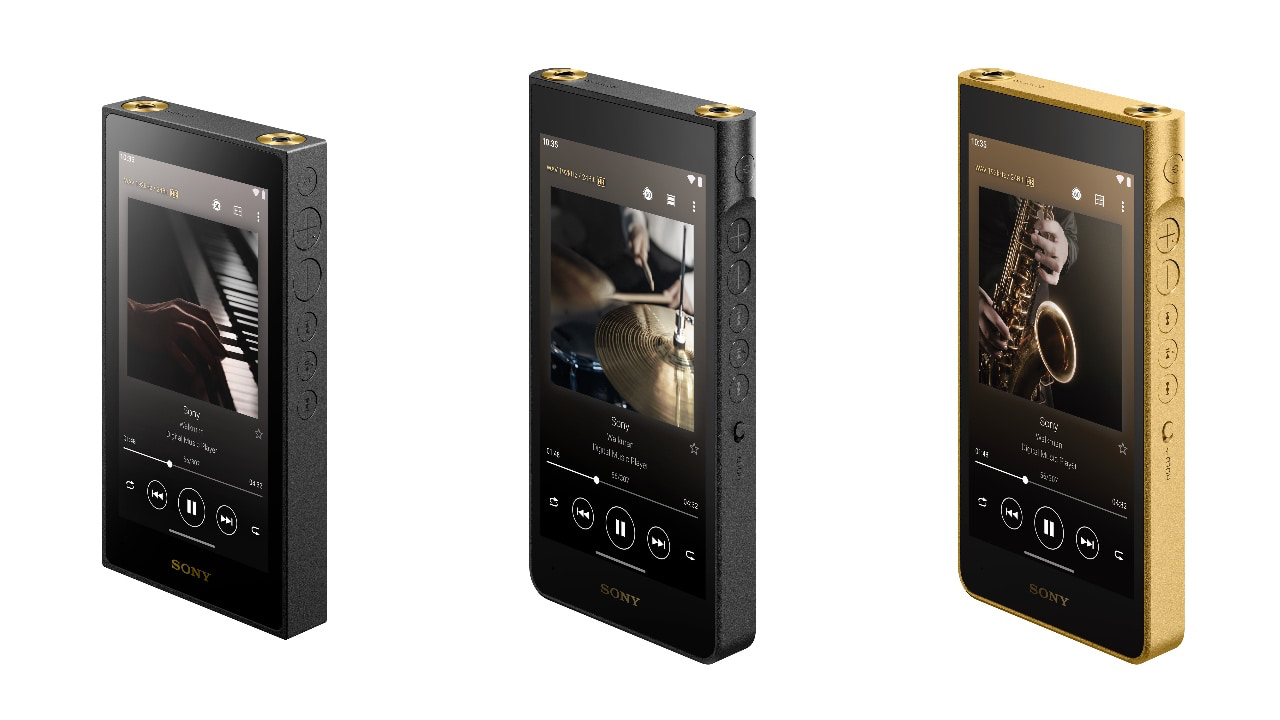
The new model moves to Android 16, compared with Android 12 at the ZX707’s original launch, and features an upgraded 5-inch display with higher resolution than its predecessor’s 1280 × 720 panel. Sony is also updating its S-Master digital amplification with a Look-Ahead Noise Shaper, designed to optimize quantization noise during digital-to-analog conversion and improve the reproduction of musical transients.
The ZX900 retains balanced headphone connectivity but adds a new High Gain mode, potentially making it more suitable for demanding IEMs and headphones. Actual output power will determine how meaningful that improvement is.
Sony has also incorporated an oxygen-free copper (OFC) rear chassis, battery technology derived from its flagship WM1 Series, and upgraded clock circuitry. These changes are intended to improve electrical performance and signal accuracy rather than simply make the ZX900 look more expensive.
With Android 16 and updated hardware, the ZX900 is also designed to provide faster navigation and a smoother experience with compatible third-party streaming applications. That matters when you’re trying to find an album rather than spend five minutes navigating menus on a $1,899 music player.
The ZX900 includes 64GB of internal storage, and, although Sony has not yet provided a complete set of technical specifications for the new model, we do know that storage can be expanded on all three new models up to a maximum of 2 TB via standard MicroSD cards, including Micro SDXC support for highest capacity.
Sony Walkman WM1AM3
Sony positions the WM1AM3 ($2,999) as the “premium value” model in its new Walkman lineup, combining several flagship-level technologies with a price that falls considerably below the top-of-the-line WM1ZM3. Of course, calling a $3,000 portable music player a value proposition requires a rather specific understanding of personal finance.
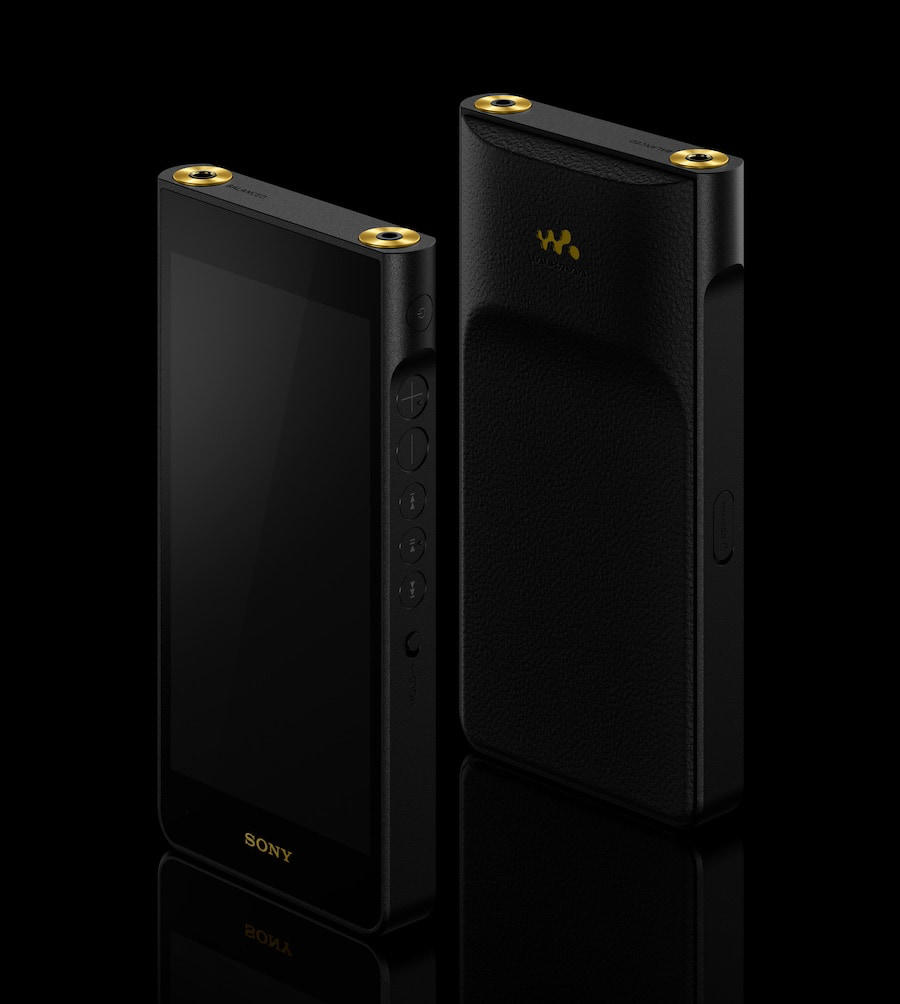
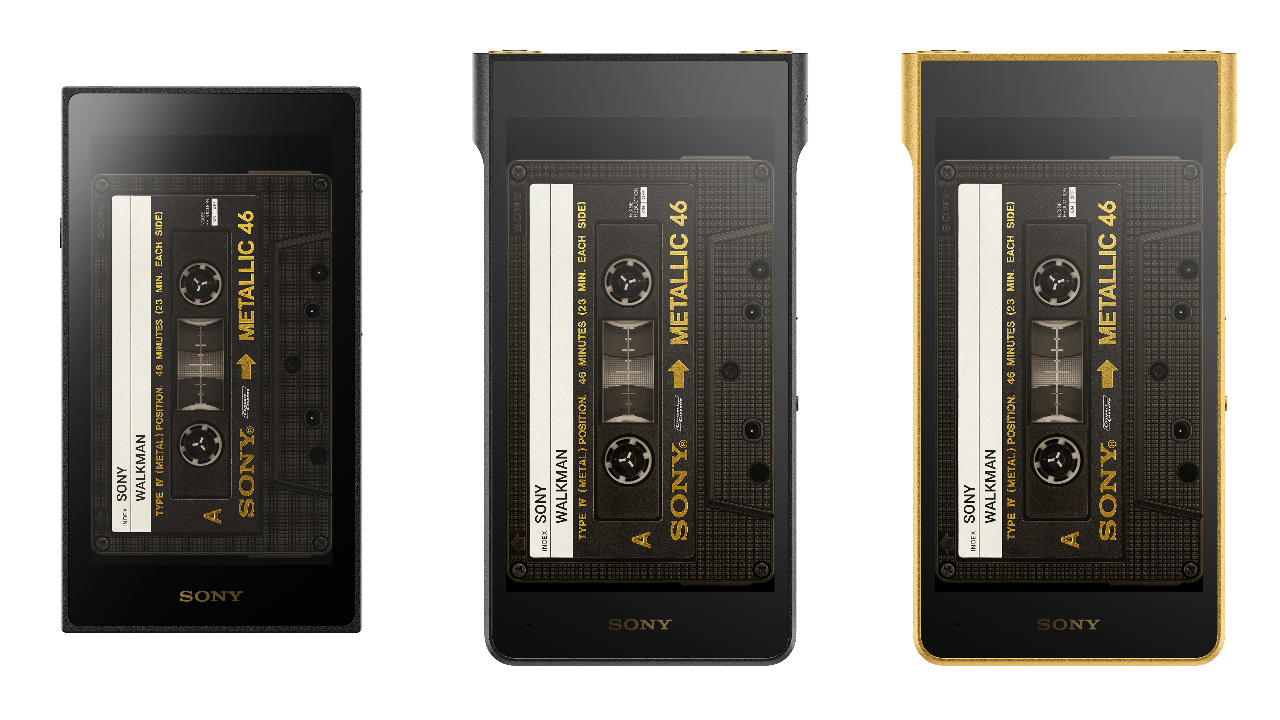
Building on the NW-WM1AM2 introduced in 2022, the WM1AM3 upgrades from Android 11 to Android 16 and increases the display size from 5 to 5.5 inches, with resolution improving from 1280×720 to Sony’s specified 1920×1080 pixels. The larger, sharper display and updated operating system are designed to improve navigation and the experience of using compatible third-party streaming applications, although Android app support was already available on the previous generation.
The audio upgrades are potentially more significant. Sony is introducing an updated S-Master digital amplification architecture with Look-Ahead Noise Shaper processing, designed to provide greater flexibility in managing quantization noise during digital conversion. The WM1AM3 also features balanced headphone connectivity and High Gain operation, although neither feature is entirely new to the series. Sony has not yet provided the output power specifications needed to determine whether the new model offers a meaningful improvement when driving more demanding headphones and IEMs.
Additional hardware changes include an oxygen-free copper (OFC) rear chassis, battery technology derived from Sony’s flagship WM1 Series, and upgraded clock circuitry. These components are intended to reduce unwanted electrical interference, improve signal accuracy, and support the performance of the revised digital amplification system. Whether those changes produce audible improvements over the WM1AM2 will require proper listening comparisons.
The WM1AM3 includes 128GB of internal storage, matching its predecessor and is expandable up to an additional 2 TB via its MicroSD card slot (supports MicroSDXC). At $2,999, buyers should expect more than an improved Android experience and a larger display.
Pro Tip: Sony’s previous-generation Walkman DAPs, including the WM1AM2, can also function as external USB DACs when connected to compatible computers, allowing listeners to use their dedicated audio circuitry for computer-based music playback. Sony has confirmed that the WM1AM3 retains this functionality, and it is also included on the ZX900 and the flagship WM1ZM3 discussed in the next section. When you plug the Walkman Player into a USB connection from a computer, it asks if you want ‘no data transfer’, ‘‘’file transfer’, or ‘‘’USB DAC’.
Sony Walkman WM1ZM3
The Sony Walkman WM1ZM3 ($5,899) is the company’s ultimate flagship DAP for 2026, combining premium materials, advanced digital processing, and extensive attention to its internal construction. At nearly $6,000, Sony is clearly targeting audiophiles who consider the price of a used car perfectly reasonable for a portable music player.
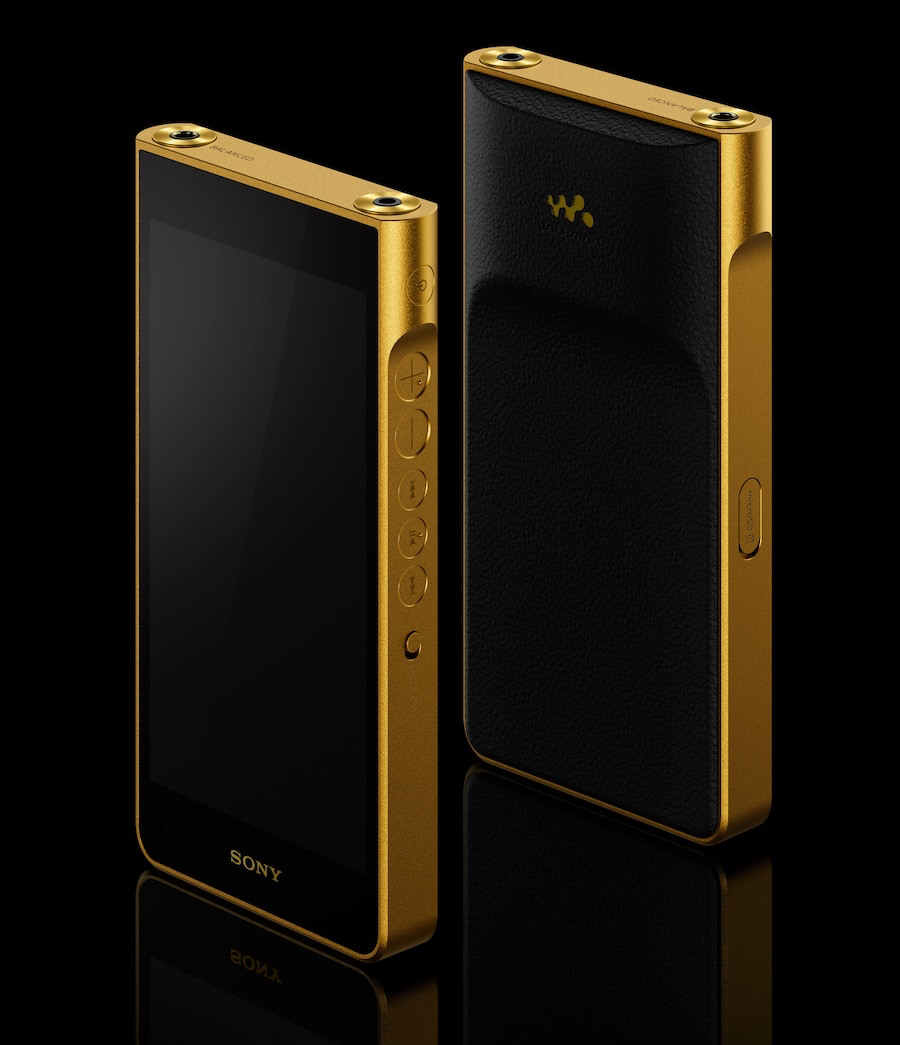
Building on the NW-WM1ZM2, Sony has refined the chassis with precision-milled 99.99% pure oxygen-free copper (OFC) for the main body and a separate rear chassis constructed from 99.96% pure OFC with direct gold plating. The company claims these materials improve grounding stability and contribute to smoother sound reproduction.
The WM1ZM3 also incorporates a direct-coupled chassis structure with low-resistance, gold-plated screws, designed to maintain more consistent electrical connections between its components. According to Sony, these refinements contribute to smoother, more extended high-frequency reproduction. Whether they produce audible improvements over the previous flagship will require careful listening comparisons.
Inside, Sony has specified two large solid capacitors and direct OFC power supply connections, intended to support stable power delivery to the audio circuitry. Thick Kimber Kable wiring is also used in the balanced headphone signal path, continuing a design approach employed in the WM1ZM2. Sony is targeting a wider soundstage, stronger bass reproduction, and improved resolution of fine musical details rather than simply adding more processing options.
On the digital side, the WM1ZM3 runs Android 16 with a 5.5-inch Full HD display and support for compatible third-party streaming applications. It also incorporates Sony’s 11.2MHz DSD Remastering Engine, which converts PCM audio into a high-frequency, 1-bit DSD signal, along with DSEE Ultimate processing for improving the playback of compressed digital music. Sony’s supplied information indicates that DSD remastering extends to compatible third-party streaming applications, an important development if implemented as described.
The flagship includes 256GB of internal storage (expandable up to an additional 2TB via MicroSDXC-compatible card slot), a 3.5mm headphone output, a 4.4mm balanced output, and USB-DAC functionality for use with compatible external sources. Sony also lists battery life of up to 35 hours, although actual endurance will depend on playback format, output connection, processing settings, and operating conditions.
At 670 grams, the WM1ZM3 is considerably heavier than its 490-gram predecessor. This is technically a portable music player, although your jacket pocket might disagree.
The bigger question is whether the elaborate copper construction, revised power supply, and digital processing justify the substantial premium over the $2,999 WM1AM3. Sony is making an ambitious case for the WM1ZM3 as a reference-level portable source, but at $5,899, spectacular engineering and genuinely superior sound quality need to go hand in hand.
Comparison
| ZX900 | WM1AM3 | WM1ZM3 | |
| Product Type | Digital Audio Player (DAP) | Digital Audio Player (DAP) | Digital Audio Player (DAP) |
| Price | $1,899.99 | $2,999.99 | $5,899.99 |
| Product Position | Step-up listener from ZX700 or smartphone | Flagship experience with cost-optimized chassis | Ultimate, no-compromise flagship |
| Sound Character Stated in Deck | Not Indicated | Deep, well-defined bass, expressive micro-detail, strong value | More stable ground; stronger low-frequency reproduction; air pressure-like bass; enhanced sense of air |
| Display/OS | 5.0-inch Full HD / Android 16 with streaming app support | 5.5-inch Full HD / Android 16 with streaming app support | 5.5-inch Full HD / Android 16 with streaming app support |
| Battery / Processing | Missing Info | Same battery figures and flagship processing suite | Same battery figures and flagship processing suite |
| Battery Life | 35 Hours (format dependent) | 35 Hours (format dependent) | 35 Hours (format dependent) |
| Main Chassis | Milled aluminum | Milled aluminum | 99.99% oxygen-free copper, precision-milled |
| Rear Chassis | Press-formed OFC | Press-formed OFC, directly gold-plated | Precision-machined OFC, directly gold-plated |
| Chassis Fastening | Not Indicated | Direct-Coupled | Direct-coupled + gold-plated screws |
| Balanced HP Internal Wiring | Not Indicated | OFC Cable | Thick 4-wire braided Kimber Kable |
| Internal Storage | 64GB | 128GB (~ 91GB usable) | 256GB (~207GB usable) |
| Expandable Storage | Up to 2 TB (MicroSDXC-compatible MicroSD card slot) | Up to 2 TB (MicroSDXC-compatible MicroSD card slot) | Up to 2 TB (MicroSDXC-compatible MicroSD card slot) |
| SOC (System on Chip) | Not Indicated | Not Indicated | Not Indicated |
| DAC (Digital to Analog Converter) | Specific Model Not Indicated | Specific Model Not Indicated | Specific Model Not Indicated |
| Connectivity | 3.5mm and 4.4mm outputs USB – DAC | 3.5mm and 4.4mm outputs USB – DAC | 3.5mm and 4.4mm outputs USB – DAC |
| Audio Processing | S-Master HX; Look-ahead Noise Shaper + WM1M3-derived parts -Balanced Output -with new High Gain Mode | S-Master HX; Look-ahead Noise Shaper with Light / Balance / Deep modes 11.2MHz DSD Remastering for Walkman and third-party streaming apps; DSEE Ultimate | S-Master HX; Look-ahead Noise Shaper with Light / Balance / Deep modes 11.2MHz DSD Remastering for Walkman and third-party streaming apps; DSEE Ultimate |
| Dimensions (HxWxD) | 77.2 x 139.8 x 17.5 mm | 86 x 157.6 x 23.2 mm | 86 x 157.6 x 23.2 mm |
| Weight | 345g | 425g | 670g |
The Bottom Line
Sony is making an aggressive move in the premium DAP market with the ZX900, WM1AM3, and WM1ZM3. Rather than simply updating the operating system and charging more for familiar hardware, the company is refining its digital amplification, internal construction, and user experience. The three models offer different levels of engineering and luxury, but all are aimed at listeners who want a dedicated music source rather than another reason to drain their smartphone battery.
The biggest obstacle is Astell&Kern, which has spent years establishing itself as one of the dominant names in high-end portable audio. The PD20 ($1,970) challenges the ZX900 with personalized hearing profiles and selectable amplification modes. The PD10 ($2,410 without its cradle) offers the WM1AM3 serious competition, particularly for listeners who also want to integrate their DAP into a home audio system. At the top, the A&ultima SP4000 (currently $4,290) combines an elaborate Octa audio architecture with extensive streaming capabilities, while costing more than $1,500 less than Sony’s WM1ZM3.
That makes Sony’s flagship a difficult proposition to justify on specifications alone. The original NW-WM1Z arrived in 2016, followed by the WM1ZM2 in 2022, establishing a product family that has evolved considerably without abandoning its fundamental design philosophy. Sony’s continued documentation and support resources are encouraging, although future firmware updates, replacement parts, and service availability should never be assumed. At almost $6,000, buyers deserve clear answers about all three.
So who are these new Walkman players for? The ZX900 looks like the most sensible entry point for enthusiasts with serious IEMs and headphones who want a dedicated source with modern streaming capabilities. The WM1AM3 targets listeners seeking a more elaborate premium design without paying flagship prices. The WM1ZM3 is aimed at collectors and committed audiophiles who value Sony’s engineering philosophy, premium construction, and ownership experience as much as the final few degrees of sonic refinement.
Astell&Kern isn’t Sony’s only serious competition. The iBasso DX340 ($1,799) offers a discrete 1-bit DAC architecture, interchangeable amplifier modules, and impressive output power for demanding headphones. The FiiO M27 ($1,799) takes a different approach with dual flagship ESS DACs, extensive connectivity, and up to 5 watts per channel of balanced output when externally powered. Both challenge the $1,899 ZX900 on technical features and price.
At the higher end, the Cayin N8iii ($3,999) combines vacuum tube and solid-state amplification modes with a flagship AKM DAC architecture, offering a distinctly different alternative to Sony’s premium models. It’s almost $1,900 less expensive than the WM1ZM3, which raises an uncomfortable question for Sony: how much are buyers willing to pay for its elaborate copper construction, proprietary processing, and Walkman heritage? At these prices, brand loyalty shouldn’t get a free pass.
Sony deserves credit for continuing to invest in dedicated portable audio when the smartphone has become the default music player for almost everyone else. The new Walkman lineup looks technically ambitious, but whether it can challenge Astell&Kern’s best players will depend on sound quality, output performance, software reliability, and long-term ownership.
The Walkman is clearly not dead. At $5,899, however, it had better sound spectacular.
Price & Availability
The 2026 Sony Walkman DAPs are available through Sony’s online store with an estimated delivery date of January 12-13, 2027.
- NW-ZX900 – $1,899.99 at Amazon | Sony (available December 7, 2026)
- NW-WM1AM3 – $2,999.99 at Amazon | Sony (available December 7, 2026)
- NW-WM1ZM3 – $5,899.99 at Sony (available January 12, 2027)
Related Reading: