While the rest of the world seems to have jumped on the Bluetooth and active noise cancellation (ANC) bandwagon, musicians performing on stage still have good reasons to stick with wired in-ear monitors. In some respects, IEMs have come a remarkably long way in the 60 years since Stephen Ambrose began experimenting with transistor radio earpieces to develop his first in-ear monitors in 1965. In others, surprisingly little has changed. The earpieces are still predominantly wired, passive noise isolation remains essential, and fit, comfort, and sound quality are just as important today as they were back then.
Modern IEMs range from elaborate designs with ten or more drivers per earpiece to relatively simple single-driver models that don’t require complicated crossover networks. While those multi-driver configurations can offer greater flexibility for tuning, there’s still a lot to be said for keeping things simple. A single full-range dynamic driver eliminates the need for a crossover, helping manufacturers reduce complexity, size, and weight without necessarily compromising performance.
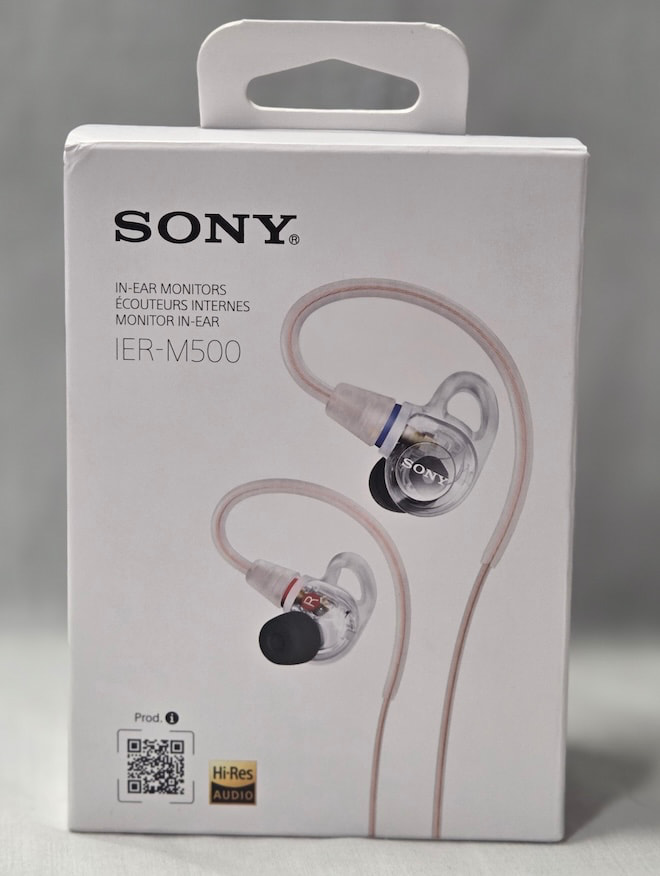
Sony has taken that approach with the IER-M500, a professional in-ear monitor designed for musicians who need reliable sound without spending a small fortune. Developed in collaboration with monitoring engineers, the IER-M500 uses a single 5mm dynamic driver and emphasizes accurate sound reproduction, passive noise isolation, a secure fit, and freedom of movement on stage.

At $119.99, Sony is positioning the IER-M500 as a professional monitoring tool that remains affordable for beginners, hobbyists, and experienced performers who need a dependable backup. You don’t have to be headlining Madison Square Garden to appreciate a pair of IEMs that stay in your ears, let you hear what you’re playing, and don’t require selling your guitar to pay for them.
Related Reading:
- Shure SE846 Gen 2 Sound Isolating Earphones: Exclusive Review
- Beyerdynamic DT 30 IE Review: A $149 Professional IEM Built For The Stage
- Sony IER-M500 First Impressions: $119 IEMs Built For Musicians
Build & Fit: Secure, Comfortable, and Ready for the Stage
Upon opening the box, the first thing you’ll notice is the number of support bands and ear tips included. Sony clearly went all-in to ensure the IER-M500 fits a broad range of performers, providing five different sizes of supports and four sizes of hybrid foam tips. I call them hybrid because they have the familiar shape of silicone ear tips but feature a compressible foam layer on the outside to provide a more foam-like seal.

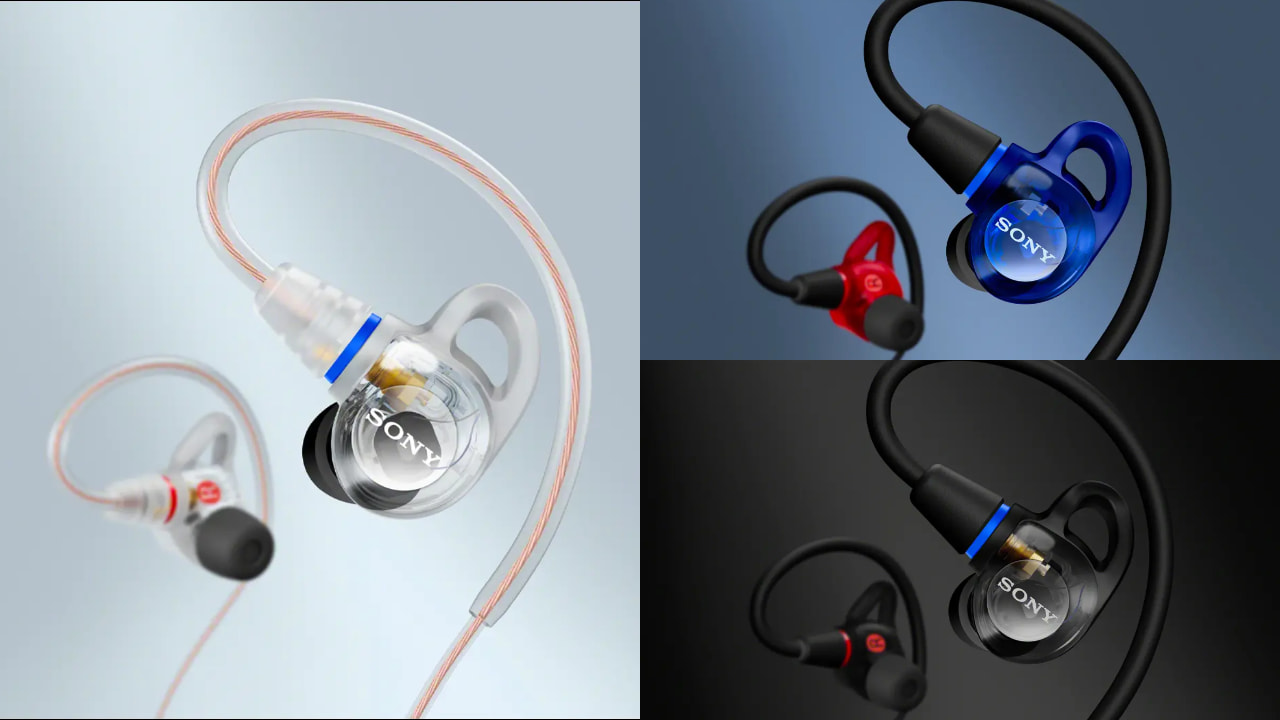
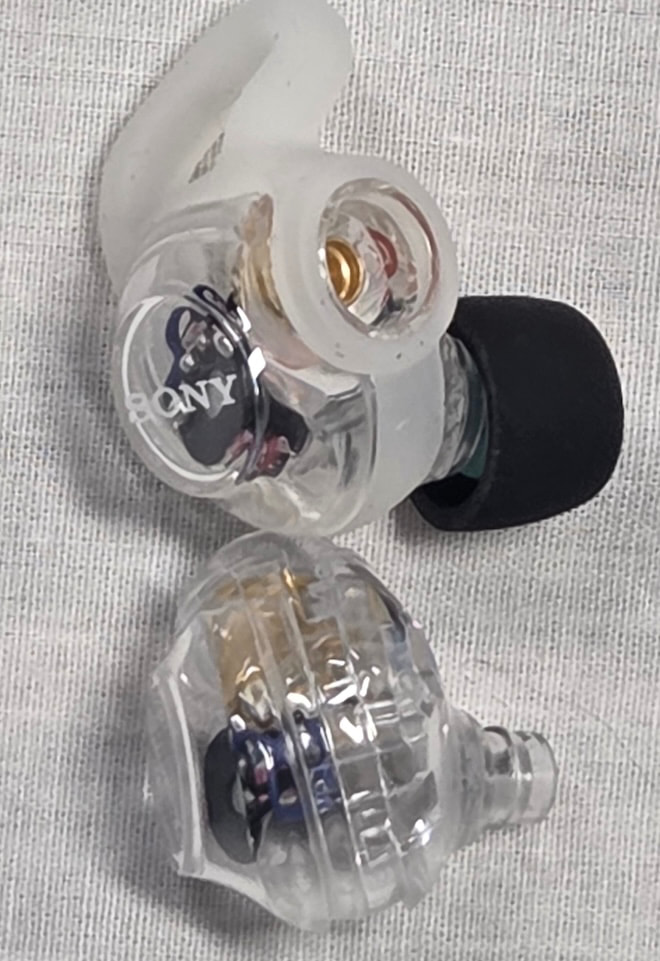
The cable and earpieces arrive inside a capsule-shaped carrying case with a mesh pocket on one side for securely storing spare supports and tips. The earpieces are available in clear, black, and transparent red and blue finishes, with the latter being a classic option for stage performers.
The earpieces are compact enough to sit inside the ear rather than rest against it, which helps improve passive isolation by positioning the housing directly behind the ear canal. Each earpiece weighs approximately 7 grams, depending on the tip and support used. Four of the five supports feature a wing designed to tuck into the antihelix and hold the earpiece securely in place. The differences in wing size and shape also affect their weight. In addition, the cable uses ear hooks without memory wire to distribute weight over the ear, further ensuring the IER-M500 stays firmly in place during performances.
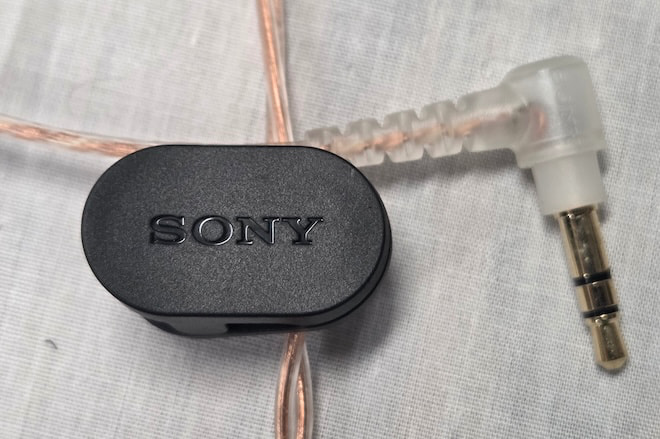
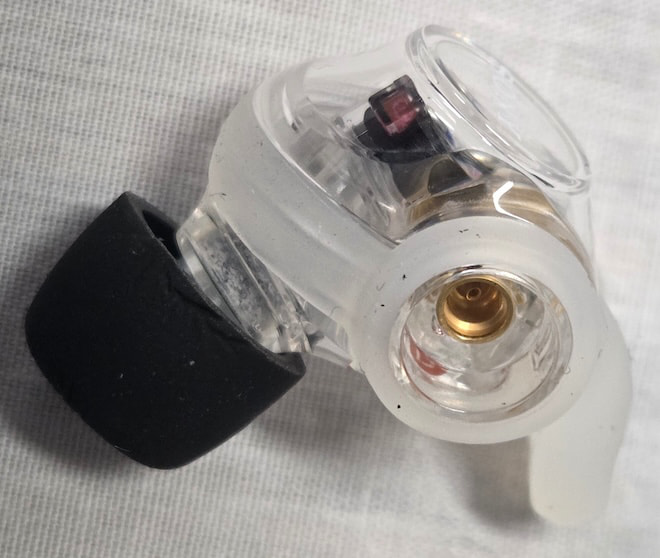
The approximately six-foot cable uses oxygen-free copper conductors inside a clear or black jacket, depending on the earpiece color. It includes both a chin slider and a cable clip for additional security, along with a standard 3.5mm plug for connectivity. The earpieces use recessed MMCX connectors, although the surrounding connector housing has a nonstandard shape.
Aftermarket cables may work, but their narrower barrels can look somewhat awkward compared with Sony’s original cable. Fortunately, replacements are available, which is important because stage monitors tend to lead a rough life. I found genuine Sony replacement cables through several suppliers for approximately $55. The part numbers are S0930104019 for black and S0930104018 for clear.
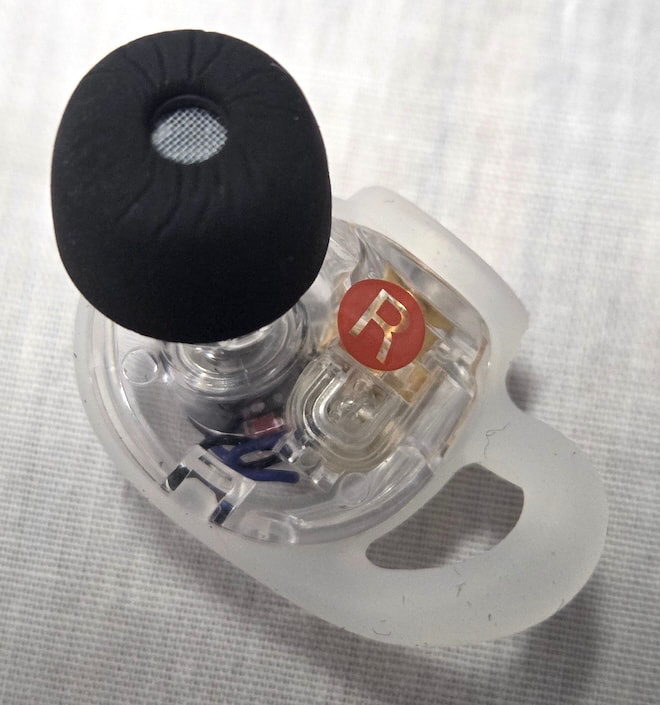
Comfort and isolation depend on finding the right combination of ear tip and support. It took me a couple of attempts to get the fit right, eventually settling on the second-largest tip and a support one size larger than the one installed when the IER-M500 arrived. Use a support that’s too small, and the earpiece can shift and lose its seal. Go too large, and the additional pressure on the ear becomes uncomfortable rather quickly. Sony provides enough options to make finding a suitable fit relatively straightforward, although some experimentation is necessary.
One thing worth mentioning is that Sony does not specify an IP water resistance rating for the IER-M500. However, in a private briefing with Sony they said they’ve passed, “Sony’s proprietary water resistance testing to evaluate suitability for stage use.” At a minimum, that’s reassuring for musicians who regularly perform under hot stage lights or in less than ideal conditions.
Internals: One Driver, No Crossover, and a Few Numbers Worth Explaining
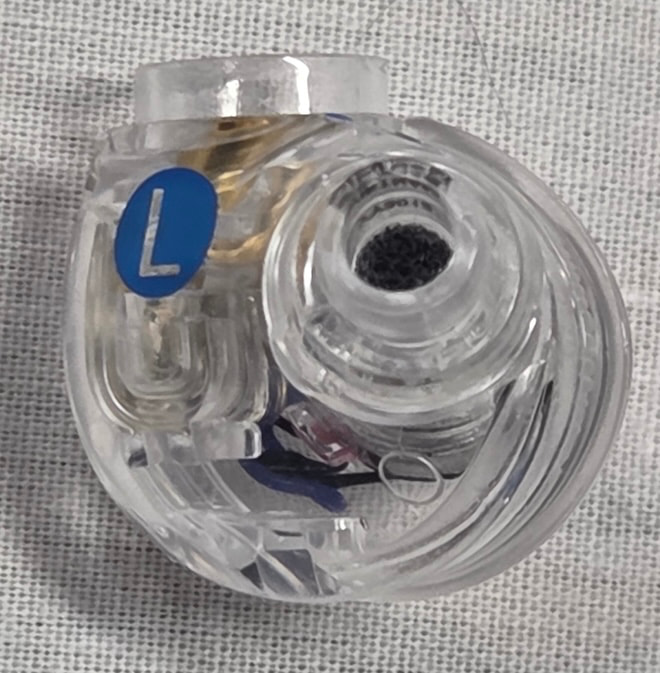
Each IER-M500 earpiece uses a single 5mm dynamic driver housed in a fully sealed acoustic structure. Sony combines the compact driver with a relatively large internal acoustic chamber designed to deliver controlled bass, clear high frequencies, and effective passive isolation. The single-driver configuration eliminates the need for a crossover, keeping the design relatively simple without requiring multiple drivers to divide up the frequency range.
Sony rates the IER-M500 at 16 ohms impedance (1kHz) with a sensitivity of 103 dB/mW, making it relatively easy to drive using a wide range of stage monitoring equipment, portable audio players, and home audio sources. Musicians shouldn’t need a particularly powerful headphone amplifier to achieve useful listening levels, although the quality of the source and amplification still matters.
The published frequency response is 10Hz to 40kHz, which looks impressive on paper, but those numbers require some context. Sony does not provide a frequency-response graph or a stated deviation in decibels across that range. The ability to reproduce a 10Hz or 40kHz tone doesn’t tell us how loudly either frequency is reproduced relative to the rest of the spectrum. Without that information, the specification offers little insight into the IER-M500’s actual tonal balance.
Frequency response limits are not the same thing as a measured response curve, and buyers shouldn’t confuse the two. What matters far more for a stage monitor is how accurately and consistently it reproduces the frequencies musicians actually need to hear.
Sony IER-M500 Specifications:
- Type: Professional wired in-ear monitors (IEMs)
- Driver: Single 5mm dynamic driver per earpiece
- Acoustic Design: Fully sealed, closed-back
- Frequency Response: 10Hz to 40kHz (IEC)
- Impedance: 16 ohms (at 1kHz)
- Sensitivity: 103 dB/mW
- Noise Isolation: Passive, using noise-isolating ear tips and sealed housings
- Cable: Detachable, approximately 5.25 feet (1.6 meters)
- Cable Connectors: Sony proprietary housing, MMCX-compatible
- Headphone Connection: 3.5mm L-shaped stereo plug
- Weight: Approximately 0.24 ounces (6.9 grams) per earpiece, without cable
- Ear Tips: Four sizes (XS, S, M, L)
- Fitting Supports: Five sizes (XS, S, M, L, XL)
- Available Colors: Black, Clear, and Red/Blue combination
- Included Accessories: Detachable cable, noise-isolating ear tips, fitting supports, cable clip, and carrying case
Listening
When discussing professional audio gear, there’s often an assumption that neutrality is the goal. That’s not necessarily the case with stage monitors, and the Sony IER-M500 certainly doesn’t follow that approach. It has a pronounced low-end emphasis, with most of the additional energy concentrated from around 60Hz upward. Sub-bass begins to roll off below approximately 50Hz, but considering the compact 5mm driver, there’s a surprising amount of bass quantity and quality on offer.
The mid-bass delivers good slam and more than enough impact for performers who rely on rhythmic cues from the drummer to keep time. Even with relatively low-powered USB dongles, the IER-M500 maintains its bass weight and impact, suggesting that this presentation is inherent to Sony’s tuning rather than the result of using more powerful or expensive source equipment.
The lower midrange takes a step back from the elevated mid-bass, sounding mildly recessed. Lower-pitched vocals remain on relatively even footing with the instrumentation rather than stepping out in front. The central midrange also sits in the trough of what is essentially a V-shaped, almost M-shaped sound signature. Guitar, piano, and strings are easy enough to follow, but they don’t have quite the same energy or dynamic presence as the frequencies above and below them.
Fortunately, the IER-M500 responds well to EQ, and a modest boost through the midrange gives instruments a more forward presentation and livelier timbre. If I were a guitar player rather than a bass player, I’d probably want to bring that region up a few decibels so I could hear more of my own instrument in the monitor mix. As a bassist, I prefer the prominent low end with enough information above it to keep track of what everyone else is doing. Musicians whose instruments occupy more of the middle frequencies may find Sony’s default tuning a little too relaxed.
Upper-register vocals are smooth and fluid, but they also tend to blend with the surrounding instrumentation rather than taking center stage. The presentation is pleasant enough, although listeners need to pay closer attention to pick out subtle vocal details and nuances. Compared with IEMs that emphasize the upper midrange and lower treble, the IER-M500 is less revealing in this area.
The treble begins with a mild lift before rolling off rather quickly, creating a presentation that is neither fatiguing nor particularly exciting. To my ears, the decline becomes especially noticeable above approximately 7kHz, keeping harshness and sibilance under control during longer listening sessions. That’s a sensible compromise for a stage monitor, although the trade-off is reduced air, sparkle, and some loss of fine detail.
Source matching also plays a role. The IER-M500 benefits from studio equipment or portable sources that lean toward a brighter, leaner presentation, which can help balance its warmer tuning. Pairing it with an already warm source tends to reinforce the low-end emphasis and can make the upper frequencies seem even more subdued. That’s worth considering if you’re using the M500 with a dedicated stage monitoring system or portable DAC.
I generally don’t expect an enormous soundstage from sealed in-ear monitors, and the IER-M500 doesn’t offer one. Width and depth are reasonably well balanced, but the overall presentation remains intimate, suggesting a small studio or theater-in-the-round environment rather than a large concert venue. That isn’t necessarily a disadvantage for stage monitoring, where being able to identify individual instruments is often more important than creating an expansive listening space.
Fortunately, instrument separation is good, and imaging is precise enough to make individual placements and movements easy to follow. I did notice some mild compression in the bass when recordings became particularly fast and complex, with low-frequency details beginning to crowd one another. It’s a limitation worth mentioning, but these are $120 entry-level stage monitors, not reference audiophile headphones costing several times as much.
For drummers, bass players, and performers who prioritize a strong rhythmic foundation, Sony’s tuning makes considerable sense. Guitarists and other musicians who need greater midrange presence may find themselves reaching for EQ, but the IER-M500 provides a solid starting point without requiring much adjustment.
The Bottom Line
The Sony IER-M500 is a compact, wired stage monitor that gets most of the important things right. It offers a secure fit, effective passive isolation, and enough low-end impact to keep drummers and bass players happy without sacrificing the clarity needed to follow the rest of the performance. Vocalists should also find plenty to like, although guitarists (who always seem to want more of themselves and less of everyone else) may wish for a more forward midrange. Fortunately, the M500 responds well to EQ, making those adjustments relatively straightforward.
Sony also deserves credit for including an extensive selection of ear tips and supports at this price. The availability of replacement cables and other components is another significant advantage, especially for working musicians who tend to be rather hard on their equipment. Having a manufacturer with Sony’s history of professional audio support behind the product adds some reassurance, although replacement-part availability is never guaranteed indefinitely.
At $119.99, the IER-M500 offers a compelling combination of durability, comfort, bass-forward tuning, and serviceability. It’s an easy recommendation for musicians just starting their stage performance journey, experienced performers who need an emergency backup when their cherished custom IEMs decide to quit, and anyone looking for something more rugged than the average consumer earphone.
My daughter used to destroy inexpensive in-ears with alarming regularity. They would end up stuffed into jeans pockets, buried at the bottom of her purse, or crushed beneath 20 pounds of textbooks in her backpack. I eventually gave her my spare pair of Shure SE215s, which finally put an end to the destruction. The Sony IER-M500 offers the same kind of practical, durable design, and if I were buying her another pair today, I’d probably choose the Sony.
The IER-M500 isn’t the last word in resolution, soundstage, or tonal neutrality, but that’s not really the point. It’s a well-built, affordable stage monitor that does what performers need it to do, and it should survive the occasional indignity that comes with actually using your equipment. For $120, that’s a pretty convincing argument.
Pros:
- Secure comfortable fit
- Great selection of supports and tips
- Detachable cable
- Easy to drive with portable or stage gear
- Good default tuning for drummers, bass players and some vocalists
- Take EQ well for those where the default tuning isn’t ideal
Cons:
- Recessed MMCX connector may limit cable replacement options
- Not IP rated for sweat/water resistance
- Midrange may require EQ tuning
Our Ratings:
★★★★★★★★★★ Sound Quality
★★★★★★★★★★ Build Quality
★★★★★★★★★★ Durability
★★★★★★★★★★ Comfort
★★★★★★★★★★ Value
Where to Buy:
Related Reading:
- Best IEMs: Editors’ Choice
- 8 New Headphones And IEMs We Want To Try In 2026
- Beyerdynamic DT 7x IE Series IEMs Review: Four Tunings For Stage Life
- Beyerdynamic DT 30 IE Professional IEMs Review