Buying a new TV has become an alphabet soup of display technologies, marketing terms, and acronyms that can leave even experienced shoppers wondering what they are actually paying for.
Choosing between an “LED TV” and an OLED TV is only the beginning. But make no mistake: most of the TVs that are generally referred to as “LED TVs” are actually LCD TVs. The “LED” part of the name refers to the type of backlight unit that lights up that LCD panel, making the image bright enough to be seen by the human eye. OLED (Organic Light Emitting Diode) TVs and MicroLED TVs are fundamentally different from LCD TVs, but those differences are not relevant to the discussion at hand. You can read more about the various types of TV technology here.
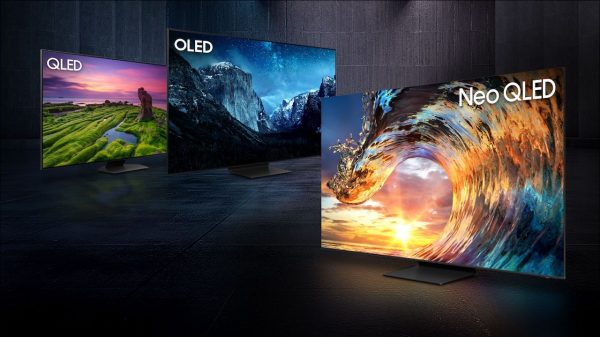
Within that LCD TV category, consumers are confronted with a plethora of terms including LED, QLED, Mini LED, SQD Mini-LED and RGB Mini-LED, often without a clear explanation of what separates one technology from another or whether the TV in the box actually matches the technology advertised on it.
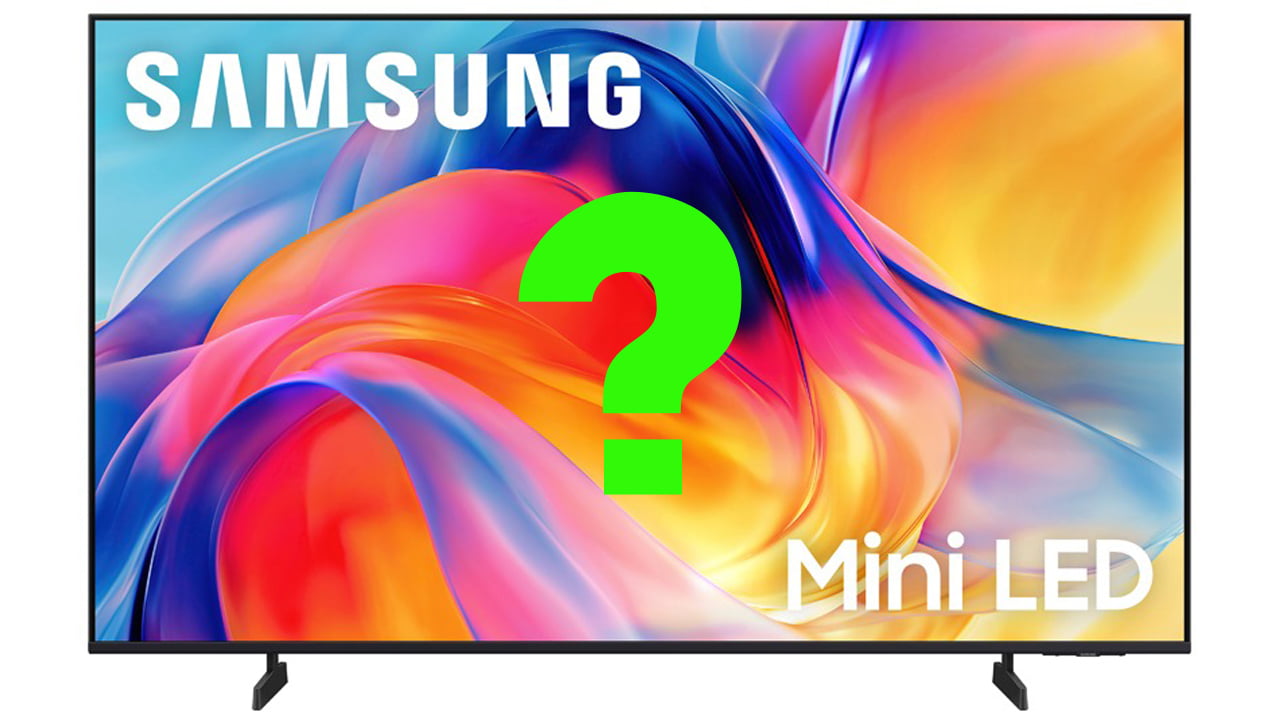
That last question has become considerably more important as the competition within the TV marketplace has become more heated. TCL is challenging Samsung over how several of its televisions are marketed as “Mini-LED” models, raising a broader issue for TV buyers: What actually qualifies as a Mini-LED TV, and how is the average consumer supposed to know the difference between it an a “regular” LED/LCD TV?
Before getting into the details of the dispute, it helps to understand the basics. Here is what separates the major LCD based TV technologies we will be discussing and why those differences matter when you are shopping for a new television.
LED TV
TVs commonly referred to as “LED TVs” are actually LCD TVs that use LEDs (light emitting diodes) in their backlights. The LEDs provide the light source behind the LCD panel, which creates the image you see on the screen. “LED TV” became a popular marketing term to distinguish these models from older LCD TVs that used fluorescent backlighting, but the display itself is still LCD based. However, understanding how LEDs are used is where things get complicated. For example, the total quantity of LED elements, their size and placement behind the screen, and whether they work independently or in zones, will all play a factor in overall picture performance.
Mini-LED TV
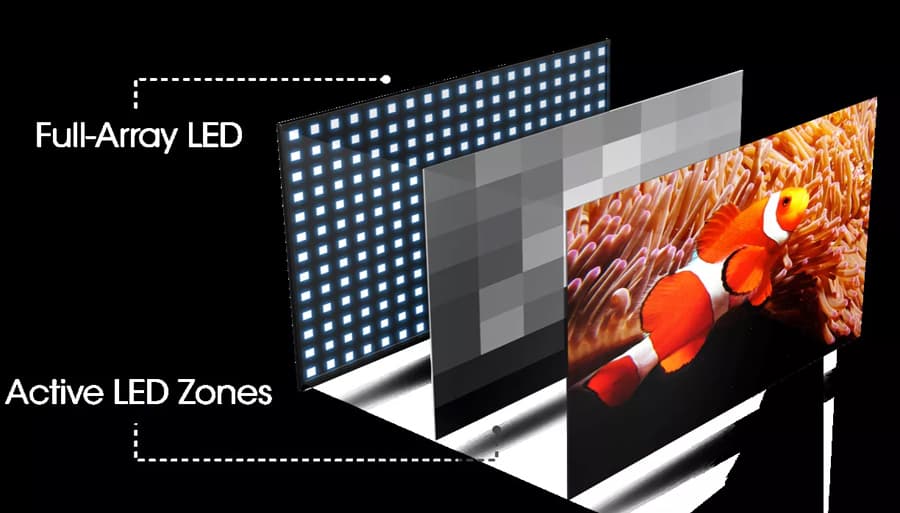
A Mini-LED TV is also an LCD TV, but it uses much smaller LEDs for the backlight than a traditional LED/LCD TV. Because manufacturers can fit far more LEDs behind the LCD panel, Mini LED backlights can potentially provide more precise control over brightness, especially when grouped into zones (aka local dimming), improving contrast and black levels and reducing common artifacts like haloing when bright objects stand out against a black or dark background.
Mini-LED is commonly defined as “submillimeter light emitting diode” – in other words, each lighting element or “bulb” is below one millimeter in size. But this is where things start to get murky. There is no universally accepted industry standard governing exactly how small an LED must be for a consumer TV to be marketed as Mini-LED. Many technical definitions place Mini LEDs in roughly the 50 to 200 micrometer range, but definitions vary. That lack of a universal standard is particularly relevant to the dispute between TCL and Samsung.
QLED TV
A QLED TV is another type of LCD TV that combines an LED backlight with a layer of Quantum Dots (hence the “Q” in the name). The use of Quantum Dots helps to improve color reproduction and brightness of an LCD TV. In a typical QLED television, the LED backlight sits behind the display, with the Quantum Dot material working with the LCD panel to produce a full color image.
An important sidebar here is that “QLED” is not fundamentally different from LCD technology, but it is simply a marketing term used for an LCD TV that combines a Quantum Dot color layer with LED lighting elements to light up an LCD panel. Despite the name, QLED TVs are still LCD based televisions and should not be confused with self emissive display technologies such as OLED or MicroLED.

Drill Down on TV Tech:
- What’s the Best TV Tech? OLED vs. Mini LED vs. RGB Backlit LCD TVs Explained
- Samsung Spent a Decade Fighting OLED With QLED: Now It May Be Moving On?
Part One: Samsung Takes TCL to Court
Although this article focuses on a new controversy involving Mini-LED TVs, the story actually began in April 2025, when Samsung sued TCL in Germany over allegedly misleading advertising involving the use of the term QLED on some televisions sold in that market, including the QLED870 Series.
Samsung claimed that TCL used only a tiny amount of quantum dot material on a diffusion plate, which did not meaningfully improve color reproduction or meet consumer expectations for what constitutes “true QLED” technology.
In the end, the German court sided with Samsung. That decision not only left a bad taste in TCL’s mouth, but also appears to have prompted the company to strike back. TCL took a closer closer look at Samsung’s own TV lineup, where it found an issue it could challenge in return.
Part Two: TCL Fires Back at Samsung
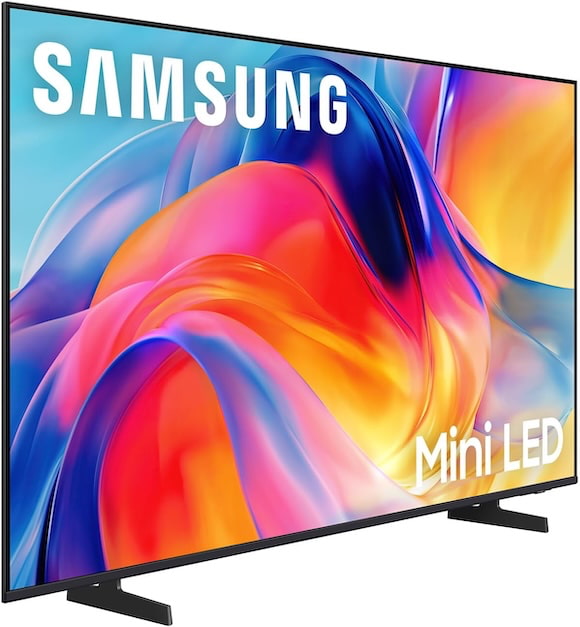
TCL filed a lawsuit against Samsung in the U.S. on August 31, 2026. The issue: TCL alleges that Samsung falsely marketed its M70H, M80H, and M90H (2026) series as Mini-LED TVs, creating what TCL argues is unfair price competition between Samsung’s lower priced M Series models and TCL’s Mini-LED TVs.
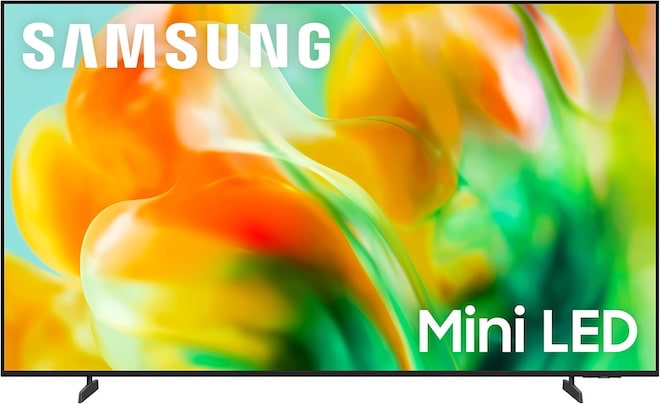
But the question is: does the case actually have merit? If the term “Mini LED” refers only to the size of each individual LED light element, and if the TVs in question use LED lighting elements that are small enough to qualify as “Mini LED” by some agreed upon definition, then it would seem on the surface that Samsung is within their rights to use the term “Mini LED” when describing their TVs. But TCL’s complaint leans more on consumer expectations than it does on the actual size of the lighting elements.
Because Mini-LEDs are generally much smaller than the conventional LEDs used in standard LED/LCD TVs, manufacturers can (and typically do) place thousands of them behind the LCD panel in a matrix or “array.” By comparison, traditional LED/LCD TVs may use only a few dozen or a few hundred LEDs to light up an entire TV. The most economical method of manufacturing an LED/LCD TV is to just use a strip of LED lights on one or more sides of the TV and use a light guide an diffuser plate to create a uniform backlight across the entire TV screen. This can produce decent results with brighter content, but falls apart when a TV has to reproduce true blacks or dark colors and white or bright colors on screen at the same time.
By having an array of Mini-LEDs behind the screen, these lights can be grouped into local dimming zones. This allows sections of a TV’s backlight to be turned on or off independently, which leads to greatly improved local contrast and black levels. A TV with thousands of Mini-LEDs, could have thousands of independently controlled dimming zones, or it could just have a few hundred zones, or it could have no zones at all, meaning the entire backlight acts as a single unit with no localized control of the backlighting system. Typically higher end LED/LCD TVs have more zones so they can approach the contrast and black level performance of emissive TV tech like OLED. Having localized lighting control is crucial on an LCD TV because the tiny “shutters” on each pixel of an LCD panel allow a small amount of light leakage around the edges of each pixel, and this leaves black looking more like gray.
More LED elements and more precisely controlled zones can improve contrast, brightness, black levels, and screen uniformity compared with conventional LED/LCD TVs. It’s not just the size of each LED element that matters, but how many elements you use, how many zones you use, and what you do with those zones that counts.

TCL’s complaint alleges that the common use of the term “Mini LED” implies both full array backlighting and hardware-based local dimming, which the TVs named in the complaint do not use. It’s not just a question of the size of the LED element, but the expectation of a prospective customer that a “Mini LED TV” will also feature a Full Array Mini LED backlight with true hardware-based local dimming (FALD).
In the case of Samsung’s M Series, TCL alleges that the TVs use only 52 LEDs positioned along the top and bottom edges of the screen. TCL also claims that those LEDs are larger than what is generally associated with Mini-LED backlighting and, since there is no array of backlights, there is no hardware-based local dimming either.
After size, there’s the technicality of backlight controls. According to Samsung’s own marketing materials, the M Series uses “software-based dimming” rather than full-array hardware-based local dimming. TCL argues that this distinction is critical because full-array local dimming has traditionally been a defining characteristic of Mini-LED TV technology. And “software-based dimming” cannot approach the performance a true local dimming backlight system.
The difference between the two reverts back to whether the LEDs lighting elements are controlled independently and/or in zones and also whether the LEDs themselves are placed behind the screen or along its edges, using a light guide and diffuser plate to create a uniform backlight. The term “software-based” is broad enough to imply just about anything, whereas “full-array” has generally been accepted to mean control of independent backlight zones arranged in a matrix or “array” directly behind the LCD screen.
TCL further alleges that Samsung’s M Series Mini LED TVs are essentially rebranded versions of its entry-level 2025 Crystal UHD U800F TVs, which use conventional edge lit LED/LCD backlighting rather than a full-array Mini-LED backlight.
Here is TCL’s court filing against Samsung, which includes additional technical details, comparisons, and illustrations that TCL says support its allegations. It’s a 45-page complaint, so if you’re having trouble sleeping tonight, have a look.
The Bottom Line
The TV market is already confusing enough without manufacturers stretching the meaning of terms such as QLED and Mini-LED. That is why TCL’s lawsuit against Samsung matters. TCL argues that Samsung’s M Series does not use the type of backlight hardware consumers have come to expect from Mini-LED TVs, but the question is whether these expectations are reasonable, given the lack of a clear technical definition of what “Mini LED” really means.
Of course, Samsung will have the opportunity to defend its marketing in court and we are not qualified to issue a legal ruling on whether this use of the term “Mini LED” is reasonable use on these specific TVs. We will say that our direct experience with watching and reviewing LCD TVs is that those with full array hardware-based local dimming typically outperform edge-lit LED/LCD TVs by a wide margin. But does the term “Mini LED” require that the lights be in a direct matrix or is it purely defined by the size of the LED lighting element itself? And how small is small enough to be considered “Mini?”
There is also a bigger competitive story here. TCL has been pushing aggressively into Samsung’s territory, and its upcoming partnership with Sony will give it an even stronger position in the global TV market. The lawsuit is separate from that deal, but both make it clear that TCL intends to compete in the TV market at the highest levels by whatever means necessary.
Mini-LED, QLED, OLED, and the rest of the alphabet soup can help explain how a TV works. They do not automatically tell you whether it is a good TV. And those labels only help consumers when everyone agrees on what they actually mean. So if this lawsuit helps to more clearly define what “Mini LED” means, then the consumer may actually benefit.
For consumers, however, the technology label should never be the deciding factor. Focus on reviews and actual hands-on viewing to judge picture quality, brightness, black levels, viewing angles, glare handling, screen size, smart TV features, sound quality, ease of use, and price. And pick the TV that matches your specific needs, regardless of what acronyms it uses.
Where to Buy:
- 2026 Samsung M70H, M80H and M90H Mini LED TVs are available at Amazon in sizes from 43 to 100-inches in diagonal.
- 2026 TCL Mini-LED TVs are available at Amazon in sizes from 50 to 98-inches in diagonal.
Related Reading:
- Samsung 2026 Mini LED TVs: Full Pricing, Features and 4K Lineup Details
- Samsung Spent a Decade Fighting OLED With QLED: Now It May It May Be Moving On?
- TCL Unveils Lower-Priced SQD Mini-LED TVs and Debuts New RGB Mini-LED TV for 2026