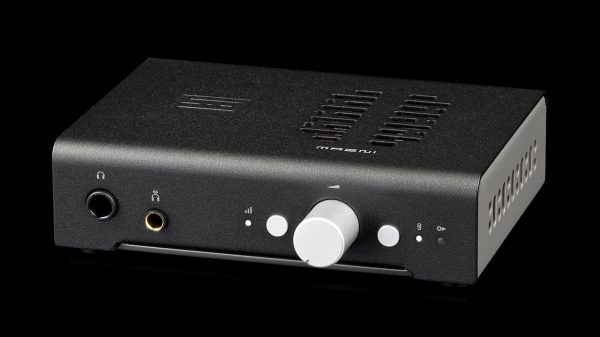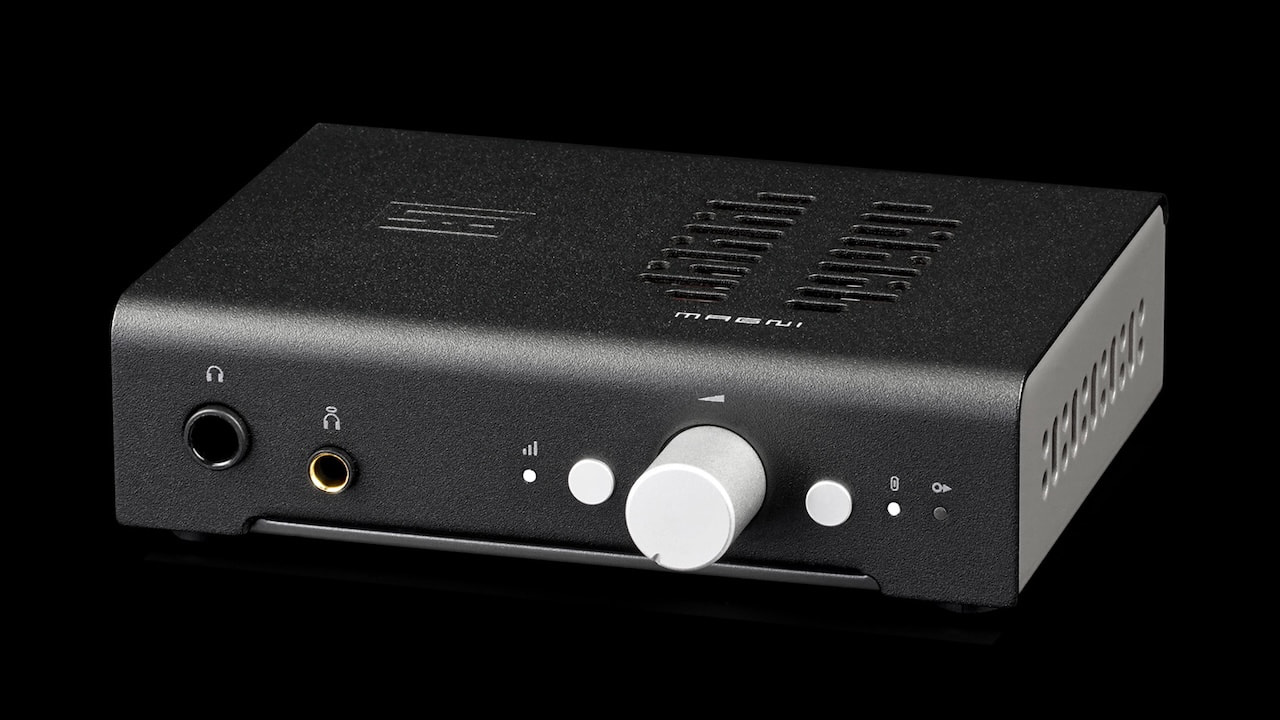
Schiit Audio has introduced the Magni 6, the latest generation of its affordable desktop headphone amplifier, and the company has managed to do something increasingly uncommon in high-end audio: add meaningful features while lowering the price.
The new Magni starts at $99, while the version with Schiit’s optional Mesh 2 DAC costs $169. For that money, buyers get a fully discrete, current-feedback amplifier, a claimed 3 watts per channel into 32 ohms, microprocessor-controlled protection, and a 4.4mm headphone output incorporating Schiit’s Halo motion-feedback technology.
For a company that has spent more than a decade making expensive audio engineering available to people who don’t have private bankers, the Magni 6 feels like a particularly aggressive statement. Schiit isn’t reinventing the headphone amplifier, but it is making some competitors’ feature lists look a little thin.
Related Reading:
- Schiit Bifrost 3 DAC Goes Mesh, Adds EQ And Somehow Costs Less
- Best Headphone Systems At CanJam SoCal 2026: From $2,900 To Nearly $57,000
What Makes the Schiit Magni 6 Different?
The previous Magni Unity was already an accomplished piece of engineering, offering a fully discrete amplifier circuit and optional DAC functionality. The Magni 6 builds on that foundation rather than replacing it with an entirely different design.
Maximum output power into 32 ohms increases from 2.5 to 3 watts per channel, a 20% increase. The amplifier-only price also drops from the previous $119, while the DAC-equipped configuration falls from $199.
There are more substantial changes to everyday operation.
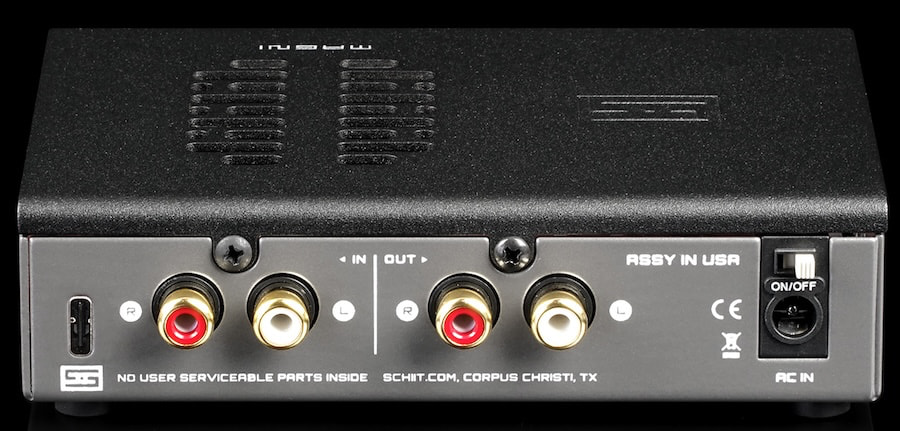
The Magni 6 replaces the previous switching arrangement with front-panel aluminum buttons for input selection, gain, and preamplifier output control. Sealed relay switching and microprocessor oversight manage these functions.
Most usefully, the preamplifier outputs can now be activated or deactivated independently. That means owners using powered desktop monitors can switch between speaker and headphone listening without physically disconnecting their headphones.
It is the kind of practical improvement that matters more during a workday than another specification involving six zeros after a decimal point. The amplifier also incorporates overcurrent sensing, output muting, and DC servo circuitry designed to protect connected headphones.
Halo Motion Feedback: More Than Another 4.4mm Jack
The most intriguing addition is Schiit’s Halo technology, previously used in products including the Midgard headphone amplifier.
Halo is a mixed-mode feedback system intended to incorporate the connected transducer into the amplifier’s feedback loop. Rather than relying exclusively on electrical feedback within the amplifier, the design attempts to account for the behavior of the headphone driver itself.
In theory, this approach could improve control of the driver and reduce certain forms of distortion.
In practice, Schiit acknowledges that its own testing has produced mixed results. Headphones generally exhibit less impedance variation and back electromotive force than conventional loudspeakers, making any benefits more difficult to establish.
That admission deserves some credit in an industry where manufacturers can turn a new capacitor into a spiritual awakening.
On the Magni 6, Halo operates exclusively through the 4.4mm headphone output. The conventional 6.35mm output provides a separate listening option without Halo.
An important clarification: a 4.4mm connector does not automatically indicate a balanced amplifier circuit. Schiit identifies this connection by its Halo functionality rather than advertising it as a conventional balanced output.
The two outputs also have different specified output impedances: less than 0.1 ohms for the 6.35mm jack and less than 2 ohms for the 4.4mm Halo connection. That distinction could matter with certain impedance-sensitive IEMs.
Whether Halo provides an audible improvement will require controlled listening and independent measurements. The presence of a proprietary feedback circuit is interesting engineering, but it is not proof of better sound.
Fully Discrete Amplification and a Linear Power Supply
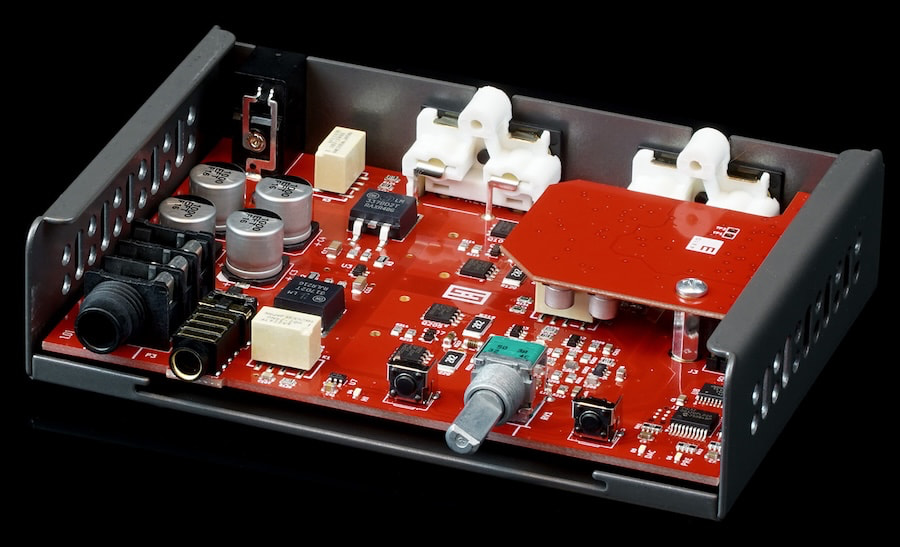
Under the chassis, the Magni 6 uses a fully discrete, DC-coupled current-feedback circuit designed for high open-loop linearity with relatively little loop feedback. There are no off-the-shelf amplifier ICs in the main amplification stage, and Schiit avoids integrated volume-control chips in the signal path.
Power comes from an external 14-16V AC transformer feeding an internally regulated linear power supply. The amplifier uses ±17.5V supply rails and more than 4,000µF of filter capacitance.
Unlike products powered entirely by a USB connection or a conventional switching DC adapter, this arrangement gives Schiit direct control over the internal power supply architecture.
The optional Mesh 2 DAC brings the company’s proprietary digital-filter technology into the same enclosure. Mesh combines Schiit’s time- and frequency-domain optimized digital filtering with delta-sigma conversion rather than simply relying on a converter chip’s standard digital filters.
This makes the Magni 6 a potential single-box desktop solution for users who want headphone amplification and digital playback without accumulating a small tower of separate components.
Schiit Magni 6 Technical Specifications
- Amplifier Design: Fully discrete, DC-coupled current feedback
- Output Power (16 ohms): 3.5W RMS per channel
- Output Power (32 ohms): 3W RMS per channel
- Output Power (50 ohms): 2W RMS per channel
- Output Power (300 ohms): 500mW RMS per channel
- Output Power (600 ohms): 250mW RMS per channel
- Frequency Response: 20Hz–20kHz, ±0.01dB
- THD+N (Low Gain): Less than 0.0001% at 2V RMS into 300 ohms
- THD+N (High Gain): Less than 0.0003% at 2V RMS into 300 ohms
- Signal-to-Noise Ratio (Low Gain): Greater than 122dB, referenced to 2V RMS
- Signal-to-Noise Ratio (High Gain): Greater than 112dB, referenced to 2V RMS
- Crosstalk: Less than -100dB, 20Hz–20kHz, 300-ohm load
- Gain Settings: 0dB and +15dB
- Optional DAC Attenuation: -10dB with Mesh 2 DAC
- Headphone Outputs: 6.35mm single-ended and 4.4mm Halo
- Headphone Output Impedance: Less than 0.1 ohms (6.35mm); less than 2 ohms (4.4mm Halo)
- Preamplifier Output Impedance: 75 ohms
- Input Impedance: 50k ohms
- Power Supply: External 14–16V AC transformer with internally regulated linear supply
- Power Consumption: 2W idle; 12W maximum
- Dimensions (W x D x H): 5 x 3.5 x 1.25 inches
- Weight: 2 lbs
- Warranty: 3-year limited warranty
The Bottom Line
The Schiit Magni 6 is significant because it combines several features normally associated with more expensive headphone amplifiers in a compact component intended for everyday desktop use.
Its fully discrete design, linear power supply, strong published measurements, and independently controlled preamp outputs make a convincing technical argument. Halo is the experimental addition that could make the amplifier particularly interesting to enthusiasts, although its sonic benefits remain to be established.
None of this guarantees that the Magni 6 will sound better than similarly priced competitors or a more expensive amplifier. Measurements and design choices tell us a great deal about engineering competence, but they do not replace listening tests.
Schiit manufactures the Magni 6 on its own assembly lines in Corpus Christi, Texas, with chassis production in California. It includes a three-year limited warranty and a 15-day return period, although returns are subject to a 15% restocking fee.
Still, the larger story is difficult to ignore. At a time when affordable personal audio has become crowded with nearly identical chip-based designs, Schiit has chosen to compete with its own circuitry and some genuinely useful features.
Pricing & Availability:
The Schiit Magni 6 is listed as available now, starting at $99 for the standalone headphone amplifier or $169 with the optional Mesh 2 DAC, before applicable shipping and taxes.
For more information: schiit.com
Related Reading: