
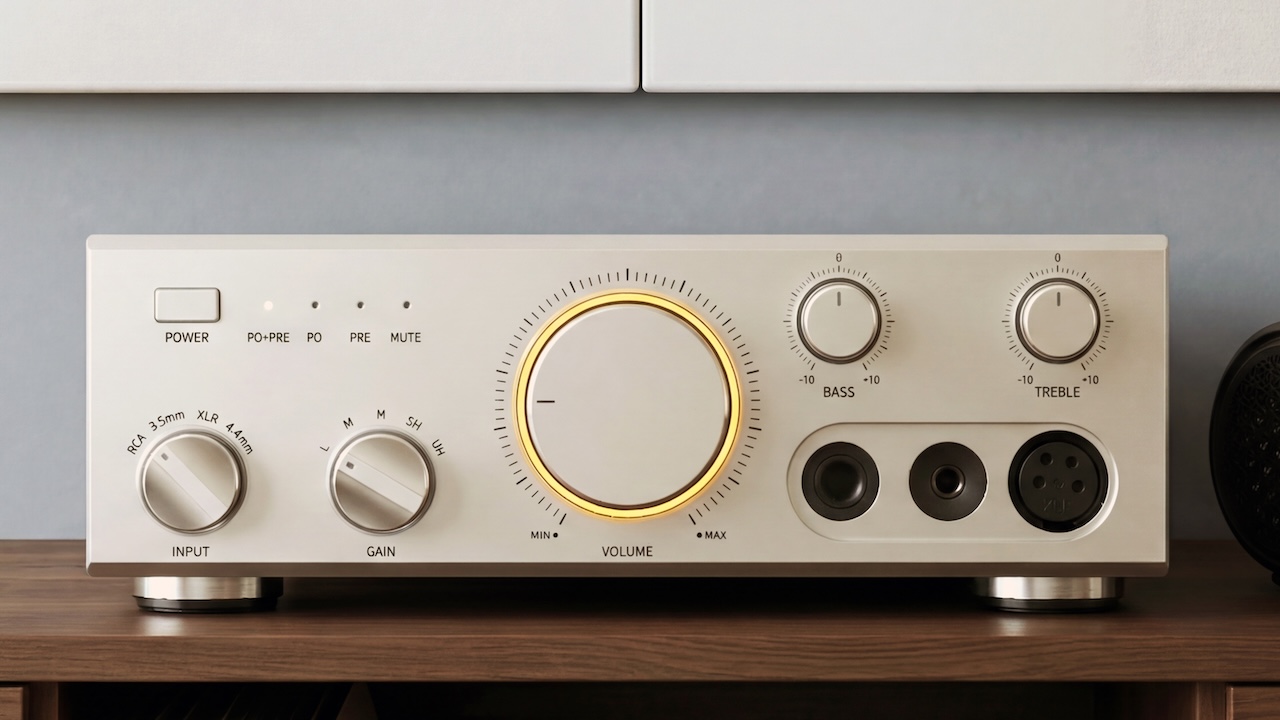
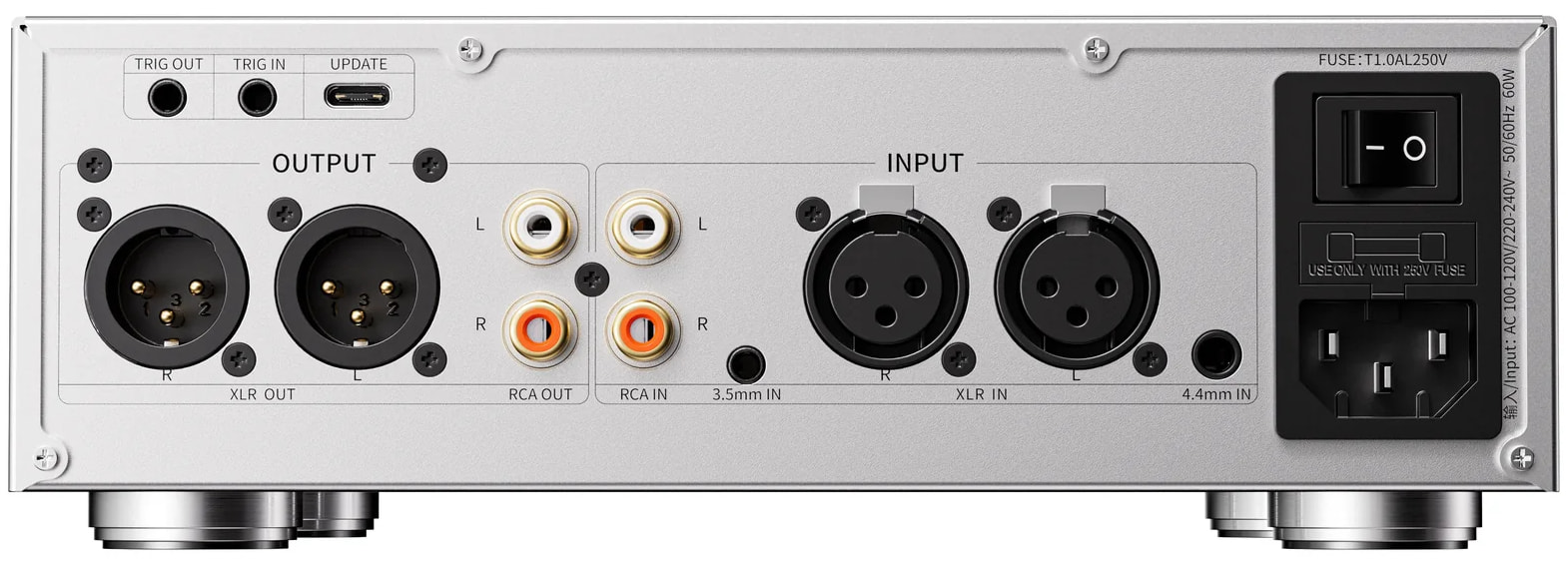
FiiO has built a reputation for delivering affordable hi-fi components that frequently outperform expectations. Its $379.99 CLASS A headphone amplifier looked like another example of the company’s willingness to challenge far more expensive competition. A fully discrete, balanced Class A design with a substantial power supply, multiple headphone outputs, and up to 4-watts per channel? Not bad for less than $400.
There’s just one problem.
The FiiO CLASS A doesn’t always operate in Class A.
That rather inconvenient detail emerged after FiiO representatives acknowledged that the amplifier transitions into Class A/B operation when driving certain lower-impedance headphones beyond specific power levels.
John Darko reported the clarification on October 8, following comments from FiiO representatives on Head-Fi.
The revelation doesn’t mean the amplifier is defective or incapable of excellent performance. It does, however, raise legitimate questions about how manufacturers describe amplifier topology, particularly when they make it the product’s actual name.
Related Reading:
- Eversolo AMP-F8 Vs FiiO EA13: Two Chinese Amplifiers Take Very Different Roads Below $2,000
- FiiO Jade Audio LEVEL 1 Desktop Amp Debuts At High End Vienna 2026 With 300 Watts For $139

What Exactly Is Going On Inside the FiiO CLASS A?
First, a little background.
In a conventional push-pull Class A amplifier, the output devices remain conducting throughout the entire audio signal cycle. They are biased with sufficient standing current to handle the intended output range without either side switching off.
That approach avoids the crossover distortion associated with imperfect transitions between output devices, but it comes with familiar disadvantages: wasted power, heat, and relatively demanding power supply requirements.
Class A/B takes a different approach.
At lower output levels, its output devices can both remain conducting, effectively operating in Class A. As the signal demands more current, the circuit moves beyond that operating region, with the output devices conducting for less than the entire waveform.
The advantage is substantially greater efficiency and potentially higher output power without requiring an enormous power supply or turning your desk into a space heater.
The distinction is determined by circuit bias, output current, and load conditions, not simply by whether the volume control is turned up.
And that brings us back to FiiO.
According to the company’s clarification, the CLASS A operates within the following limits:
Headphone Impedance Reported Pure Class A Power 16 ohms Approximately 140 mW 32 ohms More than 500 mW 60 ohms and higher FiiO says operation remains in Class A throughout the available output range
Once the applicable Class A operating limit is exceeded, the amplifier enters Class A/B operation automatically. Users cannot manually select or lock either operating mode.
Here’s the interesting part: FiiO officially rates the amplifier at up to 4,000 mW per channel into 32 ohms through its balanced headphone outputs. That means the majority of its advertised maximum power into a 32-ohm load is delivered outside its pure Class A operating range.
FiiO Explains Why It Made This Decision
To its credit, FiiO hasn’t denied what’s happening.
Company founder and CEO James Chung explained on Head-Fi that the CLASS A was deliberately designed around a substantial Class A operating region, but engineering compromises became necessary when balancing output power, impedance, and cost.
During development, FiiO reportedly built a version capable of maintaining Class A operation across all supported headphone impedances. However, according to Chung, that configuration was limited to approximately 1 watt into 32 ohms and resulted in higher output impedance.
FiiO ultimately chose to provide considerably greater maximum power instead.
Chung characterizes the additional output capability as “extra power thrown in for free.”
That’s a reasonable engineering argument. At this price, offering a large Class A operating region along with additional power for more demanding headphones could be attractive. But FiiO’s explanation also confirms that the amplifier doesn’t maintain pure Class A operation under every supported load and output condition.
Technically, that makes its operating behavior consistent with a high-bias Class A/B amplifier, regardless of the name on the front panel.
Does the Difference Actually Matter?
It matters, but perhaps not for the reasons some audiophiles might expect.
A properly designed Class A/B amplifier can deliver exceptionally low distortion, excellent dynamics, and more than enough power for demanding headphones. There is no universal rule establishing that Class A sounds better.
Likewise, moving beyond the Class A operating region doesn’t automatically mean an audible deterioration in sound quality. Any potential difference depends on the circuit’s implementation, distortion characteristics, the connected headphones, and actual listening levels.
FiiO maintains that listeners should not experience a noticeable change when the operating class changes. That claim has not been independently established by the information currently available.
For many headphones, particularly at moderate listening levels, the amplifier may remain comfortably within its Class A operating range. Owners of higher-impedance headphones may never encounter the transition at all, according to FiiO.
The issue is therefore less about whether the amplifier sounds good and more about whether consumers have been given a complete description of what they’re purchasing.
We Covered the CLASS A at High End Vienna and CanJam London
eCoustics first covered the amplifier during High End Vienna 2026, when FiiO presented it as a fully discrete, pure Class A design rated at 1,000 mW per channel in the preliminary show information.
We subsequently included it in our Best DACs, Headphone Amplifiers, and DAPs from CanJam London 2026, where James Fiorucci praised its warmth, sweetness, and ability to drive his headphones with authority.
Those listening impressions remain valid. They describe what James heard at the show, not an independent verification of the amplifier’s operating class. Our earlier technical descriptions reflected FiiO’s information at the time. The company’s subsequent clarification provides important additional context, and those reports should be updated accordingly.
The Bottom Line
FiiO deserves credit for openly discussing the engineering decisions behind its CLASS A headphone amplifier. A high-bias design offering substantial Class A operation and additional Class A/B power is not inherently a compromise in sound quality.
At $379.99, the amplifier still offers an impressive combination of output power, connectivity, analog tone controls, and discrete circuitry. But if you’re going to name a product CLASS A, you should probably anticipate customers asking whether it remains in Class A.
The sensible solution is simple: publish the operating limits alongside the maximum output specifications. That gives buyers the information they need without diminishing the amplifier’s potential value.
FiiO has made a defensible engineering choice. Now it needs to make sure its marketing explains that choice just as clearly. Because in high-end audio, the specifications printed on the box should be at least as carefully considered as the components inside it.
Expect our review soon.
Where to buy:
Related Reading:










ORT
October 16, 2026 at 2:16 am
No VU Meters means no way I am buying one. I already have a couple of ‘phone amps that don’t sport the VU. The last thing, well…Not the last but certainly not the least thing I need is another headphone amp that misses what matters mostest to me.
Style. Because I can buy any number of good amps but most of them are too fugly for me. I hate fugly. This one came close to making the cut. Shock me Amadeus…
ORT
Ian White
October 16, 2026 at 10:28 am
ORT,
I have two FiiO desktop DACs/Headphone amps that are sorta boring looking. The best part? They sit there and just do their job under my screen and I don’t notice anything but how good they sound.
IW
ORT
October 16, 2026 at 5:12 pm
Ian my brother, well do I understand what you are saying. Sound quality is of the utmost importance but the big but in this room is, for me, looks.
I want something that when I am done listening and leaving the room that is so stunningly gorgeous I cannot help but turn to look at it before exiting the room. Looks are ephemeral with most things but the absence of VU Meters is akin to Michelangelo leaving the eyes off the Pieta or David. It’s just wronger.
ORT