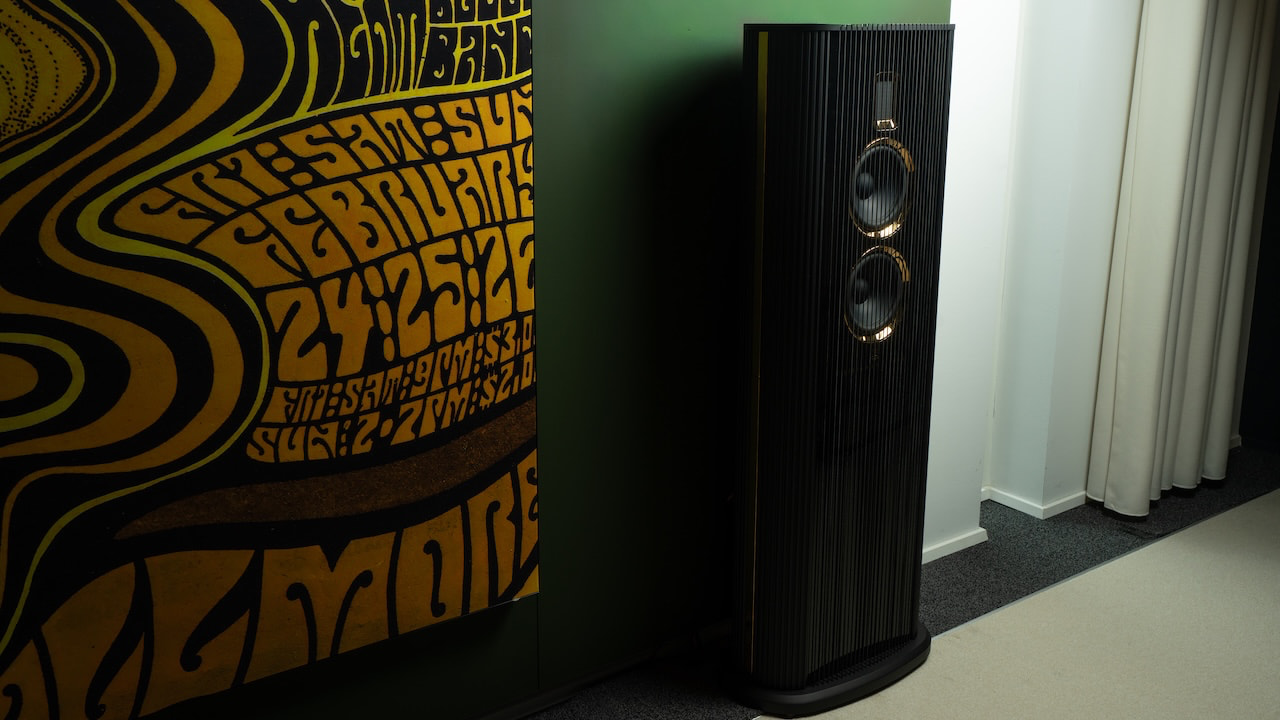
Steinway & Sons has spent more than 170 years building some of the world’s most celebrated pianos, and its partnership with Danish audio manufacturer Steinway Lyngdorf has extended that pursuit of musical realism into the luxury loudspeaker market. The newly redesigned Steinway & Sons Model O is the latest beneficiary, bringing significant acoustic improvements to the company’s most accessible floorstanding design. Of course, “entry-level” means something rather different when your family tree includes concert grand pianos and six-figure audio systems.
First introduced in 2018, the Model O was intended to deliver much of the Steinway experience without requiring an enormous listening room or dedicating half the floor to loudspeakers. The new 2026 version takes that philosophy further, with a revised driver configuration, substantially enlarged enclosure, and improved bass system designed specifically for placement close to a wall. That’s a refreshing departure from the usual high-end loudspeaker playbook, which often assumes your furniture, family, and architectural limitations are merely obstacles to proper stereo imaging.
Related Reading:
- Steinway Lyngdorf Releases BWS-110 / DW-1 In-Wall Subwoofers
- Steinway Lyngdorf Unveils Steinway & Sons Model C loudspeaker
More Drivers, More Cabinet Volume, and a Different Approach to Bass
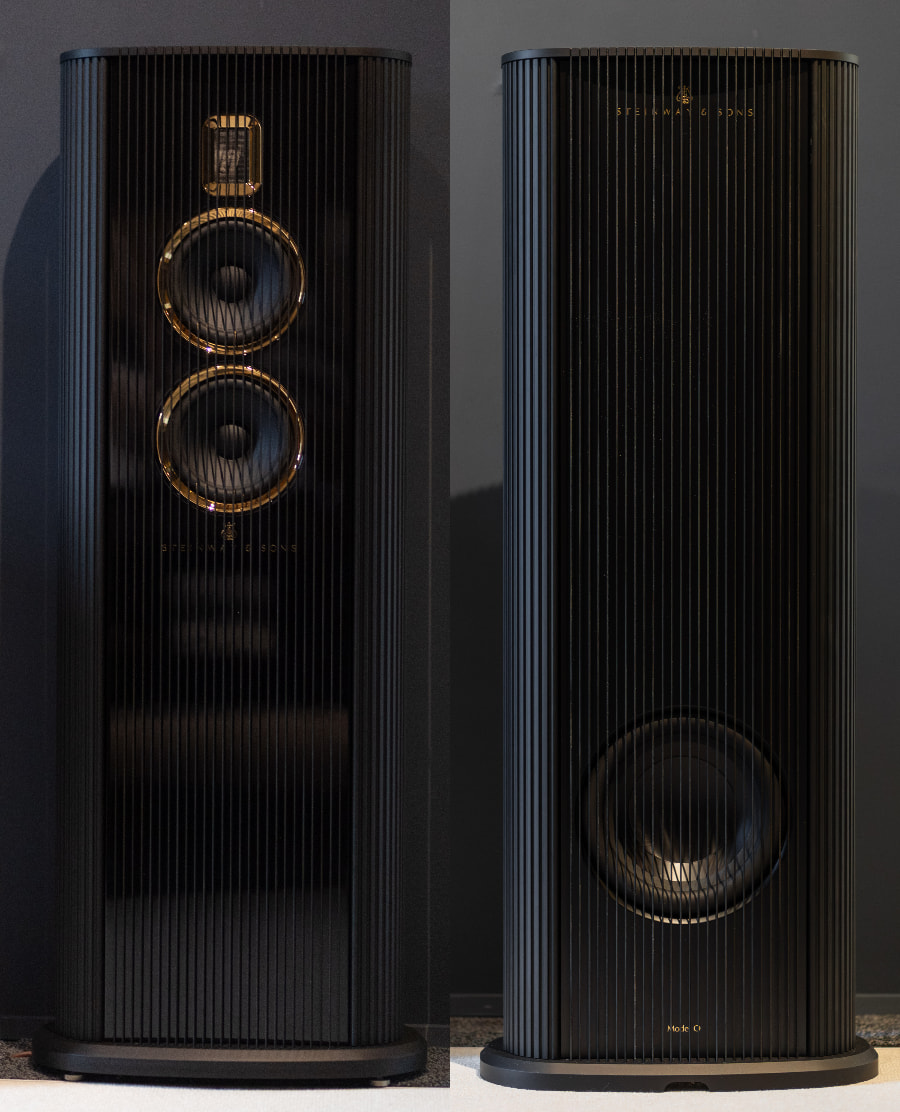
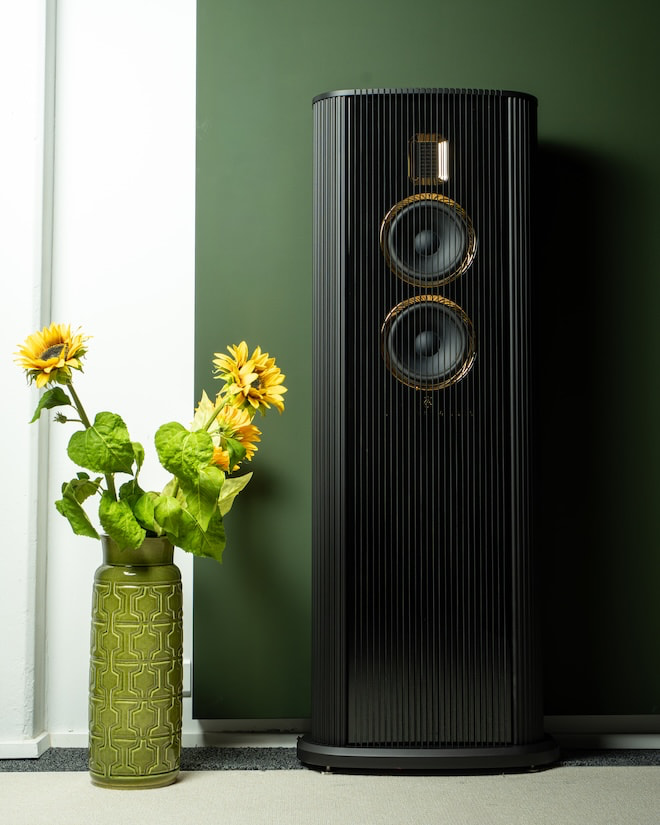
The most significant engineering changes are found inside the redesigned Model O. Steinway Lyngdorf has replaced the original single front-mounted midrange/bass driver with two 6-inch (150mm) aluminum-cone drivers, while increasing the cabinet’s internal volume by 80%. The rear-mounted passive bass radiator has also grown by 50%, with the new design using a 10-inch aluminum diaphragm. These changes are intended to increase low-frequency authority, dynamic headroom, and overall output without resorting to a conventional large floorstanding enclosure.
High frequencies are handled by Steinway Lyngdorf’s familiar Air Motion Transformer (AMT) tweeter, which uses a lightweight folded diaphragm to move air efficiently. The company has retained this driver approach across its premium loudspeaker range because of its ability to reproduce fine detail and complex high-frequency information. Whether the revised driver arrangement produces a more coherent presentation than its predecessor remains to be heard, but the engineering changes are considerably more substantial than a new cabinet finish and another gold badge.
Why the Model O Actually Wants to Be Near Your Wall
Most conventional high-end loudspeakers require careful positioning away from room boundaries to control bass reinforcement and reflections. The Model O takes a different approach, using Steinway Lyngdorf’s boundary-woofer concept to make proximity to the wall part of its intended acoustic operation. Its rear passive radiator interacts with the nearby boundary to reinforce low-frequency output, allowing the loudspeaker to deliver a fuller presentation from a placement that would be problematic for many traditional designs.
That doesn’t mean owners can put the Model O anywhere and expect miracles. Room dimensions, furnishings, and speaker positioning still matter, but designing around wall proximity is a legitimate practical advantage for anyone who doesn’t have a dedicated listening room. As we’ve previously covered with the Lyngdorf Audio FR-2, the company has considerable experience building speakers that take advantage of room boundaries rather than treating every wall like an acoustic enemy. It’s a sensible philosophy, particularly for people who insist on keeping an actual sofa in their living room.
The Catch: You’re Buying Into the Steinway Ecosystem
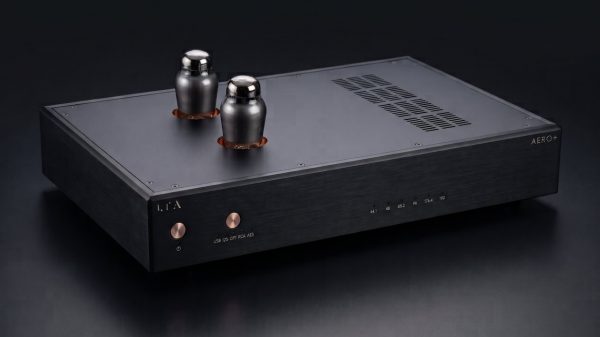
Unlike conventional passive floorstanding loudspeakers that can be connected to practically any suitable amplifier, the Model O is designed to operate within Steinway Lyngdorf’s Integrated System Approach. This combines the loudspeakers with compatible external Steinway & Sons digital amplifiers and stereo or surround processors, allowing the manufacturer to manage the complete signal chain rather than leaving amplification and system configuration to the owner.
An important part of that system is RoomPerfect, Steinway Lyngdorf’s proprietary digital room-correction technology. Rather than relying solely on conventional placement and acoustic treatment, RoomPerfect measures the loudspeakers’ interaction with the room and applies corrections through the associated processor. We previously explored the same integrated philosophy in our coverage of the Steinway Lyngdorf Model C MKII. For buyers who want a carefully engineered, professionally configured system, that’s appealing. For audiophiles who consider swapping amplifiers every six months a sacred responsibility, Steinway has some disappointing news.

Danish Craftsmanship with a Steinway Piano Pedigree
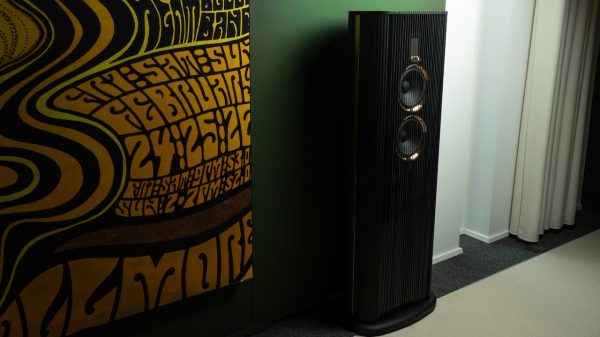
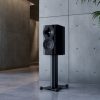
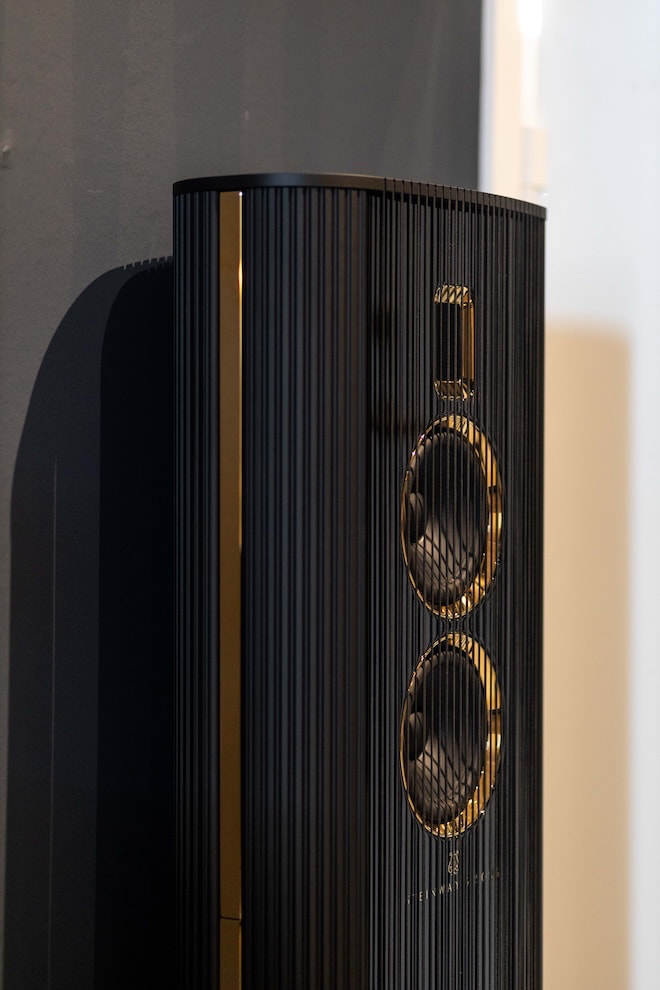
The Model O’s appearance remains unmistakably Steinway, with a high-gloss lacquered cabinet, gold-coated tweeter surround, and 26 individually aligned black decorative strings running vertically across the front. According to the manufacturer, these are carefully positioned to avoid unwanted resonance or interference with the drivers. They’re a visual reference to Steinway’s musical-instrument heritage rather than an acoustic feature, although the distinction may be lost on anyone expecting a floorstanding loudspeaker to double as a harp.
Buyers can specify matte or polished gold accents, with optional gold-coated rings surrounding the two front drivers. Individual lacquer colors and selected wood veneers are also available, and each loudspeaker is assembled and finished by hand in Skive, Denmark. This is bespoke luxury audio intended to complement carefully designed interiors, not another black vinyl-wrapped cabinet destined to disappear behind a television.
Steinway & Sons Model O (2026) Specifications
- Design: 2-way floorstanding loudspeaker with rear passive radiator
- Tweeter: Air Motion Transformer (AMT), Kapton diaphragm and neodymium magnet
- Midrange/Bass Drivers: 2 x 6-inch (150 mm) anodized aluminum cones
- Driver Voice Coils: Copper-aluminum construction
- Passive Radiator: 10-inch rear-mounted aluminum diaphragm
- Cabinet: MDF construction with premium lacquer finish
- Frequency Response: 35Hz to 22kHz (-3dB), as reported in launch specifications
- Crossover Frequency: 2,500Hz
- Maximum SPL: 111dB at 1 meter (reported)
- Amplification: External Steinway & Sons digital amplifier required
- Compatible Amplification: Steinway & Sons A1/A2 system architecture
- Speaker Connection: speakON connector
- Room Correction: RoomPerfect through a compatible Steinway processor
- Recommended Placement: Floorstanding, close to the rear wall
- Dimensions (WxHxD): 17.7 x 44.9 x 10.2 inches (450 x 1,140 x 260 mm)
- Weight: Approximately 94.8 pounds (43 kg) each
- Standard Appearance: Black lacquer with gold accents
- Customization: Optional gold trim, bespoke lacquers, and selected wood veneers
- Manufacturing: Assembled and finished by hand in Denmark
What Competes with the Steinway & Sons Model O?
The luxury loudspeaker market offers several alternatives for buyers interested in sophisticated acoustic engineering without sacrificing their living room to an enormous stereo system.
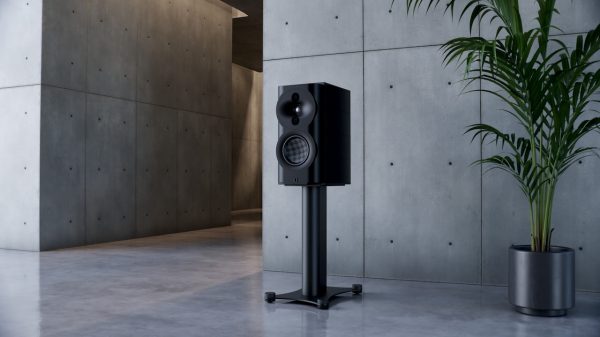
The Kii Audio THREE BXT ($31,875/pair) is particularly interesting because it also addresses the relationship between loudspeakers and room acoustics, but through a very different engineering approach. Its fully active architecture uses extensive DSP and cardioid dispersion to control unwanted radiation, rather than deliberately exploiting rear-wall reinforcement. We were extremely impressed by the Kii system at NAMM 2026, particularly its imaging, bass control, and clarity in a difficult listening environment.
The Focal Diva Utopia ($39,999/pair) takes another direction, combining French craftsmanship with built-in Naim amplification, wireless connectivity, and integrated music streaming. Like Kii, it offers a more self-contained approach to luxury audio, eliminating external electronics associated with traditional high-end systems. Steinway’s proposition is more specialized, emphasizing professional system integration, custom finishes, and room-specific calibration rather than an all-in-one wireless experience.
The Bottom Line
The redesigned Steinway & Sons Model O is an intriguing alternative to oversized high-end floorstanders, combining meaningful acoustic revisions, sophisticated room correction, and traditional Danish craftsmanship in a design intended for real living spaces. Its greatest strength may be the decision to treat the room as part of the system rather than something the customer needs to redesign around the loudspeakers.
The trade-off is a tightly integrated electronics ecosystem that limits the flexibility many audiophiles expect. Instead Steinway & Sons offers a complete audio solution that maximizes performance without any system matching guesswork. We haven’t auditioned the new version, so the promised improvements in bass performance, dynamics, and musical realism remain manufacturer claims. But Steinway deserves credit for addressing a problem that much of the luxury speaker market continues to ignore: great sound shouldn’t require turning your living room into a dedicated showroom.
Price & Availability
The redesigned Steinway & Sons Model O will be available beginning November 2026, with stereo system pricing from $40,500 USD.
For more information: steinwaylyngdorf.com
Related Reading: