
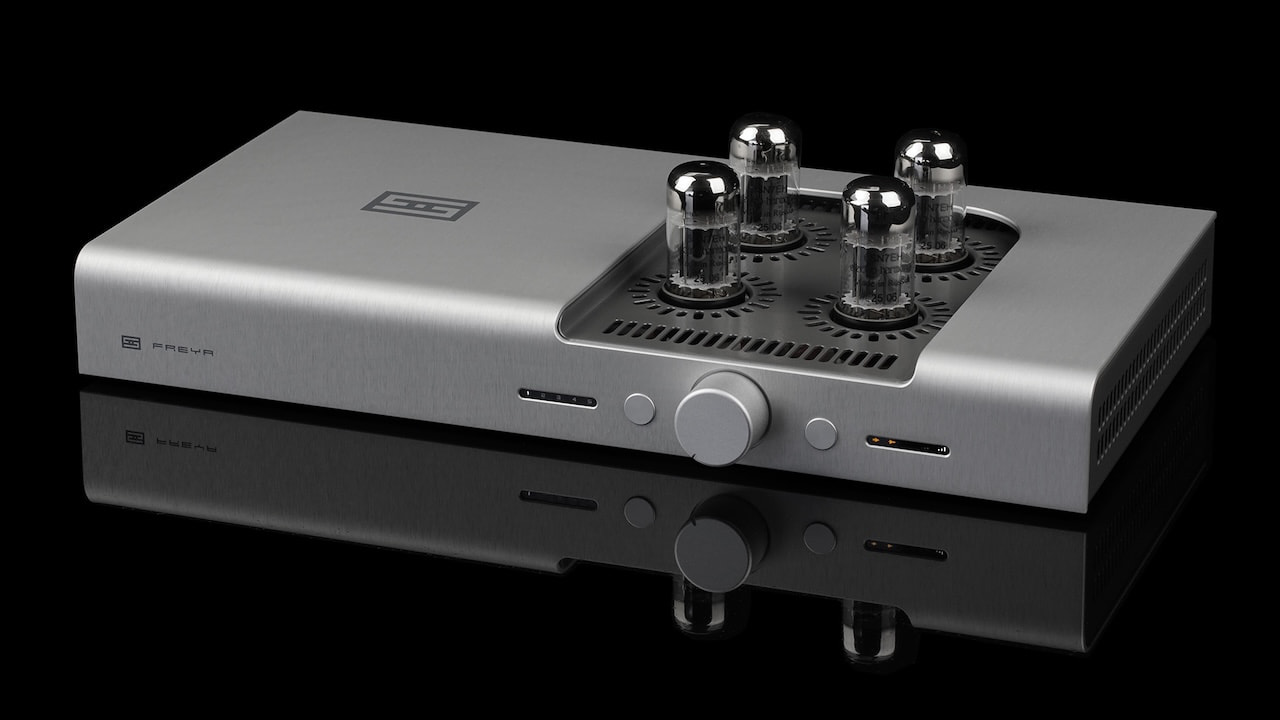
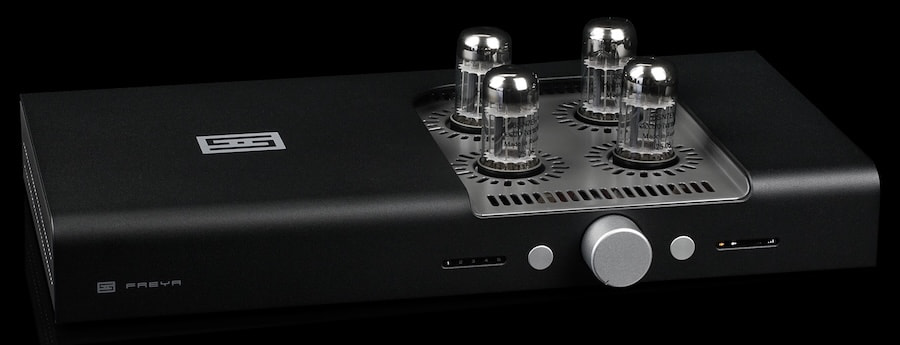
Schiit Audio has introduced the Freya 2, a $999 balanced analog preamplifier that gives listeners five different ways to configure its tube and solid-state gain stages. Passive? Yes. All tubes? Absolutely. All solid state? Also yes. Want tubes on one end and MOSFETs on the other because apparently making one decision is too easy? Schiit has you covered.
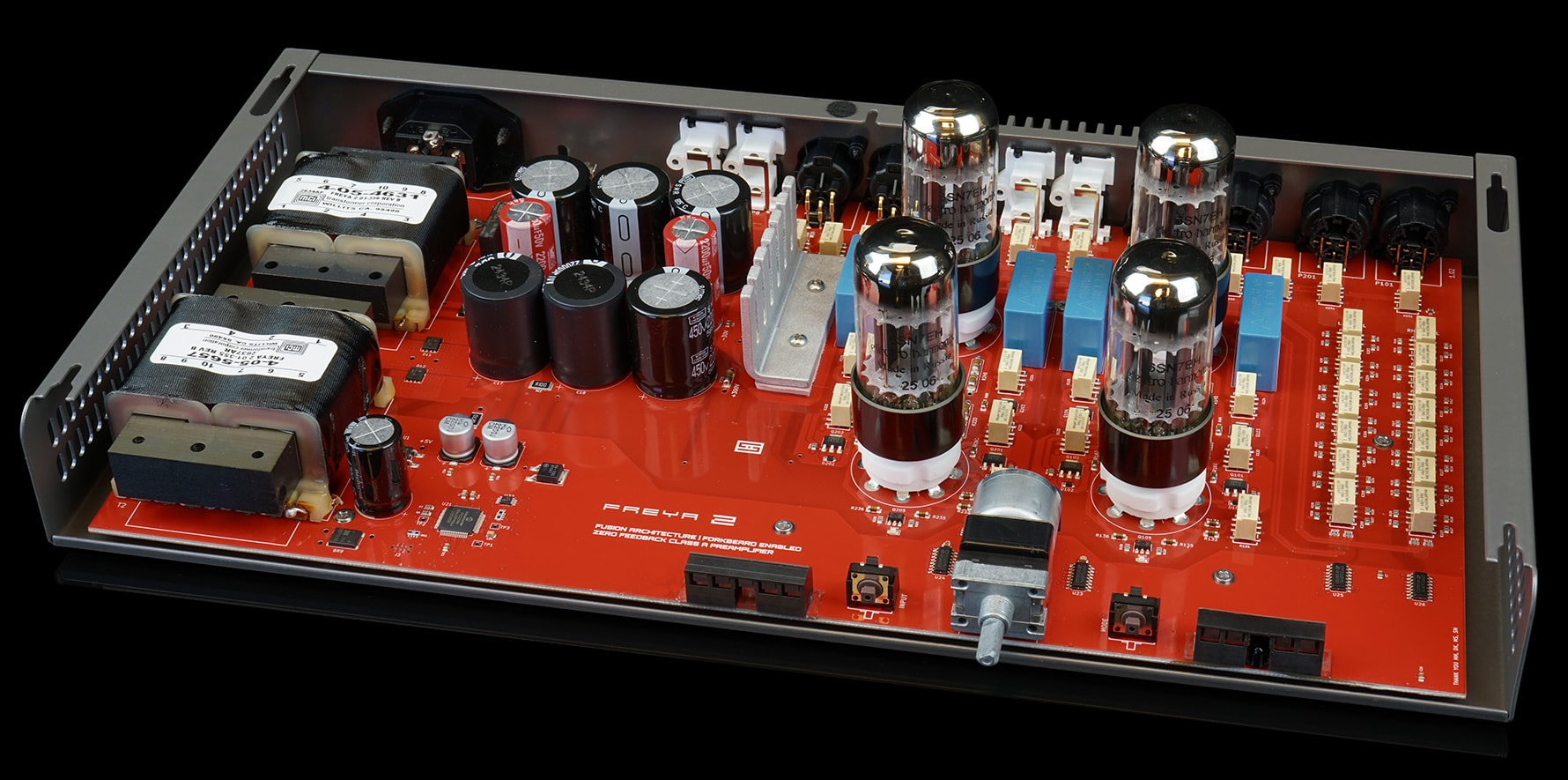
The new model uses what Schiit calls Fusion Architecture, pairing four octal tubes with depletion-mode MOSFET alternatives built around the same zero-feedback, Class A differential circuit topology. Unlike a conventional hybrid preamplifier with one fixed combination of devices, Freya 2 lets the listener determine which technology handles the voltage-gain and output stages.
Related Reading:
- Schiit Asgard X Headphone Amp/DAC Unleashes Mjolnir Power With New Continuity A Tech—Thor Would Approve
- Schiit Valhalla 3 Unleashed: Thor’s Class A OTL Tube Amp For Mortals Who Dare Drive Hard-To-Tame Headphones
Five Operating Modes
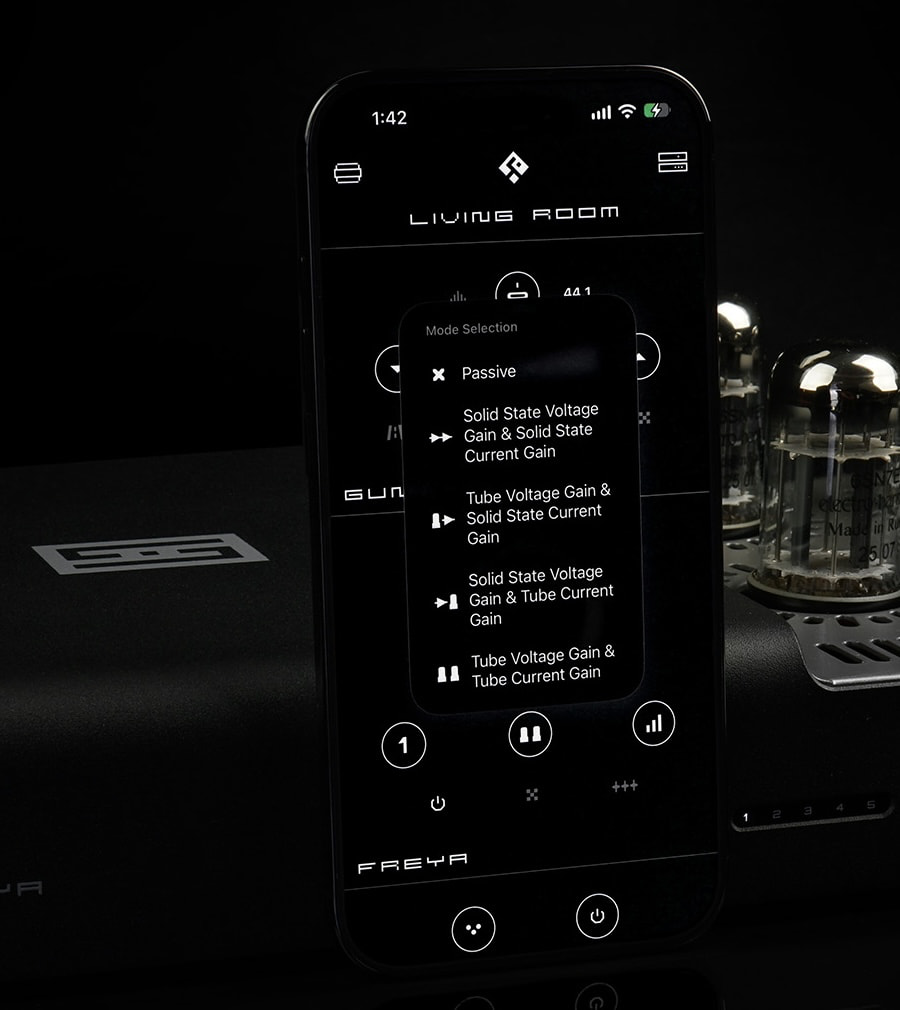
The five modes are where Freya 2 separates itself from most preamplifiers anywhere near its price.
Passive mode bypasses the active gain stages entirely, leaving the relay-switched attenuator between the source and amplifier. All Solid State uses MOSFETs for both voltage gain and output duties, while All Tube puts all four tubes into the signal path with no solid-state devices handling those functions.
The two hybrid modes are more unusual. Tube Input uses tubes for voltage gain with MOSFETs handling the output stage. Tube Output reverses that arrangement, putting MOSFETs up front and tubes on the output. Schiit co-founder Jason Stoddard readily admits that last combination is the oddball, which probably guarantees that somebody will decide it is the only correct way to listen.
Why does any of this matter?
Because these are not DSP sound profiles or EQ presets. Freya 2 is physically changing which active devices are operating in two critical positions within the analog circuit. That lets owners experiment with tube and solid-state behavior without purchasing multiple preamplifiers or repeatedly rewiring their systems.
It also gives tube owners a practical benefit. Only the tubes required for the selected mode receive heater current and high voltage. Switch to solid state and they remain cold, helping preserve tube life. Freya 2 also monitors tube installation and disables operating modes it cannot safely support if a tube is missing or improperly seated.
Connections & Control
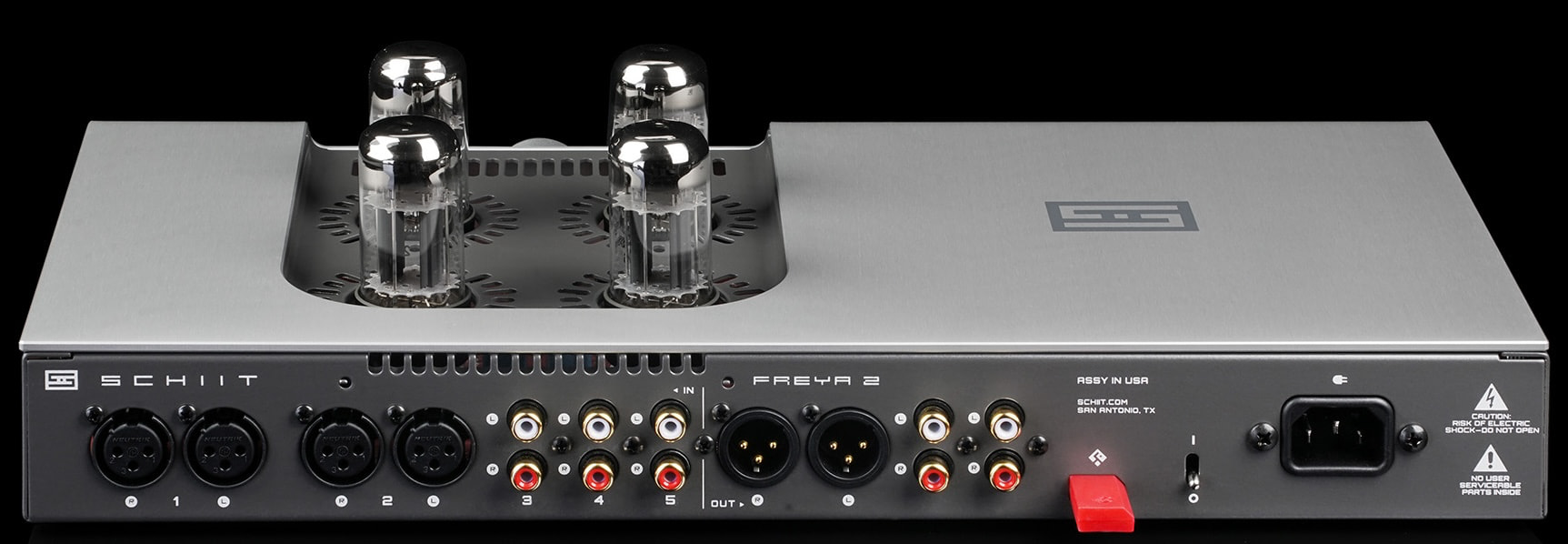
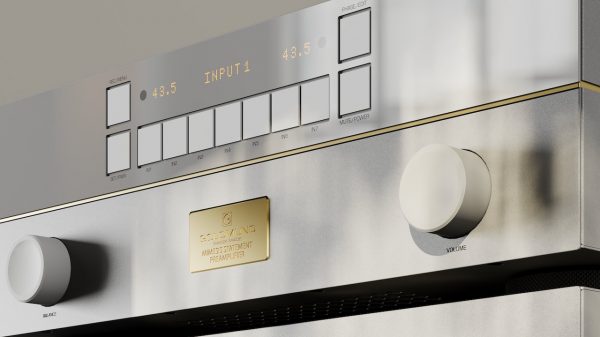
Freya 2 provides two balanced XLR inputs and three RCA inputs, along with one XLR and two RCA stereo outputs that can operate simultaneously. Active modes can convert incoming single-ended signals to balanced output.
Volume is handled by a 128-step relay-switched attenuator with 0.625dB increments, rather than a conventional potentiometer. Gain can be switched between 0dB and 12dB in the active modes. Four new-production tubes are supplied, and Freya 2 supports 6SN7, 6N8S, and 5692 octal types.
Forkbeard connectivity is standard, adding app-based control alongside the supplied IR remote. Balance and standby functions are handled through the app, while the usual volume, input, mode, gain, and mute controls remain accessible without turning your phone into another mandatory hi-fi component.
Schiit Freya 2 Specifications:
- Type: Balanced analog stereo preamplifier
- Operating Modes: Passive, All Solid State, Tube Input, Tube Output, All Tube
- Architecture: Zero-feedback Class A differential tube/MOSFET Fusion Architecture
- Tubes: Four supplied octal tubes; compatible with 6SN7, 6N8S, and 5692
- Gain: 0dB or 12dB in active operation
- Inputs: 2 x stereo XLR, 3 x stereo RCA
- Outputs: 1 x stereo XLR, 2 x stereo RCA
- Volume Control: 128-step relay-switched attenuator, 0.625dB increments
- Control: Front panel, IR remote, Schiit Forkbeard
- Input impedance: 10k ohms
- Crosstalk: >85dB, 20Hz–20kHz
- Power consumption: 40W typical
- Dimensions: 16 x 8 x 2 inches, plus roughly 2.5 inches for tube height
- Weight: 11 pounds
- Price: $999 black; $1,049 silver
- Warranty: Five years; 90 days on supplied tubes
- Availability: Shipping now
The Bottom Line
The Schiit Freya 2 occupies a very unusual position at $999. The Topping Pre90 costs less and will appeal to listeners chasing maximum measured transparency, while the $1,995 Rogue Audio RP-1 v2 adds a phono stage and headphone amplifier for buyers who want a more traditional tube preamplifier. Neither, however, approaches the Freya 2’s ability to move between passive, all-solid-state, all-tube, and two different hybrid configurations from a single chassis.
That flexibility is what makes the Freya 2 more than another incremental Schiit update. The outgoing Freya+ F already offered passive, solid-state buffer, and tube gain modes, but Freya 2 takes the concept much further with five operating modes built around the same zero-feedback Class A differential architecture. According to Jason Stoddard, Schiit went through six prototypes before arriving at the production design, which somehow uses roughly 70 fewer parts than its predecessor while offering considerably more configurability.
There are less expensive solid-state preamps and more comprehensively equipped tube designs, but very few components at any price let the owner alter the analog signal path this extensively without changing hardware. For listeners who enjoy experimenting with system voicing as much as they enjoy listening to music, that makes the Freya 2 one of the more distinctive preamplifiers Schiit has released in years.
Schiit calls it Fusion Architecture. Owners may call it a perfectly reasonable excuse to spend the next six months deciding which mode sounds best.
Where to buy: $999 at schiit.com
Related Reading:










Cal Dog Tracks
September 30, 2026 at 6:07 pm
As a Freya+ F owner, the biggest benefits I see in Freya 2 are selectable 0/12 dB tube gain, independent tube/solid-state options for the input and output stages, lower output impedance, cooler operation, balance control, and expanded tube protection. Lower published distortion is nice, too, though it doesn’t necessarily mean an audible improvement. The main draw for me is flexibility – especially using tubes without the extra gain.
Naturally, I’m now thinking about selling my six-month-old Freya+ F and buying the Freya 2. Apparently, six months is what passes for a long-term relationship in this hobby. 😂 The Ray Reserve tubes are staying, though – we’re committed. 😎
Ian White
September 30, 2026 at 6:17 pm
Cal,
It’s increasingly difficult to find a reliable tube preamp these days below $1,000 that is made domestically and that offers such a wide range of options. As someone who likes to use active speakers, this might be the preamp I’ve been looking for.
I agree about the Ray Reserve tubes. We’ve reviewed them and found them to be worth the price.
IW