In This Article:
Too Many TV Choices!?
Buying a new TV has become needlessly confusing for mainstream consumers. Choosing between an OLED and an LED/LCD television was complicated enough, but shoppers must now navigate a sea of acronyms: Mini LED, QLED, OLED, QD-OLED, MicroLED, Micro RGB, RGB Mini LED, just to name a few. And while many of these sound similar, the technology behind the image can vary significantly. And each offers its own strengths and weaknesses.
In our reference article, Buying a New TV: Everything You Need to Know, we provide an overview of the major TV technologies currently available. This article drills down a little deeper to focus to three of the most prominent options: OLED, Mini LED, and RGB backlit TVs. How do they produce an image? What separates one technology from another? And why has buying a television started to feel like studying for an engineering exam? Read on and we’ll explain.
There Can Be Only Two
There are really only two types of consumer TVs on the market today: OLED (Organic Light Emitting Diode) and LCD (Liquid Crystal Display). OLED TVs are emissive displays: each individual pixel emits its own light to form the image. CRT and plasma TVs were previous examples of emissive display technologies. LCD TVs are transmissive displays. The LCD panel which forms the image isn’t bright enough to be seen by the naked eye, so it requires a backlight to transmit the light through the panel in order to be visible. There are many types of LCD backlighting systems which vary in their effectiveness.
A traditional strength of OLED TVs is their ability to reproduce deep black levels and eye-popping saturated colors. But a weakness has been lower peak brightness, which can make bright room-viewing a challenge. On the flip side, LCD TVs’ strength is their peak brightness – some as high as 10,000 nits – though the inability of the LCD panel to completely block out the backlight makes them suffer in perceived contrast and black level reproduction.
Size Matters
One advantage that LCD TVs currently have over OLED TVs is that the “motherglass” – the material used to make the raw panel – can be made much larger for LCD TVs than it can for OLED TVs, and at a much lower cost. OLED TVs max out at 97 inches, but the cost of these larger sets can be prohibitive. So typical OLED screen sizes max out at 77 or 83 inches. Meanwhile LCD TVs are available in sizes up to 115 or even 116 inches, which can provide a truly immersive big screen experience at home, without having to install a projector and separate screen.
OLED (Organic Light Emitting Diode)
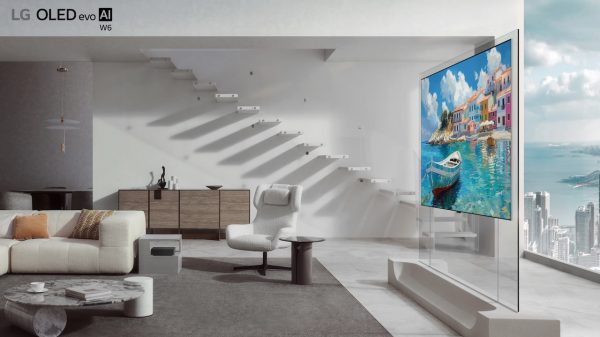
OLED TVs employ organic LED pixels to display images. As mentioned earlier, these organic LED elements are self-emitting. There is no backlight required, as there is with LCD-based TVs. In fact, the LCD panel is also eliminated because the organic LEDs produce both light and color and contain all of the image information. This simplifies TV construction by reducing the number of elements needed to display images for the viewer. However, that simplification does not necessarily translate into lower prices for consumers. In fact, OLED TVs typically command a price premium over LCD TVs due to more costly construction techniques.
There are two types of OLED TVs, which behave slightly differently: W-OLED (White Organic Light Emitting Diode), and QD-OLED (Quantum Dot Organic Light Emitting Diode). The main differences are in the color of the OLED element itself and how each set reproduces colors.
W-OLED
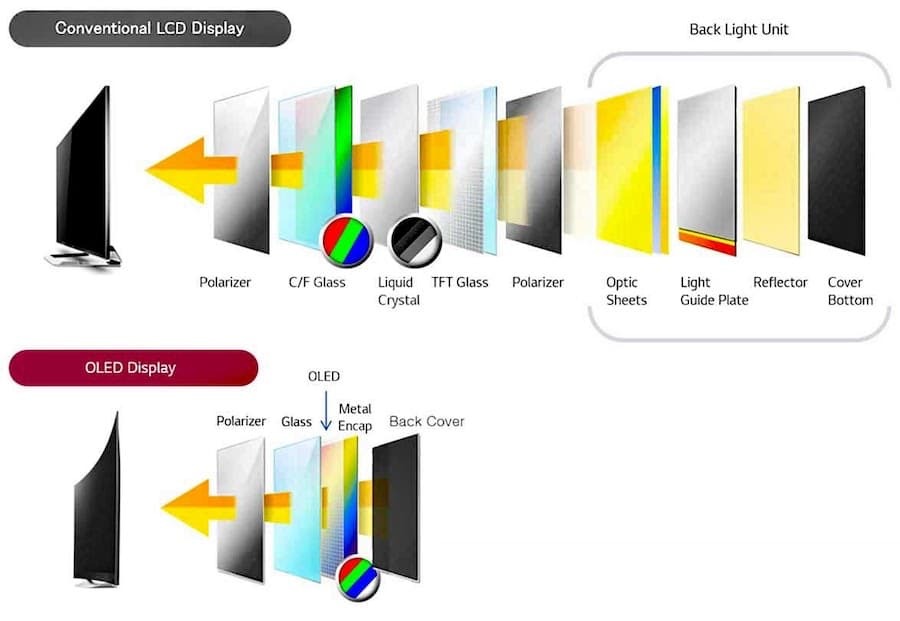
LG’s implementation of OLED technology is technically labeled WRGB OLED or W-OLED, although it is referred to at the retail level simply as OLED. This variation combines white OLED self-emitting subpixels with red, green, and blue color filters, also known as a color refiner. This design solved a problem in early RGB OLED TVs where the blue subpixel would degrade faster than the red and green subpixels, leading to color shift over time. But, because the colors are added through tiny filters on each pixel, there is some loss in efficiency and overall brightness.
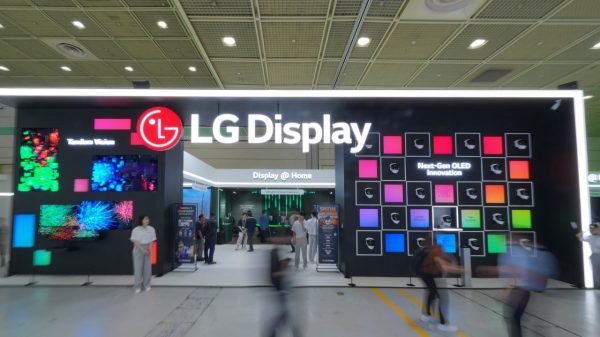
W-OLED has evolved over the past decade with advancements like MLA (Multi Lens Array) and multi-stack OLED panels. These advancements have led to brighter OLED panels to the point that bright room viewing is now possible with many OLED TVs. Most W-OLED TV panels are made by LG Display Company, a sister company of LG Electronics. LG W-OLED panels are used by several TV manufacturers, including LG Electronics, Sony, Panasonic, Samsung and Philips. Although these use LG Display’s OLED panels, each company adds its own video processing features, connectivity options, and streaming platform to differentiate its products.
OLED Related Reading:
QD-OLED
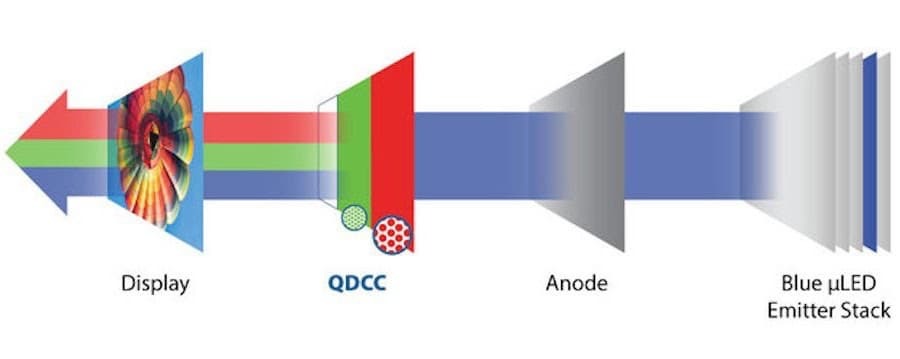
Quantum Dot OLED TVs use a blue OLED element combined with QD layers which interact with the blue light to reproduce red and green. With the blue light of the OLED element combined with the red and green produced by quantum dots, QD OLED TVs are able to reproduce a wide assortment of colors. In fact, QD OLED TVs can currently reproduce more colors (a wider color gamut) than W-OLED TVs while also hitting higher peak brightness levels. And they do this wile maintaining the deep inky black levels which make OLED TVs so compelling.
A quantum dot is a tiny nanocrystal with semiconductor properties. Just how small are these dots? Depending on the color, a quantum dot measures between 2 and 10 nanometers – that’s basically the width of anywhere from 15 to 150 atoms in size. So yeah: SMALL!
When a quantum dot nanocrystal is struck by photons from a light source—in the case of QD-OLED TVs, light from a blue OLED pixel—the dot emits color within a specific bandwidth determined by its size. Larger dots emit light that is skewed toward red. As the dots become smaller, they emit light that is skewed toward green. The process by which a quantum dot emits red or green light after being struck by a blue light source is referred to as Quantum Dot Color Conversion, or QDCC. But I digress…
As of the publication of this article (August, 2026) QD-OLED panels used in consumer TVs are made by Samsung Display. These QD-OLED panels are used in select OLED TVs from Samsung Electronics and Sony, though both manufacturers also use W-OLED TVs in some of their models. The largest QD-OLED panel currently available measures 77 inches diagonally so any OLED TV over that size uses a W-OLED panel.
QD OLED Related Reading:
- Samsung S95H OLED TV Hands-on Review: Bright, Museum Quality OLED
- Sony BRAVIA 8 II OLED TV Review – Long Live the King
Mini-LED LCD TVs
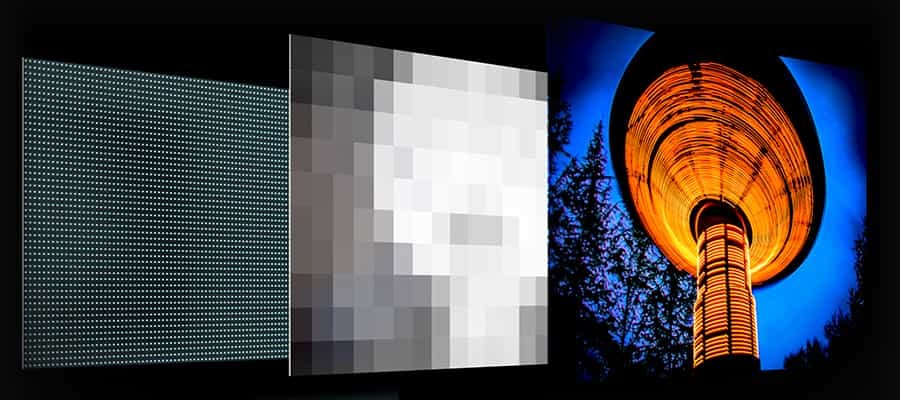
The term “Mini-LED TV” is a bit confusing. These are actually LCD TVs that use LED backlighting, but the LED bulbs used in the backlight are much smaller than the standard-sized LED bulbs used in most LCD TVs. The technical description for a “Mini-LED” is a Sub-Millimeter Light-Emitting Diode. Officially, if an LED bulb is 0.2 mm or smaller (0.008 inches), it can be labeled as a Mini-LED.
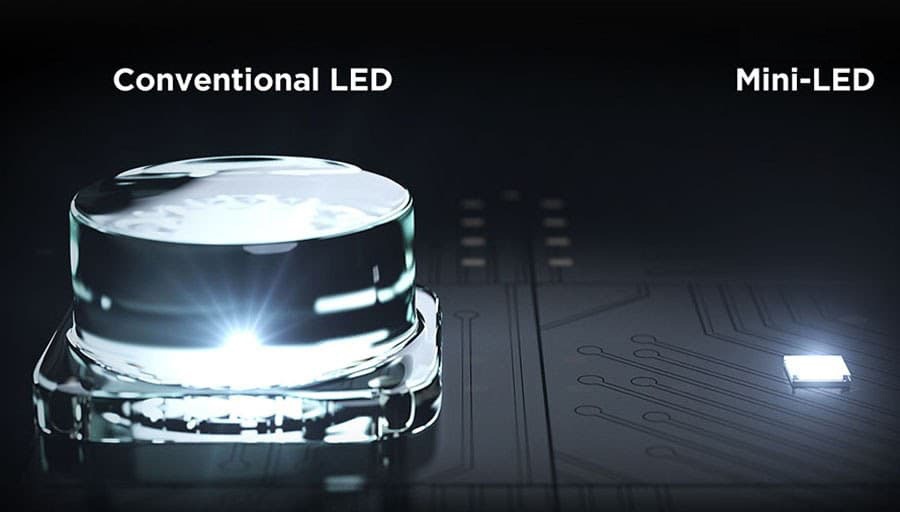
Because Mini-LEDs are much smaller than the traditional-sized LEDs used in LCD TVs, up to several thousand can be placed on a backlight panel, depending on the TV’s screen size, instead of the dozens or fewer that may be used in standard LED/LCD TVs. With smaller backlights, and more of them, Mini-LED LCD TVs can perform better than traditional LCD TVs in areas like contrast, brightness and uniformity.
When supplied with an electric current, Mini-LEDs generate light, which passes through LCD panels made up of individual pixels, containing the image information. After passing through the LCD chips, the light also passes through red, green, and blue color filters in order to reproduce colors. The resulting images are then displayed on the screen.
Because the shutters on each individual LCD pixel let a small amount of light bleed through, LCD TVs – even those with advanced Mini LED backlighting – can struggle with producing pure black or complex shadow detail. They can also suffer from image artifacts like blooming or haloing around bright objects on dark backgrounds.
Think Globally, Light Locally (Local Dimming)
Higher performance Mini LED TVs use a technique called “local dimming” to manage the individual backlight elements. This can allow a Mini LED TV to produce perfect black levels in areas of the screen that are black, like the letterbox areas at the top and bottom of widescreen content, by turning off the backlights in those areas of the screen entirely. But they can still struggle with content like star fields where you have bright pinpoints of light surrounded by the pitch black vacuum of space or scrolling text where you have bright letters moving across a dark background.
It’s important to note that the number of backlight elements in an LCD TV does not always correspond to the number of local dimming zones. While a TV may have thousands of individual Mini-LED lights, it may only have a few hundred dimming zones. This means the precision of the backlight will vary, as will its performance. Higher end flagship LCD TVs typically have several thousand local dimming zones, particularly on larger screen sizes.
Like QD-OLED TVs, some Mini-LED TVs may also include a layer of quantum dots between the backlight and LCD panel to further enhance color reproduction and widen the color gamut. For marketing purposes, these models typically include a “Q” for Quantum in the model number, model name or both. They may be labeled QLED, QNED, QD-Mini LED or even SQD (Super Quantum Dot) in their model or series names.
Mini-LED LCD TV Related Reading:
- LG’s 2026 QNED evo AI Mini LED TVs Go Big with Screen Sizes Up to 115 Inches
- Samsung 2026 Mini LED TVs: Full Pricing, Features and 4K Lineup Details
- Hisense Unveils 2026 U6 and U7 ULED MiniLED 4K TVs in Sizes from 55 to 116 Inches
- TCL Debuts Super Quantum Dot TVs at CES 2026 – a New Reference in Brightness and Color?
RGB Backlit LCD TVs (aka “Micro RGB” or “True RGB”)
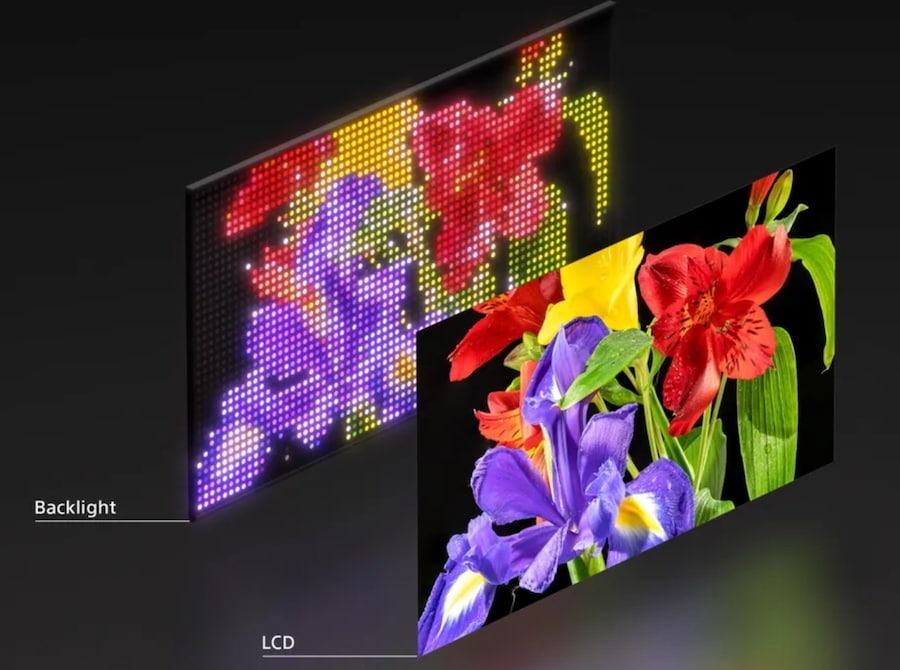
The most recent variation in LCD TV technology, introduced during 2025 and 2026, is the RGB-backlit TV. Depending on the brand, these models may be labeled “Micro RGB,” “Mini RGB,” or, in Sony’s case, “True RGB TVs.”
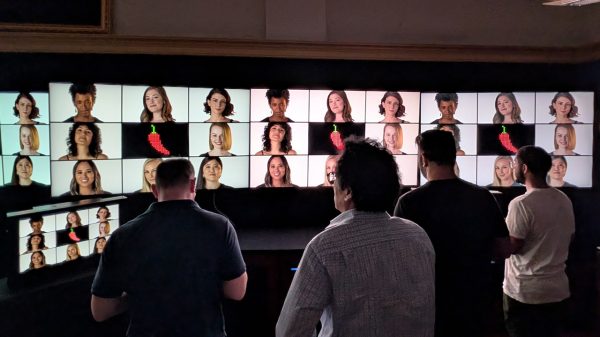
Tip: while the name “Micro RGB” sounds similar to “MicroLED,” they are actually quite different technologies. Micro RGB TVs use RGB backlights to illuminate an LCD panel while a true MicroLED display is similar to an OLED TV in that it uses individual self-illuminating pixels. Micro LED panels are not currently available in consumer TVs, however, many large displays for commercial or custom home theater deployments use multiple Micro LED panels stitched together to form giant displays, also know as “video walls.” These typically start at tens of thousands of dollars and come in custom sizes up to 20 feet wide (or more).
Like Mini-LED TVs, RGB-backlit TVs are also LCD-based, which means images are displayed on an LCD screen and a backlight is required to make this image visible. What distinguishes them from conventional LED/LCD and Mini-LED TVs is their use of red, green, and blue LED backlight elements instead of a blue or white backlight.
This backlighting difference supports greater efficiency, higher overall brightness, and a wider color gamut than traditional LED/LCD and Mini-LED TVs. While a WOLED TV may be able to reduce around 80% to 84% of the advanced BT.2020 color standard and QD-OLED TVs may reproduce 85% to 90% of BT.2020, RGB-lit LCD TVs typically exceed 92% or even 95% of the BT.2020 color gamut. While there is very little content available today which takes advantage of this color gamut, it’s nice to have this capability for the future.
Like Mini LED TVs, RGB lit TVs use advanced local dimming techniques to control the backlight. The RGB backlight elements are assigned to independent lighting zones that provide RGB-generated light to hundreds or even thousands of pixels. However, because these lighting elements include individual diodes for red, green and blue, the complexity of the backlight control is more advanced, and the processing behind this control is crucial to the quality of the reproduced image. Poor processing can lead to a new artifact called “color crosstalk” where images can take on tinges of color from surround colors. This is particularly noticeable on bright white areas of the screen or on skin tones which may be tainted by colors surrounding the color patch.
Since they still use backlights, RGB-backlit TVs can experience some of the same issues that affect LED/LCD and Mini-LED TVs, including screen uniformity problems, elevated black levels, blooming, and haloing. However, these issues are minimized through the use of hundreds or even thousands of zones of advanced local dimming.
Tip: RGB-backlit TVs represent the latest advancements in LCD TV technology, but they are still ultimately limited by the performance of LCD panels, while OLED TVs offer a completely different method of displaying images.
RGB Backlit TVs Related Reading:
- Hisense UR9 RGB MiniLED 4K TVs Aim To Set New Standard in Color Performance in 2026
- Worth the Wait? Sony BRAVIA 7 II, BRAVIA 9 II True RGB TVs Are Here, and We Have Thoughts
- Samsung Reveals 2026 Micro RGB LED TV Pricing and Availability as It Pushes Premium TV Tech Into the Spotlight
- LG’s New Micro RGB evo TVs Start at a Cool $5K
Comparison Chart: OLED vs. Mini LED vs. RGB
| TV Type | OLED | Mini-LED | RGB Backlit |
| TV Sub-Type | WOLED (aka WRGB), QD-OLED | White Backlight or Blue Backlight with Quantum Dots | RGB MiniLED, RGB Micro LED, Micro RGB, True RGB |
| Screen Sizes | Up to 97 inches | Up to 116 inches | Up to 130 inches* |
| Backlight Type | No Backlight – Pixels are Self-Emissive | Microscopic White or Blue LEDs | Microscopic Red, Green, and Blue LEDs |
| Contrast and Blacks | Infinite Contrast with Absolute Black | Wide contrast with Local Dimming Zones – Deep blacks but not absolute | Wide contrast with Local Dimming Zones – Deep blacks but not absolute |
| Color Creation | Pixel Level WOLED also employs color filters QD-OLED also employs Quantum Dots | Color Filters, optional Quantum Dot layer | Backlight supported color – with additional color filters |
| HDR Support | Yes | Yes | Yes |
| Peak Brightness (Brand/Model Dependent) | Moderate to High | Very High to Extremely High | Very High to Extremely High |
| Viewing Angle | Wide | Narrow | Moderate |
| Burn-In Susceptibility | Burn-in Possible – Depending on brand/model, tools are provided for mitigation | None | None |
| Smart Features | Yes – OS varies by brand/model | Yes – OS varies by brand/model | Yes – OS varies by brand/model |
| Gaming Support | Varies by Brand/Model | Varies by Brand/Model | Varies by Brand/Model |
| Price Point (Relative to TV Type) | High | Moderate to High | High to Very High |
*Note: Samsung showed off a 130-inch RGB-lit LCD TV at CES 2026, though they have yet to announce a production model in this size.
The Bottom Line
OLED, Mini-LED, and RGB-backlit TV technologies each have their strengths and weaknesses. Mini-LED currently offers the highest value, especially in extra large screen sizes. Step-up RGB-backlit TVs boast an even wider color gamut and higher peak brightness, while still offering extra large screen sizes. However, performance of both Mini-LED an RGB-backlit TVs varies widely based on the number of local dimming zones implemented as well as the quality of the backlight processor. More is better, but neither matches OLED’s self-emitting pixel-level controls for absolute black-levels without blooming or haloing. Yet, OLED TVs typically don’t get as bright, and aren’t offered in the largest screen sizes.
Also consider your room lighting conditions for most of your viewing time, which could determine whether a glossy or matte (anti-reflective) screen is more appropriate. One of the highest performance TVs on the market today (the Samsung S95H QD-OLED) comes with a matte screen which can make the set viewable in bright rooms, but at the cost of a raised black level. It’s best to try to see these TVs in person before making a final buying choice.
No TV is perfect, and the performance gap among TV types at the flagship level is as narrow as it has ever been. However, the largest performance differences are among the least expensive models, regardless of technology, which is ultimately where corners are cut to save money. Yet, even the cheapest TVs are much better than they used to be just a few years ago. And if you still can’t decide, factor in the highest performing model from last year that fits your budget when it goes on sale.
Related Reading
- Best OLED TV and RGB LCD TV Revealed at the 2026 TV Shootout
- Not All OLED TVs Are the Same: Key Differences That Impact Your Viewing Experience
- TCL to Offer IJP OLED Monitors and Notebook Screens. Are Consumer OLED TVs Next?
- TCL’s X11L SQD-Mini LED TV Debuts at CES 2026 with Flagship-Level Color and HDR Performance