
In the world of home theater, there are traditional A/V systems and powered speakers, and there are soundbars. Then there’s the Nakamichi Dragon, a premium-priced soundbar system designed to bridge the gap between those worlds like no other setup I’ve encountered.
I reviewed the latest version, which includes a single 12-inch subwoofer in an 11.1.6-channel configuration and lists for a whopping $3,800, although it often sells for considerably less. The Dragon delivers exhilarating performance, especially with 3D audio formats like Dolby Atmos, but before you consider buying one, you’ll want the whole story.
Skip the reading? Click play above or watch the Nakamichi Dragon review on YouTube.
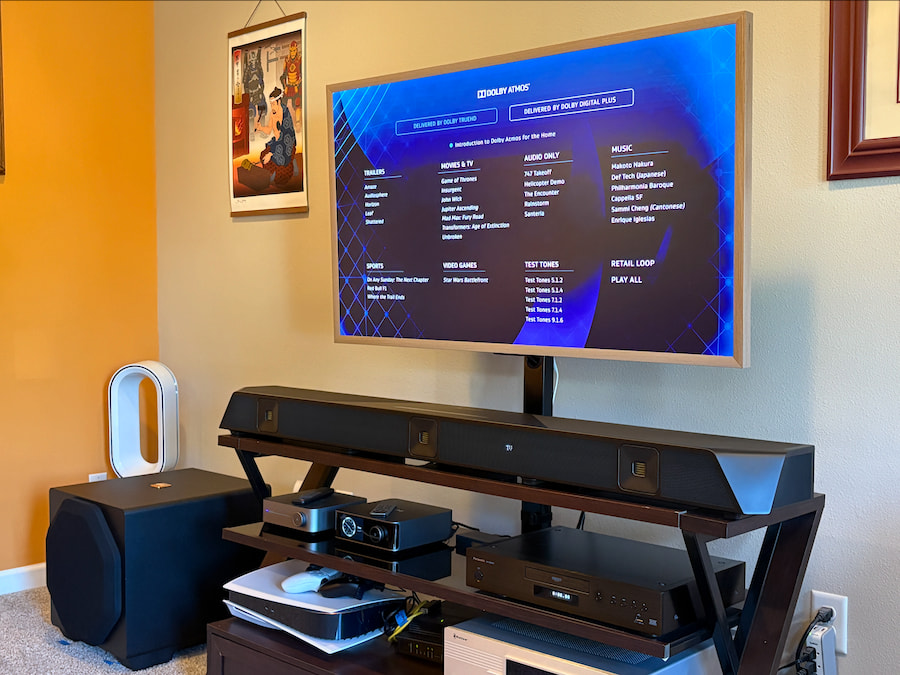
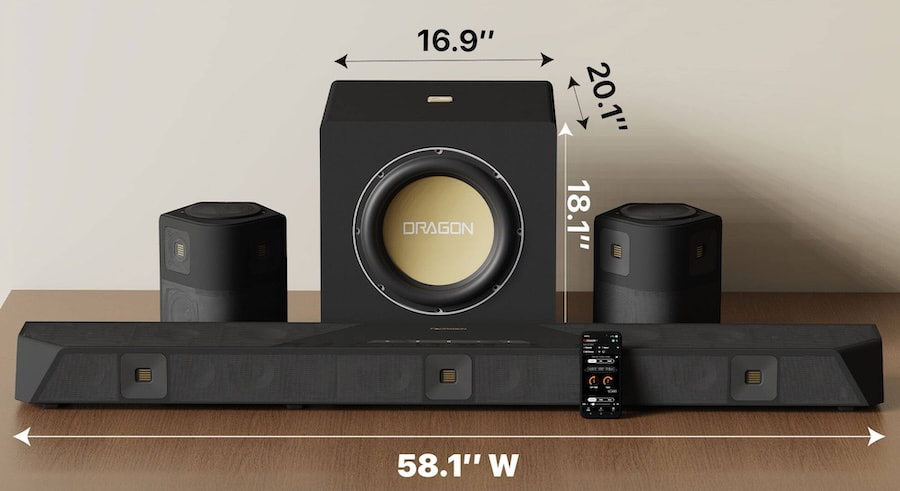
The Dragon’s sheer size and weight make it a real chore to unbox and set up. The soundbar alone weighs more than 32 pounds, and at 58 x 4.4 x 7.7 inches (W x H x D), it barely fit on my mid-size console. The subwoofer weighs about 80 pounds and extends nearly 18 inches deep.
The surround speakers are much easier to manage, although they feel a little cheap considering the price. They do offer some interesting technology, including a top-mounted dial that lets you physically adjust the direction of the upfiring drivers. The overall angular design is big and bold and practically demands an equally large TV to match.
The 11.1.6-channel model I tested comprises 28 speakers, including the 12-inch subwoofer, and you can add up to foursubs if you dare. The main soundbar houses 17 drivers, including four upfiring drivers for height effects and three 1.5-inch AMT tweeters. Each surround speaker adds two more 1.5-inch AMT drivers, two 3.5-inch drivers for side and rear surround effects, and a 3-inch upfiring driver.
Nakamichi rates the system at a claimed 3,000 watts of total power. Connections include three HDMI 2.1 inputs, one HDMI eARC port, optical input and output, 3.5mm analog input and output, and Bluetooth 5.0 with aptX HD. Oddly, there’s no Wi-Fi for features like Spotify Connect or AirPlay.
Audio support is extensive, including Dolby Atmos via Dolby TrueHD and the major DTS formats, including DTS Pro.
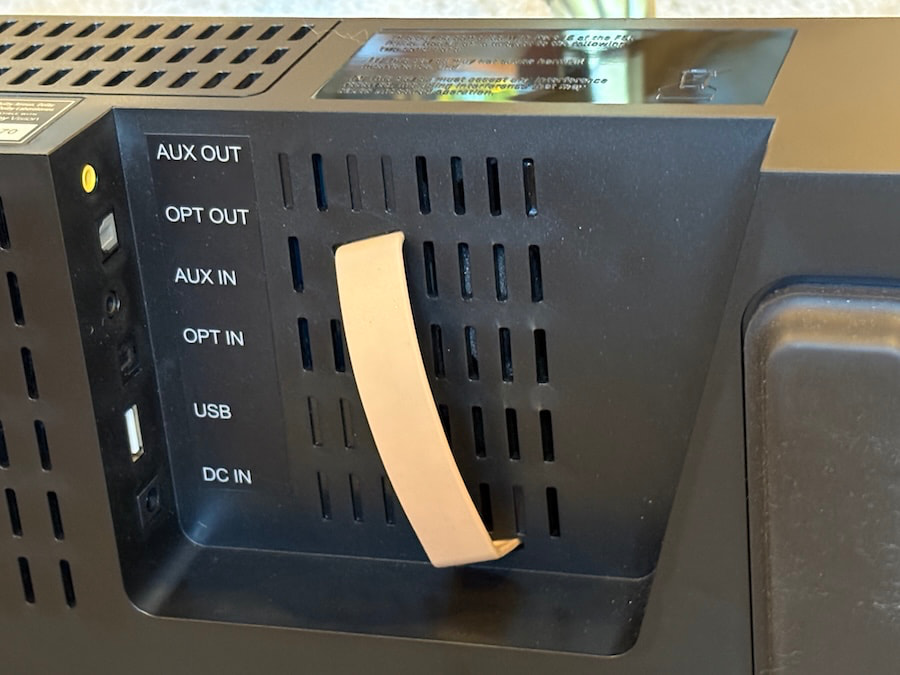
Controls and setup are handled through a loaded, old-school remote and an on-screen display that looks like it was pulled straight from a legacy A/V receiver. There’s no companion app for deeper adjustments, another odd omission at this price, and no automatic room calibration.
Instead, you can select from preset room sizes or manually enter your room measurements, which I recommend for the best results. You’ll still need to tweak several settings, especially the subwoofer, which is far too loud by default in a medium-sized room.
Those adjustments live inside the Auto Setup and Calibration menus. The available settings are extensive, but also fairly complicated, so expect to spend some time getting everything dialed in.
Performance is full throttle, from clear, forward dialogue to high-flying — and impressively precise — overhead effects and bass that can literally shake your windows. The low-end punch was far too much for my room before adjustment, although the system is admittedly better suited to larger spaces.
The overhead effects can be similarly aggressive. You can always dial them back, but it is undeniably fun to hear emphasized details like the almost visceral hull creak during the crash scene in Guardians of the Galaxy Vol. 2.
My biggest criticism is the overall sound signature, which can feel too thin and tightly wound, especially with lower-quality content. It lacks the full-bodied warmth of traditional speakers and even some less expensive soundbars, including Samsung’s HW-Q990.
Music is also less convincing than I expected at this price. The Dragon can be spectacular with movies, but it is not the system I would choose if two-channel music listening were a major priority.
The Bottom Line
If you’re after unearthly bass, cinematic surround sound, and powerful, almost surreal height effects, the Dragon is worth considering. I still take issue with its overall finesse and warmth, especially through the midrange, but there’s no denying how detailed, dynamic, and immersive it can sound with 3D audio soundtracks.
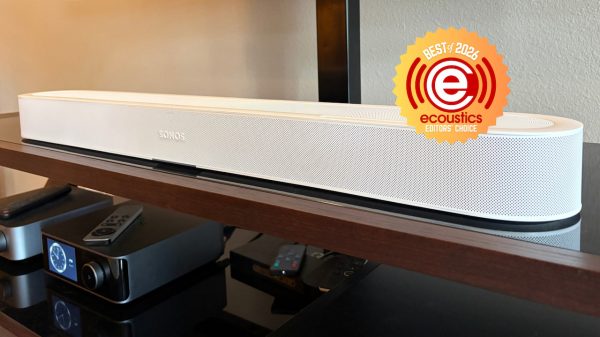
I think many A/V enthusiasts will find a better return by going with moderately priced speakers from brands like Klipsch, Polk, or SVS and a traditional A/V receiver. On the other hand, folks who want simplicity will find it in more versatile setups like Sonos’ Arc Ultra ($1,099) with a Sonos sub ($899) and Era 300 speakers ($499 each), or more affordable packages like Samsung’s HW-Q990.
That said, you’ll have a hard time finding this level of intensity, immersion, and sheer bass impact from another all-in-one home theater system. If that kind of larger-than-life presentation is what you’re after, the Nakamichi Dragon delivers in a very big way.
Pros:
- Massive, earth-shaking bass
- Powerful and adjustable overhead effects
- Clear dialogue even in chaotic scenes
- Loads of physical inputs
- Deep-dive settings and loaded remote
Cons:
- Difficult physical setup and complicated settings
- Sound signature is thin and forward
- No Wi-Fi or auto-calibration
- Cost is similar to traditional A/V setups
Our Ratings:
★★★★★★★★★★ Performance
★★★★★★★★★★ Build Quality
★★★★★★★★★★ Features
★★★★★★★★★★ Usability
★★★★★★★★★★ Value
Where to Buy:
Related Reading:




















ORT
October 7, 2026 at 8:14 pm
I remember when the Nakamichi Dragon was a totally bitchin’ cassette deck. “The pellet with the poison’s in the flagon with the dragon; the vessel with the pestle has the brew that is true”. Time to fade to black…
ORT