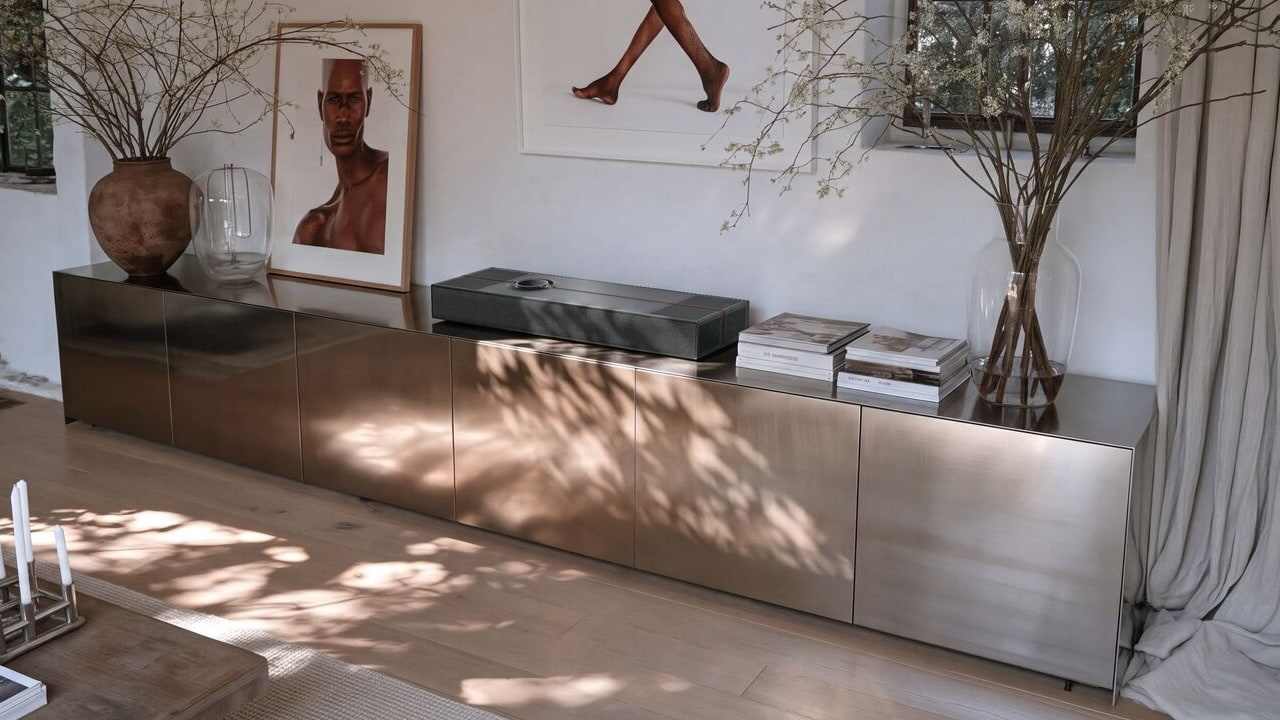
Naim Audio has decided that its Mu-so family needs something considerably more ambitious than another handsome wireless speaker with an illuminated volume dial. The new Mu-so Utopia combines 15 Focal drivers, 720 watts of amplification, Dolby Atmos 7.1.2 processing, and high-resolution streaming in a system designed to replace much of the clutter that traditionally accompanies serious hi-fi and home theater.
At $6,500, it also costs considerably more than most people spend on their entire audio system.
The Utopia designation isn’t accidental. This is the first Naim-branded product to carry the name associated with Focal’s most prestigious loudspeakers, and the Franco-British partnership has incorporated some meaningful acoustic and electronic upgrades.
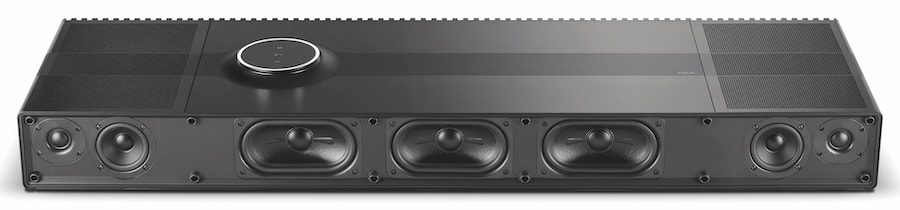
But we’ve already spent considerable time with the Focal Mu-so Hekla, which impressed us at CES, AXPONA, and Audio Advice Live. The $3,600 Hekla is also a 15-driver immersive system, with 660 watts of amplification, Dolby Atmos, and the same Naim streaming platform. Our full review is forthcoming.
So before anyone starts polishing the Utopia trophy, there’s a rather obvious question: What are you actually getting for another $2,900?
Related Reading:
- Focal Mu-So Hekla Dolby Atmos Wireless Speaker Erupts At AXPONA 2026: Still Not A Soundbar
- First Listen: Focal’s Mu-So Hekla Isn’t A Soundbar And It May Be The Wireless Speaker Solution For A Lot Of People
Focal’s Utopia Technology Meets Naim’s Most Ambitious Mu-so Amplifier
The biggest changes are inside.
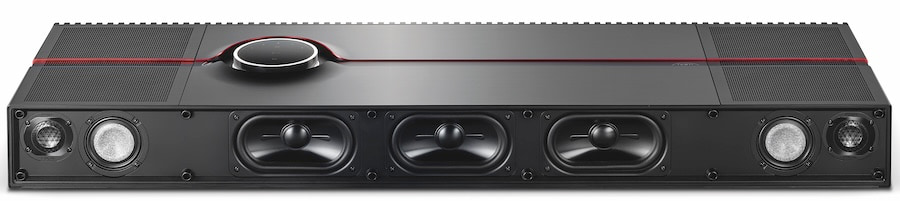
Naim has equipped the Mu-so Utopia with two French-made Focal midrange drivers using 2.75-inch M-profile W-cones, along with two 1-inch tweeters incorporating Focal’s newer PRISM technology. These are intended to improve driver rigidity, damping, and the reproduction of fine musical detail.
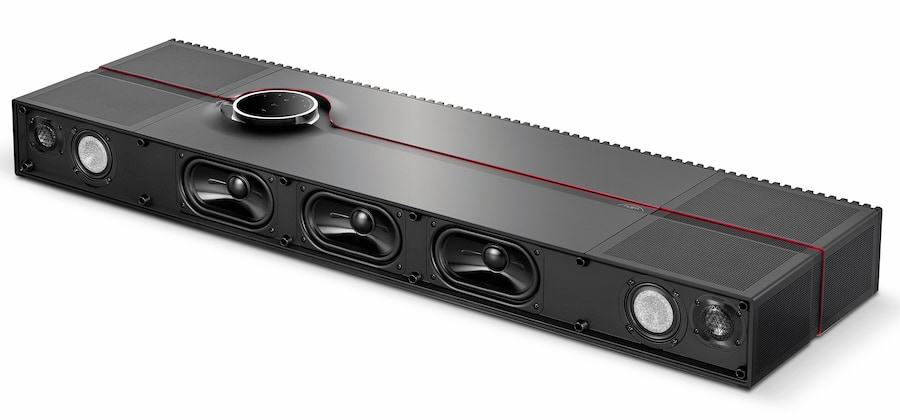
The amplification is equally interesting. Naim has developed a hybrid arrangement combining Class A/B and Class D technology, with separate amplification assigned to all 15 drivers.
Three woofers each receive an amplifier rated at 84 watts, the eight full-range drivers and two midrange drivers receive 42 watts apiece, and the tweeters receive 24 watts each. Those individual ratings, measured at specified impedances and 1% THD, add up to the advertised 720 watts.
The more important consideration is how effectively the amplifiers work with Focal’s new driver complement. A different amplifier topology and upgraded transducers could offer improvements in midrange transparency, high-frequency refinement, and dynamic expression, particularly with two-channel music.
They could. We haven’t heard it yet.
The Utopia’s 30Hz to 20kHz frequency response (±3dB), 25Hz lower cutoff (-6dB), and claimed maximum output of 109dB SPL at one meter suggest considerable acoustic capability. Naim says the system is intended for rooms up to 50 square meters, approximately 538 square feet.

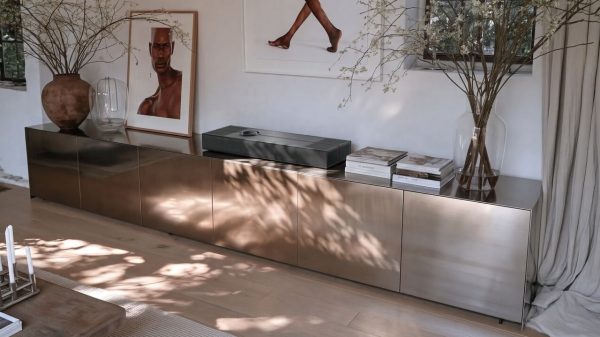
And this isn’t some diminutive lifestyle speaker. At almost 40 inches wide and weighing 31.1 pounds, it requires real furniture and enough breathing room for its side- and upward-firing drivers to operate effectively.
Streaming and Dolby Atmos Without the Usual Collection of Black Boxes
The latest Naim Pulse Platform handles streaming, while Focal and Naim’s Sphere Audio Modes combine beamforming and crosstalk cancellation to create a wider stereo image and immersive surround presentation.
There are seven drivers across the front, four along the sides, and four firing upward. Dolby Atmos processing supports configurations up to 7.1.2, but that doesn’t mean there are ten discrete loudspeakers positioned around the listening room. Much of the spatial presentation depends on processing and the interaction between the system and its surroundings.
Focal’s ADAPT room optimization system uses the Focal & Naim app to tailor playback to the room. Owners enter dimensions and placement information, and the processing adjusts accordingly. This is not microphone-based room correction that independently measures every reflection.
The platform supports Spotify Connect, TIDAL Connect, Qobuz Connect, Google Cast, AirPlay, UPnP, and internet radio. Naim also specifies Dolby Atmos music compatibility with Apple Music via AirPlay 2, TIDAL through the Focal & Naim app, and Presto Music integration.
On the technical side, there’s support for WAV files up to 32-bit/384kHz, FLAC, AIFF, and ALAC up to 24-bit/384kHz, and DSD64/128. Bluetooth 5.1 is provided for convenience, although codec support is limited to SBC and AAC.
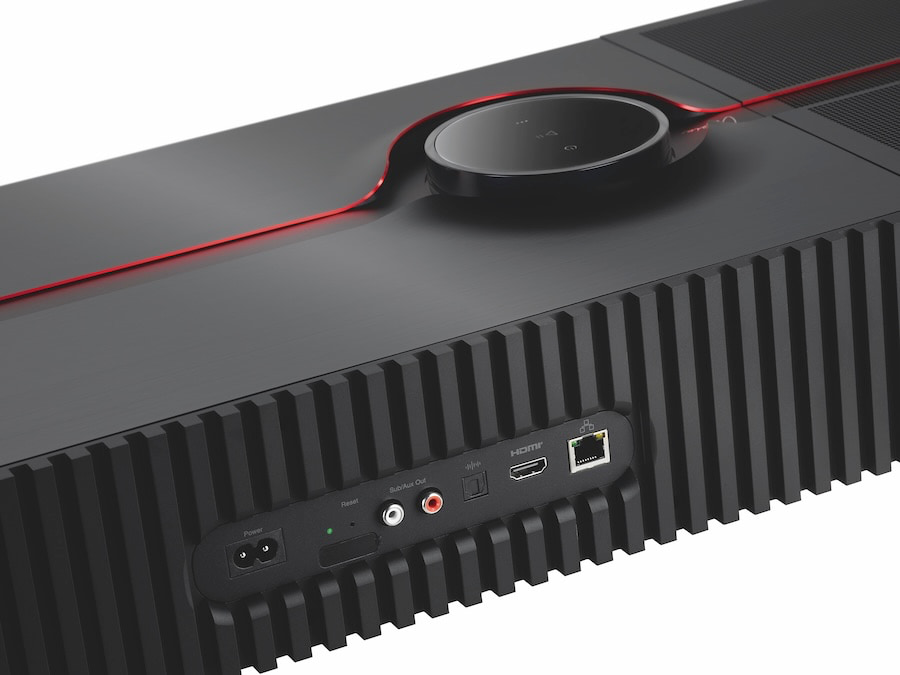
For television and movie playback, HDMI eARC provides the main connection, supplemented by optical TOSLINK. Naim’s specifications confirm Dolby Digital, Dolby Digital Plus, Dolby TrueHD, Dolby AC-4, and Dolby MAT support, along with multichannel formats including FLAC and WAV.
DTS and DTS are not listed among the supported formats. That’s worth knowing if your movie collection extends beyond the streaming services.
One other important detail: the RCA connection is a stereo pair of outputs intended for an external subwoofer, not an analog line input. A CD player or other conventional analog source will therefore need an appropriate digital connection or conversion arrangement.
Apparently, even at $6,500, some compromises survive the journey to Utopia.
Naim Mu-so Utopia Specifications:
- Type: All-in-one stereo and immersive audio system
- Speaker configuration: 15 Focal drivers
- Front:
- 3x 6×3-inch woofers,
- 2x 2.75-inch M-profile W-cone midrange drivers,
- 2x 1-inch PRISM tweeters
- Sides: 4x 1.5×2.75-inch full-range drivers
- Top: 4x 1.5×2.75-inch full-range drivers
- Front:
- Amplification: 720 watts total, Class A/B and Class D
- Amplifier allocation: 3 × 84W woofers; 10 × 42W midrange/full-range; 2 × 24W tweeters
- Frequency response: 30Hz–20kHz (±3dB)
- Low-frequency cutoff: 25Hz (–6dB)
- Maximum sound level: 109dB SPL at 1 meter
- Immersive audio: Dolby Atmos, up to 7.1.2
- Dolby codecs: Dolby Digital AC-3, Dolby AC-4, Dolby Digital Plus, Dolby TrueHD, Dolby MAT
- Additional multichannel formats: FLAC and WAV up to 7.1/192kHz via streaming; Apple APAC up to 7.1.2/192kHz
- Streaming platform: Naim Pulse
- Streaming services: Spotify Connect, TIDAL Connect, Qobuz Connect, Presto Music, internet radio
- Wireless streaming: Google Cast, AirPlay, Bluetooth, UPnP
- High-resolution audio: WAV up to 32-bit/384kHz; FLAC, AIFF, ALAC up to 24-bit/384kHz; DSD64/128
- Bluetooth: Version 5.1, SBC and AAC
- Network: Wi-Fi 6 and Gigabit Ethernet
- Digital inputs: HDMI eARC with CEC; optical TOSLINK up to 24-bit/96kHz
- Analog output: Stereo RCA pair for external subwoofer
- Room optimization: Focal ADAPT
- Multiroom: Synchronization of up to 32 compatible Focal & Naim devices
- Smart home integration: Google Home, Siri, Control4, Savant, Crestron
- Control: Focal & Naim app for iOS and Android; illuminated rotary control
- Power consumption: 220W rated; less than 2W network standby
- Dimensions: 39.37 x 4.65 x 11.61 inches (W x H x D)
- Weight: 31.1 pounds (14.1 kg)
- Finish: Black anodized aluminum with glossy accents and red Utopia trim
- U.S. price: $6,500
- Availability: January 2027
Focal Mu-so Hekla vs. Naim Mu-so Utopia: Where Does the Extra Money Go?
Here’s where the detailed specifications become particularly revealing.
| Specification | Focal Mu-so Hekla | Naim Mu-so Utopia |
|---|---|---|
| MSRP | $3,600 | $6,500 |
| Release Date | March 2026 | January 2027 |
| Drivers | 15 | 15 |
| Amplifier Power | 660W | 720W |
| Midrange | Conventional Focal drivers | M-profile W-cone |
| Tweeters | Focal tweeters | Focal PRISM |
| Frequency response | 30Hz – 20kHz | 30Hz – 20kHz |
| Bass cutoff (-6dB) | 27Hz | 25Hz |
| SPL | 108 dB | 109 dB |
| Dolby Atmos | Up to 7.1.2 | Up to 7.1.2 |
| Dimensions (W x H x D) | 39.37 x 4.65 x 11.61 inches (100 x 11.8 x 29.5 cm) | 39.37 x 4.65 x 11.61 inches (100 x 11.8 x 29.5 cm) |
| Weight | 34.2 lbs (15.5 kg) | 31.1 lbs (14.1 kg) |
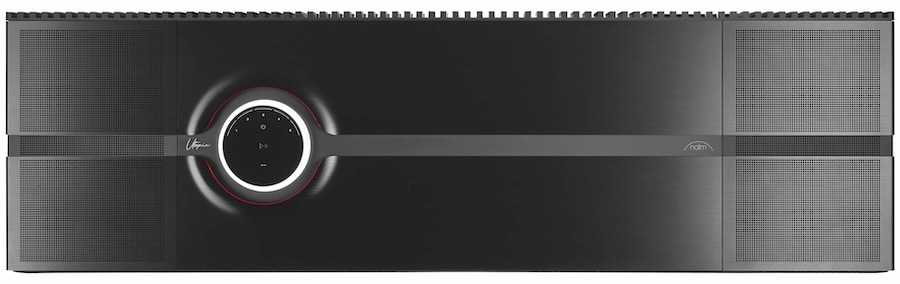
The identical dimensions are particularly interesting. Naim hasn’t made the enclosure larger to accommodate more drivers or substantially greater bass output. The two systems occupy precisely the same amount of space, and the Utopia is actually 1.4 kg lighter.
The claimed improvement in maximum output is only 1dB, while the published -6dB bass point extends another 2Hz. Neither figure, on its own, suggests a dramatic transformation.
What remains is the most important difference: the Utopia’s more ambitious Focal driver technology and Naim’s hybrid amplification.
For someone who primarily watches movies, the Hekla may already deliver everything required. For a listener who spends hours with jazz, vocal recordings, classical music, and high-resolution stereo streaming, the Utopia’s acoustic upgrades may prove more significant.
Based on what we’ve heard from the Hekla at three shows, however, Naim has set itself a difficult assignment. Its less expensive sibling already sounds remarkably convincing.
What Else Competes at This Price?
The DALI VEGA ($4,500) is arguably a more interesting alternative for music lovers who aren’t particularly concerned about recreating a Dolby Atmos theater in their living room. We covered its introduction in May, and the Danish manufacturer has taken a decidedly different approach to premium all-in-one audio.
VEGA combines eight active drivers, two passive radiators, 400 watts of Class D amplification, and BluOS streaming with DALI’s Adaptive Stereo Enhancement and Adaptive Orientation Adjustment technologies. It can operate horizontally or vertically, including wall-mounted configurations, while automatically adjusting its stereo presentation to suit its orientation. There’s also HDMI ARC, analog and digital connectivity, and Bluetooth aptX HD support.
What it doesn’t offer is Dolby Atmos processing, upward-firing height channels, or the Utopia’s more elaborate home theater capabilities. But for someone who primarily listens to music, DALI’s emphasis on stereo imaging, driver engineering, and flexible placement makes considerable sense. Its beautifully executed real wood veneer cabinet doesn’t exactly hurt the argument either.
At $2,000 less than the Naim, VEGA raises an interesting question: How much of Utopia’s premium is going toward better two-channel music reproduction, and how much is paying for immersive processing that some listeners may rarely use? The answer won’t be found on a specification sheet.
The Danes have no intention of competing with the French and British over who can throw the most imaginary loudspeakers around your ceiling. They’re betting that two convincing stereo channels are still worth getting right.
The Bottom Line
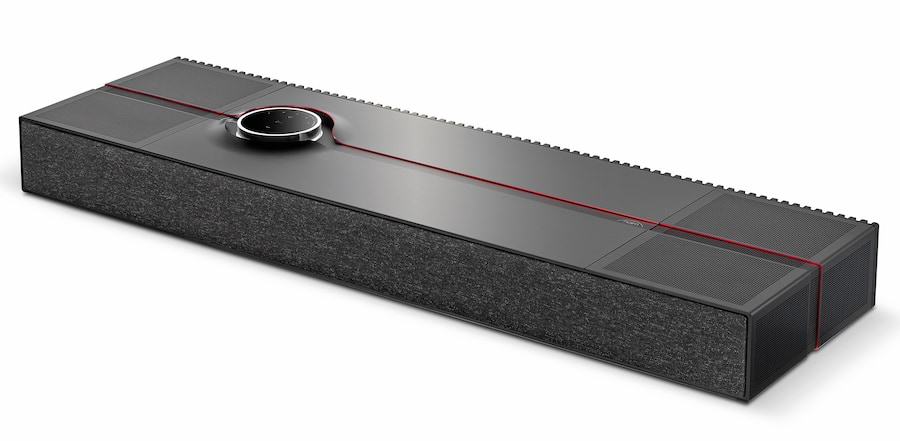
The Mu-so Utopia represents a serious attempt to combine Focal’s premium acoustic engineering with Naim’s electronics and streaming expertise. The PRISM tweeters, W-cone midrange drivers, and new amplification architecture are genuine technical changes, not simply an expensive enclosure wearing a more prestigious badge.
But those improvements have to justify an 81% premium over the Hekla, which shares its physical dimensions, overall driver count, immersive processing capabilities, and most of its digital platform.
The Utopia may ultimately prove substantially better with stereo music, where subtle improvements in tonal accuracy, imaging, and transparency can matter more than another watt or two. That’s where I’d concentrate the listening evaluation.
We’ve heard enough from the Hekla to know that Focal and Naim understand how to make these systems sound much larger than their physical dimensions suggest.
Whether the Utopia can take that performance somewhere genuinely special remains to be heard. At $6,500, I’d expect considerably more than a red accent and an illuminated volume dial that makes me feel like I’m adjusting the temperature in a particularly expensive French hotel.
Utopia is a rather ambitious name. Now Naim has to earn it.
For more information: naimaudio.com
Related Reading: