Formula 1 is already one of the few sports where the sound can be almost as important as the picture. A screaming power unit, tires protesting through a corner, frantic team radio and the organized chaos of a pit stop are not exactly subtle ingredients.
Apple apparently agrees.
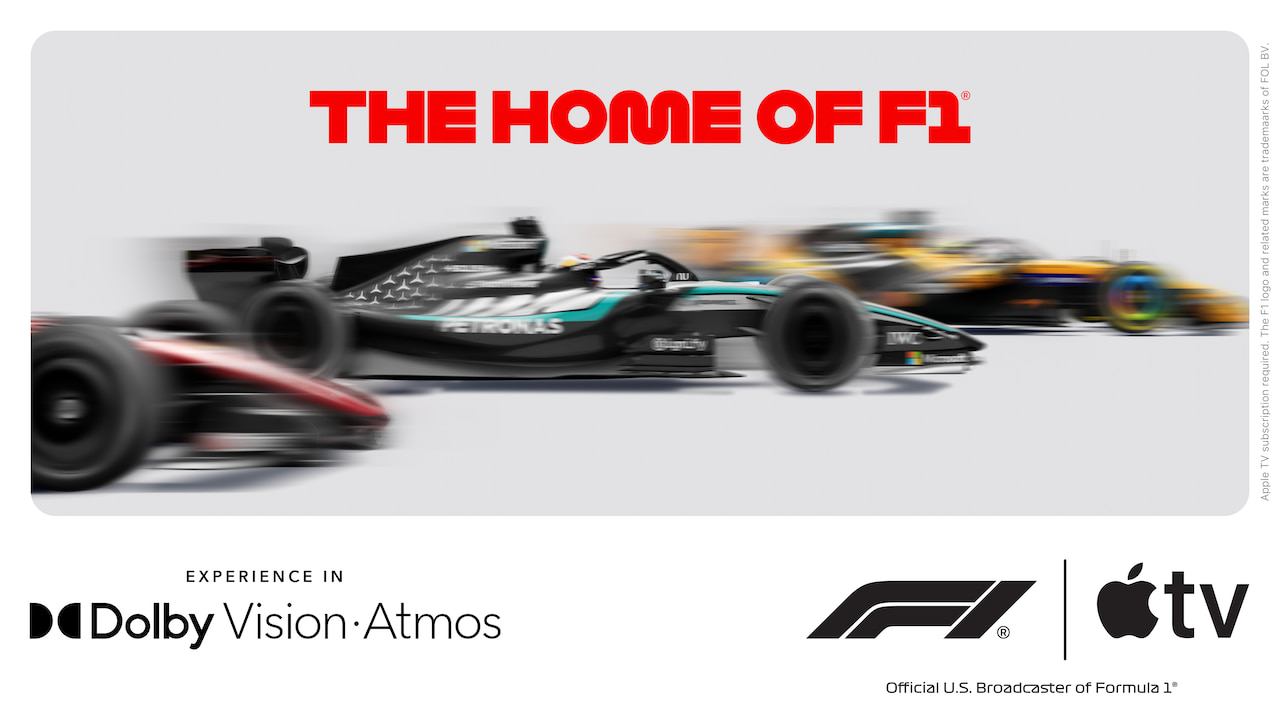
Beginning with the 2026 United States Grand Prix at Circuit of The Americas on October 23, Formula 1 coverage on Apple TV will be presented in Dolby Atmos, joining the 4K Dolby Vision presentation Apple introduced at the beginning of the 2026 season. For U.S. subscribers, that means F1 race weekends will now combine 4K, Dolby Vision and Dolby Atmos for the first time on Apple TV.
And unlike adding Atmos to another streaming drama in which three people whisper in a poorly lit kitchen, Formula 1 might actually give your height channels something worthwhile to do.
Related Reading:
- Apple Music Hall Turns Battersea Power Station Into A 48 Speaker Spatial Audio Venue
- Apple Is Testing A Four-HomePod Surround Sound System For Apple TV 4K
- Apple TV 4K Could Finally Get Siri AI, Wi-Fi 7 And A Much Faster Processor In 2026
What Will Dolby Atmos Add to Formula 1?
According to Dolby, the Atmos mix will incorporate team radio, race commentary, engine sounds, on-track battles and pit-lane activity into the immersive presentation. The obvious opportunity is to create a much larger sonic environment around the viewer rather than keeping the action largely across the front soundstage.
Apple launched its exclusive U.S. F1 coverage earlier this year with every Grand Prix in 4K Dolby Vision and 5.1 surround sound. Atmos represents a meaningful upgrade from that starting point, particularly for viewers using an AVR-based system or a capable Dolby Atmos soundbar.
The caveat is the usual one: Atmos does not automatically make a broadcast immersive simply because the logo appears before the race. Microphone placement, production choices and how aggressively the mix uses the surrounding and overhead channels will determine whether viewers actually feel closer to the circuit or merely hear a slightly larger version of the television broadcast.
F1 gives Apple and Dolby plenty of raw material. Now they have to use it.

Apple Has Been Building Toward This All Season
The Atmos announcement makes more sense when viewed alongside everything Apple has already done with Formula 1.
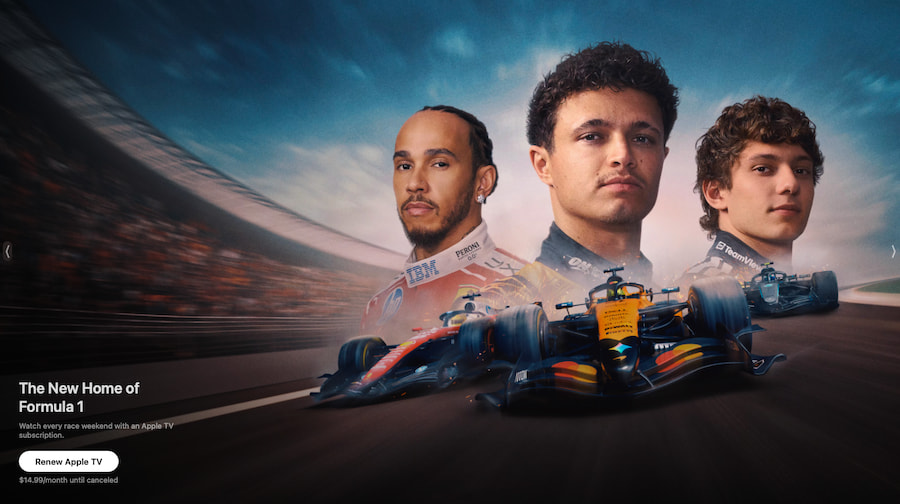
Apple became the exclusive U.S. broadcast partner for F1 under a five-year agreement beginning in 2026, moving the sport away from ESPN after eight seasons. Every practice session, qualifying session, Sprint and Grand Prix is available through an Apple TV subscription, with F1 TV Premium included at no additional charge for U.S. subscribers.
The service also offers up to 30 additional live feeds, including driver cameras, telemetry and timing, Driver Tracker and podium-focused coverage. Multiview allows compatible users to watch as many as four feeds simultaneously.
That makes Apple’s F1 offering considerably more ambitious than sticking a live race inside the Apple TV app and calling it a day.
It also explains why Dolby Atmos matters. Apple is attempting to differentiate its sports presentation through picture quality, sound and interactivity rather than simply owning the rights.
F1 Is Worth Fighting Over
Formula 1 is not the niche European motorsport some American broadcasters once treated as overnight schedule filler.
F1 reported a global fanbase of more than 830 million people during the first half of 2026, up sharply from 2018. Around 43% of its fans are under 35, while women account for approximately 42% of the audience. Race attendance also continues to climb, with nearly 3.7 million people attending the first 11 race weekends of 2026, all of which sold out.
The U.S. market has been particularly important. Formula 1 reported 52 million American fans in 2025, an increase of 11% year-over-year. The United States was also F1’s largest market for YouTube viewing and social-media followers.
Traditional television audiences were growing as well before Apple took over. ESPN averaged a record 1.3 million viewers per race during the 2025 season, up 135% compared with its first year carrying F1 again in 2018. Sixteen of the 24 races set individual event viewership records.
Apple therefore did not buy into a declining sport desperately searching for viewers. It bought into one of the fastest-growing sports properties in America and is now trying to make the viewing experience part of the attraction.
And There May Be a New Apple TV 4K Next Week
The timing of the Dolby Atmos announcement is also rather convenient.
Apple has announced a “Welcome home” event for October 13, and multiple reports indicate that a fourth-generation Apple TV 4K is expected to be part of the presentation. Apple has not officially confirmed the new box, so keep the champagne—or racing fuel—on ice for a few more days.
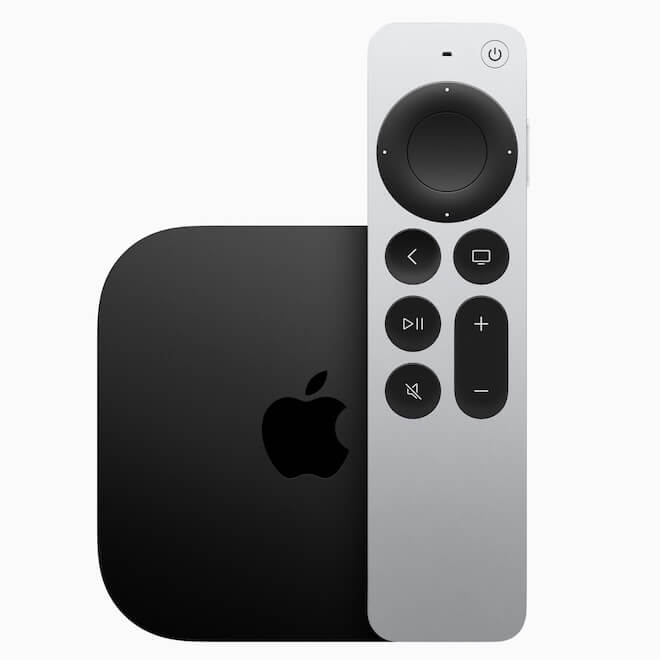
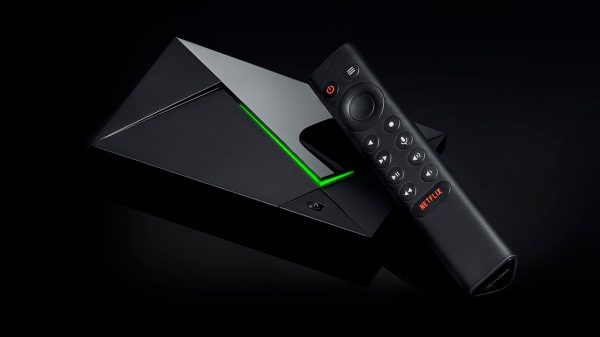
The current third-generation Apple TV 4K dates back to 2022 and uses Apple’s A15 Bionic processor. The replacement is rumored to move to an A19-class processor, significantly more memory, Apple Intelligence and the new Siri AI experience. Reports also point to Apple’s N1 networking chip with Wi-Fi 7, Bluetooth 6 and Thread support, along with a revised Siri Remote.
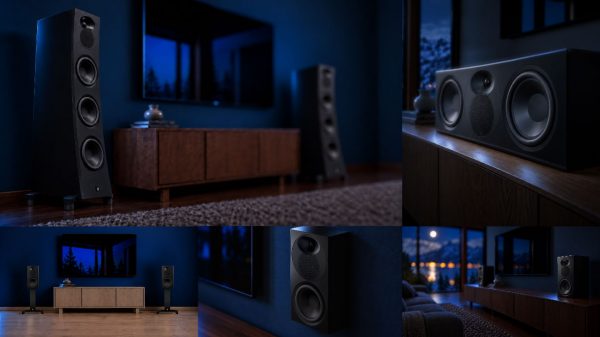
None of that hardware is required to hear Formula 1 in Dolby Atmos. Current Apple TV 4K models already support Dolby Atmos, and Apple says the new F1 presentation will also work through the Apple TV app on compatible Apple devices, Dolby-enabled televisions, soundbars and home theater systems.
In other words, do not buy a new Apple TV next week merely because Verstappen suddenly has height channels.
But a faster Apple TV 4K with Wi-Fi 7 and considerably more processing power could make sense as Apple expands Multiview, live sports, smart-home integration and AI-driven features. Apple also already lets an Apple TV 4K use a stereo pair of full-size HomePods for Dolby Atmos playback, further blurring the line between streaming box and home-theater hub.
Why Viewers Should Care
Live sports streaming has spent years chasing conventional television on reliability while often treating audio quality as an afterthought. Apple is taking a different approach with Formula 1.
The company now controls the U.S. rights, offers every race in 4K Dolby Vision, bundles F1 TV Premium, provides customizable Multiview and is adding Dolby Atmos without requiring another F1 subscription.
That combination matters because premium video formats are only useful if there is premium content worth watching in them.
Formula 1 is nearly ideal.
Fast motion makes 4K image quality important. Brightly colored cars, night races and extreme lighting conditions give Dolby Vision plenty to work with. And few sports offer a more distinctive collection of sounds than 22 cars fighting for the same piece of asphalt while engineers shout into radios and mechanics perform surgery on four wheels in less time than it takes most of us to find the remote.
If Apple and Dolby get the Atmos production right, the U.S. Grand Prix could become one of the better demonstrations of what a modern home theater can do with live sports.
Lights out should sound considerably better on October 23.
Related Reading: