Apple has spent years owning your pocket, wrist, laptop, and increasingly your ears.
The living room has been a different story.
Apple TV 4K remains one of the best streaming boxes on the market, HomePod can sound surprisingly good for its size, and the Home app has steadily improved. But Apple has never quite turned those pieces into the kind of unified home platform that Amazon, Google, and increasingly Sonos have been chasing.
That could change on October 13, 2026.
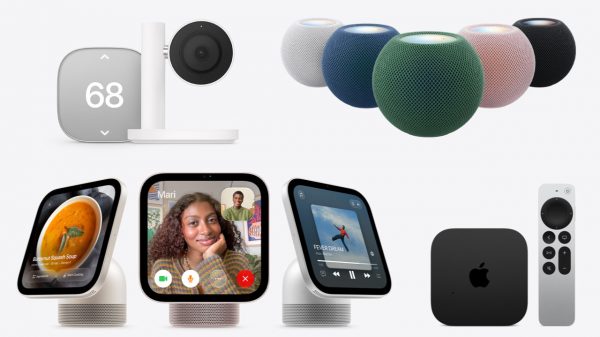
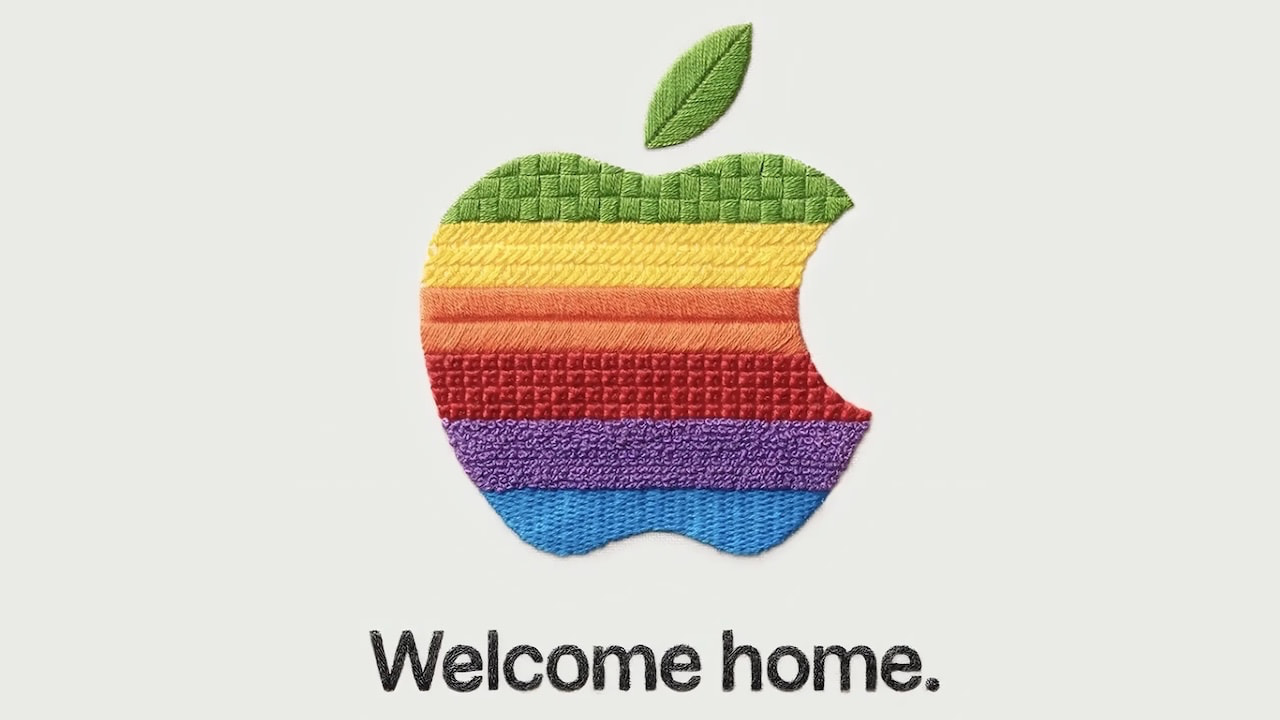
Apple has confirmed a “Welcome home” event for Tuesday, with selected media invited to a 9:00 a.m. ET experience in New York. Our invite was apparently lost somewhere on its way from NYC into Jersey. Apple has not officially named the products, but the most credible reporting points to a new Apple TV 4K, refreshed HomePod mini, and an entirely new smart home hub.
If that lineup is correct, tomorrow is less about three new gadgets than whether Apple finally has a coherent strategy for the living room.
Related Reading:
- Apple TV 4K, HomePod Mini 2 And HomeView: Has Apple Finally Figured Out The Living Room?
- Apple HomeView And Home Collection Want The Keys To Your House
- Apple TV 4K (2026) Gets Siri AI And HomePod Surround, But $299 Is A Tough Sell
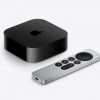
What We Expect From Apple TV 4K
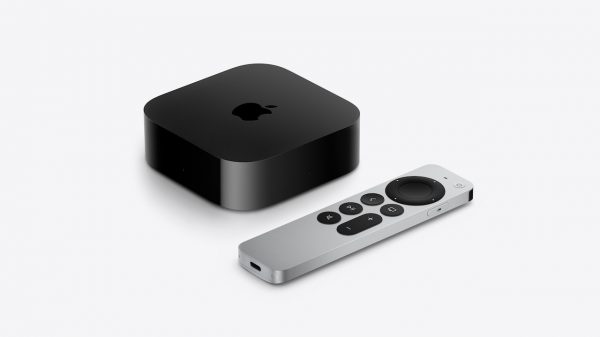
The current Apple TV 4K remains one of the fastest and most polished streaming devices available, but it is no longer inexpensive. Apple raised U.S. pricing earlier this year to $199 for the 64GB Wi-Fi model and $249 for the 128GB Ethernet version, which gives any replacement considerably more to justify.
The next model is expected to receive a faster Apple-designed processor, additional memory, improved Siri processing, and Apple’s newer wireless architecture with support for technologies including Wi-Fi 7, Bluetooth 6, and Thread.
The exact chip remains uncertain. Reports have pointed to several possibilities, so we would not treat any specific A-series processor as confirmed until Apple puts it on a slide.
What matters more is what Apple does with the additional horsepower.
Recent tvOS development has increasingly pushed Apple TV beyond simple streaming. Apple has been expanding Siri and Apple Intelligence capabilities across its ecosystem, while our recent coverage has also highlighted Apple’s work on Dolby Atmos for live Formula 1, deeper Home integration, and experiments involving multiple HomePods operating as a more complete surround system.
A faster Apple TV could become the processing center for all of that.
HomePod Mini 2: More Than a New Color?
The HomePod mini has not received a major hardware overhaul in years, and expectations for tomorrow include a faster processor, newer wireless hardware, improved Siri capabilities, and potentially better audio performance.
That final point remains speculative.
The more important change would be integration with Apple Intelligence and the broader Home ecosystem. Siri has historically been the weakest part of the HomePod experience; if Apple wants the speaker to play a larger role in home automation, communication, and entertainment, better conversational intelligence is considerably more important than another shade of orange.
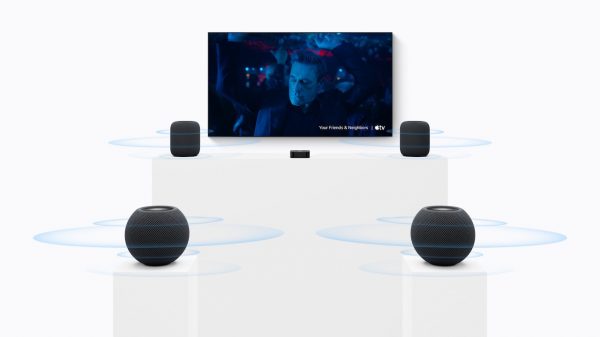
HomePod already works with Apple TV 4K for stereo playback, Dolby Atmos, and eARC audio from compatible televisions. If Apple expands that relationship into more flexible multi-speaker configurations, the competitive picture becomes much more interesting.
The New Home Hub Could Be the Bigger Story
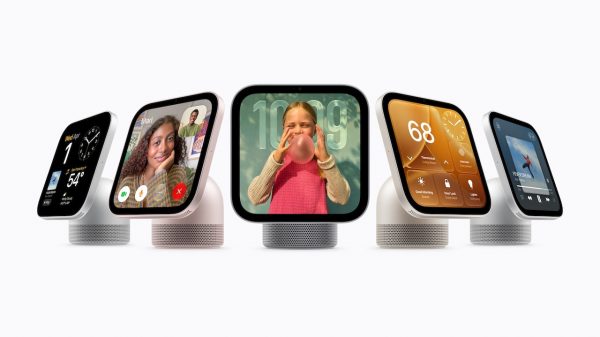
The most intriguing expected product is an entirely new Apple smart home hub built around a roughly 6-inch display.
Reports suggest the device will combine Home controls, Siri, cameras, video calling, media playback, presence sensing, and Apple Intelligence. Wall-mounted and speaker base configurations have also been discussed, with pricing reportedly somewhere around $350.
None of that is official yet.
But the concept makes considerable sense.
Apple currently asks users to control a growing smart home ecosystem through iPhones, iPads, HomePods, Apple Watches, and Apple TV. A dedicated display would provide a permanent interface for lights, cameras, thermostats, music, video calling, and other HomeKit or Matter-connected devices without requiring someone to find their phone first.
Amazon and Google figured that part out years ago.
Apple appears ready to catch up.
Why This Matters for Home Theater
The timing is especially interesting for eCoustics readers because Apple has been making a series of moves that increasingly overlap with home theater.
Apple TV 4K already supports Dolby Vision, HDR10+, Dolby Atmos, high frame rate video, and HDMI eARC functionality when paired with HomePods. Apple is also bringing Dolby Atmos to its live Formula 1 coverage beginning October 23, reinforcing the idea that premium audio and video presentation is becoming central to its sports strategy.
Meanwhile, reports that Apple has tested four-HomePod surround configurations suggest the company is at least exploring something more ambitious than a stereo pair sitting beside the television.
That does not mean Apple is about to replace a proper AV receiver and a 7.2.4 speaker system.
Nobody at Denon needs to start updating LinkedIn quite yet.
But Apple does have something few traditional home theater companies possess: hundreds of millions of customers already using its phones, tablets, computers, watches, headphones, streaming services, and operating systems.
Connecting those pieces more effectively could be considerably more disruptive than launching another soundbar.
Who Is Apple Competing With?
Amazon’s Echo devices, Fire TV hardware, Ring cameras, and Alexa already form a broad connected home ecosystem, with Amazon aggressively integrating AI capabilities across the platform.
Google’s Google TV, Nest speakers, Nest displays, cameras, thermostats, and Gemini give it many of the same building blocks Apple is expected to assemble tomorrow.
Sonos competes on the audio side, particularly if Apple expands HomePod into a larger multi-speaker home theater system.
The difference is ecosystem control.
Apple owns the hardware, operating systems, streaming platform, music service, smart home framework, voice assistant, silicon, and much of the networking technology connecting everything together.
If it finally decides to treat the living room as one product rather than six separate ones, that is worth paying attention to.
The Bottom Line
Tomorrow’s event could easily turn out to be three incremental hardware updates and a long demonstration of Siri turning off a lamp.
Apple events have certainly delivered less.
But the combination of a new Apple TV 4K, refreshed HomePod mini, and dedicated smart home display would suggest something more important: Apple may finally be connecting its entertainment and smart home products into a coherent platform. Apple already owns plenty of screens in your life.
Tomorrow we may find out whether it intends to own the room with the biggest one.
Related Reading:
- TvOS 27 Announced At WWDC 2026 As Apple TV 4K Waits For Its AI Moment
- Apple Music Hall Turns Battersea Power Station Into A 48 Speaker Spatial Audio Venue
- Google Home Speakers Turn The Google TV Streamer Into A $300 Spatial Audio System, But Is It Really Dolby Atmos?