
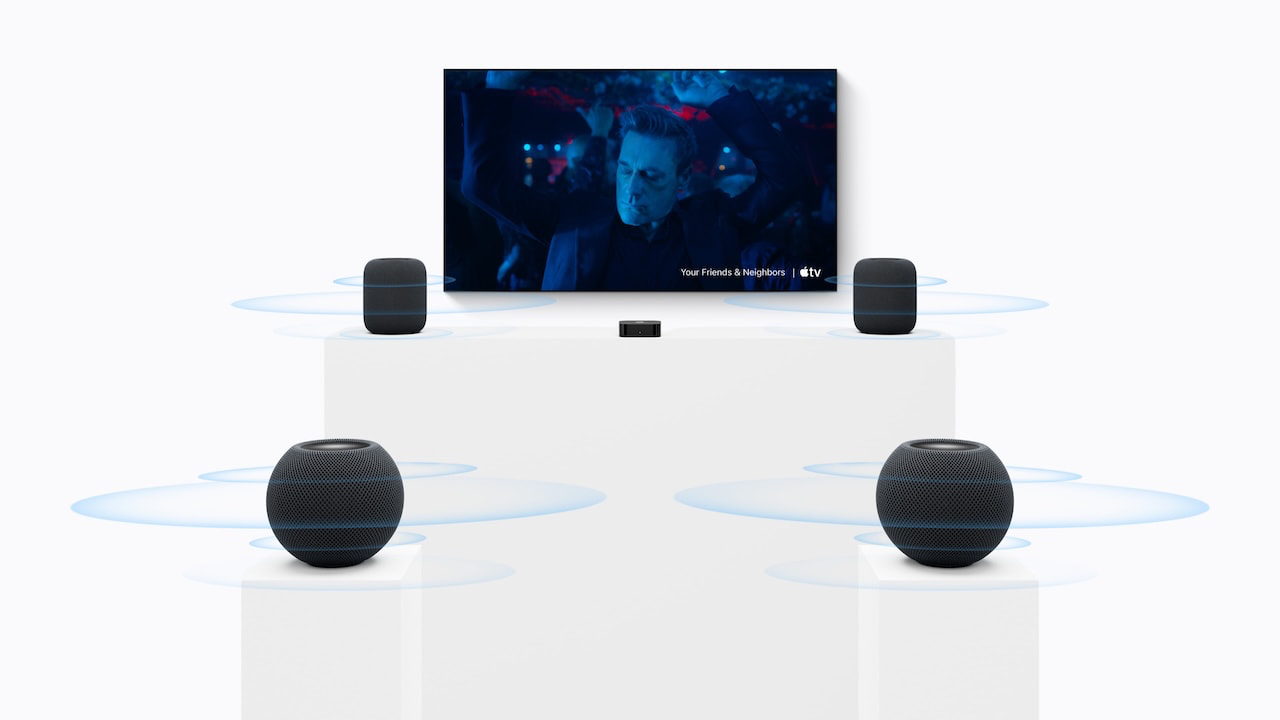
Apple has finally decided that two HomePods pretending to be an entire surround sound system might not be enough. After years of relying on computational audio, virtualized effects, and some rather impressive processing tricks, Cupertino is giving home theater enthusiasts something they’ve been asking for: actual speakers behind the listening position.
And before anyone accuses us of being surprised, we reported on Apple’s four-HomePod surround sound experiments in September, when audioOS 27 beta code revealed front and rear speaker assignments, automatic calibration, and other home theater features. Apple wasn’t talking about it publicly then. It is now.
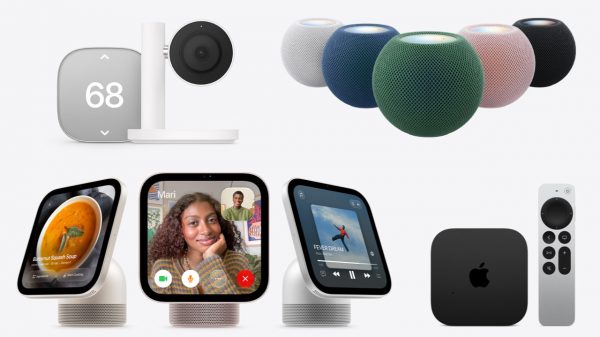
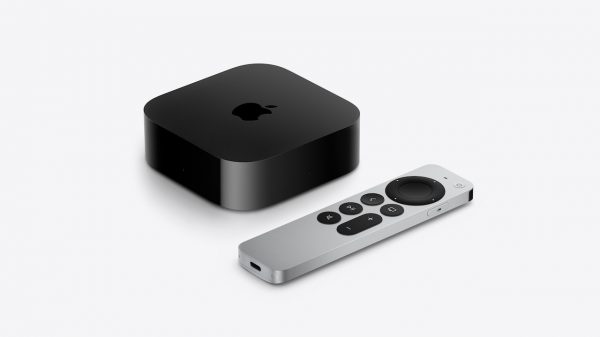
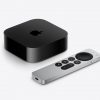
Announced October 13, the new system supports four HomePod mini 2 or second-generation HomePod speakers paired with Apple’s fourth-generation Apple TV 4K. Prices start at $895 for four HomePod mini 2 speakers and the required Apple TV, putting Apple into direct competition with Sonos and established soundbar systems.
That’s considerably more interesting than another demonstration of Siri turning off the kitchen lights.
Related Reading:
- Apple HomeView And Home Collection Want The Keys To Your House
- Apple AirPods 5 Bring ANC To $129 While Wireless Charging Model Drops To $149
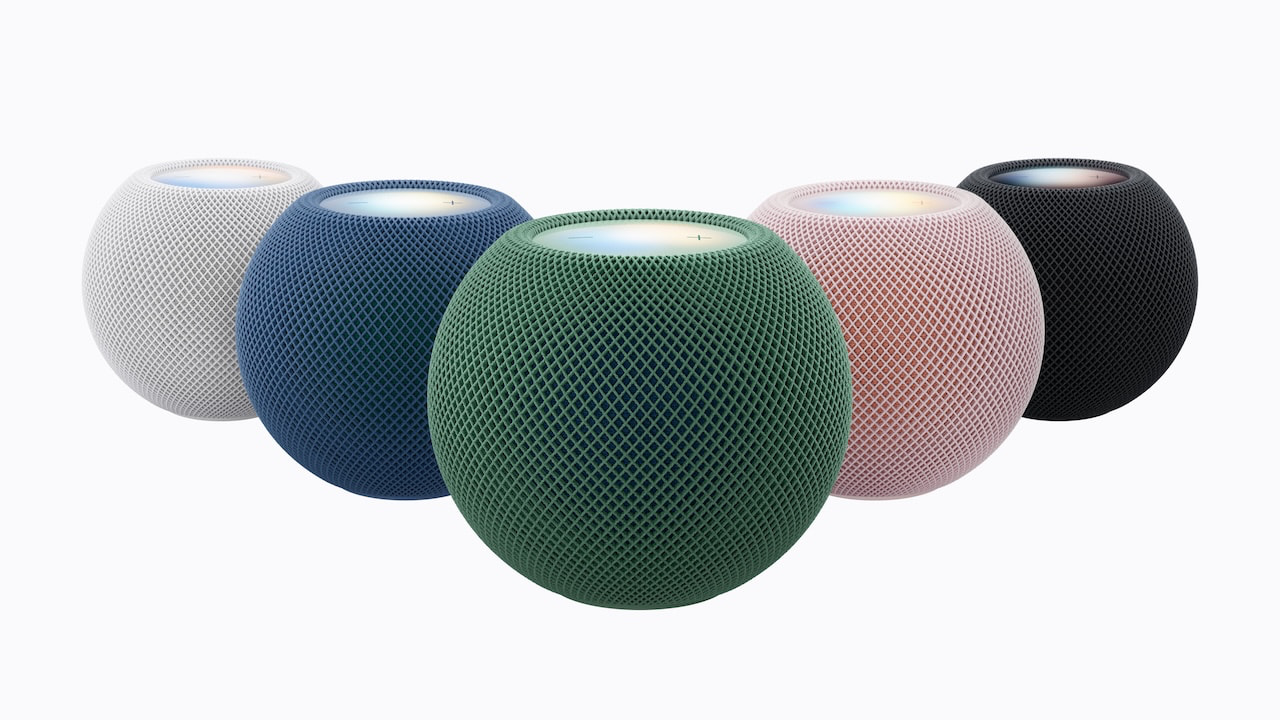
Four HomePods, One Apple TV, and Some Actual Surround Sound
The most significant change is the addition of dedicated front and rear speaker positions. Previously, Apple TV 4K owners could use a single HomePod or a stereo pair, with the larger models providing virtualized Dolby Atmos, Dolby Digital 5.1, and Dolby Digital 7.1 playback.
That approach could produce a surprisingly expansive presentation, but there are limits to convincing listeners that something is happening behind them when every loudspeaker is sitting beside the television.
The new system uses four speakers that intelligently recognize their positions in the room, with the Apple TV automatically calibrating timing and playback levels. In theory, that should produce more convincing rear effects and improve the continuity of sounds moving around the listening position.
Apple also allows mixed configurations. Owners can use two full-size second-generation HomePods at the front and two new HomePod mini 2 speakers behind the couch, provided the speakers in each pair match. Four identical models are supported as well.
There is one rather expensive catch: the system requires the new fourth-generation Apple TV 4K. Owners of older Apple TV hardware don’t get this feature simply by installing the latest tvOS update.
The original HomePod mini is also excluded from Apple’s announced compatibility list.
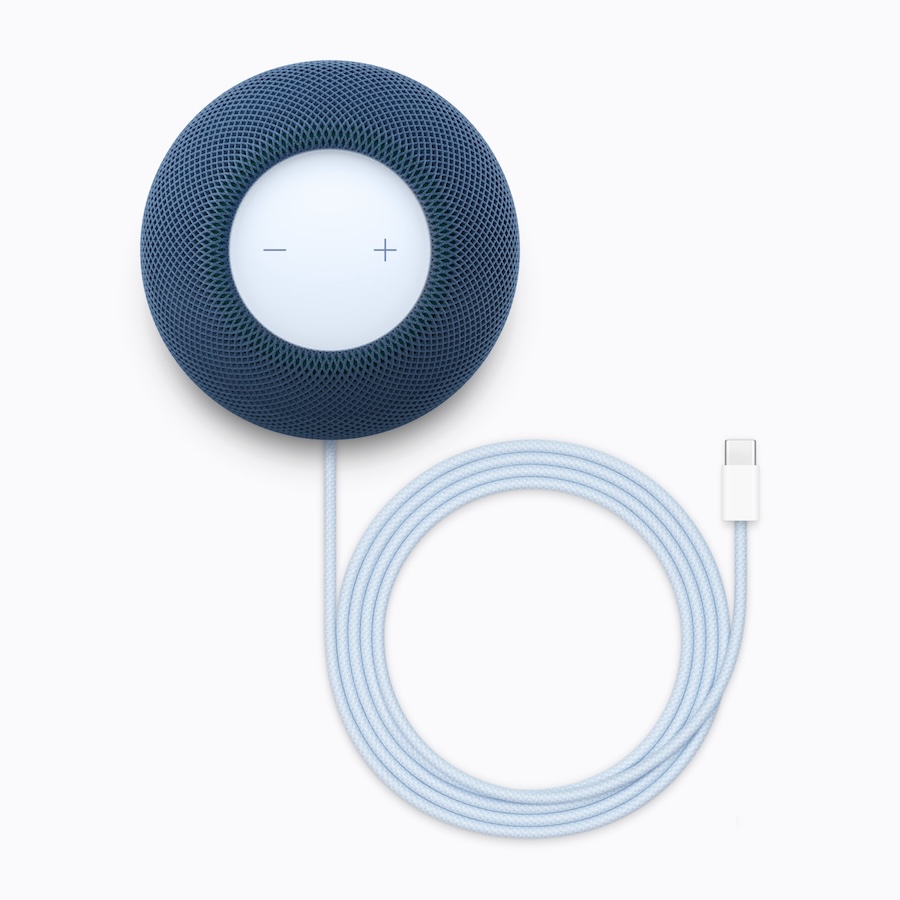
Apple Four-HomePod Surround System Specifications
- Required media player: Apple TV 4K (2026 model)
- Apple TV processor: Apple A19
- Supported speakers: HomePod mini 2 and HomePod, second generation
- Speaker configuration: Four speakers in matching front and rear pairs
- Mixed configurations: Supported, with matching models within each pair
- Calibration: Automatic speaker-position recognition, timing, and level adjustment
- HomePod mini 2 processor: Apple S10 with computational audio
- HomePod mini 2 acoustic design: Compact 360-degree sound presentation
- Full-size HomePod acoustic design: High-excursion woofer and five-tweeter beamforming array
- Apple TV audio formats: Dolby Atmos, Dolby Digital Plus 7.1, Dolby Digital 5.1
- Wireless networking: Apple TV 4K includes Wi-Fi 7, Bluetooth 6, and Thread
- Dedicated center speaker: None announced
- Separate wireless subwoofer: None announced
- Availability: HomePod mini 2 on October 30; new Apple TV 4K on November 13
Dolby Atmos Is Supported, but Apple Still Owes Us Some Answers
Apple TV 4K supports Dolby Atmos, but the company hasn’t explained precisely how multichannel and object-based audio will be rendered across four HomePods.
That’s not a trivial technical question.
Four physical speakers don’t automatically constitute a discrete 5.1.4 or 7.1.4 system. Nor has Apple specified how center-channel dialogue, height information, and low-frequency effects are distributed between the speakers.
Our earlier reporting identified references to bass management, dialogue processing, and multiple playback configurations in Apple’s software. Today’s announcement confirms automatic positioning and calibration, but not every feature suggested by that code.
Without a dedicated center speaker or separate subwoofer, the performance of the full-size HomePods becomes particularly important. Their built-in woofers provide considerably more low-frequency capability than the compact HomePod minis, but that doesn’t make them substitutes for a proper home theater subwoofer.
Apple may have some extremely clever processing behind this arrangement. I’d still prefer to hear it before declaring that four fabric-covered spheres have made the traditional home theater system obsolete.
What Does Four-HomePod Surround Actually Cost?
Apple offers three supported configurations, and none should be confused with a budget soundbar.
Configuration MSRP Four HomePod mini 2 speakers + Apple TV 4K $895 Two HomePods (2nd gen) + two mini 2 + Apple TV 4K $1,295 Four HomePods (2nd gen) + Apple TV 4K $1,695
Those totals use Apple’s announced $149 HomePod mini 2 price, the existing $349 full-size HomePod price, and the new $299 Apple TV 4K. They exclude taxes, stands, and mounts.
If you already own two compatible full-size HomePods, adding a pair of HomePod mini 2 speakers and the new Apple TV will cost $597. That makes the upgrade considerably more appealing than starting from scratch.
Sonos and Samsung Aren’t Going to Roll Over
Apple is entering a category where the competition has spent years developing dedicated home theater products.
The Sonos Beam Ultra ($699) soundbar already offers a 7.1.2 Dolby Atmos presentation, complete with dedicated upward-firing drivers, HDMI eARC, and Trueplay calibration. Adding two Era 100 surround speakers brings the current Sonos bundle price to approximately $1,082, with the option of adding a Sub Mini later.
That’s a more conventional home theater architecture, with dedicated dialogue reproduction through the soundbar and a clear upgrade path.
Samsung’s HW-Q990H ($1,999) soundbar system makes an even stronger argument. The 11.1.4-channel system includes wireless rear speakers with upward-firing drivers, a dedicated center channel, and a surprisingly compact powered subwoofer. It supports Dolby Atmos, DTS, and Eclipsa Audio, and recently earned our Editors’ Choice award following Chris Boylan’s review.
Currently discounted to around $1,500, the Q990H offers considerably more conventional home theater hardware than Apple’s four-HomePod arrangement. Chris was particularly impressed with its spatial imaging and convincing bass performance. Apple may have an advantage in simplicity and ecosystem integration, but Samsung has already demonstrated what its system can deliver. The HomePods still have to prove themselves.
Apple has an advantage in simplicity and integration for households already committed to its ecosystem. Sonos and Samsung have dedicated home theater hardware and more clearly documented multichannel configurations.
Whether Apple can outperform either will depend on the quality of its spatial processing, dialogue reproduction, and bass performance. None of those questions can be answered from a press release.
The Bottom Line
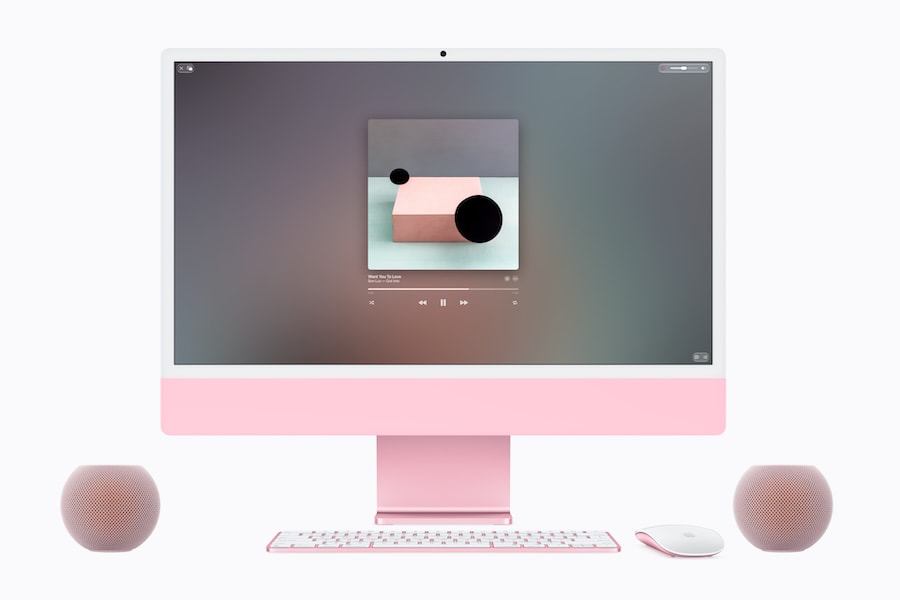
Apple deserves credit for finally treating HomePod as something more ambitious than a smart speaker that occasionally pretends to be a soundbar. Four-speaker surround with automatic calibration is a meaningful development, particularly for existing HomePod owners who have wanted to expand their systems without buying entirely different hardware.
But the company is entering a market where $895 buys serious alternatives, and spending $1,695 puts the full-size HomePod system into considerably more expensive territory.
I’m particularly interested in hearing what happens with movie dialogue, overhead effects, and bass-heavy soundtracks. Those are the areas where clever software needs equally capable hardware, and Apple hasn’t demonstrated that its four-speaker arrangement can replace a dedicated center channel or subwoofer.
Still, this is the most interesting home theater development we’ve seen from Apple in years, and one that deserves a proper listening evaluation rather than the usual enthusiastic applause from people who think a new processor automatically makes everything sound better.
Apple finally has speakers behind the couch. Now we need to find out whether it can convince us that the rest of the theater is there, too.
Where to buy: $149 at Apple (pre-order now, ships October 30, 2026)
Related Reading:
- Apple TV 4K (2026) Gets Siri AI And HomePod Surround, But $299 Is A Tough Sell
- Apple Finally Gives HomePod Real Surround Sound, But Are Four Speakers Enough?
- Formula 1 On Apple TV Gets Dolby Atmos And Race Day Is About To Sound A Lot Better










ORT
October 13, 2026 at 11:52 pm
I currently use 4 TCL Z100s for my Dolby Atmos films along with the speakers built into my TCL QM9K TV. It is more than enough but it is also nowhere near as engaging as my former 9.2 system. I decided to downsize and am completely satisfied but everyone’s mileage will vary.
ORT
Mike Cornell
October 14, 2026 at 12:03 pm
Kinda pricey, Apple, and where’s the sub?
Ian White
October 14, 2026 at 2:51 pm
Mike,
Which was my point in the earlier article this summer. If they were not prepared to do it properly, why bother?
IW