
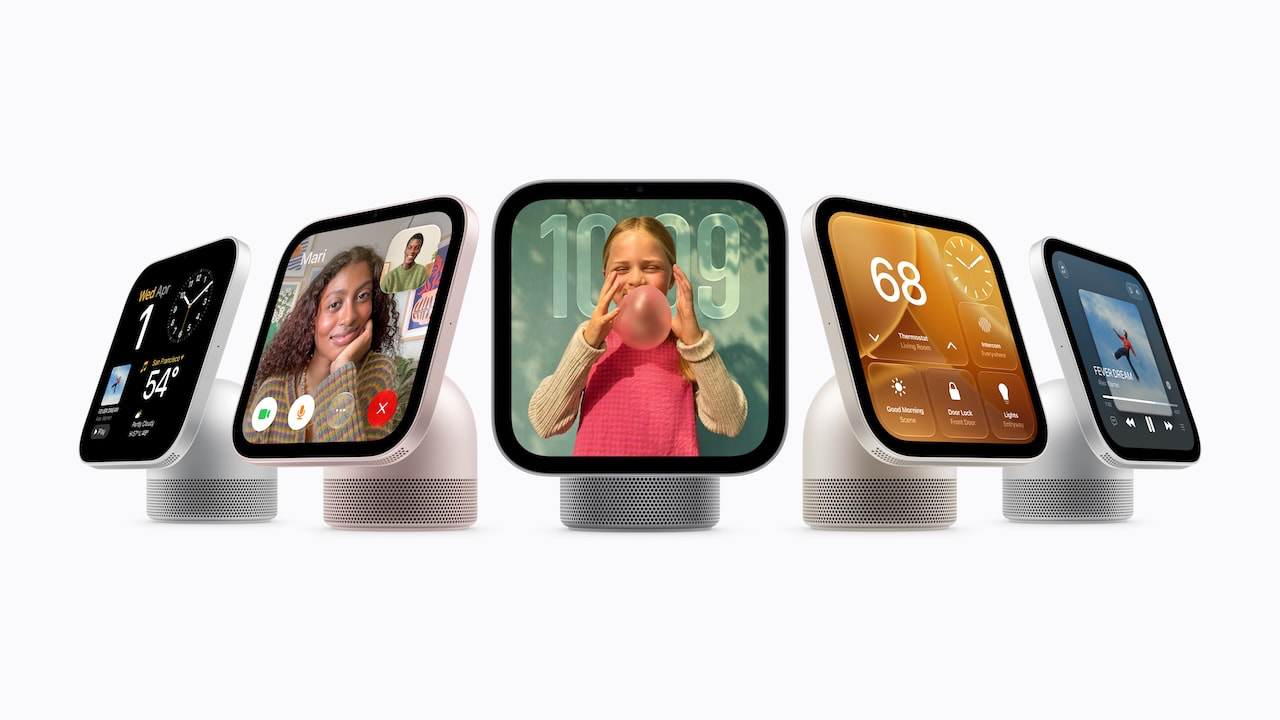
Apple has spent years convincing people that their homes would be smarter if they bought enough iPhones, HomePods, Apple TVs, and compatible accessories. What it hasn’t always explained is why controlling a few lights, checking the front door, or adjusting the thermostat should require the patience of a saint and an advanced degree in networking.
Apparently, Cupertino has finally decided to address that problem.
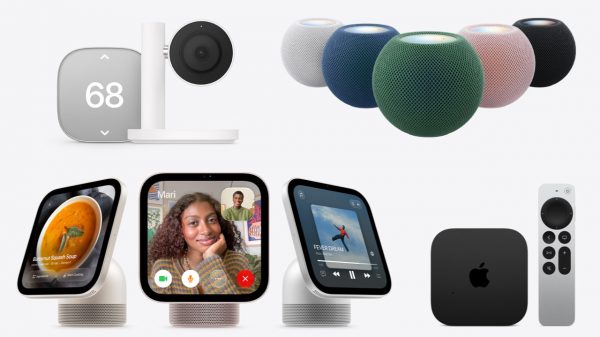
The Apple HomeView ($299) is the company’s first dedicated smart home display, supported by a new Apple Home Collection of security cameras, door locks, thermostats, and sensors developed with LG Electronics and Schneider Electric.
The goal is to make Apple’s Home platform considerably easier to live with, replacing a collection of disconnected apps and accounts with one interface built around Siri AI, facial recognition, and Apple’s existing devices.
Whether that makes your house smarter or simply more expensive remains to be seen.
Related Reading:
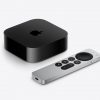
- Apple TV 4K (2026) Gets Siri AI And HomePod Surround, But $299 Is A Tough Sell
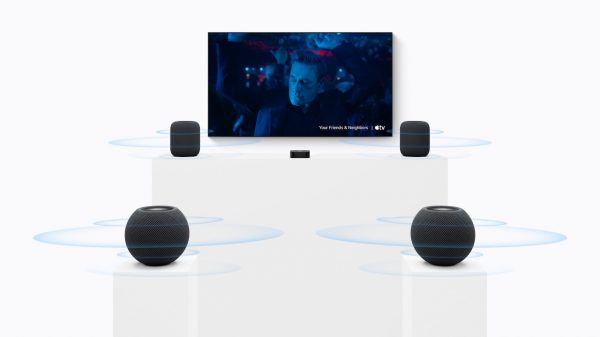
- Apple Finally Gives HomePod Real Surround Sound, But Are Four Speakers Enough?
Apple HomeView Is More Than an iPad Glued to a Speaker
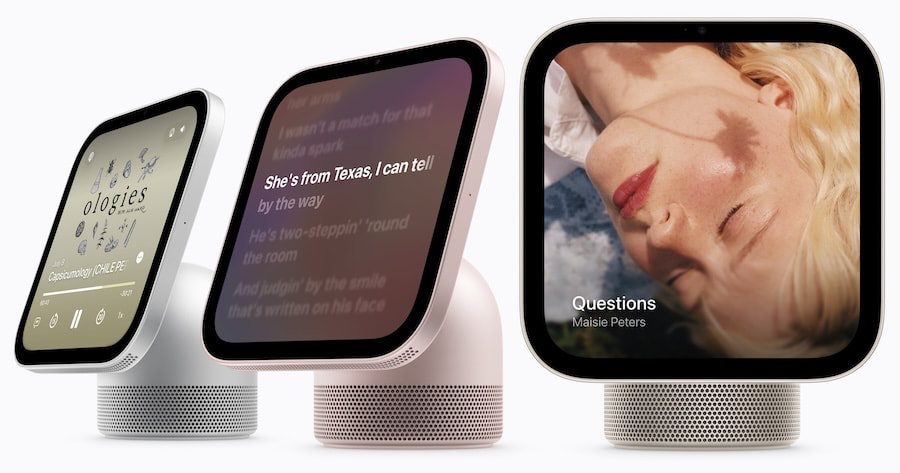
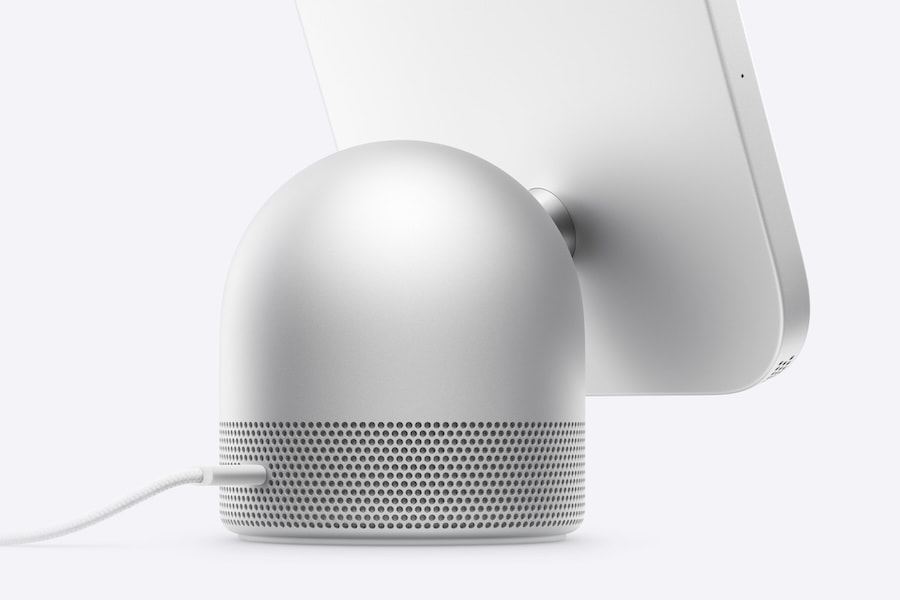
The HomeView features a 7-inch Liquid Retina touchscreen connected to a dome-shaped speaker base by an adjustable stainless steel hinge. It has a vaguely familiar design that recalls Apple’s old iMac G4, although this time the screen is considerably smaller and isn’t attached to a computer that weighs as much as a microwave.
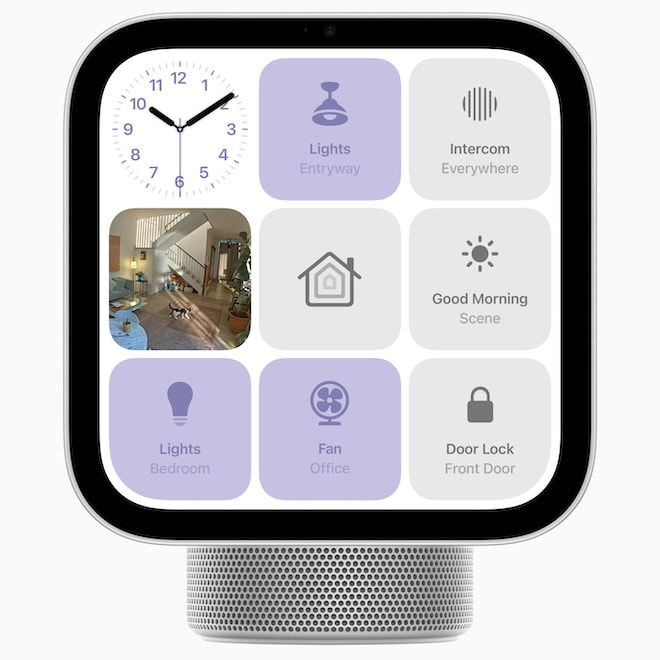
Powered by Apple’s A18 processor, HomeView recognizes up to six household members and automatically changes its interface based on who’s standing in front of it. Calendars, reminders, messages, photo albums, music, and smart home controls can all be personalized.
The clever part is how Apple handles privacy. Sensitive personal information requires facial recognition and a compatible paired iPhone or iPad that is nearby and has been recently unlocked. More advanced Siri AI functions that draw on personal context also require an Apple Intelligence-compatible device.
In other words, the family can share the display without everyone getting access to your messages, calendar appointments, and whatever questionable purchases you’ve made this week.
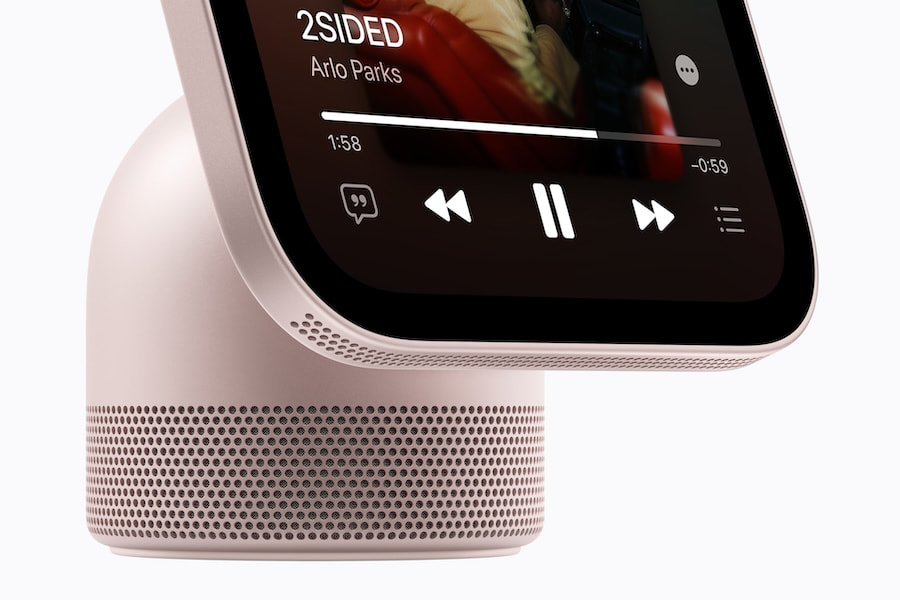
The tabletop model includes two full-range drivers in the display, a down-firing woofer, and two force-cancelling passive radiators in the base. Apple claims the system delivers room-filling Spatial Audio, with computational processing continuously adjusting loudness and bass response. A separate wall-mounted version uses two drivers with processing optimized for its placement.
Apple Music, Podcasts, FaceTime with Center Stage, third-party media apps, and AirPlay multiroom playback are supported. The display also handles recipes, timers, Intercom messages, and Find My functions.
This isn’t intended to replace a proper stereo system or television. It’s a shared household interface with enough audio capability to make listening to music in the kitchen something more appealing than the sound coming from a smartphone.
Apple HomeView Specifications:
- Display: 7-inch Liquid Retina touchscreen with True Tone
- Brightness: Automatically adjusts from 0.3 to 500 nits
- Processor: Apple A18
- Personalization: Facial recognition for up to six users
- Voice assistant: Siri AI with Apple Intelligence
- Tabletop audio: Two full-range drivers, one down-firing woofer, and two force-cancelling passive radiators
- Wall-mounted audio: Dual drivers with placement-specific computational audio
- Camera: FaceTime with Center Stage
- Smart home: Apple Home, supported Matter accessories, HomeKit Secure Video
- Camera dashboard: Up to nine simultaneous live feeds
- Security: Secure Exclaves, on-device processing, and Private Cloud Compute
- Other features: Find My, Intercom, Apple Music, AirPlay, FaceTime, Live Activities
- Tabletop finishes: Silver, Starlight, Rose Pink, Space Gray
- Wall-mounted finishes: Silver, Space Gray
- U.S. price: $299 for either version
- Availability: November 13, 2026
Apple Home Collection Finally Gives the Ecosystem Some Teeth
The more significant long-term announcement might be Apple’s decision to work directly with LG and Schneider Electric on a coordinated range of smart home accessories.
Instead of requiring a different application and account for every camera, doorbell, or thermostat, the products are managed through Apple Home, with setup beginning with a tap of an iPhone.
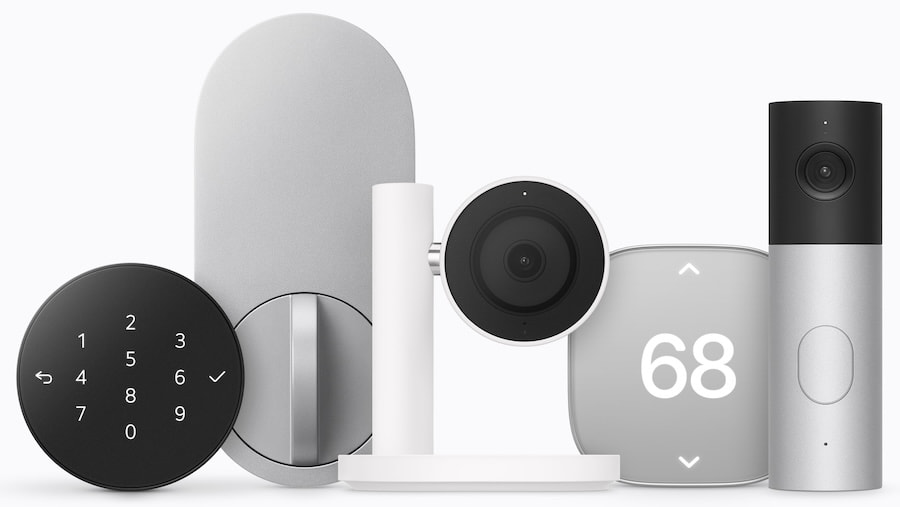
LG’s security cameras capture up to 2.5K video, with HomeKit Secure Video integration, recognition of people, pets, vehicles, and packages, and 10 days of encrypted event history through an eligible iCloud+ subscription.
The indoor camera has a particularly interesting privacy feature: it can automatically tilt downward when someone returns home, rather than continuing to stare into the room like an overly suspicious houseguest.
LG’s video doorbell uses two cameras, including a separate lower camera for packages. Its Smart Deadbolt Lock offers Ultra Wideband proximity unlocking with a compatible iPhone or Apple Watch, plus a keypad and mechanical backup key. The lock also supports Matter and Aliro, with core access functions designed to work locally.
On the climate side, LG and Schneider Electric offer separate $199.95 smart thermostats, accompanied by temperature and humidity sensors. Apple’s Adaptive Temperature feature can adjust heating and cooling based on household activity, while Clean Energy Guidance can shift usage to less expensive or cleaner periods where supported.
That’s considerably more practical than asking Siri to play a relaxing playlist while the heating bill climbs into four figures.
Apple Home Collection Prices
| Product | U.S. starting price |
|---|---|
| LG Indoor Cam Plug-In | $199.95 |
| LG Outdoor Cam Plug-In | $299.95 |
| LG Floodlight Cam | $399.95 |
| LG Video Doorbell Wired | $249.95 |
| LG Smart Deadbolt Lock | $349.95 |
| LG Smart Thermostat | $199.95 |
| Schneider Home Smart Thermostat | $199.95 |
| LG Temperature Sensor | $39.95 |
| Schneider Home Room Sensor | $39.95 |
The accessory rollout begins in December 2026, with certain products arriving in early 2027. HomeView preorders begin October 13, with delivery starting November 13.
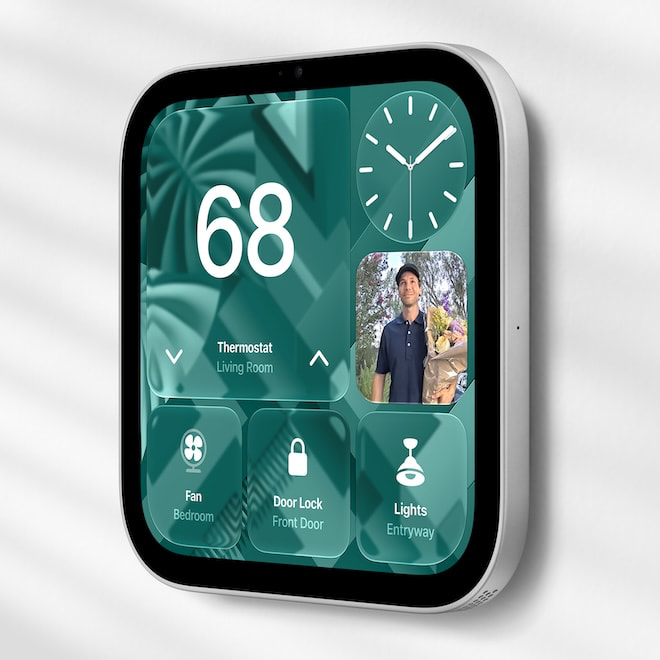
There is another expense worth mentioning. Wall-mounted HomeView installations require separate mounting hardware, starting at $59.95 for the USB Type-C power mount, $79.95 for an AC-wired version, or $129.95 for the PoE model scheduled for early 2027.
Apple is also offering optional third-party installation through ADT at an additional cost in the United States.
Amazon and Google Aren’t Exactly New to This
The Amazon Echo Show 11 ($249.99) already offers a larger touchscreen, Alexa+, a 13-megapixel camera, and an integrated smart home hub supporting Zigbee, Matter, and Thread. Amazon also has an extensive connected-home ecosystem through Ring and its other hardware.
We’ve previously covered the Echo Show 11 as part of Amazon’s Alexa+ hardware expansion, and Apple isn’t entering a category that has been waiting patiently for its arrival. Amazon has been doing much of this for years, although its increasingly intrusive advertising and subscription-heavy approach aren’t exactly universally loved.
Google’s Nest Hub (2nd generation, $99.99) offers a more affordable entry point with a 7-inch display, smart home controls, music playback, and integration with Google’s connected devices. It lacks HomeView’s camera and more elaborate personalized interface, but costs roughly one-third as much.
Apple’s advantage is the relationship between HomeView, iPhone, Apple Watch, and its security architecture. For households already using those devices, having a central display that recognizes family members and securely accesses their information could make the additional expense worthwhile.
The limitation is equally obvious: the more personal the experience becomes, the more deeply invested in Apple’s ecosystem you need to be.

The Bottom Line
Apple HomeView and the Home Collection are more interesting than another smart speaker or a streaming box with a faster processor. They address something that has been missing from Apple’s approach to home automation: a dedicated household interface backed by accessories designed to work together from the beginning.
The emphasis on privacy is welcome, particularly with cameras and door locks involved. But eligible iCloud+ subscriptions are still required for certain security features, and some of the most useful Siri AI capabilities depend on owning compatible Apple Intelligence hardware.
HomeView also won’t initially be sold in the European Union because of Siri AI availability restrictions, which rather complicates the idea of a universally accessible smart home platform.
At $299 for the display, and with cameras, locks, thermostats, and installation costs adding up, this isn’t going to be the least expensive way to automate your house. But it could become one of the more cohesive systems for existing Apple households.
The real test will be whether Siri can reliably handle the mundane things people actually need, without turning every request into a lengthy conversation or an invitation to purchase more hardware.
I don’t need artificial intelligence to tell me the philosophical significance of a locked front door. I need it to lock the bloody thing when I leave, let the dog walker in, and avoid informing the entire household that someone has ordered 5 more records from Blue Note.
Especially that last one.
Where to buy: $299 at Apple (pre-order now, ships November 13, 2026)
Related Reading:












Jose Estrada
October 13, 2026 at 6:41 pm
If Apple HomeView can’t integrate seamlessly with my existing smart home devices, cameras, and locks, then it’s just a nice-to-have product I don’t really need. I’ve already invested in a functioning smart home system, and I’m not interested in replacing perfectly good hardware just for the convenience of controlling it from a pretty new mini iPad on my counter. The value should be in bringing everything together, not forcing consumers to buy into yet another hardware ecosystem. Make my existing home smarter, Apple, not more expensive.
Ian White
October 13, 2026 at 7:03 pm
Jose,
But if they can’t get you to spend hundreds (or thousands) on these types of products, they have no reason to be in the category. I almost choked on my coffee this morning in NY when I saw the first images of the HomeView. I still have the Apple iMac that was the basis for the design in my basement on a desk as an ornament.
I still don’t get why they couldn’t just create a cradle for existing iPads that would offer the same capabilities when combined.
IW
ORT
October 13, 2026 at 6:49 pm
For those unaware, “PoE” stands for Power over Ethernet. Or at least it does in my world for devices such as this.
ORT
Ian White
October 13, 2026 at 7:00 pm
ORT,
Correct. And it’s a rather useful thing to have. Sonos has even released speakers that work with it for home and commercial spaces.
IW