Voice control in the smart home has always had one slightly ridiculous problem: you can spend $50,000 installing speakers throughout a house, ask your supposedly intelligent home a question, and then strain to hear the answer coming from a tiny microphone puck on the wall.
BluOS and Josh.ai think they have a better solution.
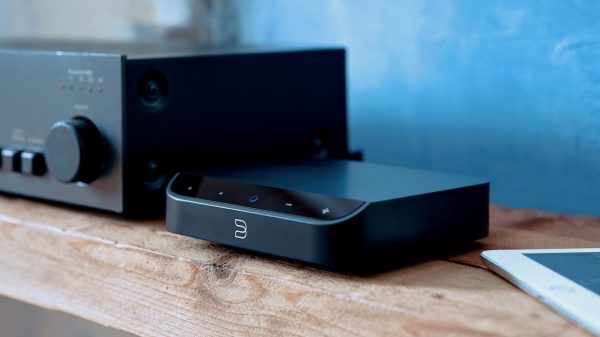
Ahead of CEDIA Expo 2026, BluOS has announced upcoming support for Josh.ai VoiceCast, which will allow Josh.ai’s spoken responses to play through compatible BluOS audio systems rather than only through the Josh.ai device that heard the command. That includes supported products from Bluesound, NAD Electronics, PSB Speakers, Bluesound Professional, DALI, Monitor Audio, Cyrus Audio, and Roksan.
It sounds like a small feature until you understand what Josh.ai is and how increasingly elaborate whole home audio systems actually work.
What Is Josh.ai?
Josh.ai is not another Alexa speaker looking for counter space.
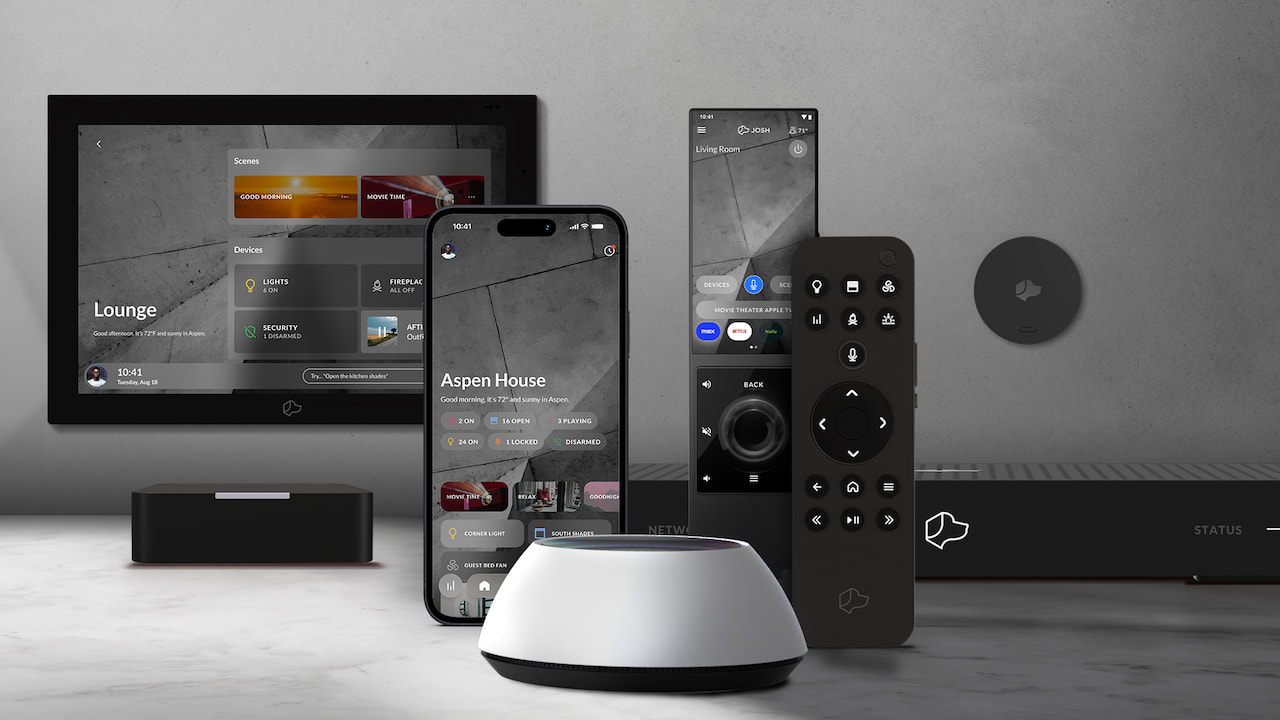
It is a professionally installed smart home control platform designed primarily for custom residential systems. Users can control lighting, shades, climate, entertainment, and other connected devices through natural language voice commands, the Josh app, remotes, touchscreens, and automation. Josh.ai can also integrate with larger control platforms including Control4 and Crestron.
The system uses products such as Josh Core, Josh Micro, and Josh Nano, with the latter serving as a very small architectural microphone that can be installed discreetly in a wall or ceiling. Josh Core acts as the central processor in larger systems and handles much of the control processing locally.
Privacy is also a major part of Josh.ai’s pitch. The company says it does not sell customer information or use it for advertising, and much of the home control processing occurs locally. Speech recognition can still use encrypted cloud services after the wake word is detected, so this is not an entirely offline system, but it is a very different business model from mass market assistants whose parent companies would also like to sell you laundry detergent before lunch.
Josh.ai is also dealer installed. You do not download an app, discover that your NAD M33 suddenly has a personality, and spend the afternoon asking it existential questions. Josh.ai systems require compatible hardware, software, networking, and installation through certified technology integrators.
So What Is VoiceCast?
VoiceCast handles the other half of the conversation.
Josh.ai has already been able to control BluOS music playback using voice, touch, and text. You could ask Josh to find music, start playback, change tracks, or control audio in different rooms.
VoiceCast allows Josh.ai’s response to come back through the room’s audio system.
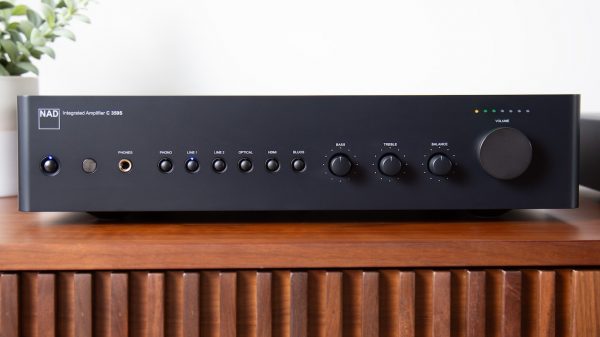
Imagine a Josh Nano installed in the ceiling of a living room with an NAD amplifier driving a pair of in-wall speakers. You ask Josh to play an album, adjust the lights, or perform another supported command. Instead of hearing the confirmation from a tiny architectural microphone several feet away, Josh’s response can be routed through the BluOS audio zone already serving that room.
That is particularly useful in larger spaces, rooms with concealed audio systems, and installations where the microphone, control interface, and loudspeakers are nowhere near each other.
It also means the homeowner does not need an additional smart speaker sitting beside a system that already contains much better loudspeakers.
What a concept.
Is VoiceCast New?
Not entirely.
Sonos already supports Josh.ai VoiceCast, allowing Josh Micro responses to play through selected Sonos products instead of the Micro’s internal speaker. Josh.ai’s current Sonos documentation actually describes VoiceCast as exclusive to its Sonos integration, which tells you how significant the BluOS announcement is: that exclusivity is about to end.
Josh.ai also offers VoiceLink, which can route voice feedback from Josh Core through wired connections to AVR zones. VoiceCast is different because the integration is native to the networked audio ecosystem rather than requiring that physical audio routing.
That makes BluOS an especially interesting partner.
Unlike Sonos, BluOS is not tied to one hardware manufacturer. It operates across products ranging from Bluesound NODE streamers and wireless speakers to NAD Masters electronics, PSB powered speakers, DALI systems, Monitor Audio custom installation products, Cyrus components, and Roksan electronics.
One software platform can therefore appear in a relatively simple two channel system downstairs, powered speakers in an office, and an architectural multi-zone installation elsewhere in the same home.

What Does This Mean for Existing BluOS Owners?
There is an important caveat.
Owning a BluOS product by itself will not give you Josh.ai VoiceCast.
If you already own compatible BluOS hardware and already have a Josh.ai system, the forthcoming integration should be considerably more straightforward. BluOS says that during setup an integrator will pair each compatible Josh.ai voice interface with the corresponding BluOS player or audio zone. Once configured, Josh.ai can direct its spoken feedback to that room’s audio system.
BluOS says the update will be available across supported BluOS products from Bluesound, NAD, PSB, Bluesound Professional, DALI, Monitor Audio, Cyrus, and Roksan. The company has not yet published a model by model compatibility list or a firm public rollout date, so owners should not assume that every BluOS product ever manufactured will receive VoiceCast.
That distinction is important.
If you own a Bluesound NODE or NAD streaming amplifier but do not have Josh.ai, nothing automatically changes when this update arrives. Adding Josh.ai means entering the professionally installed smart home ecosystem, including the appropriate Josh.ai processor or interfaces, software plan, network requirements, and dealer configuration.
This is an expansion feature for existing and future custom installations, not a free Alexa replacement buried in the next BluOS firmware update.
Why Does It Matter?
Because BluOS has spent the past several years evolving from a very good multi-room music platform into something much more useful to custom integrators.
We have already covered its expanded Control4 and RTI integrations, Qobuz Connect support, and more recent airable partnership for radio and podcast discovery. VoiceCast continues that progression, but in a different direction: it makes BluOS part of the interface between the homeowner and the house, not merely the software that sends music to different rooms.
There is also a practical advantage for integrators. A Josh.ai microphone can be chosen and positioned for voice pickup while the BluOS system can be designed independently for audio performance. Nobody has to pretend the little speaker inside a voice assistant is an appropriate way to communicate in a room containing thousands of dollars of audio equipment.
In high end CI, that separation is useful.
Who Are the Competitors?
Sonos is the obvious direct comparison because it already offers native VoiceCast with Josh.ai.
The broader competition is more complicated. Amazon Alexa, Google Assistant, and Siri offer varying degrees of smart home and multi-room control, but they are primarily consumer platforms and generally revolve around their own voice enabled endpoints or compatible consumer hardware.
Control4 and Crestron operate much closer to Josh.ai’s professional market and both integrate with Josh.ai itself. They can manage sophisticated whole home AV systems, but that is different from BluOS natively becoming the playback destination for Josh.ai’s conversational responses.
Josh.ai also supports audio platforms and components from companies including Denon, Marantz, Anthem, WiiM, Yamaha, Sony, Meridian, Autonomic, and others, but support for audio control does not automatically mean those platforms support VoiceCast in the same way BluOS soon will.
That distinction is easy to lose in a press release and rather important in the real world.
The Bottom Line
Josh.ai VoiceCast will not suddenly transform every Bluesound or NAD component into a talking smart speaker, and that is probably a good thing.
What it does offer is a more elegant way to integrate voice feedback into professionally installed BluOS systems. For homeowners who already use Josh.ai and BluOS, spoken responses can come from the audio system that was actually designed for the room instead of another little box bolted onto the network.
Sonos got there first, but BluOS brings something different to the table: an ecosystem that crosses multiple audio brands, wireless speakers, traditional hi-fi components, home theater products, and architectural installations.
For Lenbrook, that makes VoiceCast another step toward positioning BluOS as more than a streaming app. For integrators, it removes another unnecessary piece of hardware from sight.
Interior designers everywhere may now return to arguing about the shade of the wall plate.
For more information: bluos.io
Related Reading: