Sonos will reveal its plans for conversational computing and predictive intelligence in September. The larger question is whether customers will receive genuinely useful features, greater privacy concerns, or another reason for hardware prices to rise.
Sonos has spent much of the past two years trying to convince customers that pressing Play should not require an act of faith. Now the company wants its speakers to understand the shape of your home, learn how your family lives and help usher conversational computing into every room.
Nothing could possibly go wrong.
During Sonos’ third-quarter fiscal 2026 earnings call, CEO Tom Conrad confirmed that the company will hold a product launch event in early September. Conrad did not reveal the product, its price or exactly what it will do, but said the event will introduce work centered on “conversational computing and predictive intelligence” inside the home.
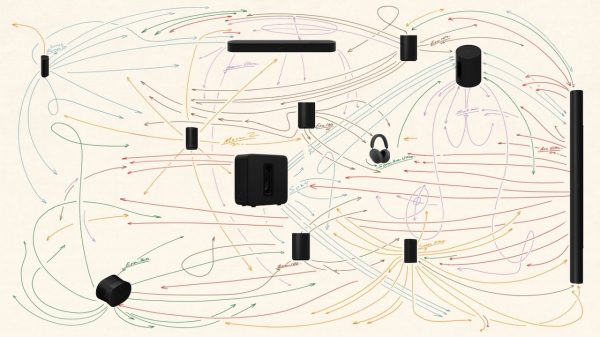
This is not simply Sonos preparing another wireless speaker with a slightly larger woofer and a new shade of beige. The company is positioning artificial intelligence as the next major layer of its entire multi-room ecosystem.
Whether Sonos customers asked for that is another question.

What Is Sonos Planning?
Conrad argues that the industry is focusing too heavily on which company has the most powerful AI model. Sonos believes the more important advantage will be the hardware, software, microphones, speakers, services and household context surrounding that model.
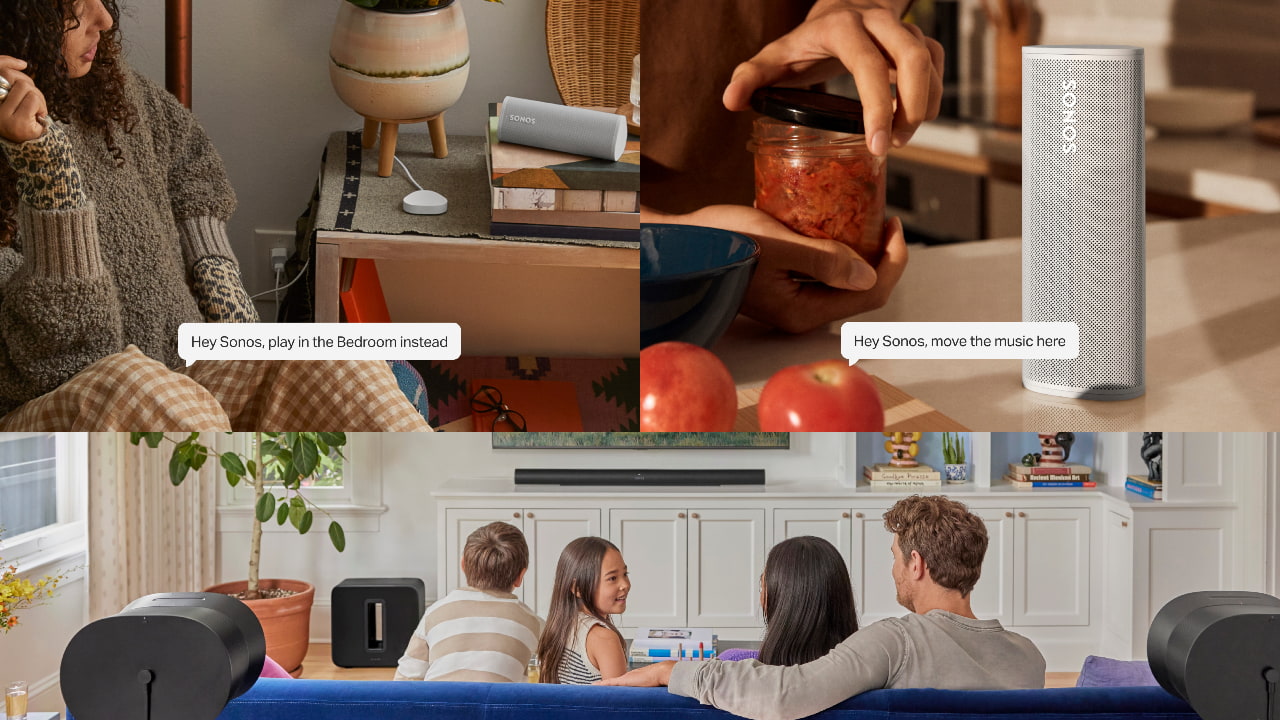
According to Conrad, Sonos has already spent 20 years solving four difficult problems inside the home: form, sound, what he calls “systemness,” and intelligence. Its speakers already communicate across rooms, integrate with outside services and adjust their sound through technologies such as Trueplay. The next step is creating a system that can converse naturally and coordinate actions based on an understanding of the household.
Sonos also has scale. The company says more than 53 million connected Sonos devices are currently operating across more than 17 million homes. That installed base gives it something an AI startup cannot purchase overnight: millions of existing microphones, speakers and networked audio systems already sitting in kitchens, bedrooms and living rooms.
The company has not explained whether its new AI features will arrive through new hardware, existing products, a cloud service or some combination of all three. It also has not said whether customers will need a subscription.
Until September, any claim that Sonos is launching a particular kind of AI speaker remains speculation.
Sonos Has the Hardware but Trust Is the Problem
Sonos has legitimate advantages in multi-room synchronization, music-service integration, acoustic design and whole-home control. It also has a recent history that makes phrases such as “predictive intelligence” sound less comforting than management probably intends.
The disastrous 2024 app replacement removed features, disrupted existing systems and damaged confidence in a platform that customers had previously considered unusually reliable. Sonos has spent 2026 restoring functionality and improving navigation, volume control, speaker sorting and system stability.
Asking customers to trust Sonos with a more intimate understanding of their homes therefore requires more than an impressive September demonstration.

Sonos will need to explain what information its system collects, where that information is processed, how long it is retained and whether it is used to improve AI models. Customers also deserve to know whether conversations remain inside the home, which functions require the cloud and whether the intelligence can be disabled without limiting basic speaker operation.
Sonos Voice Control currently offers a useful precedent because its music and system commands are processed locally rather than sending voice recordings outside the home. A more ambitious assistant that remembers routines, coordinates services and predicts household behavior may require substantially more data.
Understanding that someone usually plays jazz in the kitchen at 7 a.m. could be convenient. Constructing a detailed behavioral map of everyone inside the house is something Sonos needs to explain before asking customers to applaud.
Sonos Is Not the Only Company Putting AI in the Living Room
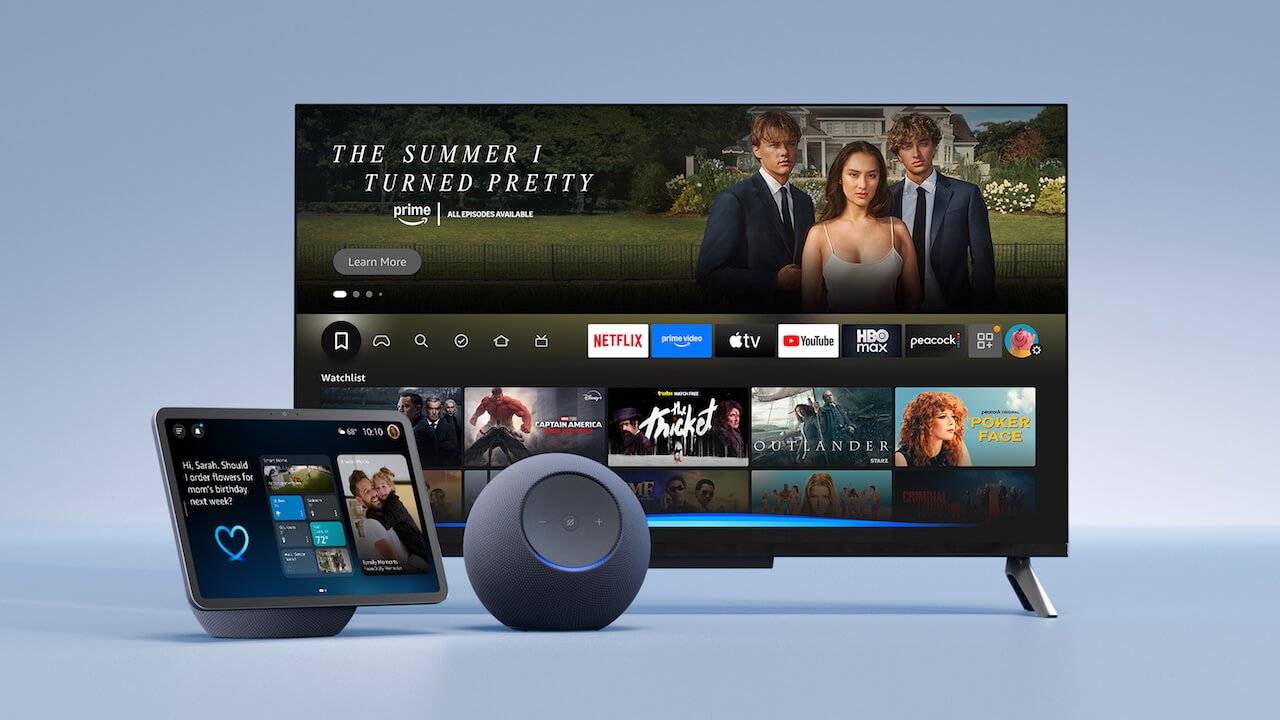
Sonos is entering a market already being reshaped by Amazon, Google, Samsung and potentially OpenAI.
Amazon’s Alexa+ uses generative AI to provide more conversational responses, complete multi-step tasks and operate across compatible Echo, Echo Show and Fire TV products. Google has replaced Google Assistant with Gemini for Home on supported speakers and displays and now sells a $99.99 Google Home Speaker designed specifically around its AI platform.
Samsung is expanding its Vision AI Companion across its 2026 television lineup, offering conversational search, recommendations and contextual information based on what viewers are watching. OpenAI is also reportedly developing a screenless home device built around ChatGPT, microphones, cameras and environmental sensors.
Sonos is therefore not introducing AI to home entertainment. It is trying to convince customers that its version will be more useful because it is built around a mature audio system rather than added to a television, shopping platform or general-purpose chatbot.
That distinction matters, but this should not become another meaningless race over which assistant can produce the longest answer to a question nobody needed to ask their loudspeaker.
Consumers need AI to solve actual problems: finding music without memorizing exact titles, grouping rooms through ordinary speech, fixing connection issues, adjusting playback to suit different listeners and coordinating television, lighting and audio without requiring six apps and a minor in network engineering.
Otherwise, it is merely another feature consuming processing power while the speaker struggles to play the correct album.
AI Is Also Making the Hardware More Expensive
There is an uncomfortable irony surrounding Sonos’ AI announcement.
The same growth in artificial intelligence that manufacturers are using to sell smarter products is consuming enormous quantities of memory and semiconductor capacity, contributing to component shortages and higher hardware costs.
Sonos said rising memory prices reduced its third-quarter adjusted EBITDA by approximately $14 million. The company expects that headwind to reach $35 million during its fiscal fourth quarter and approximately $58 million for the full year. Sonos is attempting to reduce the amount of memory required by its operating system, secure component supply and decide whether pricing changes will eventually be necessary.
Conrad said Sonos has not materially raised prices on existing products in response to the shortage and wants to continue attracting new households. He also acknowledged that if elevated memory prices persist, the broader audio industry will probably move toward higher prices and Sonos will adapt with it.
This problem extends well beyond wireless speakers. IDC says AI data centers are consuming an increasing share of available DRAM and NAND production, while manufacturers shift capacity toward more profitable high-bandwidth memory used in AI infrastructure. That leaves less conventional memory available for consumer electronics and can result in higher prices, reduced specifications and product delays. Micron expects tight DRAM and NAND conditions to persist beyond calendar 2027.
Robert Silva is currently preparing a separate eCoustics report examining how the AI-driven chip and memory shortage could affect delivery times for audio and video equipment, which products are most exposed and how much more consumers may ultimately have to pay.
For Sonos customers, the concern is whether AI features arrive alongside more expensive hardware, subscription charges or both.
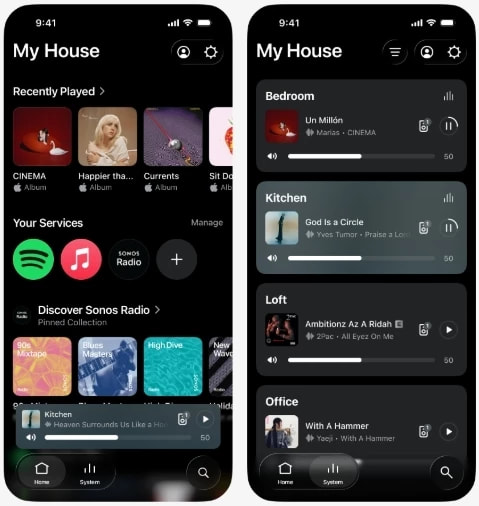
What Sonos Must Answer in September
Sonos needs to demonstrate more than a speaker carrying on a pleasant conversation under controlled lighting.
The company must explain which existing products will support its new intelligence, whether older speakers will be excluded and whether additional hardware will be required. It also needs to clarify local versus cloud processing, privacy controls, supported music and smart-home services, subscription requirements and whether customers can disable AI while retaining normal Sonos functionality.
Reliability matters even more than conversational polish. A system that can recommend dinner music but occasionally loses the living-room speakers is not intelligent. It is merely confident.
Sonos reported third-quarter revenue of $375 million, up 9% year over year, while adjusted EBITDA increased 24% to $44 million. Those results suggest the business is recovering and give the company room to invest in its next platform. They do not erase what customers experienced when the company last attempted a major software transformation.
The Bottom Line
Sonos may be better positioned than most audio manufacturers to make artificial intelligence useful inside the home. It already has the speakers, microphones, network, services and installed customer base required to turn voice requests into coordinated actions across multiple rooms.
That opportunity comes with significant risks.
Customers may be asked to accept greater data collection, increased dependence on cloud services, potential subscription fees and higher hardware prices at a time when many still remember the app collapse. The AI infrastructure boom driving this new strategy is also making memory more expensive, creating precisely the component pressure that Sonos says could eventually influence prices.
The September event therefore needs to answer a question larger than what Sonos is launching.
Can the company use AI to make its system simpler, more reliable and genuinely useful—or is it about to add another complicated layer to products that customers primarily want to play music?
Sonos does not need to prove that it can make a speaker talk.
After the past two years, it needs to prove that it can listen.
Related Reading:
- Sonos Unveils Play And Era 100 SL Wireless Speakers Designed For Music That Moves With You
- Sonos Amp Multi Blends Multi-Room Amplification And Streaming—Is The Company Rewriting Its Playbook?
- Sonos Tries To Repair Its App With Tabs, Better Volume Controls And Speaker Sorting
- OpenAI’s First Hardware Device Could Be A ChatGPT Speaker With A Camera