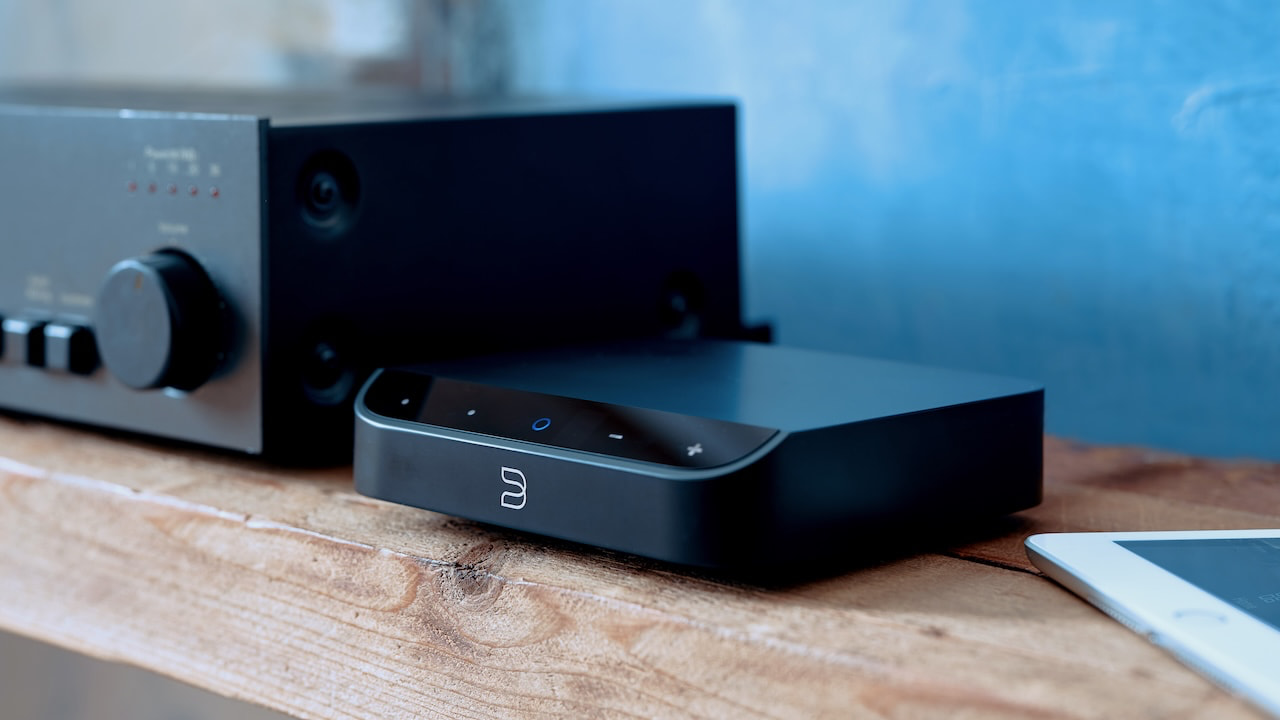
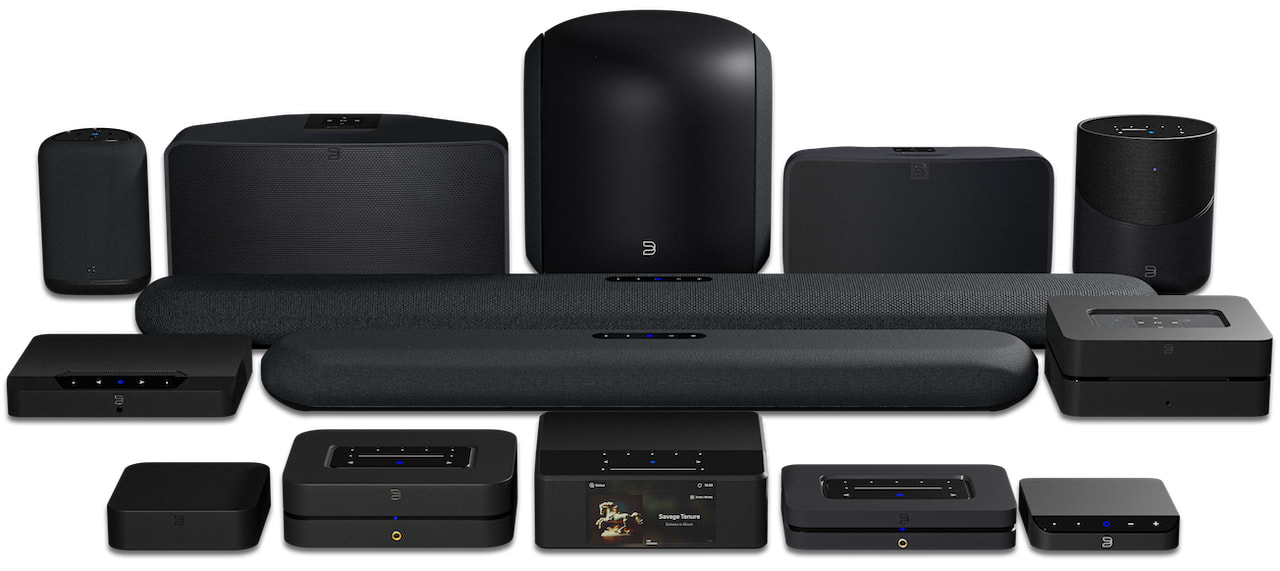
Apple Music is finally available directly through Bluesound’s BluOS platform, giving owners of compatible wireless speakers, network streamers, streaming amplifiers, and soundbars access to Apple’s enormous music catalog without relying on AirPlay 2. The free software update, released October 20, 2026, also extends Apple Music support to compatible BluOS products from NAD Electronics, PSB Speakers, DALI, Cyrus, and Monitor Audio.
For a streaming platform that has spent years positioning itself as one of the most comprehensive solutions for serious music listeners, this was a rather conspicuous omission. BluOS already supported TIDAL, Qobuz, Spotify, and numerous other services, but Apple Music subscribers still had to use AirPlay 2 to get their music onto a Bluesound system. Considering the size of Apple’s subscriber base, that was becoming increasingly difficult to explain.
And while AirPlay 2 has always been convenient, there’s a considerable difference between sending music from your iPhone and having a network player retrieve it directly from the streaming service. The former works, but the latter is how a dedicated hi-fi streamer should operate in 2026.
Related Reading:
- BluOS Will Add Josh.ai VoiceCast Across Bluesound, NAD, PSB And More
- Better Late Than Never: Qobuz Connect For BluOS Is Finally Coming In September

What Changes for Bluesound and BluOS Owners?
Until now, Apple Music listeners generally relied on AirPlay 2 to send music from an iPhone, iPad, or Mac to a compatible Bluesound component. With the new integration, users can sign into their Apple Music account through the BluOS Controller app and browse and control the service within the same environment used for their other streaming sources.
The more important change happens behind the scenes. The BluOS player retrieves music directly from Apple’s servers rather than requiring a phone or tablet to handle the stream, reducing dependence on the mobile device and its connection.
That matters in a household where multiple people use the same music system. You can start playing an album in the living room, put your phone away, and let the network player handle playback rather than treating your iPhone like an unpaid DJ who isn’t allowed to leave the party.
Apple Music subscribers gain access to the service’s catalog of more than 100 million songs, personalized recommendations, curated playlists, radio programming, and artist-hosted content. An active subscription is required, but Bluesound isn’t charging anything extra for the integration.

Why This Matters for BluOS Multiroom Audio
We’ve covered BluOS extensively at eCoustics, and one of its biggest strengths has always been the ability to combine different types of audio products within a single control environment.
Our recent Bluesound NODE N132 review explored how the platform has matured into a reliable streaming solution, even as competitors such as WiiM and Eversolo have become increasingly aggressive on price and features. I found the current NODE more transparent, spacious, and controlled than its predecessors, but its mature software remained one of the strongest arguments for spending more than the competition charges.
The same flexibility was central to our PULSE FLEX P130 review. The compact $379 wireless speaker can function independently, join a larger multiroom system, or become part of a compatible home theater setup. It also demonstrated how Bluesound has been refining its hardware rather than relying exclusively on the reputation of its software.
Our PULSE CINEMA review revealed a similarly important distinction. While the soundbar wasn’t as convincing with immersive Dolby Atmos playback as some competitors, its music performance and integration with the wider BluOS ecosystem were genuine strengths.
Apple Music now becomes another source that can operate across these products. Users can group compatible players to hear the same music in different rooms or select different content for separate listening zones.
More importantly, that flexibility extends beyond Bluesound hardware. Someone with a compatible NAD streaming amplifier in the listening room and Bluesound wireless speakers elsewhere in the house can access Apple Music without abandoning the BluOS ecosystem.
That’s a meaningful advantage over buying unrelated wireless speakers and hoping their respective apps eventually learn to cooperate. We’ve all spent enough time watching expensive consumer electronics refuse to acknowledge one another’s existence.

What About Apple Music Lossless and Hi-Res Audio?
Here’s where the announcement becomes considerably less satisfying for audiophiles. Apple Music offers lossless audio using ALAC, including high-resolution recordings up to 24-bit/192kHz, but neither Bluesound nor BluOS has confirmed the codec, bitrate, or maximum resolution supported by the new native integration. There’s also no mention of Dolby Atmos Music support, which seems like a rather important detail to leave out of a major streaming announcement.
And there’s another wrinkle. Early reports from Bluesound owners using the new integration indicate that the BluOS playback-information display is identifying Apple Music tracks as AAC at approximately 256 kbps. Several users have reported similar results, including one listening to Steely Dan’s Gaucho. These are preliminary user observations rather than independently verified measurements, but they raise legitimate questions about what the new integration actually delivers.
The distinction matters because streaming directly from Apple’s servers doesn’t automatically mean the audio arrives losslessly. The Bluesound NODE can handle high-resolution audio from supported sources, but those hardware capabilities don’t establish the quality of the Apple Music stream. BluOS’s older support documentation also confirms that conventional Apple Music playback through AirPlay could involve AAC compression at 256 kbps, with a Mac-based workaround offering CD-quality ALAC. That guidance predates the new integration and shouldn’t be confused with its technical specifications.
Bluesound deserves credit for finally bringing Apple Music into the BluOS ecosystem, but it needs to clarify whether native playback currently supports lossless ALAC, high-resolution audio, or only compressed AAC. Dolby Atmos compatibility is another unanswered question. For a company that has spent years promoting high-resolution streaming, those aren’t minor details.
Apple Music finally has a seat at the BluOS table. Now we’d like to know whether we’re getting the lossless master or the 256 kbps appetizer.
How to Get Apple Music on Bluesound
The integration is available through a free BluOS software update for compatible hardware. Existing Apple Music subscribers can sign in through the BluOS Controller app after updating their system.
The process is intended to be straightforward, and no additional Bluesound subscription or hardware purchase is required.
Bluesound has not provided an exhaustive model-by-model compatibility list in the announcement. Owners of older or third-party BluOS components should confirm that their specific hardware supports the latest software before assuming the feature will be available.
For more information, visit Bluesound or BluOS.
The Bottom Line
Apple Music’s arrival is a meaningful upgrade for Bluesound and the wider BluOS ecosystem, particularly for households already invested in Apple’s streaming service. Native integration simplifies playback, improves multiroom flexibility, and removes an unnecessary dependence on AirPlay 2 for controlling music throughout the home.
It also makes Bluesound hardware more appealing to prospective buyers who previously favored competing streaming platforms because Apple Music support was a priority. Considering how capable the current NODE, PULSE FLEX, and PULSE CINEMA products have become, this was a gap that needed closing.
The remaining issue is sound quality. Bluesound has delivered the convenience that Apple Music subscribers wanted, but without confirmation of lossless and high-resolution support, we can’t yet say that it has delivered everything audiophiles have been waiting for.
Apple Music finally has a proper seat at the BluOS table. Now we’d like to know whether it’s being served the full-resolution meal or the compressed airline version.
Related Reading:
- NAD C 359S Integrated Amplifier Bucks The Class D Trend With Class A/B Power And BluOS For $1,299
- DALI VEGA Wireless Hi-Fi System Delivers All-In-One Sound With BluOS, HDMI ARC, And Adaptive Orientation
- Apple Music Raises Prices To $11.99 As Family Plan Jumps Nearly 18%