If you’re looking for an immersive Dolby Atmos soundbar that lets you easily build out a full surround or multi-room sound system piece by piece, the conversation starts with the Sonos Arc Ultra and, some might argue, ends there.
That’s not for lack of competition, and Bluesound’s Pulse Cinema has emerged as an intriguing new challenger, thanks in large part to the brand’s powerful BluOS software. Similar to Sonos, BluOS makes it easy to expand a system and connect with other speakers and components, including supported products from brands such as NAD and PSB Speakers. BluOS’s strong reliability is especially enticing for anyone burned by Sonos’ recent app mishaps.
The bar itself is impressively appointed, with features and inputs many competitors lack, including an analog RCA input for connecting a turntable. Its array of 12 active drivers delivers musical and, at times, premium performance, along with punchy bass.
Its limited channel configuration, however, potentially limits it in comparison to top rivals at immersing you in Dolby Atmos movies and TV shows. You’ll likely need to add more speakers for a more complete Atmos experience, which is a tougher ask considering the bar’s lofty $1,500 price.
The Pulse Cinema is still a solid option for those already invested in the BluOS ecosystem or anyone looking to break free from Sonos in favor of cleaner, more reliable software.
Design & Features: Old Meets New
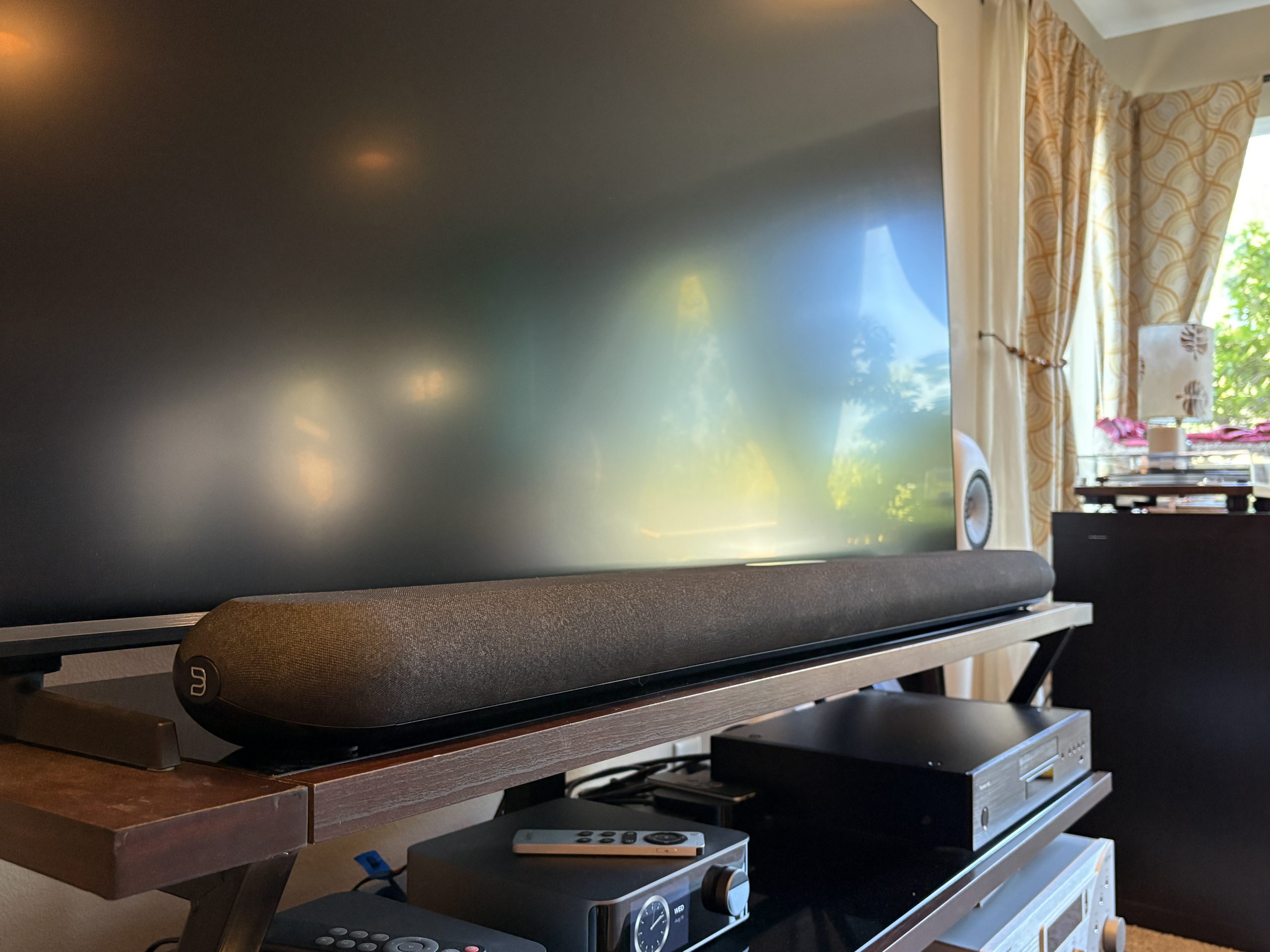
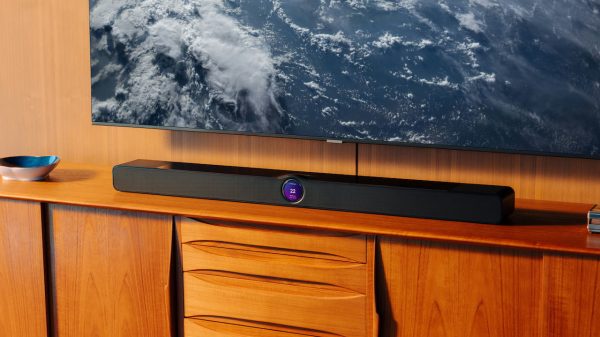
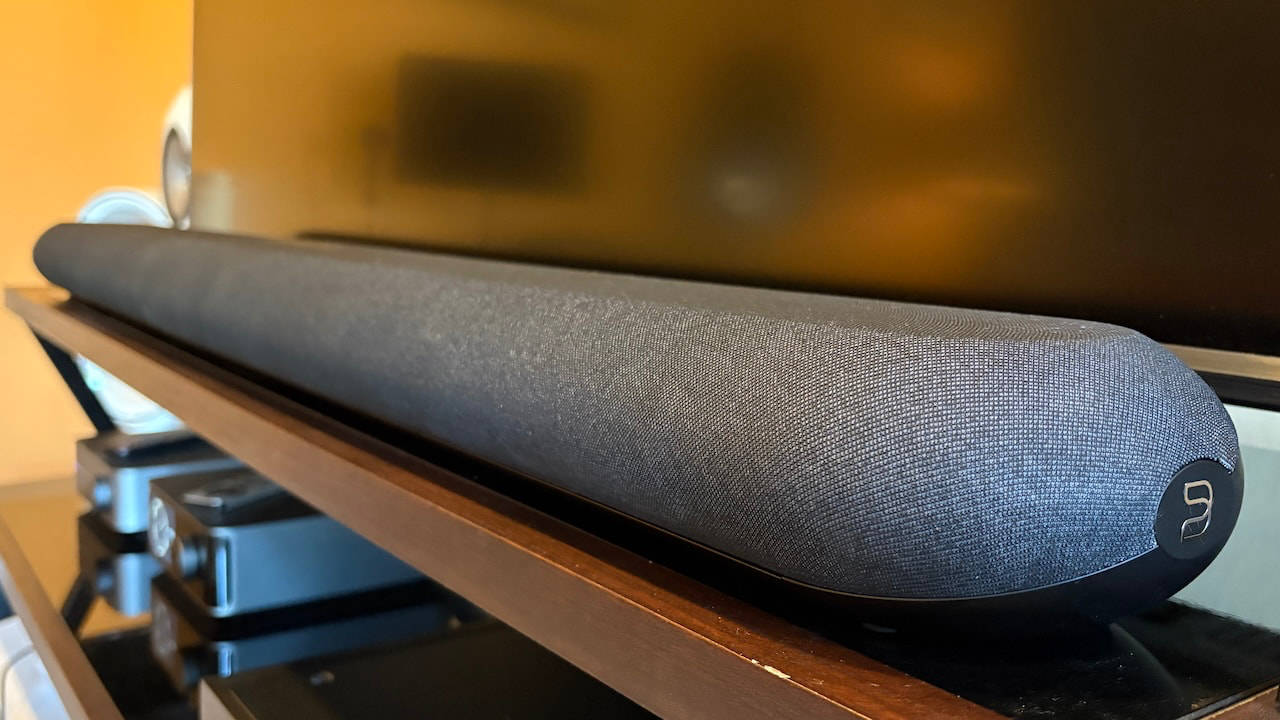
Unboxing the Pulse Cinema reveals a surprisingly substantial soundbar wrapped in soft fabric. The unit stretches more than 47 inches across, barely fitting between the stands of the 65-inch Hisense U6SF TV I’m currently reviewing. At 2.9 inches tall, it also almost completely covered the TV’s IR sensor.
That’s pretty common for a soundbar loaded with this many speakers, and Bluesound accounts for the Cinema’s size by including a mounting kit. Like Samsung’s latest soundbar, an internal accelerometer adjusts the sound based on orientation, helping deliver the best performance whether the Cinema is mounted or placed on a TV stand.
Around back is a relatively generous input hub, highlighted by increasingly rare inclusions such as the previously mentioned analog RCA input and a traditional subwoofer output, along with Ethernet, optical, and HDMI eARC for connecting to your TV. What you don’t get are any additional HDMI inputs for connecting a game console or other external devices. Sonos and Bose are even stingier with their flagship soundbars, but at $1,500, an extra HDMI port would have been nice.
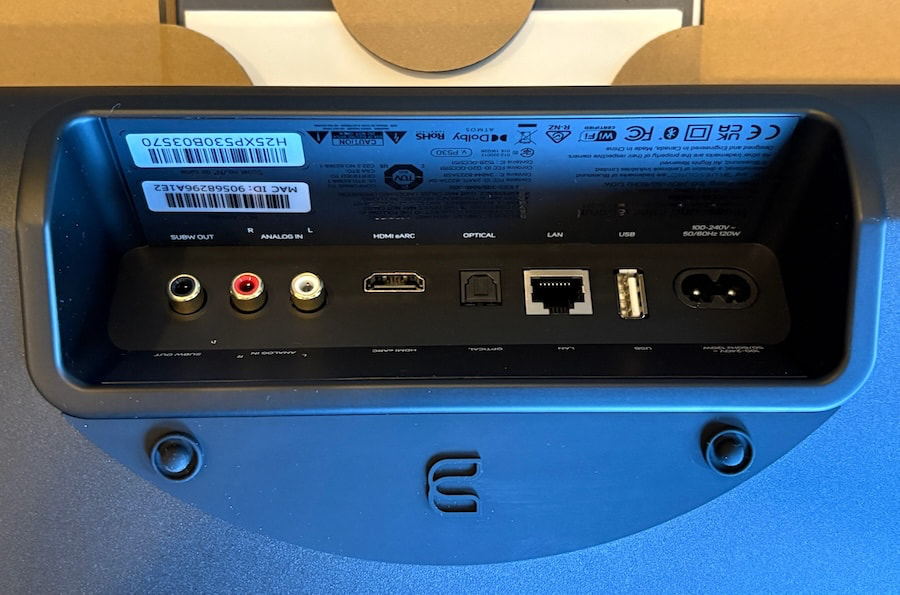
Keeping with the Sonos theme, the Pulse Cinema follows the Arc Ultra in skipping a dedicated remote, relying instead on the BluOS app for most controls, along with basic buttons on top. The bar includes an IR sensor for programming a separate remote, but as long as you connect over HDMI ARC/eARC, which is necessary for Dolby Atmos, your TV remote should automatically handle basics like volume and power.
BluOS serves as the main streaming hub, directly supporting more than 20 music services, including Amazon Music, Pandora, Deezer, and iHeartRadio, along with a deep catalog of internet radio stations. Third party streaming support includes Spotify Connect, Tidal Connect, Qobuz Connect, and Roon, as well as Apple AirPlay and Bluetooth 5.2 with aptX Adaptive.
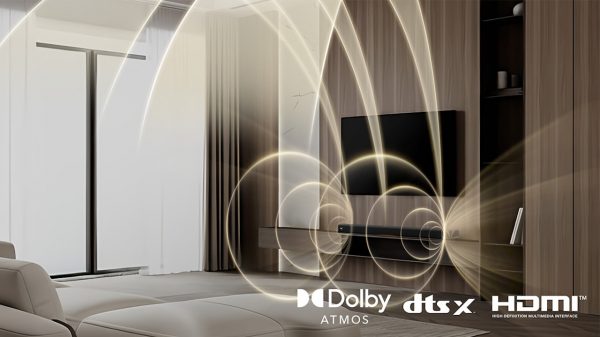
The Pulse Cinema’s 12 individually powered drivers comprise five 0.75-inch tweeters and five 1.5 x 3-inch midrange drivers spread across the three front channels and dual upward firing height channels, along with two 4-inch woofers below for bass. The low end is further reinforced by four passive radiators for extra punch. Bluesound calls this a 3.2.2 configuration, although the “.2” in the bass refers to the dual down-firing woofers. There is only one dedicated subwoofer output.
As for audio support, the Pulse Cinema unfortunately skips DTS, offering LPCM support instead. Again, that puts it in line with some competitors, including Bose, but at this price, I would have liked to see full DTS:X support for anyone with a substantial Blu-ray library. On the Dolby side, you’re getting most of the good stuff, including full-resolution Atmos over Dolby TrueHD, but no native Dolby Atmos Music. Other playback options include FLAC, MQA, ALAC, and WAV files at up to 24-bit/192kHz, along with DSD256.
Setup & Control: Serious Sound Modes
Like most modern soundbars, getting the Pulse Cinema up and running is a mostly breezy affair. The bar automatically connected to my TV over HDMI eARC using the included cable, and the quick start guide makes network setup simple. The only hiccup was that, like the PSB iQ2 speakers I recently reviewed, BluOS balked at my split network’s 5GHz band. It worked instantly on the 2.4GHz band, however, and streaming remained trouble-free throughout a week of testing.
Designed as a bridge for connecting multiple components across brands like Bluesound, PSB Speakers, NAD, DALI, and others, BluOS has a steeper learning curve than some proprietary apps. You’ll find the main streaming options and inputs in the Music section, while selecting Players provides direct control of the bar and other connected gear.
One thing I learned quickly about the Pulse Cinema is that its performance relies heavily on the available sound settings. As noted in the app, the Virtualizer must be engaged for the best Dolby Atmos expansion, and I found the Surround Upmixer helpful for creating better spacing with surround sound as well.
Movie Mode is also surprisingly potent, raising the baseline volume significantly with Dolby content while giving effects and dialogue a crisper, more aggressive edge. Thankfully, while it definitely adds more punch to action movies and TV shows, it does so without becoming overly sharp or sibilant, so I had no issue using it with most TV content. Music is simpler, sounding good with either Music Mode engaged or the sound mode set to Off. Whatever mode you use, you’ll likely want to disable the Volume Limiter, as it can significantly restrict dynamics.
Listening: Definition Over Immersion
It’s perhaps telling that I spent so much time experimenting with the Pulse Cinema’s different sound modes, hoping to coax more expansion and immersion from my favorite Dolby Atmos content. Even after locking in my preferred settings, the sound remained more confined to the front of my room than with less expensive competitors like the Arc Ultra and Samsung QS90H, let alone multi-speaker systems like Samsung’s fantastic HW-Q990.
Starting with my usual first Atmos test track, Dolby’s “Amaze” demo, the buzzing insects in the intro felt oddly localized, as if the entire soundstage had been compacted. While overhead sounds like the raindrops and thunder toward the end fared better, the bar fell similarly short when tracking scenes like the dual starships that normally fly just overhead in the disc’s “Horizon” demo.
That compacted feeling continued with real-world content, where the bar’s lack of side-firing drivers kept some of the more cheek-brushing moments from fully landing. I also found myself wishing for a channel control to boost the height speakers for overhead effects. That’s not to say the Pulse Cinema doesn’t summon some Dolby Atmos magic, however. What it lacks in overall expansion, it makes up for to some degree with impressive clarity and definition for individual Atmos effects, otherwise known as sound objects.
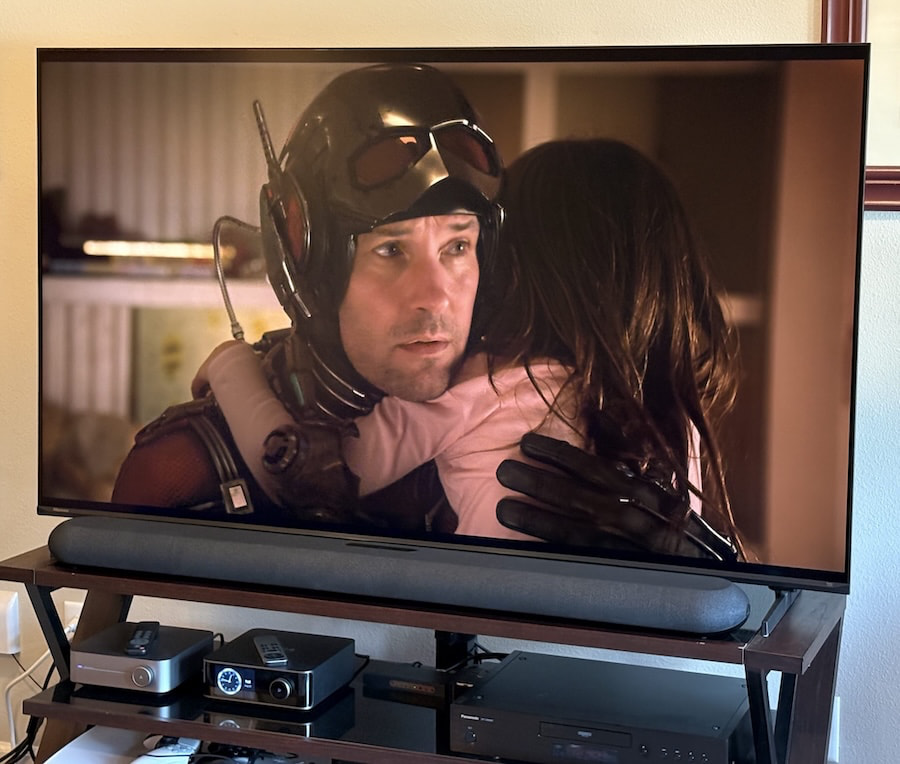
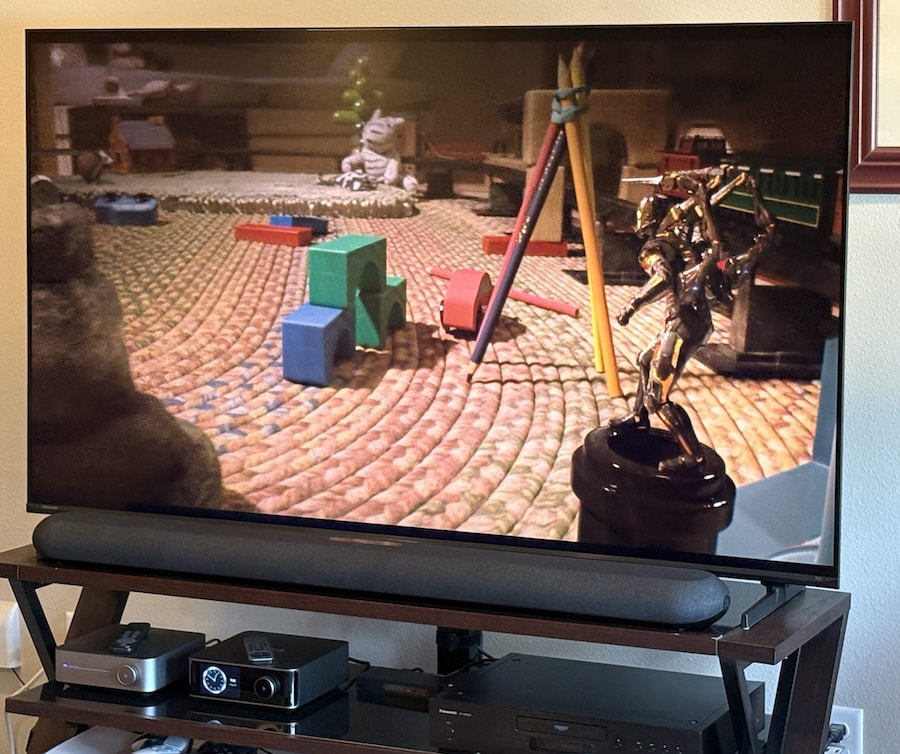
The first shrinking scene in Marvel’s Ant-Man was a prime example, delivering an almost palpable slosh of water as Scott Lang is swept up in the bathtub tsunami. Moments like the dance scene as he flies off the turntable were rendered with impressive nuance. The booming bass swells as he hops across the dance floor, then dies down with stark dynamics, leading into a head spinning swirl as he falls victim to the vintage vacuum cleaner. The Cinema really focuses on pinpointing each effect, to the point that I could almost feel the wind flying off the spinning wings of the ants as Scott climbs aboard for the first time.
Mad Max: Fury Road was similarly engaging. While the whispering little girl in Max’s head during the opening scene doesn’t bounce around the room, her voice is fantastically clear, while the gravelly grit of Max’s internal monologue and the high octane roar of his infamous muscle car seem to hit with extra vitality, climaxing in the scene’s barrage of gasoline fueled mayhem.
The bar showed a similarly subtle but premium touch with high quality thrillers like Apple TV’s Widow’s Bay. Little details like the creaking of a ship at sea, the whipping wind of a storm, or the slamming of a door are elevated with rich definition and enough bass to buzz through the floor at my feet.
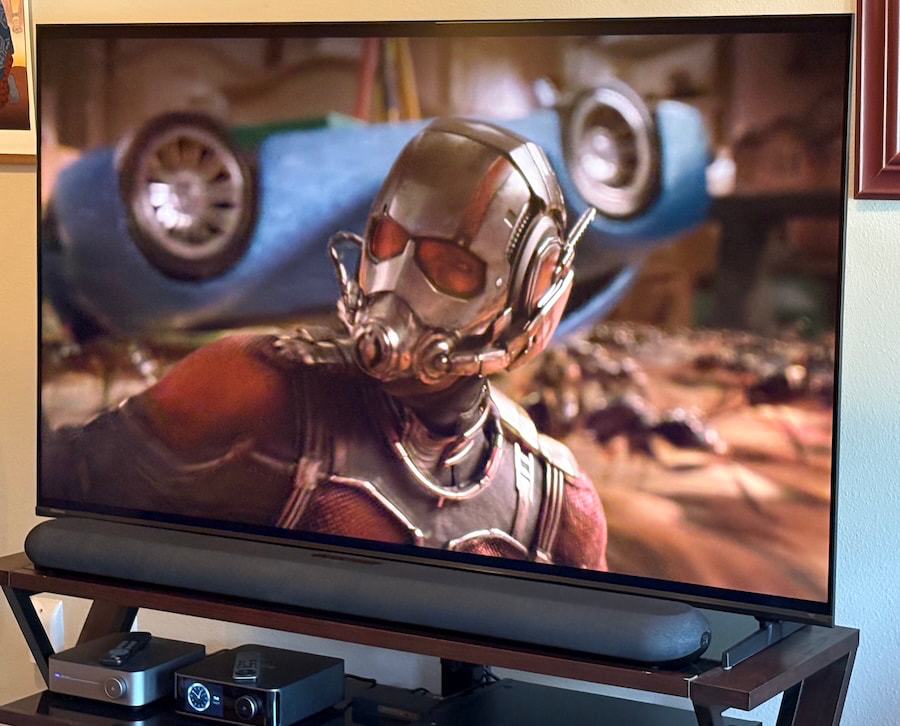
Bass in general is restrained yet dynamic, while dialogue stays clear and out front, even in chaotic scenes like the opening chase in Skyfall. Bond’s voice floats evenly above the machine gun chatter and the pulpy crack of his Walther PPK, while M’s radio dialogue from mission headquarters is appropriately compressed yet clear.
The Pulse Cinema is no slouch with music, either. You’ll want to make sure you’re using either Music Mode or the Off setting, but the bar’s multi-speaker array delivers a warm yet clean presentation across the midrange and treble, along with energetic bass. Unlike with many systems, I often preferred using the Surround Upmixer when streaming lossless tracks over Spotify Connect, as it created a more organized instrumental spread, especially with denser productions.
Percussion is taut and textural, which is especially fun with electronic tracks, while vocals are clear and pronounced, with well defined reverb tails that hang in the air. You’ll even get the occasional synth effect sweeping past your face or a piano line that seems to climb into the air above the bar.
It’s not on par with similarly priced bookshelf speakers, but it makes a fine musical centerpiece, delivering deeper timbres than expected from instruments like a growling clavichord or gritty saxophone. My only real complaint is that, on occasion, the collection of downfiring woofers created some buzz from my console, forcing me to dial the bass back.
The Bottom Line
Bluesound’s Pulse Cinema is a capable flagship soundbar with plenty of room to expand, including the ability to add multiple speakers for surround sound or multi-room audio, all backed by powerful and reliable software. Its performance is generally impressive, but Dolby Atmos immersion is held back by the lack of side firing drivers and less convincing overhead effects than cheaper rivals like the Sonos Arc Ultra, Samsung QS90H, and others.
At $1,500, the Pulse Cinema also competes with more immersive multi-speaker systems like Samsung’s 11.1.4-channel Q990 and JBL’s Bar 1300MK2, both of which deliver more convincing surround sound and 3D audio immersion, along with features such as DTS:X support.
The Pulse Cinema’s analog RCA input and subwoofer output make it more flexible for home audio integration than most rivals, but its price makes it harder to justify. Its strongest use case is as part of a broader multi-room audio system or a multi-speaker surround setup for listeners already invested in BluOS gear.
Pros:
- Simple setup and control over BluOS
- Connects as part of a multi-room or multi-piece sound system
- Good clarity and balance, especially once you dial in the settings
- Dynamic and well-defined Dolby Atmos effects
- Solid musical chops
Cons:
- Limited Dolby Atmos immersion
- Occasional console buzzing with hefty bass tracks
- No Spare HDMI input or DTS support
- No included remote
Our Ratings
★★★★★★★★★★ Performance
★★★★★★★★★★ Usability
★★★★★★★★★★ Build Quality
★★★★★★★★★★ Value
Where to Buy:
- Bluesound Pulse Cinema – $1,499 at Amazon | Crutchfield | B+H Photo
- Samsung QS90H – $1,000 at Amazon | Crutchfield | Best Buy
- Sonos Arc Ultra – $1,099 at Amazon | Crutchfield | Best Buy
Related Reading: