
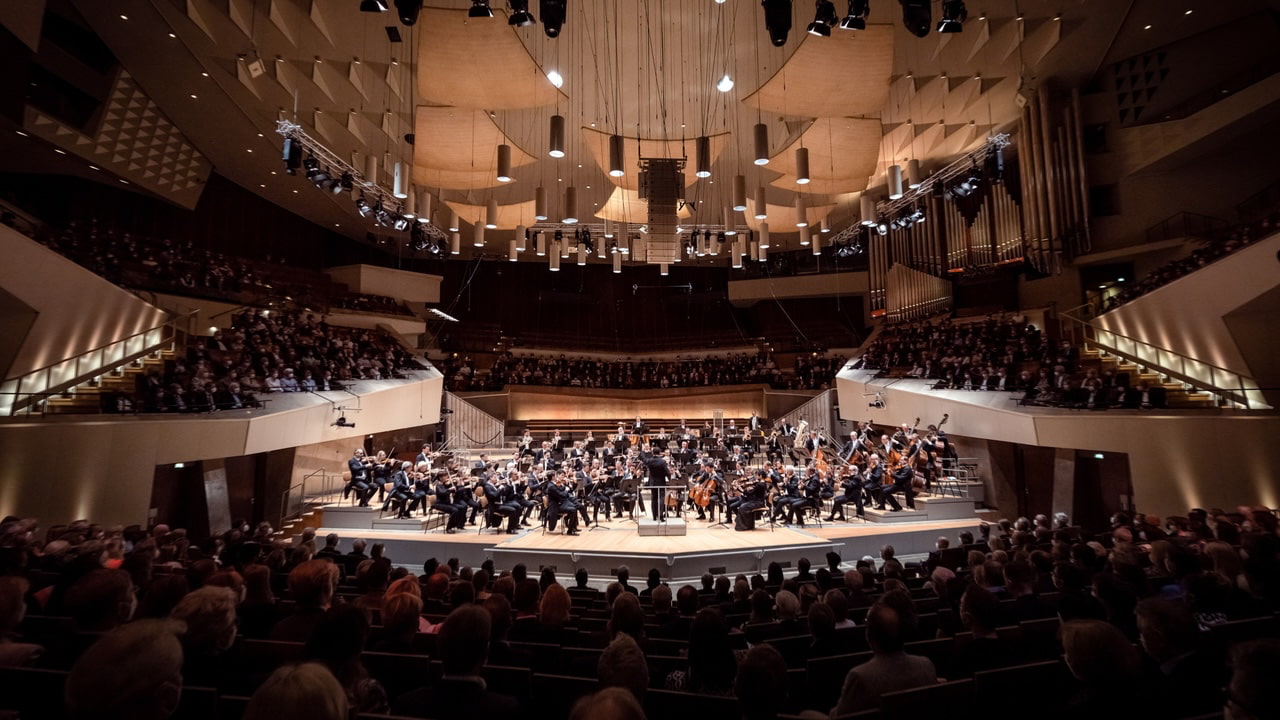
Classical music doesn’t get nearly enough attention in conversations about Dolby Atmos, which is rather strange when you consider that an orchestra is one of the most convincing reasons to invest in a serious multichannel audio system. More than 100 musicians performing in a concert hall designed around the relationship between sound, architecture, and audience placement offer something rather different from another Atmos remix with guitars wandering around the ceiling.
The Berliner Philharmoniker is addressing that opportunity through its excellent Digital Concert Hall streaming service. Since the opening of the 2026-27 season, every live concert broadcast from the Main Auditorium of the Philharmonie Berlin has been available in Dolby Atmos.
The first live broadcast in the new format took place on August 21, 2026, with chief conductor Kirill Petrenko leading the season-opening concert. The orchestra formally detailed the upgrade in September, describing Digital Concert Hall as the first classical music streaming platform to provide regular live Dolby Atmos concert broadcasts.
Related Reading:
One of Classical Music’s Best Streaming Services Just Got Better
I’ve subscribed to the Berliner Philharmoniker’s Digital Concert Hall for several years, and I consider it one of the best classical music programs available on television. The performances are consistently impressive, the programming extends well beyond the usual greatest-hits approach, and the production values are exceptional.
The camera work deserves particular recognition. Unlike televised concerts that seem determined to cut between musicians every three seconds, Digital Concert Hall generally does a superb job of connecting viewers to the performers without getting in the way of the music.
There’s also a substantial archive spanning six decades of performances, along with interviews, documentaries, concert introductions, and curated programs. Subscribers can explore different conductors, soloists, interpretations, and musical periods without relying on whatever a general-purpose streaming service decides to promote that week.
And frankly, that’s considerably more interesting to me than hearing another mediocre pop album remixed into Atmos because somebody discovered where the overhead channels were.
How the Dolby Atmos Technology Works
The Digital Concert Hall’s immersive presentation is based on a specially developed process designed to recreate the spatial characteristics of the Philharmonie Berlin. Rather than simply adding reverberation or spreading the orchestra across more speakers, the system accounts for the positions of instrumental groups and the acoustic behavior of the auditorium.
According to the orchestra, sound engineer Benedikt Schröder developed a specialized upmixing process in collaboration with Andreas Wolf. It converts stereo concert recordings into Dolby Atmos 7.1.4, with individual mixing parameters tailored to each musical work.
That’s an important distinction from a native multichannel recording mixed directly from discrete microphone feeds. The objective is to reconstruct a convincing three-dimensional acoustic environment using an approach developed for the Berlin venue, rather than suggesting that every performance was originally recorded in Atmos.
Immersive versions of concerts from recent seasons have also been added to the Digital Concert Hall archive, with older performances undergoing conversion. The Atmos option is included in the existing subscription without an additional fee.
What Do You Need to Hear It?
The good news for home theater enthusiasts is that you don’t need to replace your existing equipment if you already have a compatible Dolby Atmos playback system.
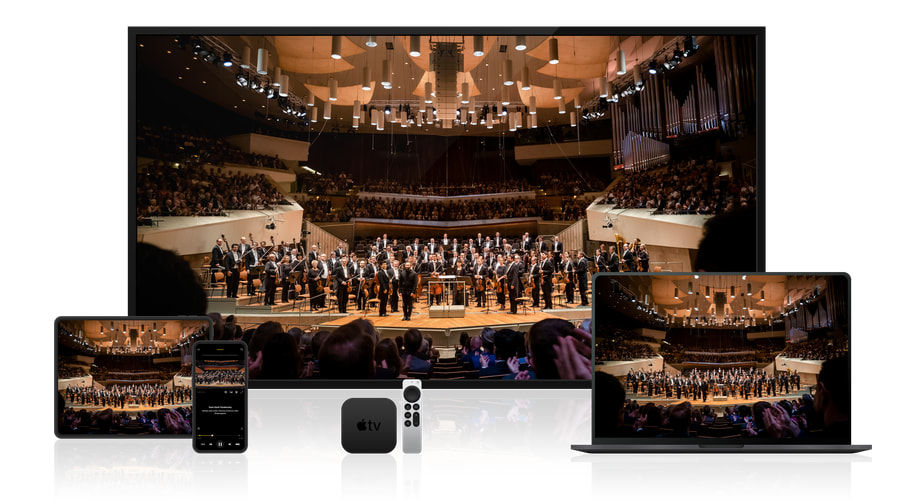
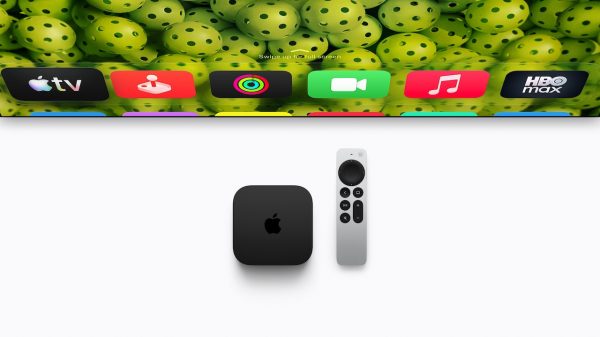
Digital Concert Hall supports Immersive Audio through several platforms, including Apple TV 4K, compatible Fire TV devices, Android TV and Google TV hardware, and supported smart televisions. Playback is also available on selected computers, smartphones, and tablets, although the actual audio format depends on the device and output configuration.
For the most convincing presentation, I’d favor a properly configured multichannel speaker system with an Atmos-capable AV receiver or soundbar. Compatible headphones offer another option for listeners who don’t have the space or domestic permission to turn their living room into a miniature Philharmonie.

It’s worth checking the service’s compatibility guidance before assuming that every browser, television, or casting method will deliver Atmos. Some configurations offer stereo playback only, and supported formats can vary between devices.
The service also provides 4K UHD and HDR video on compatible equipment, along with a separate lossless Hi-res Audio option. Dolby Atmos is an additional listening format, not a guarantee that every device can combine immersive sound with the highest available stereo resolution.
Pricing & Availability
Digital Concert Hall currently costs $20 per month in the United States, with an annual access option priced at $193. Monthly subscriptions can be cancelled, while the annual option provides twelve months of access without automatic renewal.
Both plans include live performances, on-demand concerts, documentaries, and educational programming. There is no separate premium tier required to access the available Dolby Atmos content.
The Bottom Line
The most encouraging aspect of this development is that Berliner Philharmoniker isn’t treating immersive audio as another marketing checkbox. The orchestra has developed a venue-specific approach that attempts to preserve the spatial relationships and acoustic character of its performances, rather than simply making everything sound bigger.
Whether the resulting Atmos mixes consistently improve on the stereo originals deserves careful listening, particularly given the reliance on upmixing technology. But when a streaming service puts this much effort into presenting serious music properly, it deserves attention from more than just the classical faithful.
And if your expensive Atmos system spends most of its time reproducing helicopters, explosions, and the occasional dinosaur, perhaps it’s time to let the Berliner Philharmoniker demonstrate what it’s capable of with some actual music.
For more information: Immersive Audio at Digital Concert Hall
Related Reading:



























Asa
October 21, 2026 at 9:30 pm
Thanks for surfacing this, Ian, and agree with your commentary.
I signed up for a trial to see how it works on different devices and their overall setup/sound.
A few notes (so far):
– Not all concerts are Atmos-enabled but all have Stereo & Stereo Hi-Res (not sure of actual bit-rate & sample rates all seem to be 44.1).
– On iOS (via browser/screen casting), Atmos wasn’t working even though the option was checked (will try app on TV next, and then app on mobile device.
– I enjoy watching these gifted artists play their instruments as much as listening. Agree that production quality is excellent (lighting, slow cuts, etc.).
– I’d say 95% of the audience is 65+ in age (more time/money/interest?). I wish there were more ways to engage younger audiences in classical as you imply, it needs more attention. I know our local theater/symphony hall offers big discounts to college student.
I may subscribe but I rarely sit down and watch a symphony on my main system, but it’s tempting if it ends up working as advertised. While driving, I’m starting to prefer classical to almost anything else.
Ian White
October 22, 2026 at 12:57 am
Asa,
I often watch it after midnight when the house is asleep. I set the volume just loud enough that I can hear what’s going on and I just find it peaceful. I also listen to classical at my desk when I’m working. My grandpfather left me over 200 records and I’ve added another 200+ over the years. My kids don’t like it but I think their generation is slightly moronic.
IW