Apple has spent years convincing consumers that the Apple TV 4K is one of the best streaming devices money can buy. The interface is polished, Dolby Vision looks excellent, Dolby Atmos works with the major streaming services, and integration with the rest of Apple’s ecosystem is difficult to beat. There is, however, one rather irritating omission for serious home theater enthusiasts: the inability to pass Dolby TrueHD Atmos soundtracks from locally stored movies directly to an AV receiver or processor.
That limitation has sent more than a few Apple TV owners into the welcoming arms of Nvidia, Amazon, and other manufacturers that support bitstream audio output. Now, developers have demonstrated a workaround that brings the immersive height effects of Blu-ray Dolby Atmos soundtracks to Apple’s streaming box without waiting for Cupertino to change its audio architecture.
The catch? The result isn’t lossless Dolby TrueHD, even if the source recording is. But for Apple TV owners with large movie libraries and Atmos-capable systems, it’s a meaningful development.
Why Can’t Apple TV 4K Play Lossless Dolby TrueHD Atmos?
The distinction comes down to how Dolby Atmos is delivered.
Netflix, Disney+, Apple TV, and other major streaming services typically deliver Dolby Atmos using Dolby Digital Plus, a lossy compression format designed to conserve bandwidth. Apple TV 4K supports this approach, decoding the audio and delivering Atmos through Dolby MAT over HDMI to compatible receivers and soundbars.
UHD Blu-ray Discs use a different approach. Their Dolby Atmos soundtracks are commonly encoded using Dolby TrueHD, a lossless format that preserves the original audio data while carrying the additional information required to position sounds in three-dimensional space.
The problem isn’t that Apple TV cannot reproduce multichannel audio from a TrueHD recording. Applications such as Infuse can decode the soundtrack into lossless multichannel PCM, but the Atmos object and height information isn’t preserved in the conventional output.
You still get surround sound, and it can sound excellent. What you don’t get is the complete immersive presentation encoded on the disc, including the original height and object information.
For someone watching Netflix through a soundbar, this distinction may be largely irrelevant. For the enthusiast who has invested thousands of dollars in a 7.1.4-channel theater, carefully positioned four overhead speakers, and built a library of legally backed-up UHD Blu-rays, it’s a different story.
Those ceiling speakers weren’t installed to admire the paint.
Are Home Theater Enthusiasts Really That Upset?
Yes, although this is a relatively specialized group rather than evidence of widespread consumer dissatisfaction.
Discussions across Reddit’s home theater, Plex, Apple TV, and Infuse communities have repeatedly raised the issue. Owners describe investing in Dolby Atmos speaker systems, playing their locally stored movies through Apple TV, and discovering that their receivers report multichannel PCM instead of reproducing the complete TrueHD Atmos presentation.
In one February 2026 discussion on Reddit’s Plex community, an Apple TV owner with a Denon receiver and ceiling speakers questioned why Dolby Atmos worked through Netflix but not with locally stored movie files. Other enthusiasts regularly recommend keeping an Nvidia Shield TV Pro specifically for lossless audio playback while using Apple TV for everyday streaming.
This isn’t a new complaint, either. Firecore, the developer of Infuse, explicitly acknowledges the limitation in its audio documentation and has encouraged Apple to offer more flexible support for Dolby TrueHD Atmos and DTS.
What we don’t have is reliable data demonstrating how many Apple TV owners consider this a purchasing dealbreaker. Most consumers use subscription streaming services, where the device’s existing Dolby Atmos functionality works as intended. But Apple’s most demanding home theater customers have been remarkably consistent about wanting more.
And they’re not requesting that Siri fold their laundry. They just want their expensive receiver to decode the soundtrack they already own.

How the New Dolby TrueHD Atmos Workaround Actually Works
The breakthrough comes from open-source development involving LibTrueHD, AetherEngine, and an experimental implementation in the Nuvio media player for tvOS.
Rather than attempting to force Apple TV to transmit a Dolby TrueHD bitstream it doesn’t support, the software takes a different route. It decodes the original audio and its Atmos object-positioning information, renders the immersive presentation into a fixed speaker layout, and then converts that result into Apple’s own spatial audio format.
The signal path works like this:
Dolby TrueHD Atmos → Decoded audio and object metadata → 9.1.6-channel render → Apple Positional Audio Codec (APAC) → Dolby MAT output over HDMI
The use of Apple Positional Audio Codec is the clever part. It allows the rendered immersive soundtrack to move through Apple’s native playback system and reach a compatible Dolby Atmos receiver or soundbar.
Developer documentation confirms that the implementation can decode the original Atmos presentation, including up to 15 dynamic audio objects and their positioning metadata. Those objects are rendered into a 9.1.6-channel speaker arrangement before being encoded into APAC.
This doesn’t mean you need 16 loudspeakers to use it. The 9.1.6 configuration is an intermediate rendering layout, and the actual presentation ultimately depends on the connected playback system.
There are also several limitations worth understanding. APAC uses lossy compression, and the original moving Atmos objects are no longer transmitted as independent objects to the receiver. The original lossless source has been decoded, spatially rendered, and re-encoded into a different format.
In other words, the developers have found a potentially excellent workaround for preserving immersive effects, not a secret switch that unlocks native Dolby TrueHD passthrough.
Can You Try It on Your Apple TV 4K?
The experimental feature has been integrated into the Nuvio tvOS project’s development code, with the relevant pull request merged on October 13, 2026. It is described as TrueHD Atmos Spatial Audio (Beta) and remains disabled by default.
The setting is located under Settings → Playback → Player in the supported development build. It requires tvOS 26 or later and a compatible 48 kHz TrueHD Atmos soundtrack, along with an appropriate Atmos-capable playback system.
A developer using a third-generation Apple TV 4K running tvOS 27 reported excellent results with a Sonos surround system. However, those are subjective listening impressions rather than independent measurements demonstrating that object placement, channel balance, or spatial accuracy exactly match native TrueHD playback.
The implementation has undergone extensive software testing, but its published validation does not establish identical performance across different receivers and soundbars. There is also no confirmation that the option is available in a general public Nuvio release.
For enthusiasts comfortable building and signing development software using a Mac and Xcode, the project provides a route to experimentation. Everyone else should wait for a supported player release rather than assuming a regular tvOS update has suddenly solved the problem.
What About the New $299 Apple TV 4K?
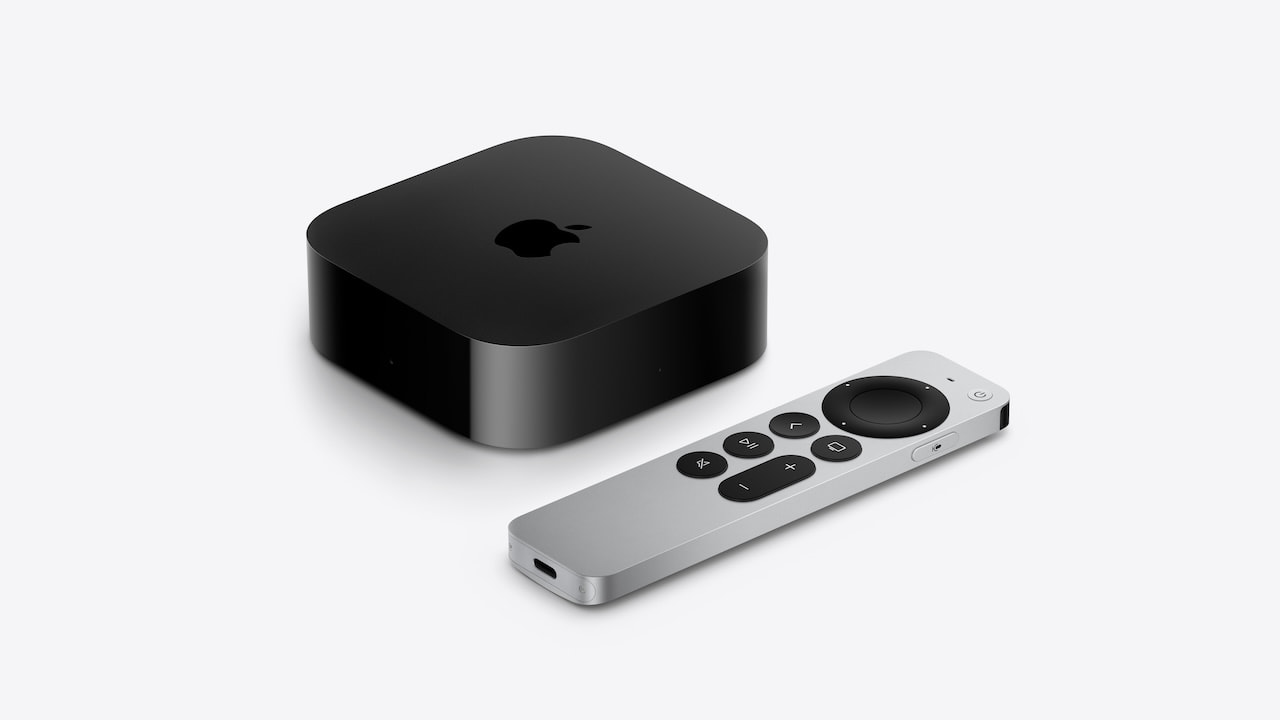
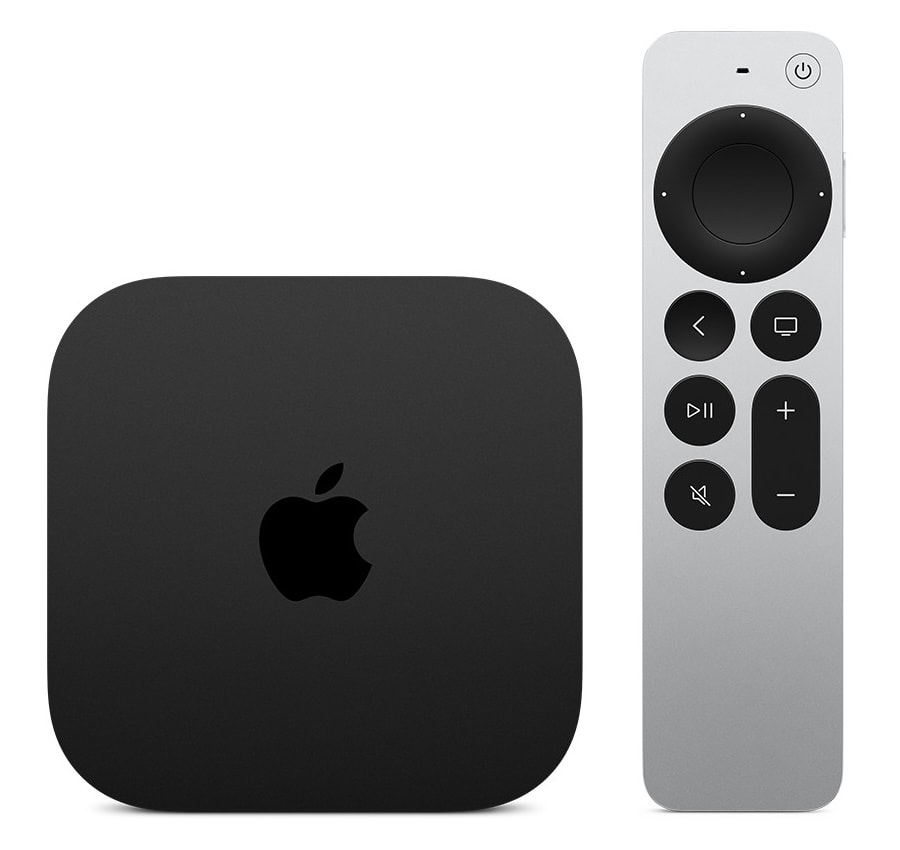
Apple announced its fourth-generation Apple TV 4K on October 13, 2026, introducing the A19 processor, Siri AI, an improved remote, and a four-HomePod surround sound configuration.
Apple has not announced native Dolby TrueHD Atmos or DTS-HD bitstream passthrough for its fourth-generation Apple TV 4K, and the company’s published specifications offer no indication that the longstanding limitation has been addressed. With the new $299 streamer not scheduled to reach consumers until November 13, independent testing is still needed to establish exactly what the final hardware and software can deliver. Caleb Denison and other home theater journalists have already raised the issue, although speculation about a future software update remains just that.
The experimental workaround has been demonstrated on the existing third-generation model. Whether it performs identically on the new hardware remains untested, and Apple hasn’t announced plans to incorporate this technique into tvOS itself.
That’s an interesting omission for a streaming box increasingly marketed as the centerpiece of an advanced home theater system. Apple has developed a considerably more sophisticated living room platform, but owners of serious AV receivers are still waiting for something considerably less glamorous than artificial intelligence: complete control over their audio output.
How Do Nvidia Shield TV Pro, Roku Ultra, and Amazon Fire TV Cube Handle Dolby TrueHD Atmos?
Apple’s competition has approached this issue differently, although support isn’t always as straightforward as reading the specifications.
Nvidia Shield TV Pro — $299.99
Despite hardware dating back to 2019, the Nvidia Shield TV Pro remains a favorite among Plex and home theater enthusiasts because it supports lossless Dolby TrueHD Atmos and DTS bitstream passthrough. With compatible playback software, including Plex and Kodi, the Shield can send the original encoded soundtrack directly to an AV receiver or processor, preserving both the lossless audio and immersive object metadata. That’s precisely what Apple TV 4K still can’t do, making the Shield an attractive option for enthusiasts with extensive libraries of locally stored UHD Blu-ray movies.
However, Nvidia increased the Shield TV Pro’s price from $199.99 to $299.99 on October 2, 2026, a rather astonishing 50% hike without upgrading its Tegra X1+ processor, 3GB of RAM, 16GB of storage, or HDMI capabilities. The aging hardware also lacks HDR10+ support, which may frustrate Samsung TV owners. Nvidia is now charging 2026 prices for seven-year-old technology, but here’s the embarrassing part for Apple: the Shield still handles lossless home theater audio better than its brand-new $299 streaming box. Apparently, getting everything you want from a streaming device remains a bridge too far, regardless of which $300 box you choose.
Amazon Fire TV Cube (3rd Generation) – $139.99
Amazon’s third-generation Fire TV Cube also officially supports Dolby TrueHD passthrough, including Atmos-encoded TrueHD content, along with several DTS formats.
The important distinction is software compatibility. Users have reported that certain versions of the Plex app transcode TrueHD tracks instead of passing them through, while alternative players such as Kodi can successfully deliver the original bitstream on the same hardware.
The Cube offers considerably more flexibility than Apple TV for this particular application, but getting the expected output can depend on the player, firmware, connected equipment, and audio settings.
Neither competitor has a perfect combination of hardware, interface design, format support, and long-term software experience. But neither requires developers to reconstruct an Atmos presentation simply to get immersive audio from a locally stored Blu-ray soundtrack.
Roku Ultra — $149.99
The Roku Ultra (2024) supports Dolby Atmos through compatible streaming services, along with Dolby Vision, HDR10+, Wi-Fi 6, and DTS Digital Surround passthrough. However, there’s an important distinction: Roku supports Atmos delivered through Dolby Digital Plus, but does not support lossless Dolby TrueHD Atmos bitstream passthrough from locally stored Blu-ray movies. When playing those soundtracks through Plex, the audio generally needs to be transcoded, sacrificing the original lossless format and Atmos object information.
Roku also raised the Ultra’s list price from $99.99 to $149.99 in July 2026, without introducing new hardware. Discounts have brought it back to $99.99 at some retailers, making it considerably more affordable than Apple TV 4K or Nvidia Shield TV Pro. For conventional streaming, Roku remains a sensible choice with an approachable interface and broad app support.
But for home theater enthusiasts who want their AV receivers decoding untouched Dolby TrueHD Atmos soundtracks, Roku doesn’t solve the problem either. Apparently, getting every streaming device manufacturer to agree that lossless audio matters is harder than convincing them to raise prices.
The Bottom Line
The new workaround is an impressive example of independent developers finding a solution to a problem Apple has left unresolved for years. It demonstrates that more sophisticated immersive playback from local movie files is possible within Apple’s existing software architecture, even without native TrueHD passthrough.
It also raises an uncomfortable question for Apple. If independent developers can deliver a usable spatial audio workaround on existing hardware, why hasn’t a company with Apple’s engineering resources offered enthusiasts a more complete audio solution?
For now, the Shield TV Pro remains a more straightforward choice for viewers who insist on preserving original lossless movie soundtracks. Apple TV 4K is still an excellent everyday streaming platform, and this experimental development makes it potentially more versatile, but it doesn’t erase the underlying limitation.
Apple can make Siri understand complicated conversational requests, recognize your voice from across the living room, and help find the remote buried beneath six months of sofa debris. Giving a $299 streaming box proper bitstream audio passthrough shouldn’t require an international coalition of programmers and a crash course in software development.
Related Reading: