
When we looked at U.S. CD sales in July, the first-half numbers were surprising enough to warrant a closer look. Luminate reported that Americans purchased 16.3 million CDs during the first six months of 2026, an increase of 16%, and the growth did not disappear when K-pop was removed from the equation; without it, CD sales were still up 6.7%.
At the time, however, an important piece of the picture was missing. The RIAA had not yet published its first-half 2026 revenue report, which uses a different methodology and gives us a much clearer view of how much money record companies are actually generating from physical formats.
Those numbers have now arrived, and the CD increase looks considerably more dramatic.
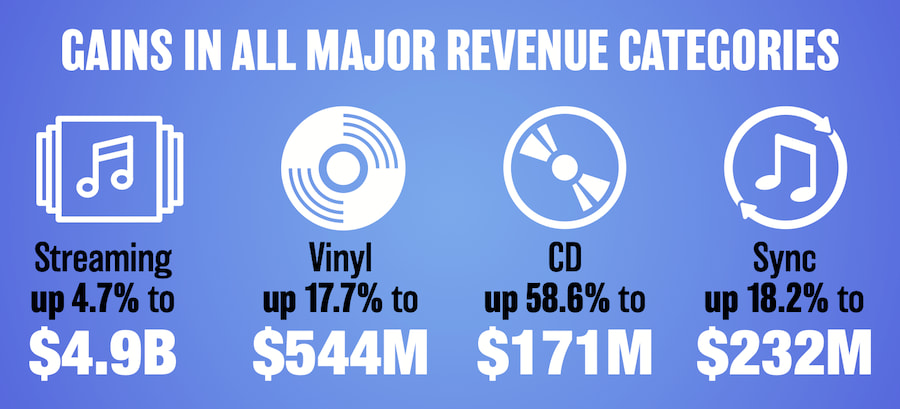
According to the RIAA’s new mid-year data, CD volume increased 45.7% to 17.5 million units, while wholesale CD revenue jumped 58.6% to $171.1 million. Vinyl also grew strongly, while total physical recorded-music revenue reached $731.5 million, up 25.9% during the first half of the year.
Nobody should interpret that as evidence that CDs have overtaken vinyl, much less that Spotify subscribers are abandoning streaming and searching the garage for a Case Logic binder from 1998. What it does suggest is that the compact disc’s rebound is becoming harder to explain away as a statistical curiosity.
RIAA and Luminate Are Measuring Different Things
Before anyone starts comparing the 16.3 million figure from Luminate with the RIAA’s 17.5 million and deciding somebody needs remedial arithmetic, the two organizations are not measuring the market in exactly the same way.
Luminate tracks consumer music activity using sales and consumption data from retailers and other reporting partners, supplemented by its own measurement and modeling. Its mid-year report is therefore useful for understanding what consumers are buying at retail and, in the case of K-pop, how specific genres and fan behavior are influencing those purchases.
The RIAA approaches the business from the industry side and now reports U.S. recorded-music revenue using wholesale value net of returns, a methodology it adopted to align its reporting more closely with international standards. That change is worth remembering when comparing newer RIAA reports with older ones because historical tables and baselines can be revised as the association updates its methodology.
The result is two datasets that should complement one another rather than be treated as competing sales counters. Their percentages differ substantially, particularly for vinyl, but both point toward the same broader development: physical music strengthened during the first half of 2026, and CDs were the biggest surprise among the major formats.
U.S. Physical Music in the First Half of 2026
| Format | 1H 2025 Units | 1H 2026 Units | Unit Change | 1H 2025 Revenue | 1H 2026 Revenue | Revenue Change |
|---|---|---|---|---|---|---|
| CD | 12.0M | 17.5M | +45.7% | $107.9M | $171.1M | +58.6% |
| Vinyl | 22.0M | 26.5M | +20.9% | $461.9M | $543.8M | +17.7% |
| Other Physical | 0.9M | 1.6M | +73.4% | $11.4M | $16.5M | +44.9% |
| Total Physical Revenue | — | — | — | $581.2M | $731.5M | +25.9% |
The newer RIAA comparison table also slightly revises some first-half 2025 figures from those published in last year’s mid-year report. The original 2025 report listed 11.7 million CDs and $108.1 million in CD revenue, for example, whereas the current comparison uses 12.0 million units and $107.9 million as its 2025 baseline.
RIAA does revise historical data, so the sensible approach is to use the comparison figures accompanying the current report when quoting its official year-over-year percentages. Apparently spreadsheets can get remastered too.
Does the RIAA Figure Include Used CDs?
This is one of the most important questions because the used-CD market has become increasingly visible again as buyers discover that entire collections can still be assembled for considerably less than the price of a handful of new records.
Used-CD transactions are not what is driving these RIAA numbers. A disc resold by an independent record shop, on Discogs or eBay, at a flea market, or between two collectors does not create another wholesale transaction for the label and therefore does not become new recorded-music revenue in the RIAA dataset.
The 17.5 million figure should therefore be understood as activity in the market for new commercial CD product, not the enormous secondary pool of discs already in circulation. The used market may well be benefiting from some of the same renewed interest in physical ownership, but measuring that would require a different set of data.
So the copy of Rumours that changes hands for $4.99 for what must be the six-millionth time is innocent. Fleetwood Mac has enough to answer for already.
CDs: The Biggest Surprise
What makes the CD increase particularly interesting is where the format came from. RIAA’s full-year 2025 report showed CDs moving in the opposite direction, with revenue declining while vinyl continued its long growth streak, so the first half of 2026 represents a meaningful change rather than the continuation of an established upward trend.
The obvious explanation is K-pop, and it would be foolish to pretend otherwise. Luminate specifically credits collectible K-pop releases as a major contributor to the 16% increase it measured, while noting that mass-market retailers captured nearly 30% of physical music sales as K-pop fandom helped drive buyers into that channel.
The format works particularly well for that market because the disc itself is only part of the product. Multiple versions, photo books, cards, alternate artwork and limited packaging turn an album release into something closer to a collectible series, and dedicated fans frequently buy more than one version.
But there is an equally important number in Luminate’s report: CD sales would still have increased 6.7% without K-pop. That does not make K-pop unimportant; it tells us that the resurgence cannot be attributed exclusively to one exceptionally enthusiastic fan culture.
Affordability Is Giving CD an Opening
Vinyl’s revival demonstrated that consumers would pay for physical music again, but the success of the format has also created an obvious opening below it. New LPs routinely sell for $30 to $40, and premium reissues, limited pressings and boxed sets can move well beyond that without breaking a sweat.
CDs provide a much less expensive route to owning the same album physically, while also delivering lossless digital audio, compact storage and easy ripping for anyone maintaining a local digital library. They also avoid the occasional excitement of spending $40 on a new LP and discovering that the pressing plant has included a complimentary ski jump.
The difference becomes visible even in the RIAA’s wholesale figures. Dividing first-half revenue by units produces an implied value of roughly $9.78 per CD versus about $20.52 per vinyl album, although those figures should not be confused with average retail prices because product mix, distribution and wholesale economics differ considerably between the two formats.
What they do illustrate is the basic economic gap. For a younger listener interested in beginning a physical collection, or an older listener who simply wants to own the albums that matter without paying premium vinyl prices, the compact disc suddenly looks rather sensible.
The CD Is Also Becoming a Collectible Again
The industry’s smartest move may have been recognizing that physical music no longer needs to replace streaming in order to succeed. A fan can listen to an album on Spotify or Apple Music every day while still buying a CD because the physical edition has value as a collectible, a piece of artwork or a more direct way of supporting an artist.
Luminate’s broader mid-year research helps explain why that model can work. It identifies 20% of U.S. music listeners as superfans who engage with artists in at least five different ways, while Gen Z and millennials are heavily represented among the most engaged fan groups.
That is a very different consumer relationship from the 1990s, when buying a CD was primarily how someone obtained the music. In 2026, access to the music may already be included in a monthly subscription; the physical edition has to justify itself through ownership, packaging, fandom, collectibility or some combination of all four.
The irony is difficult to miss. After two decades of convincing consumers that the disc was unnecessary, the music industry has discovered that people might buy one anyway if you make the object interesting.
New CD Hardware Is Suddenly Everywhere
The software numbers become even more interesting when you look at what has happened on the hardware side during 2026. This is no longer a handful of legacy manufacturers keeping an old transport mechanism alive for customers who refuse to move on.
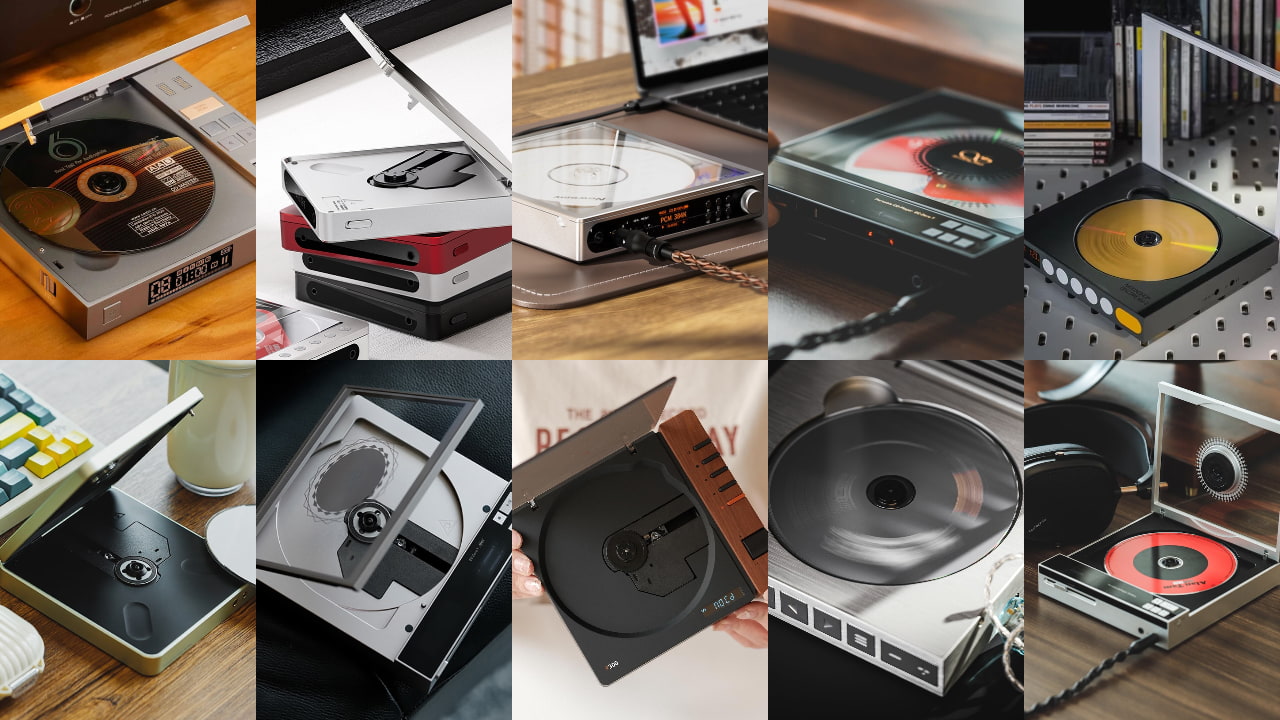
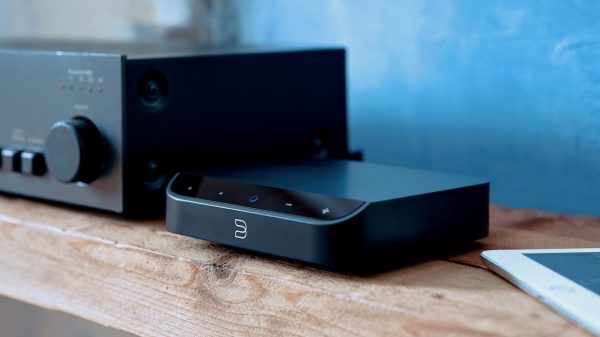
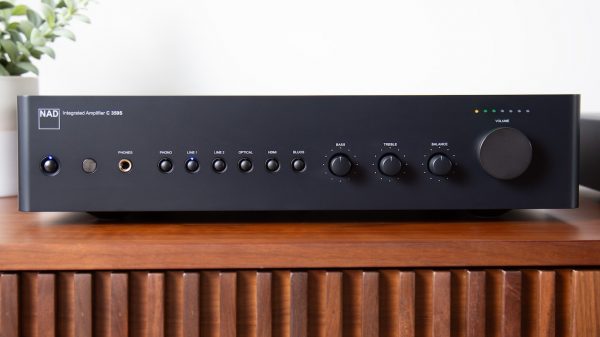
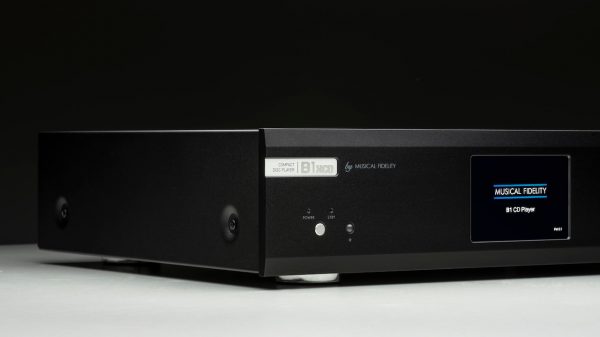
We have covered new full-size players and transports including the $750 Marantz CD 70, $1,399 NAD C 589, Mission 778CDT, $999 Shanling CT90, $4,000 Michi Prestige Q430 and the new Accuphase DP-470. Some are conventional players with increasingly sophisticated DAC sections, while others are dedicated transports designed for listeners who already own the digital converter they want.
The portable market might be even stranger. Our 2026 portable CD player guide now includes products from FiiO, Shanling, Moondrop, Cayin and Syitren, with machines such as the FiiO DM15 R2R, Shanling EC Play and Shanling EC Zero T Max offering balanced headphone outputs, Bluetooth, USB DAC operation, CD ripping and, in some cases, enough amplifier power to drive headphones that would have reduced an original Discman to tears.
The category now stretches from roughly $100 machines to $600-plus portable players using R2R DACs and tube output stages. Apparently “portable CD player” no longer means a plastic circle with three buttons and a deeply personal relationship with AA batteries.
There is another reason this hardware never completely disappeared from serious hi-fi systems. Plenty of audiophiles and more than a few hi-fi editors remain convinced that a really good CD player can kick the crap out of mediocre streaming playback. That does not mean a compact disc contains some secret digital information unavailable to a lossless streaming service; Red Book CD remains 16-bit/44.1kHz, and a lossless stream of the same master can deliver the same underlying audio data.
The differences people hear can come from everything surrounding those bits: the quality of the digital implementation, power supply, clocking, DAC, analog output stage and, crucially, whether the streaming service is serving the same master in the first place.
Put a $4,000 CD player against a cheap streamer using an indifferent internal DAC and the disc player may make the comparison rather embarrassing. Put that same CD player against a serious network transport feeding a high-quality standalone DAC, and suddenly the argument becomes much less convenient for the silver-disc congregation. At that level, implementation matters far more than whether the music arrived from a spinning disc or through an Ethernet cable.
Vinyl: Still the Physical-Media Heavyweight
CD may have the more surprising growth story, but vinyl remains much larger. RIAA’s first-half figures put vinyl at 26.5 million units and $543.8 million in wholesale revenue, increases of 20.9% and 17.7%, respectively.
That means vinyl generated more than three times as much revenue as CDs during the period and remains responsible for the large majority of physical-format revenue. Nothing about the CD resurgence changes the fact that vinyl has built a substantial and remarkably durable business after almost disappearing from the mainstream market.
Luminate’s retail data tells a somewhat different story about the rate of growth, reporting only a 2.4% increase in vinyl sales during the first half compared with 16% for CD. Once again, the methodologies are different, so the useful conclusion is not that one organization has discovered 18 percentage points of missing records; it is that CD growth accelerated sharply while vinyl remained a much larger established category.
The formats also offer different experiences. Vinyl’s attraction includes large artwork, analog playback, ritual and an enormous collector ecosystem, while CD counters with lower prices, smaller shelves, convenient ripping and perfect digital copies of the contents.
There is no requirement that one format defeat the other. The format war ended years ago, although several corners of the internet apparently missed the memo.
What About Cassettes, SACD and the Rest?
RIAA’s Other Physical category recorded the fastest percentage growth, with units increasing 73.4% to 1.6 million and revenue rising 44.9% to $16.5 million. The numbers sound spectacular until one remembers both the small starting point and the number of different formats being combined.
The category includes physical products outside the primary CD and vinyl album categories, and RIAA does not provide enough detail in the mid-year table to attribute that growth to any one format. Consequently, the data does not support claims that cassettes individually increased 73%, SACD is suddenly a mainstream success, or MiniDisc has crawled out of 1998 seeking revenge.
What we can say is that smaller physical formats collectively grew from a modest base. Anything more specific would require data that the report does not provide, and percentages become extremely photogenic when the denominator is tiny.
Why Is Physical Music Growing While Downloads Are Not?
The most revealing part of the story may be the continued strength of physical formats alongside streaming rather than in opposition to it. Streaming generated roughly $4.89 billion during the first half of 2026, accounting for about 82% of U.S. recorded-music revenue even as physical revenue climbed to $731.5 million.
Consumers therefore do not appear to be choosing between streaming and ownership in the way the industry once assumed they would. Streaming handles discovery and ubiquitous access extraordinarily well, while physical products can satisfy a different desire for collectibility, permanence and a tangible connection to favorite artists.
That interpretation becomes more convincing when digital downloads are considered. If consumers were merely worried about losing access to subscription music and wanted permanent digital ownership, downloadable albums and tracks should be experiencing some version of the same revival.
They aren’t. The physical object itself appears to be an important part of the appeal, which helps explain why records, CDs and collectible editions can grow even when virtually every song involved is already available instantly on a phone.
The Bottom Line
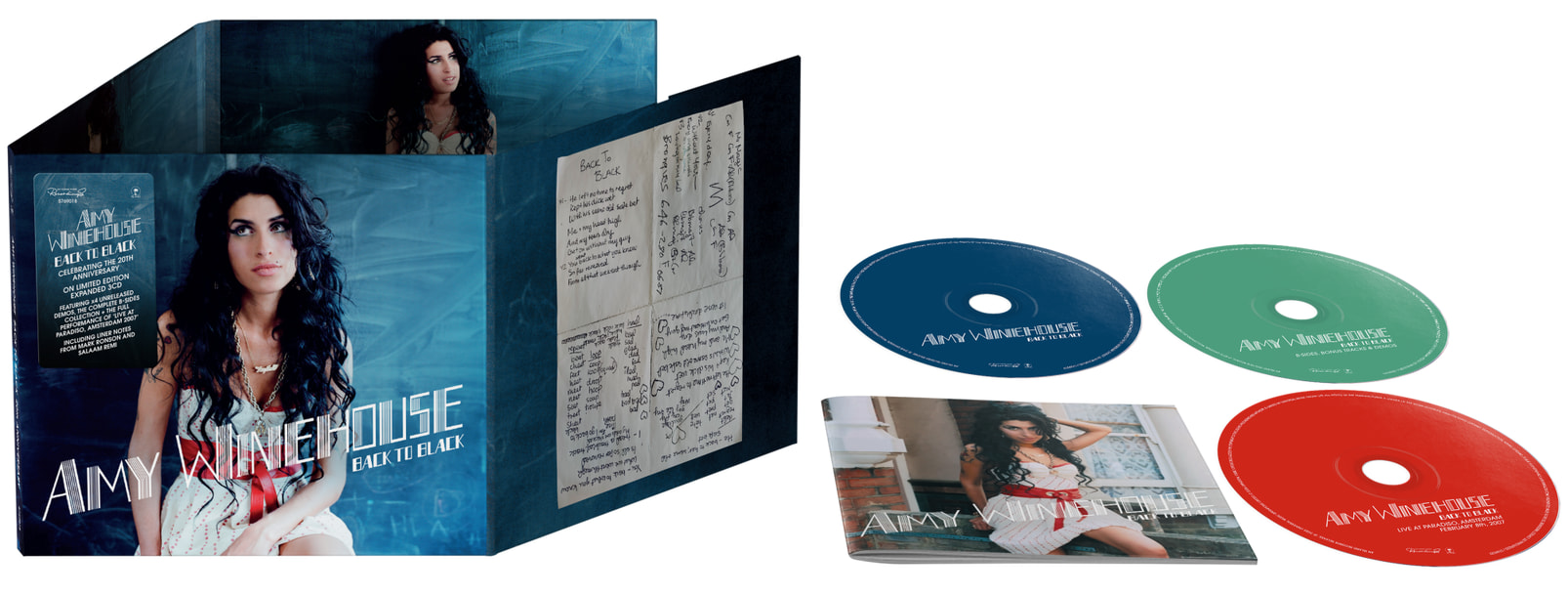
Perhaps the most interesting part of the CD story has very little to do with the format itself. A generation raised with essentially unlimited access to music may be discovering that having 100 million songs available on demand is not quite the same thing as owning the 100 albums that actually mean something to you.
Streaming won the convenience argument years ago, and deservedly so. But it also turned music into something increasingly invisible: another monthly subscription, another app, another catalog whose contents can change without asking permission. A CD is considerably less sophisticated. You buy it, put it on a shelf, rip it if you want, play it whenever you want, lend it to somebody, sell it twenty years later, or discover it in a box after forgetting you owned it. Nobody needs to renew the license.
That may explain why younger consumers can embrace streaming and physical media at the same time without seeing any contradiction. They are not trying to recreate 1997, and most of them probably have little interest in the old argument over whether CD sounds better than vinyl. They are using streaming for access and increasingly treating physical media as ownership, fandom and permanence.
The music industry spent two decades teaching consumers that owning music was unnecessary. It may now be discovering that some of those consumers would actually like to own something after all.
Funny how that works.
The CD was declared dead because streaming made it unnecessary.
Nobody asked whether unnecessary meant worthless.
Related Reading:
- Vinyl Sales Top $1 Billion As RIAA Data Confirms The Record Revival Is No Nostalgia Act
- Record Store Day, AXPONA 2026, And The Americanization Of Emily: Editor’s Round-Up
- Independent Record Stores In The U.S. And Canada: A 2026 Guide
- Tiny Vinyl: The 4-Inch Record You Didn’t Ask For Taking Up Shelf Space At Target, Because What Every Music Fan Needs Is A Record That Fits In Their Pocket






























Robert Silva
September 7, 2026 at 11:45 am
This is great news!
Ian White
September 7, 2026 at 1:56 pm
Robert,
Now I have to scamper back to PRX in Princeton to buy all of my used jazz CDs before they go up from $1.99 to $5.99 — which is already happening. I did some inventory over the weekend and looked at my physical media (music only) purchases so far in 2026. 3 new CDs. 48 used CDs. 39 new records.
IW