
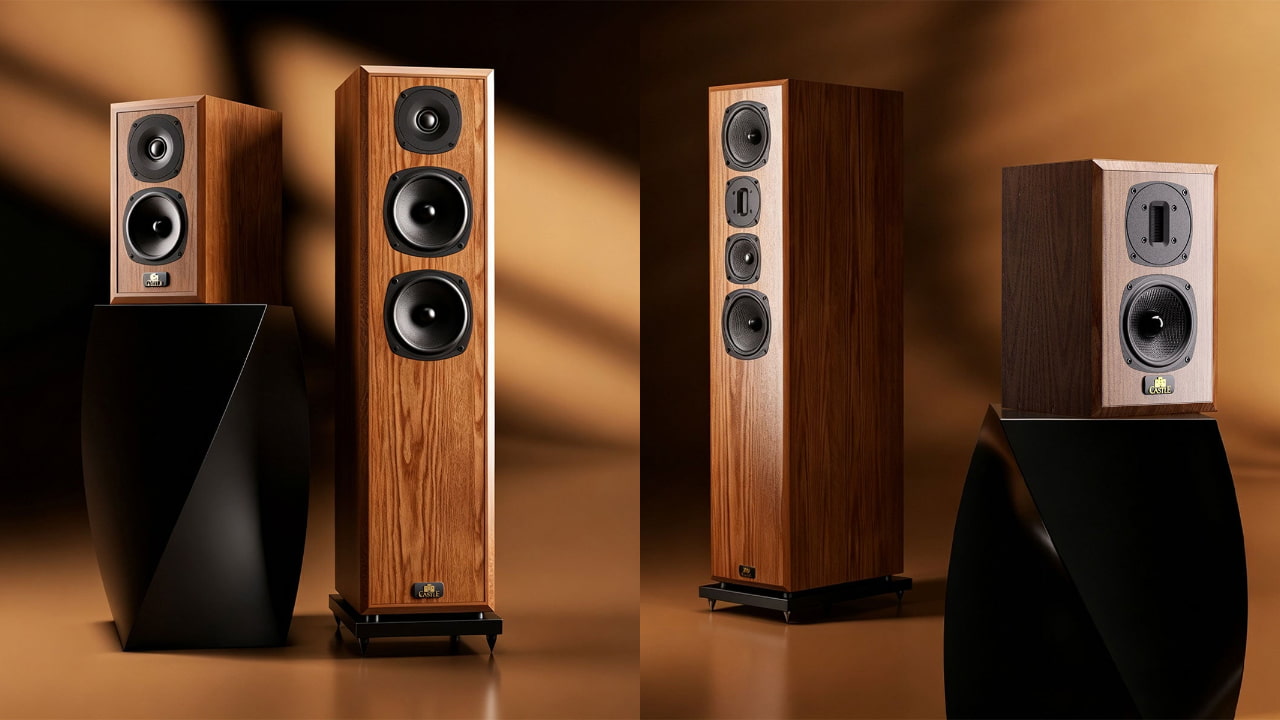
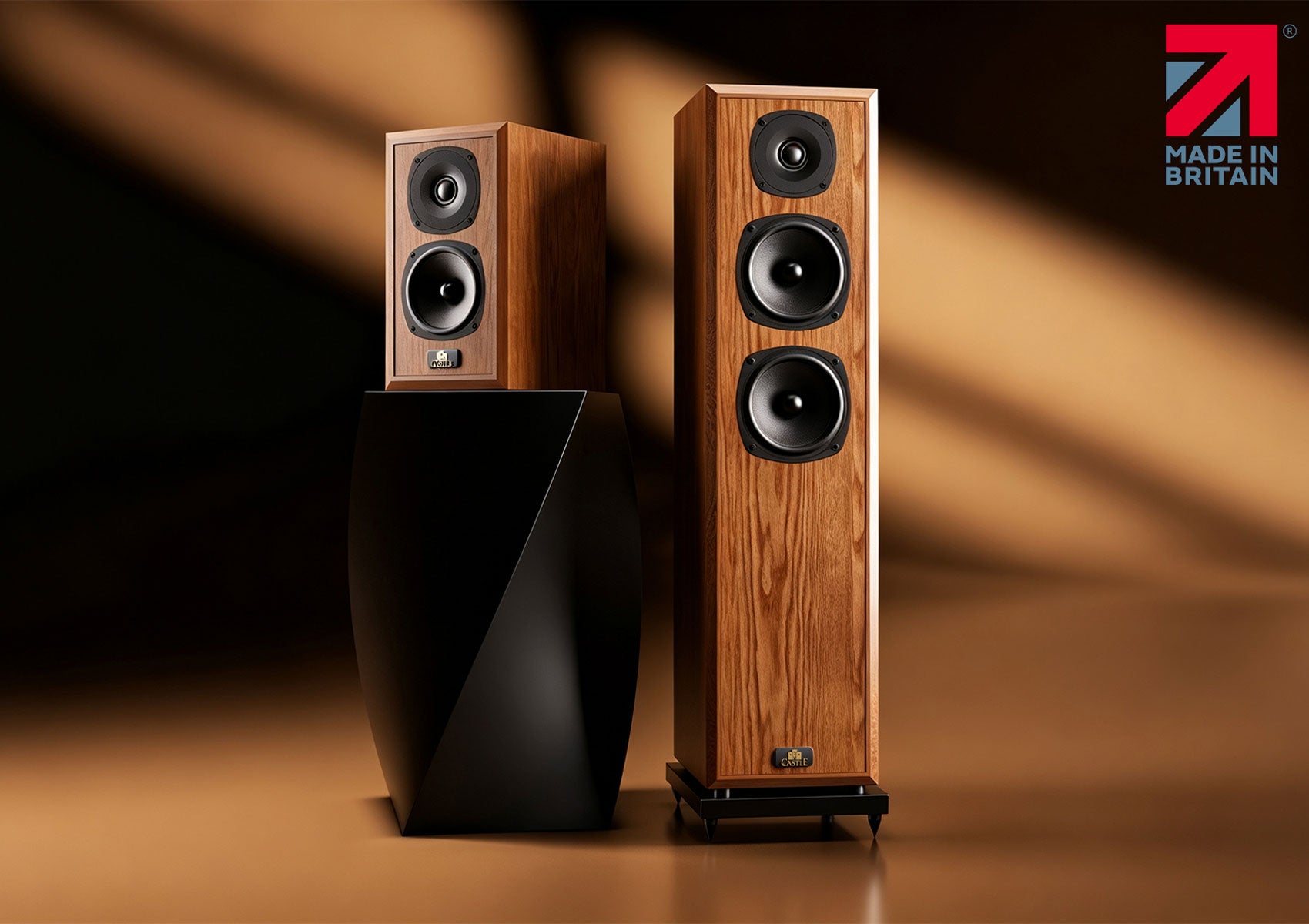
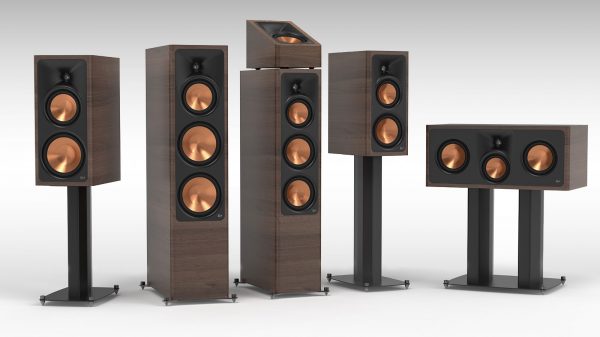
Castle Acoustics is expanding its return to UK loudspeaker manufacturing with four new passive speakers that take two distinctly different approaches to the British hi-fi formula.
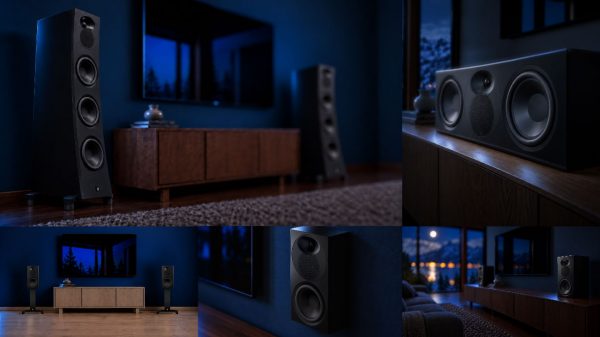
The new Tintagel 1 and Tintagel 2 stick closer to convention, combining advanced fibre cone drivers with 28mm silk dome tweeters. The more expensive Walmer 1 and Walmer 2 move in a different direction with woven carbon fibre drivers and 12 x 45mm true ribbon tweeters, while the flagship Walmer 2 adds a dedicated midrange driver.
All four are built and finished in the UK and use real wood veneers. U.S. pricing ranges from $2,749 to $7,499 per pair, with availability expected in September 2026.
That makes these considerably more important than another heritage brand adding four speakers to an already crowded market.
The Windsor Series, introduced in 2023, marked Castle’s return to British manufacturing and involved loudspeaker designer Karl-Heinz Fink and his FinkTeam. Tintagel and Walmer broaden that strategy with two floorstanders, lower points of entry, and a more obvious division between Castle’s traditional sound philosophy and its more technically ambitious products.
Castle finally looks like it is building a range again.
Related Reading:
Castle Tintagel Takes the More Traditional Route
Castle describes Tintagel as the accessible heart of its Made in UK lineup, and the engineering reflects that approach.
Both models use Castle’s advanced fibre cone material, selected for low mass and internal damping, along with a 28mm silk dome tweeter mounted in a shallow waveguide. The objective is controlled dispersion and relatively straightforward integration rather than exotic technology for the sake of having something impressive to put in the brochure.
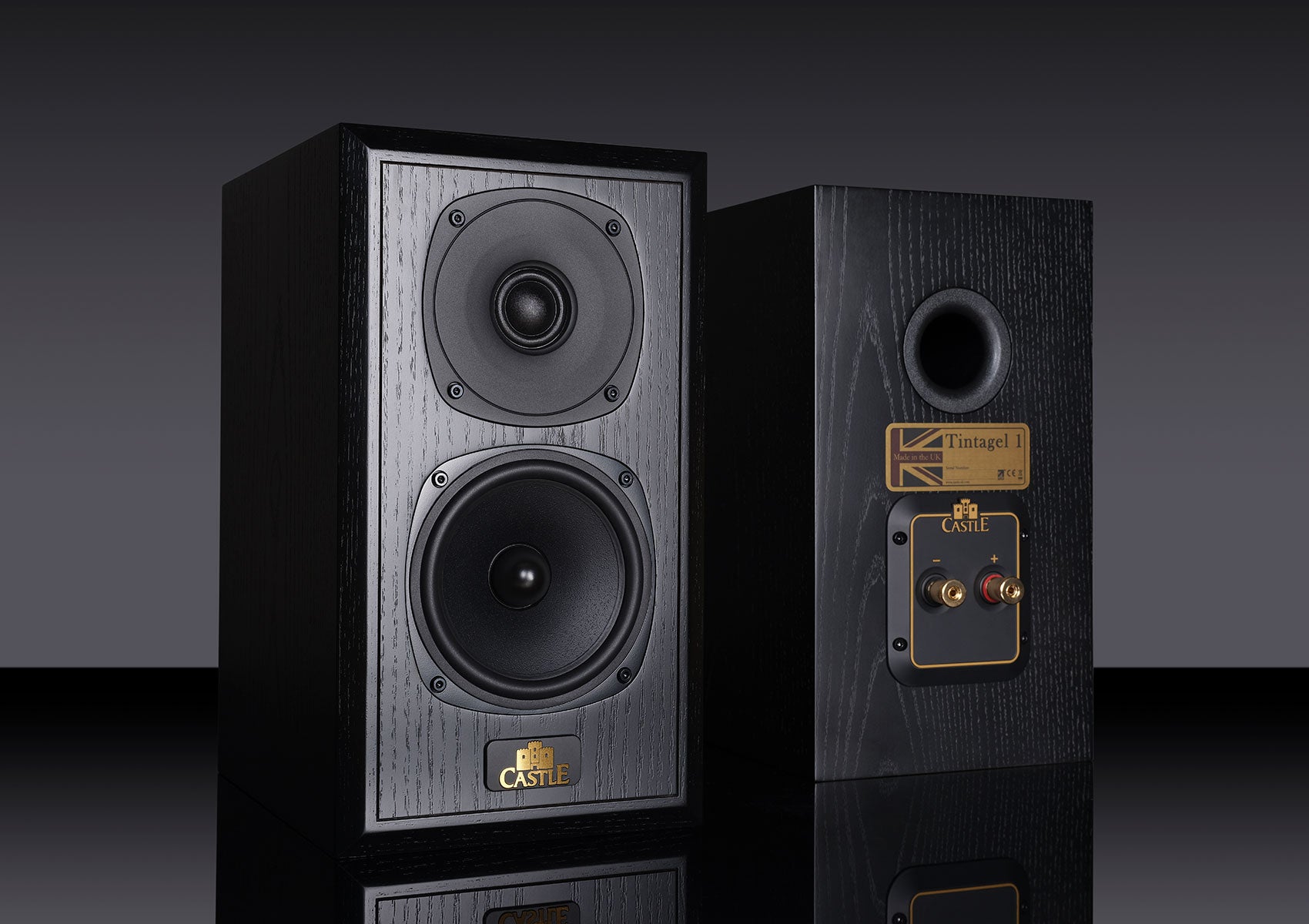
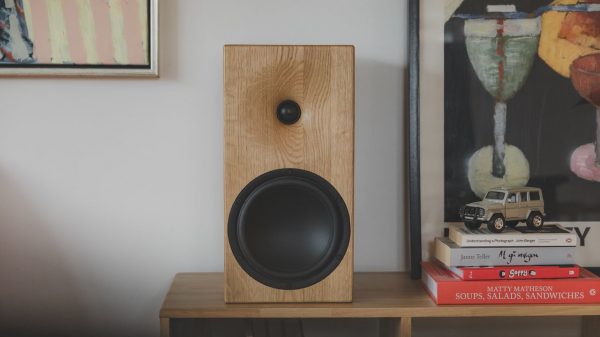
The Tintagel 1 ($2,749/pair) is a compact two-way standmount with a single 130mm bass/midrange driver and rear reflex port.
Its 86dB sensitivity is relatively modest, but its 8-ohm-compatible nominal impedance and 5.2-ohm minimum suggest that it should not be an especially hostile load for a decent integrated or streaming amplifier. Castle recommends between 30 and 100 watts.
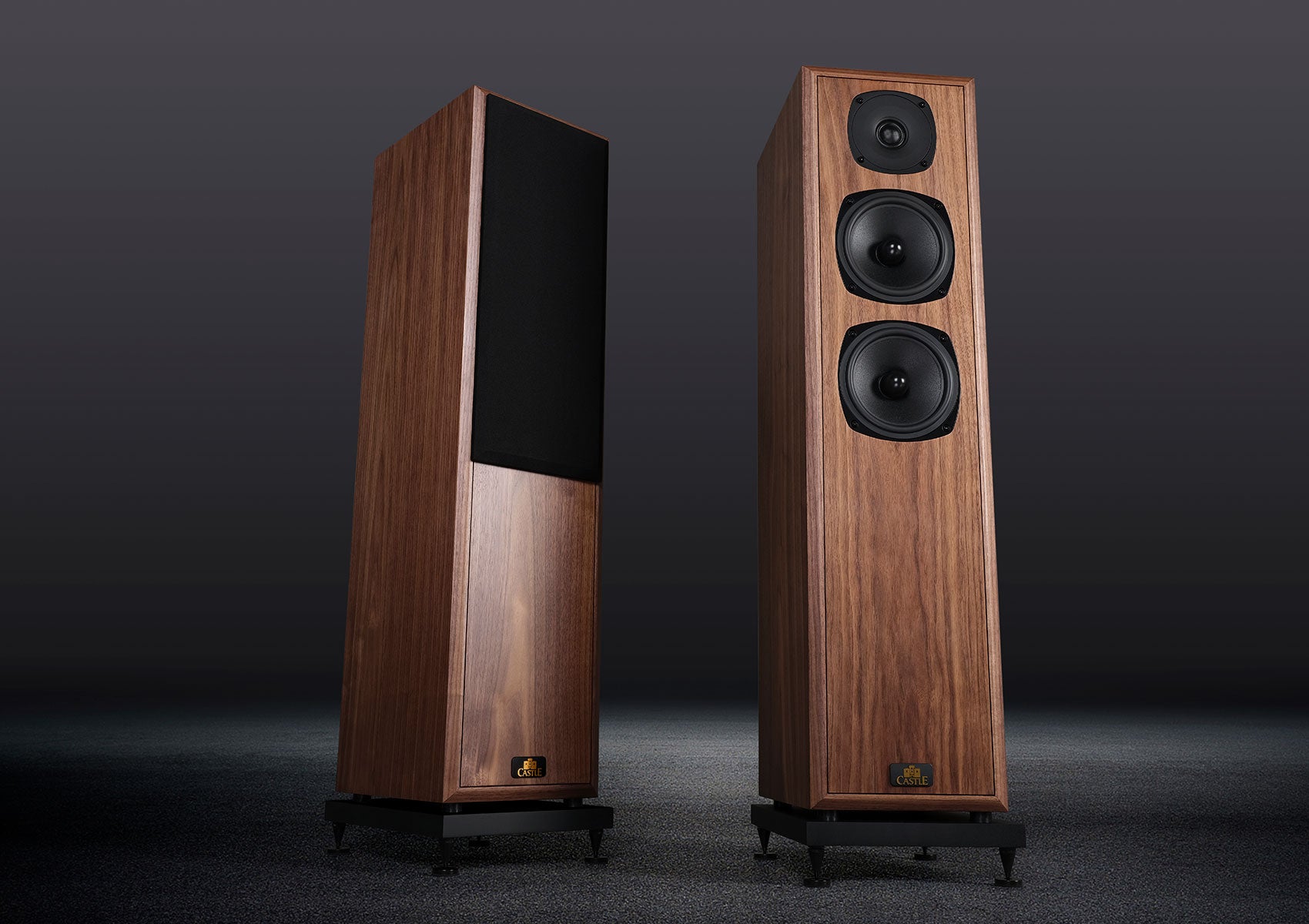
The Tintagel 2 ($3,999/pair) scales the concept into a floorstander with two 150mm advanced fibre drivers. Castle describes its architecture as 2.5-way, meaning the two drivers do not cover precisely the same frequency range, with the lower driver reinforcing the bass and lower midrange.
A downward-firing reflex port vents through the plinth rather than directly toward the rear wall, which should provide somewhat greater flexibility with placement. Sensitivity also increases to 89dB, while claimed bass extension reaches 38Hz at -6dB.
There is one small documentation oddity worth mentioning. Castle’s descriptive material repeatedly identifies Tintagel 2 as a 2.5-way loudspeaker, but the specification table on the same product page currently calls it a two-way design. Based on Castle’s own explanation of how the two 150mm drivers operate, 2.5-way is the more technically consistent description.
Castle Tintagel Specifications
| Specification | Tintagel 1 | Tintagel 2 |
|---|---|---|
| Price | $2,749/pair | $3,999/pair |
| Design | 2-way standmount | 2.5-way floorstander |
| Enclosure | Rear ported bass reflex | Downward ported bass reflex |
| Bass/Midrange | 1 x 130mm advanced fibre | 2 x 150mm advanced fibre |
| Tweeter | 28mm silk dome | 28mm silk dome |
| Sensitivity | 86dB | 89dB |
| Nominal Impedance | 8-ohm compatible | 8-ohm compatible |
| Minimum Impedance | 5.2 ohms | 5.4 ohms |
| Recommended Amplifier | 30–100W | 30–150W |
| Frequency Response | 55Hz–20kHz ±3dB | 44Hz–20kHz ±3dB |
| Bass Extension | 45Hz at -6dB | 38Hz at -6dB |
| Crossover | 2.2kHz | 2.5kHz |
| Dimensions | 13.6 x 7.6 x 10.9 in. | 39.2 x 9.8 x 13.2 in. |
| Weight | 16.1 lbs each | 46.3 lbs each |
| Finishes | Walnut, Black Oak | Walnut, Black Oak |
Castle Walmer Brings Out the Ribbons
The Walmer Series is where Castle starts moving further away from the familiar British loudspeaker recipe.
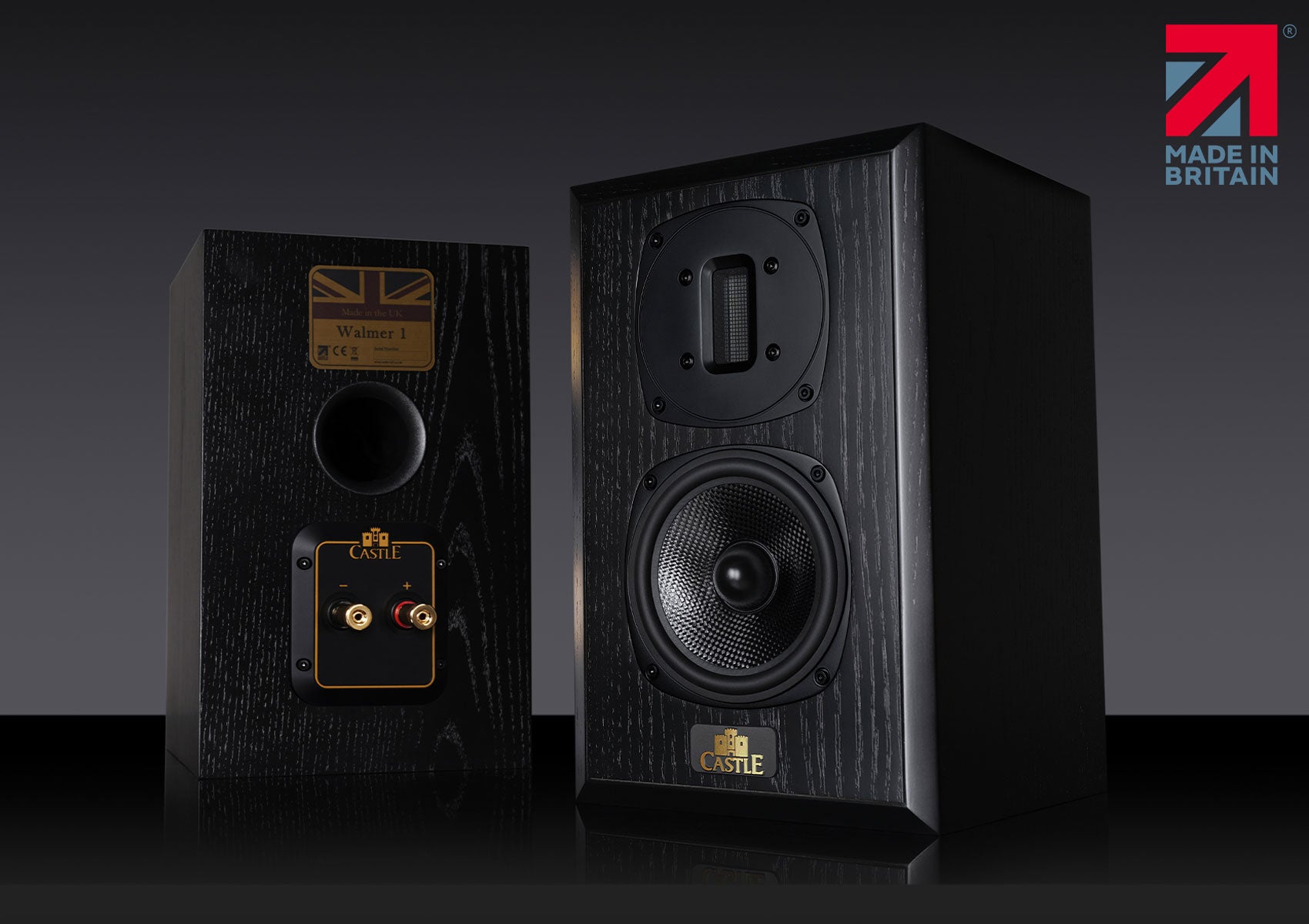
The Walmer 1 ($3,499/pair) remains a two-way standmount, but replaces Tintagel’s advanced fibre cone with a 130mm woven carbon fibre bass/midrange driver. More significantly, the silk dome disappears in favor of a 12 x 45mm true ribbon tweeter.
True ribbons use an extremely lightweight conductive diaphragm suspended within a magnetic field, allowing the diaphragm itself to reproduce the signal rather than attaching a separate voice coil to a dome or cone.
Castle says the low moving mass is intended to improve transient response and fine detail, while the ribbon’s wide horizontal dispersion should create a broader listening window. The carbon fibre driver provides a high stiffness-to-weight ratio intended to reduce cone flex while maintaining speed.
Neither technology is revolutionary on its own. What is less common at $3,499 is finding a true ribbon, carbon fibre bass/midrange driver, real wood cabinet and UK assembly in the same compact passive speaker.
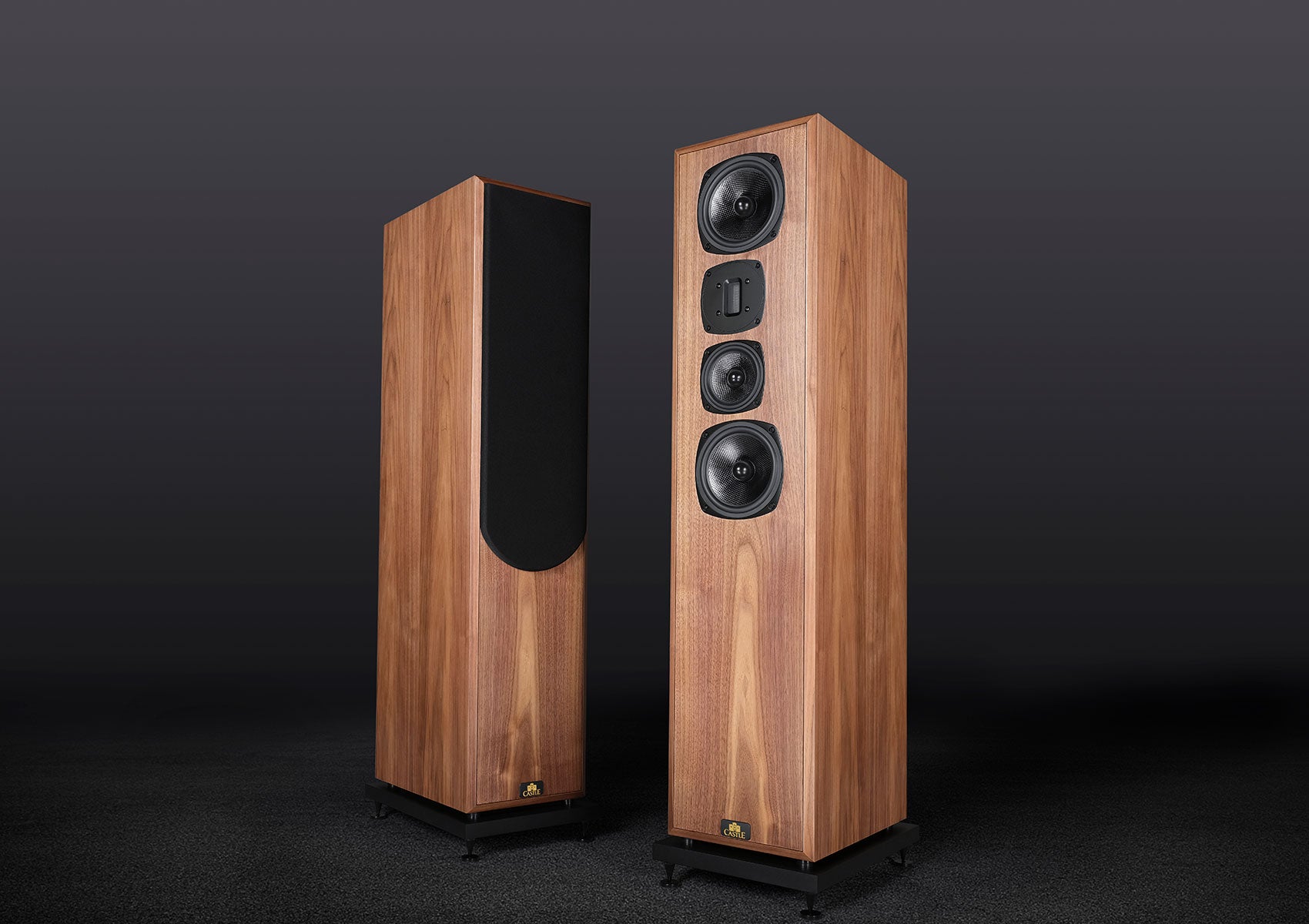
The Walmer 2 ($7,499/pair) takes a much larger step.
It is a three-way floorstander with two 150mm carbon fibre woofers, a dedicated 115mm carbon fibre midrange driver and the same true ribbon tweeter. The midrange operates inside its own internal enclosure to isolate it from pressure generated by the bass section.
Castle rates it at 89dB sensitivity with an 8-ohm-compatible nominal impedance, although its 3.4-ohm minimum means I would still pair it with an amplifier possessing a healthy power supply.
Bass extension is rated down to 32Hz at -6dB, which should make a subwoofer unnecessary for most two-channel systems unless subterranean bass is part of the job description.
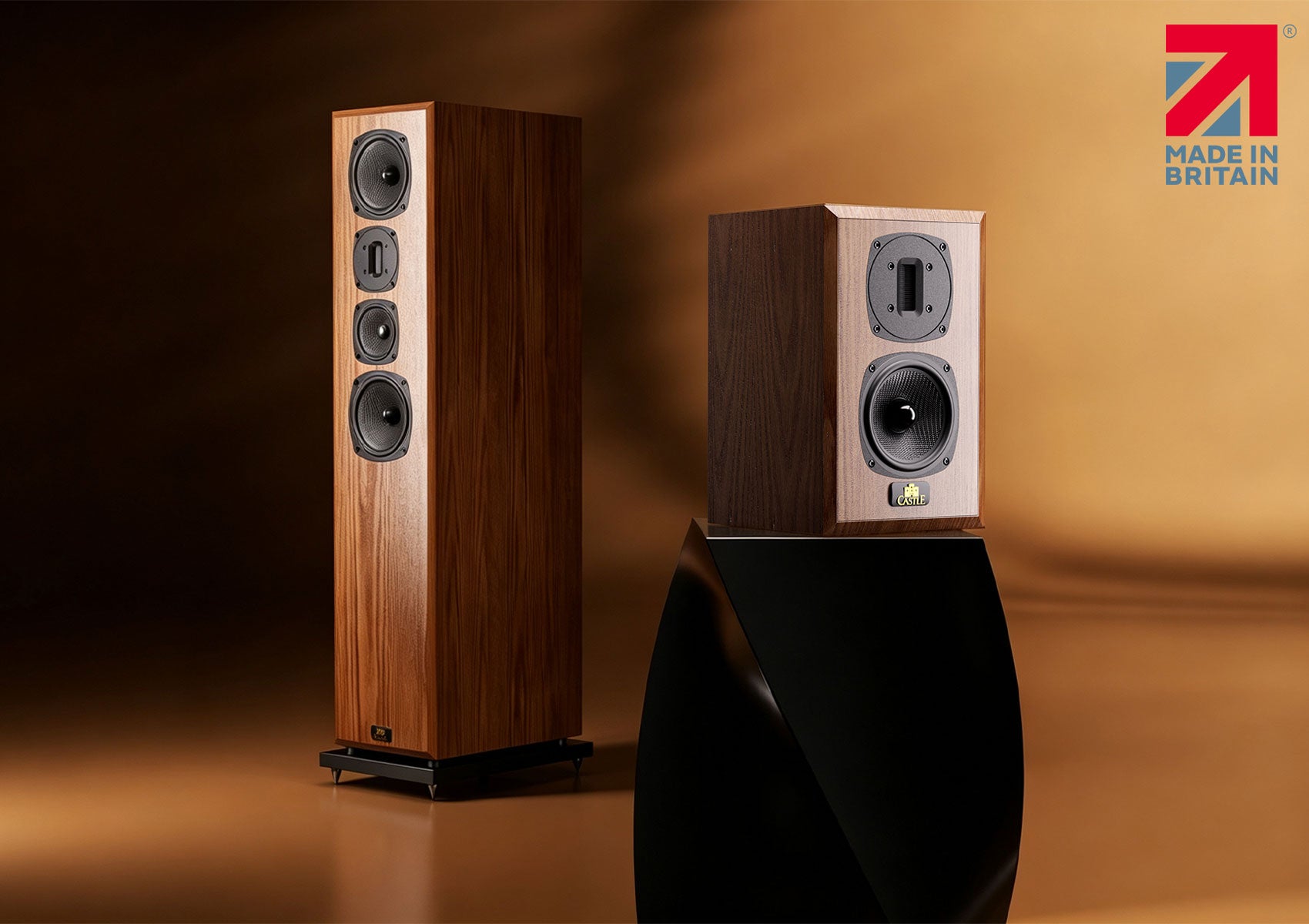
Castle Walmer Specifications
| Specification | Walmer 1 | Walmer 2 |
| Price | $3,499/pair | $7,499/pair |
| Design | 2-way standmount | 3-way floorstander |
| Enclosure | Bass reflex | Bass reflex* |
| Bass Drivers | 1 x 130mm carbon fibre | 2 x 150mm carbon fibre |
| Midrange | — | 1 x 115mm carbon fibre |
| Tweeter | 12 x 45mm true ribbon | 12 x 45mm true ribbon |
| Sensitivity | 86dB | 89dB |
| Nominal Impedance | 8-ohm compatible | 8-ohm compatible |
| Minimum Impedance | 4.3 ohms | 3.4 ohms |
| Recommended Amplifier | 25–100W | 25–150W |
| Frequency Response | 55Hz–20kHz ±3dB | 38Hz–20kHz ±3dB |
| Bass Extension | 48Hz at -6dB | 32Hz at -6dB |
| Crossover | 2.8kHz | 350Hz / 3.5kHz |
| Dimensions | 13.1 x 8.3 x 9.8 in. | 46.1 x 9.8 x 15.7 in. |
| Weight | 16.5 lbs each | 68.3 lbs each |
| Finishes | Walnut, Black Oak | Walnut, Black Oak |
*Castle’s current Walmer 2 specifications are inconsistent. The product table lists the enclosure as Bass Reflex, while other launch material describes a Mass Loaded Transmission Line design, and the product page also includes misplaced Tintagel 2 porting copy. Until Castle clarifies the final specification, we would treat the enclosure design as unconfirmed.
What Makes These Castle Speakers Different?
The interesting part is not that Castle discovered silk dome tweeters, carbon fibre or ribbon technology. Plenty of competitors already use some combination of those technologies.
It is the way Castle has divided the range.
Tintagel is intentionally conventional. The designs emphasize benign electrical loads, relatively straightforward placement and familiar driver technology in furniture-grade cabinets. Someone running a Naim, Rega, Audiolab, NAD, Cambridge Audio or similar integrated amplifier should not need to rebuild the rest of the system around the speakers.
Walmer is the technical counterpoint. The carbon fibre drivers and true ribbon tweeters move Castle into a part of the market where speed, resolution and dispersion become bigger selling points, while Walmer 2 adds a dedicated midrange and substantially deeper bass.
That gives the two ranges a reason to coexist rather than making Walmer look like Tintagel with a larger price tag.
There is also some genuine history behind Castle’s bass engineering. The company introduced its quarter-wave tapered-pipe Winchester in 1990 and later developed its Twin Drive Transmission Line technology for the Avon Series. If the Walmer 2 ultimately proves to use a related transmission line system, it would represent an evolution of something Castle has been pursuing for decades rather than an engineering fashion imported for 2026.
Who Are the Castle Tintagel and Walmer Speakers For?
The Tintagel 1 is aimed at listeners with small to medium-sized rooms who value traditional passive hi-fi, real wood construction and relatively easy amplifier matching. At $2,749, however, nostalgia and cabinetry alone will not be enough.
The Tintagel 2 may be the most broadly appealing model of the four. Its $3,999 price puts it into a fiercely competitive floorstander category, but 89dB sensitivity, a manageable impedance load and claimed 38Hz bass extension make it an easier system proposition than many more exotic designs.
The Walmer 1 is the more interesting standmount for listeners who specifically want a true ribbon presentation without moving into substantially more expensive specialty brands. Its compact size should also make it practical in rooms where larger monitors become visually intrusive.
The Walmer 2 is clearly aimed at serious two-channel systems. Its $7,499 price puts it against some extremely accomplished European loudspeakers, which means Castle will need to demonstrate that the ribbon and carbon fibre architecture delivers more than an attractive specification sheet.
Castle Has Some Serious Competition
Castle Tintagel 1 — $2,749/pair
The MoFi SourcePoint 8 at $2,195/pair is two-way standmount designed by Andrew Jones that uses an 8-inch concentric driver and takes a very different engineering approach from Castle’s ribbon-based design.
The KEF R3 Meta at $2,499.99/pair offers a 3-way architecture using KEF’s Uni-Q driver array with Metamaterial Absorption Technology, giving buyers a technically sophisticated alternative at almost the same price.
Castle Walmer 1 — $3,499/pair
The Bowers & Wilkins 705 S3 at $3,800/pair brings its Continuum mid/bass driver and Carbon Dome Tweeter-on-Top, while Castle counters with a true ribbon tweeter and UK-made real wood cabinetry.
The MoFi SourcePoint 10 is currently $2,999/pair, down from its original $3,699 price. Its massive 10-inch concentric driver, high sensitivity, and large cabinet make it an unusually muscular standmount and a very different proposition from the Walmer 1.
Castle Tintagel 2 — $3,999/pair
The Monitor Audio Silver 500 7G at $3,749/pair is a 3-way floorstander with twin 8-inch bass drivers, a dedicated 3-inch midrange, and Monitor Audio’s C-CAM Gold Dome tweeter.
The Bowers & Wilkins 704 S3 at $4,500/pair is a slim 3-way tower with twin 5-inch Aerofoil bass drivers, a Continuum FST midrange, and Carbon Dome tweeter, giving buyers another established British option without moving dramatically beyond the Tintagel 2’s budget.
Castle Walmer 2 — $7,499/pair
The Bowers & Wilkins 702 S3 at $7,900/pair brings its combination of three Aerofoil bass drivers, dedicated Continuum FST midrange, and Tweeter-on-Top design, which gives Castle a very well-established opponent at almost exactly the same price.
The KEF R11 Meta at $6,999/pair features four 6.5-inch bass drivers surrounding KEF’s 12th-generation Uni-Q array with MAT.
Castle therefore does not have an easy path at any of these price points. Its argument rests on the things that genuinely separate the new models from these established alternatives: true ribbon tweeters, transmission-line loading on the floorstanders, real wood cabinetry, UK manufacturing on the Walmer models, and a deliberately traditional approach to loudspeaker design.
There is also an amusing complication within Castle’s own corporate family.
Castle and Wharfedale are both IAG brands, which means models such as the AURA 2 and AURA 3 are legitimate competitors despite residing under the same corporate roof. Castle itself was founded in 1973 by six former Wharfedale engineers, so the family squabble has considerably more history than most.
Apparently Thanksgiving dinner was getting too peaceful.
The Bottom Line
The Castle Tintagel and Walmer Series make the brand’s UK manufacturing comeback feel far more complete.
Tintagel is the more traditional choice, with conventional driver technology, practical amplifier requirements and Castle’s familiar emphasis on cabinetry. Walmer is the more ambitious line, adding true ribbon tweeters, carbon fibre drivers and, in the Walmer 2, a three-way design aimed at more serious systems.
Price & Availability
The Castle Tintagel and Walmer Series are scheduled to become available beginning in September 2026 in Walnut and Black Oak real wood veneers.
- Castle Tintagel 1: $2,749 / £1,999 / AU$3,749 per pair
- Castle Tintagel 2: $3,999 / £2,999 / AU$5,499 per pair
- Castle Walmer 1: $3,499 / £2,499 / AU$4,748 per pair
- Castle Walmer 2: $7,499 / £4,999 / AU$10,499 per pair
For more information: castle.uk.com
Related Reading:
- The Duke of Earl? Castle’s Windsor Series Loudspeakers Will Be Made In the UK
- Wharfedale Super Denton Review: The British Bulldog of Standmount Speakers
- Wharfedale Elysian R Series Debuts: Flagship Speakers Get AMT Upgrades, New Finishes, and Deeper Bass
- Wharfedale Denton 1S Bookshelf Speakers: Heritage Hi-Fi Gets a Coaxial Rebirth for $999







Pete Mitchell
October 1, 2026 at 12:37 pm
How do you think these compare to the new Quad and Wharfedale which I believe are made in the same factory?
IAG makes a lot of speakers right now. At least 5 different brands.
Ian White
October 1, 2026 at 8:55 pm
Maverick,
I have not heard them so I can’t comment but I suspect there will be some crossover.
IW