Wharfedale has been mining its Heritage Series with unusual success, but the new Denton 1S is not another sepia tinted tribute act in walnut drag. Priced at $999 per pair, the compact bookshelf loudspeaker takes the Denton name in a very different direction with a clean sheet coaxial point source driver architecture, designed to deliver better coherence, tighter imaging, and a more unified presentation from a small cabinet.
That matters because the Denton story has always been about value, scale, and getting real hi-fi sound into rooms that do not require massive levels of power to come alive. The original Denton dates back to 1967, while the Denton 1 arrived in 1974, and Wharfedale is clearly leaning into that history without being trapped by it. Under the direction of Peter Comeau, the Denton 1S joins the Linton, Super Linton, Super Denton, Aston, and new Heritage Centre as part of a growing lineup that proves British heritage hi-fi does not have to look like it was rescued from a damp Cotswolds library.
The big question is whether the Denton 1S can turn its coaxial makeover into something more than a clever engineering headline. At $999, this is not entry level background music furniture. It is aimed at listeners who want a compact loudspeaker with proper timing, focused imaging, and a more balanced tonal approach than the size suggests.
It should also be easy to drive with a wide range of network amplifiers or integrated amplifiers, making it a smart fit for anyone building a serious system under $2,500.
Rebirth of the coaxial? Maybe. But Wharfedale seems more interested in giving the Denton name a proper modern spine than dressing it up for another lap at Downton Abbey.
Coaxial Done Properly
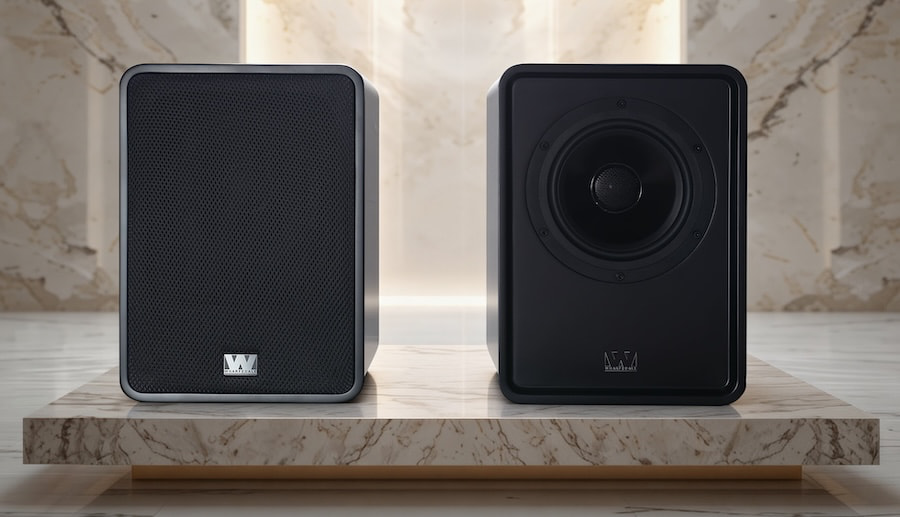
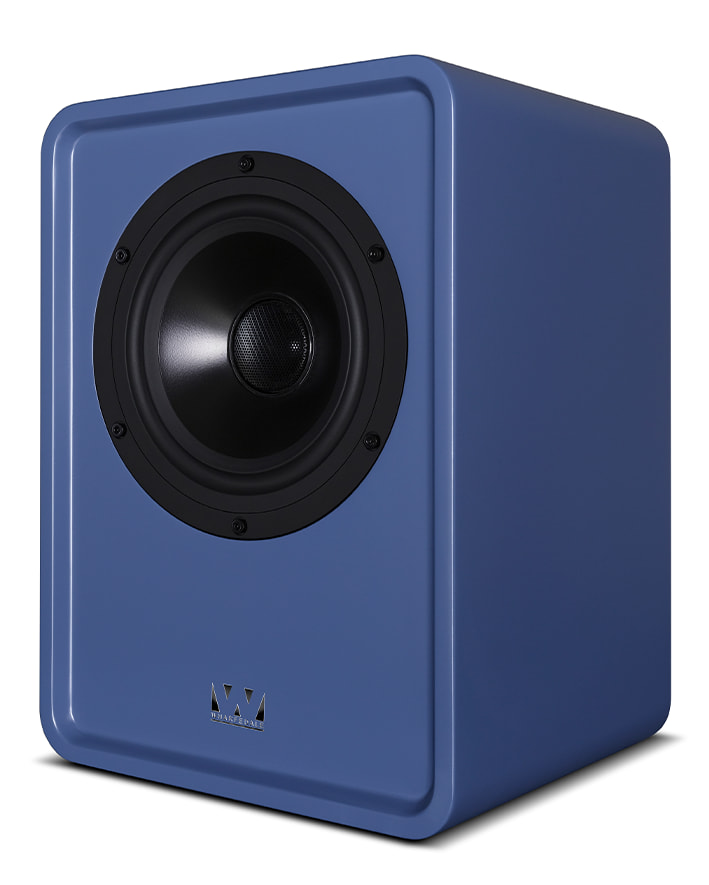
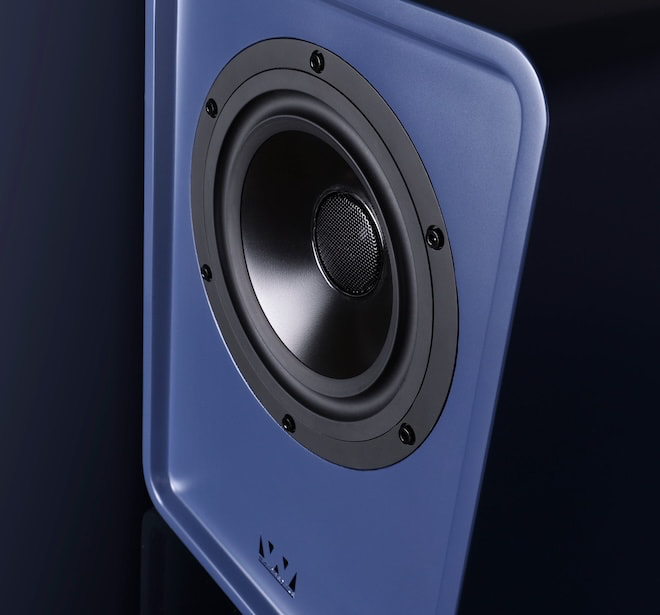
At the center of the Denton 1S is a new coaxial driver array that places a 25mm silk dome tweeter inside a 165mm mid/bass cone. The goal is simple: make both drivers behave more like a single acoustic source instead of two separate elements arguing over the same piece of music.
That matters because a properly executed coaxial design can improve timing, phase behavior, and image stability, especially in smaller rooms where listeners are not always locked into the perfect center seat like they are defending a throne. By radiating from the same acoustic center, the Denton 1S is designed to deliver a more consistent tonal balance across a wider listening area, with imaging that should remain stable both on and off axis — which is likely to be important for those who may decide to mount these to the wall.
The layout also gives Wharfedale some practical design advantages. With the tweeter mounted concentrically within the mid/bass driver, the front baffle remains cleaner and less interrupted, allowing for a more compact cabinet and potentially improved rigidity. It also helps the Denton 1S look more modern and purposeful than the usual retro box with a nice veneer and a charming backstory.
Built for Real Rooms
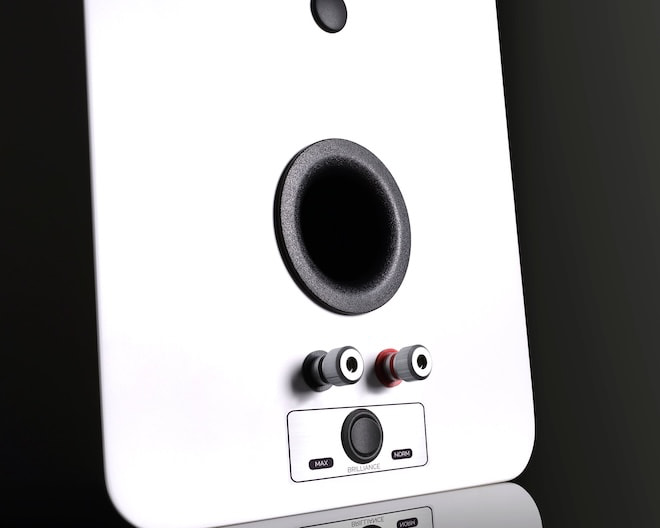
The Denton 1S is designed for homes where speakers have to live in the room, not dominate it. Wharfedale includes a discreet rear 3/8 inch mounting point for wall installation, giving owners more flexibility than the usual stand or shelf placement routine. A rear-panel Brilliance EQ switch also provides a small tonal adjustment for free-space or near-wall positioning, which is useful when the room starts making decisions for you. Rooms do that. Usually badly.
Placement options include stands, shelves, or wall mounting, making the Denton 1S a more adaptable Heritage Series model than some of Wharfedale’s larger designs. The cabinet also moves away from the traditional hardwood look, with smooth curves, a painted finish, and a cleaner silhouette that feels more contemporary without pretending the past never happened.
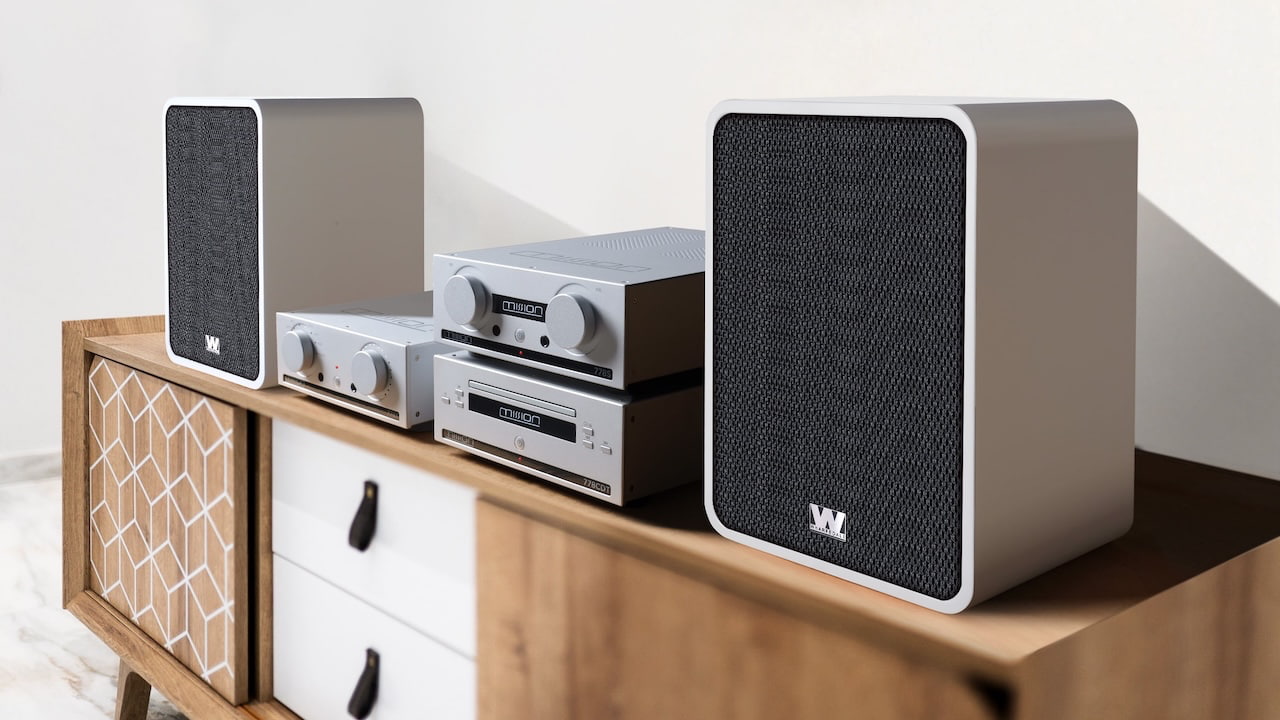
Wharfedale still keeps the heritage cues in place. The cloth grille and silver retro badging connect the Denton 1S to the company’s classic British hi-fi identity, but the execution is less country house and more modern apartment. Cabinet construction includes multi-layer panels, internal bracing, and controlled damping to reduce unwanted resonance, which matters far more than another paragraph about “timeless elegance.”
The Denton 1S will be available in matte black, matte white, and a new matte blue finish. That gives it a broader lifestyle appeal without turning it into furniture masquerading as hi-fi. It still looks like a proper loudspeaker. Just one that understands not everyone wants their living room to look like a 1978 dealer showroom.
Denton 1S Specifications:
Sensitivity is rated at 88dB, with a nominal impedance of 8 ohms and a minimum impedance of 4.5 ohms. Wharfedale recommends amplifier power between 30 and 100 watts, which should make the Denton 1S a realistic match for a wide range of integrated amplifiers, AVRs, and compact streaming amps. Peak SPL is rated at 95dB, so this is still a compact loudspeaker, not a PA system in polite clothing.
Frequency response is listed at 50Hz to 20kHz, plus or minus 3dB, with bass extension down to 45Hz at minus 6dB. That is respectable for a cabinet with an 11.5 liter internal volume, but anyone expecting true full range bass from a speaker this size needs a brisk walk and possibly a subwoofer.
The crossover frequency is 3.1kHz, and the cabinet measures 13.0 inches high, 9.29 inches wide, and 10.04 inches deep. Each speaker weighs 15 pounds and includes a rear panel 3/8 inch thread for wall mounting.
The Bottom Line
The Wharfedale Denton 1S is not just a smaller Super Denton or another Heritage Series box with nicer clothes. Its clean sheet coaxial point source driver is the big difference, giving it a more focused technical identity than the rest of the range.
The Linton, Super Linton, Super Denton, Aston, and Heritage Center lean into Wharfedale’s vintage inspired formula, but the Denton 1S feels like a compact modern rethink. Smaller cabinet, wall mounting, Brilliance EQ adjustment, matte finishes, and coaxial driver geometry all point to a speaker designed for tighter rooms, cleaner installs, and more precise imaging.
At $999 per pair, it is for listeners who want British loudspeaker DNA without the full retro furniture routine. Stand mount it, shelf mount it, or put it on the wall. That flexibility makes it especially useful for apartments, offices, secondary systems, or living rooms where a Linton is simply too large.
Amplifier matching should be easy on paper. With 88dB sensitivity, 8 ohm nominal impedance, a 4.5 ohm minimum, and a 30 to 100 watt recommendation, the Denton 1S should work well with Leak, Rega, Audiolab, Cambridge Audio, and Quad integrated amplifiers. The Leak Stereo 230, Rega Brio or Elex, Audiolab 6000A or 7000A, and Cambridge Audio CXA series all make sense.
If the Denton 1S proves more neutral than the Super Denton, the Quad 3 could be the under the radar pairing. A little warmth and texture from Quad, plus the Denton 1S’s coaxial focus, might be a very clever match. The kind of small system that walks in quietly and starts making bigger boxes nervous.
Where to buy: $999 at Crutchfield | Wharfedale USA
Related Reading:
- Steve Cropper, FiiO Air Link, Wharfedale Diamond 12.3 & Other War Stories — An Editor’s Round-Up From A Hospital Bed
- The Head-Fi Bubble, Aavik Goes Nuclear, McMurphy Still Dies, And Wharfedale’s Super Denton Redemption: Editor’s Round-Up
- Wharfedale’s Aston Heritage Loudspeakers Will Be Limited To Only 500 Pairs?
- Wharfedale’s Super Linton Loudspeakers Still Evoke That Vintage Vibe But A Lot Has Changed Under The Hood: Preview