
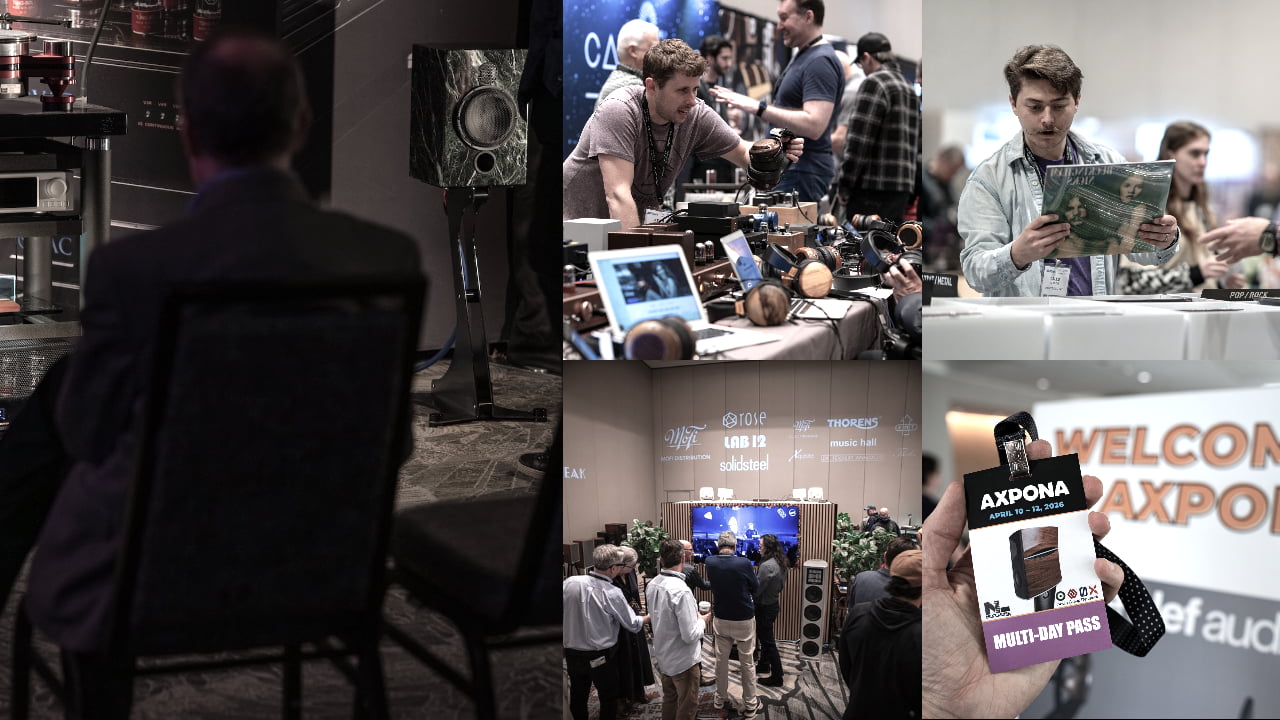
AXPONA 2026 is finally in the books, and if you’ve never tried to cover a show like this, imagine logging miles inside a hotel chasing sound, running on bad coffee and less sleep, and pretending your ears and brain are still on speaking terms by hour twelve. Chicago couldn’t decide what season it was: cold, rain, wind, then a sudden heat swing for no good reason, and now I’m back home on the Jersey Shore, a few blocks from the ocean, wearing Magnum P.I. short shorts, a Buck Mason T-shirt, and a Detroit Tigers hat, trying to decompress and remember what silence sounds like. The show may be over, but the real work, sorting through what mattered and what was just expensive, is just getting started.
Three days. Gone in a blink. Twenty percent of the rooms if I’m being honest, and that’s with moving like I had somewhere better to be. Some exhibitors handed over the remote and let you have a moment with the system. Others guarded it like it might reveal something they’d rather keep hidden. Same pitch either way. Different flavors, same bill at the end. You listen, you nod, you try to stay present, even when it starts to blur together and you long to be somewhere else with her head on your chest and Chet playing softly in the background.
Then I got home and put on a film that quietly exposes how far off the rails modern storytelling has drifted.
The Americanization of Emily didn’t just age well. It lands like a slap. Sharp, uncomfortable, and completely uninterested in flattering its audience. It reminds you that Hollywood once trusted people to think, not just consume. Watching it now, in 2026, makes a lot of what passes for content feel hollow, manufactured, and engineered for people who stopped asking questions somewhere around the third sequel.
AXPONA 2026: The Good, the Bad, and the Truth About High-End Audio

AXPONA 2026 didn’t just break records. It felt like it was about to break the building.
By the time I rolled into the Renaissance Schaumburg Convention Center on Thursday; almost 18 hours before the show officially opened, it was already obvious this wasn’t going to be a normal year. The lobby had that low hum you only get when something big is about to happen. Industry people moving with purpose. Members of the press already circling like vultures for the free food and booze at the opening night mixer. By Friday morning, it wasn’t a question anymore. The place was packed. Not inflated press release packed. Actually packed. Hallways clogged, listening rooms full, elevators a gamble every single time.
The numbers back it up. 12,546 attendees. Up 15% year over year. A 52% jump in Gen Z passes. You could feel that shift in the rooms. Younger crowd. More diverse. Less interested in polite audiophile nodding and more interested in whether something actually sounded good. That kind of energy changes a show.
In 28 plus years of doing this around the world, I’ve seen shows that looked impressive on paper fall apart the second the doors opened. That didn’t happen here. AXPONA 2026 was extraordinarily well run. Everything moved. Everything worked. Minus the elevators unless you started at 6 in the morning.
235 listening rooms across 12 floors, 750 brands, a packed Ear Gear Experience, a record fair that never really slowed down. It should have been chaos. It wasn’t.
Schaumburg isn’t winning any tourism awards anytime soon, but for this? It’s perfect. The Renaissance can actually handle the scale without collapsing under it. You get space, flow, and just enough separation to make the madness manageable.
And here’s the part that puts it in perspective. We had six people on the ground. Three focused on video. One on podcasts, and we still managed to record ten. The rest of us moving room to room trying to keep up. And it still wasn’t enough. We barely scratched the surface. There’s no clean way to cover a show this size in three days. You miss things. A lot of things. Another day or two would have helped.
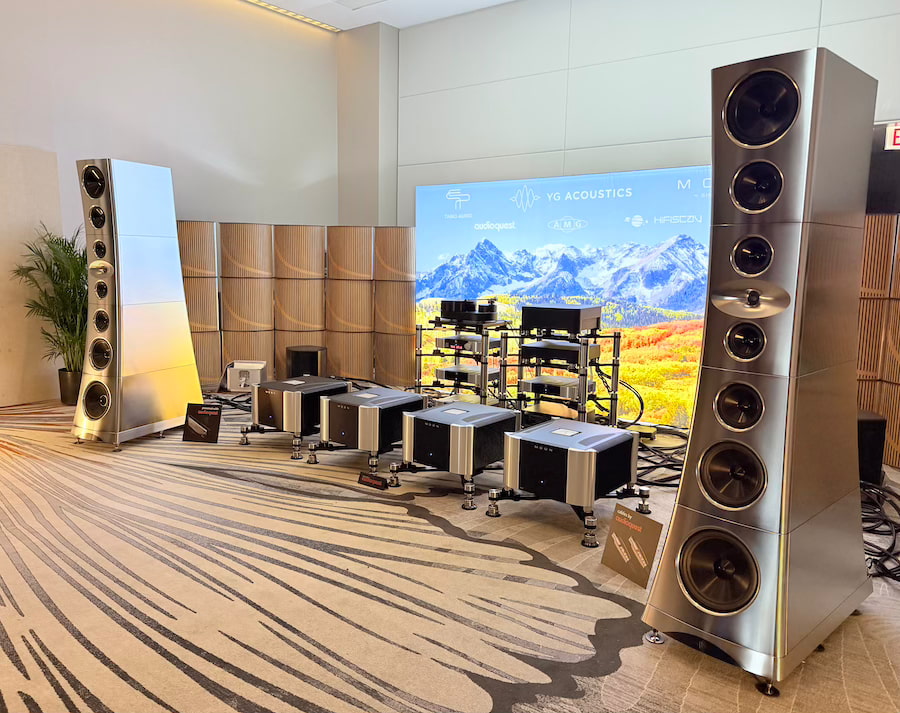
Distributors like Playback Distribution, Fidelity Imports, Harmonia, and MoFi Distribution had a strong presence across multiple floors. Plenty of new products, steady traffic, and rooms that stayed busy. If tariffs are having an impact, it wasn’t obvious from the show floor. I even heard someone bought the multi-million dollar YG Acoustics system at the end of the show.
Come again?
Here’s where the narrative needs a reality check. As a former Chicagoan, I know this market better than most fly-in takes ever will. Chicago has a strong upper middle class and affluent African American community, and you see that in the suburbs and at a show like this. I had some great conversations with locals about the industry, Chicago sports, and my completely questionable loyalty to The Wieners Circle. The audience isn’t as one dimensional as some might expect, and that matters.
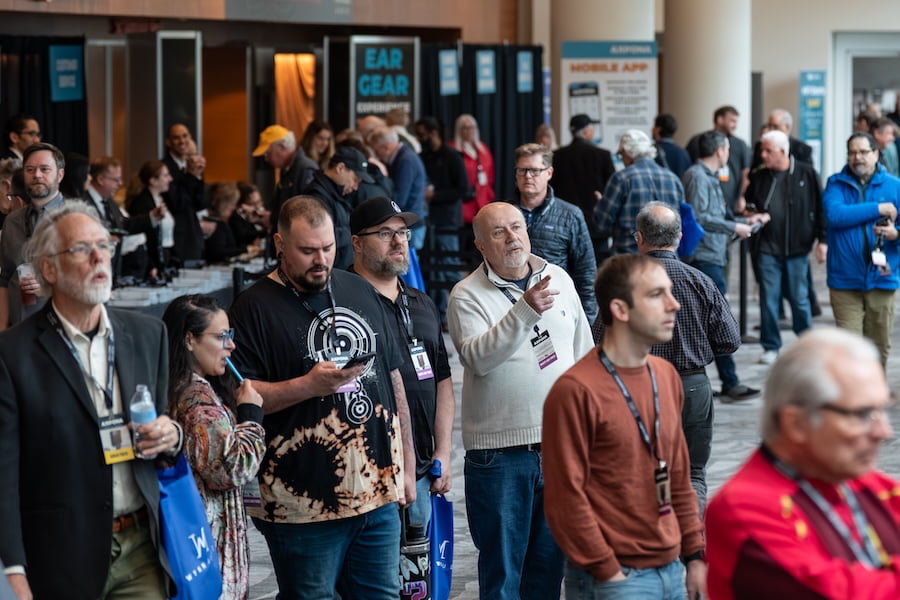
But let’s not kid ourselves about what the room actually looked like. There were a lot of older, white hair audiophiles walking those halls. The guys who built this hobby and have been funding it for decades. The obvious question is who replaces them. Because that pipeline isn’t exactly obvious.
And while we’re at it, the gender gap hasn’t magically fixed itself. I didn’t see many women. Certainly not many younger women. You can talk about growth and fresh energy all you want, but if half the population still feels like a guest at the party, that’s not a small problem.
Then there’s the price of admission. I lost track of how many six figure, mid-six figure, and even million dollar systems were on display. At some point, that stops being inspiring and starts feeling disconnected from reality. There’s a difference between showing what’s possible and building something sustainable. Right now, it leans a little too hard in one direction.
Overall, one of the best hi-fi shows I’ve been to. Not flawless, but it got a lot more right than wrong, which isn’t something I say lightly. You can follow our coverage here. We’ll be back for AXPONA 2027, probably still trying to catch up.
Record Store Day 2026: Scarcity, Hype, and Killing the Golden Goose
Record Store Day 2026 lands this weekend across the globe, and for the first time in seven years, I’m sitting it out. That’s not a casual decision. We’ve supported this event for years with coverage and with our wallets, but something doesn’t feel right anymore.
On paper, everything looks great. 2025 cleared over $1 billion in new record sales in the United States and Canada. Vinyl has carved out a real share of the market again. Labels are happy. Pressing plants are busy. Indie artists are getting a piece. Turntable manufacturers and cartridge brands like Denon, Audio-Technica, Grado Labs, Ortofon, and Sumiko have more reasons than ever to celebrate. If you stop there, it sounds like a success story.
But talk to the people actually running the stores.
I spoke to 8 independent record dealers, all of them long time participants. The story changes fast. Yes, they love the traffic. Yes, the visibility matters. But behind the scenes, it’s a different conversation. Upfront costs keep climbing. They’re forced to buy titles they don’t necessarily want, in quantities that don’t always make sense, hoping enough of it moves before it turns into expensive shelf filler.
And a lot of it doesn’t move. Walk into enough shops and you’ll see stacks from previous years still there, quietly tying up cash. My local record stores in Red Bank and Princeton still have bins filled with titles from the past two years, sitting there with a nice layer of dust like nobody wants to admit they exist.
And can we finally have an honest conversation about pressing quality. Mark Smotroff’s RSD 2026 preview gets into it, and while it is a small sample size and this year might as well be Zev Feldman Day with the number of releases, the early signs are not exactly comforting. When a highly anticipated Bill Evans release shows up and sounds like a sonic dud, that is not a small miss. That is the kind of thing that should make people stop and ask what exactly they are paying for.
There’s also pressure. Real pressure. Opting out is not a simple business decision when you rely on access and relationships to stay relevant. Nobody says it loudly, but the concern is there. The system works until it doesn’t, and right now some of the people inside it are starting to question how long that balance holds.
Record Store Day still brings people through the door and creates moments that matter for independent retailers. The lines of people waiting patiently in the dark so they can flip the most popular titles on Discogs are real. But talk to the people behind the counter and you start to hear a different tone beneath it. Killing the golden goose doesn’t happen all at once. It’s slower than that, one disillusioned indie record store at a time
When Hollywood Used to Be Better
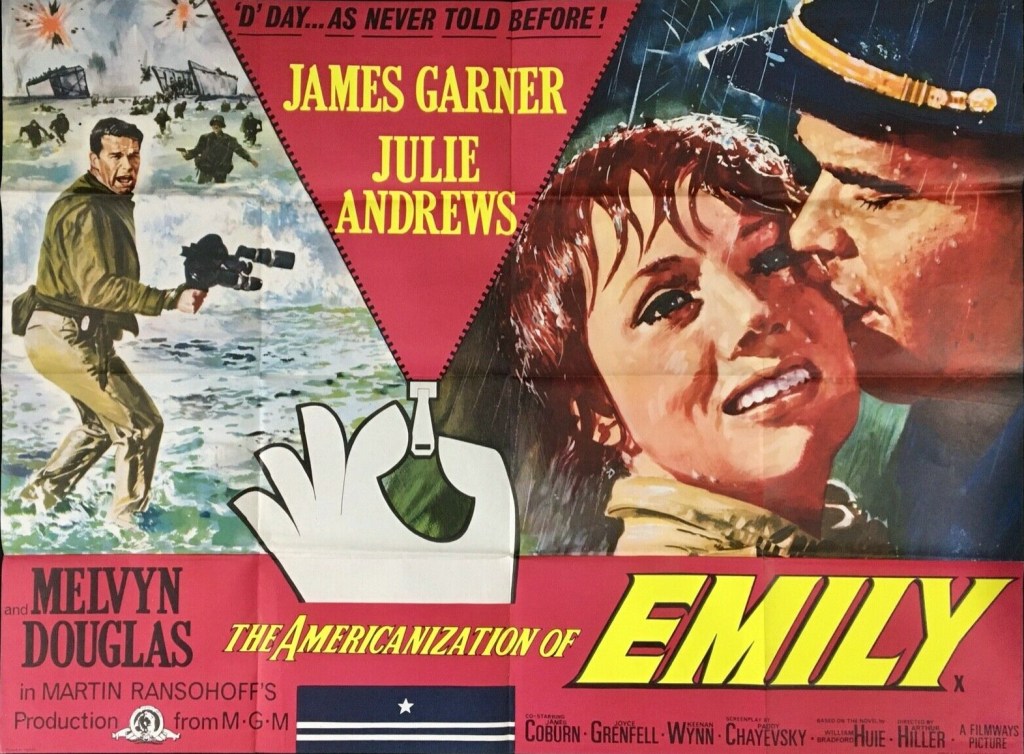
The Americanization of Emily is one of those films that feels a little too honest for its own good. Released in 1964, directed by Arthur Hiller and written by Paddy Chayefsky, it arrived before Julie Andrews was twirling across the Alps and just after James Garner had tried and failed to outrun the Nazis in The Great Escape. On the surface, it’s a black and white wartime story about a Navy adjutant being pushed into a grotesque publicity stunt to become the first American killed on D-Day. In reality, it’s something far more uncomfortable: a dismantling of how war is packaged, sold, and consumed.
Chayefsky would go on to write Network and take a flamethrower to media and corporate control, but the blueprint is already here. The Americanization of Emily doesn’t just question war. It questions the machinery around it. The messaging. The narratives. The need to turn chaos into something clean, heroic, and easy to digest. And buried inside all of that is a love story that actually hurts, because it refuses to lie about what’s at stake.
The Americanization of Emily doesn’t waste time pretending war makes people noble. It starts with U.S. Navy Lieutenant Commander Charlie Madison, played by Garner, a cynical operator whose entire job is keeping his admiral comfortable in London while the world burns. He’s efficient, shameless, and very good at it. Then he meets Emily Barham, played by Julie Andrews, who has already lost her husband, brother, and father to the war and has zero interest in being charmed by another American with a talent for survival.
Naturally, she falls for him anyway. Not because he’s heroic, but because he isn’t. Charlie just wants to stay alive, and in a world obsessed with sacrifice, that honesty cuts through. Andrews and Garner play it straight. The film doesn’t need to show everything to make the point, especially when it comes to the relationship. You get just enough to understand it, and that restraint is why it works. It’s not some glossy wartime fantasy where everyone ends up half dressed and spiritually fulfilled. This film knows desire is a lot more complicated when death is sitting in the next room.
That comes down to Chayefsky. The dialogue resonates because it sounds like real people trying to make sense of something they can’t control. The pain isn’t exaggerated. It’s just there. Hollywood used to trust that.
Then the film turns the knife. Admiral Jessup, played by Melvyn Douglas, decides the Navy needs a win on D-Day. Not a strategic one. A symbolic one. He wants the first American killed on Omaha Beach to be a sailor, captured on film, packaged for headlines, and sold back home as proof of relevance. Charlie gets handed the assignment he’s been avoiding his entire life. He ends up on the beach, gets shot, and through a mix of bad luck and worse decisions becomes the “first man on Omaha Beach,” a ready made war hero built on a lie.
Except he isn’t dead. He turns up alive, limping, angry, and fully aware of how absurd the whole thing is. Jessup moves from guilt to opportunity without missing a step and decides Charlie is more useful breathing. Now he’s not just the first man on Omaha Beach. He’s a story that can be reused.
And that’s the point. The image matters more than the truth. The story matters more than the man.
The Americanization of Emily doesn’t let you off the hook. It leaves you sitting with it. Love in the middle of war. Survival that looks like cowardice. Truth that gets buried because the lie is easier to live with. Nobody walks away clean. Not Charlie. Not Emily. Not the people who needed the story to be something else.
And maybe that’s what hits hardest now. The film understands that the lie isn’t always forced on us. Sometimes we choose it. Because it’s simpler. Because it hurts less. Because the truth asks something we’re not sure we can give.
Hollywood used to make films that trusted you to carry that weight. No apology. Just the quiet understanding that some stories aren’t meant to make you feel good. They’re meant to stay with you.
Related Reading:
- Opening Day 2026, Eyes Wide Shut, Sennheiser’s Uncertain Future, And Kaleidescape At 25: Editor’s Round-Up
- AXPONA Storms Chicago, Spotify Still Chasing Lossless, Moses Returns For Passover, And A Brief Encounter: Editor’s Round-Up
- CanJam NYC 2026 & The Rebirth Of Physical Media: Editor’s Round-Up
- Network 4K UHD Review: Mad As Hell And Still Watching


















Kevin
April 19, 2026 at 10:20 pm
Ian-
I could not make Axpona. Thank you for your insight into the experience. I did see a video of Cambridge equipment in all black at that show which I think looks much better than the lunar grey cxn v2 I own. No interest in the really expensive equipment.
Being in my 60s now and getting back into vinyl a bit with my Rega P2 with the ND3 cartridge ( sounds really great) I thought I would hit a few stores for RSD. I agree that there seems to be much more browsing than buying every time I walk in.Bought 2 records I thought I might like but I did not. No one had the Buddy Guy Sweet Tea reissue I really wanted so I got up early and bought it online from Sonic Boom in Toronto. Minutes later it was sold out so fingers crossed it actually ships.
Please keep talking about affordable gear.
Thank you
Ian White
April 19, 2026 at 11:42 pm
Kevin,
With the exception of a few really expensive speakers (ATC and Quad), I will continue to focus on equipment that people can actually afford. As a publication, you need to have a few outliers every year in the review cycle that will be worth checking out — even if 99% of us will never be able to own it.
I did see the new finish. I like it. I own a Cambridge Edge A so I’m stuck with that finish. My CXN100 is also the lunar grey one. It’s fine. But the black is nicer.
Good choice on the table. Rega makes very solid stuff.
I did not participate in RSD at all. Although I did write/edit and script almost all of our content (minus the two podcasts) with Mark so we did cover it more than any other publication. I’m done standing in line in Red Bank at 5 am for records. I have family responsibilities and it’s Shabbat. My wife and kids are more observant than I am and the past 5 RSD events on Saturday made them rather unhappy.
Back to AXPONA. It was a fantastic show. But I don’t know who is affording these systems. I left the show with a short list of things I’m going to review and the cheapest product was the new Ruark Talisman. That’s sorta depressing.
IW