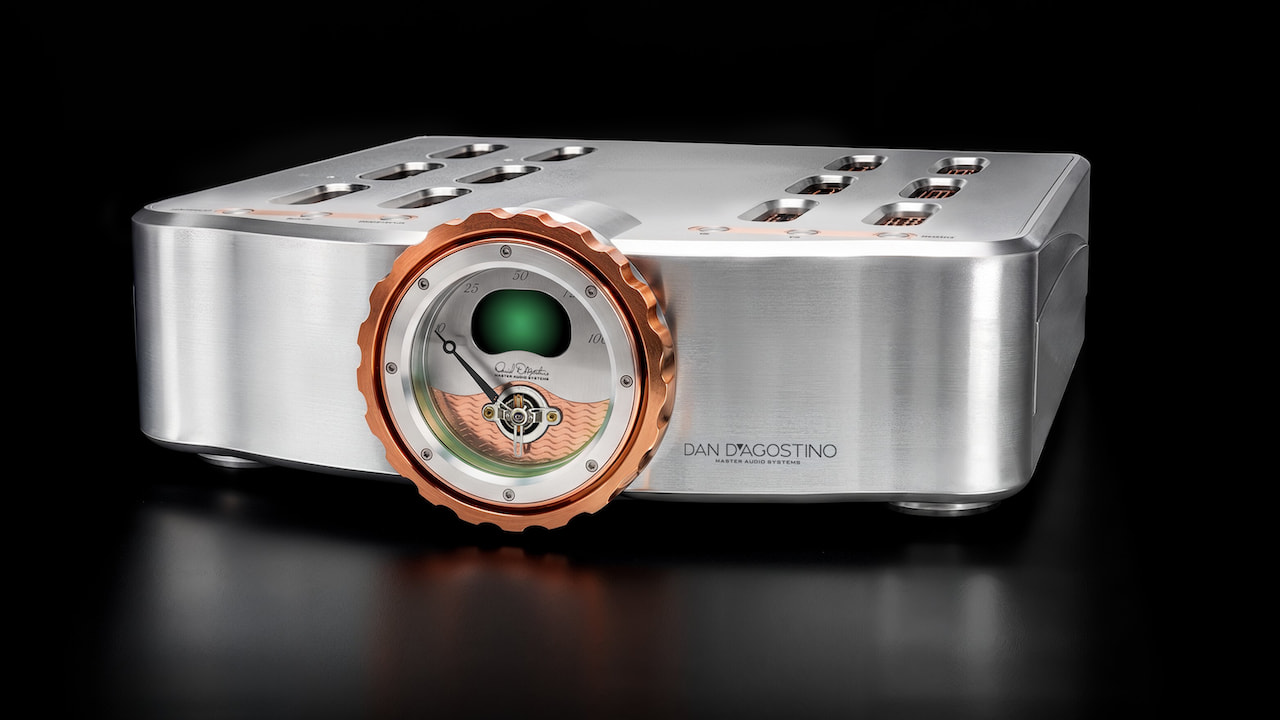
Dan D’Agostino Master Audio Systems is using High End Vienna 2026 to introduce the Progression Neo Series, a new three-component lineup that includes the Progression Neo Preamplifier, Progression Neo Monoblock Amplifier, and Progression Neo Stereo Amplifier.
The big story is not just another round of heavier metalwork and green meters for people who think rack space is a personality trait. The real engineering shift is the migration of JFET input-stage technology from D’Agostino’s higher-end Relentless, Momentum, and Momentum Z platforms into the Progression Neo range.
The result is a more technically ambitious Progression platform with updated preamp architecture, new amplifier input stages, Ethernet-based diagnostics, optional streaming and HDMI eARC support on the preamp, and power ratings that should make most loudspeakers behave without turning the listening room into a municipal substation.
We’ll get to pricing at the very end, because it is too early in the day for that kind of cardiovascular event.
What Dan D’Agostino Is Announcing
Progression Neo Preamplifier
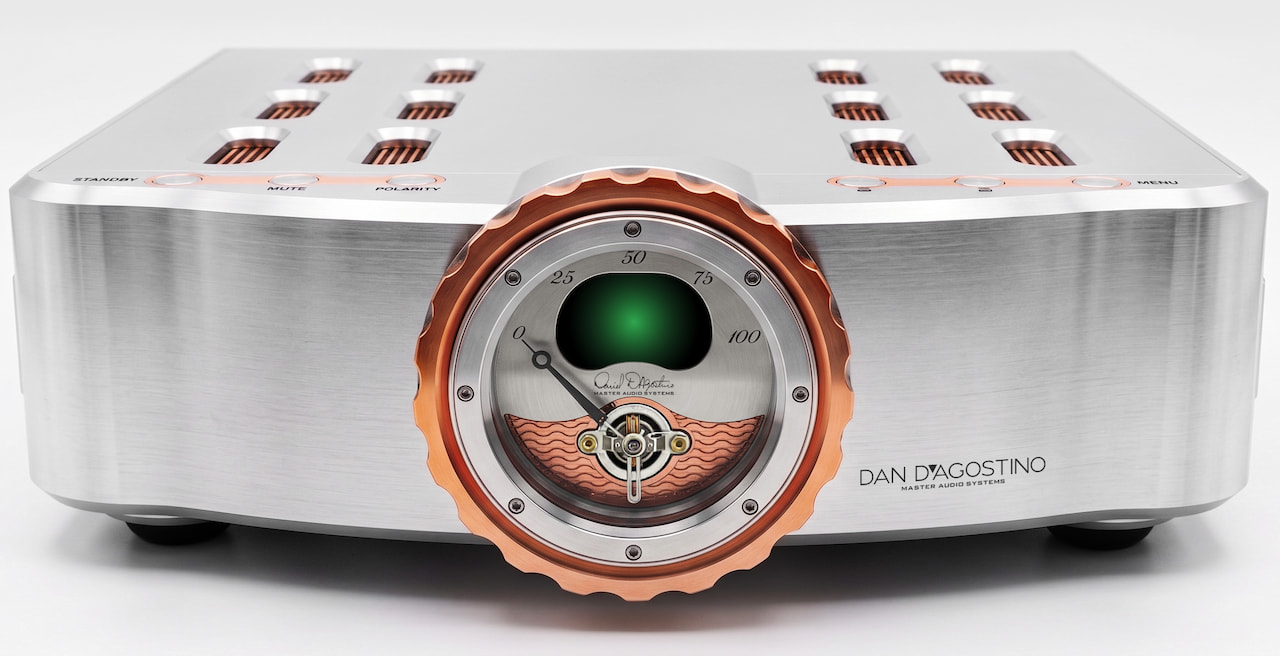
The preamp is positioned as the control center of the new series and uses a specialized JFET input-stage topology first introduced in the flagship Relentless Preamplifier. According to D’Agostino, placing those devices at the start of the signal path is intended to reduce noise and preserve low-level detail before the signal moves deeper into the circuit. The company also says the preamp uses an oversized custom analog transformer, potted for isolation and positioned to reduce noise, with a claimed 66% increase in operating rail voltage versus previous designs.
The preamp also adds some practical modern touches that matter in 2026. It includes a bi-directional remote with an integrated LCD display that mirrors front-panel information, plus a dedicated iOS app for Bluetooth control from a phone or tablet. An optional Digital Streaming Module adds optical, RJ45 Ethernet, Wi-Fi networking, and 10/100/1000 Ethernet support. More notably, this is D’Agostino’s first preamplifier with HDMI eARC and CEC, which makes it far easier to integrate a high-end two-channel system with a TV without pretending everyone still lives in 1998.
Progression Neo Monoblock Amplifier
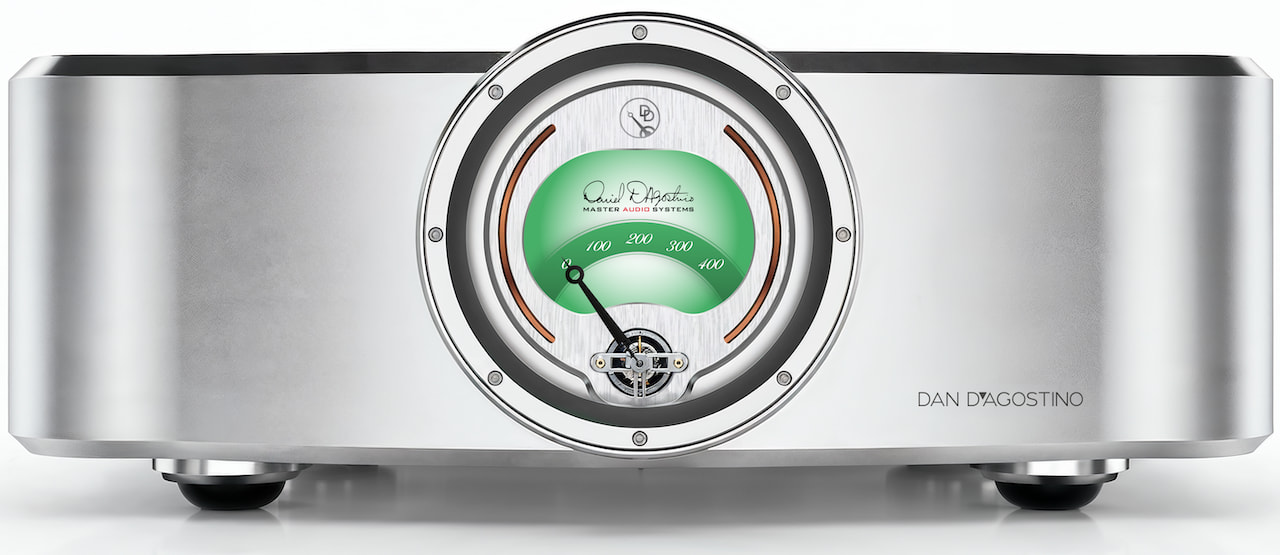
The Progression Neo Monoblock Amplifier is rated at 400 watts into 8 ohms, 800 watts into 4 ohms, and 1,600 watts into 2 ohms. Each chassis uses a 1,800 VA custom toroidal transformer and 96,000 microfarads of capacitance. Preliminary specifications list frequency response at 1 Hz to 80 kHz, -1 dB, and 20 Hz to 20 kHz, ±0.1 dB. Distortion is listed at 0.03% at 1 kHz at full rated output, with gain specified at +9.0 dB and input impedance at 1 MΩ.
Connectivity includes one balanced XLR input and one pair of binding posts. Dimensions are 17.25 x 6.9 x 20.8 inches, and weight is listed at 115 pounds. Silver and black finishes will be offered.
The key circuit change is a redesigned input stage using JFET concepts from the Momentum Z Monoblock. D’Agostino says the goal is lower noise and distortion at the earliest stage of amplification, before the signal reaches the larger power sections. The input stage is independently regulated, and the amplifier uses a fully complementary signal path with precision-balanced circuitry.
Progression Neo Stereo Amplifier
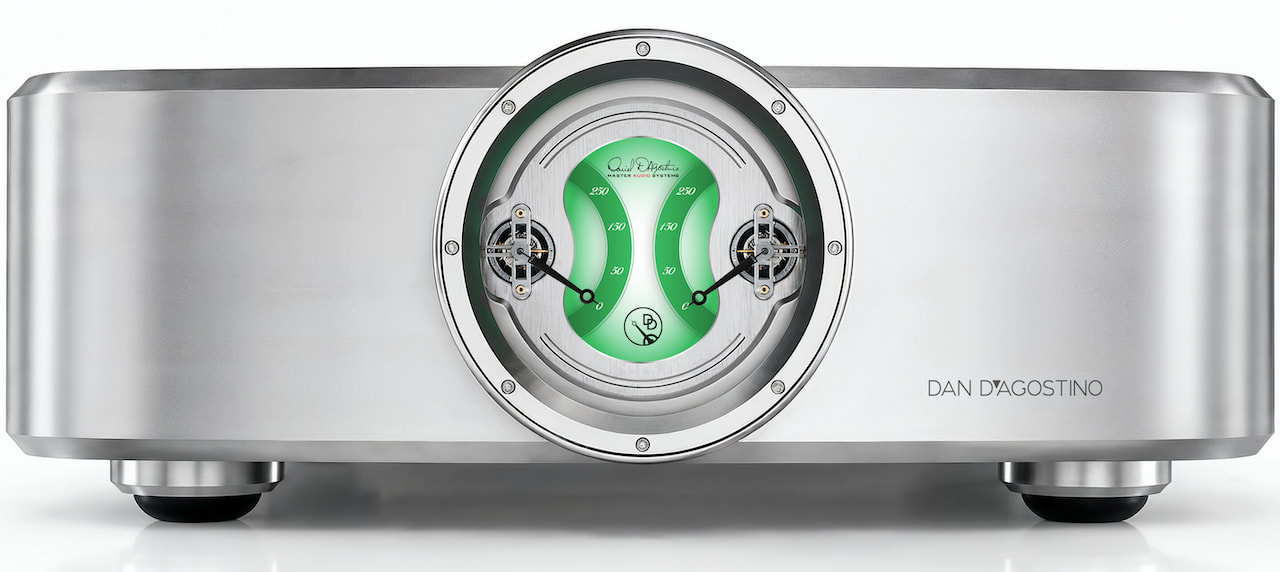
The Progression Neo Stereo Amplifier is rated at 250 watts into 8 ohms and 500 watts into 4 ohms, with the press materials also listing 1,000 watts per channel into lower impedance loads. It shares the same 1,800 VA custom toroidal transformer, 96,000 microfarads of capacitance, 1 Hz to 80 kHz, -1 dB frequency response, and 20 Hz to 20 kHz, ±0.1 dB specification as the Monoblock. Distortion is listed at 0.03% at 1 kHz at full rated output, with +9.0 dB gain and 1 MΩ input impedance.
The Stereo model includes two balanced XLR inputs and two pairs of binding posts. Dimensions are 17.25 x 6.9 x 20.8 inches, with weight listed at 115 pounds. Silver and black finishes will be available.
Both amplifiers share the new chassis design, the D’Agostino power meter, and a high-resolution LCD display that handles power metering and diagnostic messages. They also include RJ45 Ethernet for browser-based access to operating data including voltage, temperature, bias, and DC offset. That is useful for owners and dealers because it moves some system monitoring out of the mystery box category and into something visible on a home network.
The Bottom Line
The Progression Neo Series looks like a meaningful technical update to D’Agostino’s Progression platform, not just a fresh faceplate with a familiar green meter. The important changes are inside the signal path: JFET input-stage technology from the company’s higher-end designs, a redesigned amplifier front end, regulated input stages, updated power architecture in the preamp, Ethernet-based diagnostics, and HDMI eARC on the preamplifier for systems that now have to play nicely with large displays and people who refuse to use six remotes.
The Progression Neo Preamplifier, Stereo Amplifier, and Monoblocks are expected to ship in September, with likely pricing around $25,000 for the preamp, $25,000 for the stereo amplifier, and $40,000 for the monoblocks. That keeps the Neo Series firmly in the luxury category, but the appeal is easy to understand: existing D’Agostino owners get a more connected and technically updated Progression platform, while new buyers get some of the company’s upper-tier circuit thinking without stepping all the way into Relentless or Momentum territory. Bring a strong loudspeaker, a reinforced rack, and maybe avoid checking your retirement account before ordering.
For more information: dandagostino.com
Related Reading:
- Dan D’Agostino Momentum C2Z Preamplifier Debuts With Z-Circuitry, Optional Streaming Module, And Reference-Level Design
- Dan D’Agostino Momentum Z Monoblock Amplifier Can Be Yours For $125K — But You’ll Need Two!
- Dan D’Agostino Momentum C4 Preamplifier: High End Munich 2024
- More High End Vienna 2026 Coverage