
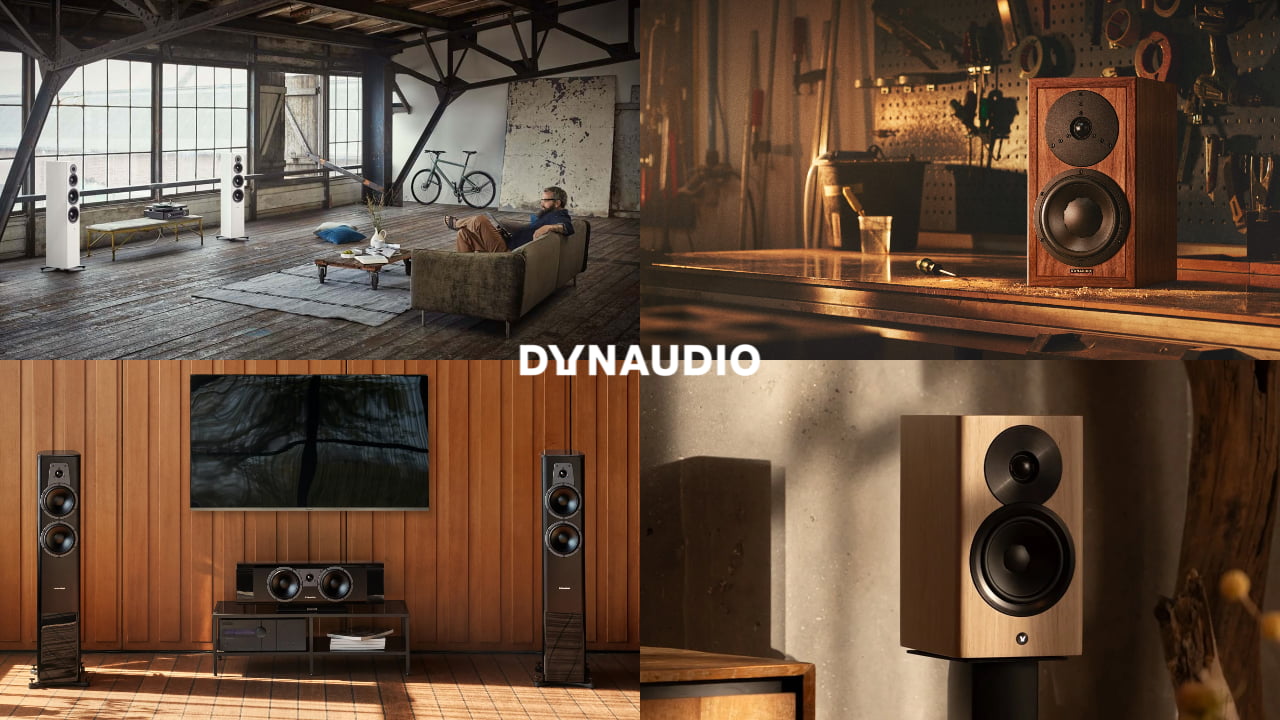
Dynaudio is pulling out of North America.
In a brief statement from from Skanderborg, Denmark, the Danish loudspeaker manufacturer announced that it will refocus its future market development efforts on Europe and Asia. As part of that shift, Dynaudio says it will “cease operations of its commercial activities in North America and permanently shut down its U.S. subsidiary in the fall of 2026.”
That is not a small distributor adjustment. That is not a quiet change in rep coverage. That is Dynaudio exiting the North American market as a direct commercial operation.
The statement acknowledges that Dynaudio has achieved sales growth in North America in recent years, which makes the decision even more notable. The company points instead to ongoing economic challenges and market uncertainty as the reason for prioritizing markets it believes offer stronger strategic opportunities.
In other words, North America may not have been a disaster. It may simply have become too expensive, too unpredictable, or too low-priority to justify the investment required to keep a full U.S. subsidiary operating.
For a brand with Dynaudio’s history, dealer footprint, studio credibility, and recent product momentum, that is a significant industry development.
Dynaudio’s Statement
Dynaudio has not yet provided the detailed transition plan that dealers, customers, and service partners will want to see. The company says continuity of product support and customer service will be addressed and communicated shortly.
That will be the critical part of this story.
Owners of Dynaudio loudspeakers, custom installation products, automotive systems, and professional monitors will want to know whether warranty support, parts availability, repairs, and dealer service will continue in the U.S. and Canada after the subsidiary closes.
Dynaudio also currently lists North American service contacts for Dynaudio Pro, including Dynaudio North America in Illinois and additional service partners in the U.S. and Canada. That may provide a temporary support bridge, but it does not answer the bigger question: what happens after fall 2026?
The Timing Is Strange
The timing is hard to ignore.
Dynaudio did not look like a brand retreating from the U.S. market in 2026. Quite the opposite.
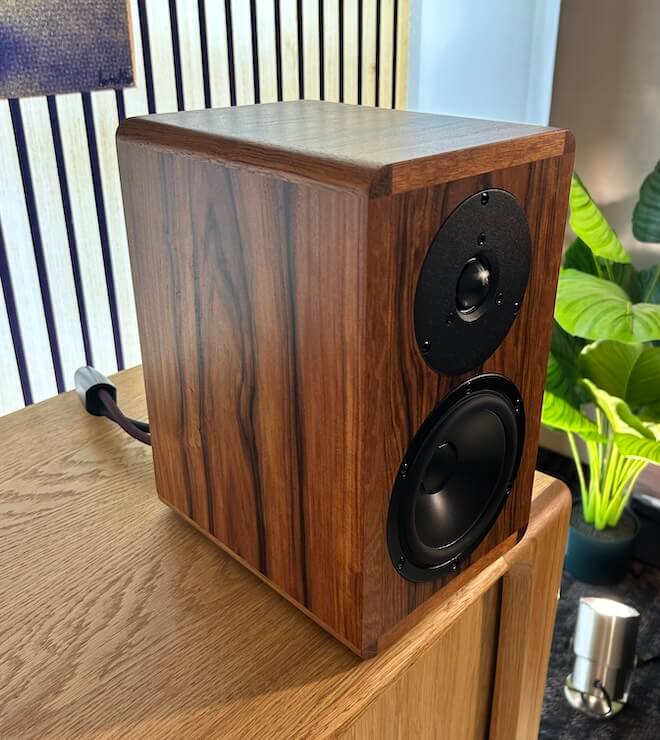
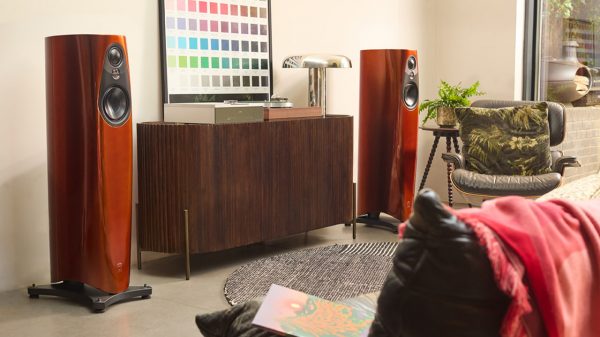
At AXPONA 2026, Dynaudio had one of its most visible recent North American showings, highlighted by the Dynaudio Legend, a luxury passive bookshelf loudspeaker that made its public debut in Chicago. The Legend was positioned by Dynaudio as a handcrafted, premium bookshelf speaker using matched natural rosewood veneer panels, Brazilian cherry corner pieces, and Danish assembly at Dynaudio headquarters.
The room created real interest because Legend felt like a reminder of what Dynaudio does best: elegant Danish industrial design, serious driver engineering, and loudspeakers that don’t need to look like they were designed by a committee of enraged refrigerator manufacturers.
eCoustics had two Dynaudio reviews planned this year, including an anticipated review of the Legend. That review has now been delayed, and in light of today’s announcement, the delay takes on a very different meaning.

Dynaudio also had a major presence at HIGH END Vienna 2026. The company’s Symphony Opus One immersive audio system was at the center of its demonstrations in Vienna before its June launch in Copenhagen. Dynaudio’s forthcoming Confidence i series was also previewed for High End Vienna, showing that the company was still pushing hard into the upper end of the market.
That is why this announcement lands with a thud. Dynaudio was not invisible. It was not quiet. It was not showing signs of creative exhaustion.
It was showing up.
From North American Expansion to Exit
The reversal becomes even sharper when you look back at Dynaudio’s North American investment.
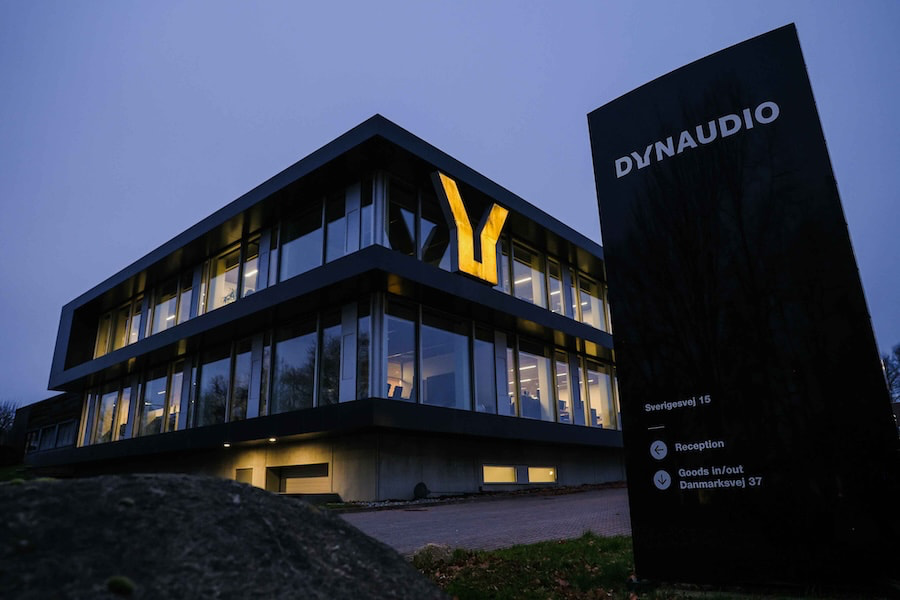
In 2019, Dynaudio opened a 25,000-square-foot North American headquarters and Experience Center in Northbrook, Illinois. The facility was designed for product demonstrations, dealer and sales rep training, and warehousing to support regional demand.
That was a serious commitment.
Seven years later, Dynaudio is preparing to shut that U.S. subsidiary down.
The company has not said whether a third-party distributor will take over North American sales. It has not said whether existing dealers will continue to receive product. It has not said whether Canada will be handled differently from the United States. It has not said whether Dynaudio Pro, Custom Install, Home Audio, and Automotive are all affected equally.
Until Dynaudio clarifies those points, the safest reading is that Dynaudio is ending its own commercial operation in North America, while promising some form of future support continuity.
That distinction matters.
Dynaudio products may not vanish from every shelf overnight. Existing dealer inventory may remain in the market. A future distribution arrangement is possible. But none of that has been confirmed.
Tariffs, Greenland, and the Danger of Easy Explanations
It is tempting to speculate.
The current U.S. trade environment has created real pressure for European manufacturers, and the U.S. and European Union trade framework has involved a 15% tariff structure on many EU exports. That kind of cost pressure matters when you are shipping large, heavy, premium loudspeakers into a dealer-driven market.
There is also the bizarre timing of President Donald Trump’s renewed comments that Greenland should be controlled by the United States rather than Denmark, a position that has strained relations between Washington and Copenhagen.
But there is no evidence at this stage that Greenland, tariffs, or any single political issue caused Dynaudio’s decision.
The more practical explanation is probably less theatrical and more painful: North America is expensive. Warehousing is expensive. Dealer support is expensive. Shipping is expensive. Product demos are expensive. Customer support is expensive. And in a market where high-end loudspeaker sales can be slow, seasonal, and dealer-dependent, even growth may not be enough if the margin math no longer works.
Not every retreat is a collapse. Sometimes it is a spreadsheet with a knife.
The Bottom Line
Dynaudio’s decision to exit North America is one of the more surprising hi-fi industry developments of 2026.
This is a company with a deep loudspeaker legacy, strong engineering credibility, a meaningful presence in home audio and professional audio, and recent show momentum at both AXPONA and High End Vienna. The brand was visible. The products were interesting. The Legend looked like a serious statement piece. Opus One suggested a more ambitious design-led future.
And yet Dynaudio has decided that its future market development efforts belong elsewhere.
GoerTek’s 2014 acquisition gave Dynaudio access to Chinese engineering, electronics, and wireless expertise, and Dynaudio’s 2016 management update referenced GoerTek-linked Asia-Pacific experience at the executive level. That does not mean China is “the reason,” but Europe and Asia as priority markets are consistent with Dynaudio’s ownership and long-term product direction.
That does not mean the brand is finished in North America forever. It does mean that the current structure is finished.
For customers, the immediate concern is support. For dealers, it is inventory, warranty coverage, and continuity. For the industry, it is another reminder that the North American hi-fi market may look attractive from the outside, but it is increasingly difficult to serve profitably from the inside.
Danish loudspeakers are not the problem.
The business of selling them here might be.
For more information: dynaudio.com
Related Reading:
- Best in Show at AXPONA 2026
- Dynaudio Symphony Opus One Soundbar at HIGH END 2026
- Dynaudio Legend Bookshelf Speakers Debut At AXPONA 2026
- 11 New High End Vienna 2026 Products I Want To Review Most








E Elsworth
July 8, 2026 at 6:01 am
No problem I guess that Denmark has a 25% vat tax on USA imported goods, and higher tariffs on agricultural products from USA, and 5% to 14% on industrial manufacturing imports from USA.
But we impose tariffs and the sky is falling.
Ps previous Presidents have also wanted control of Greenland to counter Russia, etc., but you now oh my
Ian White
July 8, 2026 at 10:01 am
I would agree that using Trump/Greenland is a bizarre excuse. Every other company has been forced to navigate the same waters. The issue (IMHO) in regard to Dynaudio is not the quality of their speakers, but how they really didn’t differentiate themselves well enough in a very competitive market. There was some angst when I covered the Legend at AXPONA because of the price. Even die-hard Dynaudio customers couldn’t understand the $7,000 asking price.
It’s too bad because they make good speakers.
IW
Rob
July 9, 2026 at 5:26 pm
I was in my nephew’s new BYD SUV in Panama the other day, and riding in the second row, noted the Dynaudio speakers inbedded in the doors. This might be part of the Dynaudio equation. (didn’t get to listen, we chatted from Panama City to Colon)
Ian White
July 9, 2026 at 5:54 pm
Rob,
Nice area.
I think part of their problem was that they didn’t really differentiate themselves enough. They make really good drivers and tweeters. The market settled on that many years ago. The speakers were never “sexy” in the way that Sonus Faber, DeVore, and other brands used design to attract attention.
The car audio market is a huge fight right now for market share.
IW
Esteban
July 9, 2026 at 8:47 pm
That’s show biz, try buying some Klipsch over there for the last 50 years and getting jacked for near 40%.
Don Bingaman
July 13, 2026 at 8:44 pm
The US audio market is huge but its growth has become pretty stagnant in recent years – particularly for home audio equipment sales. The automobile audio and personal markets (headphones tied to iPhones, etc.) are absorbing much new consumer spending on music sources.
At the same time, the number of new entrants to the home audio market are growing exponentially – with sparse sales to show for it. The continued consolidation of brick and mortar audio stores is also a symptom of a larger problem with demand.
Dynaudio may have simply decided that the $$$ math doesn’t work for them in the United States, while it does still work for them in the EU and in Asia, where the growth in consumer electronics sales are apparent.
Dynaudio may be a sign that our audio market is no longer worth the required investment. They may not be the last to make this decision.