
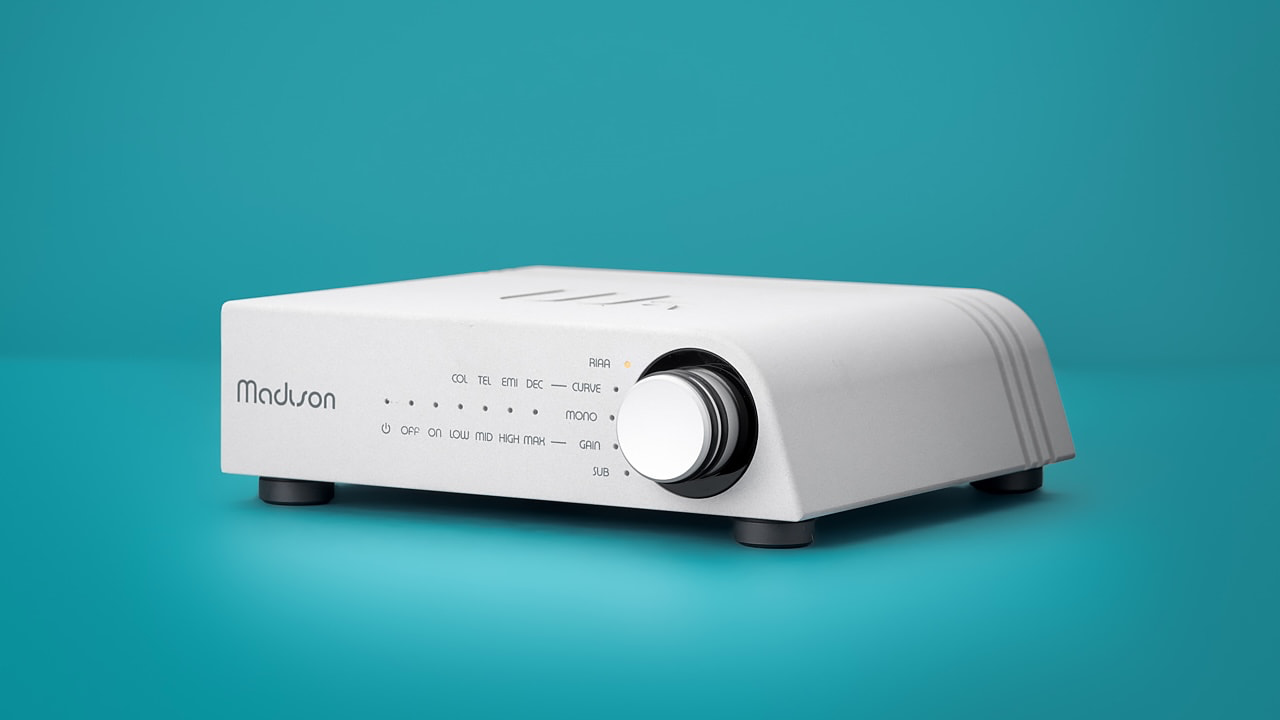
Vinyl enthusiasts tend to become nervous when someone proposes inserting an ADC between their cartridge and amplifier. Mention 32-bit/384 kHz conversion and digital equalization, and a few may start clutching their original Blue Notes rather tightly.
Wattson Audio’s new Madison Phono is built around exactly that idea, but there is more going on here than digitizing vinyl for the sake of technological mischief.
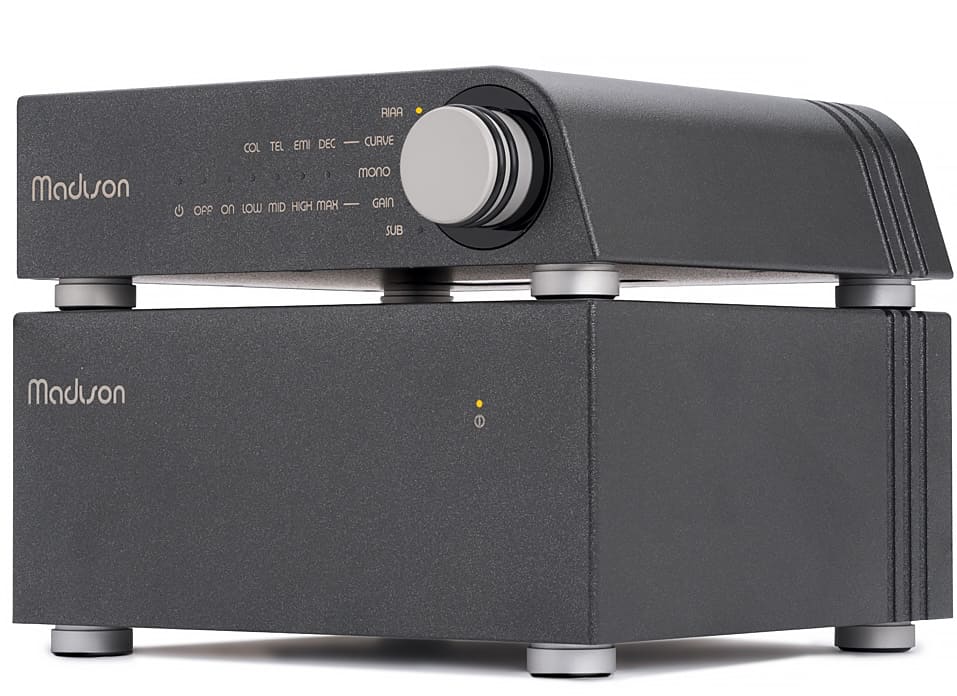
Priced at $5,495, the Swiss-made phono stage uses cartridge-specific analog input circuitry before converting the amplified signal at 32-bit/384 kHz. Equalization and filtering are then handled in the digital domain, with RIAA, Columbia, Teldec, EMI and Decca curves implemented to a claimed ±0.1 dB accuracy.
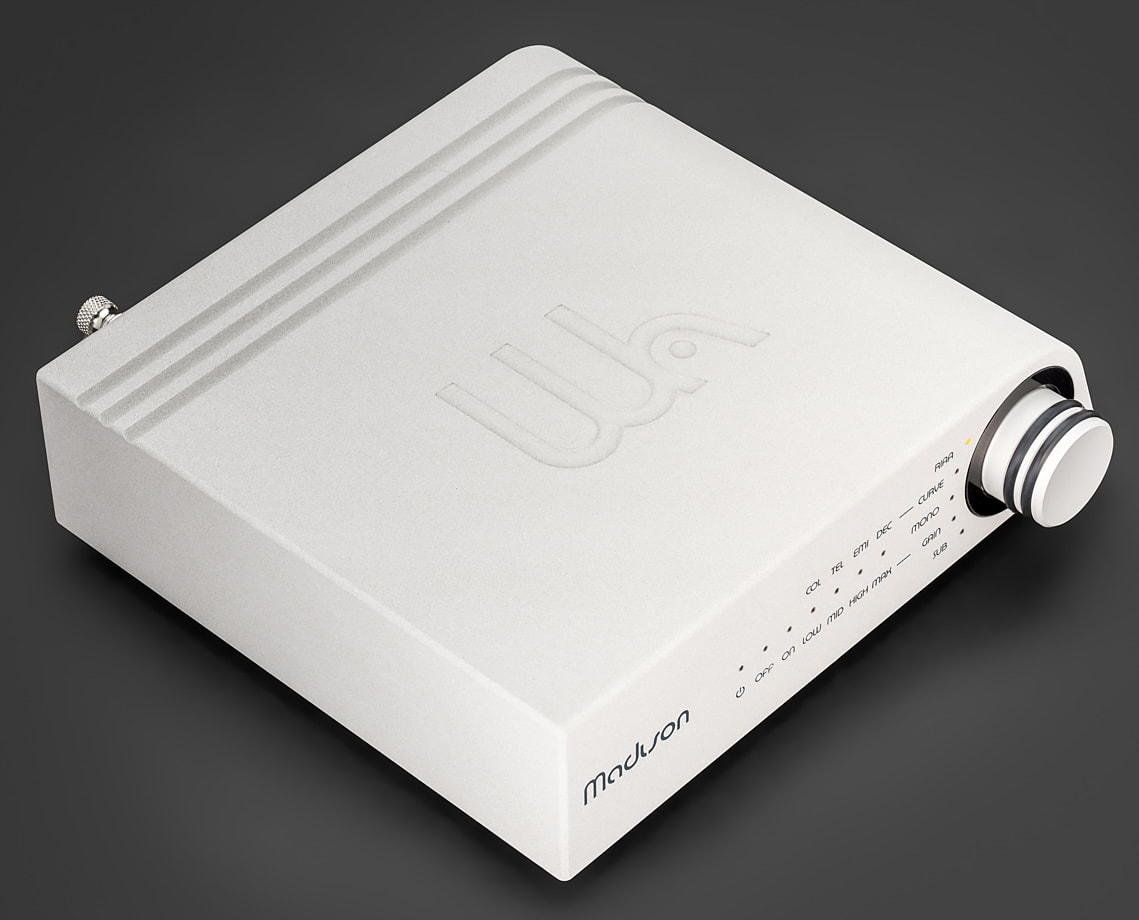
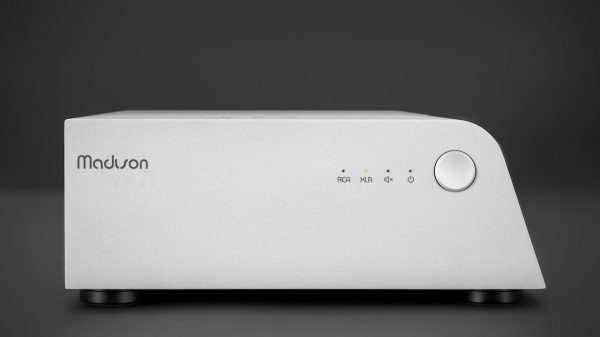
The chassis measures just 175 x 185 x 52 mm (6.9 x 7.3 x 2.0 inches) and weighs 1.7 kg (3.7 pounds), making Madison Phono considerably smaller than most reference-level phono stages.
Three Different Front Ends
What makes Madison Phono unusual is that Wattson does not treat MM, MC and optical cartridges as variations of the same electrical problem.
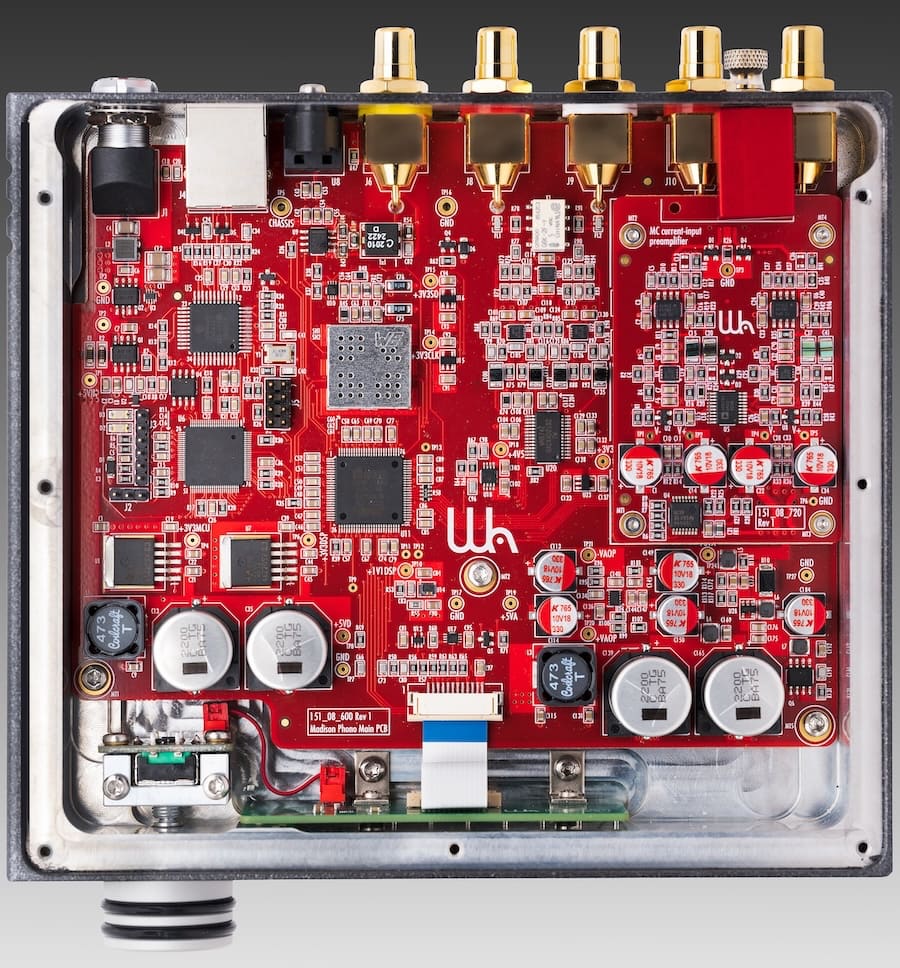
Each unit is ordered with one of three replaceable input boards.
The Voltage board supports moving magnet and higher-impedance moving coil cartridges, while the Current board is intended for low-impedance MC designs and uses an active transimpedance amplifier derived from CH Precision technology. The third Optical board is designed specifically for DS Audio photoelectric cartridges and also uses an active transimpedance topology.
Additional boards are priced at $500 each, and they can be exchanged later if the owner changes cartridge technologies.
That is more important than it sounds.
Most phono stages offer different gain and loading values around essentially the same basic input architecture. Wattson is changing the front end itself depending on how the cartridge generates its signal.
Why Digitize Vinyl?
After the initial analog gain stage, Madison Phono converts the signal at DXD-level 32-bit/384 kHz resolution and performs equalization digitally.
Wattson’s argument is straightforward: moving RIAA correction out of the analog stage eliminates large passive EQ networks and allows multiple curves to be implemented with much tighter repeatability. The analog amplification section can therefore remain linear rather than being responsible for both gain and equalization.
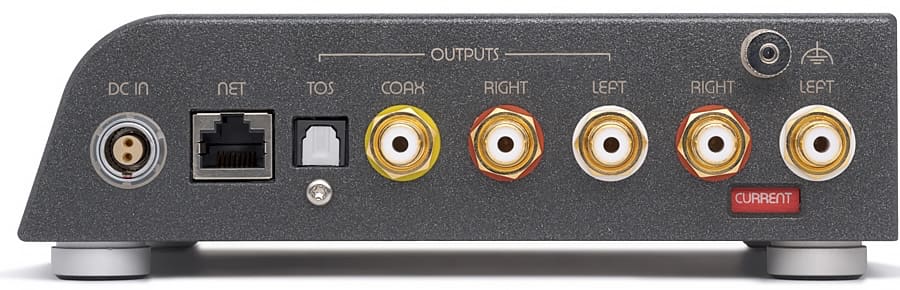
The resulting signal can leave Madison Phono through conventional RCA analog outputs or remain digital through coaxial or optical S/PDIF at up to 192 kHz, with optional downsampling to 96 kHz.
That makes it particularly interesting in systems built around a high-quality external DAC or digital preamplifier. Owners using Wattson’s Madison Streamer can keep the vinyl signal digital after the phono stage rather than converting it back to analog immediately.
Purists may now request a paper bag.
Who Is It For?
Madison Phono makes the most sense for someone already using a serious turntable and cartridge who also owns a modern digital-centric system.
A collector with older Columbia, Decca or EMI pressings gains access to the appropriate historical EQ curves. A low-output MC owner can use current-mode amplification without conventional cartridge loading, while a DS Audio owner can move into optical playback without buying an entirely separate equalizer platform.
And if that owner changes cartridge technologies later, the phono stage does not automatically become an expensive aluminum paperweight.
What Actually Competes With It?
Among the phono stages we have covered, none duplicates the entire Madison Phono architecture.
The MoFi Electronics MasterPhono ($5,995) offers a fully balanced MM/MC all-analog phono stage with both conventional voltage and current-mode cartridge inputs, extensive loading flexibility and multiple configuration options.
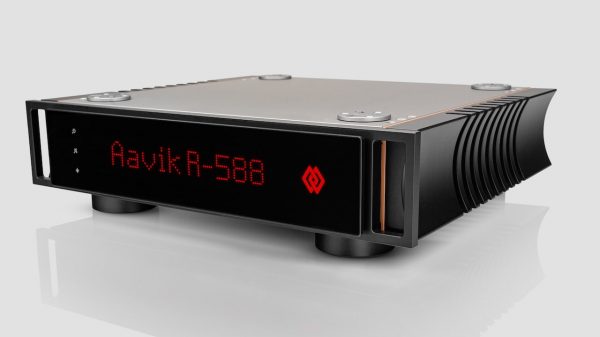
The Aavik R-x88 Series supports both moving coil and DS Audio optical cartridges, which overlaps another important part of Wattson’s approach. But the Aavik models start at $20,000, omit MM support and retain a conventional analog signal path rather than digitizing the cartridge signal for EQ.
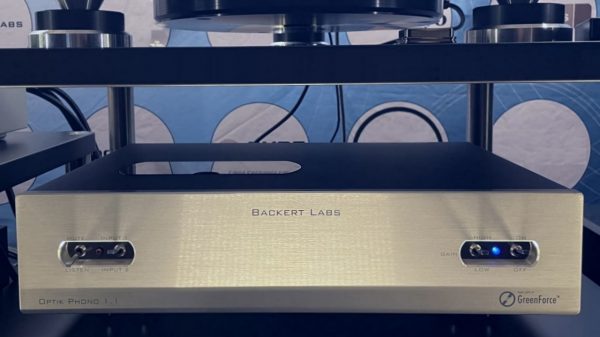
Backert Labs’ Optik Phono 1.1 also supports DS Audio cartridges, but it is a dedicated optical equalizer rather than a multi-format phono stage and costs $11,500.
In other words, competitors exist for individual pieces of the Madison Phono concept. Finding one product that combines MM, voltage-mode MC, current-mode MC, DS Audio optical support, interchangeable input boards, historical EQ curves, 32-bit/384 kHz digital processing, analog output and digital output is another matter entirely.
The Bottom Line
The Madison Phono is not unique because it digitizes vinyl. Linn’s Urika II and products such as Parks Audio’s Waxwing have already demonstrated that digital RIAA correction can work very well.
What Wattson has done differently is combine three fundamentally different cartridge input architectures with high-resolution digital EQ and both analog and digital outputs in one compact, upgradeable platform.
That makes Madison Phono less of a conventional phono preamplifier and more of a bridge between serious analog playback and modern digital systems. Will someone who believes an ADC should never come within shouting distance of a turntable buy one? Probably not.
For everyone else, especially collectors using multiple cartridge technologies or systems centered around an expensive DAC, Madison Phono solves several problems that normally require multiple boxes.
That is what makes it genuinely interesting.
For more information: wattson.audio/madison-phono
Related Reading:






GoofyTwoShoes
October 8, 2026 at 12:12 pm
Another ADC/DAC is the Korg DS DAC 10R. It records PCM and DSD, with many features. Software for playback and recording is included. My son uses his to extract his LPs and play back live at DSD128. Cost is well under $cdn 1,000 and worth every penny.
Ian White
October 8, 2026 at 3:20 pm
Goofy,
I concur. I look at it as a form of converting and archiving music that might not exist on the streaming platforms or CD. I have 3 dozen rare 78s that I inherited that I can only enjoy on an older table that supports 78 RPM and has a cartridge for it.
IW
ORT
October 8, 2026 at 2:31 pm
Hmmm…Perhaps if they raised the price and didn’t mention the digital stuff, frAudiophiles would be more inclined to buy in and start PRaTing on and waxing off about stuff they really can’t hear and the world would spin on in fappy silence?
I dunno. I just turn on my Model 60n, choose the rather pedestrian “phono” input, place a record on the ‘table and start listening to my music. As Curly Howard might’ve said if he were me, “I’m a victim of soicumcision!” Curly was and remains, a genius. He would’ve just listened to the music and enjoyed it.
ORT
Ian White
October 8, 2026 at 3:18 pm
ORT,
I reviewed the Wattson gear a few years ago and found it technically solid, but unforgivingly cold in tonal balance. Unless my info is incorrect, they are owned by one the larger Swiss high-end brands (CH Engineering maybe) and this is their entry-level stuff.
I really don’t have an issue with a phono stage that includes an ADC/DAC set-up if the software allows you to make really good digital copies of your records; especially those that don’t exist on streaming platforms or on CD. It’s a form of preservation and building up a library of more music to listen to.
IW