
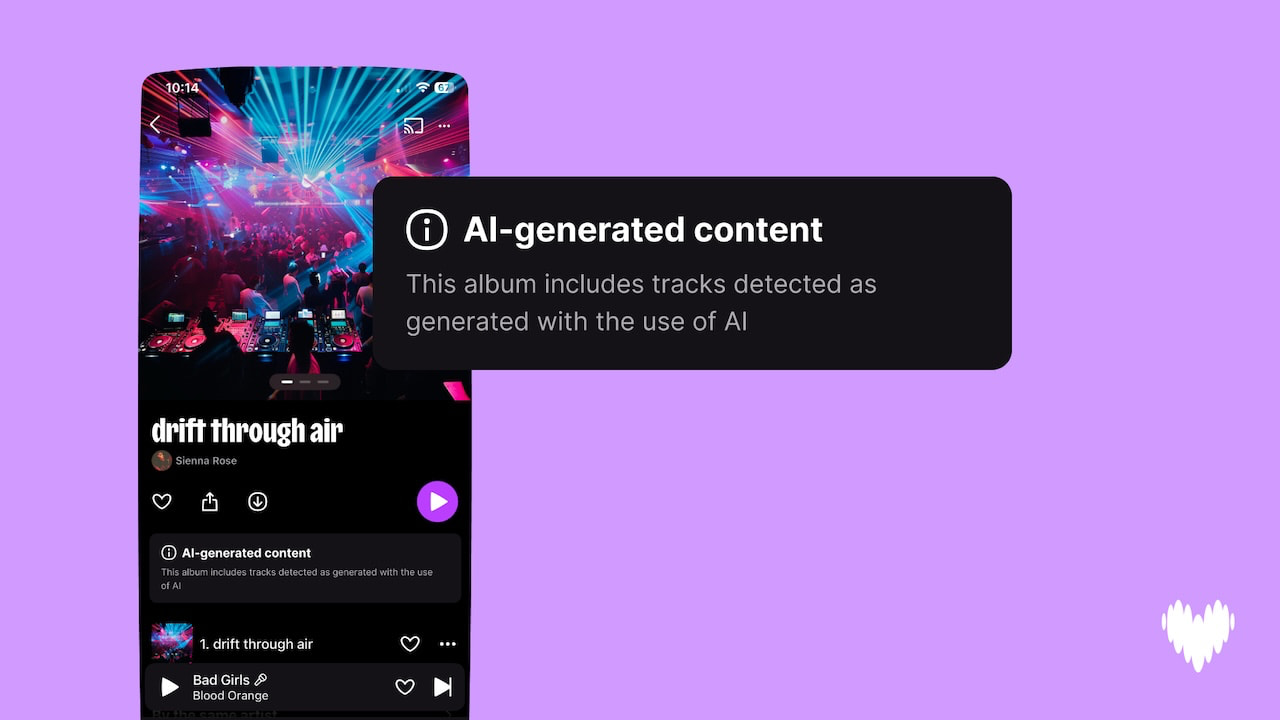
Major labels want rules determining which AI assisted recordings qualify for official charts. Their proposal draws a necessary line, but their growing AI licensing business makes the location of that line rather convenient.
“More human than human” was a memorable slogan for the Tyrell Corporation. It is a considerably less convincing standard for deciding whether AI generated music should compete against living artists on the official charts.
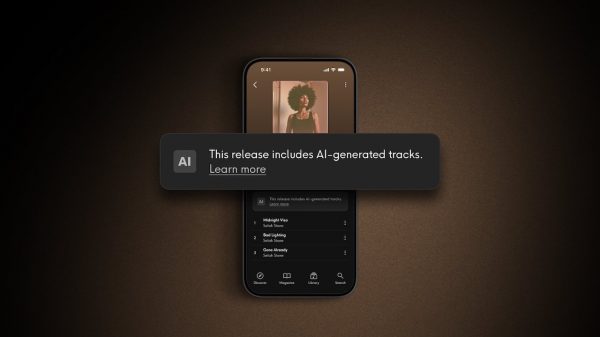
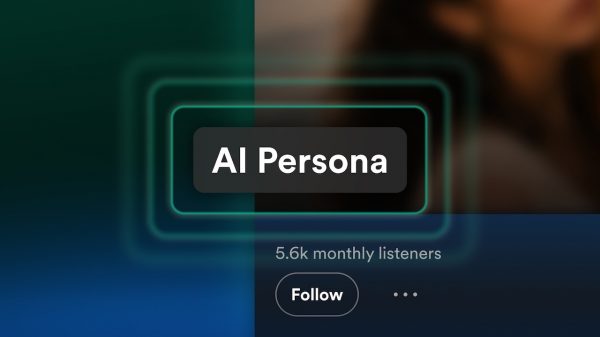
Sony Music, Universal Music Group, Warner Music Group, BMG, Concord, Believe, HYBE and a group of independent labels have proposed principles governing when recordings involving generative AI should qualify for chart recognition. Their position sounds sensible enough: the AI platform must be authorized, the recording must comply with copyright and personality rights, its use of AI must be disclosed, streaming activity must be legitimate and the finished work must remain “substantially human made.”
That final phrase is doing almost as much artificial work as the software. The labels want to appear protective of human creativity without defining the point at which the songwriter, musicians and singer have been reduced to decorative accessories—or closing the door on the licensed AI platforms they increasingly expect to monetize.
The proposal is not a binding rule, and chart organizations have not universally adopted it. It is the industry’s attempt to establish boundaries before synthetic performers, automated uploads and manipulated streams make the charts even less representative of what people are actually listening to.
The labels are correct that fully AI generated music should not compete directly with recordings written, performed and produced by human beings. The more difficult question is why anyone believes it should be eligible in the first place.
Related Reading: AI Music Labels Are Coming To Streaming, But Will They Actually Work?
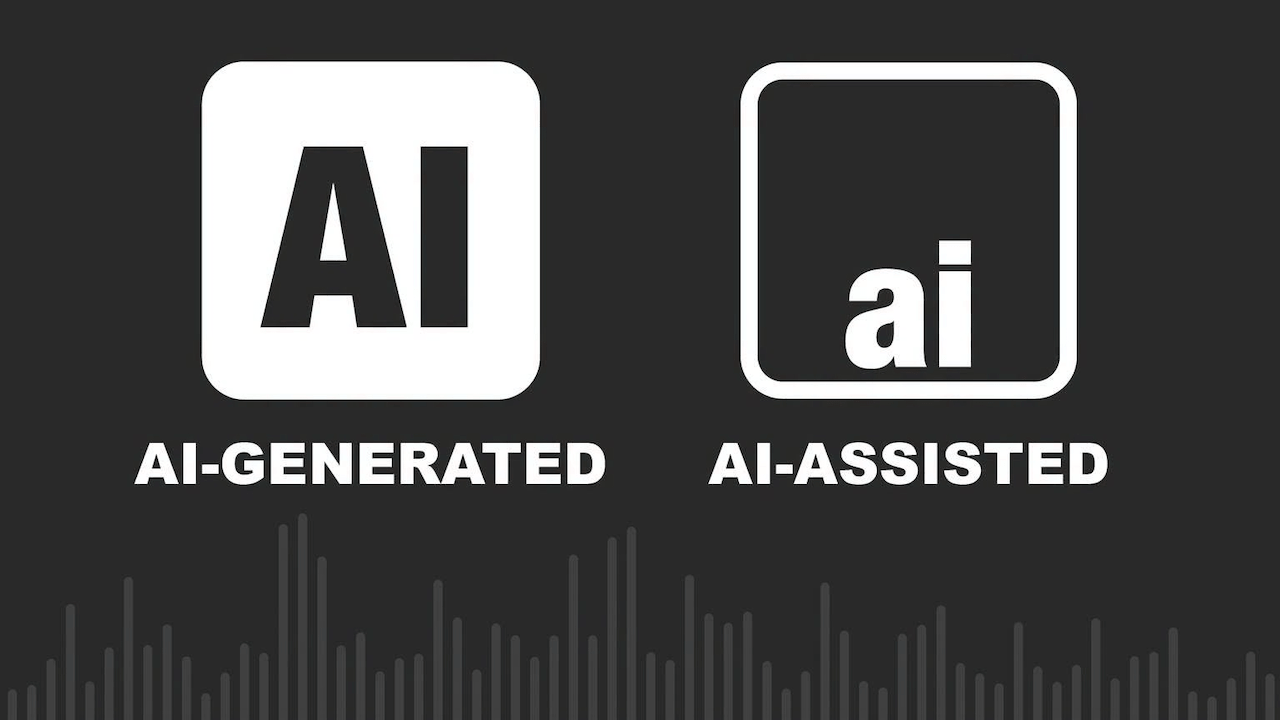
Not Every Use of AI Is the Same
The debate becomes dishonest when every use of artificial intelligence is placed into the same bucket. A musician using software to remove noise from a recording is not doing the same thing as someone entering a prompt and receiving a finished song with synthetic lyrics, instruments and vocals.
AI assisted music still begins with human authorship and performance. The artist writes the song, performs it and makes the defining creative decisions, while software helps with tasks such as stem separation, restoration, timing correction, noise reduction or mastering. Recording studios have always used technology to improve and manipulate performances. Nobody should be removed from the charts because an engineer used machine learning to eliminate an air conditioner humming behind the singer.
Hybrid music occupies the far less comfortable middle. A human songwriter might write the lyrics and melody while AI generates the backing arrangement. A singer might record the lead vocal while software creates harmonies or instrumental parts. Another artist might begin with a generated composition and then rewrite and perform enough of it that the final recording bears little resemblance to the original output.
Some of those recordings may contain enough genuine human authorship to qualify. Others amount to placing decorative trim around a song the machine has already written and performed.
Fully AI generated music is different again. The software creates the composition, lyrics, instrumentation, vocals and finished recording from a prompt. The user may request revisions and choose the strongest output, but selecting version 27 does not suddenly make someone a songwriter or producer.
AI voice clones and synthetic performers create another problem. A platform can imitate the voice or recognizable style of a living or deceased artist, sometimes with permission and sometimes without it. Legal authorization may resolve part of the rights issue, but it does not make the performance human. A licensed computer generated Frank Sinatra vocal remains a computer generated Frank Sinatra vocal, even after everyone’s lawyer has enjoyed lunch.
The test should not be whether software was involved. The question is whether the software assisted the artist or replaced one.
What Should Qualify?
The primary charts should recognize recordings in which human beings wrote, performed and shaped the defining creative elements, rather than rewarding someone who entered a prompt and called themselves a producer. Hybrid recordings can qualify, but only when AI served the artist instead of quietly replacing the songwriter, musicians and singer—and its involvement was disclosed before the track started collecting streams, royalties and trophies.
“Substantially human made” is not a useful standard. It is the kind of conveniently foggy language corporations use when they want to appear principled without closing off a future revenue stream.
Do Consumers Care?
The music industry has occasionally behaved as though listeners will accept whatever appears next in an autoplay queue, provided the cover art is attractive and nobody asks who made it.
Research suggests otherwise.
A Deezer and Ipsos survey of 9,000 adults across eight countries found that most participants could not consistently distinguish fully AI generated recordings from human music in a blind listening test. That may delight AI companies, but it does not mean listeners are indifferent.
Eighty percent wanted fully AI generated music clearly labeled, while 45 percent wanted the ability to filter it from their streaming experience. More than half said synthetic recordings should not compete with human music on the main charts, while only 11 percent supported treating both categories equally.
Consumers may not always recognize AI music by ear, but many still care whether the voice, performance and songwriting came from an actual person. That is precisely why disclosure matters.
Streaming subscribers are paying for access to music, not for an endless reservoir of inexpensive background material manufactured to fill playlists, reduce royalty costs and keep people from pressing stop.
The Synthetic Flood Has Already Started
Deezer reported receiving approximately 90,000 fully AI generated tracks every day during June 2026. On some peak days, synthetic recordings represented more than half of all new music delivered to the service.
That sounds like enormous consumer demand until the listening numbers are examined. Fully AI generated music accounted for only around 1 to 3 percent of total listening on Deezer, and the service previously reported that as much as 85 percent of streams associated with those tracks during 2025 appeared to be fraudulent.
The upload volume is therefore not being driven entirely by listeners desperately waiting for their next synthetic masterpiece.
Generative platforms can produce recordings faster than any collection of human artists could write, rehearse and record them. Combine that output with automated uploads, fake accounts and manipulated streams, and the charts risk becoming a ranking of who owns the most efficient content factory.
Charts have never been perfect measures of taste, but they are supposed to document what people are buying and hearing. Allowing industrial quantities of synthetic music to compete against human artists would turn them into something closer to a server stress test.
The Labels Have Discovered Principles
The record companies supporting these rules deserve some credit for acknowledging that fully synthetic recordings should not receive the same recognition as human music. Artists need protection from unauthorized voice cloning, unlicensed training data, fake performers and fraudulent streaming operations.
The labels’ motives become less heroic once their own AI agreements enter the conversation.
Universal Music Group has reached an agreement with Udio to develop a licensed AI music creation platform. Warner Music Group has settled litigation with Suno and entered a partnership intended to create licensed AI products and new revenue opportunities. Warner has also worked with Udio on tools involving approved remixes, covers and recordings connected to participating artists.
The labels are not trying to stop AI music. They are attempting to control which AI companies receive access to their catalogs, artists and intellectual property—and how much money flows through the licensing system.
There is nothing inherently wrong with demanding consent and compensation. Artists should control whether their recordings, compositions, voices and likenesses are used to train or operate generative systems. Unauthorized platforms should not be allowed to treat a century of recorded music as free raw material.
But the labels should spare everyone the suggestion that this is solely about defending human creativity. They are drawing a line between unauthorized AI music they cannot monetize and licensed AI music from which they expect to receive revenue.
Nothing clarifies an ethical dilemma quite like discovering where to send the invoice.
Is Protecting Musicians Still Part of the Job?
Record companies present themselves as partners that discover artists, finance recordings, develop careers and protect creative rights. That relationship has not always been remembered with equal affection by the musicians involved.
Labels are businesses rather than unions, but that does not excuse them from protecting the people whose work gives their catalogs value.
An artist’s voice, catalog or identity should not be licensed into an AI platform without explicit consent, meaningful control and direct compensation. Those terms should not be buried inside a contract signed years before generative AI became commercially viable.
A system in which labels control the rights, technology companies control the platform and musicians provide the raw material is not artist protection. It is resource extraction wearing a conference badge.
The proposed chart rules therefore need to explain more than whether an AI system was “authorized.” Authorized by whom? A label may possess the contractual authority to approve something the artist would never willingly accept. Legal permission and artistic consent are not always the same thing.
Is Physical Media Part of the Answer?
Buying records and CDs will not automatically protect listeners from AI generated music. A synthetic album can be pressed onto vinyl and sold inside an elaborate box with numbered packaging and a booklet nobody needed.
Physical media does, however, encourage transparency. Album credits and liner notes make it easier to see who wrote, performed, recorded and mastered the music. Buying directly from an artist, independent label or retailer can also create a more deliberate financial connection between the listener and the people who made the recording.
Streaming platforms are designed to remove friction. Music appears, plays and disappears into the next recommendation, often without the listener knowing who performed it, who owns it or whether anyone involved possesses a birth certificate.
Buying a record or CD requires an actual decision. As streaming services fill with tens of thousands of synthetic tracks every day, knowing who made the music—and intentionally paying for it—may become more meaningful than having access to another 100 million recordings nobody requested.
The Bottom Line
AI assisted production should remain eligible for the charts when software supports human creativity rather than replacing it. Hybrid recordings need firm definitions and full disclosure. Fully AI generated performers and songs should compete in a separate category where they cannot take visibility, recognition and royalty share from living musicians.
The labels deserve credit for recognizing the problem, but their expanding partnerships with AI companies make their motives impossible to ignore. They want rules that protect artists while remaining flexible enough to preserve the AI businesses they expect to license and monetize.
Protecting musicians cannot mean protecting them only from technology companies that have not yet signed an agreement with the labels.
The charts should recognize human achievement. Let the synthetic performers have their own rankings, their own playlists and, eventually, their own off-world colonies.
They should not receive the trophy merely because nobody bothered to administer the Voight Kampff test.
Related Reading:




































ORT
August 1, 2026 at 8:54 pm
No. Or better still, No Intercoursing Way.
ORT
Ian White
August 1, 2026 at 9:46 pm
ORT,
The music labels are massive hypocrites. They don’t like it being uploaded to the streaming platforms because it takes away listens from their own artists, but then the accountants actually realised that they can make money from it and now they are fine with it as long as the check clears and they can regulate it.
IW
ORT
August 1, 2026 at 9:05 pm
A.I. “created” music should not be tolerated, especially as a product to be purchased let alone listened to. The soul of Mankind is best heard through the music of it’s past.
There has been very little of worth done by mankind since 1990. cRap and Hippity Hop suck baboon buttocks. Only a mental midget of the kind portrayed in the prophetic film, “Idiocracy” would think highly of cRap “music”. Actually, their kind of maroon doesn’t even “think”. They only “feeeeeeel”. Those that feel otherwise can take an airborne intercourse. I loathe the decline of the Civilized World whose, if one can call them this, “architects” should be sent into space like the dog, Laika. Unlike cRap farteests who have long SOULED out, Laika did nothing to deserve her fate.
ORTacles of Thebes
Ian White
August 1, 2026 at 9:44 pm
ORT,
While I’m not a fan of AI-created music at all, the reality is that the definition is actually quite broad. AI can be used to enhance vocals that are recorded by a human and consumers seem to be ok with that. It’s very popular in Asia.
Will I buy any of it? Unlikely.
IW
Clint Johnson
August 12, 2026 at 8:41 pm
How about banning all non-human assistance? No Autotune, sampling, synthesizers, drum machines, backing tracks, or finishing in a DAW? That is all fake, so if it wasn’t recorded live in one sitting, it isn’t eligible.
The AI-Slop isn’t any worse than the Human-Slop that has been churned out for decades; in fact, it is often much better.