NEXTGEN TV was supposed to reinvent over-the-air television. Years into its U.S. rollout, plenty of consumers are still waiting for the reinvention part.
4K broadcasting remains uncommon, support from TV manufacturers has been inconsistent, and DRM restrictions have created headaches for some of the early adopters who actually bothered buying compatible tuners and DVRs. eCoustics has been following those growing pains for years.
Now ATSC has an even bigger idea.
Rather than limiting next-generation broadcasting to the television hanging on your wall, the organization behind ATSC 3.0 is developing Broadcast-to-Everything, or B2X, an architecture intended to extend broadcast delivery to a much broader collection of connected devices and networks.
Phones, vehicles, wearables, sensors and other connected hardware could eventually become part of the equation.
Which raises an obvious question.
If NEXTGEN TV hasn’t completely won over the television yet, why is ATSC already trying to escape it?
Because television may ultimately be only one part of the business.
Related Reading:
- WTF Is ATSC 3.0/NextGen TV?
- ATSC 3.0 Next Gen TV Broadcasts Finally Begin In New York City: Will Anyone Notice?
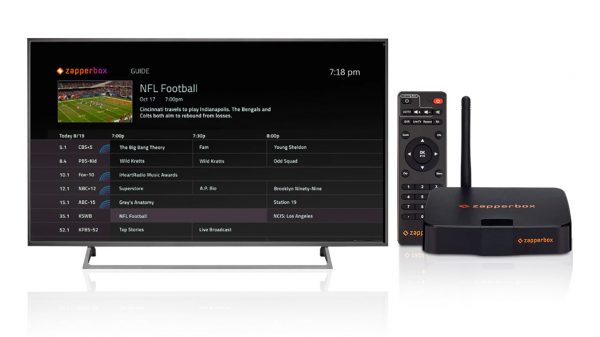
- ZapperBox Now Testing Whole Home ATSC 3.0 DVR With DRM Protected Broadcasts
What Is ATSC Broadcast-to-Everything?
ATSC highlighted B2X again on October 8, 2026, describing a new Candidate Standard as an important foundation for combining the efficiency of traditional broadcasting with the scale of mobile and connected-device networks.
There is an important bit of housekeeping here.
The A/391 B2X System Discovery and Signaling Candidate Standard was actually approved on July 9, 2026, not October 8. ATSC’s more recent announcement puts a brighter spotlight on the development as the organization tries to draw participation from broadcasters, wireless companies, semiconductor manufacturers and device makers. Its Candidate Standard review period runs through June 30, 2027.
A/391 does not suddenly create a complete B2X network.
It establishes one of the fundamental pieces required to build one: a common way for compatible devices to recognize a B2X transmission, identify what it is and determine how to access the service.
Think of it as building the front door before worrying about the furniture.
ATSC also makes clear that A/391 does not modify the existing ATSC 3.0 standards. More B2X specifications will be required before this turns into a complete commercial platform.
Why Broadcast Still Has One Enormous Advantage
Streaming works extremely well until everyone wants the same thing at the same time.
A conventional streaming service generally delivers separate data streams to individual users. If ten million people want to watch the same live event, the infrastructure needs to support delivery to those ten million connections.
Broadcast works differently.
One transmitter can send the same information to enormous numbers of receivers simultaneously. Adding another receiver does not require creating another individual transmission. That one-to-many efficiency is the heart of B2X.
ATSC wants to explore ways for mobile and broadband networks to use broadcast capacity when sending the same large piece of content or data to huge numbers of devices makes more sense than delivering millions of separate copies.
Live sports is an obvious example, but B2X could extend well beyond entertainment.
Software or firmware updates could potentially be distributed to fleets of vehicles or connected devices. Emergency information could reach large geographic areas. Navigation data, public safety information, connected-car services and even low-power devices such as sensors and wearables are among the broader categories ATSC has been discussing.
Suddenly, that television tower starts looking less like an antique and more like infrastructure.
No, Your iPhone Isn’t About to Become a NEXTGEN TV
Before anyone starts looking for an ATSC setting buried inside their smartphone, there is one rather substantial obstacle.
Current smartphones cannot receive these broadcasts.
Not even with a software update.
ATSC has previously explained that today’s phones lack the necessary RF support for the frequencies and channel bandwidths used by television broadcasting. Prototype phones capable of receiving ATSC 3.0 or 5G Broadcast signals have been demonstrated, but a commercial device ecosystem has not developed.
That distinction is important because B2X can easily be reduced to the much sexier headline that “free broadcast TV is coming to your phone.”
Maybe someday.
That isn’t what ATSC announced. B2X is about developing the technical architecture that could allow future compatible devices and networks to use broadcast delivery alongside conventional mobile communications.
There is still a considerable amount of silicon, spectrum, standards work and corporate cooperation standing between today’s announcement and something consumers can buy at Best Buy.
B2X Is Not Just 5G Broadcast With Another Name
The terminology doesn’t exactly help.
5G Broadcast was developed by 3GPP for delivering broadcast services into the cellular ecosystem. Despite the name, it is based on LTE technology rather than conventional 5G New Radio. ATSC 3.0, meanwhile, was designed as an IP-based broadcast platform and is already deployed commercially for television broadcasting in the United States and several other markets.
B2X takes another approach.
ATSC describes it as a way for broadcast technology to work alongside mobile networks, with the A/391 specification optimized for B2X endpoints operating in both broadcast and International Mobile Telecommunications spectrum environments.
The objective isn’t necessarily to replace cellular delivery. It is to stop pretending cellular networks should handle every type of data distribution on their own.
Why This Matters
The most interesting part of B2X may have very little to do with better television.
Broadcasters own valuable spectrum, operate high-power transmission facilities and already have infrastructure capable of covering enormous geographic areas.
The industry increasingly sees an opportunity to use that network for more than ABC, CBS, NBC, Fox and local weather.
That thinking is already visible in projects such as EdgeBeam Wireless, backed by Sinclair, Scripps, Gray Media and Nexstar. The companies have been developing the idea of a national broadcast data network capable of supporting connected vehicles, critical communications, smart-city infrastructure and other one-to-many data services. ATSC has described that broader vision as “Data Distribution as a Service.”
And that may explain why B2X matters more than another promise of eventual 4K broadcasts.
NEXTGEN TV has struggled to give average consumers an obvious reason to replace equipment they already own. Being told that their local station might someday offer better HDR is not exactly the same thing as the transition from analog television to HDTV.
Turning the broadcast network into a national data-delivery infrastructure is a much larger proposition.
It could also give broadcasters something they badly need: new ways to monetize their spectrum that don’t depend entirely on people watching television.
The Bottom Line
ATSC Broadcast-to-Everything remains early technology.
A/391 is a Candidate Standard, not a finished consumer platform, and compatible smartphones, vehicles, wearables and other B2X devices are not suddenly appearing on store shelves.
But the direction is significant.
ATSC 3.0 was introduced to most Americans as the future of free over-the-air television. B2X suggests the broadcast industry’s longer-term ambition is considerably larger: use those same towers and spectrum as part of a national communications network capable of delivering data efficiently to potentially millions of devices at once.
After years of trying to convince Americans that NEXTGEN TV is the future of television, broadcasters may eventually discover that its more valuable future lies beyond the television altogether.
Related Reading: