
Spotify would like listeners to know that fake AI artists are a problem.
Unless, apparently, the AI is being used in a licensed product that lets paying subscribers alter music created by actual human beings.
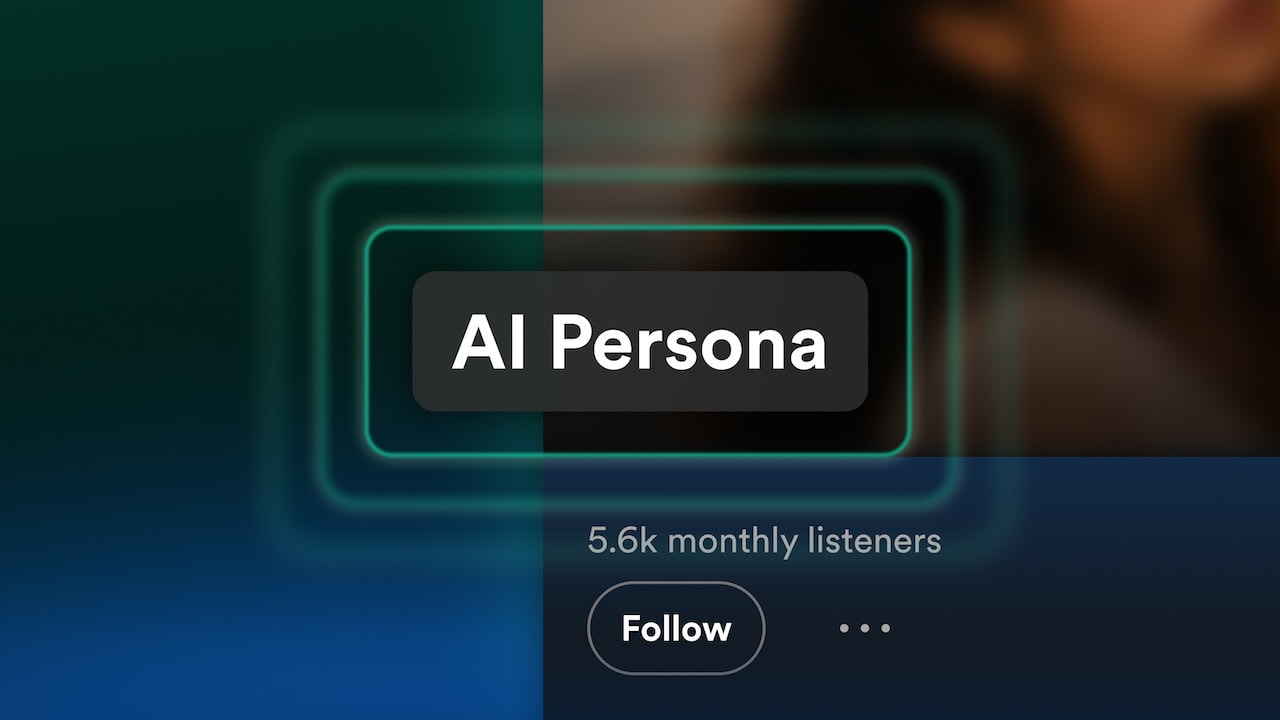
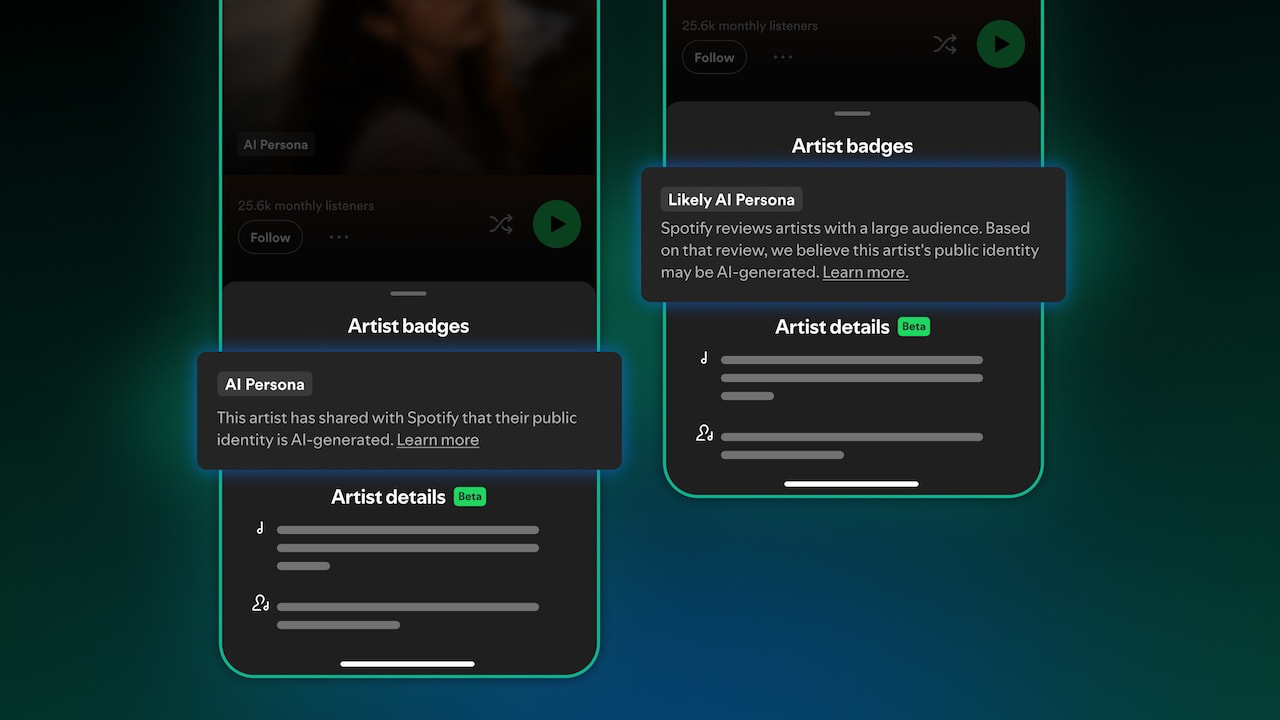
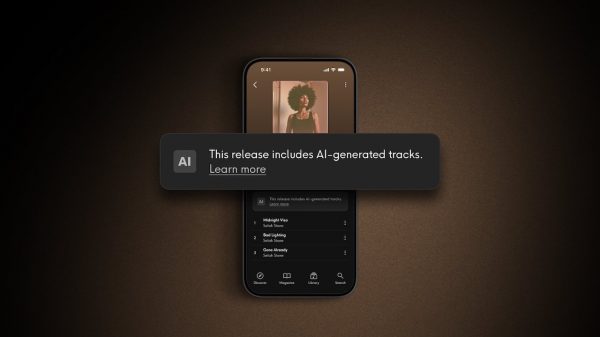
Spotify has announced that it will begin labeling some artist profiles with an AI Persona badge when the public identity presented by that artist does not represent a real person. Beginning in mid-September, those badges will appear on artist profiles, in search results, playlists and individual track listings. More importantly, Spotify says music from AI Personas will not be included by default in editorial or algorithmic recommendations unless listeners have deliberately followed or engaged with them.
That is a meaningful change. It is also the latest turn in Spotify’s increasingly complicated relationship with artificial intelligence.
Related Reading:
- Spotify Wants Fans To Remix Real Songs With AI And The Labels Smell Another Payday
- Suno Will Press Your AI Songs On “Vinyl” For $45. Who Exactly Asked For This?

Does Spotify Like AI Music or Not?
The answer appears to be: it depends.
Spotify has never broadly banned music merely because AI was involved in creating it. In September 2025, the company explicitly said that it supports artists using AI creatively and that licensed music would be treated equally regardless of the tools used to make it. At the same time, Spotify tightened its rules against unauthorized voice cloning, fraudulent uploads and industrial-scale music spam.
That distinction made some sense.
Using AI during production is not automatically the same thing as generating 5,000 anonymous tracks, impersonating Drake or creating a photorealistic singer who never existed and hoping listeners don’t notice.
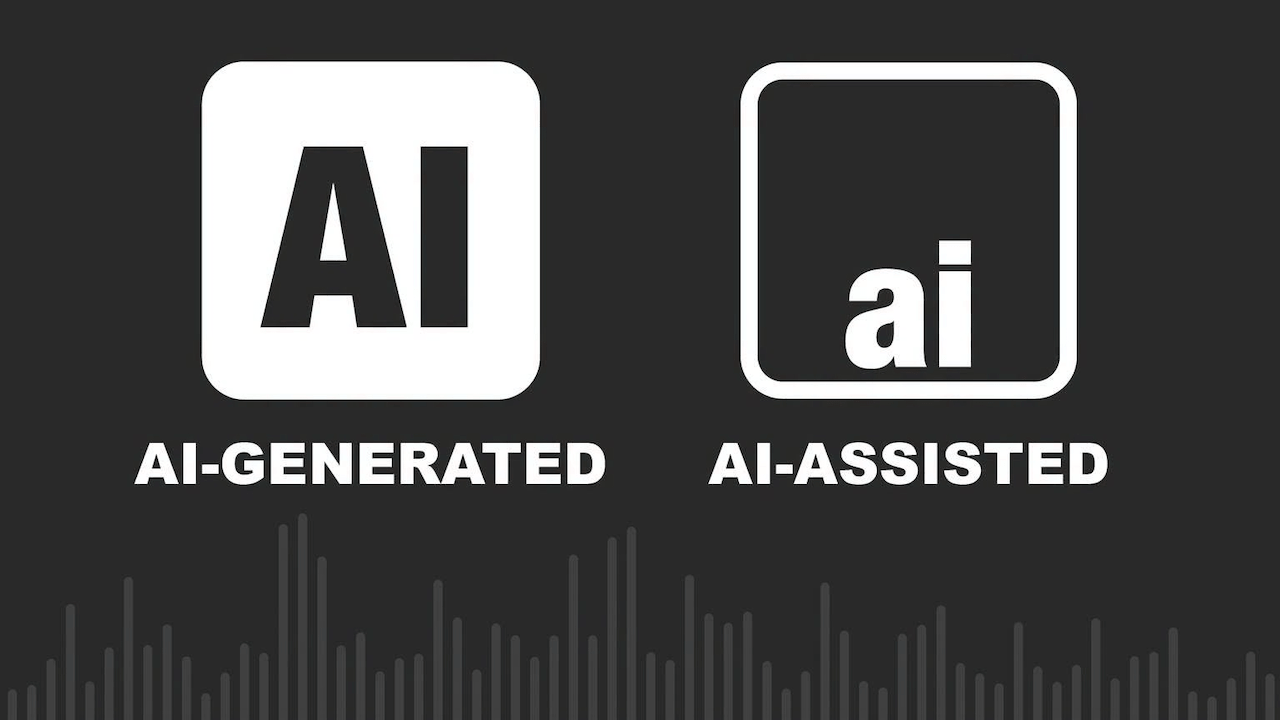
Spotify subsequently introduced AI credits that allow artists and distributors to disclose how AI was used in areas including vocals, lyrics and production. As we reported in July, that industry-wide push toward AI Generated and AI Assisted labeling is ultimately about giving listeners some idea of what they are actually hearing.
Then things became considerably more interesting.
Spotify Decided AI Could Also Be a Business
In May, Spotify and Universal Music Group announced a forthcoming generative AI tool that will allow Premium subscribers to create licensed covers and remixes of music from participating artists and songwriters.
It will be sold as a paid add-on.
Universal signed on first, and Merlin followed on August 4, bringing a large collection of independent labels into the program. Spotify says participating artists will have control over whether their music is included and will receive credit and compensation when fans create new versions.
We recently examined that deal and asked the uncomfortable question: if Spotify is worried about AI undermining musicians, why is it preparing to sell consumers tools that let them modify commercially released music in the first place?
The answer increasingly looks like consent and money.
Unauthorized AI impersonation? Bad.
Mass-generated AI sludge designed to siphon royalties? Bad.
A fictional AI artist pretending to be a real person and being pushed into your Discover Weekly playlist? Apparently bad now as well.
AI used under agreements negotiated with Universal, Merlin and other rights holders, with Spotify charging subscribers for the privilege? Welcome aboard.
That does not necessarily make Spotify hypocritical. There is a legitimate distinction between licensed AI tools used with permission and deceptive AI content designed to fool listeners or manipulate the royalty system.
But from the listener’s side, the rules are becoming awfully complicated.
What Is an AI Persona?
Spotify’s new badge is specifically about identity, not whether the music itself was AI generated.
That distinction matters.
An artist can use AI extensively in making a recording without necessarily receiving an AI Persona badge. Conversely, an artist profile portraying a photorealistic fictional human could receive the badge regardless of precisely how the music was created. Spotify says it will initially review profiles that have reached certain audience thresholds rather than relying entirely on voluntary disclosure. Artists can appeal the designation, and Spotify plans to eventually let listeners report suspected AI Personas.
That is considerably more useful than hiding an AI disclosure six menus deep inside the credits. And keeping AI Personas out of recommendations by default may be the most important part of the entire policy.
Spotify’s recommendation engine does not merely help listeners find music; it determines which artists receive enormous amounts of exposure. Removing synthetic personalities from that pipeline makes it harder for AI content farms to compete for attention simply by generating more material than humans possibly can.
Why Listeners Should Care
Listeners should not need forensic training to determine whether the singer Spotify just recommended is an actual person.
That is the larger problem with AI music. The debate is usually framed around copyright, royalties and artist compensation, all of which matter enormously. But streaming services also have a basic responsibility to tell subscribers what they are listening to.
TIDAL recently went further by deciding that wholly AI-generated music can remain on its service but will not receive royalty attribution. Qobuz has also taken a more human-centered approach to curation and AI-generated content. Spotify is choosing a different path: allow AI, disclose more of it, suppress deceptive uses and monetize the versions it can license properly.
There is a logic to that strategy. It just happens to be a logic that becomes considerably easier to understand once somebody is getting paid.
The Bottom Line
Spotify’s AI Persona badge is a positive move for listeners. Clearly identifying fictional artists and keeping them out of recommendations by default should make the service less susceptible to the flood of synthetic content that increasingly threatens genuine music discovery.
But Spotify cannot have this conversation entirely on its own terms.
The company is telling listeners that authenticity matters while simultaneously building a business that will let subscribers use generative AI to alter recordings made by real musicians. Those two positions can coexist if consent, transparency and compensation genuinely remain at the center of the system.
If they don’t, Spotify isn’t drawing an ethical line around AI.
It’s drawing a revenue line.
Related Reading:


































Asa
August 13, 2026 at 5:57 pm
The “A” in AI is artificial…fake…as in…you couldn’t do that w/o your little pocket elf. It’s a shortcut to real learning. Yes, there are some practical uses for it, but when the power goes out and your batteries go dead, we’ll know quickly who did and didn’t do their own homework.
I think Dave Grohl said something to the effect in the Sound City documentary…paraphrasing…music made by humans should sound human, imperfections and all…makes it sound like people…complaining a bit after the sound engineer made him use a click-track after his drumming had a tendency to speed-up, which isn’t too suprising given the nature of the bands he’s played in.
Fascinating how each company approaches it. I think the bigger problem isn’t those platforms, but Ytube which has let publishers take real video/audio from others’ copyrighted work they steal and republish it to their own channel w/o a strike unless the original owner notices it. Sigh.
Ian White
August 14, 2026 at 1:16 am
Asa,
It’s all about the money. The labels were originally furious about all of the AI-created music that was popping up, but now their accountants told them that money can be made, so forget integrity.
IW