There are plenty of great IEM cables on the market, whether it’s the stock options included with models like the XENNS Mangird Tea Pro SE or affordable aftermarket alternatives like the Tripowin Zonie. Finding a comfortable, well-made analog cable isn’t particularly difficult. Things get more complicated, however, when you want USB-C connectivity, a built-in microphone, and physical volume and playback controls without sacrificing sound quality. Some modular cables offer USB-C connectivity, but finding one that combines all of these features in a single package is considerably more challenging.
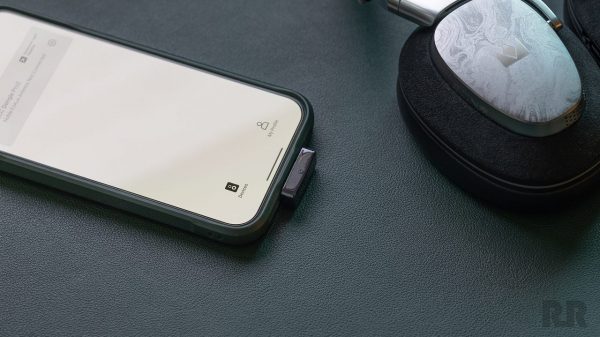
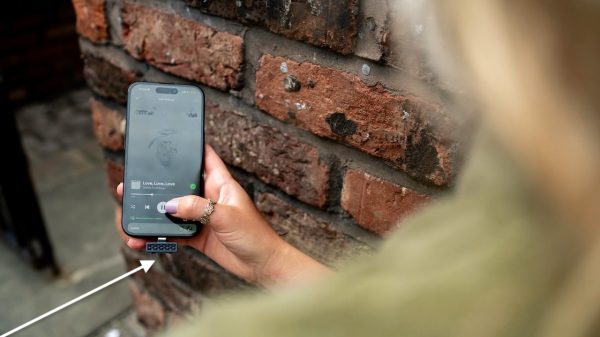
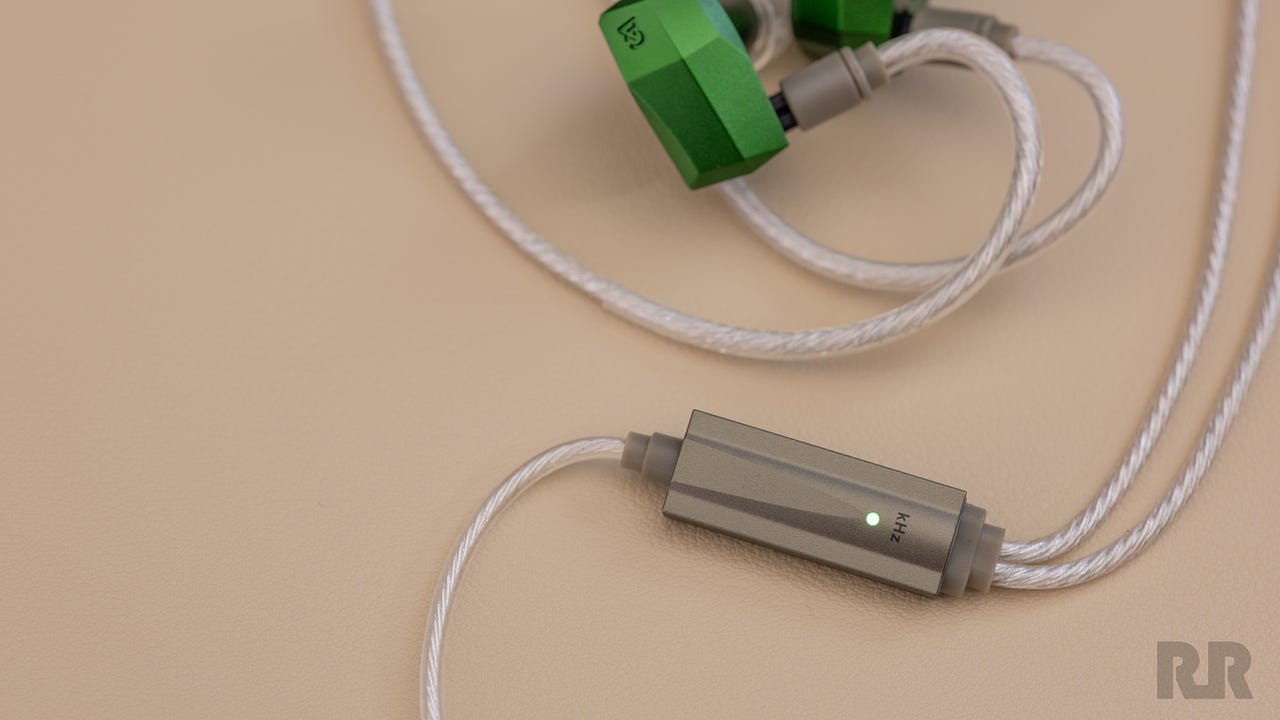
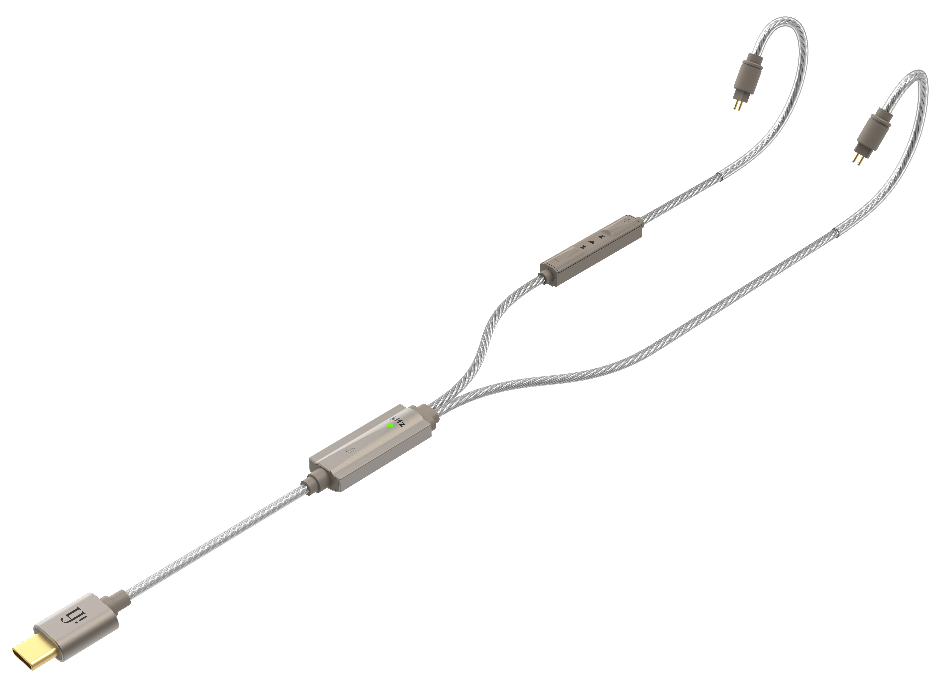
That’s where the new iFi Audio GO Cable comes in. Designed for IEMs with standard 0.78mm two-pin connectors, it integrates an ESS Sabre DAC and headphone amplifier directly into a USB-C cable, complete with an inline microphone, volume adjustment, and playback controls. With support for high-resolution PCM up to 32-bit/384kHz and native DSD256, iFi is promising audiophile-grade performance without the inconvenience of carrying a separate dongle DAC. It’s an intriguing proposition on paper, but specifications only tell part of the story. So, what are they trying to accomplish here and might you need it?
iFi Audio GO Cable Technical Specifications
- DAC: ESS Sabre ES9219MQ/Q
- High-Resolution Audio Support: PCM up to 384kHz; DSD256
- Device Connection: USB-C
- IEM Connection: 0.78mm 2-Pin L/R Male
- Output Power (RMS):
- ≥1.5V/70mW @ 32Ω
- ≥2V/14mW @ 300Ω
- Output Impedance: <1Ω
- Signal-to-Noise Ratio (SNR): ≥120dBA
- Dynamic Range (DNR): ≥125dBA
- Total Harmonic Distortion + Noise (THD+N): ≤0.004% (1.27V @ 32Ω))
- Frequency Response: 10Hz – 80kHz (-0.5dB)
- Cable Conductors: Oxygen-free high-conductivity copper (OFHC) with pure silver
- Power Consumption: No signal ~0.3W; Max signal <1W
- Cable Length: 1.37m (53.94 inches)
- Weight: 16g (0.56 oz)
- Additional Features: Inline microphone, volume controls, and playback controls
Related Reading:
- iFi UP Play Max Brings AptX Lossless Bluetooth To IPhones And More For $89
- iFi GO Link 2 Max Debuts At High End Vienna 2026: S-Balanced Dongle DAC For $85?
Build

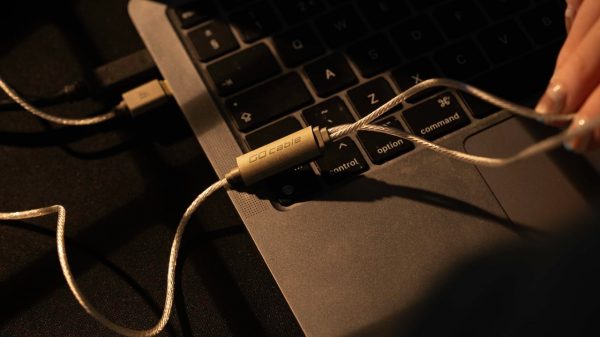
iFi constructed the GO Cable using a combination of plastic and metal. The USB-C connector and DAC housing/Y-splitter are clad in aluminum, while the inline controls and 2-pin connector housings are made from plastic. The cable itself features multi-strand silver-plated copper (SPC) conductors encased in a lightweight, transparent plastic sheath. The GO Cable feels well-constructed, although it doesn’t exactly scream luxury. That said, iFi may have prioritized practicality over premium materials. The cable also offers water resistance, making it suitable for commuting in humid conditions or light rain, although that shouldn’t be mistaken for full waterproofing.
Cable Comfort and Ergonomics
The iFi GO Cable is noticeably thinner than many stock IEM cables, including those supplied with affordable models like the SIVGA Lyrebird and EarAcoustic Audio Oshun.
I place considerable value on how cables and IEMs feel in the hand, so the GO Cable’s slender construction isn’t ideal for my preferences. That said, its lightweight design and minimal cable microphonics make it a practical option for listening on the go. I even tested it while cycling and found that it performed well, remaining comfortable and relatively unobtrusive during use.
Broad Compatibility and Efficient Performance
The iFi GO Cable promises broad device compatibility, and it delivers. I paired it with a variety of IEMs and tested it with nearly every device I use regularly, including a Linux desktop, Windows 10 desktop, Windows 11 laptop, Android phone, iPad, and MacBook Pro. I also connected it to my Nintendo Switch 2 and put it through its paces using GameChat. Across these devices and IEM combinations, the GO Cable worked flawlessly, with no compatibility issues to report.

The GO Cable also proved relatively power-efficient during testing, with no noticeable impact on battery life when connected to my portable devices or laptops. It didn’t become noticeably warm during use, either, suggesting that iFi has paid attention to power efficiency and thermal management. For something designed to travel with your IEMs, those are meaningful practical advantages.
Listening
Conventional analog cables rarely change how an IEM sounds, outside of unusual circumstances involving cable resistance or impedance interactions. USB-C cables with integrated DACs and amplifiers, however, are a different story. Whether through onboard DSP, firmware tuning, or built-in EQ, some can alter the sound signature of connected IEMs. Take the DUNU Titan X and NiceHCK Tears, for example, which offer optional USB-C cables with their own tuning adjustments. The iFi GO Cable takes a more general-purpose approach, delivering what I found to be a completely transparent listening experience. It pairs particularly well with highly resolving IEMs like the Campfire Audio Andromeda 10, while its extremely low output impedance helps minimize unwanted frequency response changes with sensitive, multi-driver IEMs.
The GO Cable also has more than enough output power for most IEMs, including some particularly demanding models. During testing with my Google Pixel 10 Pro, I rarely needed to push the volume beyond halfway, even when driving power-hungry IEMs. That’s an encouraging result for such a compact DAC and amplifier combination, particularly one designed for everyday portable listening.
The Bottom Line
Judged purely on its construction and feel, the iFi Audio GO Cable isn’t the most compelling value for anyone simply looking to upgrade their IEM cable. Its thin, somewhat utilitarian design lacks the premium feel of some less expensive aftermarket alternatives. But factor in its integrated USB-C DAC and amplifier, ample output power, excellent device compatibility, and convenient inline microphone and controls, and the value proposition becomes considerably stronger.
For listeners who want a capable USB-C cable without sacrificing sound quality or everyday convenience, the GO Cable delivers a thoughtful combination of features that relatively few competitors offer in one package. It won’t be replacing the stock cables on most of my IEMs used for home listening, but it has already displaced several basic cables in my portable setups. That’s a meaningful endorsement for a product designed around practicality rather than luxury. I’d still like to see iFi introduce thicker, softer cable options in the future, but the GO Cable gets the fundamentals right and makes a convincing case for itself among listeners who want fewer accessories without giving up functionality.
Pros:
- Excellent compatibility across tested USB-C devices
- Integrated ESS Sabre DAC and headphone amplifier
- Ample power for demanding IEMs
- Transparent sound with low output impedance
- Clear inline microphone and convenient physical controls
- Lightweight, comfortable design with minimal microphonics
- Works with Nintendo Switch 2 GameChat
- Water-resistant construction for everyday use
- Good value for the integrated features
Cons:
- Thin construction lacks the premium feel of some aftermarket cables
- Cable is prone to retaining bends and kinks
- Plastic 2-pin connector housings look inexpensive
- Limited to compatible 0.78mm 2-pin IEMs
Our Ratings:
★★★★★★★★★★ Sound Quality
★★★★★★★★★★ Build Quality
★★★★★★★★★★ Comfort
★★★★★★★★★★ Value
Where to Buy:
Related Reading: