As EarAcoustic Audio (EAA) has settled into a more reasonable release cadence, they’ve had more time to focus on the subtleties of their branding and product development. Some of their “earlier” models are compelling, yes, but they’re difficult to distinguish from their other, less impressive offerings.
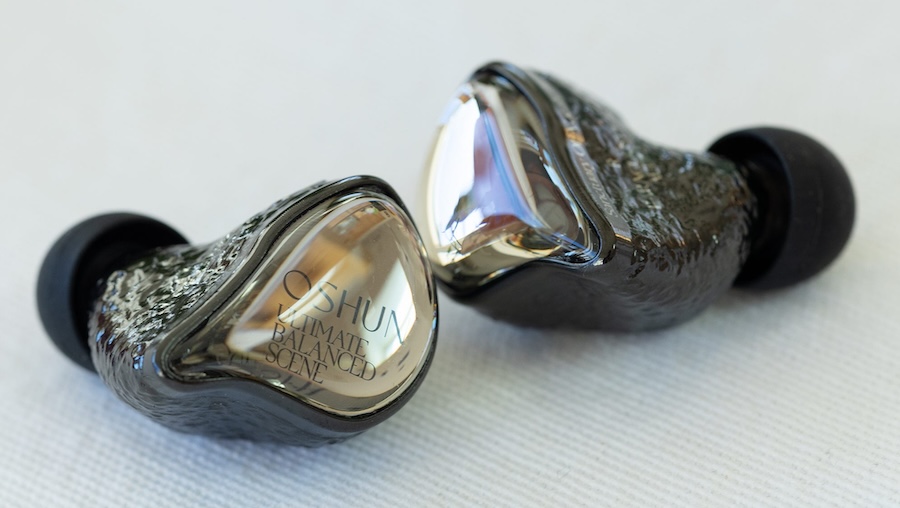
EAA looks to have hit its stride in 2026, teasing and releasing a suite of distinct and interesting new IEMs. Today, we’re looking at their newest dynamic-driver IEM, the Oshun “Utopia” LTD. Clad in metal shells and boasting a single full-range dynamic driver per side, the Oshun looks similar to its many siblings—but its refined tuning and impressive performance are very real differentiators.
Let’s get into the details of what makes the Oshun so compelling.
About My Preferences: This review is a subjective assessment and is therefore influenced by my personal preferences. While I try to mitigate this as much as possible during the review process, I’d be lying if I said my biases were completely erased. So, for you, my readers, keep the following in mind:
- My ideal sound signature features competent sub-bass, textured mid-bass, a slightly warm midrange, and extended treble.
- I have mild treble sensitivity.
My testing equipment and standards can be found here.
Related Reviews:
- CanJam SoCal 2026 IEM Roundup: 35 In-Ear Monitors Tested From $75 To $8,000
- Noble Audio Vanguard Review: Can These Analytical IEMs Compete In The $300 To $500 Market?
- 8 New Headphones And IEMs We Want To Try In 2026
Key Specs:
- Driver Configuration: Single dynamic driver
- Driver Size: 8.3mm
- Driver Design: Dual-magnet, dual-cavity dynamic driver
- Diaphragm: Plated titanium-alloy dome with carbon-fiber suspension
- Frequency Response: 20Hz–20kHz
- Impedance: 26Ω ±15%
- Sensitivity: 110dB/mW at 1kHz
- Total Harmonic Distortion: <0.5% at 1kHz, 94dB SPL
- Shell Material: 6063 aluminum alloy
- Shell Finish: Textured surface with electroplated coloring and protective crystalline-style coating
- Weight: 6.8g per earpiece
- Connector: 0.78mm 2-pin
- Cable: Detachable silver-plated/OCC copper Litz cable
- Cable Length: Approximately 1.2 meters
- Termination: 3.5mm single-ended or 4.4mm balanced, depending on configuration and market
- Available Finishes: Silver, Black, Gold, and Platinum
- Included Accessories: Detachable cable, carrying case, ear-tip storage case, multiple sets of silicone ear tips, documentation, and warranty card
- Warranty: 1 year
Unboxing
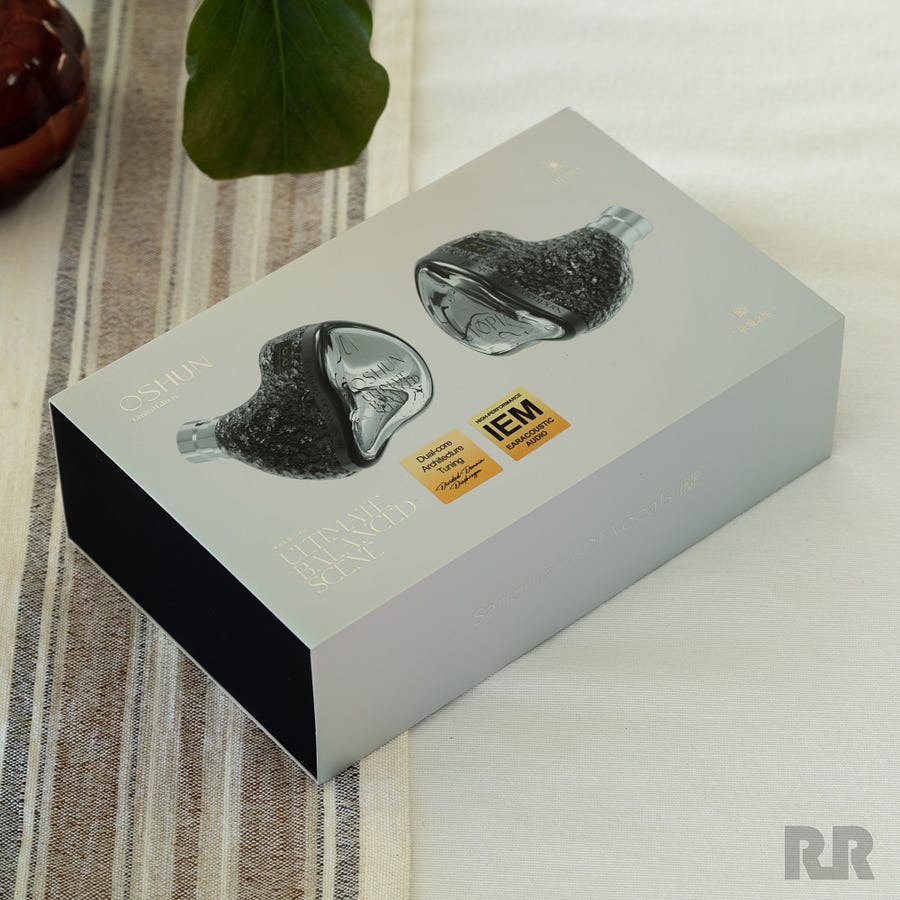


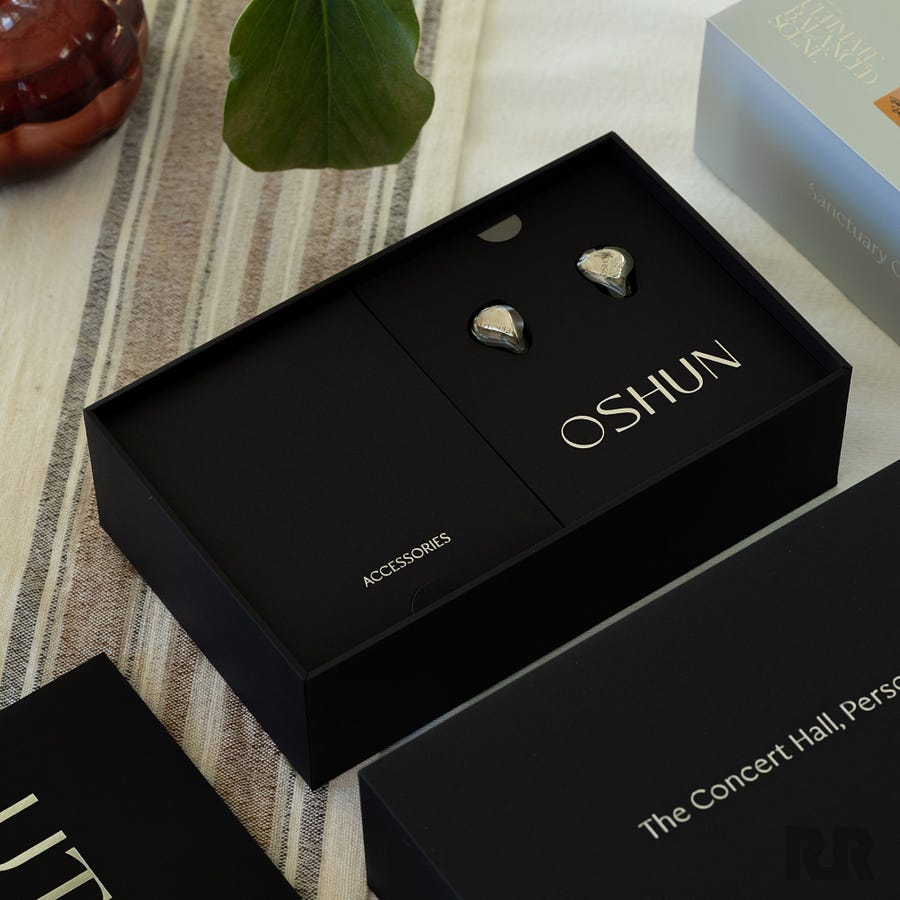
EarAcoustic Audio’s packaging designer needs a raise. For $169, this is an impressive unboxing experience, especially considering the Oshun’s box is reasonably compact.
Build
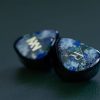
The Oshun features a classy “hammered metal” shell design composed of three pieces of CNC-machined aluminum and a reflective resin faceplate. It is noticeably lighter than most other EAA models, with the possible exception of the Genesis.
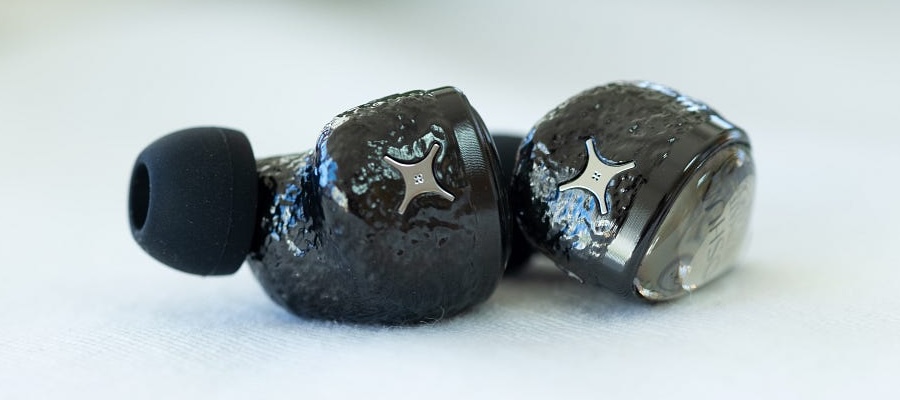
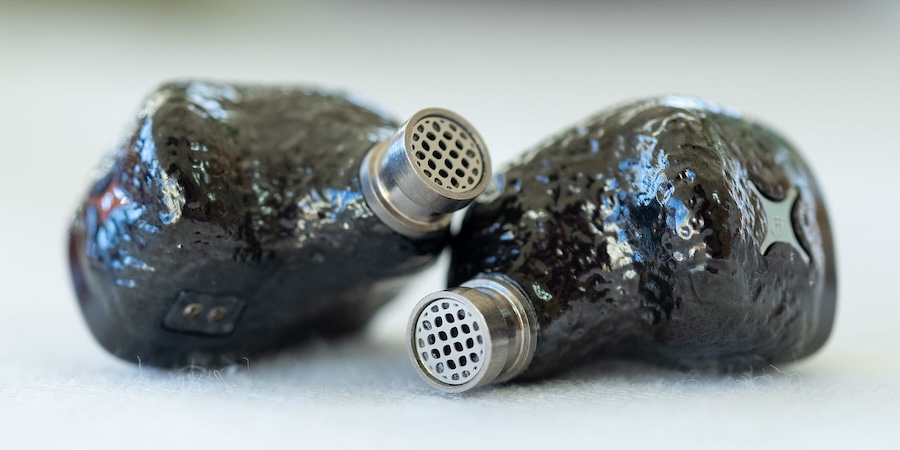
The top of the Oshun’s shells houses its 0.78mm 2-pin sockets. They’re seated firmly and sit flush with the shell. The Oshun also features metal nozzles, though they’re separate components rather than extensions of the shell itself.
EAA’s pricier models use a unified shell-and-nozzle chassis, which likely gives them a slight durability advantage.
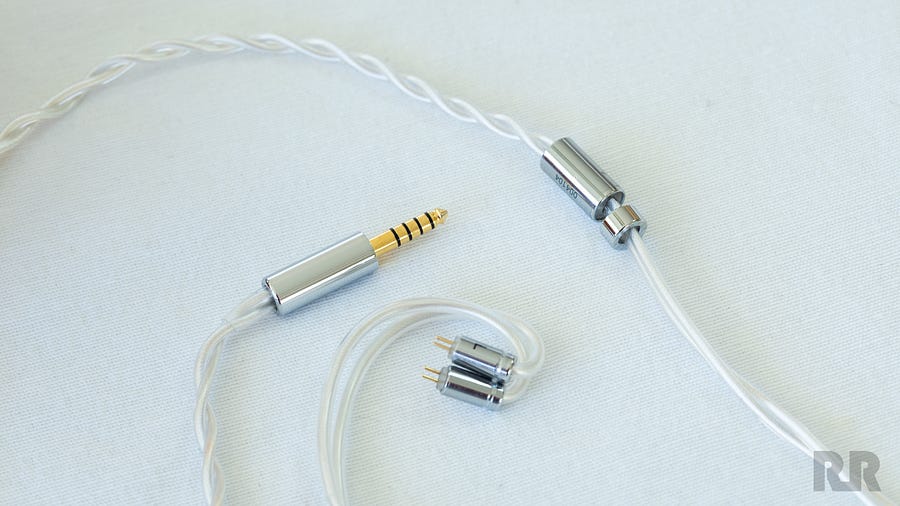
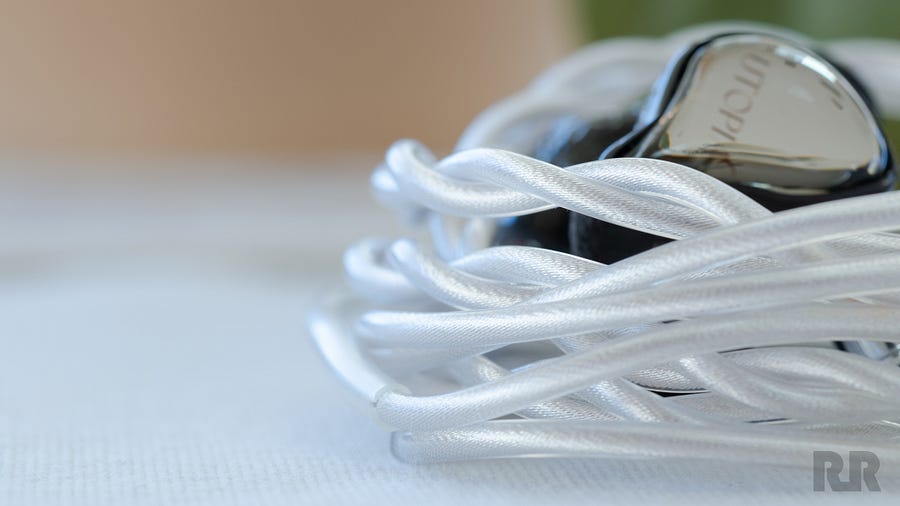
The Oshun comes with a fixed-termination cable. At checkout, you can select a 3.5mm, 4.4mm, or USB-C version, and I went with the 4.4mm option. The cable uses a soft, braided wire that transitions into a single, comfortable run above the Y-splitter. The termination housing, 2-pin housings, and Y-splitter are all clad in metal with a reflective finish. It’s not necessarily the most ornate cable, but it feels sturdy and looks good, so I’m not complaining.
Comfort
Comfort is a metric that relies heavily on factors influenced by your individual ear anatomy. Your mileage will vary. The Oshun is on the smaller side for an EAA IEM and fits my average-sized ears comfortably. I was able to achieve an effective seal with the stock ear tips and comfortably listen for more than two hours at a time.
The Oshun’s cable is thick but soft and not particularly heavy, so it doesn’t place excessive weight on the ears.
Accessories
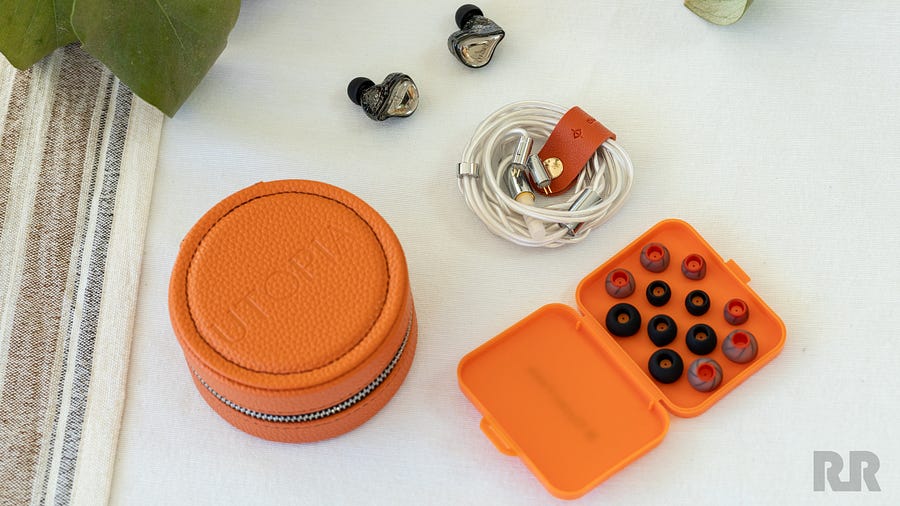
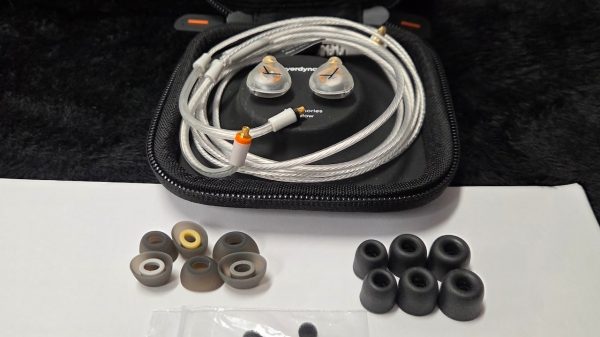
Inside the box, you’ll find:
- 1x semi-hard carrying case
- 1x 2-pin cable
- 6x pairs of silicone ear tips
- 1x leather cable tie
EAA has figured out a nice balance between quantity and quality with its latest batch of IEMs. The Oshun’s cable feels well made, and the included carrying case can neatly store the IEMs, cable, and ear-tip case without feeling cramped.
EAA’s new inclusion of spiral-style silicone ear tips is welcome, as they’re much easier for me to get a good seal with compared to the standard sets the company used in the past. It would have been nice to see liquid-silicone and foam ear tips included in the box, but those are more of a luxury than a requirement.
Beyond that, an ear-tip baggie and microfiber cleaning cloth would have been useful additions. The Oshun’s metal shells can collide while stored in the case, potentially scuffing or chipping the finish.
Listening
The Oshun is a vibrant, full-range IEM. Its frequency response is V-shaped, featuring a broad bass region, moderately warm lower midrange, nicely elevated upper midrange, and relatively linear treble. This style of tuning is both forgiving and resolving, striking a wonderful balance between analytical positioning and tonal substance.
The Oshun’s soundstage is wide and deep, and the IEM seldom struggles to place elements dynamically. For such a richly tuned dynamic-driver IEM, the Oshun achieves striking levels of transparency.
Sweet, Clean Treble
The Oshun’s treble is moderately forward, balancing the lower and upper treble nicely. It is responsibly bright, placing treble-bound elements neatly and distinctly toward the middle of the soundstage. There’s no hint of harshness, sibilance, or excessive sharpness, and even roughly mastered tracks remain palatable for treble-sensitive listeners.
Hi-hats and cymbals sound clean and possess healthy levels of decay. The intro to “Everything to Nothing” by Manchester Orchestra demonstrates the Oshun’s remarkable ability to communicate detail and texture from treble-bound instrumentation. Bright, metallic textures are rendered cleanly and cohesively, blending smoothly into the soundscape.
Higher-pitched elements are sculpted crisply without smudging, contributing to a greater overall sense of contrast and resolution. The Oshun isn’t the most “revealing” IEM, as it doesn’t artificially push treble-bound details forward, but it possesses a satisfying degree of air nonetheless.
Rich and Vibrant
The Oshun is moderately warm, tilting beyond neutral and into “rich” territory. This allows it to imbue vocals and instrumentation with substance and harmonic fullness, especially on drier recordings such as “Flagpole Sitta” by Harvey Danger.
Thankfully, the Oshun doesn’t indulge too much in warmth, allowing it to maintain solid separation, layering, and vocal intelligibility. Lightweight vocals, like those in “American Blood” by Dead Poet Society, have enough energy to contrast against the dark, atmospheric instrumentation in the background, contributing to a dynamic and expressive overall performance.
The Oshun may not be shattering records for midrange resolution, but it performs far better than the average dynamic-driver IEM in this price range and can even compete with some hybrid designs. Tracks with diverse textures remain cohesive and properly layered, even during busier passages.
Bass That Puts the “Dynamic” in “Dynamic Driver”
There’s a reason dynamic drivers remain a favorite for bass reproduction, though it’s easy to forget that after diving too far down the rabbit hole of audiophile mania. “Full-range balanced armature drivers” and “bone-conduction rumble” can start to look like complicated solutions when a well-executed dynamic driver can deliver this kind of bass naturally.
The Oshun’s low end is deep, lush, and intensely complete-sounding. Excellent sub-bass extension, complemented by strong overall bass control, allows the Oshun to absolutely throw down on bass-heavy tracks like “DOPAMINE++” by Juelz. Punchy mid-bass lines sit just above full-bodied, rumbly sub-bass synths, producing a genuinely full-range presentation.
The in-ear tactility that some IEMs attempt to recreate using more complex methods, such as bone-conduction drivers, comes naturally to the Oshun, and its dynamism is genuinely commendable. That said, this isn’t a “bass-only” IEM—you’ll need to increase the volume considerably to achieve truly head-throbbing levels of bass quantity. I’m perfectly happy with the level of bass emphasis at around 65 dB.
The Oshun’s lower register is plenty competent outside of EDM, and I found it to be a natural fit for rock and alternative music as well. I was impressed by the amount of body accompanying the drum hits in “Gone Away” by The Offspring. The natural weight and decay of the drums satisfyingly fill out the bottom end of the track, adding valuable tonal contrast.
The Oshun performs similarly well on “Down” by Seether. The drums integrate smoothly into the soundstage, punctuating the performance and adding harmonic dimensionality.
Comparisons
Comparisons are selected solely based on what I find interesting. If you’d like me to add another comparison, feel free to leave a request in the comments below.
EarAcoustic Audio Genesis G318s
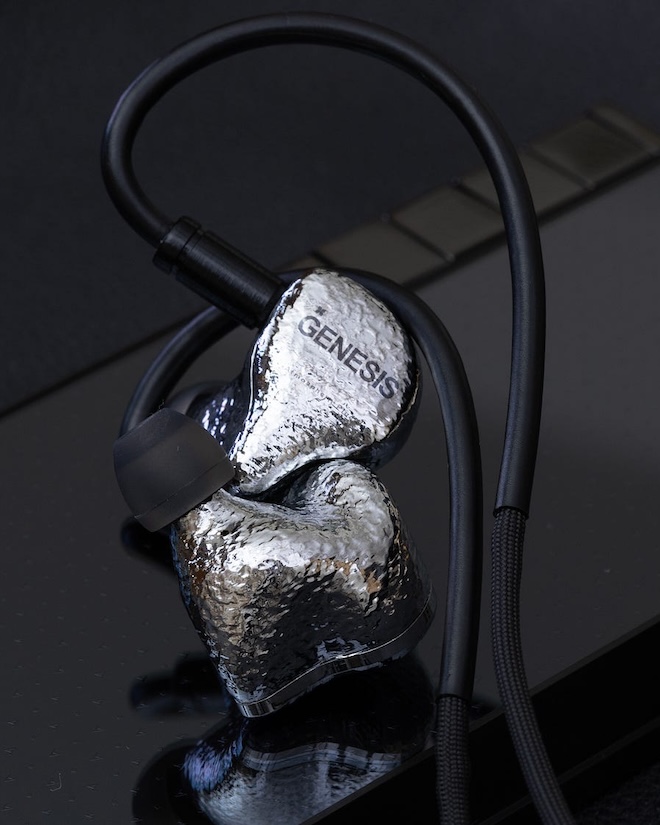
The G318s is a single dynamic-driver IEM released just before the Oshun. It has all-metal shells and costs $250, or about $70 more than the Oshun. The G318s comes with a cloth-covered cable and a fancier accessory package, opting for a rectangular carrying case rather than the usual round variety found throughout EAA’s lineup.
I prefer the Oshun’s cable because of its lower levels of microphonics, and I appreciate the ability to order the Oshun with a variety of cable terminations rather than being limited to 4.4mm, as with the G318s.
While many brands tune their more “premium” IEMs with restrained and “professional” sound signatures, the G318s maintains the same rich and energetic disposition as the Oshun. Both IEMs are V-shaped, though there are some subtle differences.
The Oshun has slightly more forward mid-bass, while the G318s delivers sub-bass with a little more slam and firmness. Both IEMs are warm-tilted, with the Oshun exhibiting a moderate increase in warmth. Instrumentation, particularly bass guitar, sounds a little richer as a result, though there’s a subtle sense of crowding during dense passages that isn’t present on the G318s.
The G318s’s treble is very similar to the Oshun’s, save for a slight increase in upper-treble presence. This gives the G318s a somewhat airier presentation and places hi-hats and cymbals very slightly closer to the front of the soundstage.
These are very similar—and competitive—IEMs, and I think both are easy recommendations for hi-fi enthusiasts with a preference for meaty bass. That said, the G318s’s higher price doesn’t translate into a substantial improvement in the day-to-day experience, and the differences in tonality are relatively minor.
While I prefer the G318s’s tighter, punchier bass, its cable can sometimes be distractingly microphonic. The Oshun’s better-behaved cable and lower price are compelling factors in its favor, and I anticipate that most people will gravitate toward it over the G318s.
Binary Acoustics 1900
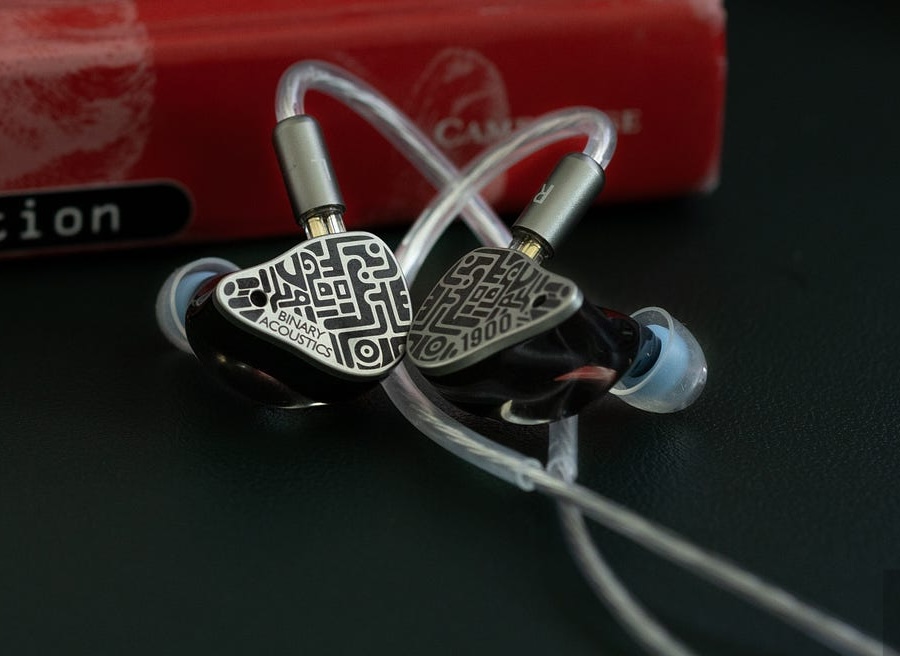
The 1900 is a fairly new hybrid IEM from Binary Acoustics, priced at $239. It features resin shells with metal faceplates and is lighter than the all-metal Oshun. The 1900 also uses a 0.78mm 2-pin cable, though its design is modular and includes both 3.5mm and 4.4mm terminations in the box.
The Oshun’s cable feels meatier and more premium in the hand, but the 1900’s smaller, lighter footprint makes it more comfortable during long listening sessions with minimal fuss.
In terms of sound, the 1900 offers a similar amount of sub-bass but noticeably less mid-bass presence than the Oshun. Its lower midrange is slightly cooler, while the upper midrange sits a little farther forward in the mix.
The 1900’s treble is brighter than the Oshun’s, though most of that additional energy appears above 8kHz. Below that point, the 1900 only slightly edges out the Oshun in overall presence. The Oshun’s upper treble rolls off earlier and captures less air as a result.
Both IEMs are quite precise, and the 1900 only slightly pulls ahead in resolution on complex tracks. The Oshun’s technical performance remains very competitive here.
The 1900 is a strong IEM and one I spoke quite highly of in my review. My enthusiasm for it hasn’t waned, but I still find myself reaching for the Oshun more often. Its pronounced, tactile bass response and effortless, organic timbre are addictive.
I’m sure some audiophiles will prefer the 1900’s more restrained and relaxed presentation, but I’m a sucker for the Oshun’s excellent combination of rich tonality and engaging dynamics.
HiSenior Cano Cristales
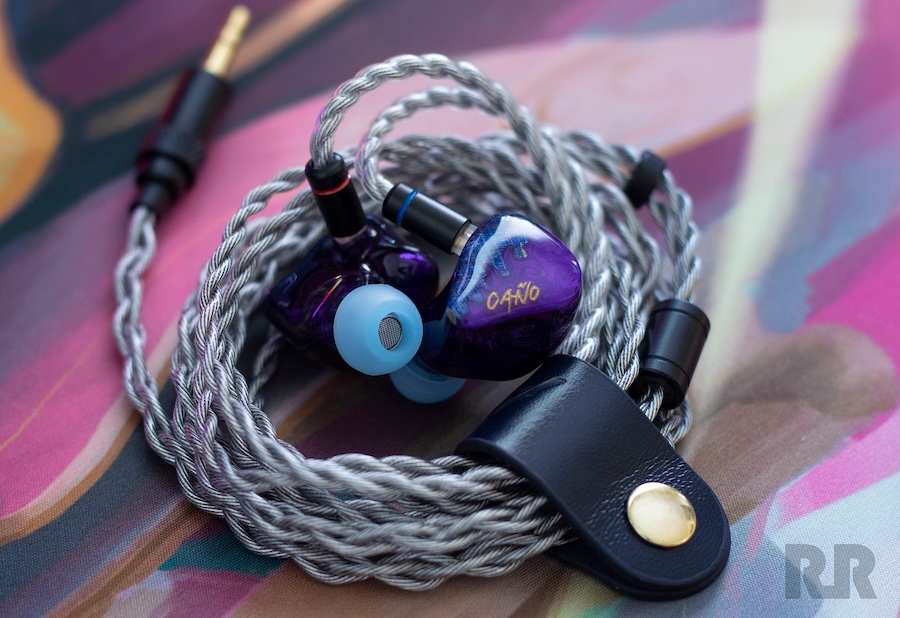
Why am I comparing the $169 Oshun to the $399 Cano Cristales? Because I love both of them, of course. This isn’t intended to be a “takedown” comparison with an obvious winner and loser, but rather a way to give Oshun owners some perspective on how the Cano Cristales stacks up—and vice versa.
The Cano Cristales packs ten drivers per side into its resin shells and features sturdy metal nozzles. The all-metal Oshun feels more robust, though proper care should prevent the Cano Cristales from failing any sooner in normal use. The Oshun’s cable is thicker and softer and feels a bit nicer in the hand.
Both IEMs come with round carrying cases, though the Oshun’s is a little roomier and uses a proper zipper rather than a button closure. The Cano Cristales includes a wider selection of higher-quality ear tips, which is to be expected given the substantial difference in price.
Sonically, the Cano Cristales leans brighter and cooler. The Oshun has less prominent sub-bass, so its rumble is a touch milder. The Cano’s mid-bass is tighter and punchier but carries slightly less tonal weight than the Oshun’s. The Oshun’s lower midrange is warmer and richer, while the Cano’s upper midrange has a little more emphasis in the 2–3kHz region. The Cano’s treble is also more forward and brighter overall.
The Oshun’s warmer, mid-bass-focused lower register sounds more analog to my ears, but it trades away some of the perceived cleanliness that comes from a more even balance between mid-bass and sub-bass, as heard on the Cano.
While I don’t believe that “more drivers = better sound” as an absolute rule, the Cano’s hybrid configuration does deliver greater control, texture, and layering than the Oshun. Its brighter upper end also surfaces subtle treble details more easily and maintains greater separation during hectic passages.
That said, the Oshun’s tonal balance is excellent, and even the Cano Cristales’s formidable performance may not sway listeners who prioritize warmth, richness, and harmonic body.
Ultimately, this comparison highlights two realities of the 2026 IEM market: inexpensive IEMs have gotten remarkably good, and midrange models can still deliver exceptional performance without requiring completely absurd prices.
KBear KB08
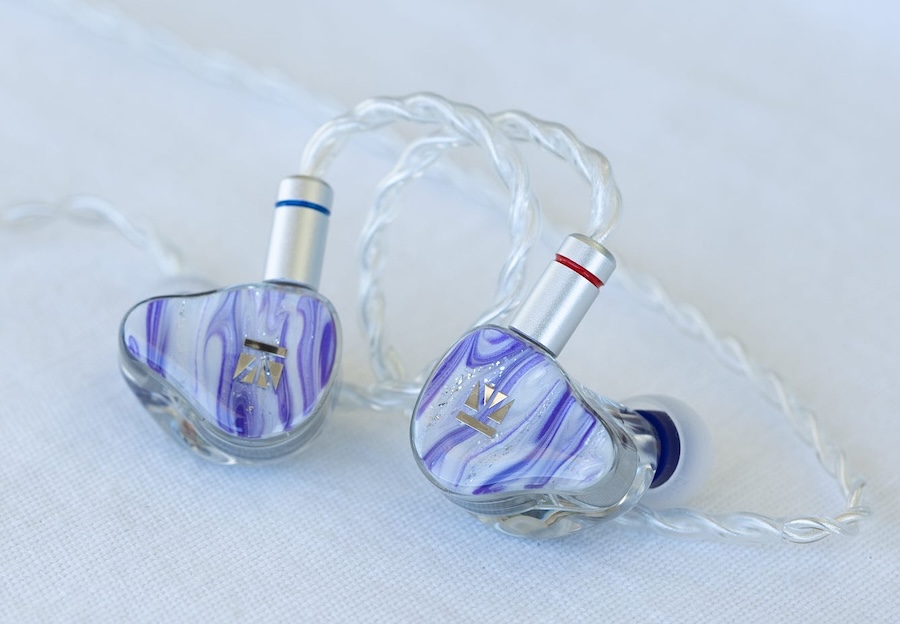
The KB08 is a resin-shelled tribrid IEM costing $10 less than the Oshun. It features a thinner, though still nice, braided 2-pin cable and comes with a few more pairs of ear tips than the Oshun. The Oshun’s all-metal construction feels weightier and sturdier, especially compared to the KB08’s thin resin nozzles.
The KB08’s tuning is fairly similar to the Oshun’s. Both IEMs are rich and bass-happy, with moderate treble emphasis. The KB08 sounds mildly “cleaner” thanks to its less forward mid-bass. Its sub-bass is also a little calmer than the Oshun’s, lacking some of its firmness and control.
The KB08’s midrange is close to the Oshun’s overall, with slightly less lower-midrange warmth and a bit more energy in the 4–5kHz region. Both IEMs place vocals at approximately the same depth within the soundstage.
The KB08 offers a little more sparkle and air thanks to its greater upper-treble extension. The Oshun’s treble rolls off somewhat earlier but maintains nearly the same overall level of resolution.
Choosing between these two IEMs is something of a toss-up, but I give the Oshun the slight edge. Its meatier bass region is friendlier to EDM and fills out bass drops a little better, and I have a soft spot for all-metal construction. I also appreciate the Oshun’s thicker cable and roomier case.
That said, if you’re looking for a bass-friendly V-shaped IEM without an overactive upper register, you can’t go wrong with either one.
The Bottom Line
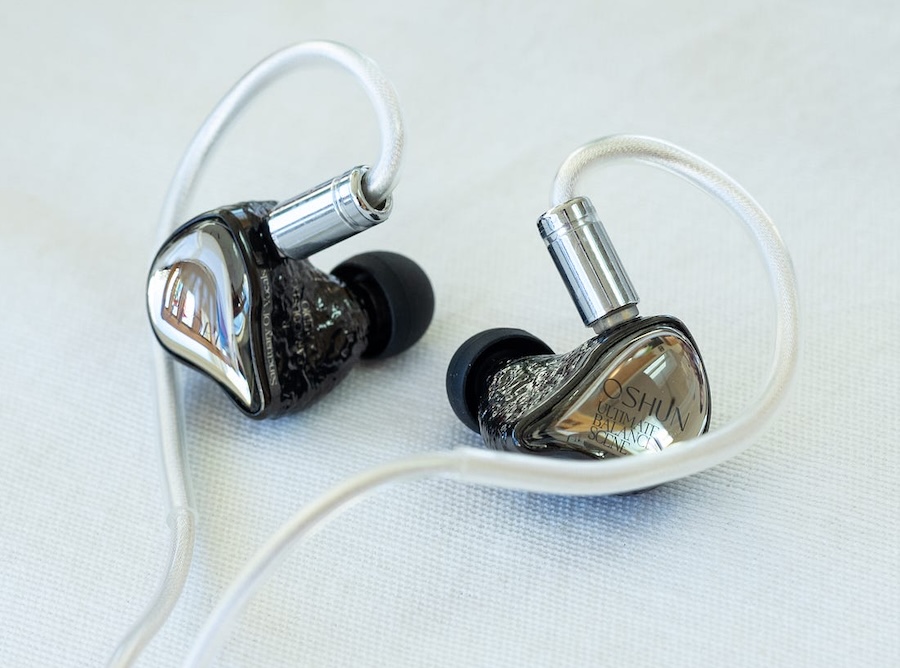
Frankly, the Oshun is a killer. There are very few IEMs below $200 that combine this level of tonal richness, bass authority, technical competence, and build quality without stumbling somewhere along the way.
Its warm, V-shaped tuning won’t satisfy listeners chasing a strictly neutral or ruthlessly analytical presentation, but that isn’t what the Oshun is trying to be. Instead, it delivers deep and tactile bass, a rich midrange, clean treble, and enough resolution and separation to keep its fuller presentation from becoming muddy or congested.
Factor in the excellent metal construction, comfortable cable, useful accessory package, an affordable asking price, and the Oshun becomes one of EAA’s most compelling IEMs to date. More importantly, its appeal extends beyond the enthusiast crowd. This is the kind of tuning that someone who simply loves music can understand almost immediately.
The Oshun isn’t chasing measurements, driver counts, or audiophile bragging rights. It simply sounds very good—and at $169, that’s ultimately the argument that matters most.
Pros:
- Rich, engaging V-shaped tuning
- Deep, tactile, and punchy bass
- Excellent tonal weight and natural timbre
- Strong texture, layering, and separation
- Clean treble without excessive sharpness or sibilance
- Wide and convincingly deep soundstage
- Impressive resolution for a single dynamic-driver design
- Excellent all-metal construction
- Comfortable, well-made cable
- Good accessory package
- Strong overall value
Cons:
- Bass quantity may still be insufficient for dedicated bassheads
- Mid-bass can sound slightly soft during demanding passages
- Warm tuning can introduce some crowding in dense recordings
- Upper-treble extension falls short of some competing hybrid designs
- No liquid-silicone or foam ear tips included
- No protective IEM pouch or microfiber cloth
- Metal shells can contact one another inside the carrying case
- Not ideal for listeners seeking neutral or reference-style tuning
Our Ratings:
★★★★★★★★★★ Sound Quality
★★★★★★★★★★ Build Quality
★★★★★★★★★★ Comfort
★★★★★★★★★★ Value
Where to Buy
Related Reading: