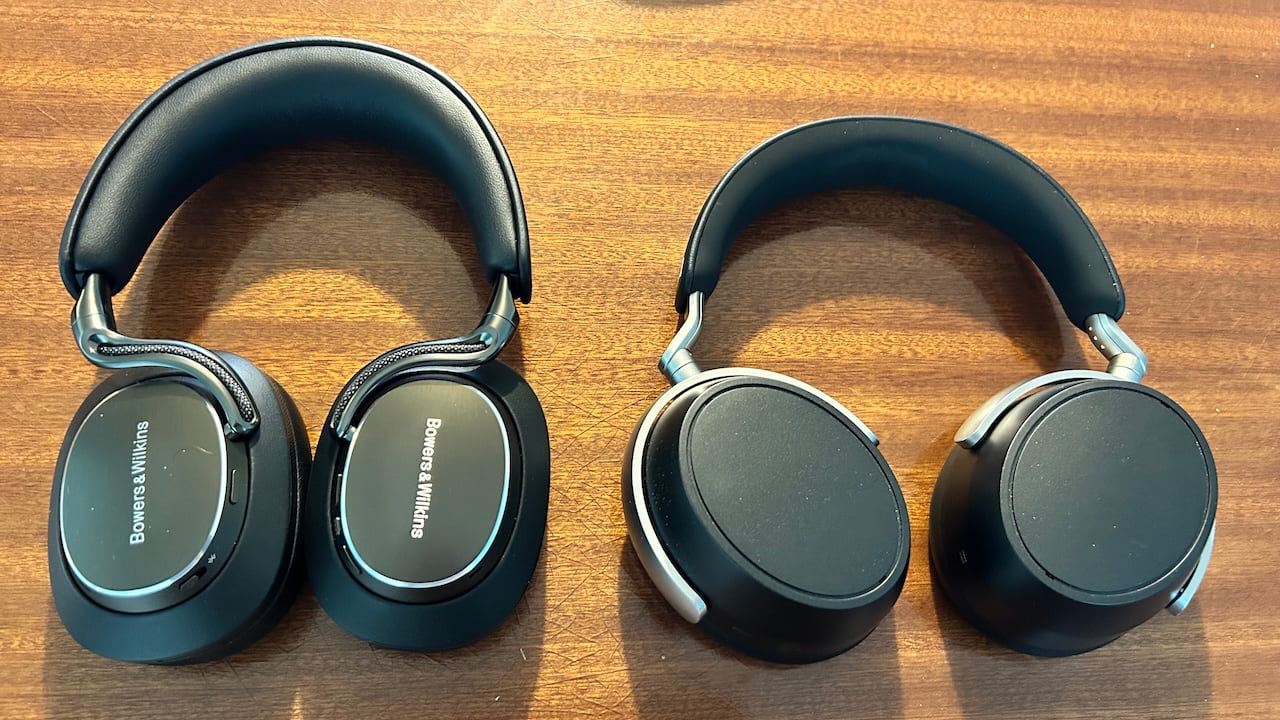
I know there is a rather large price difference between the Bowers & Wilkins Px8 S2 and the Sennheiser HDB 630. The Px8 S2 sits at $799, while the HDB 630 lands at $499. That $300 gap is not nothing. It is the difference between my $250 seat for The Wizard of Oz at the Sphere and the $450 first-level ticket that promised the full wraparound experience, flying monkeys included.
So why compare them?
Because the two are surprisingly close in a few areas that matter, and the gap is not as ridiculous as it looks on paper. Some readers will throw eggs. Probably the same bitter Rush fans still pretending Anika Nilles has not been killing it behind the kit on the Fifty Something tour because accepting reality would apparently violate the sacred scrolls of 2112. Someone get poor Geddy a glass of tea and a throat lozenge. He still remembers every word, but a few of those notes are landing somewhere near the corner of Bathurst and Wilson.
Could I have used the Bowers & Wilkins Px7 S3 instead? Sure. That would have made the pricing cleaner. It also would have required having a pair around, and this is what I had in front of me. Reviewing is not fantasy football. You work with the gear on the desk, the train, the airplane, the hotel room, and occasionally the Wawa-adjacent dog walk.
So here we are: a $799 British luxury wireless flagship versus a $499 German wireless headphone with a very useful USB-C dongle and enough sonic discipline to make the comparison less silly than it sounds.
Can der kleine David from Wedemark make the British Goliath blink?
Let’s find out.
This comparison is based on our full reviews of both models, which are linked below for readers who want the deeper individual breakdowns.
Related Reviews:
Why This Comparison Makes More Sense Than It Should
The Bowers & Wilkins Px8 S2 and Sennheiser HDB 630 are not aimed at identical buyers, but they do overlap in one very important way: Both are built for listeners who care more about sound quality than ANC trickery, app gimmicks, or whether their headphones match the color of their laptop. Which, for most of us, is a yes.
The Px8 S2 is the more luxurious headphone. Nappa leather, exposed cable detailing, a slimmer frame, stronger passive isolation, physical buttons, Bluetooth 5.3, aptX Lossless, aptX Adaptive, aptX HD, USB-C playback, 3.5mm wired playback, and a more powerful low-end presentation all reinforce its flagship position.
The HDB 630 is the more practical and more value-driven headphone. It offers 24-bit/96kHz playback via USB-C, Bluetooth 5.2 with aptX Adaptive and aptX HD, and the included BTD 700 USB-C dongle, which makes higher-quality Bluetooth easier to access from more phones, tablets, and laptops. Add in the better app, parametric EQ, crossfeed, bass boost, longer battery life, and more spacious midrange-focused presentation, and the Sennheiser starts looking like the more sensible troublemaker.
One is wearing a tailored British overcoat. The other shows up with German paperwork, better battery life, and a dongle that actually solves a problem.
Design & Build Quality

The Px8 S2 wins the materials contest.
One area where the Px8 S2 clearly pulls ahead is visibility. The Bowers & Wilkins branding, materials, and overall look stand out in a way the Sennheiser does not.
That became obvious during my usual coffee shop testing. My Asbury Park routine has become slightly more complicated lately, so I have been spending more time at a different local spot where the coffee is better, Hebrew is not uncommon, and the parking lot looks like a Range Rover, BMW, and Tesla owner’s support group.
This is also a crowd that includes some of my children’s former classmates, parents, soccer coaches, and baseball coaches, all of whom know I am the guy who rolls up in large Toyota SUVs with 150,000 to 200,000 miles on them and considers that “nicely broken in.”
They noticed the Px8 S2. More than once. The Sennheiser HDB 630 drew less attention, which may be a positive depending on your personality, wardrobe, or tolerance for conversations before caffeine. But in terms of brand presence and visual appeal, the Bowers made the stronger impression.
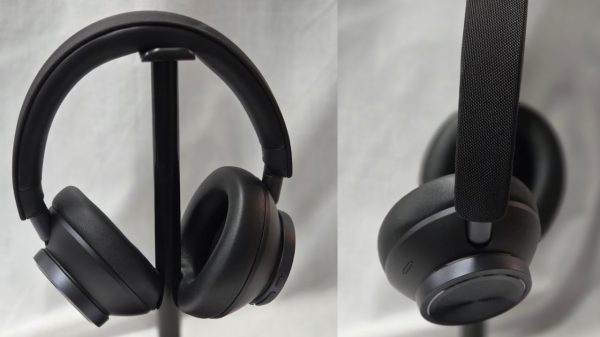
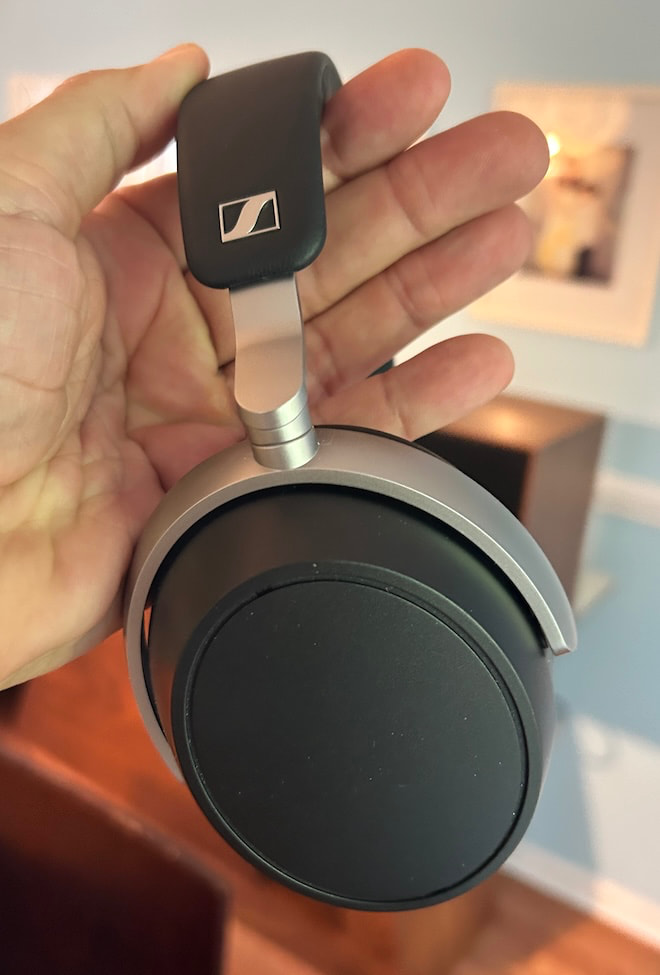
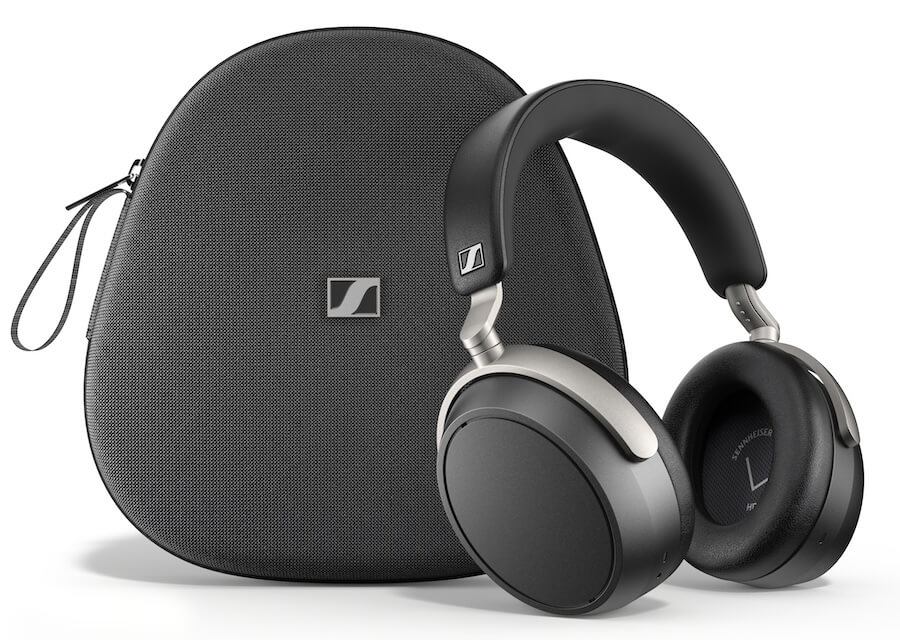
The HDB 630 is more understated. It borrows from the MOMENTUM 4 & 5 platform but feels more substantial than most Sony or Bose competitors. The travel case is practical, the accessories are well organized, and the included USB-C cable, 3.5mm analog cable, airline adapter, and BTD 700 dongle make the package feel complete.
Winner: Bowers & Wilkins Px8 S2
Comfort & Fit
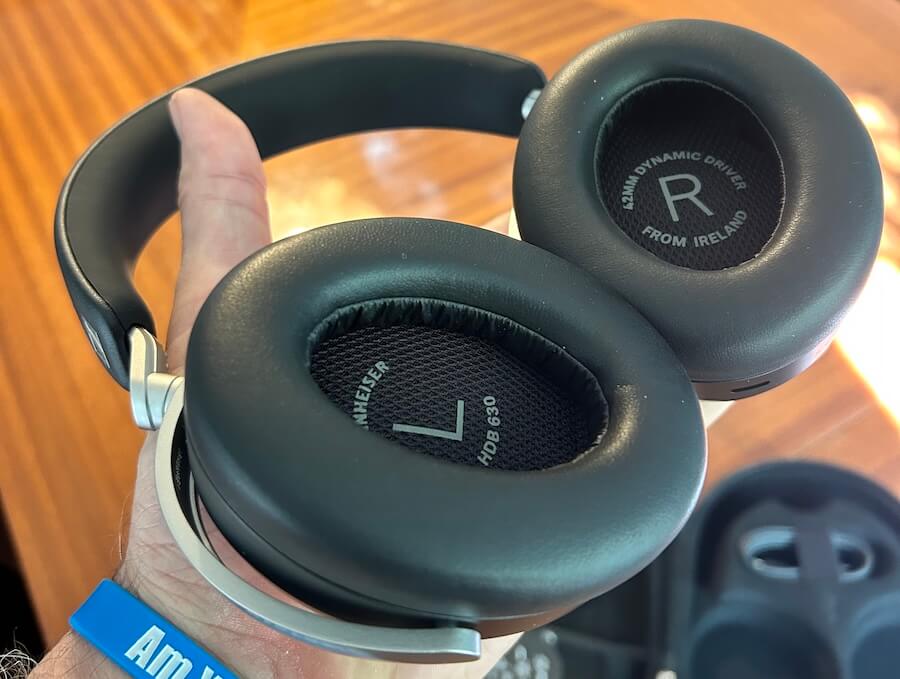
On paper, these two are almost identical in weight. The Px8 S2 weighs 310 grams. The HDB 630 weighs 311 grams. On the head, they feel different.
The Px8 S2 has a firmer clamp. That helps with passive isolation and keeps the headphones planted while walking, commuting, or pushing through public transit crowds with the usual mixture of resignation and mild rage. The padding is comfortable, and the slimmer frame makes the Px8 S2 easier to wear for long stretches than the original Px8.
The HDB 630 has a lighter clamp and softer Japanese Protein Leatherette ear cushions. It feels less locked-in than the Bowers models, which some listeners will prefer. The pads can get warm during longer sessions, especially on trains or in warmer spaces, but the overall comfort is strong.
If you want a firmer, more secure fit, the Px8 S2 is better. If you want a lighter clamp and less pressure, the HDB 630 makes more sense.
Winner: Tie, depending on fit preference
Battery Life
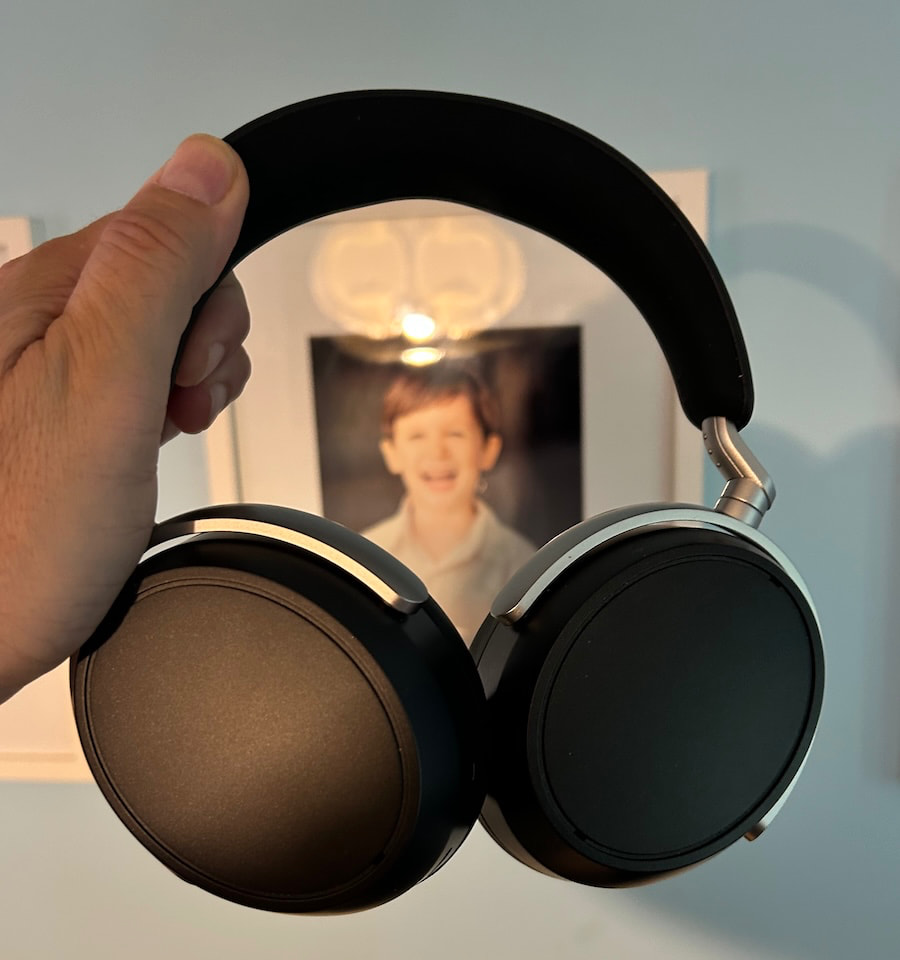
This one is not close.
The Px8 S2 delivers roughly 28 to 30 hours in real-world use with ANC. That is perfectly respectable.A 15-minute quick charge adds about seven hours, which is useful if you forgot to charge them before a flight or a long NJ Transit day. With the World Cup landing at MetLife Stadium this weekend, seven hours may only get you through the first cheerful lie about how smoothly NJ Transit is handling the crowds.
The HDB 630 averaged roughly 53 to 54 hours in real-world use, with around 51 to 52 hours when ANC was engaged all the time at above-average listening levels. A 10-minute charge also delivers about seven hours of playback.
That is almost a full week of commuting from a single charge. Sennheiser wins this category before the Bowers even finishes lacing its shoes.
Winner: Sennheiser HDB 630
Connectivity & Hi-Res Support
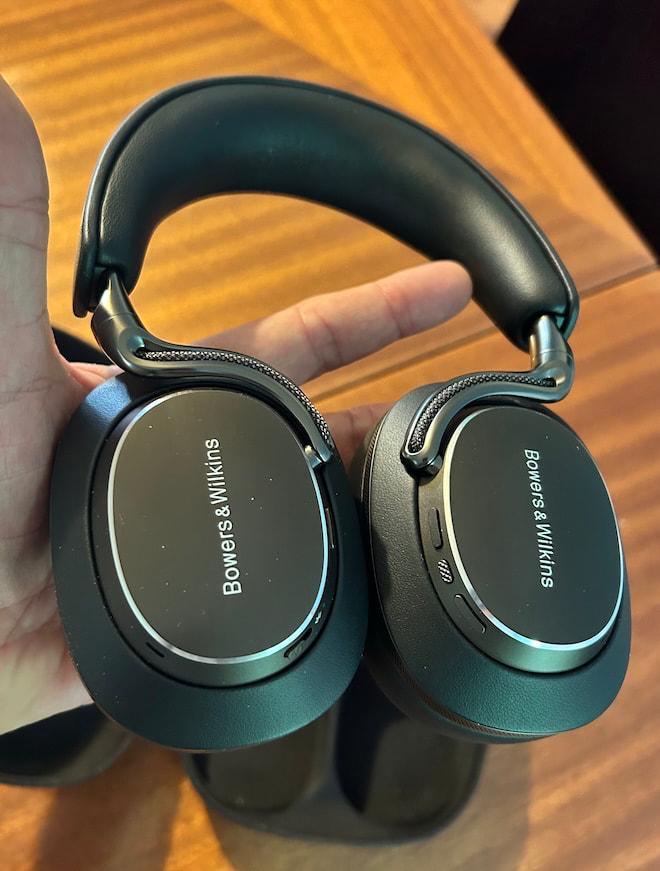
The Px8 S2 has the stronger native Bluetooth spec. It supports Bluetooth 5.3 with aptX Lossless, aptX Adaptive, aptX HD, aptX Classic, AAC, and SBC, along with multipoint connectivity. It also supports wired playback via USB-C and 3.5mm, and both cables are included in the case.
For Android users with compatible hardware, that gives the Bowers & Wilkins a very complete wireless toolkit. For Apple users, the usual aptX problem remains. iPhones, iPads, and Macs do not support aptX Adaptive or aptX Lossless natively, so the Px8 S2’s best Bluetooth performance still depends on using the right source device.
The HDB 630 is more limited on the headphone side. It supports Bluetooth 5.2 with SBC, AAC, aptX, aptX HD, and aptX Adaptive. It does not support LDAC, Bluetooth LE Audio, or aptX Lossless. That gives the Px8 S2 the clear advantage on the spec sheet.
Where Sennheiser fights back is with the included BTD 700 USB-C dongle. The dongle gives Android, iOS, Windows, and macOS users a more reliable path to aptX Adaptive or aptX HD from devices that might otherwise be limited to AAC or basic Bluetooth codec support. That matters because a lot of phones, tablets, and laptops still handle Bluetooth audio with all the grace of a vending machine rejecting a perfectly good dollar bill.
The important distinction is that the BTD 700 improves the source side of the chain, but the HDB 630 headphones are still limited to the codecs they can actually receive: SBC, AAC, aptX, aptX HD, and aptX Adaptive. So no, the HDB 630 does not magically become an aptX Lossless headphone because the dongle knows a few extra tricks.
Winner: Bowers & Wilkins Px8 S2 for native Bluetooth support.
Real-world compatibility winner: Sennheiser HDB 630, because the included BTD 700 dongle makes aptX Adaptive and aptX HD easier to access across more source devices, including Apple hardware.
Controls & App Experience

The Px8 S2 has the better physical controls. Real buttons still matter. Volume, playback, power, and Quick Action controls are easy to use without poking blindly at the side of your head like you are trying to reboot a router in the dark.
The Bowers & Wilkins Music app is clean and simple. It gives you ANC controls, wear sensor adjustment, battery status, Quick Action customization, and a basic EQ. It works. It also does not give you much room to shape the sound.
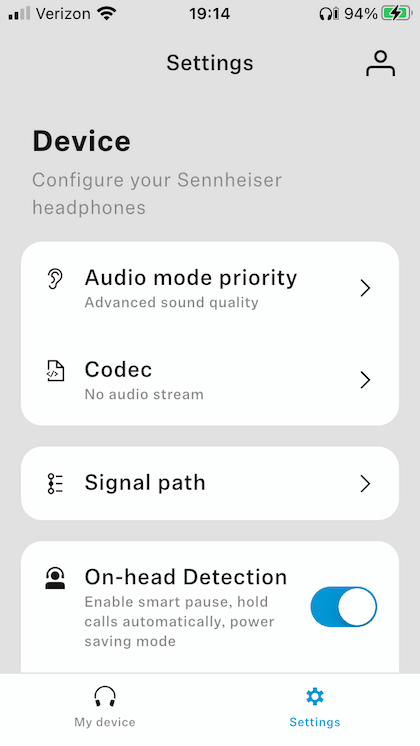
The Sennheiser Smart Control Plus app is far more useful. Parametric EQ, crossfeed, bass boost, ANC customization, and on-head detection controls make it the better tool for listeners who actually want to tune the headphone.
The downside? Touch controls. They work, but they are not as satisfying or consistent as physical buttons. I will take buttons every time. I am old enough to remember when pressing something meant something happened.
Controls winner: Bowers & Wilkins Px8 S2
App winner: Sennheiser HDB 630
Active Noise Cancellation & Passive Isolation
The Px8 S2 provides better passive isolation and stronger ANC. Penn Station, airports, Rutt’s Hutt, Kosher Square Pizza, and Rook Coffee in Oakhurst are not exactly anechoic chambers with better parking. In all of them, the Bowers did a better job lowering the outside world.
The passive isolation is so strong that there were times when ANC felt less necessary. That is a good problem to have. The issue is that ANC and Transparency mode do affect the sound. Clarity, low-end definition, and soundstage depth can shift depending on the source and the mode.
The HDB 630’s Hybrid Adaptive ANC is effective, but not as strong as the Bowers & Wilkins. Voices and sharper environmental sounds remain more noticeable. Passive isolation is also not quite at the same level.
The upside is that Sennheiser’s ANC does less damage to the sound. It tightens the presentation slightly and can shave off a bit of openness, but it does not flatten the music or make everything feel like it was run through cheesecloth.
If isolation is the priority, buy the Bowers. If preserving the music matters more than muting the entire planet, Sennheiser has a stronger argument.
Winner for isolation: Bowers & Wilkins Px8 S2
Winner for sonic consistency with ANC engaged: Sennheiser HDB 630
Sound Quality: Bass
The Px8 S2 has the stronger low end. Sub-bass and mid-bass hit with more authority, more speed, and more physical impact. These are not neutral headphones, and they do not need to apologize for that.
The important part is that the bass does not smear the midrange. The Px8 S2 adds weight and drive without turning everything into wireless sludge. Rock, pop, electronic music, and modern recordings benefit from that extra punch.
The HDB 630 is leaner. Bass is present, controlled, and well integrated, but it does not hit with the same force or definition as the Px8 S2. Bass heads will probably prefer the Bowers. That is not a character flaw. Some people like their low end with a chair and a name tag.
Sennheiser’s choice is different: less skull pressure, more clarity, more space, and better midrange detail.
Bass impact winner: Bowers & Wilkins Px8 S2
Bass restraint and balance winner: Sennheiser HDB 630
Sound Quality: Midrange and Vocals
This is where the HDB 630 begins to push back.
The Sennheiser has the stronger midrange focus. Vocals are more present, instruments have more breathing room, and the presentation feels cleaner through the center of the mix. Acoustic music, jazz, piano, and vocal-driven recordings benefit from that approach.
The Px8 S2 is clear and detailed, but male vocals sit slightly farther back than the instruments. Sam Cooke’s “Lost and Lookin’” was clean and crisp, but some of the warmth and texture I expect from that recording were pulled back. Nick Cave’s “Into My Arms” had the full, heavy piano weight the track demands, but his voice lost some of the growl and chest-shaking presence that give the song its emotional gravity.
That does not make the Px8 S2 weak through the midrange. It just tells you where Bowers & Wilkins made its choices. Compared with the HDB 630’s more midrange-forward balance, the Px8 S2 puts more emphasis on bass impact, speed, detail, and top-end air than on vocal intimacy.
Female vocals can vary by recording. Amy Winehouse comes through with the attitude intact. Aretha Franklin sounded clearer than lush, with a touch less body than expected.
Winner: Sennheiser HDB 630
Sound Quality: Treble and Detail
The Px8 S2 has more top-end energy. In my review, I noted that its top end had more air and sparkle, giving the sound a greater sense of openness and a slightly brighter character. The important part is that it does not turn hard or fatiguing with poor recordings, and with better tracks, the extra bite and presence are obvious.
Amy Winehouse’s “Valerie” is a useful example. That track can grate with the wrong gear, but the Px8 S2 kept the guitar notes sharp, her vocals clean and crisp, and never pushed things into hardness. Dolly Parton’s “Jolene” and “I Will Always Love You” also showed that the Bowers does not round off the top end or soften the edges just to make everything easier to digest.
The HDB 630 is smoother through the top end. On Gotye’s “Somebody That I Used to Know,” the Sennheiser stayed clean and controlled, with no splashy treble tantrums. On Amy Winehouse’s “Valerie,” it avoided turning a bright recording into dental work, which is always appreciated before lunch.
So the Px8 S2 sounds more vivid and energetic up top, while the HDB 630 sounds smoother and more controlled. If you want more bite, air, and sparkle, Bowers wins this round. If you want a calmer treble balance that still preserves detail and space, Sennheiser makes the better case.
Winner: Tie, depending on taste
Soundstage & Imaging
The HDB 630 is the more spacious headphone. For a closed-back wireless design, it creates an unusually open presentation with strong imaging and a real sense of air. No, it is not an open-back headphone. Let’s not start selling magic beans. But it gets closer than most wireless ANC models have any right to.
The Px8 S2 has a precise and stable soundstage. Width, depth, and height are solid, and instruments are placed accurately. It sounds organized and controlled, but not as expansive as the HDB 630.
The Bowers gives you solidity and impact. The Sennheiser gives you space and separation.
Winner: Sennheiser HDB 630
Which One Sounds Better?
The Px8 S2 sounds bigger, punchier, and more dynamic. It has stronger low-end authority, a livelier top end, better passive isolation, and a more premium feel. It is the headphone I would pick for travel, louder environments, rock, electronic music, pop, and situations where I want more physical engagement from a wireless headphone.
The HDB 630 sounds cleaner, more spacious, and more balanced through the midrange. It gives up some bass weight and luxury finish, but gains clarity, app flexibility, battery life, and a more open presentation. It is the headphone I would pick for long listening sessions, vocal music, jazz, acoustic recordings, and anyone who wants less lifestyle theater and more actual listening substance.
The Px8 S2 is more fun in the visceral sense. The HDB 630 is more honest in the musical sense. The Sennheiser is the better fit for the audiophile purist who puts neutrality, midrange clarity, and tonal discipline ahead of bass weight, luxury finish, and the understandable desire to look slightly more important at the coffee shop.
Which One Is the Better Value?
The Sennheiser HDB 630 is the better value.
At $499, it delivers excellent clarity, long battery life, a useful app, USB-C hi-res playback, aptX Adaptive, strong comfort, and the included BTD 700 dongle. That dongle is not just filler in the box. It solves a real problem for people using phones, tablets, and laptops that do not always support the best Bluetooth performance natively.
The Px8 S2 justifies some of its higher price through better materials, stronger isolation, more authoritative sound, physical controls, broader codec support, and a more luxurious design. It feels like a flagship.
But $799 is still $799. At that price, the Px8 S2 has to be judged as a luxury wireless headphone, not just a better-sounding alternative. It clears that bar in many ways, but not every listener needs what it does best.
Value winner: Sennheiser HDB 630

The Bottom Line
The Px8 S2 is the more premium, more physical, and more visually distinctive headphone. It has stronger bass, better passive isolation, more effective ANC, physical controls, and the kind of build quality that makes the price easier to understand, if not exactly painless.
The HDB 630 is the smarter value play. It gives you better battery life, a more useful app, stronger tuning flexibility, a more spacious presentation, and a cleaner midrange balance for considerably less money.
Can the German David slay the British Goliath?
Not quite. But he lands enough clean shots that Bowers & Wilkins should keep both gloves up.
Which One Should You Buy?
Buy the Bowers & Wilkins Px8 S2 if you want the more premium, more visually distinctive, and more physically engaging headphone. It delivers stronger bass, better passive isolation, more effective ANC, physical controls, and a more energetic presentation. It is the better choice for travel, commuting, louder environments, and listeners who want their wireless headphones to feel like a flagship product.
Skip the Px8 S2 if you want the best value, the longest battery life, the most flexible app, or the most neutral midrange. It is also not ideal if you dislike a more bass-forward tuning or expect ANC and Transparency mode to leave the sound completely untouched.
Buy the Sennheiser HDB 630 if you care more about clarity, neutrality, midrange balance, battery life, app control, and practical hi-res support than luxury materials or coffee-shop visibility. It is the better choice for long listening sessions, vocal music, jazz, acoustic recordings, and listeners who want a more spacious presentation for considerably less money.
Skip the HDB 630 if you want maximum bass punch, the strongest ANC, the most luxurious build, physical controls, or aptX Lossless support built into the headphones themselves.
The Px8 S2 wins on luxury, isolation, bass impact, and flagship presence. The HDB 630 wins on value, battery life, app control, midrange clarity, and everyday flexibility.
Where to buy:
- Sennheiser HDB 630: $499 at Amazon | Crutchfield | Sennheiser
- Bowers & Wilkins Px8 S2: $799 at Amazon | Crutchfield | Bowers & Wilkins
Related Reading:
- Noble Audio Artemis Wireless Headphones Debut With Dynamic, Planar And Balanced Armature Drivers: HIGH END Vienna 2026
- Sennheiser MOMENTUM 5 Wireless Review: Did Sennheiser Just Undercut The HDB 630?
- Apple AirPods Max 2 Review: Better ANC, Marginally Better Sound, Tougher Bose Competition
- Podcast: Best Wireless Headphones & Earbuds Of 2025