Not long ago, I reviewed the HiFiMAN HE600 and lamented that, while it is a very good headphone, it is no HE6. For 16 years, HiFiMAN has tried, and mostly failed, in my opinion, to recapture the magic of the original. Several subsequent models have been excellent headphones in their own right, but none has remained faithful to the HE6’s distinctive sonic character.
When a headphone develops a cult following and can command higher prices on the used market than it did when new, that tells you something. Few headphones have inspired the kind of loyalty enjoyed by the original HiFiMAN HE6. Used prices can approach twice the original retail price, assuming you can find a pair for sale. They rarely appear on the market, and owners understand that selling theirs might mean never finding another.
The HE6 was expensive when it first appeared in 2010. Between its original price and current scarcity, many headphone enthusiasts have never had the opportunity to experience what it can do. Those of us fortunate enough to own a first-generation HE6 know that, when properly amplified, it can still compete with many of today’s flagship headphones. I continue to use mine for comparisons and amplifier stress testing because its exceptionally low sensitivity and substantial power requirements can expose the limitations of even some dedicated headphone amplifiers.

The original HE6 was far from perfect. It was heavy, somewhat fragile, and equipped with screw-on SMC headphone connectors that could be frustrating to use. Its demanding power requirements also led many owners to connect it to the speaker outputs of a conventional two-channel amplifier, often using HiFiMAN’s dedicated adapter. None of this made the HE6 particularly convenient, but its devoted following has endured for good reason.
What the HE6 helped demonstrate was that planar magnetic headphones could deliver genuinely powerful, physical bass without sacrificing the detail, clarity, and speed that made the technology so appealing. Over the years, manufacturers have worked to extract more slam, impact, and low-frequency rumble from planar magnetic designs. Audeze’s newer SLAM-equipped models now pursue a similar combination of bass authority and technical precision, but the original HE6 was delivering something remarkably close to that experience back in 2010. At the time, it felt almost magical.
Related Reading:
- HiFiMAN HE600 Open-Back Headphones Review: Can It Really Replace The Legendary HE-6?
- HiFiMAN HE1000 WiFi Review: Can Wireless Planar Headphones Finally Replace Cables?
Familiar Looks, Modern Improvements, and a Few Compromises
When the HE6 Remastered was announced, I knew I had to audition it, so I promptly requested a review sample. The press release suggested that HiFiMAN had returned to the original HE6 driver design, warts and all, while updating some of the usability features that made the original less than convenient. That was more than enough to pique my interest.
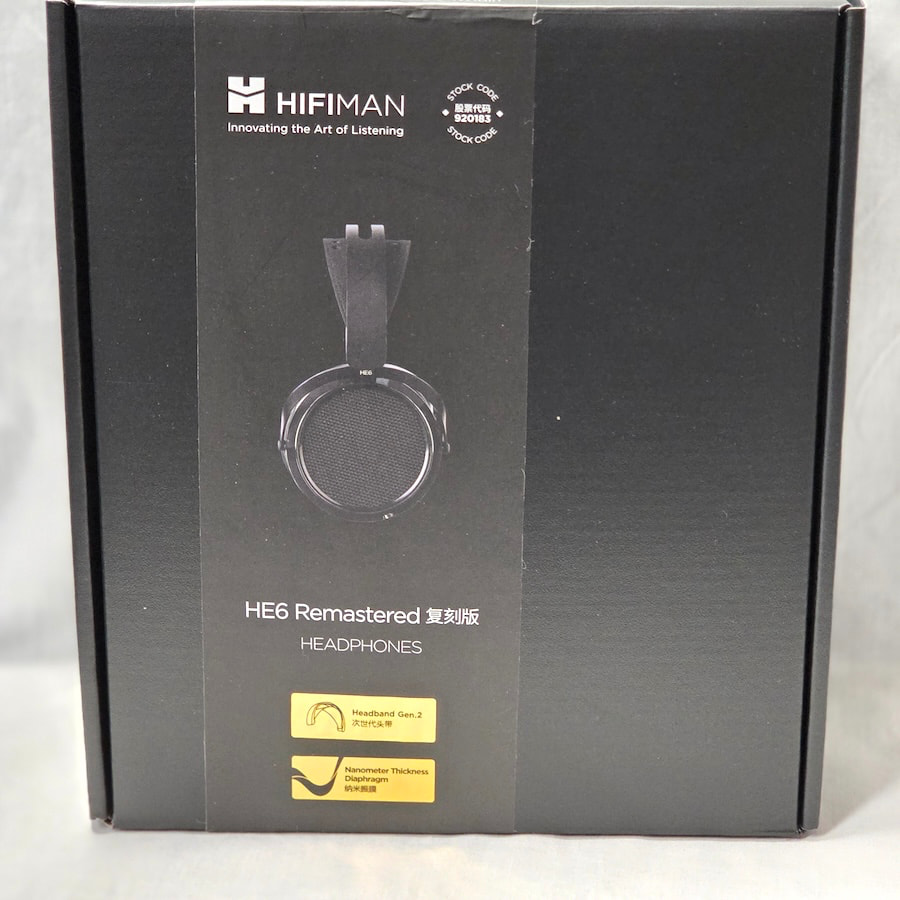
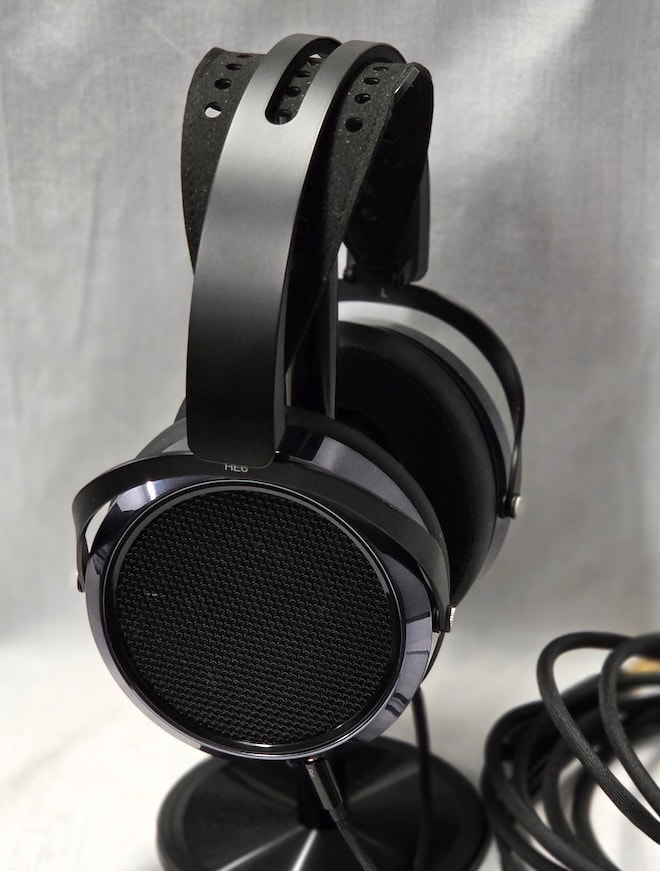
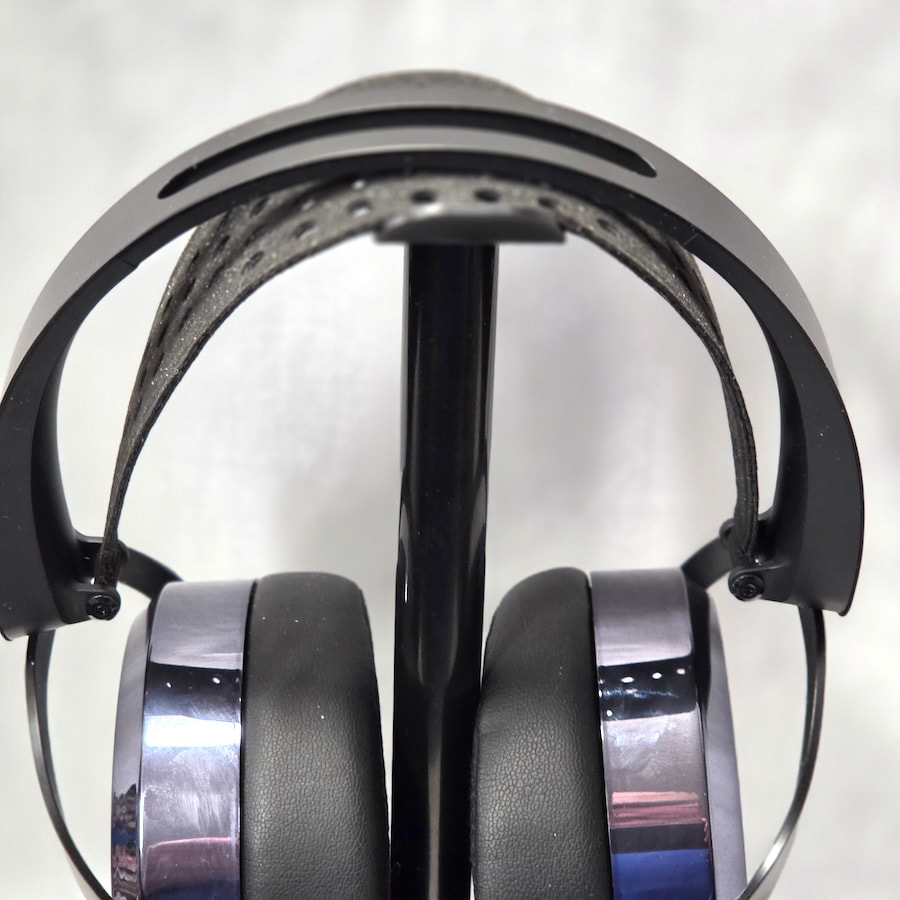
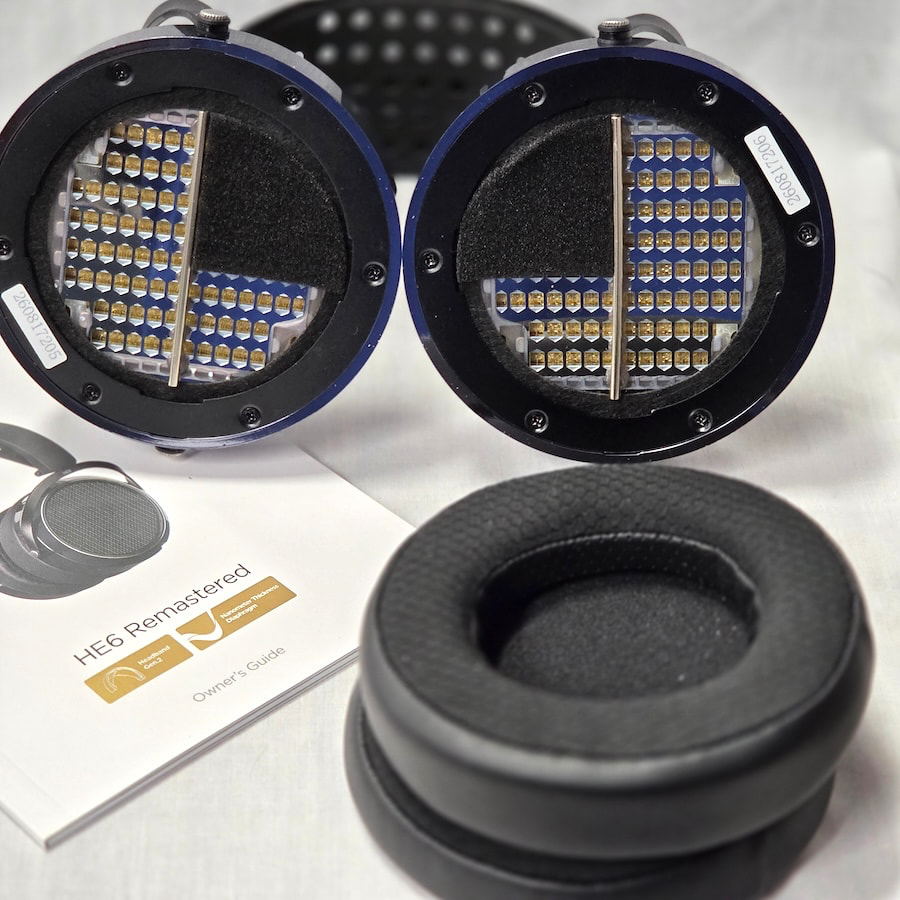
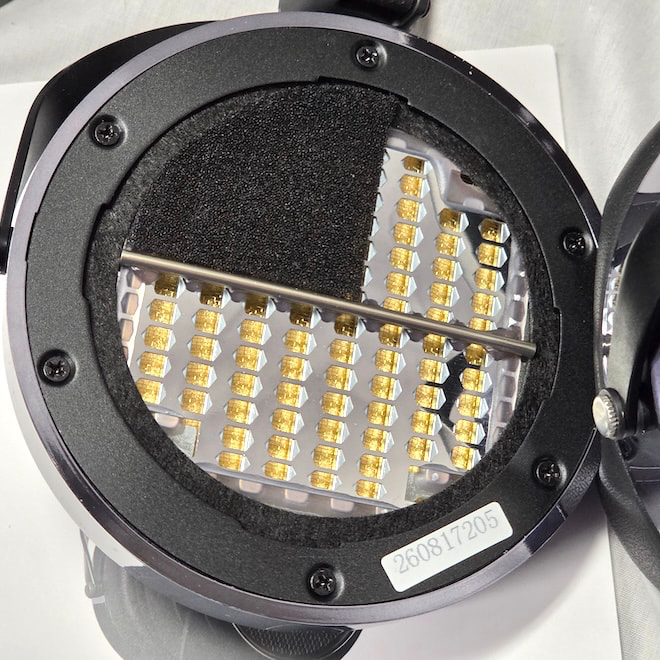
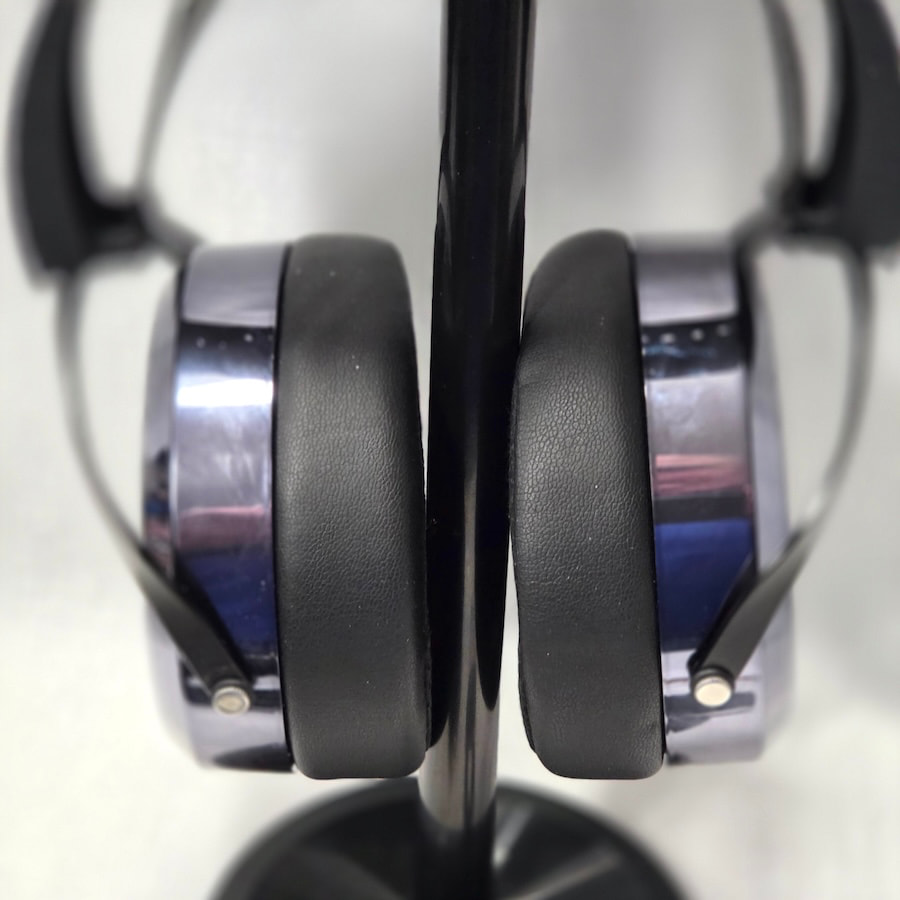
When it arrived, the resemblance was immediately apparent. The HE6 Remastered retains the familiar metallic blue earcups and open-back grilles, with black exterior surfaces and silver accents underneath. The earpads are HiFiMAN’s now-standard angled hybrid design, which also fits several of the company’s other round-cup models, including the original HE6. Beyond those familiar visual elements, however, HiFiMAN has made some meaningful changes.
The original’s troublesome screw-on connectors have been replaced with more durable 3.5mm sockets, while the headband now uses HiFiMAN’s newer Gen.2 suspension design, which offers improved adjustability and weight distribution. At 522 grams, the HE6 Remastered is lighter than the original, although the difference isn’t substantial enough to transform the wearing experience. This remains a relatively heavy headphone, even with the ergonomic improvements.
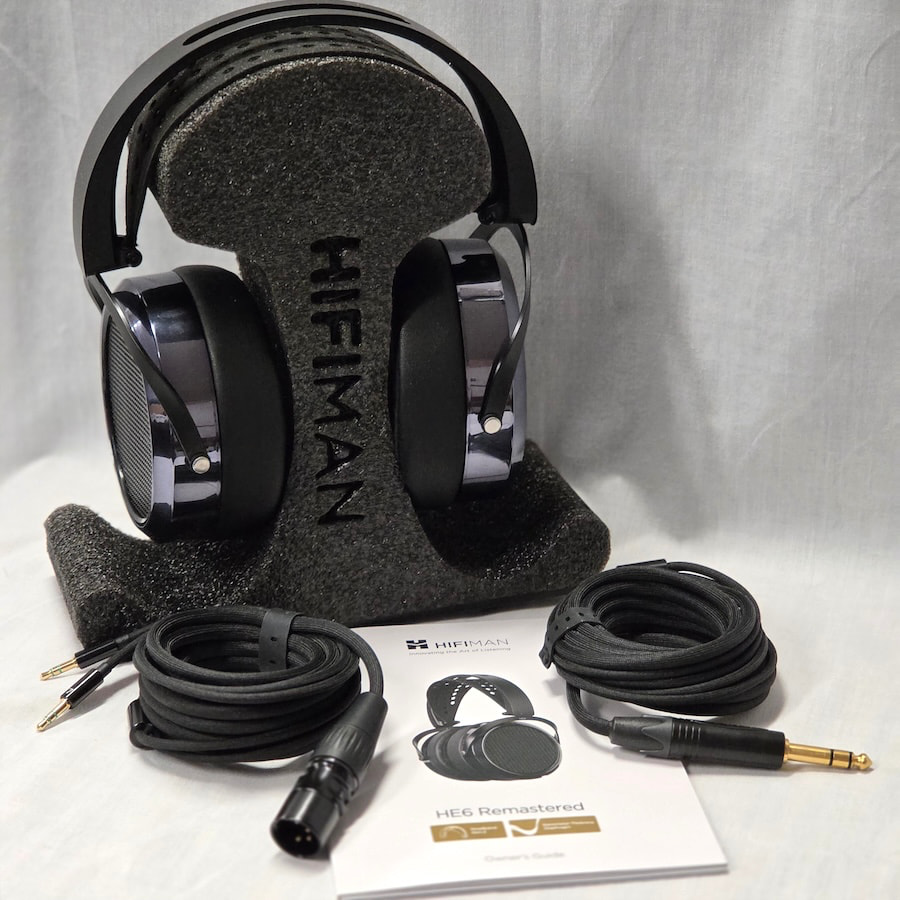
Unboxing will be familiar to anyone who has owned a HiFiMAN headphone. The packaging includes the headphones, two detachable cables (one terminated in a 6.35mm plug and the other in a balanced 4-pin XLR connector), and foam padding that doubles as a headphone stand. The cardboard and foam packaging are adequate for protecting the contents, but they feel rather underwhelming for a headphone priced at $1,899. Compared with the more elaborate presentation of models like the HE1000 Unveiled, the experience feels decidedly ordinary. At nearly $2,000, a little more attention to presentation wouldn’t have been unreasonable.
Serious Power Requirements and Finding the Right Match
The included cables offer a clue about the HE6 Remastered’s amplification requirements. Like the original, this is a headphone that demands serious desktop amplification. HiFiMAN specifies an impedance of 50 ohms and an exceptionally low sensitivity of 83.5 dB/mW. In my experience, an amplifier capable of delivering at least 2 watts RMS into a suitable load is a reasonable starting point, although considerably more power reserves can be beneficial when dealing with demanding recordings, dynamic peaks, and EQ adjustments.
The HE6 Remastered needs a particular kind of amplifier. Many models that work beautifully with conventional headphones simply don’t have enough power or headroom to get the best out of it. At the opposite extreme, an amplifier capable of delivering 15 watts or more can be excessive for most headphones and potentially damaging if used carelessly. The goal isn’t simply to have the highest wattage rating, but to find an amplifier capable of delivering sufficient voltage and current into a 50-ohm load without strain or audible distortion.
In the early days of the HE6, the solution was often a conventional two-channel amplifier or receiver connected through an adapter that converted its speaker outputs to a balanced headphone connection. Output transformerless (OTL) tube amplifiers are generally better suited to high-impedance dynamic headphones, where substantial voltage swing is more important than high current delivery. The HE6’s combination of relatively low impedance and extremely low sensitivity presents a different challenge. It requires an amplifier that can deliver significant power into a much lower impedance load, making powerful solid-state designs particularly attractive.
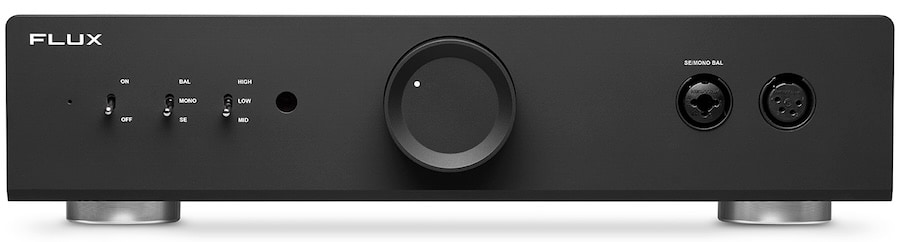
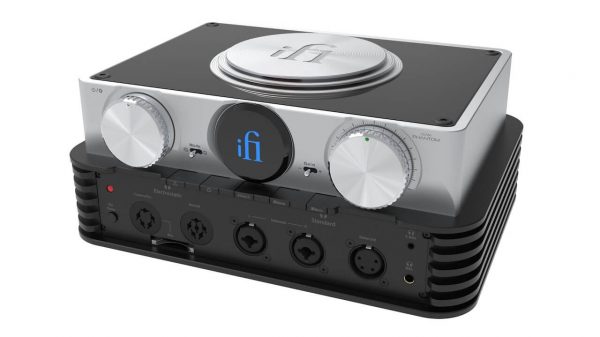
Since discovering the original HE6, I’ve worked my way through a long list of amplifiers in search of one capable of delivering everything the headphone has to offer. I eventually settled on the Flux Lab Acoustics Mentor, which costs up to $1,499 and delivers approximately 11 watts per channel into 32 ohms. For those who consider that insufficient, Flux Lab also offers a stacked configuration using two Mentor amplifiers, delivering an extraordinary 33.5 watts RMS per channel into 32 ohms. That’s more power than any sensible headphone listener should ever need, and in my experience, a single Mentor is more than capable of driving the HE6 properly.
Flux Lab Acoustics manufactures its products in Kharkiv, Ukraine, where the ongoing war has made production and availability challenging. I sincerely hope for a peaceful resolution to the conflict and a return to normal life for the people who build these remarkable amplifiers.
I also tested the HE6 Remastered with the Pass Labs HPA-1 and xDuoo TA-30 ($889), two amplifiers that offer more conventional levels of headphone output power. Pass Labs rates the HPA-1 at 3.5 watts into 20 ohms, while the TA-30 delivers 3 watts into 32 ohms. Both provide useful alternatives for enthusiasts who don’t have a dedicated high-power amplifier sitting on their desks.
The TA-30 is particularly interesting because it combines a tube preamplifier stage with solid-state output amplification, giving it the current delivery necessary for more demanding planar magnetic headphones. It is also considerably more affordable than the Mentor or Pass Labs models. The trade-off is its fixed +16 dB gain, which makes volume adjustment challenging with sensitive headphones and IEMs. It’s not an amplifier I’d recommend for everything, but for demanding planar magnetic headphones like the HE6 Remastered, its specialized design makes considerably more sense.
HiFiMAN HE6 Remastered Technical Specifications
- Headphone Type: Over-ear, open-back planar magnetic
- Driver: Original HE6-inspired planar magnetic design
- Diaphragm: Gold-sputtered, nanometer-thickness diaphragm
- Frequency Response: 8Hz – 65kHz
- Impedance: 50 ohms
- Sensitivity: 83.5 dB
- Weight: 522 g (18.4 oz)
- Earcups: Circular, open-back design with protective metal grilles
- Headband: Second-generation adjustable suspension headband
- Earpads: Hybrid FocusPads with memory foam, pleather, and velour
- Cable Connections: Dual 3.5mm detachable connectors
- Included Cables: 6.35mm (1/4-inch) single-ended and 4-pin XLR balanced
Listening
Despite all the attention paid to its bass performance, the HE6 Remastered is not “all about that bass.” It is a remarkably well-balanced headphone with a slight lean toward brightness and a level of technical performance that places it in serious flagship territory.
Deep sub-bass provides the foundation, extending into the lowest frequencies while retaining excellent texture and more weight than many planar magnetic headphones deliver. The mid-bass offers satisfying impact and exceptional control. There is plenty of slam, but the emphasis is on texture rather than sheer quantity, with fast transients and quick decay that keep everything sounding tight and articulate.
Rather than pushing the bass forward to grab your attention, the HE6 Remastered relies on dynamic contrast. Bass remains unobtrusive when the music doesn’t call for it, then explodes when the big hits arrive, only to disappear again a moment later. It delivers slam comparable to some of the best dynamic headphones, including the Focal Utopia and Denon AH-D5200, while offering the speed and control that make the best planar magnetic designs so compelling. The HE6 Remastered also responds exceptionally well to EQ when properly amplified and can become an absolute bass monster if that’s what you’re after.
The midrange is arguably the headphone’s greatest strength. Its appeal isn’t built around warmth, weight, or lush vocals, but rather natural timbre, flagship-level clarity, and exceptional separation. The HE6 Remastered leans slightly toward a cool, analytical presentation without suffering from the thinness that often accompanies that kind of tuning.
Vocals cut through the mix without being artificially pushed forward. Guitars have convincing growl and attack, while strings and piano sound fluid and energetic without becoming fatiguing or exaggerated. This has always been one of my favorite aspects of the HE6 experience. With so many headphones emphasizing the lows and highs at the expense of the midrange, it’s refreshing to hear one that presents the mids with such clarity and precision without exaggerating them.
The downside is that the HE6 Remastered’s honesty doesn’t conceal flaws in poor vocal performances or badly recorded material. If you’re looking for a headphone that smooths over rough edges or makes every recording sound flattering, this isn’t the one.
The treble has a mild lift, but it sounds realistic, adding energy and openness without becoming strident or excessive. Percussion has excellent snap, and cymbals sound natural rather than thin, tinny, or unnaturally sharp. Treble extension is excellent, with no audible sense of roll-off below my personal hearing limit of approximately 14kHz. The result is plenty of air and sparkle, contributing to an expansive and convincing presentation.
In many respects, the treble reminds me of the far more expensive Susvara Unveiled, although the HE6 Remastered gives up a little resolution and refinement. Considering the substantial difference in price, that’s an impressive achievement. The HE6 Remastered is technically a little bright, but it handles the upper frequencies so well that I suspect even some listeners who ordinarily avoid brighter headphones will find plenty to enjoy.
The soundstage is another major strength. It rivals some of HiFiMAN’s larger headphones and the big Audeze models. I’d even argue that it comes dangerously close to the Sennheiser HD800’s famously expansive soundstage, without the HD800’s more troublesome treble peaks. The presentation is wide and deep, with a convincing sense of height, allowing instruments to occupy distinct positions and move through the space with impressive precision.
Positioning an orchestra is almost laughably easy. There are no obvious gaps, misplaced instruments, or distracting overlaps. With the right recording, it’s sometimes possible to distinguish individual violins within an orchestral section; the separation and perceived resolution are that good. Even with exceptionally fast or complex passages, I heard no obvious compression or congestion. Properly amplified, the HE6 Remastered is an extraordinarily capable headphone.
And that brings us back to its biggest problem: amplification. Connect it to an amplifier without sufficient power or headroom, and much of that impressive performance disappears. I deliberately tested the HE6 Remastered with a couple of amplifiers rated below 2 watts, and neither delivered acceptable results in my setup. Dynamics became noticeably constrained, powerful bass transients lost their impact, and the marvelous soundstage collapsed into a much narrower, less convincing presentation.
I fully expect the HE6 Remastered to receive wildly different reviews. I also suspect that many of those differences will come down to the source components and, more importantly, the amplifiers used during testing. This is a headphone that can sound extraordinary with the right equipment and surprisingly ordinary with the wrong pairing. Anyone evaluating it without taking those requirements seriously risks missing much of what makes it special.
The Bottom Line
I’m thrilled to say that the HiFiMAN HE6 Remastered is a true HE6. It doesn’t sound exactly like the original, but it comes remarkably close, and some differences may even be improvements, depending on your preferences. After 16 years of waiting, HiFiMAN has finally recaptured the authoritative bass, exceptional midrange clarity, expansive soundstage, and explosive dynamics that made the original a legend.
For longtime HE6 enthusiasts, the Remastered offers a rare opportunity to experience that distinctive sound in a new headphone with improved connectors, a more comfortable headband, and a manufacturer’s warranty. For those who never heard the original, it’s a chance to understand what all the fuss was about in 2010. Just remember two things: bring a powerful amplifier and don’t expect forgiveness. Without sufficient headroom, much of the magic disappears, and poor recordings have nowhere to hide.
As much as it pains me to say it, the HE6 Remastered is a genuine value at $1,899. It approaches the technical performance of flagship headphones costing considerably more, including the Susvara Unveiled, without quite matching their ultimate resolution and refinement. Even paired with my Flux Lab Acoustics Mentor, the complete system costs substantially less than a Susvara Unveiled alone.
What makes the HE6 Remastered special is that HiFiMAN has finally resisted the temptation to reinvent the original. Instead, it has brought back the sound that earned the HE6 its devoted following while addressing some of its practical shortcomings. If you already own a suitable amplifier, this might genuinely be the last headphone you need to buy. After 16 years, that’s a verdict I never expected to deliver.
Pros:
- Near-neutral signature with a slight bright lean
- Exceptional resolution
- Clean presentation from the lowest to the highest notes
- Excellent bass slam and rumble
- Takes EQ well
- Large soundstage with precise imaging
Cons:
- Requires serious amplification
- Heavy
- Included kit feels underwhelming at $2,000
- Tuning will not suit everyone
- Build quality is mid-grade rather than flagship-level
Our Ratings:
★★★★★★★★★★ Sound Quality
★★★★★★★★★★ Build Quality
★★★★★★★★★★ Comfort
★★★★★★★★★★ Value
Where to Buy:
Related Reading: