Active noise-cancelling (ANC) headphones have become one of the most competitive categories in audio, with everyone from smartphone manufacturers to vacuum cleaner companies joining the party. While premium brands compete on refinement and noise cancellation, budget models are packing increasingly sophisticated technology into products that cost a fraction of their flagship counterparts. The EarFun Wave Pro X is a prime example.
At $129.99, the Wave Pro X offers dual-coaxial drivers, eight microphones, adaptive ANC, Bluetooth 6.0, Auracast, lossless-capable codecs, USB-C audio, multipoint connectivity, and up to 90 hours of battery life with ANC disabled. That’s an impressive feature list at any price, but specifications only tell part of the story. Can the Wave Pro X deliver convincing sound quality, effective noise cancellation, and all-day comfort, or has EarFun packed in more technology than it can properly execute?
Related Reading:
- Sony WH-1000XM4C Review: Can A Former ANC King Still Compete At $300?
- Bose QuietComfort Ultra Headphones 2nd Gen Review: Still The Best For Noise Cancelling?
Wave Pro X Build Quality and Comfort
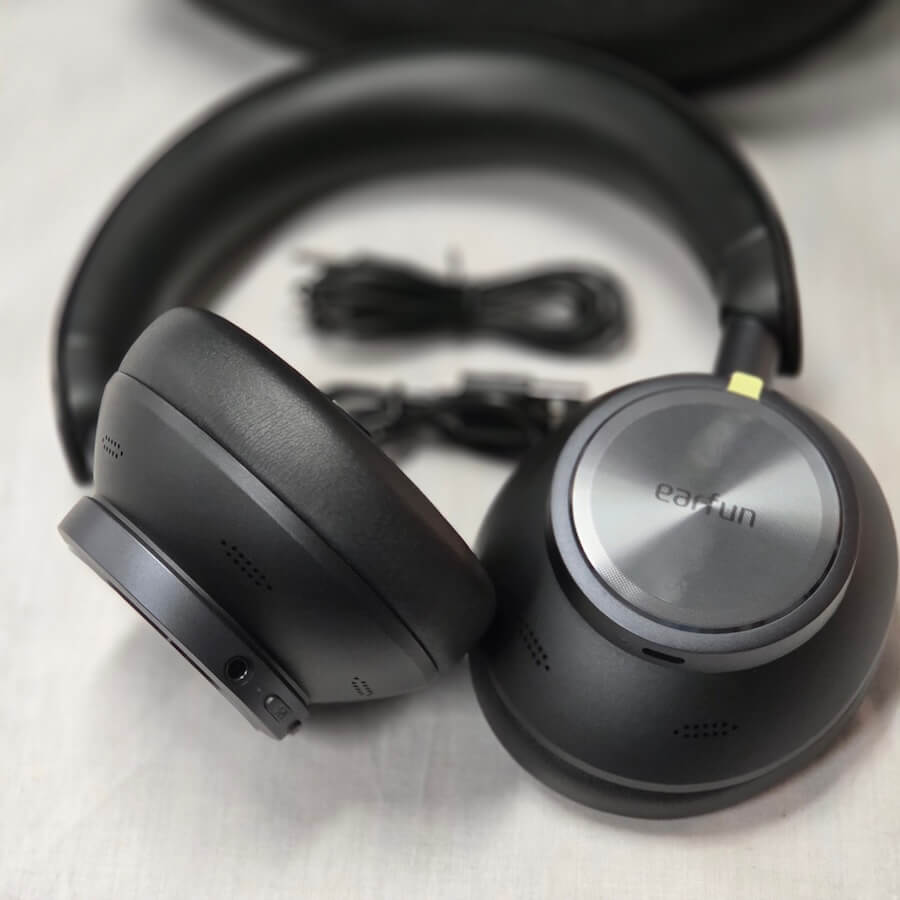
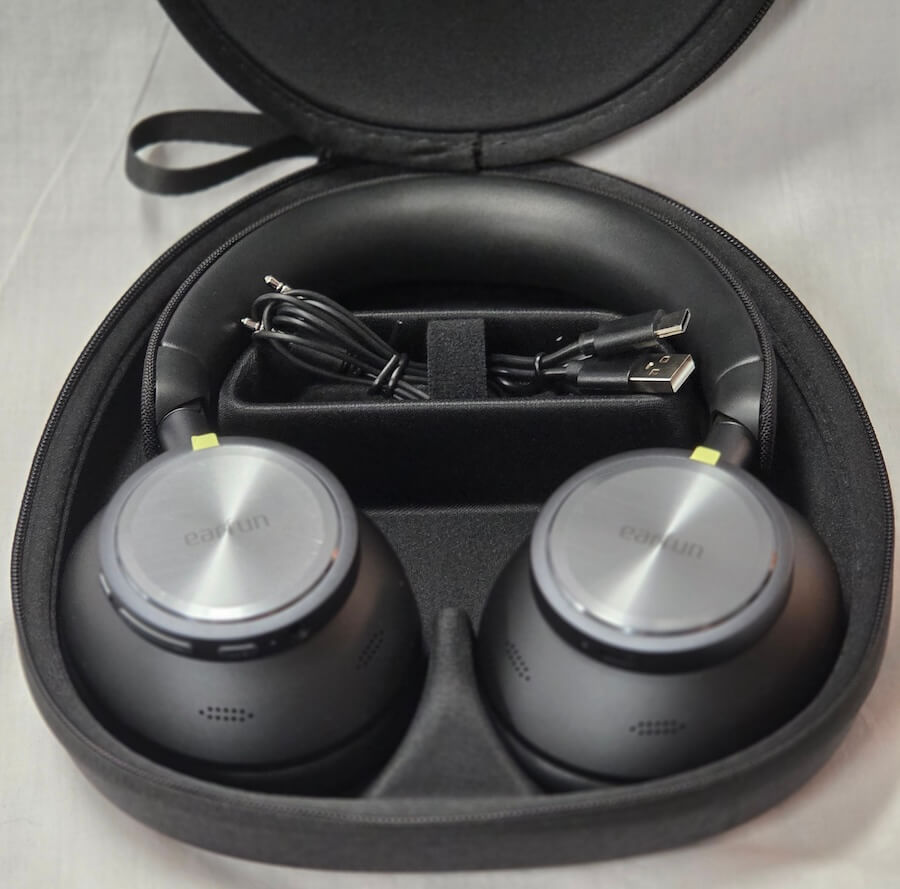
The Wave Pro X comes packed in a hard-sided travel case with a canvas-like exterior and a molded interior that provides a divider to keep the earcups from scratching each other, along with a pocket for the included USB-A to USB-C charging cable and 3.5 mm auxiliary cable. The earcups fold flat for storage in the case or fold at the hinges to take up less room in a backpack if desired.
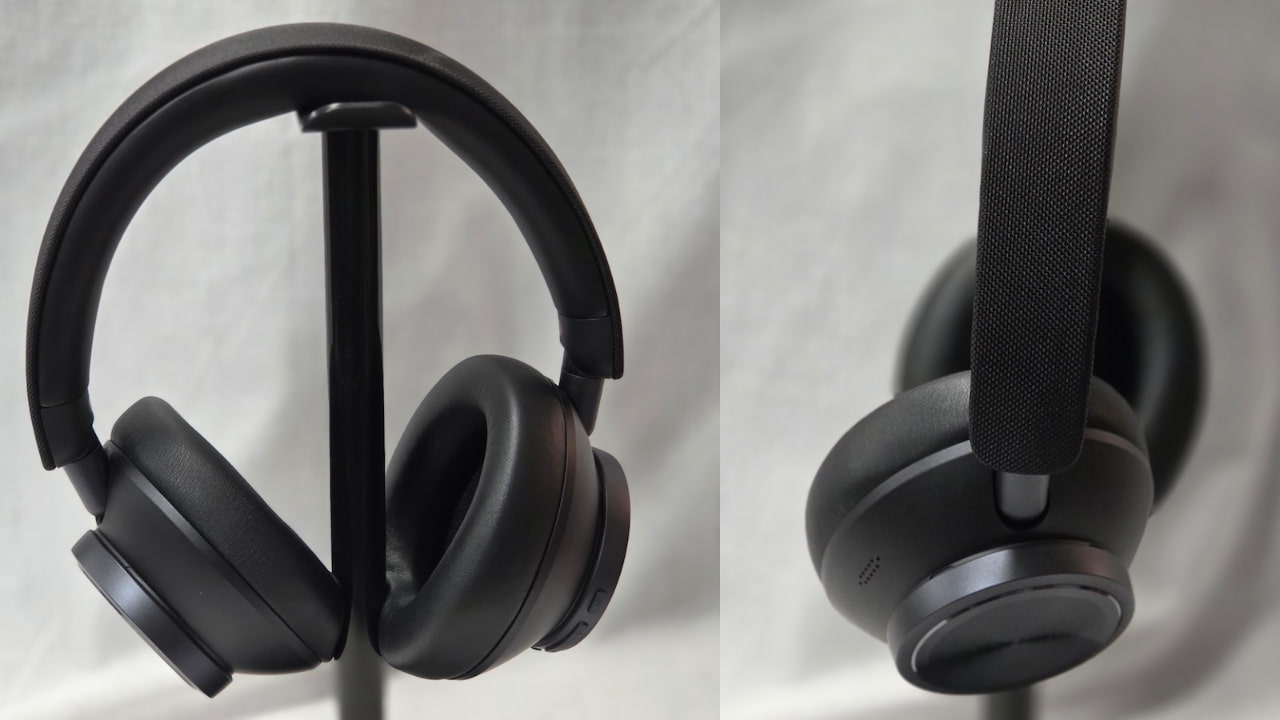
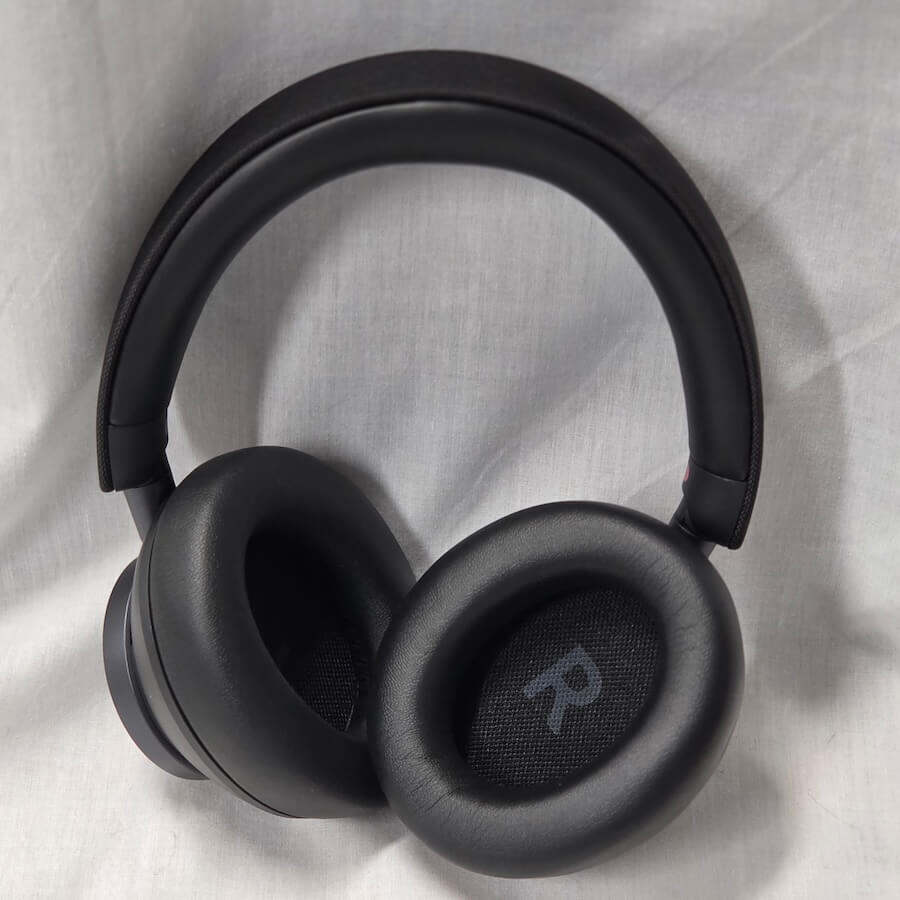
The construction is mostly polymer, with metal faceplates on the earcups. The headband is cloth-wrapped on top, similar to the case exterior, with memory foam padding underneath. Combined with the light weight of only 259 grams (just over half a pound), this makes for a comfortable fit. Clamping force is moderate to high, as is common with ANC headphones, but the lightweight construction and well-padded earcups and headband help mitigate that. Overall, I found the EarFun Wave Pro X comfortable for long listening sessions, although the moderately sized earcups may touch larger ears. An audition is advisable for anyone who has experienced fit issues with smaller earcups.
Lightweight construction can sometimes raise durability concerns, but EarFun provides some reassurance with a one-year warranty that is automatically extended to two years when the product is registered online. This should alleviate some concerns, but with no IPX rating specified, it’s probably best to avoid sweaty workouts and wet weather when using the Wave Pro X.
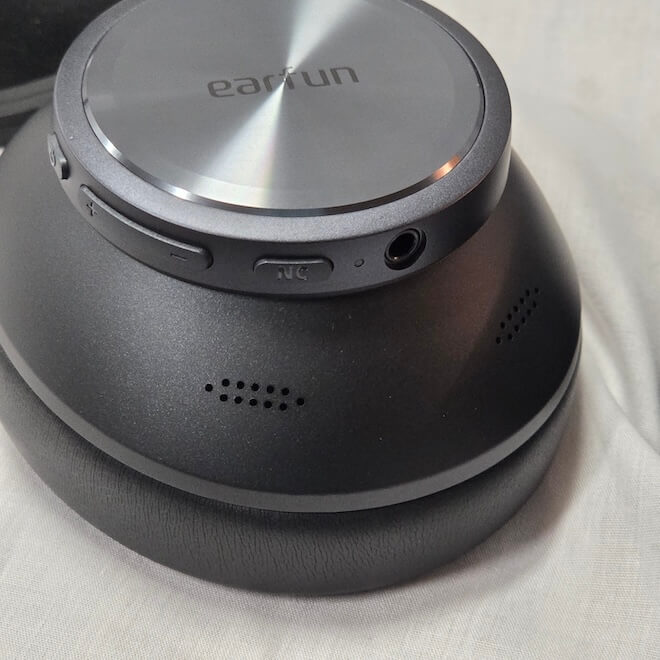
A welcome practical choice is the use of physical buttons instead of touch controls. They provide tactile confirmation and are less prone to accidental commands when adjusting the fit. I much prefer buttons on headphones intended to switch between calls, music, and ANC modes, where mistakes are less common.
Inside the EarFun Wave Pro X
The Wave Pro X’s headline hardware feature is EarFun’s Dual-Coaxial Acoustic Architecture (DCAA). DCAA consists of two dynamic drivers positioned on the same acoustic axis, intended to produce a more integrated presentation than a conventional single-driver design. This is EarFun’s name for a coaxial or point-source driver arrangement, which, while not uncommon in loudspeakers, is less frequently seen in headphones. The larger driver measures 40 mm and uses a DLC composite diaphragm, while the smaller 10 mm driver features an LCP diaphragm. Nominal impedance is listed at 32 ohms, although my testing with the 3.5 mm cable yielded a measurement closer to 36 ohms.
Sensitivity is not specified, but the headphones must be powered on even when used with a wired connection, so source matching is less about driving the transducers and more about the internal electronics. Frequency response is listed at 20 Hz to 40 kHz.
Wireless connectivity is provided by the Qualcomm QCC3095 chipset, which supports Bluetooth 6.0 and offers aptX Lossless, aptX Adaptive, LDAC, LC3, and SBC, according to EarFun’s documentation. Interestingly, AAC is absent from that list, which seems like a glaring omission.
However, I was able to pair the Wave Pro X using AAC on my Samsung Galaxy S25+ and confirm the connection with Bluetooth Codec Changer by AMR-G, which also identified AAC among the device’s supported codecs. An iPhone 15 had no trouble connecting either. With AAC support remaining unofficial, compatibility may vary between devices, so Apple users could potentially be limited to SBC unless using a third-party Bluetooth adapter.
The ANC system uses an 8-microphone array and Qualcomm processing for noise cancellation and awareness mode. The DSP also provides parametric EQ capabilities through the companion app, which is one of the better equalizers I’ve used with ANC headphones. Some other manufacturers would do well to take a page from EarFun’s playbook here.
Battery capacity is 800 mAh, with playback time rated at approximately 50 hours with ANC enabled or high-quality codecs in use, and up to 90 hours in basic mode with ANC disabled. A full recharge takes approximately two hours using a 1A charger, while a 15-minute quick charge provides roughly 10 hours of playback, also in basic mode.
Auracast & ANC Without the Flagship Price
Active noise cancellation (ANC) is a must-have feature these days, but not all ANC systems are created equal. Most premium models offer adaptive ANC that automatically adjusts to the surrounding environment, along with an awareness mode for those times when hearing a car horn or the boss is necessary. The Wave Pro X includes adaptive ANC with environmental adjustment, wind noise reduction, and manual controls for determining how much noise is reduced. According to EarFun, the eight microphones feed information to an internal processor that analyzes surrounding sounds 800 times per second and adjusts the ANC accordingly.
As with other ANC headphones, the most useful test is how well they handle steady low-frequency noise, such as ventilation, road rumble, or an aircraft cabin, while avoiding unpleasant pressure, tonal changes, or audible artifacts.
The Wave Pro X performs admirably in most circumstances, reducing unwanted noise to a level where it becomes far less distracting. After all, that’s the goal rather than complete silence. Sudden, piercing sounds can still get through, as they do with most ANC systems, but the Wave Pro X does a good job of limiting those intrusions.
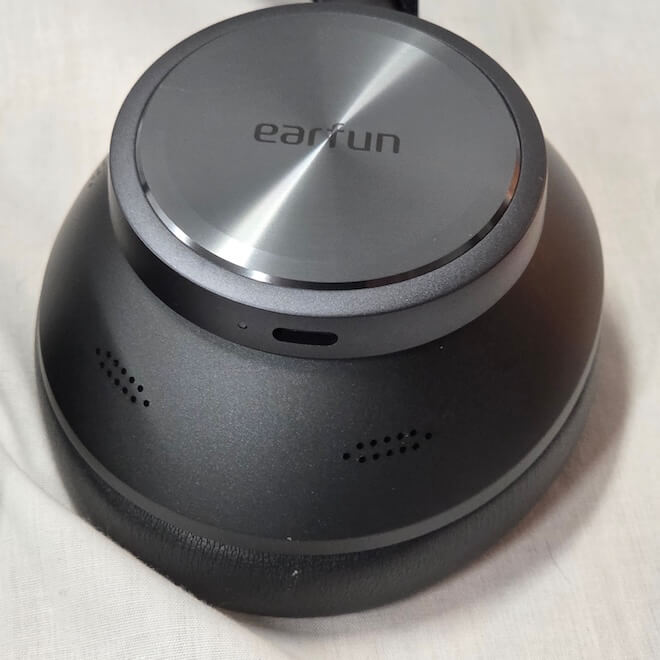
The Wave Pro X supports both USB Type-C audio and a 3.5 mm AUX connection, with ANC remaining available through either wired connection. This also means the headphones must remain powered on, even when used with a cable. They can charge through USB Type-C while connected to a compatible source that supports both data and power transfer. I always prefer having a wired option, although a 3.5 mm connection that didn’t require battery power would offer even greater flexibility.
Auracast support is included through Bluetooth LE Audio. The technology allows compatible devices to receive shared audio broadcasts, although its practical usefulness depends on compatible sources and the availability of public broadcasts. For now, it’s best viewed as a future-proofing feature, since relatively few sources currently support Auracast.
Bluetooth multipoint allows the headphones to connect to two devices simultaneously, making it quick and painless to switch between a laptop and phone once everything is set up. The Wave Pro X also includes AI-assisted noise reduction for voice calls and a low-latency mode for video and gaming.
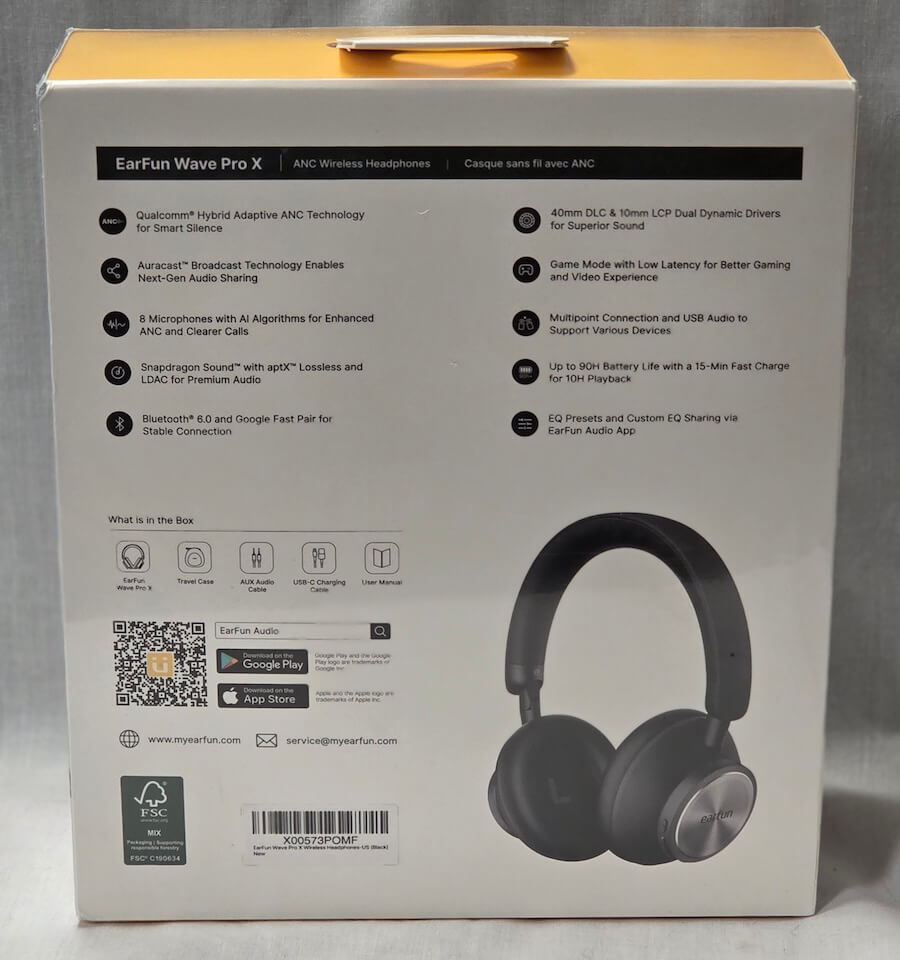
EarFun Wave Pro X Specifications:
- Type: Wireless, closed-back, over-ear ANC headphones
- Drivers: Dual-Coaxial Acoustic Architecture (DCAA) with 40 mm DLC and 10 mm LCP dynamic drivers
- Frequency Response: 20 Hz – 40 kHz
- Bluetooth: Version 6.0 with Qualcomm QCC3095 chipset
- Audio Codecs: aptX, aptX Adaptive, aptX Lossless, LDAC, LC3, SBC
- Noise Cancellation: Adaptive hybrid ANC with eight microphones
- Transparency Mode: Yes, with adjustable ambient awareness
- Auracast: Supported through Bluetooth LE Audio
- EQ: Customizable parametric EQ through EarFun Audio app
- Connectivity: Bluetooth multipoint (two devices), Google Fast Pair
- Wired Audio: USB-C and 3.5 mm AUX; headphones must remain powered on
- Additional Features: Low-latency gaming mode, AI-assisted call noise reduction, physical controls
- Battery: 800 mAh rechargeable
- Battery Life: Up to 90 hours (ANC off); 50 hours (ANC on)
- Quick Charging: 15 minutes for up to 10 hours of playback
- Full Charging Time: 2 hours
- Weight: 259 g (9.1 ounces)
- Design: Foldable earcups with padded headband
- Accessories: Protective carrying case, USB Type-A to USB Type-C charging cable, 3.5 mm audio cable
Listening
Since one of the big selling points is ANC, I did most of my listening with either ANC or transparency mode enabled. I also tested the EQ functions with ANC disabled to determine whether there was a difference in the degree of change heard between the two modes.
The first thing I noticed about the Wave Pro X’s sound signature is that it has very similar tuning to the AirPods Max, so those looking for that sound at a lower price will appreciate the Wave Pro X.
Sub-bass has good weight, with mild elevation and enough texture to keep it from sounding monotone while providing good rumble when called upon. That emphasis drops back quickly above about 100 Hz, leaving mid-bass near neutral. Mid-bass has enough body to sound natural, but slam is mostly heard rather than felt because it isn’t pushed. These won’t please the basshead crowd, but they are well balanced, with enough low-end presence to avoid sounding deficient without overwhelming the lower midrange. There is no noticeable bleed or bloom into the lower mids.
Being a big fan of the midrange, I like what EarFun has done with the tuning. The lower mids have good body, with lower voices cutting through the instrumentation and standing on equal footing with higher vocals. Guitars have sharp edges and rasp, along with enough weight to sound realistic. Strings have good energy as well and sound natural due to a mild lift as the frequencies move into the midrange (around 1 kHz). That lift also helps with piano and gives upper vocals the energy needed to sound full without becoming nasal or harsh.
The lift continues into the lower treble before becoming somewhat grainy in the true and upper treble ranges. Overall, it’s a very polite treble presentation, with the emphasis concentrated more in the upper mids and a drop-off beginning around 4 kHz. This keeps the Wave Pro X from sounding harsh or fatiguing, but it also limits air and sparkle, leaving percussion snap somewhat blunted. For me, this is the weakest part of the sound signature and where I spent time tweaking the EQ to better match my preferences.
Soundstage is always limited with closed-back ANC headphones, and the mild treble leaves the presentation both narrow and shallow, with minimal height. Imaging is average as a result, with good instrument separation but relatively little space between instruments. Adjusting the treble with EQ helps open the soundstage somewhat, but the limitations of the design prevent it from becoming truly expansive.
One big plus for the Wave Pro X is how little the sound signature changes with ANC enabled or disabled. Too often, engaging ANC introduces a veil or flattens the sound, robbing it of dynamics. While the amount of noise reduction is a solid step below that of class-leading ANC models, at least the sound isn’t being ruined in the process. The Wave Pro X still reduces steady, droning noises enough to keep them from becoming a distraction.
The Bottom Line
The EarFun Wave Pro X packs an impressive amount of technology into a $129.99 wireless headphone. Few models at this price offer Bluetooth 6.0, aptX Lossless, LDAC, LC3, and Auracast support. The companion app also includes a parametric EQ, a feature still uncommon in budget headphones. Build quality is solid enough that durability isn’t a major concern, and the included carrying case provides additional protection when traveling.
Auracast is particularly interesting because it’s finally moving beyond demonstrations and into public spaces. Vue cinemas in the UK and Ireland have begun installing the technology, Brighton railway station now broadcasts announcements directly to compatible listening devices, and Frankfurt Airport is testing it at selected gates. For students, seniors, travelers, and especially those with hearing difficulties, the ability to hear important announcements directly through compatible headphones could become genuinely useful. Availability remains limited, but this is one feature that could become more valuable over time.
Beyond the specifications, the ANC and transparency modes are both effective without significantly altering the sound quality, something budget ANC headphones don’t always manage. The default tuning should appeal to listeners who favor popular music genres, while the parametric EQ provides enough flexibility to tailor the presentation toward a more neutral balance. The soundstage is relatively narrow, and the softer treble lacks some air and sparkle, but neither is a dealbreaker at this price.
The value proposition is difficult to ignore. Buyers are getting what feels like 90% of the ANC performance, sound quality, and construction of premium wireless headphones for roughly 30% of the price. That’s an impressive achievement, even if the Wave Pro X can’t quite match the refinement of the best flagship models. For commuters, frequent flyers, students heading off to university, or anyone who wants capable noise-cancelling headphones without spending several hundred dollars, the EarFun Wave Pro X is an easy recommendation.
Pros:
- Extensive codec support, including LDAC, aptX Adaptive, aptX Lossless, and LC3, Bluetooth 6.0, LE Audio, and Auracast
- Parametric EQ
- USB-C audio and 3.5mm AUX connections
- 50+ hour battery life
Cons:
- Power must be on when wired (no powerless operation)
- No independent ANC attenuation or distortion measurements listed
- USB-C audio resolution is unspecified
- AAC not officially supported, subject to updates.
Our Ratings:
★★★★★★★★★★ Sound Quality
★★★★★★★★★★ Build Quality
★★★★★★★★★★ Comfort
★★★★★★★★★★ Features
★★★★★★★★★★ ANC
★★★★★★★★★★ Value
Where to Buy:
Related Reading: