India might not be the first country that comes to mind when discussing high-end headphone manufacturers, but a handful of homegrown brands are looking to change that perception. Among them, Sonic Lamb is arguably one of the most technologically ambitious, developing headphones that challenge conventional approaches to sound reproduction.
The Sonic Lamb headphones made their debut in India in 2023, following several years of development. The company has since been looking beyond its domestic market to reach a wider international audience.
At $239, these challengers from the world’s most populous country are competing against well-established global brands such as Sony, Anker, and Sennheiser. But the Sonic Lamb headphones have a trick up their sleeve that sets them apart from most conventional wireless headphones, and it’s something you can actually feel.
Related Reading:
- EarFun Wave Pro X Review: Flagship Features In Budget Wireless Headphones?
- Sony WH-1000XM4C Review: Can A Former ANC King Still Compete At $300?
Sonic Lamb’s Hybrid Driver Technology Puts a Subwoofer Against Your Head
That trick, undoubtedly the Sonic Lamb’s most intriguing feature, is its patented Hybrid Driver Acoustics system, which combines two different driver technologies to reproduce sound.
A traditional dynamic driver handles frequencies above 120 Hz, including the majority of the midrange and treble. This part of the system operates much like a conventional headphone driver, generating sound waves that travel through the air and into our ears.
Below 120 Hz, however, things become considerably more interesting. Instead of relying entirely on the dynamic driver to reproduce lower frequencies, Sonic Lamb employs a dedicated impulse driver that converts low-frequency audio signals into mechanical vibrations. These vibrations are transferred through specially designed earpads, allowing the wearer to physically feel the bass through their skin and surrounding tissue.
The principle shares some similarities with bone-conduction audio technology, although the implementation and intended result are quite different. Traditional bone-conduction headphones use vibrations to transmit sound through the skull, whereas Sonic Lamb uses its impulse drivers primarily to add a physical dimension to low-frequency reproduction.
Think of the sensation you experience when standing near a powerful subwoofer at a concert. You don’t just hear the bass; you feel it in your chest and throughout your body. Sonic Lamb attempts to recreate something similar inside a pair of wireless headphones, using specially designed Wooferpads to transfer vibrations from the impulse drivers to the sides of the wearer’s head. Clever stuff, and particularly impressive considering the limited space available inside the earcups.
Sonic Lamb also sought external expertise during development. According to the company, the headphones were tuned using a GRAS acoustic measurement system, with guidance from Peter Petersen, CEO of Sound Hub Denmark and former CTO of Bang & Olufsen.
Getting into the nerdy specifications, the Sonic Lamb uses the slightly outdated but still perfectly viable Bluetooth 5.1 standard, powered by Qualcomm’s QCC3034 chipset. It supports codecs up to aptX HD, allowing 24-bit/48kHz wireless audio transmission with compatible devices. If you want higher-resolution playback, you can connect the headphones via USB-C, which supports sampling rates up to 96 kHz. AAC is also supported for those of you in the Apple ecosystem.
One important limitation is that the Sonic Lamb cannot be used passively because its impulse drivers require the internal electronics to operate. There’s also no active noise cancellation (ANC), which could be a dealbreaker for commuters and anyone who regularly uses headphones on public transport.

Design & Comfort
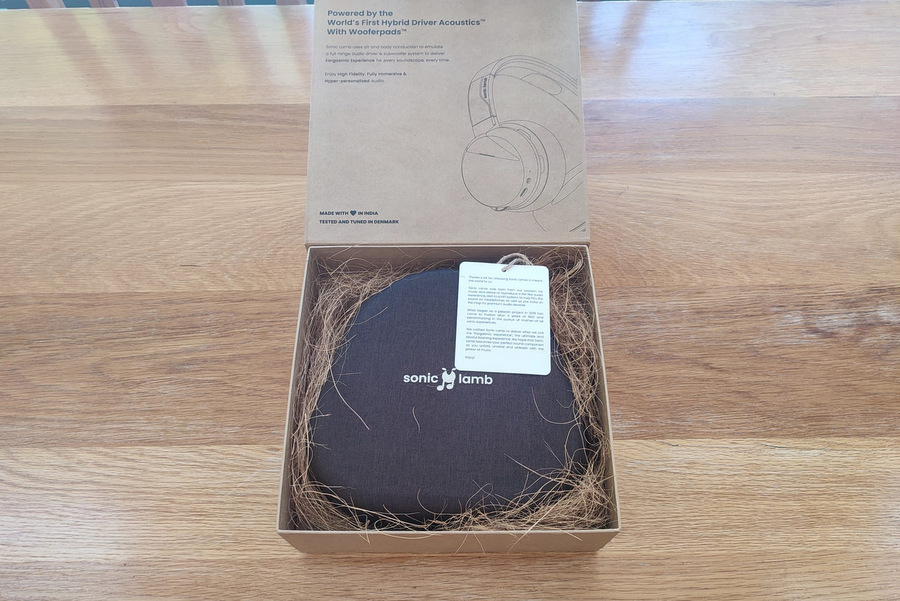
Before getting into the headphones themselves, I have to give Sonic Lamb credit for the unboxing experience. Rather than simply placing the headphones inside an ordinary cardboard box, the manufacturer presents its semi-rigid carrying case surrounded by natural-looking packing material resembling wood shavings.
It creates the impression that you’re uncovering some sort of wild, untamed creature. As it turns out, that’s a remarkably appropriate introduction to the Sonic Lamb, although perhaps not entirely for the reasons the manufacturer intended. More on that shortly.
Unfortunately, that sense of occasion doesn’t last very long once you get your hands on the headphones themselves. The presentation might suggest something rather special, but the materials and overall finish tell a different story.
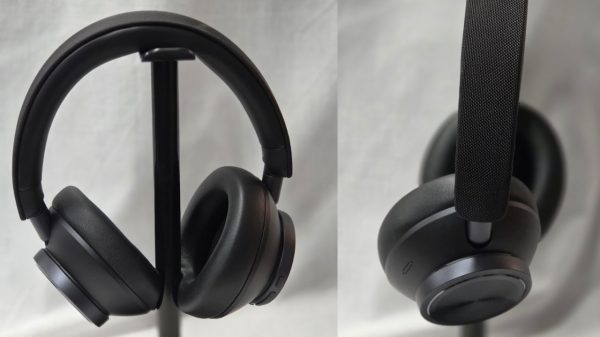
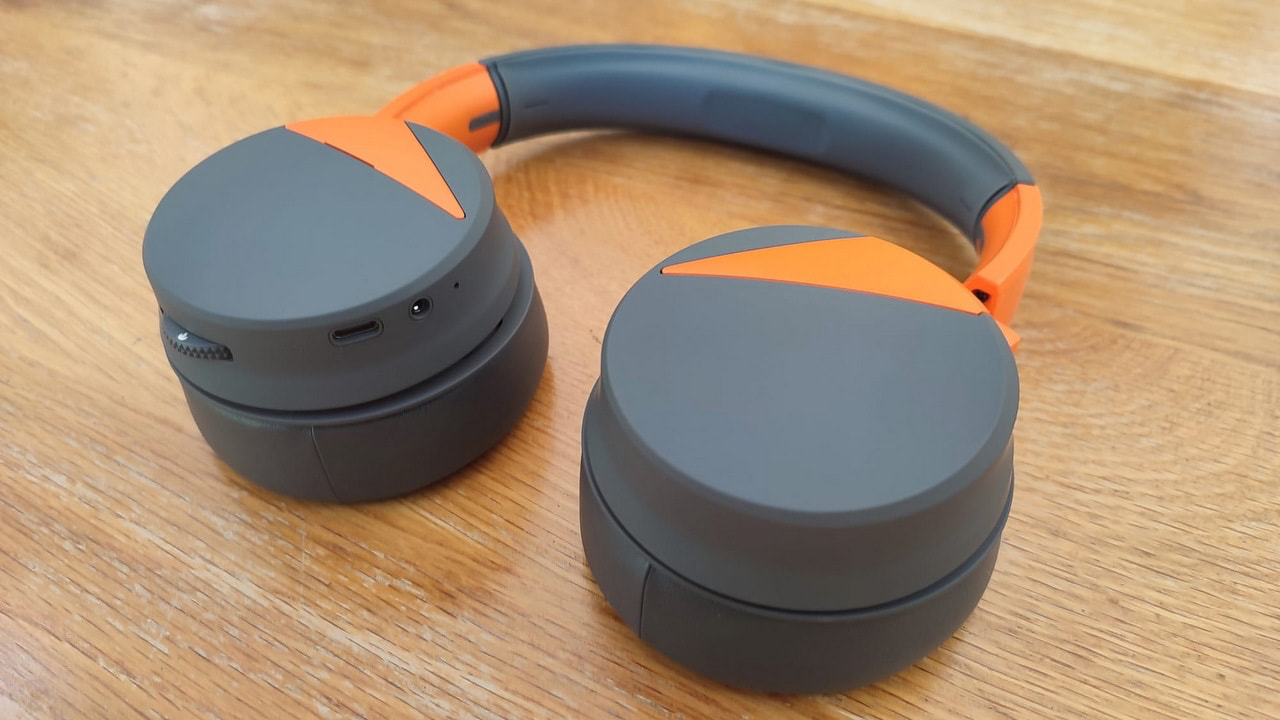
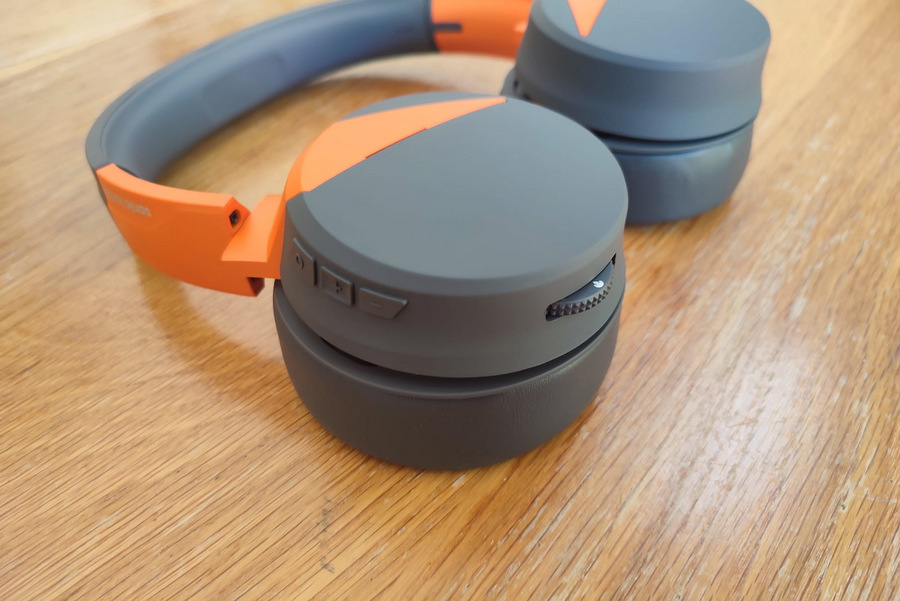
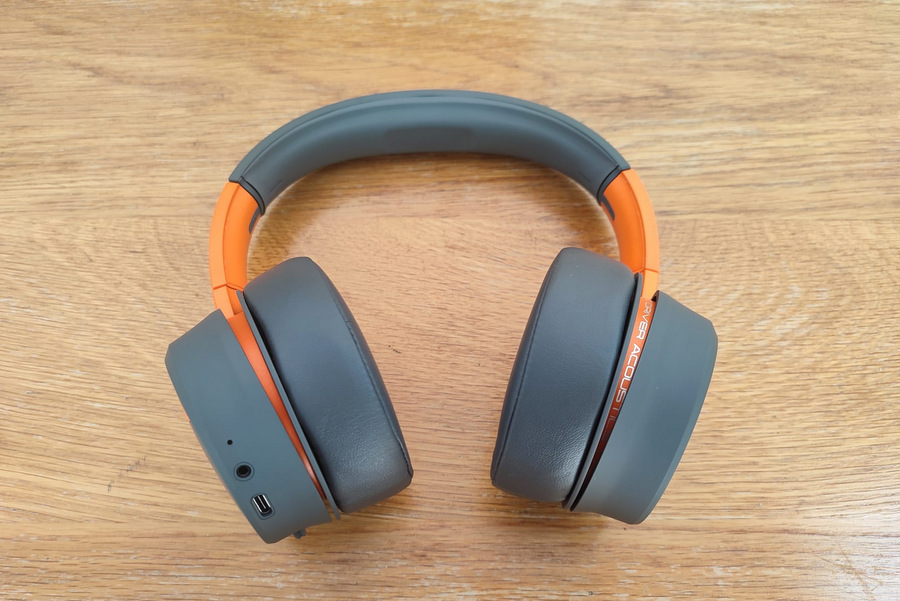
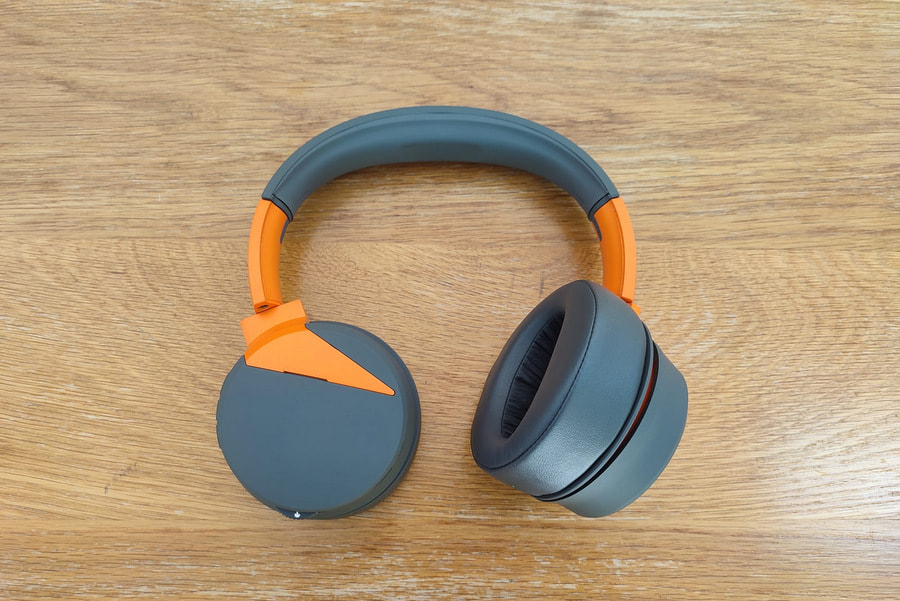
Our review sample came in the grey and orange colour scheme, and while I’m sure some will appreciate the contrasting colours, I found the overall aesthetic rather cheap-looking. I’ve also seen pictures of the Obsidian Black version online, and that one is much more up my street.
The construction is predominantly plastic, with some spring steel and silicone incorporated into the design. While the headphones feel reasonably sturdy, there’s little about the materials or finish that communicates a particularly premium product. That wouldn’t necessarily be a significant criticism at a lower price, but when you’re asking $239 for a pair of wireless headphones, appearance and build quality do matter.
The headband adjustment mechanism also has some surprisingly sharp edges, while the earcups don’t rotate quite far enough to conform naturally to the shape of my head. Neither issue inspires much confidence in the ergonomics, particularly for headphones intended to deliver a more physical listening experience.
Comfort is similarly a mixed bag. While the headphones are relatively light at 320 grams, the headband uses soft silicone padding rather than conventional foam, presumably to improve durability and make cleaning easier. Unfortunately, I consistently developed a pressure hotspot on the crown of my head after around 90 minutes of listening, which is far from ideal for extended sessions.
The earpads, on the other hand, are considerably more comfortable, with generous padding and a soft faux-leather covering that caused me no discomfort. They’re also replaceable, which is a welcome feature and should help extend the headphones’ useful lifespan.
Overall, the Sonic Lamb headphones are perfectly usable, but it’s clear that considerably more attention went into developing the driver technology than refining the ergonomics and visual presentation. The innovative acoustic design deserves credit, but comfort and finish shouldn’t feel like afterthoughts at this price.

Four Listening Modes Let You Decide How Much Bass You Can Handle
Rather than offering conventional sound presets focused on equalisation, Sonic Lamb has incorporated four listening modes that primarily adjust the intensity of the impulse drivers. These are selected using a physical dial on the headphones, making it easy to switch between profiles without having to reach for your phone.
The four modes are:
- Hear: The most restrained setting, keeping impulse-driver activity to a minimum while placing greater emphasis on conventional sound reproduction, vocal clarity, and perceived detail.
- Feel: Increases the contribution of the impulse drivers, adding greater physical weight to bass notes. Sonic Lamb recommends this setting for rock, jazz, and metal.
- Immerse: Delivers a more pronounced low-frequency sensation, specifically tuned for energetic and upbeat music.
- Beast: Unleashes the impulse drivers at maximum intensity, creating the most aggressive and physically engaging listening experience. Sonic Lamb primarily recommends this mode for films, gaming, and workouts. Intriguingly, the company actually advises against using it for music.
We’ll get into the sonic consequences shortly, but I commend Sonic Lamb for giving users direct physical control over the headphones’ most distinctive feature. Whether anyone genuinely needs Beast mode for a two-hour listening session is another matter entirely.
App Control, Call Quality and Battery Life: A Few Surprises Along the Way
If you want to adjust the midrange and treble response alongside the intensity of the impulse drivers, you can do so through the accompanying Sonic Lamb app. It allows you to create, fine-tune, and save up to five custom EQ profiles according to your preferences. Unfortunately, the app is still unavailable on Apple’s App Store and can only be downloaded through the Google Play Store.
I was generally impressed with the app, which looks polished and features a clean, intuitive layout that makes navigating the available settings refreshingly straightforward. You can also switch the LEDs on the outside of the earcups on or off and install firmware updates without much fuss.
One thing I didn’t particularly enjoy during everyday use was the lack of spoken status announcements. Instead of a voice informing you when the headphones have connected or which listening mode you’ve selected, the Sonic Lamb communicates through a series of beeps. You’re therefore expected to memorise the different sounds and associate them with their respective functions.
It’s hardly a dealbreaker, but I much prefer straightforward voice prompts, particularly on headphones incorporating multiple listening profiles. Having to remember which beep means what feels like an unnecessary complication.
I haven’t mentioned yet that Sonic Lamb includes a detachable boom microphone in the box, which is certainly a welcome addition. There are also two built-in microphones for voice capture and noise suppression. In practice, I found the microphone performance adequate for ordinary phone calls, although a dedicated microphone would still be preferable for conferences, recordings, or other situations where vocal clarity is a priority.
Battery life is quoted at up to 42 hours, which sounds perfectly respectable, so I was initially disappointed when I managed only around 20 hours from a full charge during testing. However, a closer look at Sonic Lamb’s specifications explained the discrepancy: 42 hours is achievable only in Hear mode, while switching to Beast mode reduces the claimed battery life to just 12 hours.
Considering that I spent a considerable amount of time switching between all four listening modes, my results suddenly made a lot more sense. It’s an important distinction for prospective buyers, particularly those planning to make frequent use of the headphones’ most entertaining feature.
Listening
The Sonic Lamb is easily one of the most unusual pairs of headphones I’ve reviewed. In fact, describing its performance using conventional audio terminology almost feels inadequate because a substantial part of the experience isn’t strictly auditory. You can physically feel what the low-frequency drivers are doing, and it’s quite unlike listening through a conventional pair of headphones.
Whether this represents a revolutionary development or an entertaining novelty will depend largely on your expectations and the type of music you typically enjoy. There’s no denying that Sonic Lamb has created something genuinely different, but that doesn’t necessarily mean it’s suitable for everyone.
Even with the Hear profile selected, the lowest frequencies remain noticeably elevated relative to the rest of the presentation. There’s simply no escaping that emphasis, regardless of how conservatively you configure the impulse drivers.
Things become considerably more extreme as you move through Feel, Immerse, and Beast. And I really do mean extreme. The physical sensation becomes increasingly dominant, to the point where the experience can feel more like sitting beside a powerful subwoofer than listening through a pair of wireless headphones.
Bass
Bass is unquestionably the main attraction here. Even on the lowest setting, the Sonic Lamb reproduces music with noticeable warmth and weight, placing considerable emphasis on the mid-bass and lower frequencies.
Even in Hear mode, the lower frequencies lack the finer details and texture you can get from more neutrally tuned wireless headphones such as the Sennheiser Momentum 5. Turn up that dial, and the presentation becomes progressively messier, but also considerably more entertaining in certain situations. As I’ve already mentioned, it really depends on your musical preferences and the genres you listen to most frequently.
For modern R&B, hip-hop, rap, and electronic music, the Sonic Lamb can be an absolute riot. Dense electronic basslines, heavily compressed kick drums, and rhythmic low-frequency effects all benefit from the added physicality of the impulse drivers in the more aggressive modes. Listening to Massive Attack’s “Angel,” with its powerful, repetitive bassline, was such an outrageous experience in Immerse mode that I couldn’t help but enjoy myself.
Obviously, there’s a flipside to such a bombastic presentation. Tracks with quieter passages or a greater emphasis on vocal clarity and acoustic instruments, particularly classical, opera, folk, and jazz, sounded muddy, congested, and generally lacking in finer details. Furthermore, there’s a noticeable roll-off in the sub-bass below 50 Hz, meaning you don’t really hear the deepest rumbles, although the physical vibrations from the Wooferpads help compensate for this to some extent.
For these reasons, my primary use case for the Sonic Lamb ended up being club-oriented music, with a preference for the Immerse and Beast modes. Since the bass is already exaggerated in Hear mode, attempting to use these headphones for neutral or analytical listening felt somewhat pointless. These aren’t headphones I’d recommend for mixing, mastering, or critically evaluating a recording, but that’s clearly not what Sonic Lamb had in mind.
So why not embrace them for the untamed beasts they are? Sometimes you just want to have some fun with your music, even if tonal accuracy gets thrown out of the window in the process.
Midrange
Thankfully, the rest of the Sonic Lamb’s frequency response is considerably more restrained. If you can mentally separate the exaggerated bass from the rest of the presentation, there’s actually a reasonably well-balanced midrange underneath. Vocals generally have sufficient body and presence, while guitars, pianos, and other midrange-focused instruments avoid sounding excessively thin or recessed.
Female vocals managed to cut through the bass reasonably well, but male vocals, on the other hand, occasionally sounded bloated and overly thick due to the emphasis on the lower frequencies. The lower registers of the piano also suffered from a boomy timbre, something I noticed while listening to James Blake’s “Limit to Your Love.”
The underlying tuning, however, seems fairly sensible once you account for the exaggerated low end. This suggests that Sonic Lamb may have benefited from the involvement of Sound Hub Denmark during development, even if the impulse drivers frequently overshadow the more balanced characteristics of the conventional drivers.
Treble
Moving into the higher frequencies, the Sonic Lamb is surprisingly well-behaved. There’s no obvious attempt to compensate for the heavy bass by dramatically boosting the upper treble, which could easily have resulted in an excessively V-shaped sound signature. Instead, the treble is relatively smooth and controlled.
I didn’t notice any particularly offensive peaks or areas of harshness during my listening sessions, and the headphones generally avoid the exaggerated sibilance that can make certain wireless models fatiguing. Cymbals, hi-hats, and other high-frequency percussion retain a reasonable amount of presence without becoming piercing or overly aggressive.
The trade-off is that the Sonic Lamb headphones don’t exactly set the world alight when it comes to detail retrieval. Some of that is undoubtedly a consequence of the outrageous bass emphasis, but the treble itself isn’t particularly airy, extended, or revealing. This became apparent while listening to “La lune” by L’Impératrice, where I struggled to distinguish the faint triangle strikes that can be heard throughout the track.
Imaging & Soundstage
When it comes to soundstage and imaging, don’t expect the Sonic Lamb to perform miracles. As closed-back wireless headphones, they already face certain limitations compared with the more spacious presentation commonly associated with wired open-back designs.
The soundstage isn’t particularly expansive, with much of the music appearing to occupy a relatively confined space around the listener’s head. Instrument separation is adequate, but complex arrangements can become congested, particularly when the impulse drivers are operating at higher intensity.
Imaging precision is similarly unremarkable. While it’s possible to distinguish basic left-to-right placement, the Sonic Lamb doesn’t offer the kind of pinpoint positional accuracy that allows individual instruments to be located effortlessly within a recording.
Thankfully, the impulse drivers introduce a different kind of immersion, adding a physical dimension to the music that conventional headphones struggle to replicate. However, that visceral sensation shouldn’t be confused with the expansive soundstage and precise instrument localisation offered by premium wired open-back headphones. You certainly feel more of the music, but that doesn’t necessarily mean you hear more of it.
The Bottom Line
The Sonic Lamb is one of the most unconventional wireless headphones I’ve reviewed, and the Indian manufacturer deserves credit for developing something genuinely different. Its patented impulse drivers transform bass into a physical experience that few conventional headphones can match, making hip-hop, electronic music, and bass-heavy soundtracks tremendously entertaining. There’s something undeniably addictive about feeling the music rather than simply hearing it.
Unfortunately, that excitement comes with some significant compromises. The exaggerated bass frequently overwhelms the midrange, obscuring finer details and affecting instrumental timbre, while the disappointing build quality and inconsistent comfort are difficult to overlook at $239. Listeners who value tonal accuracy, particularly fans of classical, jazz, and acoustic music, will find more balanced alternatives elsewhere.
Ultimately, the Sonic Lamb prioritizes visceral excitement over sonic accuracy, and there’s a legitimate audience for that approach. These aren’t headphones for critical listening, but for bass enthusiasts willing to sacrifice refinement for sheer entertainment, having a miniature subwoofer strapped to your head has an undeniable appeal. Sonic Lamb has delivered a genuinely innovative concept; now it needs to give the rest of the headphones the same attention.
Pros:
- Innovative impulse-driver technology creates an unusually physical bass experience
- Tremendous fun with hip-hop, electronic music, and bass-heavy soundtracks
- Four listening profiles with distinctly different levels of tactile impact
- Smooth treble and reasonably balanced underlying midrange
- Polished and intuitive companion app
- aptX HD, USB digital audio and detachable boom microphone
Cons:
- Excessive bass emphasis even in the most restrained listening mode
- Limited bass texture, definition, and apparent deep sub-bass extension
- Elevated low frequencies can obscure midrange detail and instrumental timbre
- Plastic-heavy construction and unrefined adjustment mechanism
- Headband can become uncomfortable during extended listening
- No active noise cancellation
- Battery life falls significantly when using Beast mode
Our Ratings:
★★★★★★★★★★ Sound Quality
★★★★★★★★★★ Build Quality
★★★★★★★★★★ Comfort
★★★★★★★★★★ Usability
★★★★★★★★★★ Value
Where to Buy:
Related Reading: