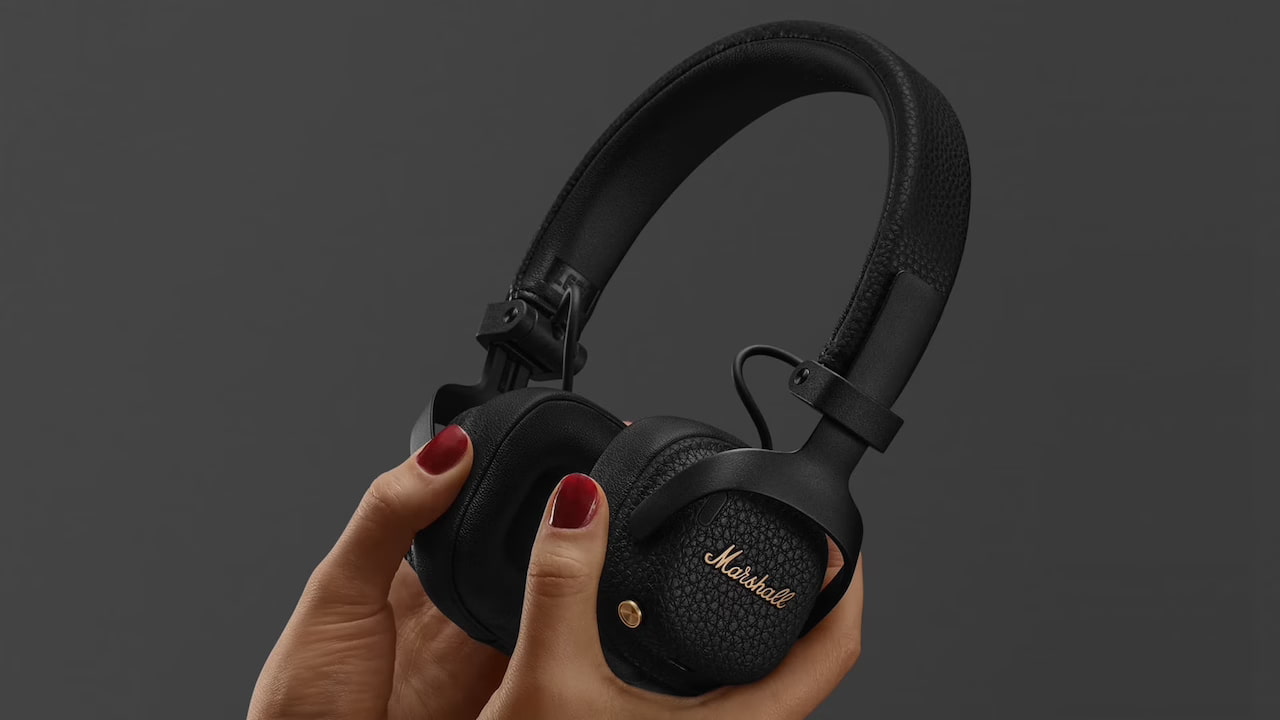
Marshall has expanded its wireless headphone lineup with the new Milton A.N.C., a foldable on-ear model that brings adaptive noise cancellation, long battery life, and the brand’s familiar amp-inspired design to a more portable form factor. Priced at $229.99, Milton A.N.C. offers 50+ hours of playback with ANC on and up to 80 hours with ANC off, putting it squarely in the travel-friendly headphone category without forcing listeners into a full-size over-ear design.
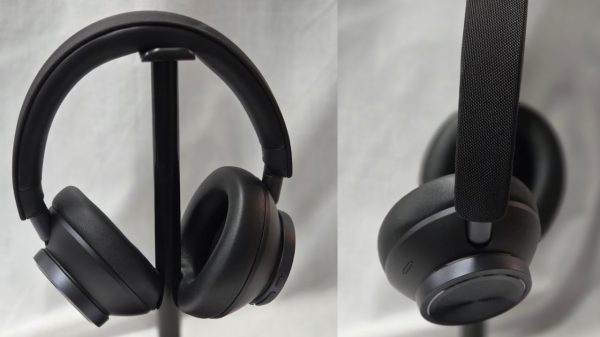
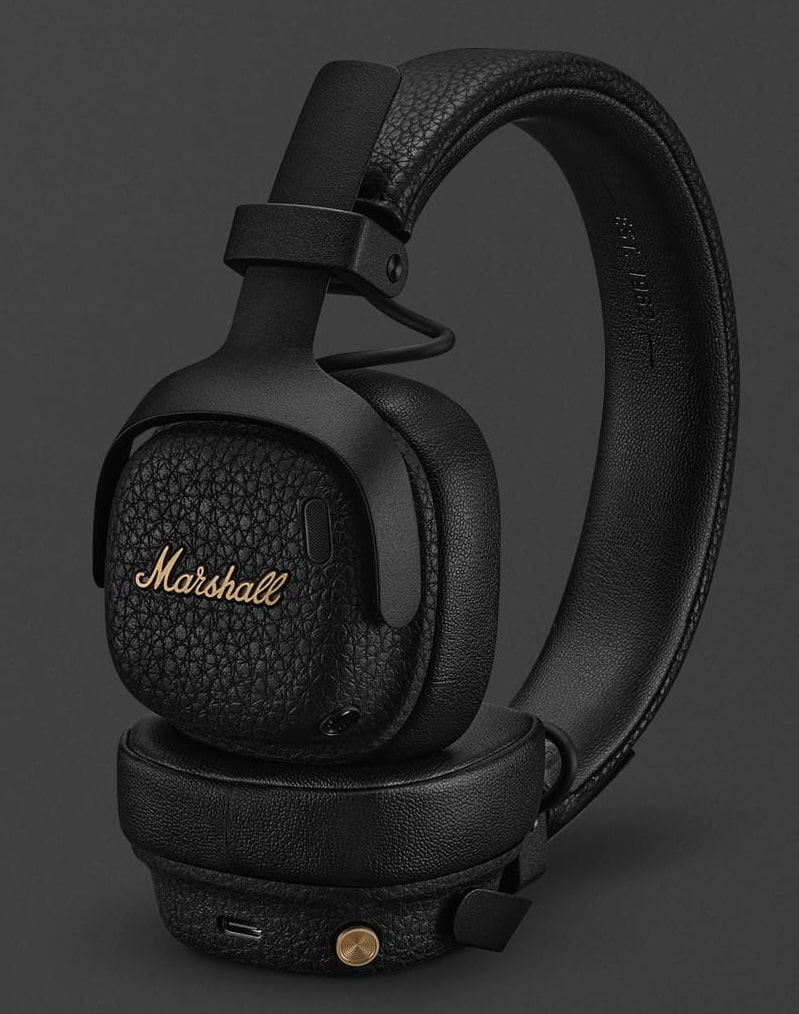
The design sticks closely to Marshall’s house style: square TPU molded ear caps, textured leather surfaces, brass logo hardware, powder-coated metal arms, and memory foam cushions intended to make the on-ear fit less punishing over longer sessions.
Over-Ear vs. On-Ear: Many wireless headphones use an over-ear design, with larger earcups that surround the ears. The Marshall Milton A.N.C. uses an on-ear design instead, meaning the earcups rest directly on the ears. That usually makes the headphones more compact and easier to pack, although comfort and isolation can vary depending on ear shape, clamping force, and how long you wear them.
Design and Comfort Is Just The Start
Battery Life and Replaceable Battery: Design and comfort are a good starting point, but battery life and usability matter just as much once the headphones leave the box. The Marshall Milton A.N.C. is rated for up to 80 hours of wireless playback with ANC off and 50+ hours with ANC enabled, which gives it enough stamina for commuting, travel, and long listening sessions without constant charging anxiety.
Milton A.N.C. is also Marshall’s first wireless headphone with a replaceable battery, although the spare battery is sold separately. That matters because battery degradation is usually where wireless headphones start their slow walk to the drawer of forgotten electronics. A replaceable battery does not make them immortal, but it is a practical move in a category that could use fewer disposable “premium” products.
Connectivity, ANC, and Spatial Audio: The Marshall Milton A.N.C. supports Bluetooth 6.0 with LE Audio and is compatible with SBC, AAC, LC3, and LDAC codecs. That gives it broader wireless codec support than many lifestyle headphones, especially with LDAC for higher-bitrate Bluetooth playback from compatible devices. For users who still prefer a wired option, Milton A.N.C. also supports a USB-C to 3.5mm connection.
Adaptive ANC is included and is designed to analyze surrounding noise and adjust the level of noise cancellation in real time. That should help reduce distractions during commuting, travel, work, movies, calls, or extended listening sessions. When users need to hear what is happening around them, Transparency mode lets outside sound back in without removing the headphones.
Milton A.N.C. also includes Soundstage Spatial Audio, Marshall’s in-house spatialization algorithm. Activated through the Marshall app, Soundstage is designed to add a greater sense of depth and width to stereo tracks. It will not magically turn a bad mix into Abbey Road. But for listeners who want a wider presentation from standard stereo content, it gives Milton A.N.C. another feature beyond battery life, ANC, and the usual Marshall attitude.
Additional Key Features:
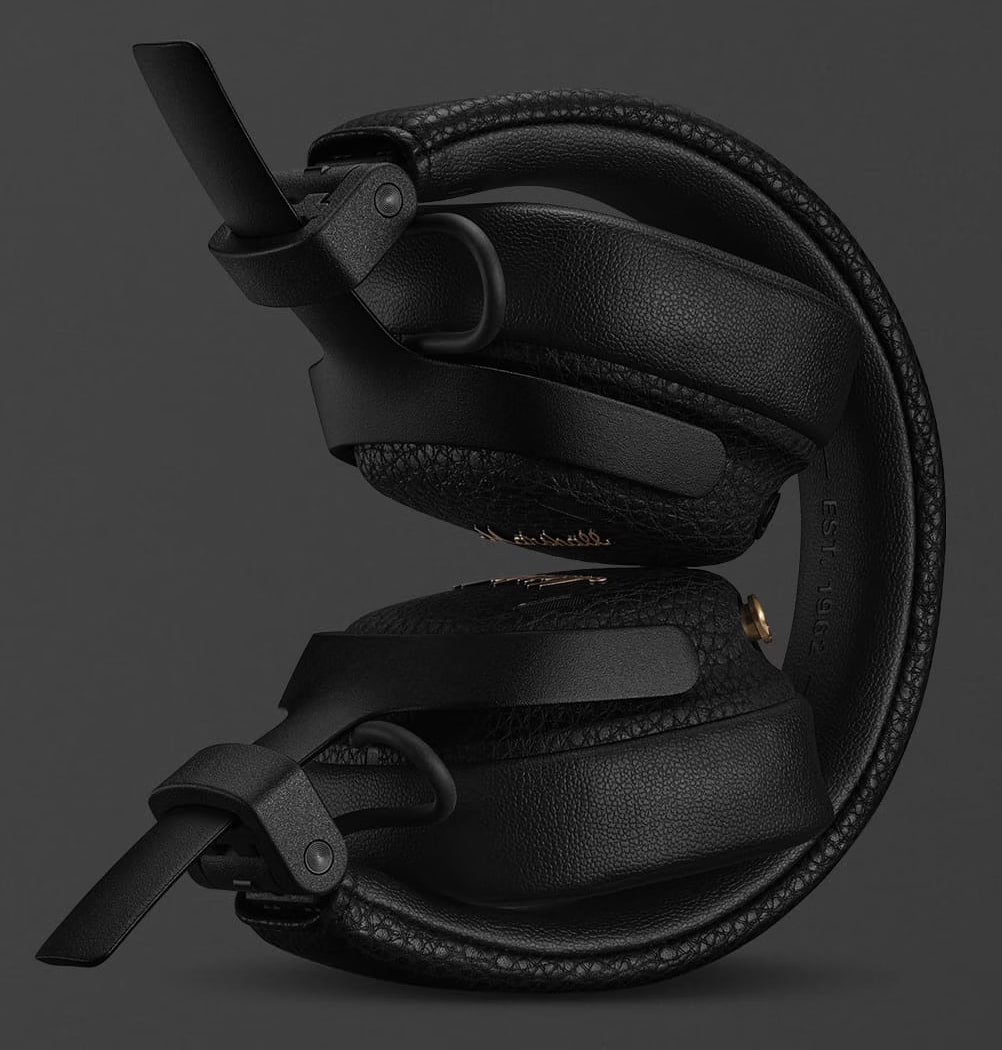
The Marshall Milton A.N.C. is built around a foldable on-ear design intended for daily use and travel. The headphones can be folded down for easier packing and unfolded quickly when it is time to listen, which is the whole point of choosing on-ear portability over larger over-ear cans.
Marshall says the Milton A.N.C. uses newly developed 32mm drivers tuned by its in-house acoustic engineers. The company describes the sound as part of its long-running “signature sound” approach, with improved bass and treble extension and support for Hi-Res Audio playback. Translation: Marshall is leaning on the rock-and-roll heritage again, but at least there is actual driver development behind the leather jacket.
The Milton A.N.C. also includes Adaptive ANC and Transparency mode. Multiple microphones analyze surrounding noise and adjust cancellation automatically, while Transparency mode lets outside sound back in when users need situational awareness. Disabling ANC is not the same thing as Transparency mode; one turns noise cancellation off, while the other actively passes external sound through the microphones.
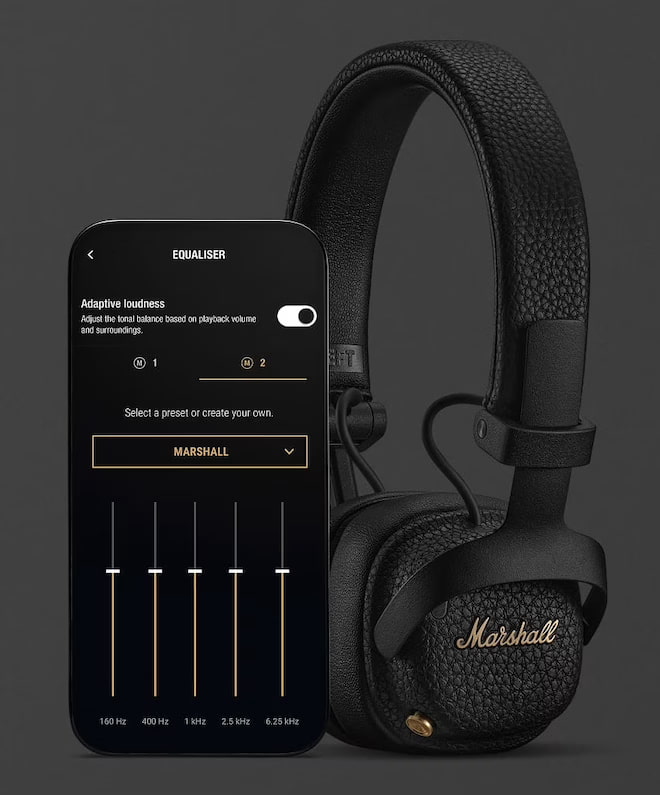
Adaptive Loudness is designed to preserve tonal balance at lower volume levels or when outside noise interferes with listening. Marshall says the feature raises bass and lower midrange output to help maintain a more natural balance without forcing users to crank the volume. That is useful in theory, especially for commuting, but it will depend on how subtly Marshall applies it. Too much “help” and the bass starts driving the bus.
The M Button: To further support ease of use, the Milton has a single onboard button that can access key headphone functions. For example, you can use the button to Toggle between ANC and Transparency mode or turn soundstage spatial audio on and off. Switch between preferred EQ settings. Go directly to a Spotify playlist with Spotify Tap, a voice assistant, or take a call using a voice assistant without the need to pick up the phone.
Packaging: Milton A.N.C has 42% recycled material by weight, reducing the need for virgin resources and helping lower environmental impact. Recycled materials typically have a smaller carbon footprint than virgin materials, though actual savings vary by material and process.
Specifications
| Marshall Model | Milton A.N.C |
| Product Type | Wireless On-Ear Headphones |
| Price | $229 |
| Driver Type | Dynamic |
| Driver Size | 32 mm |
| Driver Sensitivity | 99.3 dB SPL (1mW @ 1kHz) |
| Driver Impedance | 32 Ω |
| Frequency range | 20-20,000 Hz (SBC, AAC, LC3) 20-40,000 Hz (LDAC at 96kHz) |
| Play time | 50 hours with Bluetooth and ANC 80 hours with Bluetooth only |
| Battery Preservation | Yes |
| Wireless Charging | No |
| Quick Charging | 15 minutes gives 9.5 hours of playtime |
| Charging time | 2 hours to full recharge |
| Exchangeable Battery | Yes |
| Wireless connectivity | Bluetooth 6.0 |
| Wired connectivity | USB-C to 3.5mm |
| Bluetooth range | 10 m / 30 ft |
| Bluetooth Codecs | SBC, AAC (MPEG-2), LC3, LDAC |
| Controls | Control knob, M-button |
| Marshall App | Yes – iOS and Android |
| Microphone & Remote | Yes |
| Active Noise Cancellation | Yes |
| Microphones | 6 |
| Bluetooth Multipoint Connectivity | Yes |
| Dimensions | Not provided |
| Weight | 231 g / 8.2 oz |
| Colorways | Black |
| Foldable design | Yes |
| Included Accessories | Marshall Milton A.N.C. Headphones USB-C to USB-C Cable: (for charging) USB-C to 3.5mm Cable: (wired audio connection) Travel case |
| Repairability | Yes |
| Country of origin | Designed and engineered in Sweden. Made in China. |
If you compare Milton A.N.C. with our other on-ear headphones, like the beloved design of Major V, you’ll notice a few big differences. We’ve increased the ear cushion size to help keep the sound in and improve passive noise attenuation. Larger earpads and softer memory foam also mean the headphones are more comfortable to wear over longer periods. We’ve introduced an entirely new driver system tuned to improve bass and treble extension, delivering dynamic Hi-Res audio with rich details. On top of that, 6 microphones optimally placed for ANC and call complement the acoustic design for highly effective noise reduction,” says Nicolas Pignier Delafontaine, Senior Manager, Audio & Acoustic at Marshall Group
“With Milton A.N.C., we have created a premium, yet durable headphone that is easy to bring with you wherever life takes you. Our design and engineering teams have worked for years to bring the immersive feeling of Adaptive ANC into our beloved on-ear form factor, and we couldn’t be prouder of the results. Its portable design makes it a sleek contender to heavier over-ear alternatives, without compromising on features. The combination of adaptive ANC with 80 hours battery life is guaranteed to take on-the-go music listening sessions to the next level,” says Evelina Lindström, Product Manager at Marshall Group.
The Bottom Line
The Marshall Milton A.N.C. enters a crowded wireless headphone category with a few things that help it stand out: an on-ear foldable design, up to 80 hours of battery life, 50+ hours with ANC enabled, wired and wireless connectivity, app control, LDAC support, adaptive ANC, Transparency mode, and a replaceable battery. That last one is the real eyebrow raiser. Most wireless headphones eventually become landfill candidates when the battery fades, so Marshall deserves credit for making serviceability part of the story instead of pretending lithium-ion cells are blessed by the Pope.
At $229, Milton A.N.C. looks like a credible option for listeners who want a more compact alternative to over-ear ANC headphones without giving up long battery life or modern codec support. It makes the most sense for commuters, travelers, students, and Marshall loyalists who want a portable headphone with classic styling and enough stamina to survive more than one bad week.
The competition is not exactly asleep at the pub. The Fender Mix costs more at $299 but claims up to 100 hours of battery life. The Final UX5000 at $250 brings aptX and aptX Adaptive support. The Skullcandy Aviator 900 at $299 counters with THX Spatial Audio, which some listeners may prefer over Marshall’s Soundstage processing. Budget buyers also have the EarFun Wave Pro at around $80, with LDAC and multiple ANC modes, though it clearly plays in a different build and brand category.
Milton A.N.C. is not the cheapest, not the longest-lasting, and not the only model chasing spatial audio and ANC. But its combination of foldable on-ear portability, long battery life, LDAC, adaptive noise cancellation, Marshall design, and a replaceable battery gives it a sharper identity than many lifestyle headphones at this price. That matters. In this category, looking cool is easy. Surviving the commute without becoming another dead gadget in a drawer is the harder trick.
Price & Availability
The Marshall Milton A.N.C. wireless headphones are priced at $229 at Marshall.com and will be available at select retailers beginning May 27th 2026.
Related Reading:
- Best Wireless Headphones: Editors’ Choice
- Noble Debuts FoKus Apollo Pro Wireless Headphones at CanJam Singapore 2026
- Loewe LEO Wireless Headphones Took on Luxury Rivals at AXPONA 2026 in Bold Blind Listening Test Strategy
- Écoute TH2 Wireless Headphones Debut on Kickstarter With Built-In Vacuum Tube Preamp