
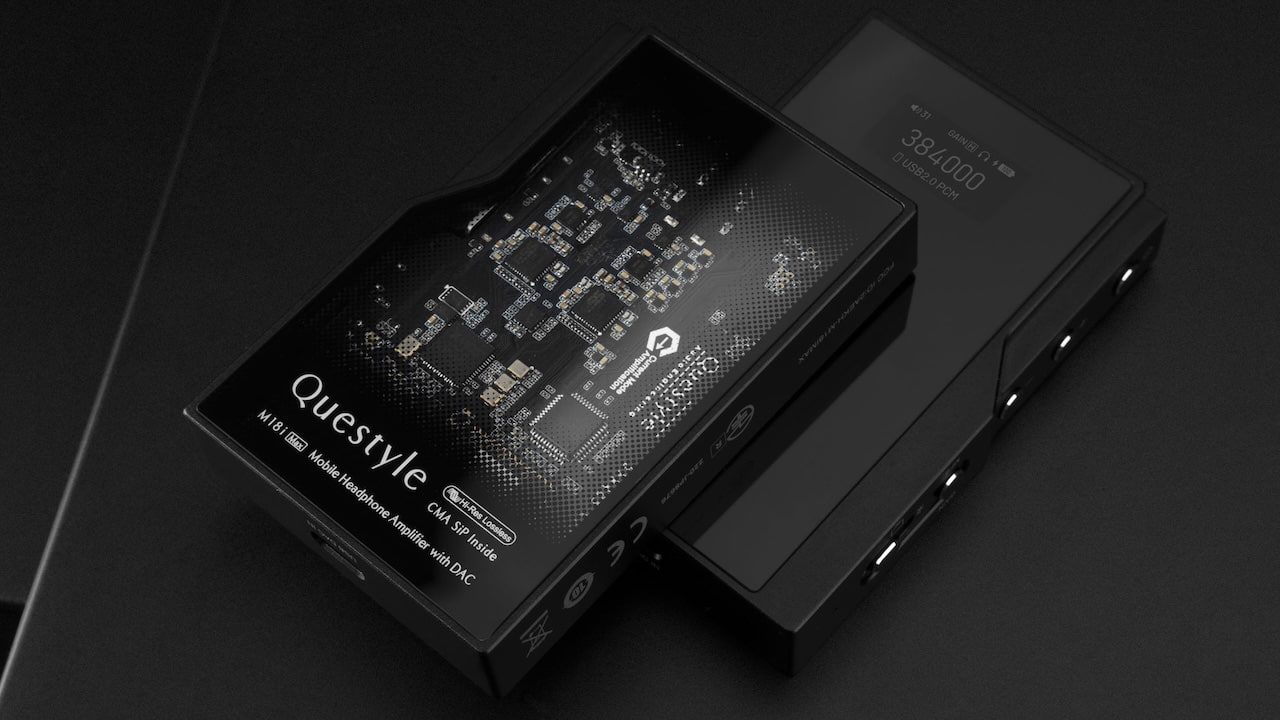
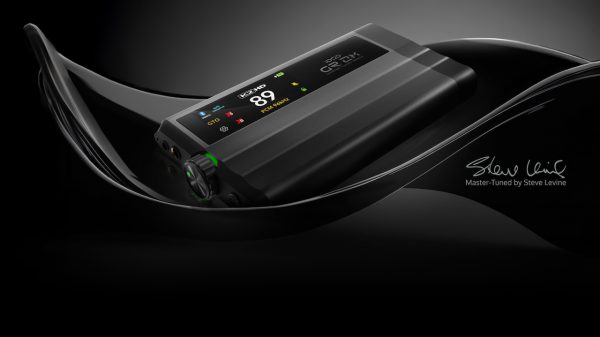
Questyle isn’t aiming low with the new M18i MAX. At $349 USD, this flagship mobile DAC and headphone amplifier targets listeners who expect more than convenience-grade audio. We’re looking at you, discerning audiophiles, music professionals, and mobile hi-fi users who actually read the spec sheet before surrendering the credit card.
Yes, even the Audio Science Review crowd. Still chasing that last decimal point of SINAD while the rest of us are listening to music. At some point, you have to step away from the measurements, come upstairs, and admit that enjoyment isn’t a graph. Momma called. Your TV dinner is ready.
The M18i MAX pairs Questyle’s patented Current Mode amplification with dual ESS ES9219Q DACs, Snapdragon Sound, and support for both USB DAC operation and lossless Bluetooth via aptX HD, LDAC, and LE Audio; all in a compact, premium design built to their usual level of quality at the factory in Shenzhen.
That also puts it on a very different path than Schiit’s new Vestri — the $99 Norse dongle DAC that basically says, “we don’t play that Schiit.” No screen. No Bluetooth. No wireless codecs. Just a stripped-down, wired-only approach that leans hard into simplicity and price. And to be fair, at $99, that’s kind of the point.
But in 2026, most people want options. Wired when it matters. Wireless when it’s convenient. High-quality codecs that don’t turn your library into sonic Bojangles. Questyle isn’t ignoring that reality — the M18i MAX is built around it.
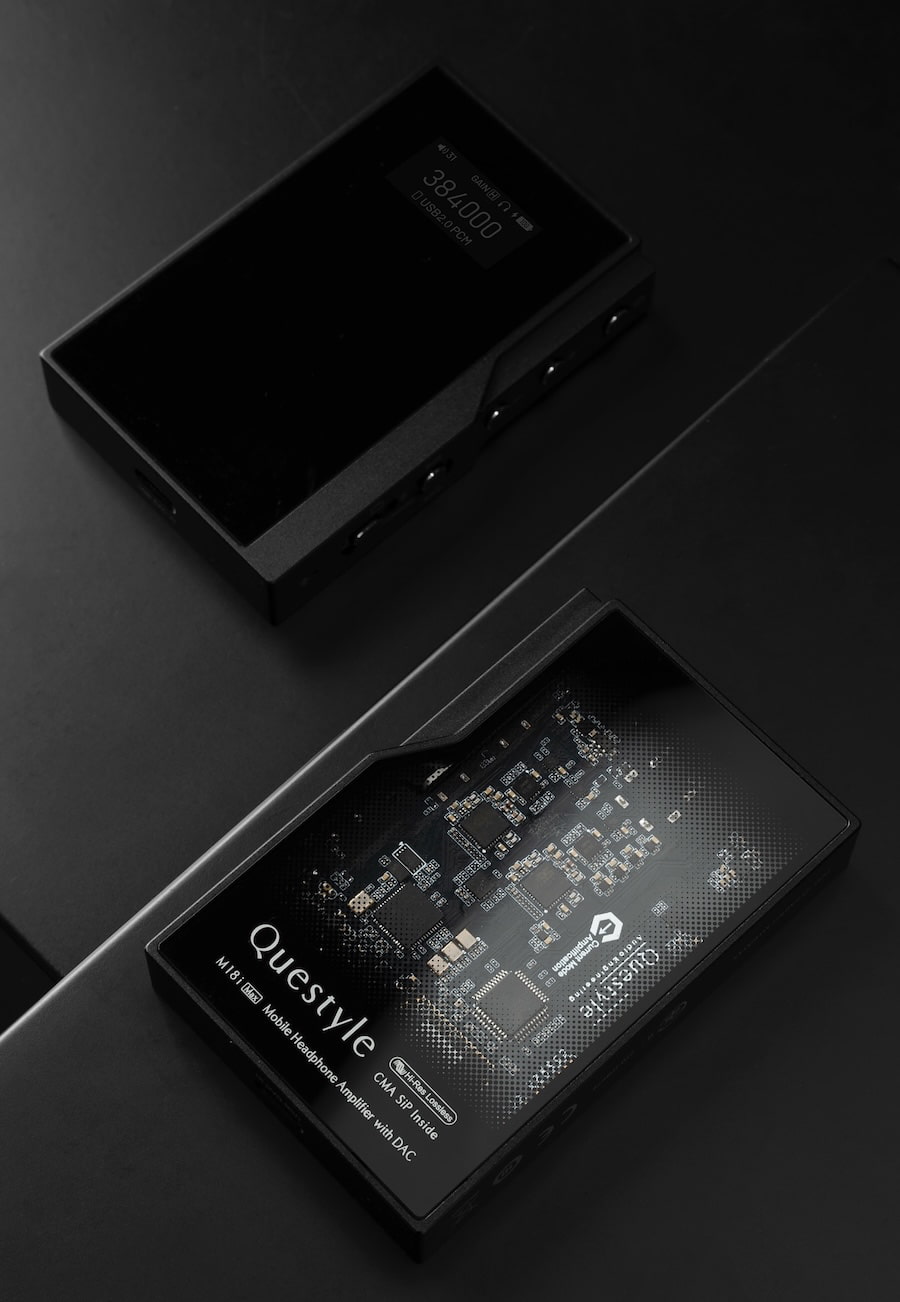
What the Questyle M18i MAX Offers
The Questyle M18i MAX uses a dual ESS ES9219Q DAC architecture with Questyle’s TTA decoding design, paired with four groups of patented Current Mode amplification rated at an ultra-low 0.0002% THD+N. It supports both Bluetooth 5.4 and USB DAC operation, giving users the flexibility to listen wirelessly or plug in directly when maximum signal integrity matters. It supports up to 384kHz/32-bit PCM and DSD256, which should cover 99% of the music that you might own or stream at this juncture.
Wireless support includes Snapdragon Sound, aptX Adaptive, aptX HD, LDAC, and LE Audio, which gives the M18i MAX broader codec support than many mobile DAC amps in this category. On the output side, it includes both 3.5mm single ended and 4.4mm balanced headphone connections, along with manual gain adjustment for better control with different IEMs and headphones.
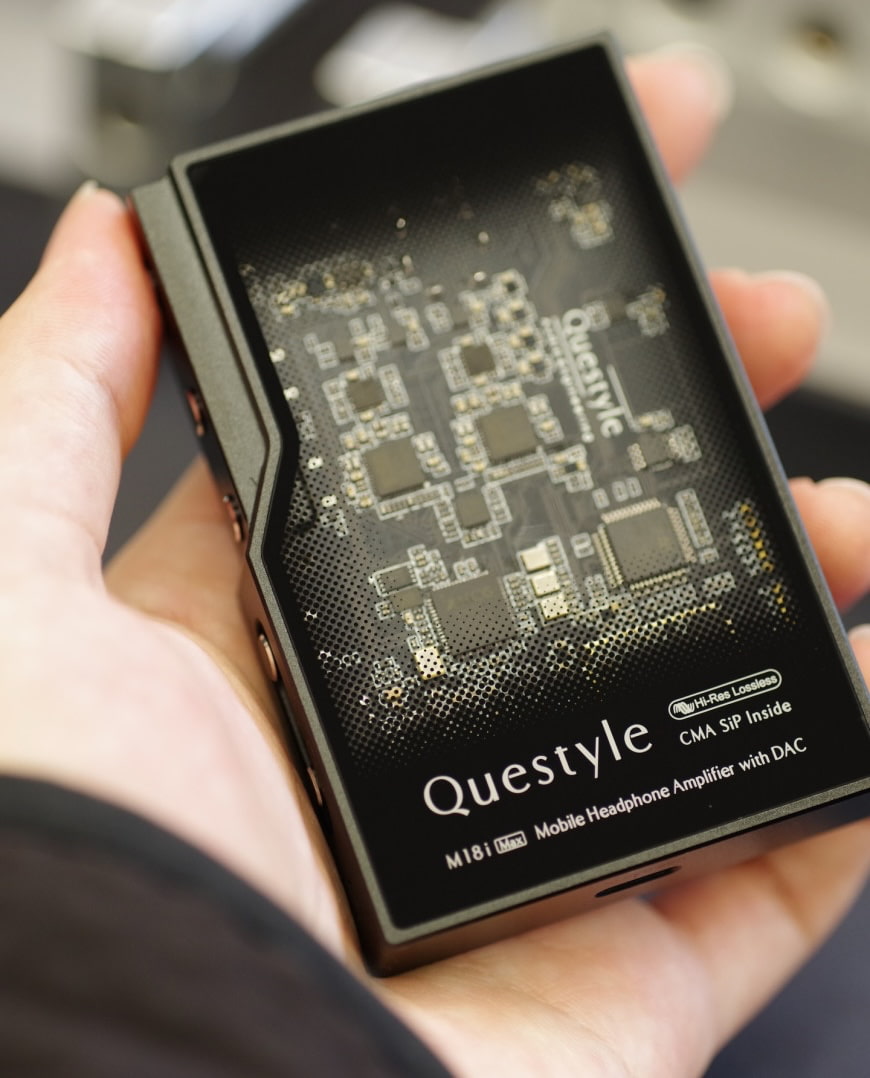
Questyle also adds an intelligent battery management system with up to 12 hours of wireless playback, Apple MFi certification for smoother iPhone and iPad compatibility, an OLED display, and a premium CNC anodized aluminum chassis. In other words, this is not a bare bones dongle. It is a full featured portable DAC and headphone amplifier for listeners who want wired performance, wireless flexibility, and actual control in one pocketable device.
Questyle M18i MAX vs. M18i: What Changed and What We Still Don’t Know
Based on the currently available information, the M18i MAX looks more like an evolution of the original Questyle M18i than a complete redesign. A lot of the core DNA appears intact: dual ESS ES9219Q DACs, Questyle’s Current Mode amplification, Bluetooth plus USB DAC operation, balanced and single ended outputs, OLED display, and the same general “dongle that refuses to behave like a dongle” philosophy.
What does appear different so far is the positioning and feature refinement. Questyle is clearly leaning harder into the “flagship mobile DAC and headphone amplifier” language this time around, and the M18i MAX seems designed to address some of the criticisms surrounding the original M18i.
The biggest potential improvement is battery life. The original M18i earned praise for its sound quality, but eCoustics Headphone Editor Will Jennings and some users noted the relatively small 500mAh battery and limited runtime. In heavier use, especially over LDAC or the balanced output, real world playback could drop to roughly three hours.
The M18i MAX now claims up to 12 hours of wireless playback with a new intelligent battery management system. If that number holds up in real world use, that is not a small tweak. That changes the product from “desktop dongle with Bluetooth” into something people might actually use on flights longer than a Marvel movie.
Bluetooth support also seems more mature this time around. The original M18i already supported aptX HD, aptX Adaptive, LDAC, and LE Audio, but the M18i MAX branding and Snapdragon Sound emphasis suggest Questyle may have refined stability, latency, or wireless performance further. What we do not know yet is whether wireless output power has improved. As our review noted, the original M18i delivered its strongest performance in wired mode.
Technical Specifications
- Dual ESS ES9219Q DAC architecture with Questyle TTA (Three-Tier Architecture) decoding
- 4 groups of patented Current Mode amplification delivering ultra-low 0.0002% THD+N
- 1800mAh battery with Fast charging
- 12 hours of wireless playback
- Bluetooth 5.4 + USB DAC dual-mode operation
- TTA 3-stage amplification architecture
- OLED display and premium CNC anodized aluminum chassis
- 3.5mm single-ended and 4.4mm balanced outputs with manual gain adjustment
- Compatible codecs: SBC/aptX/aptX HD/aptX Adaptive/LDAC/LE Audio
- Apple MFi certification for seamless iPhone and iPad compatibility
- Size: 82 x 53 x 15 mm
- Weight: 100g
There are still a lot of unanswered questions about the M18i MAX.
We do not yet know:
- Actual output power ratings into common loads like 32Ω, 150Ω, or 300Ω
- Whether wired mode performance has improved over the original
- Whether battery bypass or battery protection features were added
- If thermal performance changed
- Whether Questyle added DSP, EQ, filters, or app support
- If gaming console compatibility has improved
- Whether the OLED interface offers more functionality or customization
- Whether the Bluetooth antenna and reception performance were upgraded
- If the MAX uses revised amplification modules or simply retuned existing CMA stages
And perhaps most importantly for the measurement crowd currently polishing their oscilloscopes in the basement: we do not know how much of the M18i MAX improvement is measurable versus audible. Questyle products have historically leaned into musicality, dynamics, and current mode implementation rather than chasing spec sheet theater alone. That tends to annoy people who listen to AP analyzer screenshots more than albums. Your dinner is getting cold.
The Bottom Line
The Questyle M18i MAX looks like a meaningful step forward because it keeps the original M18i formula intact while addressing the one issue that mattered most: battery life. What makes M18I MAX unique is the combination of wired DAC performance and serious wireless flexibility in one compact device. This is not a $99 plug in dongle with a very focused mission. The M18i MAX is for people who want one portable solution for laptops, phones, tablets, IEMs, and easier to drive headphones without giving up codec support or manual control.
What we still need to know matters. Questyle has not provided enough information yet on actual output power, thermal behavior, app support, EQ or filter options, wireless output performance, or whether the amplification section has been meaningfully revised beyond the original M18i. Until we test it, the “MAX” part remains a promise, not a verdict.
This is for mobile audiophiles, music professionals, frequent travelers, and anyone who wants a premium pocket DAC amp that works both wired and wirelessly. It is not for buyers who only need a simple dongle, refuse Bluetooth, or want desktop class power in their pocket. The M18i MAX looks far more complete than the original, but Questyle still has to prove that the longer battery life and updated feature set translate into better real world use.
Where to buy: $349, available May 20, 2026.
Related Reading:







Goran Djeric
May 31, 2026 at 9:27 pm
Hi, why don’t you say how much the battery drains with a wired connection compared to USB-C… that’s not fair, on the contrary, you’ve already turned me away from this device with your anti-advertising.
Ian White
May 31, 2026 at 11:38 pm
Goran,
How could we possibly know that without testing it first? It’s not a review. You might want to read it again and see where we raise the battery issue in multiple places.
IW