After more than two decades as a reviewer, I still get asked the same question: “What would you get?” My answer is always the same — what I would buy doesn’t matter. What matters is what works for you, the listener. That’s also why I usually give people three recommendations instead of one. In my experience, one of those three is usually the right fit, and I have no way of knowing in advance which one will click for someone else. That made Loewe’s approach with the LEO Wireless Headphones at AXPONA 2026 feel unusually grounded. Rather than claiming the Loewe LEO was better than every rival in the room, the brand let people listen for themselves in a semi-blind comparison against competing models and decide where it belonged.
Sound is subjective. Fit is subjective. Even design is subjective. There’s no universal answer when it comes to headphones, no matter how badly marketing departments want there to be one. Every year, millions get poured into campaigns trying to convince listeners that Brand X is better than Brand Y, while Brand Y is doing the exact same thing with a slightly different angle.
Some lean hard into sound quality, like Focal and Bowers & Wilkins. Others focus on style, like Beats. Convenience is the play for Apple. Noise cancelling is dominated by Bose and Sony. And then you have brands like Master & Dynamic trying to balance all of it without dropping the ball.
The result? A market where opinions are all over the map because the people using these products are all over the map. And just when it feels like everything that could exist already does, some new brand or the latest “it” product, shows up and reminds everyone there’s still room for one more.
A Different Kind of First Impression
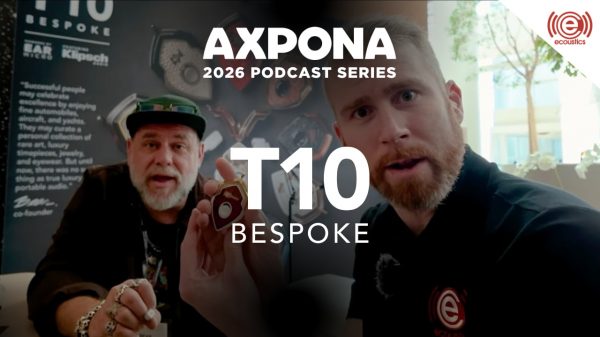
That’s why I kept coming back to Loewe’s booth at AXPONA 2026. Our podcast setup was parked between one of Loewe’s TVs and the T10 Bespoke “in-ear computers,” which, for the record, were some of the most interesting headphone adjacent tech at the show and not your typical in-ear by any stretch. That proximity gave me more time than usual to sit with the new Loewe LEO Wireless Headphones and see what they were about.
The TV across from our booth wasn’t just there for decoration either. It pulled in multiple members of our team who actually know display tech inside and out, and that’s not a group that gets impressed easily. It’s one of the better looking TVs I saw at the show, full stop, but it also comes with a price tag that makes it clear Loewe isn’t playing in the budget TV space.
That lines up with the company’s history. Founded in 1923, Loewe built its reputation on television innovation, everything from early mass produced sets to some of the first portable designs. They’ve stayed relevant by leaning into design, engineering, and more recently, sustainability. A lot of their products are built with serviceability in mind, which is something you don’t see nearly enough of anymore. If you’re trying to cut down on e-waste and keep gear longer than a typical upgrade cycle, that actually matters.
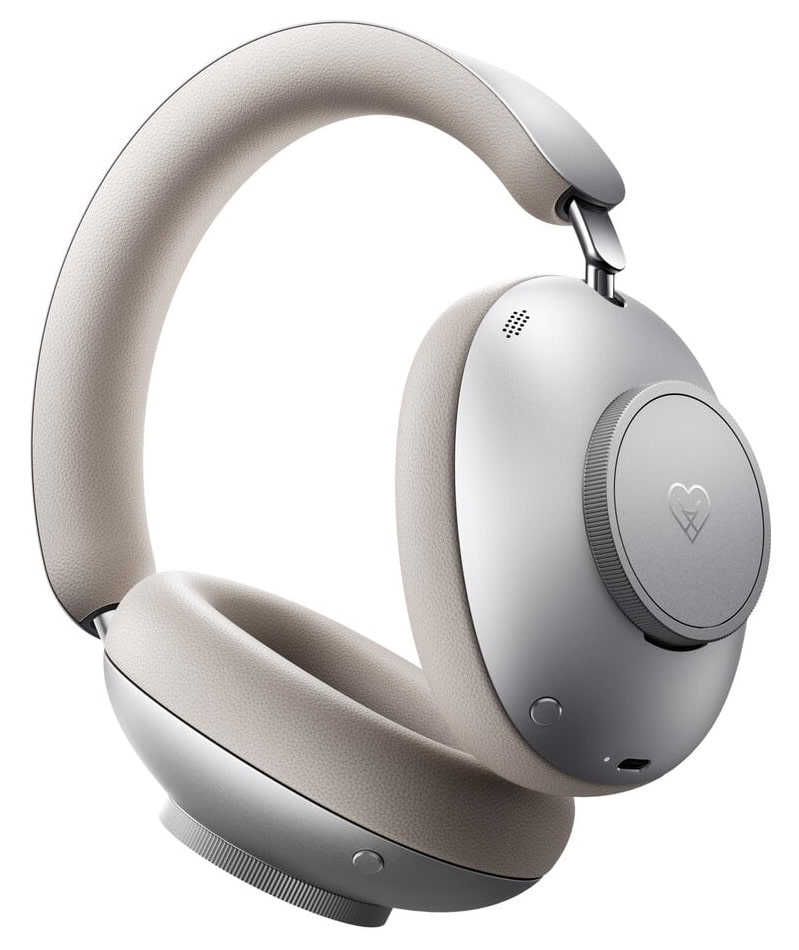
The $2,000 LEO is a bit of a departure for Loewe. It’s a premium Bluetooth headphone that integrates cleanly with Loewe’s TVs, but it’s not limited to that role. The intent here is much broader. Loewe is positioning it as a direct competitor to models like the Focal Bathys MG, Bowers & Wilkins Px8 S2, and Mark Levinson No. 5909.

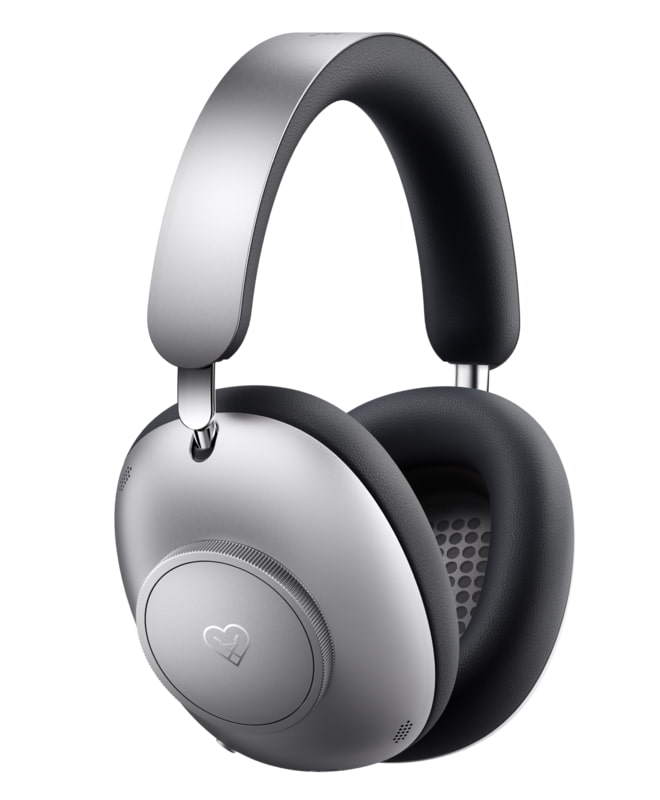
At €1,299 ($2,000 USD), this is firmly in premium territory, and the build reflects that. You get soft leather on the pads and headband, a modular design that allows for battery replacement or potential upgrades down the line, and a design language that leans understated and refined. That is, unless you go for the Noir Rainbow version (€99,000), which clearly didn’t get the memo about subtlety.
I got about 30 minutes with the LEO at AXPONA 2026 and came away impressed with both the sound quality and how much outside noise they managed to cut down. Nothing short of in-ears made from solid tungsten is going to block everything at a show like that, but the LEO brought things down to a level where the noise didn’t interfere with actually enjoying the music. If it can manage that on a busy trade show floor, it should be more than adequate for most commutes.
The overall sound struck me as well balanced, but let’s be honest, trade show impressions are unreliable at best. This wasn’t the environment to make definitive calls. I’ll reserve final judgment for a proper review in a controlled setting, which is coming soon.
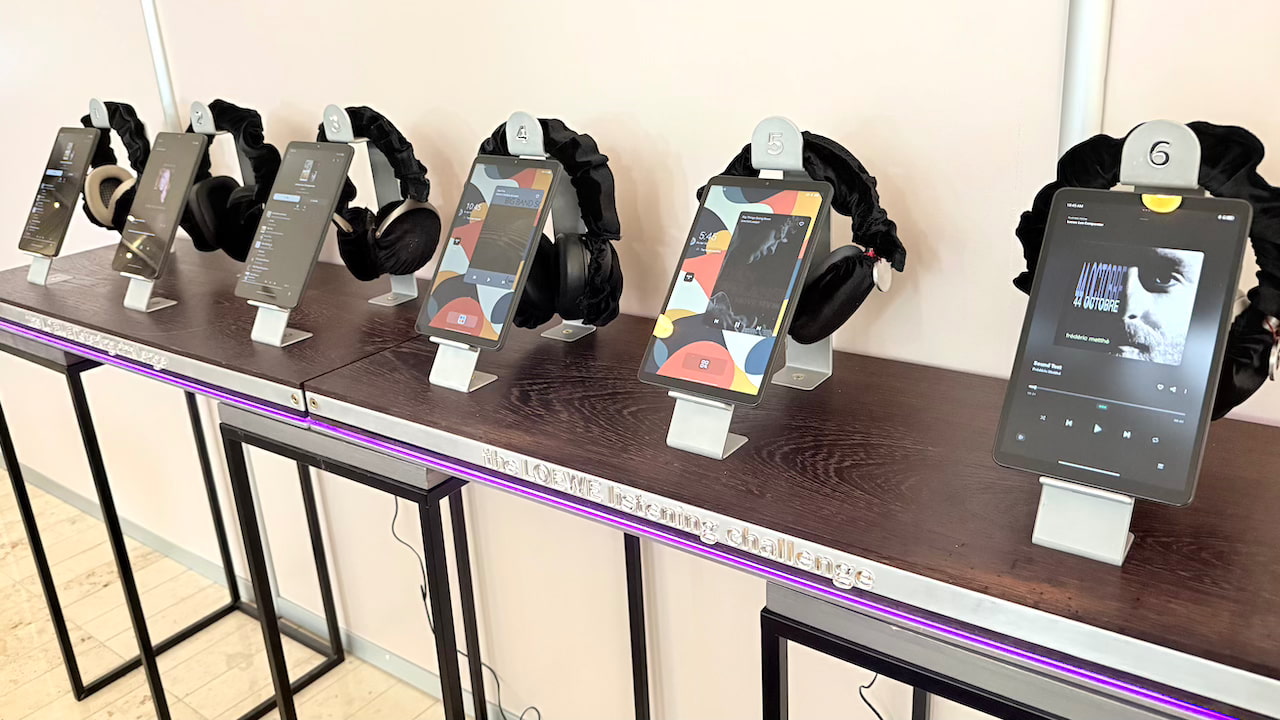
What stood out most, though, was how Loewe is positioning the LEO. Instead of claiming it’s better than Sony, Focal, or anyone else, they set up a semi-blind listening test and let people decide for themselves. Six tablets with identical playlists were paired with six disguised headphones from a mix of brands, some Loewe, some not.
Having reviewed more headphones than I can count, I had a few educated guesses based on shape and ear cup design, but the masking did a solid job of hiding what was what. It wasn’t perfect, but it was good enough to make you second guess yourself, which is kind of the point.
Talking with Loewe’s team made the strategy even clearer. The goal isn’t to win every comparison. It’s to show they belong in the same conversation and win often enough that people start mentioning them alongside the usual suspects when shopping for high-end wireless headphones. That’s a more realistic approach than most brands take, and frankly, a smarter one. It gives listeners a reason to trust their own ears instead of a marketing claim, which is exactly how it should work.
Their demo did exactly what Loewe hoped it would, at least for me. I went down the row, listened to the same track on all six pairs, and walked away without a single “eureka” moment. No one model stood clearly above or below the rest. Some handled ANC better, others leaned more into fidelity, a few were lighter or more comfortable, but nothing jumped out as “The One.”
If anything, that was the point. It reinforced how close this category has become and how much personal preference still drives the final decision. At the very least, it did its job. I’m now interested in getting the LEO in for proper testing in a quieter environment to see where it actually lands among the current crop of premium wireless headphones.
For more information: loewe.tv/int/en/loewe/audio/leo
Related Reading:
- More AXPONA 2026 Coverage
- Bowers & Wilkins Px8 S2 Review
- Best Wireless Headphones: Editors’ Choice
- HiFiMAN Arya WiFi And HE1000 WiFi First Impressions At CanJam NYC 2026