
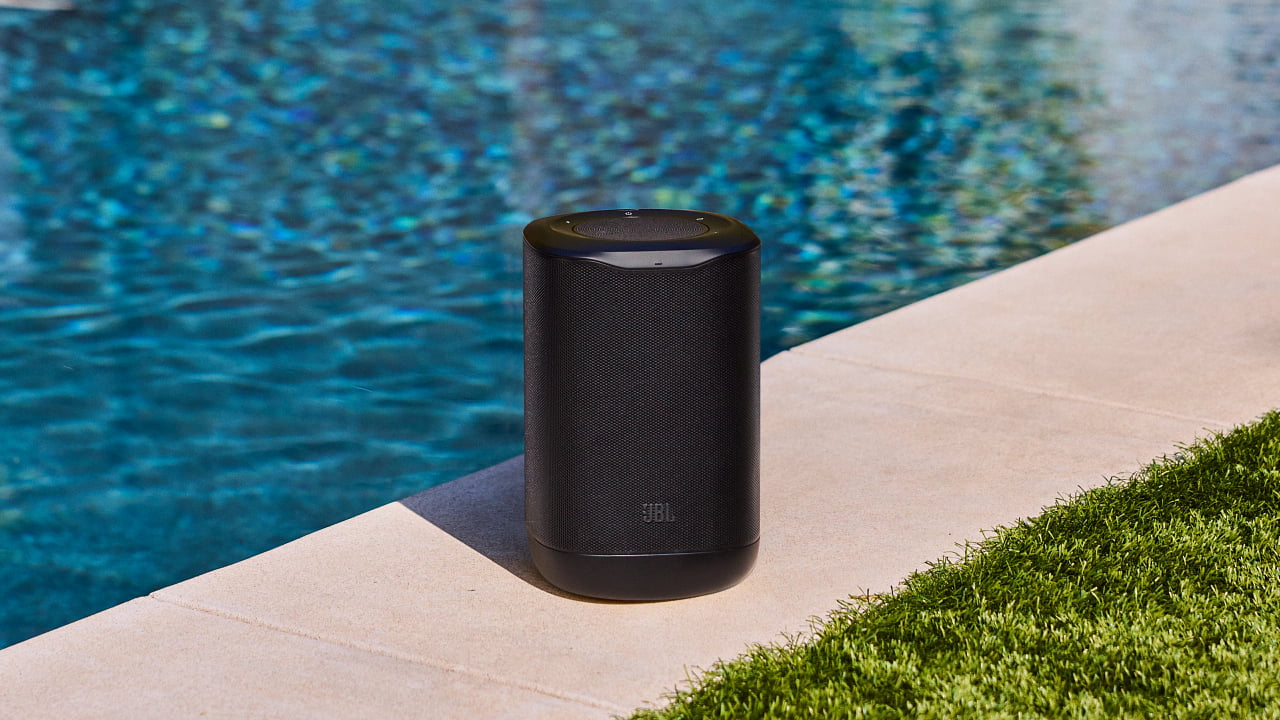
JBL already sells just about every type of wireless speaker imaginable, but it has never really had a direct answer to Sonos, HEOS or Bluesound BluOS as a complete whole-home audio platform.
The new JBL Cove Series is designed to change that.
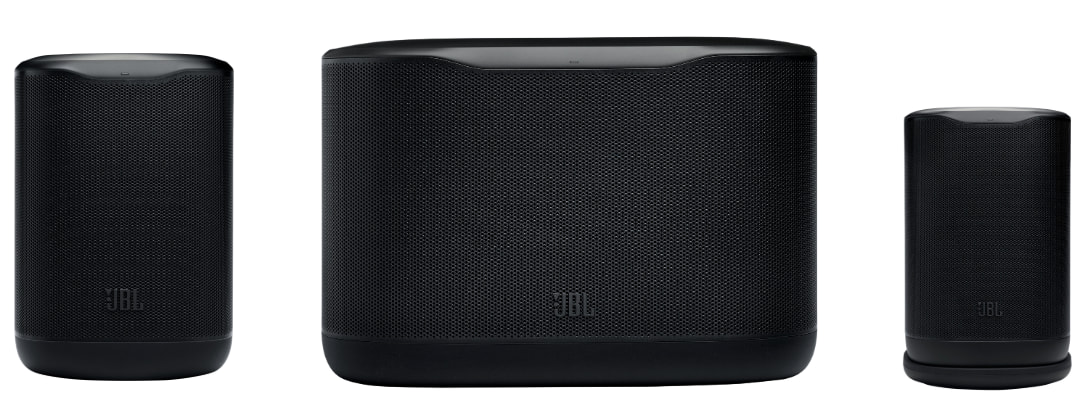
Launching with three Wi-Fi speakers, Cove combines multi-room playback, stereo pairing, automatic room optimization, direct music streaming, voice control and integration with JBL’s Bar MK2 soundbars. The range starts with the compact Cove M1 at $229.95, moves to the portable Cove P1 at $399.95, and tops out with the Dolby Atmos-enabled Cove X1 at $449.95. All three will be available in black or white beginning September 13, 2026 and can be pre-ordered now at Best Buy.
That pricing is aggressive, but Cove is more interesting because JBL isn’t merely introducing three powered speakers. It is trying to turn its existing soundbar business into the foundation of a much larger connected home audio ecosystem.
Sonos has enjoyed that party for a long time. JBL apparently found the front door and plans on getting to know your home.
Related Reviews:
- Denon Home 200 And Home 400 Wireless Speaker Review: Can HEOS Finally Challenge Sonos?
- First Listen: Denon Home 200, 400, 600 Wireless Dolby Atmos Speakers With HEOS Built-In
- Bluesound PULSE FLEX Review: This $379 Hi-Res BluOS Speaker Has Range, But Does It Have A Pulse?
What Is JBL Cove?
Cove is built on JBL’s own platform and controlled through the JBL One app, but JBL isn’t requiring owners to use its app every time they want to hear something.
All three speakers support Wi-Fi, Bluetooth, AirPlay 2, Google Cast, Roon Ready, Spotify Connect, Tidal Connect and Qobuz Connect, along with high-resolution audio support. JBL also includes Spotify Tap through the Moment button, Alexa Built-In for voice and smart-home control, and access to Alexa+ in the U.S. for Prime members and Alexa+ subscribers.
Setup takes place through JBL One, and speakers can be grouped for synchronized playback around the house or operated independently. JBL says users can simply begin streaming in another room without first dismantling an existing group, resetting speakers or interrupting the rest of the system.
That sounds minor until you’ve lived with a multi-room system that makes changing rooms feel like filing a zoning application.
Three Technologies Shared Across the Range
JBL is also applying the same three sound-processing technologies to the M1, P1 and X1: automatic self-tuning, Constant Sound Field and AI Sound Boost.
Automatic self-tuning is JBL’s room-optimization system and is intended to compensate for speaker placement and room conditions. Constant Sound Field is designed to maintain more consistent tonal balance across a wider listening area rather than creating one narrow sweet spot, while AI Sound Boost is intended to reduce distortion as playback levels increase.
The supplied material does not explain the measurement methodology, number of microphones, correction range or exactly how Constant Sound Field and automatic self-tuning interact. Until JBL provides those details, comparisons with systems such as Sonos Trueplay should remain limited to what each manufacturer actually claims.
JBL Cove M1: The $229.95 Entry Point
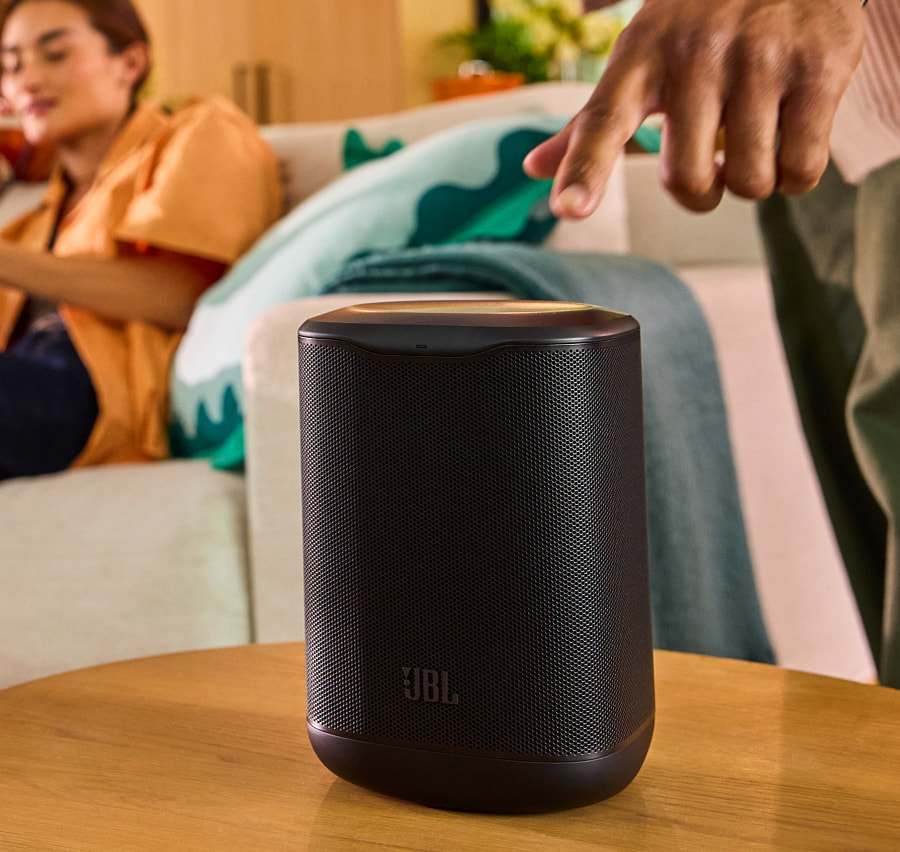
The Cove M1 is the smallest and least expensive model, but it is not simply a mono smart speaker.
JBL describes it as a 3.0-channel system powered by 110 watts RMS, with three 20mm tweeters and one 105mm/4-inch woofer. Frequency response is rated at 55Hz to 20kHz at -6dB.
At 4.9 x 7.2 x 4.9 inches and 3.64 pounds, it is clearly intended for kitchens, bedrooms, offices and other spaces where a larger wireless speaker would be overkill. Two M1s can also be configured as a stereo pair.
JBL Cove M1 Specifications
- Price: $229.95
- Configuration: 3.0-channel
- Power: 110 watts RMS at 1% THD
- Drivers: 3 x 20mm/0.75-inch tweeters, 1 x 105mm/4-inch woofer
- Frequency Response: 55Hz to 20kHz (-6dB)
- Dolby Atmos Music: No
- Stereo Pairing: Yes
- Automatic Room Calibration: Yes
- Constant Sound Field: Yes
- AI Sound Boost: Yes
- Bluetooth: 5.3
- Wi-Fi: Wi-Fi 6, dual-band 2.4/5GHz
- USB: USB-A; MP3 playback on U.S. version
- Dimensions: 4.9 x 7.2 x 4.9 inches
- Weight: 3.64 pounds
- Colors: Black or white
- Availability: September 13, 2026
JBL specifically confirms that the M1 can also be used with compatible Bar MK2 soundbars as a rear channel at launch.
JBL Cove P1: The Most Interesting One?
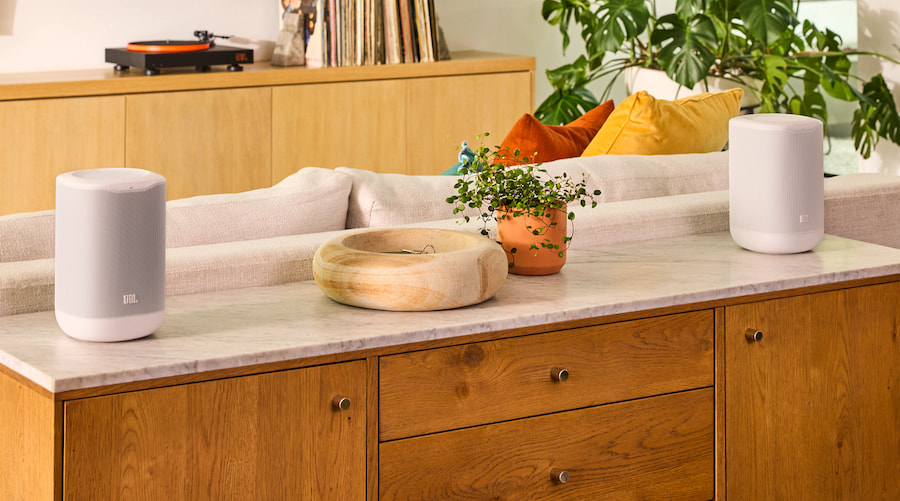
The Cove P1 sits in the middle of the range at $399.95, but its feature set might make it the most distinctive of the three.
It is a 3.0.1-channel portable Wi-Fi speaker with Dolby Atmos Music, an integrated 10.8V/4,800mAh battery, up to 14 hours of playback, an included charging dock and an IP56 rating for water and dust resistance. JBL also gives it an integrated handle for moving between rooms or taking it outside.
Its 120-watt amplifier drives one 20mm tweeter, three 30mm tweeters and a 105mm/4-inch woofer. JBL’s comparison chart specifies that one of the four tweeters is up-firing, providing the height element for its Dolby Atmos presentation.
JBL Cove P1 Specifications
- Price: $399.95
- Configuration: 3.0.1-channel
- Power: 120 watts RMS at 1% THD
- Drivers: 1 x 20mm tweeter, 3 x 30mm tweeters including one up-firing, 1 x 105mm/4-inch woofer
- Frequency Response: 50Hz to 20kHz (-6dB)
- Dolby Atmos Music: Yes
- Battery: 10.8V, 4,800mAh
- Playback: Up to 14 hours
- Weather Protection: IP56
- Charging Dock: Included
- Stereo Pairing: Yes
- Automatic Room Calibration: Yes
- Constant Sound Field: Yes
- AI Sound Boost: Yes
- Bluetooth: 5.3
- Wi-Fi: Wi-Fi 6, dual-band 2.4/5GHz
- USB: USB-C; MP3 playback in U.S. and Central American versions
- Dimensions: 5.8 x 9.2 x 5.8 inches
- Weight: 7.19 pounds
- Colors: Black or white
- Availability: September 13, 2026
The P1 can also serve as a wireless rear speaker with compatible JBL Bar MK2 soundbars at launch.
That makes the P1 rather unusual. It can operate as an indoor whole-home Wi-Fi speaker, a Dolby Atmos Music speaker, part of a stereo pair, a home theater surround, or an IP56-rated battery-powered speaker on the patio.
That’s quite a résumé for something that costs $399.95.
JBL Cove X1: 200 Watts and Dolby Atmos
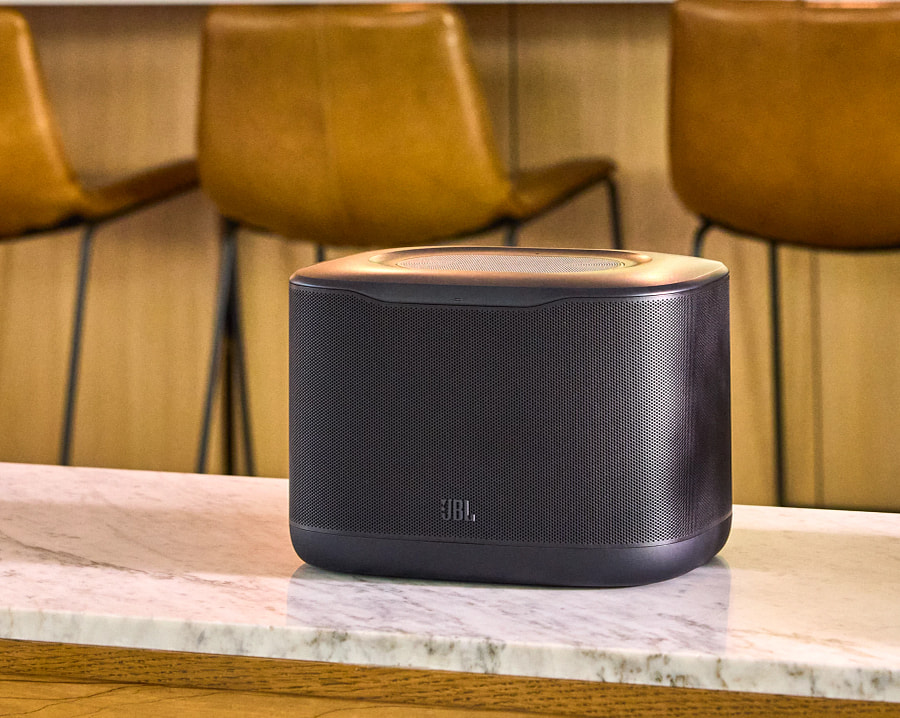
The $449.95 Cove X1 is the flagship and the largest speaker in the family.
Its 3.0.1-channel architecture produces 200 watts RMS and uses four 30mm tweeters, including one up-firing driver, plus two 90 x 120mm woofers. Frequency response extends down to 45Hz, giving the X1 the deepest claimed bass response in the range.
At 10.2 inches wide and nearly 11 pounds, it is considerably larger than the M1 and P1 and is positioned as the primary music speaker for larger rooms.
JBL Cove X1 Specifications
- Price: $449.95
- Configuration: 3.0.1-channel
- Power: 200 watts RMS at 1% THD
- Drivers: 4 x 30mm/1.25-inch tweeters including one up-firing, 2 x 90 x 120mm woofers
- Frequency Response: 45Hz to 20kHz (-6dB)
- Dolby Atmos Music: Yes
- Stereo Pairing: Yes
- Automatic Room Calibration: Yes
- Constant Sound Field: Yes
- AI Sound Boost: Yes
- Bluetooth: 5.3
- Wi-Fi: Wi-Fi 6, dual-band 2.4/5GHz
- USB: USB-A; MP3 playback on U.S. version
- Dimensions: 10.2 x 7 x 6.8 inches
- Weight: 10.76 pounds
- Colors: Black or white
- Availability: September 13, 2026
There is one important limitation: although the X1 can participate with Bar MK2 products for multi-room music, JBL says it cannot be used as a Bar MK2 rear channel at launch. That capability is limited to the M1 and P1.
JBL Bar MK2 Integration Could Be Cove’s Secret Weapon
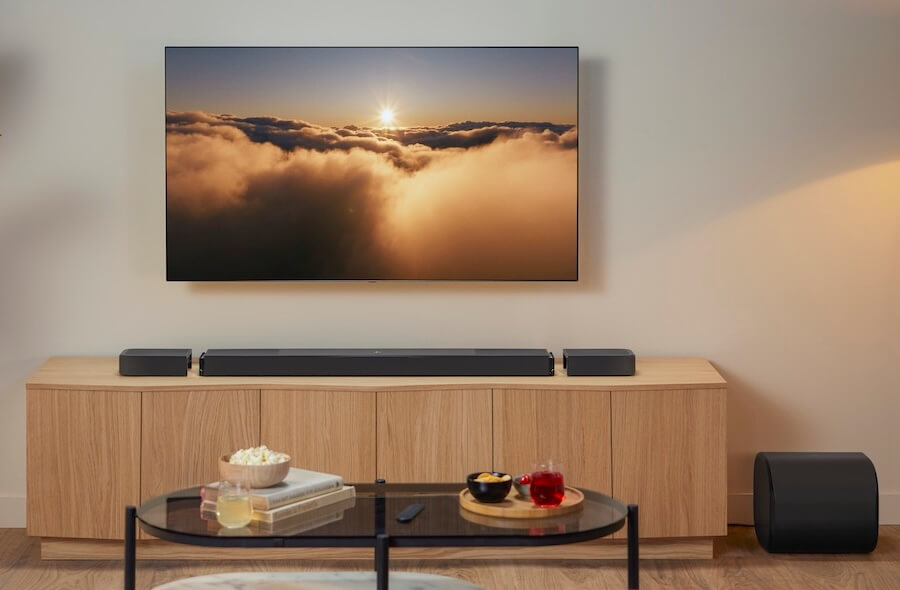
Compatible soundbars include the JBL Bar 300, 500, 700, 1000 and 1300 MK2 Series. Cove M1 and P1 speakers can be assigned as wireless rear channels through JBL One, while all three Cove models can participate in multi-room music.
JBL also adds Music Follows Me, which goes beyond simply grouping rooms. Press and hold the Moment button and music — or even TV audio — can move to the Cove speaker in another room without reaching for a phone.
That existing soundbar connection is strategically important. JBL doesn’t need Cove owners to replace everything they already own; it can potentially turn existing Bar MK2 customers into multi-room customers one speaker at a time.
JBL Cove vs. Sonos

The $219 Sonos Era 100 sits almost directly against the $229.95 Cove M1. Era 100 uses two angled tweeters and one midwoofer, supports stereo pairing and can become a wireless rear speaker with compatible Sonos soundbars. Sonos also offers Trueplay room tuning and an ecosystem refined over more than two decades.
The Era 300, with a $479 MSRP, is the natural competitor for Cove X1. It uses four tweeters, including an upward-firing unit, two woofers and six Class D amplifiers while supporting Dolby Atmos spatial audio. That’s remarkably close conceptually to what JBL is attempting with the X1.
The P1 has a different Sonos rival: Move 2. Sonos currently lists Move 2 at $499 with Wi-Fi, Bluetooth, automatic Trueplay, IP56 protection, a charging base and up to 24 hours of battery life, substantially longer than the P1’s 14-hour rating.
Where JBL separates the P1 is Dolby Atmos Music and its ability to serve as a Bar MK2 rear channel. Move 2’s official specifications emphasize stereo playback rather than Dolby Atmos.
Sonos still has the ecosystem maturity advantage. JBL counters with Google Cast, Roon Ready, Qobuz Connect, Tidal Connect and potentially more aggressive pricing.
JBL Cove vs. Denon Home and HEOS
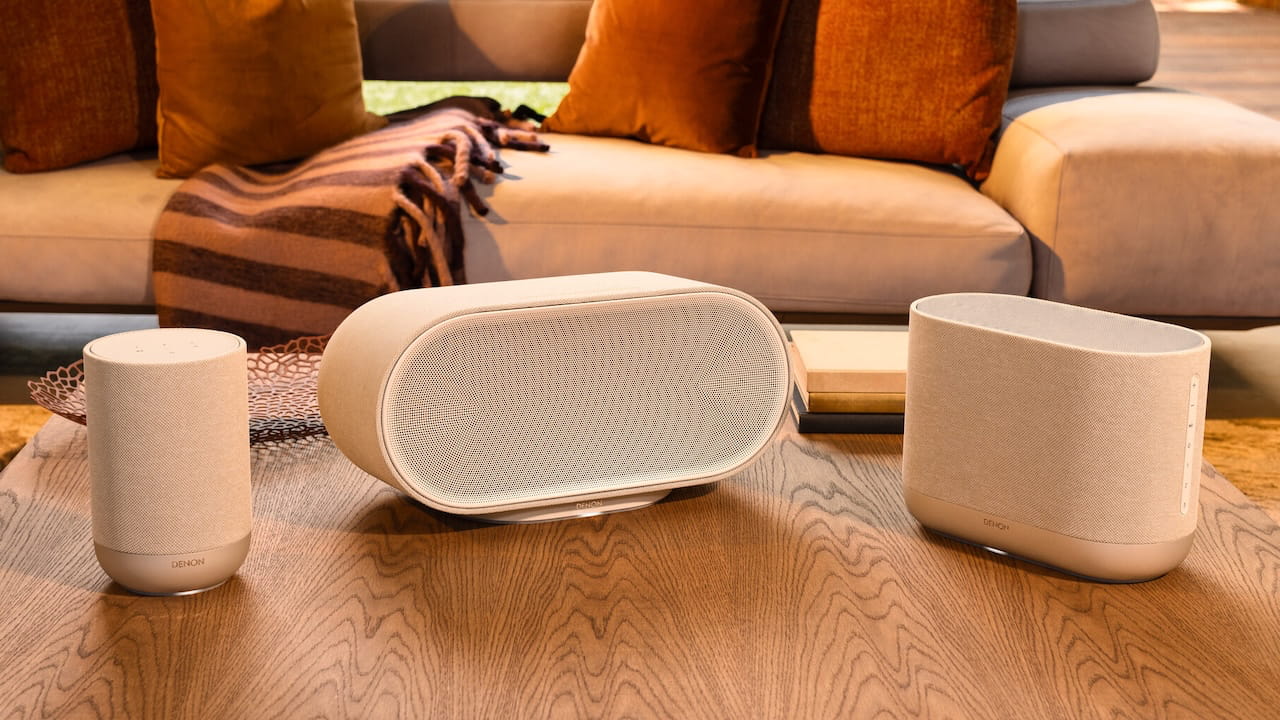
Denon’s recently refreshed Home lineup is another very obvious competitor, and this comparison has become slightly weird because Denon and JBL now live under the same HARMAN corporate umbrella.
The current Denon Home 200 is $399, Home 400 is $599 and Home 600 is $799, with all three supporting Dolby Atmos Music and operating within the HEOS whole-home ecosystem.
HEOS has one major advantage: it extends far beyond wireless speakers. Denon and Marantz AVRs, amplifiers and other products can all become part of the same multi-room network, giving traditional A/V enthusiasts a bridge between serious component systems and wireless audio. HEOS can support as many as 64 compatible products and high-resolution playback from streaming services and local music libraries.
JBL’s lineup is currently narrower but substantially less expensive at the top end. The $449.95 Cove X1 undercuts the Home 400 by almost $150 and Home 600 by $349 while still offering Atmos Music.
The P1 also gives JBL something the new Denon Home range does not currently offer: a battery-powered IP56 portable Atmos speaker that can leave the living room entirely.
JBL Cove vs. Bluesound
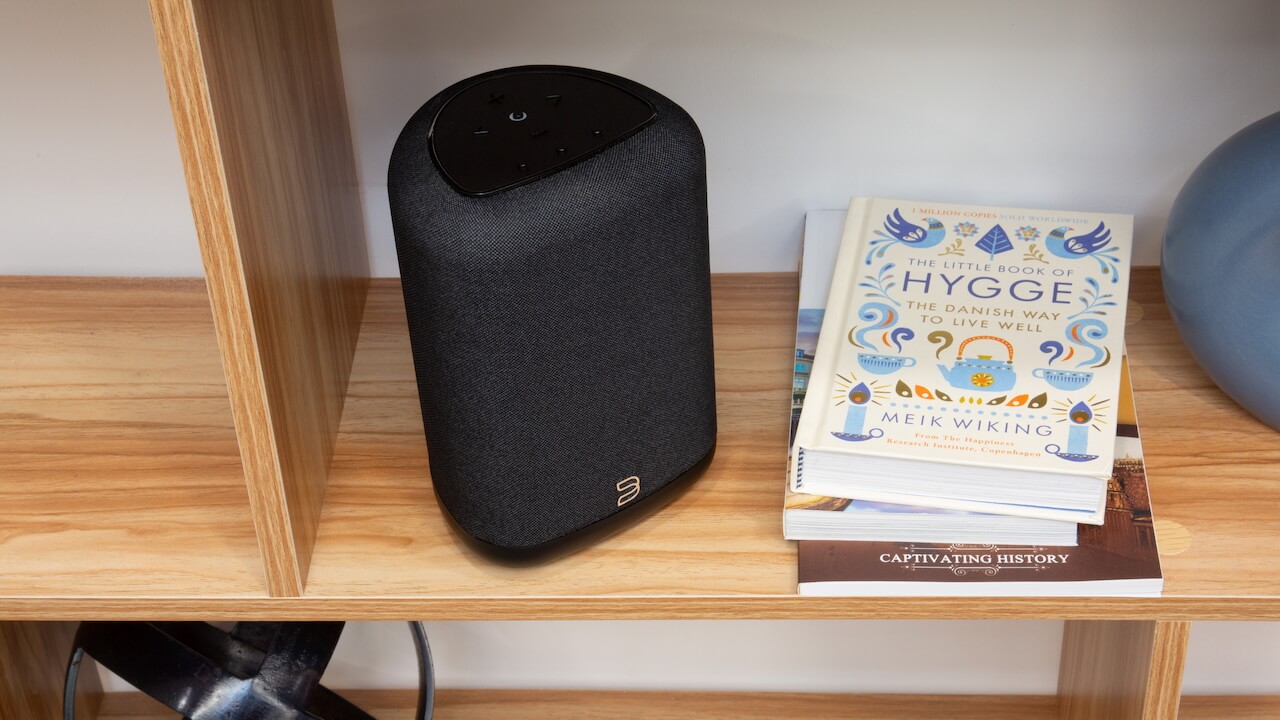
The current PULSE FLEX costs $429 and supports 24-bit/192kHz playback, DSD256, Roon Ready, AirPlay 2, Spotify Connect, Tidal Connect, Qobuz Connect and aptX HD Bluetooth. It also offers Gigabit Ethernet, optical/analog input, USB connectivity, local network-library support and integrations with Control4, Crestron, RTI, Nice, URC and Lutron.
The larger PULSE M costs $699 and uses Bluesound’s Omni-Hybrid design with an up-firing 5.25-inch woofer and two angled tweeters. It also operates within BluOS, which stretches into Bluesound and NAD streamers, amplifiers and home theater products.
JBL cannot match that ecosystem’s hi-fi component depth yet. What it can do is offer a Cove M1 for almost half the price of a PULSE FLEX and a Dolby Atmos X1 for $249 less than a PULSE M.
Bluesound is aimed more squarely at listeners building a networked hi-fi system. JBL is going after the much larger group that wants wireless music, home theater and multi-room audio without earning a networking certification first.
What Is Actually Unique About JBL Cove?
No individual Cove technology is unprecedented. Sonos has room tuning and wireless surrounds. HEOS and BluOS have scalable multi-room systems. Dolby Atmos Music has already migrated into competing all-in-one speakers.
The combination and pricing are what make Cove interesting.
For $229.95, JBL gets buyers into an automatically tuned whole-home ecosystem that can expand into stereo or home theater. At $399.95, the P1 combines Wi-Fi, Dolby Atmos Music, IP56 protection, battery operation, a charging dock, stereo pairing and wireless rear-channel capability. The $449.95 X1 then provides a larger 200-watt Atmos option without pushing the price toward $600 or $700.
Add Google Cast, AirPlay 2, Roon Ready, Alexa+, direct streaming protocols and existing Bar MK2 integration, and JBL has avoided one of the biggest mistakes a new multi-room platform can make: forcing users into a closed ecosystem.
JBL Cove Features Compared
| Feature | JBL Cove M1 | JBL Cove P1 | JBL Cove X1 |
| How it fits in the home | Compact home Wi-Fi speaker | Portable home Wi-Fi speaker | 3D room-filling home Wi-Fi speaker |
| Drivers | 2 x 30mm and 1 x 20mm silk dome neodymium tweeters & 1 x 4” woofer | 3 x 30mm and 1 x 20mm silk dome neodymium tweeters (1 up-firing) & 1 x 4” woofer | 4 x 30mm silk dome neodymium tweeters (1 up-firing) & 2 x 4” woofers |
| Dolby Atmos | – | Yes | Yes |
| Battery | – | Up to 14 hours: just drop it on the dock to recharge | – |
| IP rating | – | IP56 | – |
| Auto room calibration | Yes | Yes | Yes |
| Constant Sound Field | Yes | Yes | Yes |
| AI Sound Boost | Yes | Yes | Yes |
| Stereo Pair | Yes | Yes | Yes |
| Whole-home audio | Yes | Yes | Yes |
| Works with JBL Bar MK2 | Yes | Yes | Yes – for multi-room music only |
| MSRP | $229.95 | $399.95 | $449.95 |
| Availability | September 13, 2026 | September 13, 2026 | September 13, 2026 |
The Bottom Line
JBL Cove is much more ambitious than the two-speaker launch we initially thought it was.
The M1 is the inexpensive entry point, the X1 tackles the Sonos Era 300 and Denon Home models with 200 watts and Dolby Atmos Music, while the P1 may be the sleeper of the range. A portable, weather-resistant Wi-Fi speaker with Atmos, automatic room calibration and the ability to become a wireless home theater surround is an unusual combination at $399.95.
The harder challenge will be software. Sonos, HEOS and BluOS have spent years building ecosystems, solving networking problems and teaching customers how their platforms work. JBL One and Cove now have to prove they can be equally reliable when a home grows from one speaker to five, ten or more.
On hardware, features and price, however, JBL has not arrived merely to make up the numbers. The whole-home audio fight just got considerably more crowded.
Where to buy: $219 to $379 at Best Buy
Related Reading:














Dan
September 1, 2026 at 12:04 pm
Another good comparison would be the Harman Kardon Enchant product line.
ORT
September 1, 2026 at 2:59 pm
I remain a HEOS enthusiast.
ORT
Ian White
September 1, 2026 at 3:14 pm
HEOS is a winner. They found the secret sauce.
Sonos is unveiling a possible rival at CEDIA but I suspect it’s the new soundbar that I hinted about a few weeks back and their new wireless headphones.
IW