
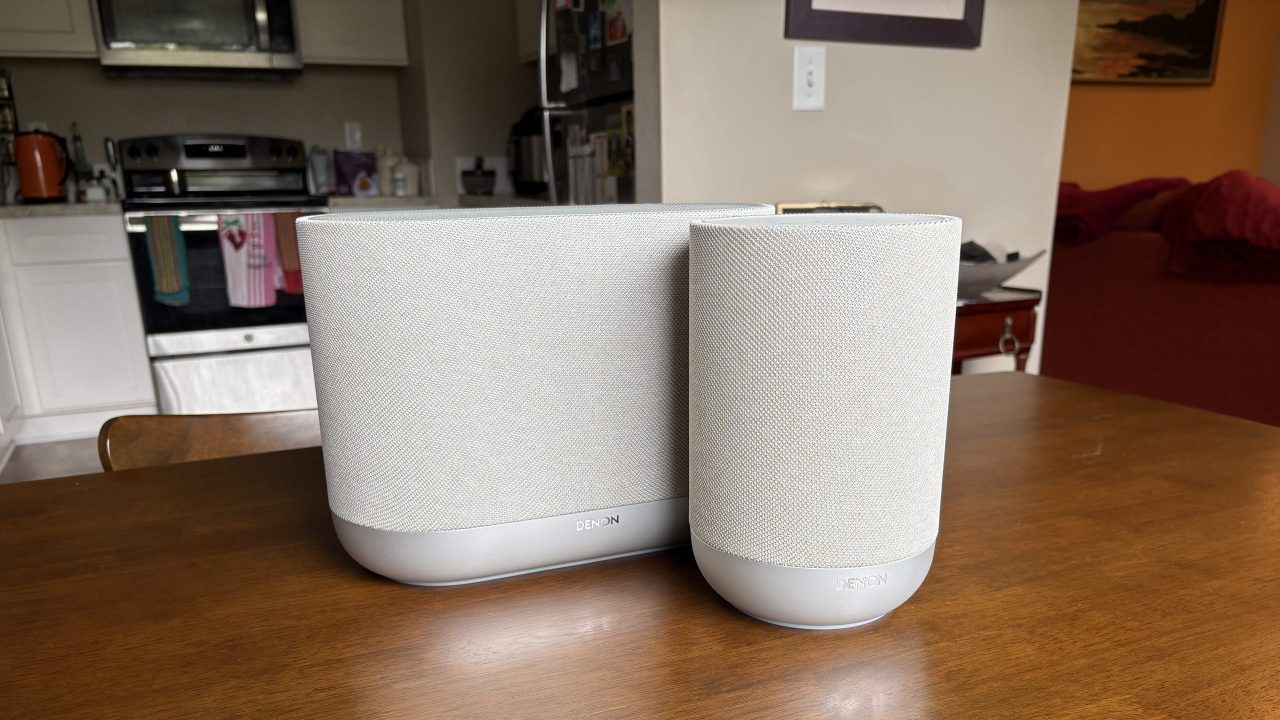
Denon is taking a big swing at multi-room audio in 2026 with a major revamp of its HEOS lineup, with three all-new wireless home speakers, and why not? The multi-room category continues to appeal to serious listeners who want convenience without giving up performance. And with Sonos still dealing with the fallout from its 2024 app debacle, there is real opportunity for other audio brands to chip away at its market grip.
Denon’s approach comprises three rather pricey options, including the entry-level Denon 200 ($399), the midrange Denon 400 ($599), and the flagship Denon 600 (a whopping $799). The Home 200 and Home 400 are particularly poised to take on Sonos and its similarly designed Era 100 and Era 300 speakers, so it was only natural that we took a look at those two first, and I’ll be comparing them to those Sonos models early and often.
Each of Denon’s new speakers offers some form of Dolby Atmos Music support (virtualized in the Home 200), along with convenient setup and control via Denon’s HEOS app, and multiple connection options, from Wi-Fi and Bluetooth to 3.5mm and USB input. The obvious question is whether the new lineup delivers performance that justifies the premium pricing.
The short answer is yes, you’re getting what you pay for here, at least when it comes to audio quality. But that doesn’t necessarily mean you should throw in your Sonos card and make the swap just yet. Here’s how it all shakes out.
Swift Setup
Getting the Home 200 and Home 400 ready to play is as simple as pulling them from their cardboard packaging, plugging in, and jumping on the HEOS app. The app immediately feels Sonos-like, though the design and layout are a bit clunkier. Most importantly, it makes setup and Wi-Fi connection virtually effortless, something I couldn’t say about HEOS speakers I’ve tested in the past. Adding the Denon 200 took just a few minutes, and the Home 400 was even quicker after creating my profile, accomplished with just a few taps. After a five-minute firmware update, the speakers were online and ready to roll.
As with Sonos, speakers are designated in the HEOS app as “Rooms,” allowing them to operate independently in different spaces or be grouped with other HEOS speakers and devices. You can name them after the actual room, give them something more personal, or, as I did during testing, use the model number to keep each speaker straight.
Design & Features: Elegance Meets Substance
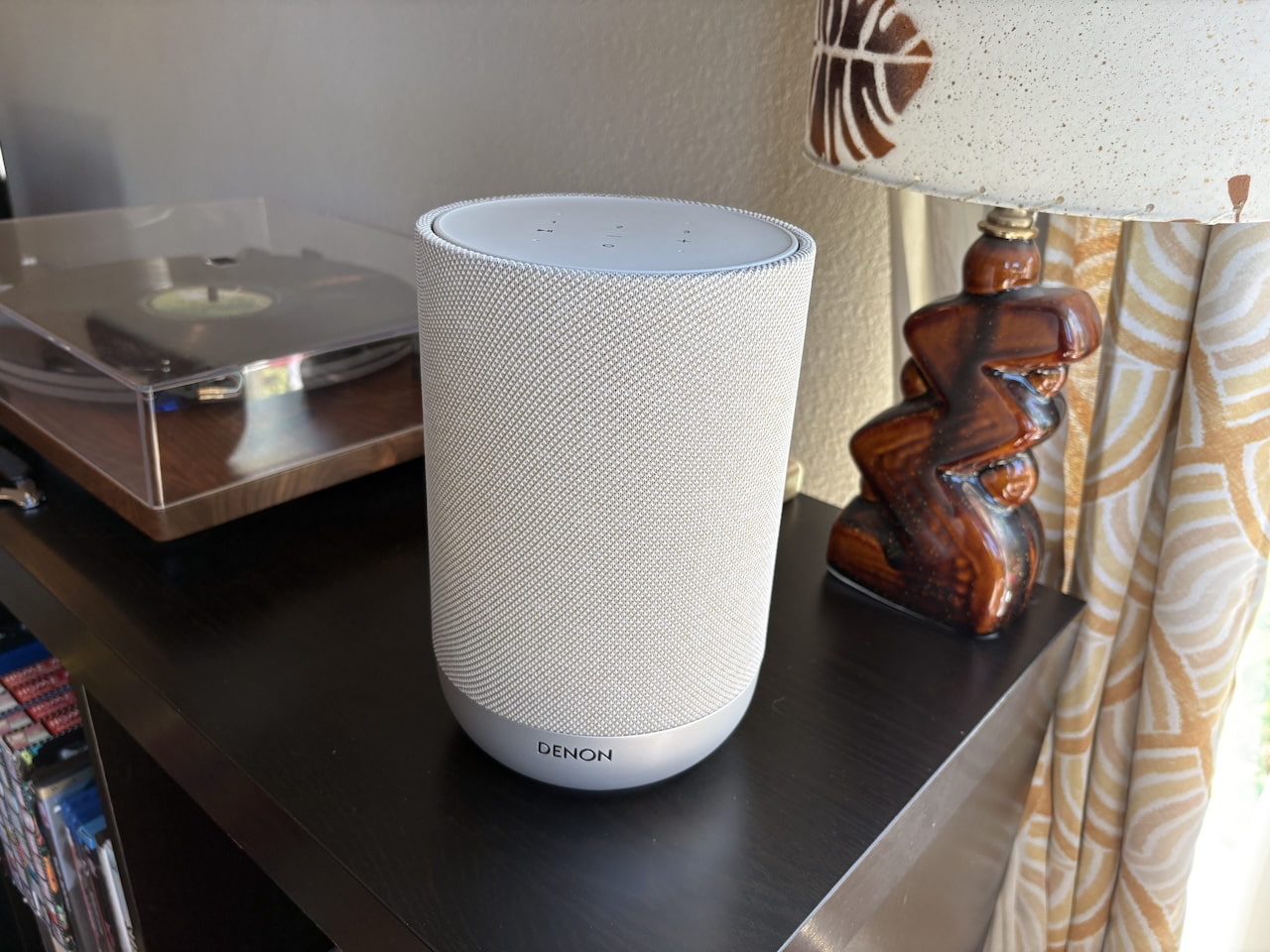
While each Home speaker has its own aesthetic vibe, Denon did well in creating a common design language—call it elegant utilitarianism. The Home 200 is, like so many rivals, basically just a slick column of sound, though at 8.5 inches high and 5.5 inches deep, it’s notably bigger than the Era 100. Its acoustic wrapping is a familiar theme found in everything from Bluesound’s latest Pulse Flex to Google’s Nest smart speakers, Its glittering matte base, available in silver/stone or charcoal, and rather gaudy centralized LED remind me of some of the first Wi-Fi speakers I tested back in the 2010s. Mercifully, the light can be dimmed or turned off in the app settings.
Under the Home 200’s grille are three drivers, including dual 1-inch tweeters and a four-inch woofer, powered by three class D amplifiers. The lack of any upfiring or side-firing drivers means any spatial audio you hear is achieved through virtualization, and each of Denon’s Home speakers is set to provide a deeper and wider soundstage than its drivers suggest by default via digital processing.
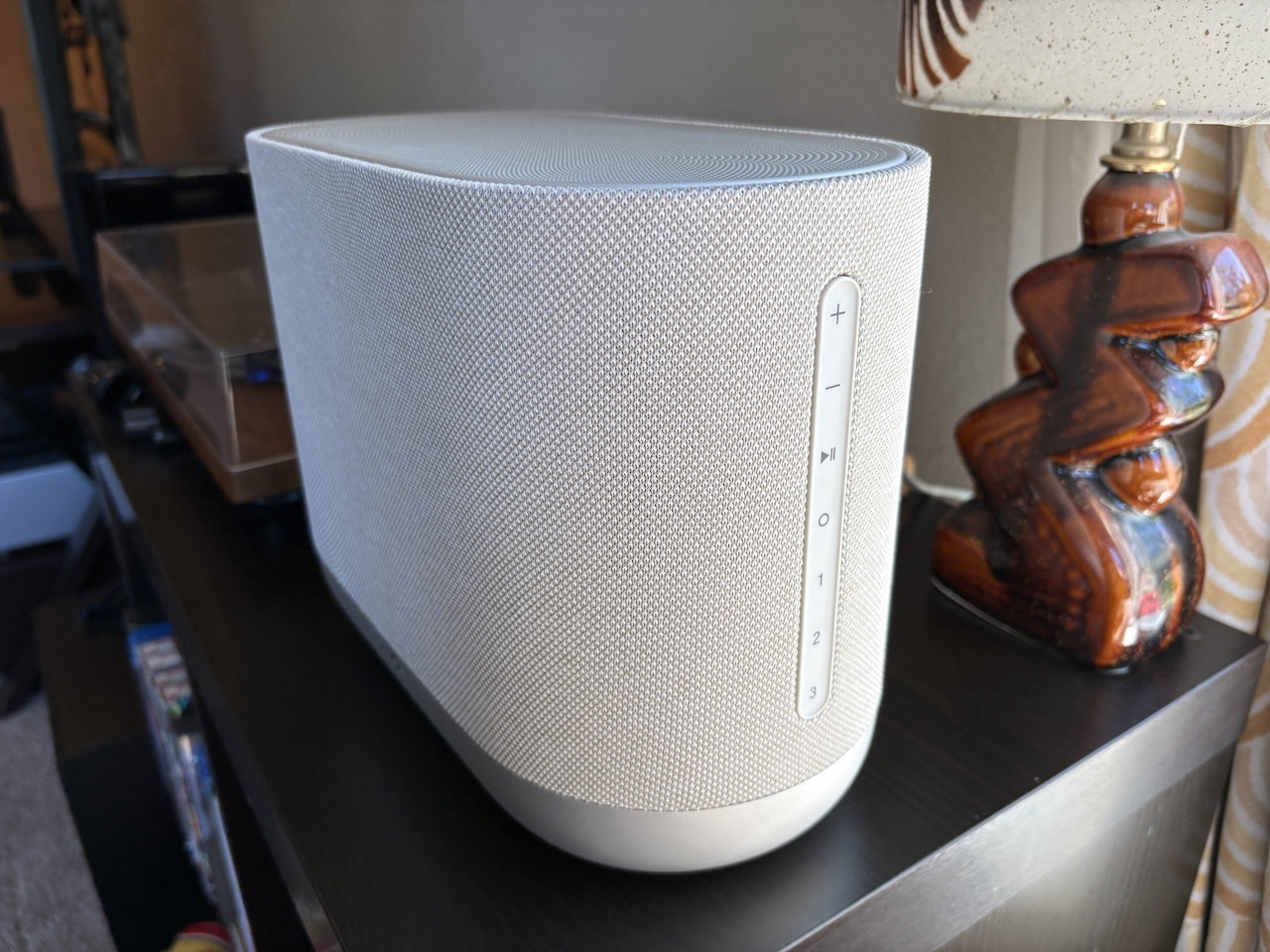
The larger Home 400 offers a few more style points, somewhat reminiscent of a curvy Vegas hotel wrapped in fabric. It sits 8.6 inches high, 5.9 inches deep, and 11.8 inches wide. On top is a stout grille to protect the dual .75-inch upfiring drivers set at angles to help expand spatial audio. Those are joined by two forward-facing 1-inch tweeters, and dual 4.5-inch woofers, each powered by its own class D amplifier.
Both speakers offer a full swath of touch controls to supplement the HEOS app, including volume, play/pause, an action key for a voice assistant, and three “Quick Select” keys that can be programmed to a desired station or service. The Home 400 sets them on a side control strip, while the Home 200 hosts them on its rounded top. It’s a busier look than the more minimalist Sonos controls, but they’re pretty convenient in daily use.
Connectivity and Smarts
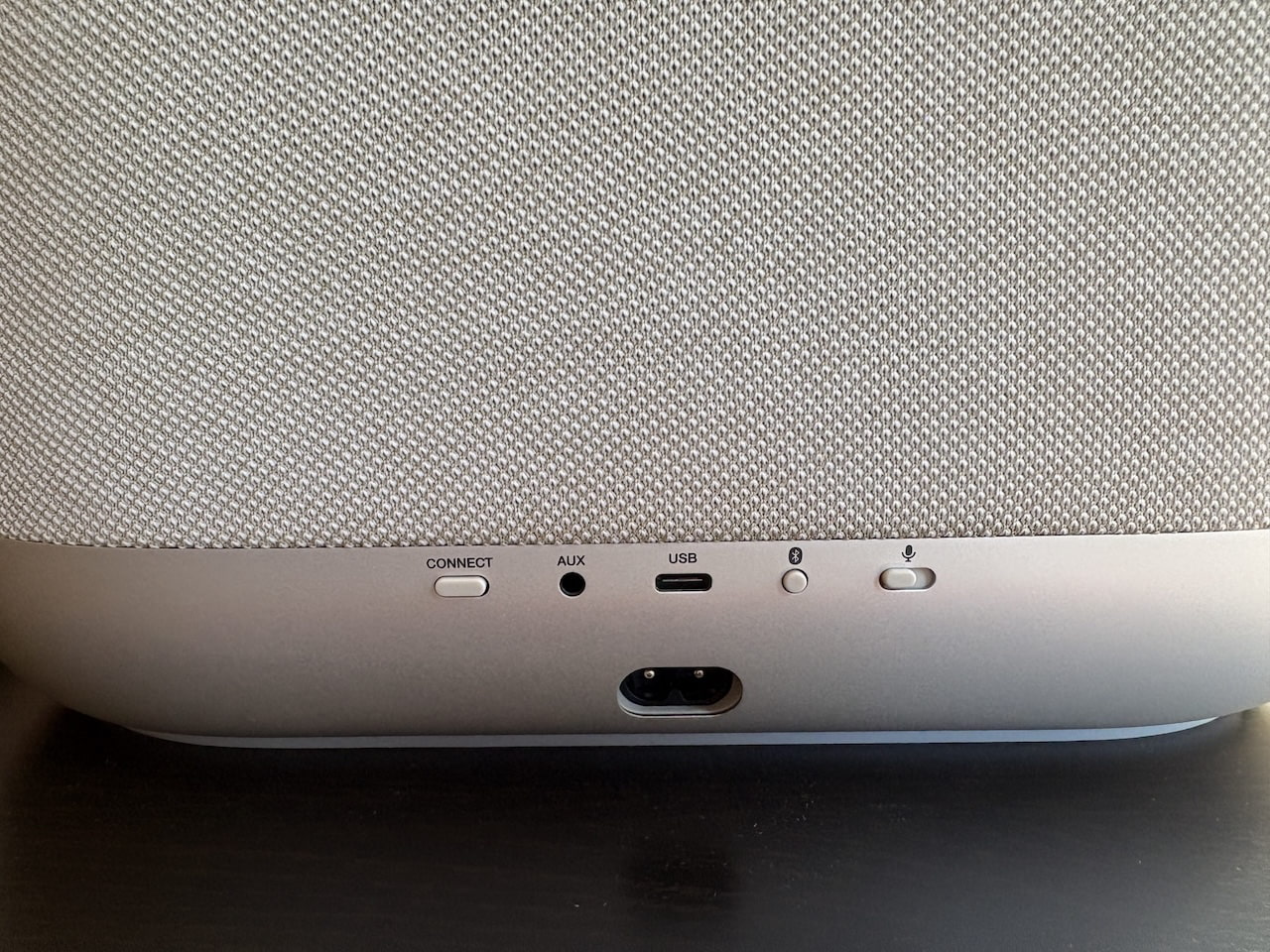
Each of the speakers offers a host of connectivity options, including Bluetooth, Wi-Fi (with both 2.4GHz and 5GHz support), a 3.5mm aux input, and a USB connection, which can connect a NAS storage drive or double as an Ethernet input via an adapter (not included). Streaming support includes AirPlay 2, as well as Spotify and TIDAL Connect, and Qobuz Connect. Unlike Sonos speakers, Google Cast isn’t offered, and while there’s an onboard microphone, there’s no support for Google Assistant or Alexa. Siri is (oddly) only available if you have a HomePod connected, so if smarts or voice control are of concern, you’ll want to look elsewhere.
As for built-in streaming services, you won’t find the 100+ options Sonos supports, but you’ll get top options like Pandora, Spotify, TIDAL, Deezer, SiriusXM, and Qobuz, as well as loads of available internet radio stations. Apple Music is the biggest miss, available only via AirPlay. Dolby Atmos Music is available from TIDAL and Amazon Music Unlimited, but not Apple Music. Still, two out of three is not bad, and Sonos speakers do not currently support Dolby Atmos Music via TIDAL.
As with other multi-room systems, the Denon Home speakers can be grouped throughout the home, used as surrounds with the Denon Home 550 soundbar, currently the only supported bar, or paired directly with the Denon Home Subwoofer ($649). As expected, two Home 200s or two Home 400s can also be configured as a stereo pair.
Listening
When I first fired up the Home 200 to stream over Spotify Connect, I was immediately impressed by its width, breadth, and just how much bass the little speaker was able to muster. Vocals sounded slightly echoed, but since I was playing the speaker in the background, I didn’t pay it much attention at first.
After digging in deeper with some of my go-to test tracks, I noticed the speaker was making some odd choices in balancing frequencies, especially for more complex tracks. In Radiohead’s “Burn the Witch,” the entrance of the frantic strings seemed to push back the vocals the way I push my dog into the back seat on a road trip. I soon realized that each of Denon’s Home speakers defaults to an “Auto” mode, which attempts to virtualize every track for spatial audio, including stereo music, with varying results.
After switching to the alternate “Pure” mode, I found much more to like about the Home 200, which offers clarity, instrumental definition, and sheer potency that goes beyond the vast majority of speakers in its class—a good thing considering its price point. The bass in even basic pop tunes like Hall and Oates’ “Sarah Smiles” is reproduced with character and texture. The acoustic guitar in Joni Mitchel’s “California” is cut with a spritely vibrance that gives an almost live quality, while percussion and cymbals in tracks like White Denim’s “A Place to Start” show off serious sparkle in the upper midrange and treble.
Moving to the Home 400 stepped up the performance considerably. Again, I much preferred the “Pure” sound for everything besides Dolby Atmos Music (more on that below). Oddly, choosing the Pure mode means you can no longer adjust EQ on either speaker, but luckily, I rarely felt the need to. This model offers hefty punch for its size, and not just in the bass. Midrange instruments are rendered with impressive punch and muscle, and the speaker easily filled my room at midrange volume without any noticeable distortion. Occasionally, the splashy upper midrange pushed toward the edge of sharpness, but never crossed over.
Caroline Polachek’s revelatory dance track, “Welcome to My Island,” absolutely bumps on the Home 400, summoning a clean, expansive soundstage as her ethereal vocals sit out front of the groove with unabashed rawness. The timbre of each synth and percussive element is given a spotlight, with plenty to explore in the space between, and the crescendo into each chorus reveals impressive dynamic expression.
Sound Check
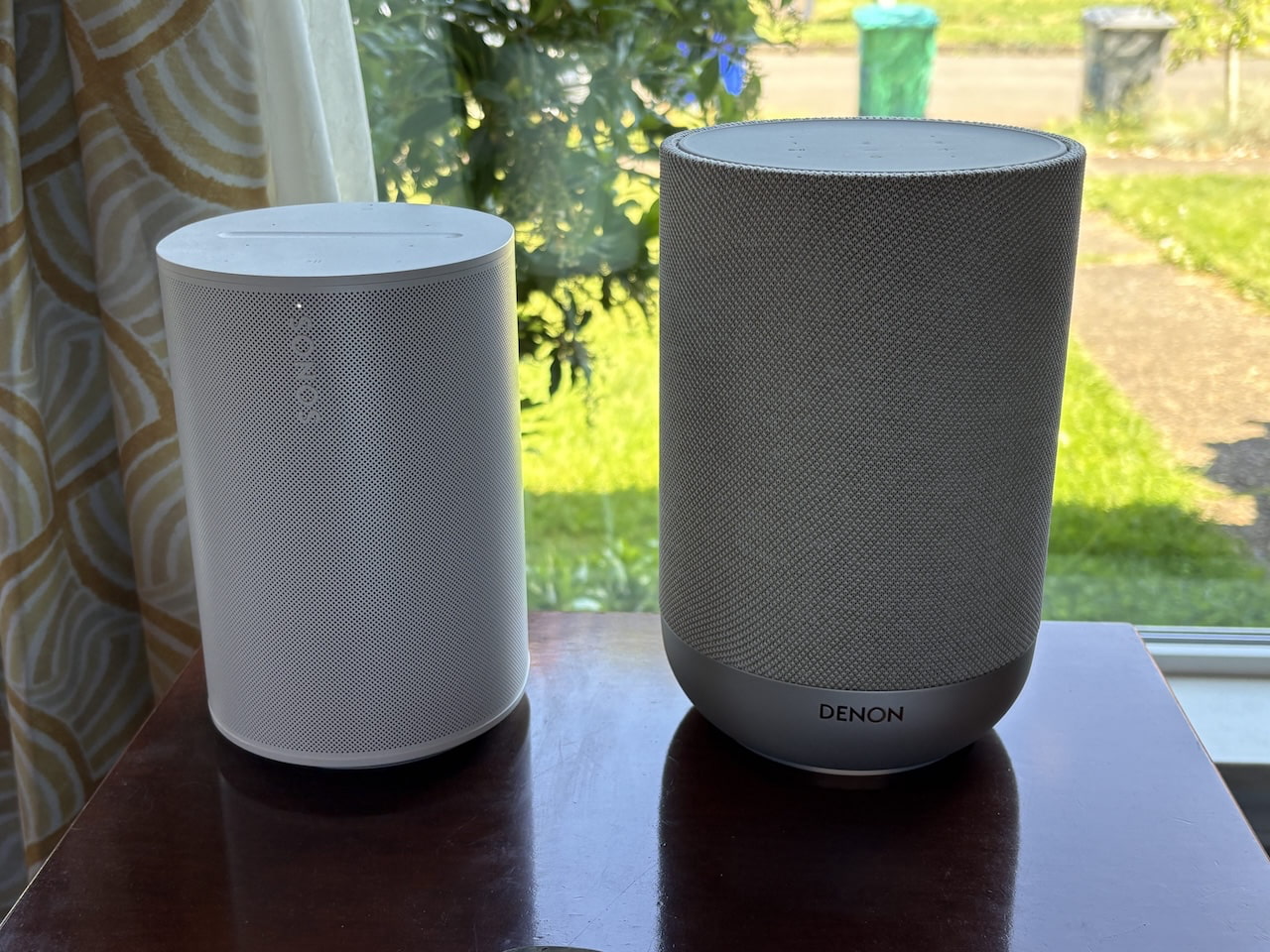
Comparing the Home 200 to the Era 100 directly, Denon’s pricier speaker provided a bigger, cleaner sound, with better bass and finer attention to the small details. For its part, the Era 100 sounds a little smoother and more streamlined across the frequency range, with better consistency across genres.
Even so, the Home 200 outduels its smaller rival with its flashier, more engaging sonic signature, digging deeper into the texture of each instrument. If you care to try it, you’ll get a much wider soundstage in the Auto mode, even for stereo tracks, with instruments seeming to pop out multiple feet from its relatively meager footprint.
It’s a similar story with the Home 400, which is not only louder and more nuanced than the Era 300 in everyday listening, but also provides a more full-bodied sound across registers. That’s most noticeable in the meat of the sound, with midrange instruments like vocals, guitar, and percussion all offering a bigger, weightier punch. The Era 300 competes well in the bass and treble, with its futuristic, rounded sides providing some impressive acoustic efficiency. In most cases, though, the Home 400’s bigger, more precise sound signature is more satisfying.
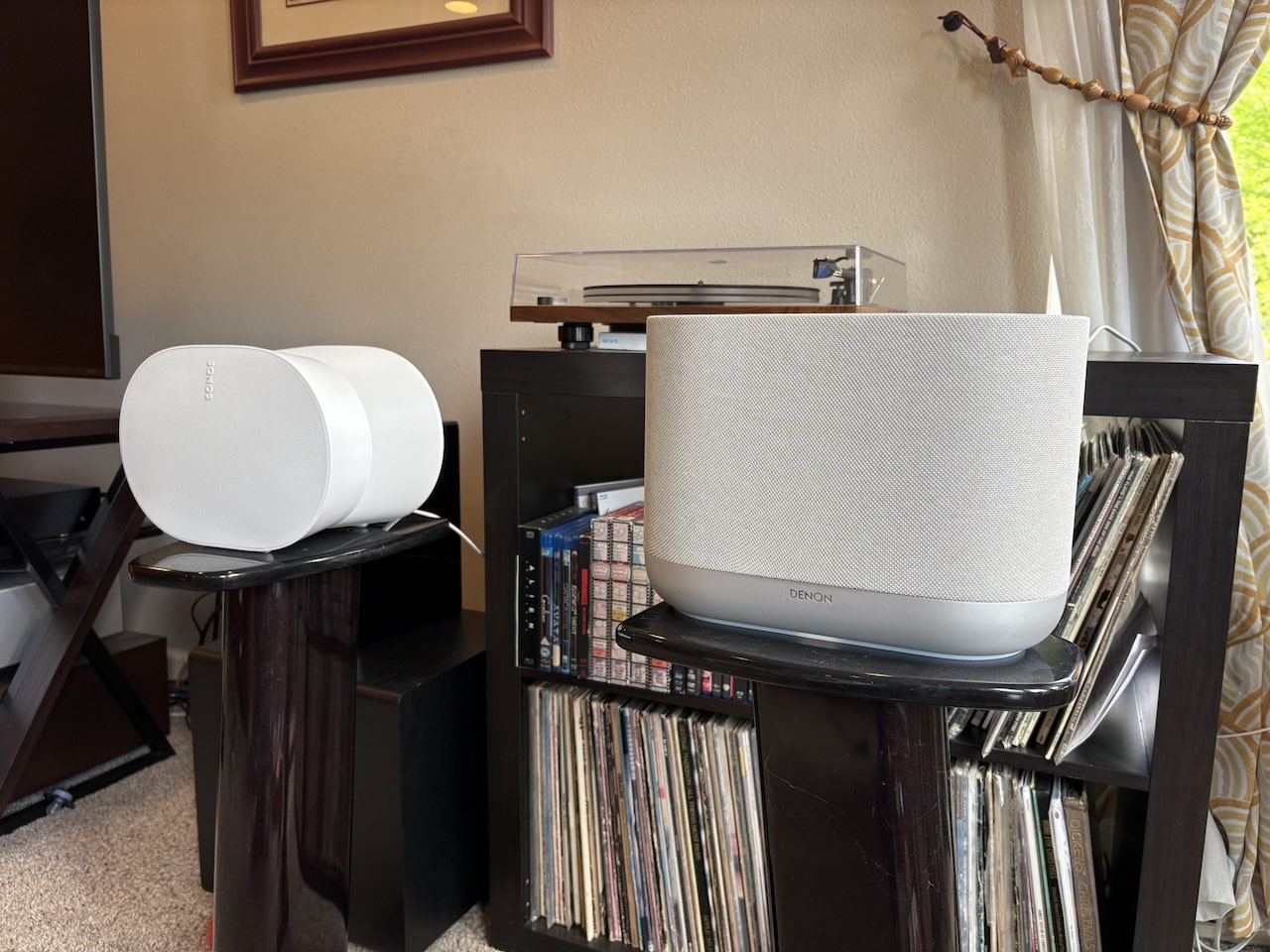
The one caveat is when I switched to Dolby Atmos Music, which I mostly tested on the service both brands support, Amazon Music Unlimited. Setting aside the sheer difficulty in both sourcing and actually tracking down good Dolby Atmos mixes, something with which the format in general continues to struggle across sources, the two speakers were on a more even playing field for 3D audio tracks.
That’s not too surprising, given that the Era 300 offers both upfiring and side-firing drivers for a more expansive and immersive soundstage than the Home 400 offers in its Pure mode. The slip-sliding space guitars and pop-up background vocals in Elton John’s “Rocket Man” (still one of the best Atmos mixes out there) were sent cascading around the room with the Era 300, whereas the Home 400 sounded more compact and resigned.
That changed when I switched back to the previously maligned Auto mode, which used some surprisingly effective digital processing to push the sound well beyond the speaker’s physical footprint, by what sounded like six or seven feet. Unlike with stereo tracks, Auto mode did not introduce obvious frequency emphasis, overly echoed vocals, or strange compression with Dolby Atmos content.
Taken purely on sonic ability, the Home 200 and Home 400 outperform their Sonos rivals.
Usability
Sonos makes up some ground in daily use. Some of that may come down to my familiarity with the Sonos app, but it still offers a cleaner, more intuitive layout, especially for speaker grouping. Sonos’ method of selecting speakers and tapping “Apply” feels smoother and simpler than HEOS’ approach, which requires creating or dissolving different speaker groups in the Rooms tab.
Sonos also offers a simpler method for controlling features like EQ, which, unlike Denon’s speakers, is available at any time from the device settings. As mentioned, I was also confused by Denon’s decision to virtualize all audio to 3D sound by default, even in the stereo-only Home 200.
I was also surprised to find that the Home speakers convert lossless audio to compressed AAC by default. To get lossless playback, you have to go into each speaker’s settings and change Multi-room Audio Quality from Normal to High. The app even warns you to use Ethernet or “excellent Wi-Fi” first, though I had no major issues on my network.
The Bottom Line
Denon’s Home 200 and Home 400 deliver sound quality that rises above most speakers in their class, including Sonos, though the higher pricing is impossible to ignore. The HEOS app is relatively easy to use, setup is as slick as anything I’ve tested, and I had no issues using the speakers solo or grouped throughout my home over multiple weeks of testing.
They can also be connected to a Denon subwoofer or soundbar, and the potential for broader integration with Denon AV receivers could make the system even more versatile down the line. That makes the latest Denon Home speakers legitimate Sonos competitors, especially with newer formats like Dolby Atmos Music, where the Home 400 proved to be one of the stronger performers in the category.
Even so, they fall short of being the proverbial “Sonos killers.” You get fewer streaming services, fewer streaming options, no Chromecast support, and Denon’s HomePod-dependent Siri integration pales next to Sonos’ built-in Alexa and Sonos Voice Control.
That’s fine. This is not a zero-sum market, and Denon still makes a serious splash with some of the best multi-room speakers I’ve heard in this class. For listeners who want excellent performance in a multi-room system that gets close to Sonos simplicity, the Denon Home 200 and Home 400 deliver.
Pros:
- Quick and hassle-free setup
- Excellent sound quality
- Impressive Bass Response
- Slick and intuitive design
- Consistent multi-room grouping and connection
- Good Dolby Atmos Music support
Cons:
- Very limited smart assistant support
- Grouping in the app could be simpler
- Odd default sound mode requires adjustment
- No Google Cast or Alexa Cast support
- Fewer streaming services than Sonos
Our Ratings
★★★★★★★★★★ Performance
★★★★★★★★★★ Usability
★★★★★★★★★★ Build Quality
★★★★★★★★★★ Value
Where to buy:
- Denon Home 200 – $399 at Amazon | Crutchfield | Audio Advice | Best Buy
- Denon Home 400 – $599 at Amazon | Crutchfield | Audio Advice | Best Buy
- Sonos Era 100 – $219 at Amazon | Crutchfield | Audio Advice | Best Buy
- Sonos Era 300 – $479 at Amazon | Crutchfield | Audio Advice | Best Buy
Related Reading:
- Bluesound PULSE FLEX Review: This $379 Hi-Res BluOS Speaker Has Range, But Does It Have A Pulse?
- Bose Lifestyle Ultra Wireless Speaker Debuts With AirPlay, Spotify Connect, And Google Cast: Should Sonos Be Worried?
- Bose Lifestyle Ultra Wireless Speaker Review: The $299 AirPlay and Google Cast Speaker Sonos Should Notice
- Sonos Unveils Era 100 & Era 300 Wireless Speakers With Support For Dolby Atmos












Asa
May 22, 2026 at 3:39 pm
Thanks for reviewing these, Ryan. I run the previous version (350s +sub in LR and 250s in BR).
Once set up and configured, they sound great and fill the space well for a speaker that doesn’t have a large footprint. Firmware updates are handled via the app automatically if you prefer.
I like the way the HEOS app lets you adjust EQ for each song if you wish vs going deeper into the app to adjust each time.
I’m invested in the Denon ecosystem and run everything via Wi-Fi with no fuss, no wires, no Bt, and the new speakers are only $50 more than the older version if Atmos is critical. The previous versions are still available for purchase.
Since these can be run via Wi-Fi, if another person is your HH is playing something via their iPhone (no app needed), you can go into the HEOS app and control it … like turning down the sound if a family member is play Swift to loudly. Lol.
You can also find these discounted occasionally which is an added bonus (was true of 350s when purchased).