Nearly 20 years ago, I wrote what was, at the time, the first mainstream publication review of Vinnie Rossi’s Red Wine Audio iMod, a $200 modification that bypassed parts of the iPod’s analog output stage and turned Apple’s portable player into something audiophiles were suddenly willing to connect to rather expensive systems. Wired subsequently quoted my original review in its 2006 examination of the growing audiophile fascination with modified iPods.
Vinnie has come a rather long way since then.
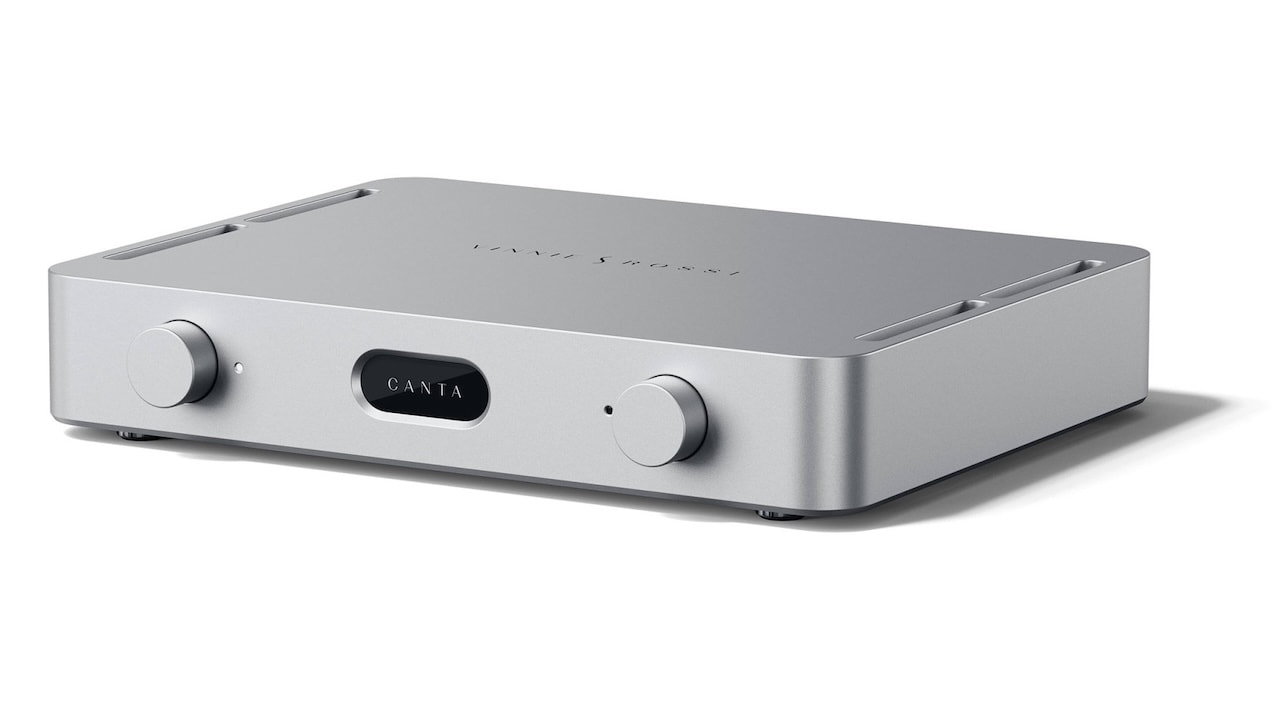
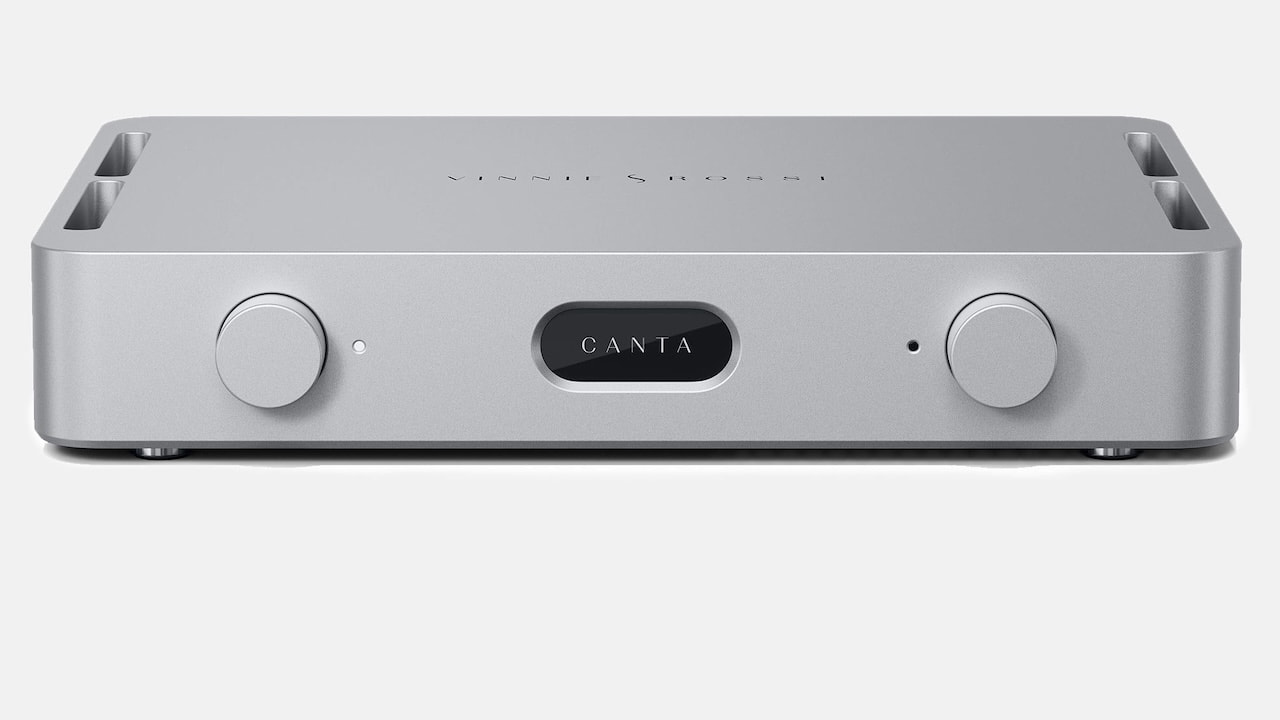
The new Vinnie Rossi CANTA Phono Preamplifier weighs 22 pounds, is machined from a solid block of aluminum, supports both MM and MC cartridges, and launches an entirely new component family positioned below Rossi’s cost-no-object Brama Series. The CANTA range will expand this fall with an integrated amplifier, preamplifier, and stereo power amplifier.
Starting a new electronics line with a phono stage in 2026 also tells you something about where Rossi thinks high-end audio is going.
Apparently vinyl did not get the memo that it was supposed to die.
Why Is the Vinnie Rossi CANTA Phono Different?
Flexibility is the obvious answer, but the circuitry is more interesting.
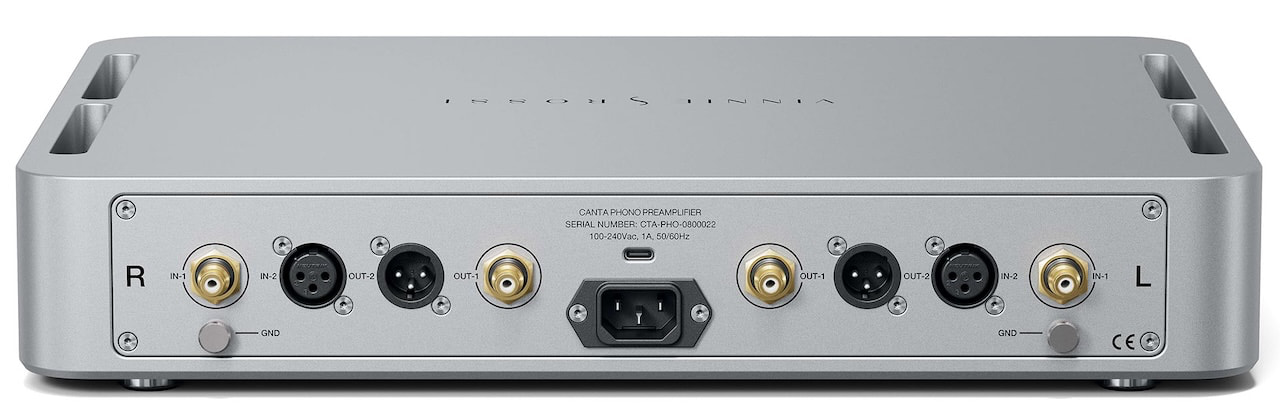
The CANTA uses a fully discrete JFET transconductance/transimpedance input stage rather than an IC op-amp-based input section, followed by a dual-mono architecture with independent left and right-channel circuitry. Power comes from a Belleson super-regulated supply, while both balanced XLR and single-ended RCA inputs and outputs are provided.
The cartridge adjustment range is unusually extensive. MM users get four gain settings and four capacitance choices, while MC users can select four gain settings and 20 impedance values ranging from 10 to 1,000 ohms. Settings are stored in memory even after AC power is disconnected, and the front-panel display allows changes without having to crawl behind the rack with a flashlight and vocabulary unsuitable for children.
RIAA accuracy is specified at ±0.1dB from 20Hz to 20kHz, and a switchable third-order 20Hz subsonic filter is included for warped records, turntable rumble, and other low-frequency garbage that your woofers really do not need to reproduce.
There are no tubes here, despite Rossi’s extensive use of Western Electric 300Bs in Brama. CANTA Phono is an all-solid-state design focused on low noise, cartridge matching, and keeping extremely small phono signals intact before they reach the rest of the system.
Vinnie Rossi CANTA Phono Preamplifier Specifications
- Cartridge Support: Moving Magnet and Moving Coil
- Inputs: 1 pair balanced XLR; 1 pair single-ended RCA
- Outputs: 1 pair balanced XLR; 1 pair single-ended RCA
- MM Gain: 36dB, 40dB, 46dB, 52dB
- MC Gain: 56dB, 60dB, 66dB, 72dB
- MM Loading: 47k ohms
- MM Capacitance: 100pF, 200pF, 300pF, 400pF
- MC Loading: 10, 15, 18, 20, 25, 30, 40, 50, 60, 70, 80, 90, 100, 150, 180, 200, 250, 400, 600, or 1,000 ohms
- RIAA Accuracy: ±0.1dB from 20Hz to 20kHz
- Subsonic Filter: Switchable third-order high-pass filter at 20Hz
- Maximum Output: 10Vrms
- Output Impedance: Less than 100 ohms
- Dimensions: 16.25 x 12.75 x 2.75 inches
- Weight: 22 pounds
- AC Power: 100–240V, 50/60Hz
Who Is It For?
The CANTA Phono is aimed at listeners whose analog front end has moved beyond the point where a basic MM/MC box makes sense.
Someone using multiple cartridges, very low-output moving coils, or frequently changing cartridge loading will appreciate the ability to adjust almost everything from the front panel and have those settings remembered. Balanced connectivity also makes considerable sense in larger systems where the phono stage may sit some distance from the line preamplifier.
It is also clearly intended for someone considering Brama but unwilling—or perhaps unable without creating an awkward domestic conversation—to move all the way into Rossi’s flagship electronics.
Vinnie Rossi describes the CANTA Phono as a bridge between Brama and the forthcoming CANTA components, which suggests this is not intended to be an inexpensive entry-level product.
What we do not know yet is important: Vinnie Rossi has not published U.S. pricing or a firm shipping date, and the current specification sheet does not provide published signal-to-noise, THD, or overall frequency-response figures beyond the stated RIAA accuracy.
So put the credit card back in the drawer for another five minutes.
The Competition
Pricing will ultimately determine which products belong directly across the table from CANTA, but the high-end phono market is hardly short of alternatives.
The MoFi Electronics MasterPhono at $5,995 may be one of the most interesting comparisons. Peter Madnick’s fully discrete, balanced design offers both conventional voltage inputs and a current-mode transimpedance input for low-impedance moving-coil cartridges, four gain settings, extensive loading options, a dual-chassis power supply, remote operation, and ±0.05dB RIAA accuracy.
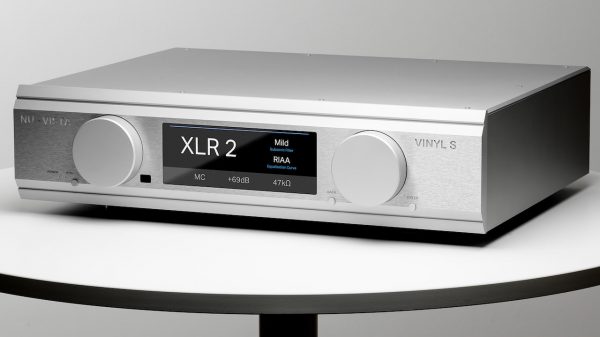
Musical Fidelity attacks the same market from a different direction. The Nu-Vista Vinyl S is $6,999, while the flagship Nu-Vista Vinyl 2 is $12,999. The Vinyl 2 combines fully balanced discrete circuitry with eight 7586 Nuvistor tubes, multiple RCA and XLR inputs, extensive cartridge adjustment, three EQ curves, and selectable subsonic filtering.
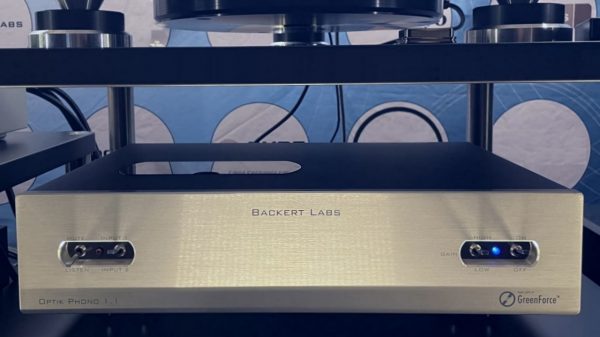
E.A.T. is another obvious competitor with its new $4,599 E-Glo CB and $6,250 E-Glo SB. Both are fully discrete, dual-mono phono stages with balanced XLR connectivity, MM/MC support, extensive loading and gain adjustment, and no IC op-amps in the signal path. The CB uses a hybrid second gain stage built around two ECC83S tubes and a transistor, while the more expensive SB moves closer to E.A.T.’s flagship E-Glo FB architecture with a fully balanced tube-based second stage using two ECC83S and two E88CC tubes. The SB, in particular, looks like a very direct rival if Rossi lands the CANTA somewhere around the $6,000 mark.
Other potential alternatives include the Sutherland DUO, Pass Labs XP-17/XP-27, Parasound JC 3+, and Boulder’s 508, depending on where Rossi ultimately lands on price.
The Bottom Line
The CANTA Phono is interesting for more than its extensive loading options or 22-pound chassis.
It represents the beginning of Vinnie Rossi’s next chapter.
The guy who once modified an iPod in his workshop now builds $40,000-class electronics, machines enclosures from solid aluminum, works with Western Electric 300B tubes in his flagship products, and is launching a second product family intended to make his design philosophy accessible to a broader group of high-end listeners.
And he chose vinyl to introduce it.
Twenty years after I plugged one of his modified iPods into my system, there is something wonderfully backwards about that.
For more information: vinnierossi.com
Related Reading:
- EAT E Glo SB And CB Bring Flagship Balanced Phono Technology Starting At $4,599
- MoFi Electronics Introduces UltraPhono Pro: More Affordable High-End MM/MC Phono Preamp
- NAGRA Launches PREAMP II-S Tube Preamplifier Built The Swiss Way: Slowly, Precisely, And Without Apology
- Vertere Phono-1 LX MM/MC Phono Preamp Brings Lower Noise And Greater Control To Vinyl Playback