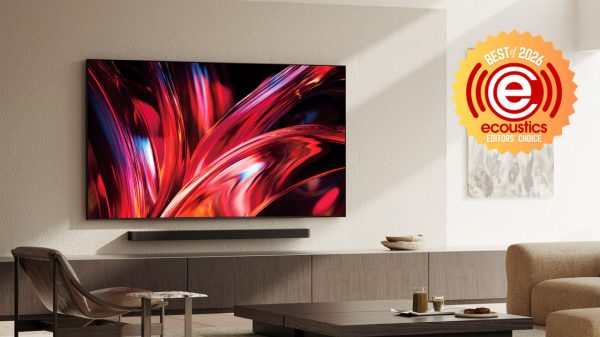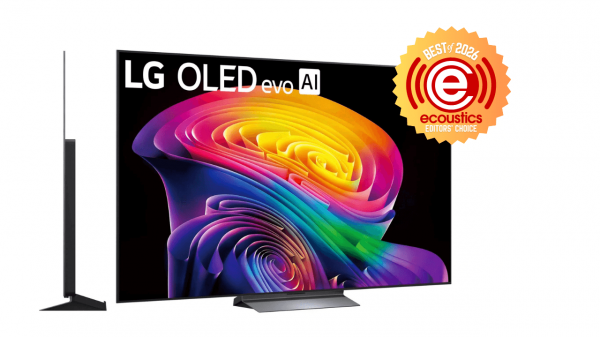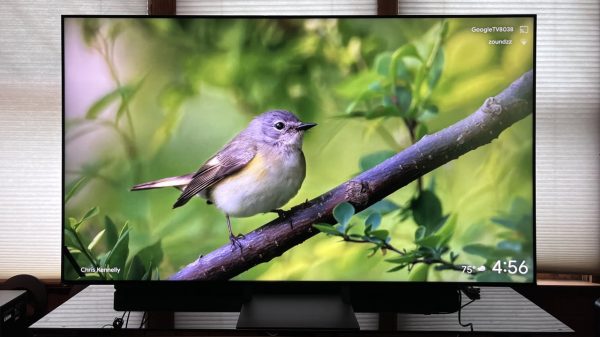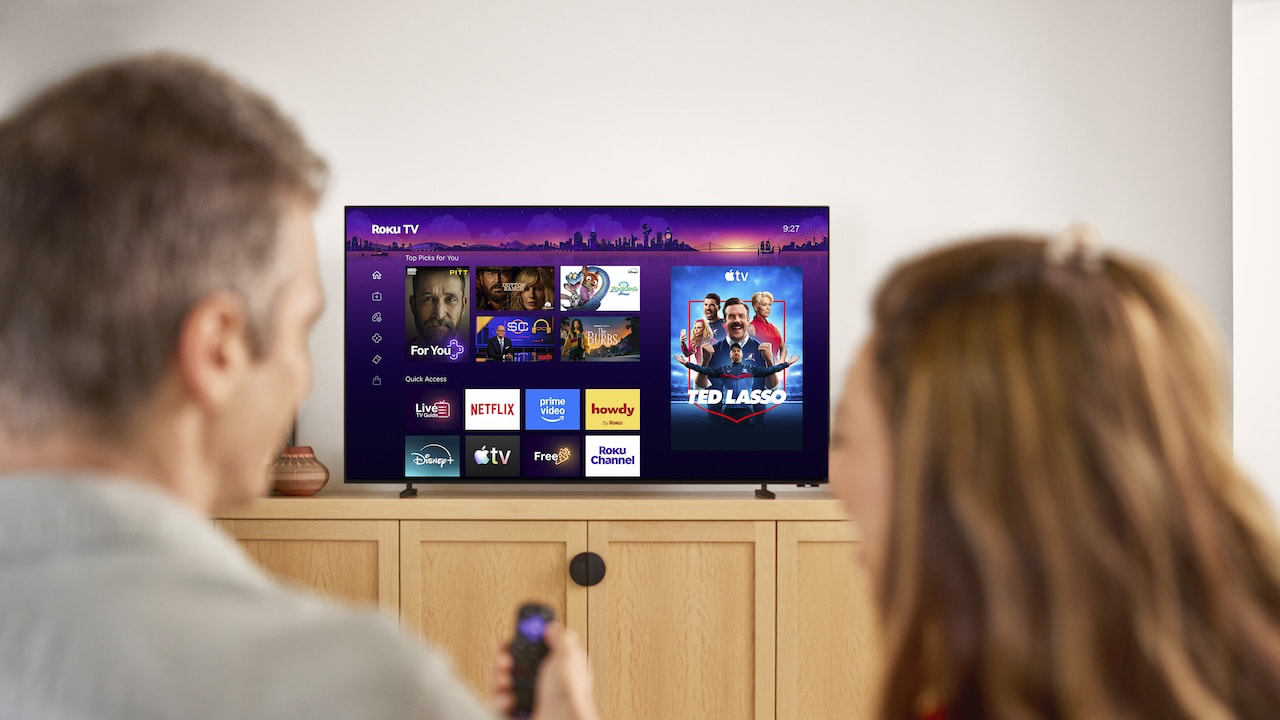
OLED televisions have spent years moving steadily down in price, but Roku is about to put even more pressure on the category.
The company is launching the Roku Pro Series OLED with pricing starting at $999, while the step-up Pro Series LX OLED will start at $1,299 when it arrives in October 2026. These are Roku-branded televisions, as opposed to OLED models from other manufacturers that simply use the Roku TV platform.
The regular Pro Series will be offered in 55-inch and 65-inch sizes and sold exclusively through Amazon.
Related Reviews:
- Samsung S95H OLED TV Review: Top Notch Performance In An Artsy Frame
- New Sony BRAVIA 6 TV Brings OLED Power To The People
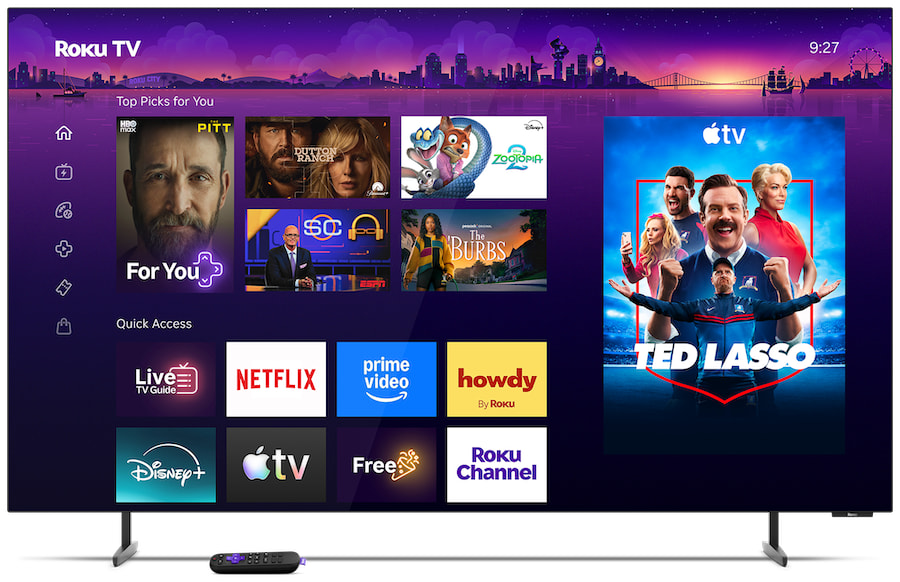
Roku Pro Series OLED TVs
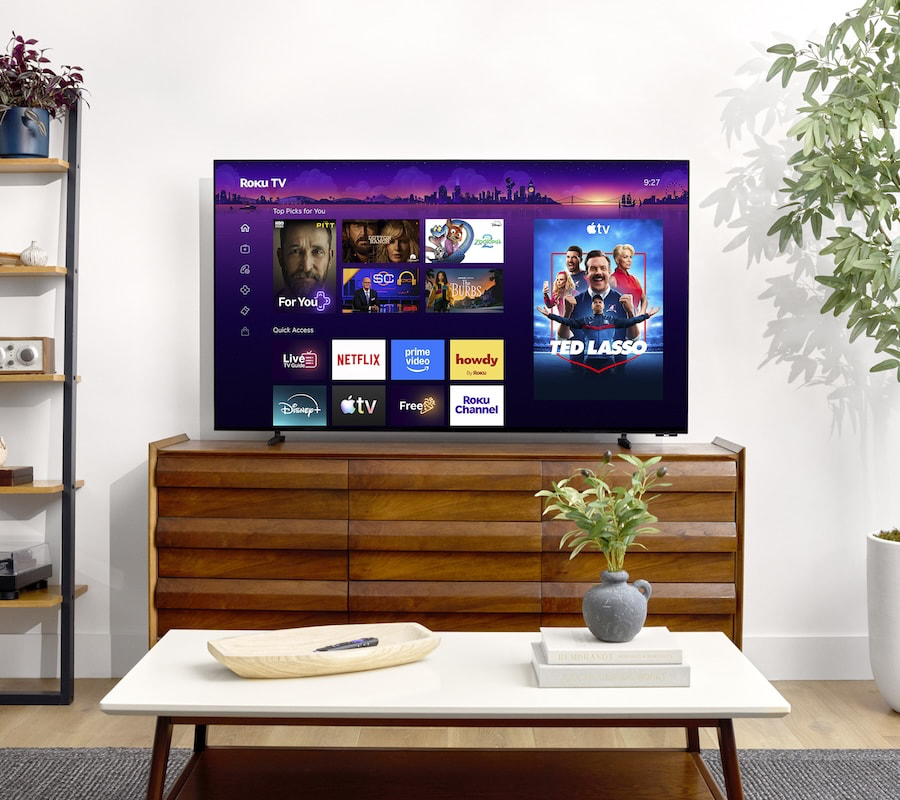
The standard Pro Series uses a 4K 120Hz OLED panel with Dolby Vision and Roku Smart Picture Max. Roku is also giving gamers Variable Refresh Rate, AMD FreeSync Premium and Automatic Game Mode rather than treating gaming as an afterthought.
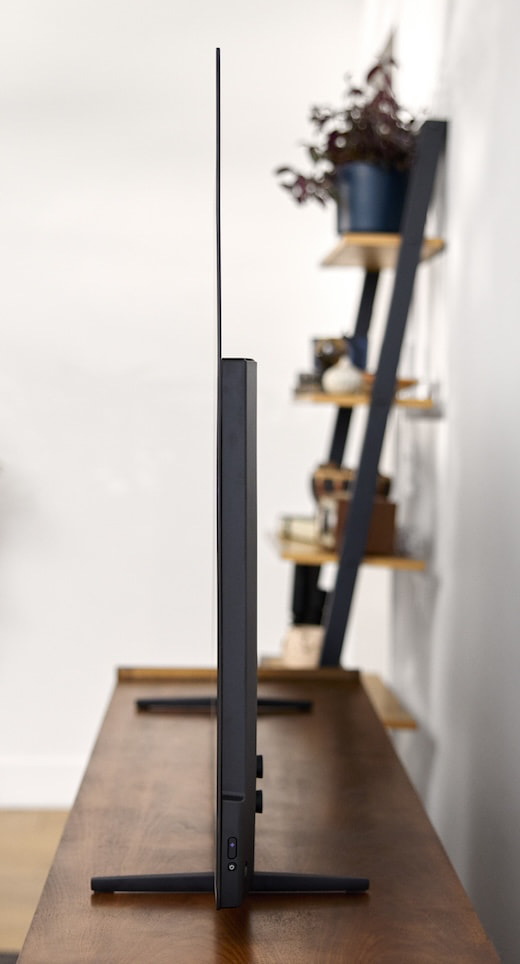
Other features include ultra-wide viewing angles, Bluetooth Headphone Mode and an adjustable tool-free stand with integrated cable management.
Roku Pro Series OLED Features:
- 55-inch and 65-inch screen sizes
- 4K OLED display
- 120Hz OLED panel
- Dolby Vision
- Roku Smart Picture Max
- Ultra-wide viewing angles
- Variable Refresh Rate
- AMD FreeSync Premium
- Automatic Game Mode
- Bluetooth Headphone Mode
- Ultra-thin metal bezel
- Adjustable tool-free stand
- Built-in cable straps
- Enhanced Roku Voice Remote
- Backlit remote buttons
- Customizable remote shortcuts
- Push-to-talk voice control
- On-TV remote finder button
- Exclusive to Amazon
Roku Pro Series LX OLED Steps Up to 144Hz
The Pro Series LX OLED adds a brighter image, wider color reproduction and 144Hz VRR, along with an advanced polarizer designed to reduce room reflections.
Roku also upgrades the controller to its Voice Remote Pro, which adds hands-free voice operation, USB-C charging and a rechargeable battery.
Includes all Pro Series OLED features, plus:
- 4K OLED display
- 144Hz Variable Refresh Rate
- Higher brightness than Pro Series OLED
- Wider color range
- Advanced polarizer designed to reduce room reflections
- Roku Voice Remote Pro
- Backlit remote buttons
- Hands-free voice control
- Customizable remote shortcuts
- Rechargeable remote battery
- USB-C charging
- Available beginning October 2026
Are Roku’s OLED Panels Related to LG’s B and C Series?
If LG Display is supplying the panels, that raises another question: what exactly might Roku be buying? eCoustics Senior Reviewer Al Griffin noticed a rather conspicuous difference between the two televisions.
The standard Roku Pro Series tops out at 120Hz, while the LX increases that to 144Hz. That looks remarkably similar to the division between LG’s B5 and C5 OLED televisions, which supported 120Hz and 144Hz respectively.
That does not mean Roku is buying literal B5 and C5 TV panels. LG Display supplies OLED hardware to numerous manufacturers, and Roku is responsible for its own electronics, image processing, software and final implementation.
But the similarities make it reasonable to speculate that the Pro Series uses a more affordable LG Display panel tier, while the LX gets a higher-performance version comparable to what LG has used further up its own television range.
The LX’s additional brightness and reflection treatment support that theory as well. Until Roku or LG Display identifies the specific panels, however, B Series versus C Series remains educated speculation.
Why $999 Matters
Roku entering OLED at $999 says considerably more about the state of the market than another $4,000 flagship ever could.
Mini LED televisions have become exceptionally competitive, offering enormous brightness and increasingly sophisticated local dimming at prices OLED manufacturers have struggled to match. The emerging wave of RGB backlit LCD televisions will increase that pressure.
LG Display’s response has not been to abandon OLED. It has been to figure out how to make it less expensive to manufacture.
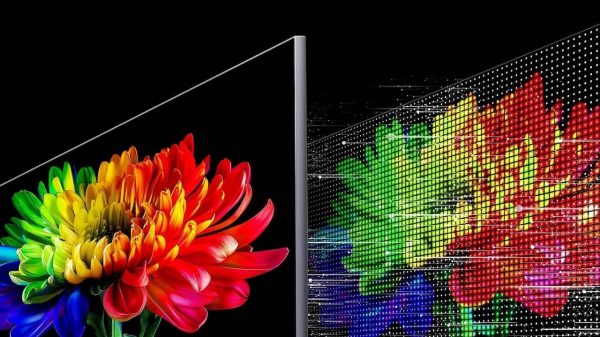
We recently covered LG Display’s work on a simpler 2-stack WOLED architecture, which could reduce material requirements, manufacturing complexity and power consumption while helping lower panel costs.
LG Display has also demonstrated its FLiPP manufacturing technology, which eliminates the traditional fine metal mask used during OLED production and is intended to improve manufacturing efficiency.
Those developments are still part of a much larger transition, but Roku selling an OLED television for $999 provides a very tangible example of where the industry is heading.
OLED does not have to beat Mini LED at every specification. Perfect blacks, excellent off-axis performance, instantaneous pixel response and superb contrast remain compelling advantages.
It just needs to stop costing so much.
Sony Is Pushing OLED Downmarket Too
Roku is not alone in trying to make OLED more accessible. Sony just introduced the new BRAVIA 6 OLED TVs, which start at $1,299 for the 48-inch model and extends all the way up to 83 inches. It still supports Dolby Vision, HDR10, HLG, 4K/120Hz gaming with VRR and ALLM, and offers four HDMI 2.1 inputs, but Sony trims costs with its standard 4K Processor rather than the XR Processor used in the BRAVIA 8 and BRAVIA 8 II, along with a more conventional speaker system. The Roku Pro Series starts another $300 lower, which makes the downward pressure on OLED pricing even harder to ignore.
The Bottom Line
The important thing about Roku entering the OLED television market is not simply the Roku logo on the front. It is the $999 starting price.
The Pro Series brings 120Hz OLED, Dolby Vision and a legitimate gaming feature set into a much more accessible price category, while the $1,299 LX adds 144Hz VRR, greater brightness and improved reflection control.
The LG Display panel connection makes both models even more intriguing, particularly given the similarities between their refresh-rate capabilities and LG’s recent B and C Series OLED tiers.
Mini LED and RGB backlit LCD televisions are not going anywhere, and OLED still faces challenges when it comes to brightness, very large screen sizes and manufacturing cost. But Roku entering the market around $1,000 while LG Display continues working to make OLED cheaper tells us something rather clearly.
OLED is far from dead. It is getting more affordable.
Where to buy:
- Roku Pro Series OLED TV (55-inch) – $999 at Amazon (available Sept 1, 2026)
- Roku Pro Series OLED TV (65-inch) – $1,199 at Amazon (available Sept 1, 2026)
- Roku Pro Series LX OLED TV (65-inch) – $1,599 at Amazon (available Oct 22, 2026)
Related Reading: